
The closely divided House Appropriations subcommittee on foreign operations delayed action on the administration proposal for $222 million in emergency military aid to Cambodia until the assistance is authorized in separate legislation. The decision, on ostensibly parliamentary grounds, complicated the already slim chance for approval by Congress. In any event, it was becoming increasingly unlikely that Congress would act within the April 1 deadline set by the Administration for rescuing the Cambodian Government.
Before reaching its decision, the subcommittee met with members of a Congressional delegation that visited South. Vietnam and Cambodia last week at the suggestion of the White House. Representative Paul N. McCloskey Jr., a California Republican who has previously been identified with the Congressional doves, presented a proposal for $116.7‐million in additional military aid and $76‐million in food assistance. Mr. McCloskey said his proposal, which he said should end aid to Cambodia, had the support of the majority of the delegation. From their statements, however, it appeared that the seven House members of the delegation were split four ways.
Mr. McCloskey’s position was generally supported by Representatives Bill Chappell Jr., Democrat of Florida, and John P. Murtha, Democrat of Pennsylvania, as well as Senator Dewey F. Bartlett, Republican of California. Donald M. Fraser of Minnesota, a leader among House Democratic liberals, said he was willing to support additional military aid only if he was convinced that it would lead to a negotiated settlement. Bella S. Abzug, Democrat of Manhattan, is opposed to military aid, but willing to support humanitarian assistance. Millicent Fenwick, Republican of New Jersey, is undecided, but leaning in the direction of more military aid. John J. Flynt, Democrat of Georgia, one of the first Southern Democrats to support legislation to end the war in Vietnam, declined to commit himself.
The Administration has predicted that the Cambodian Government of President Lon Nol would fall within a month if Congress does not provide additional money for ammunition before April 1. The Administration says that it has exhausted the $275‐million in military aid authorized in December, leaving no funds for the last three months of the fiscal year, which ends on June 30. It seemed unlikely that Congress, already reluctant to provide the emergency military assistance, could complete action on both the authorization and appropriations legislation before April 1. As assessed by some members, the subcommittee’s decision to defer action reflected an uncertainty among Congressional supporters of the Administration request that they had the votes to win approval of an appropriations bill.
The 13‐member subcommittee appeared to be divided five to five, with three undecided members. Even if approved by the subcommittee, however, the request would have to survive a complicated series of legislative hurdles in the House and the Senate. In the foreign aid authorization legislation enacted in December, Congress set a ceiling of $275‐million on military aid to Cambodia. It is this ceiling that the Administration is trying to lift in asking for $222‐million in additional appropriations. Normally, under House and Senate rules appropriations cannot be considered by either house unless they have been authorized in separate legislation. The authorizing legislation is handled by the House Foreign Affairs Committee and the Senate Foreign Relations Committee.
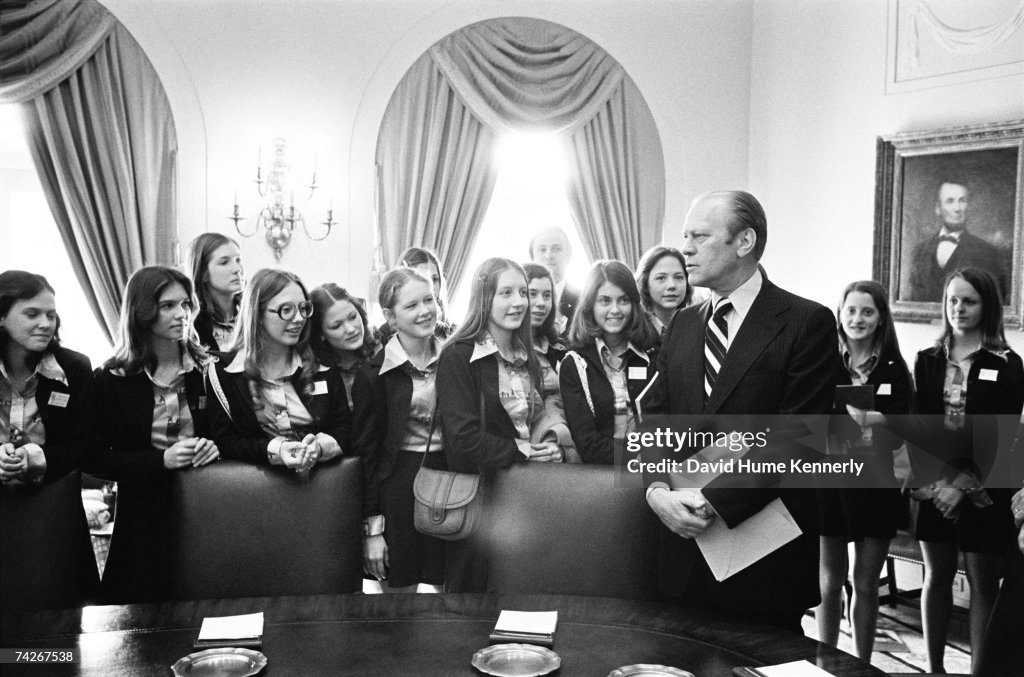
In an attempt to overcome the parliamentary obstacles, President Ford and Otto E. Passman of Louisiana, chairman of the House Appropriations subcommittee, had been working on a strategy of getting a rule from the House Rules Committee providing that a point of order could not be raised on the House floor that the appropriations were being considered without a proper authorization. That strategy was dropped today as Administration supporters became increasingly uncertain that it would succeed. In explaining the subcommittee’s decision to defer action until authorizing legislation was enacted, Elford A. Cederberg of Michigan, the highest ranking Republican on the full Appropriations Committee, told reporters that the appropriations request “faces a succession of steps that are a little cumbersome.” “There was a reasonable chance, he observed, “that we might stumble along the way.” Therefore, he said, it was concluded that the emergency aid had “a better chance” of winning Congressional approval if authorizing legislation was enacted first.
The helicopter carrier USS Okinawa, with several hundred marines aboard, has been in the vicinity of the Gulf of Thailand for several weeks in case it is necessary to evacuate American civilians from Phnom Penh, a Defense Department source said today. The source emphasized, however, that the stationing of the carrier, which has about 25 helicopters, was a “fallback” contingency plan. If it should become necessary to evacuate the approximately 400 American civilians in the Cambodian capital, Pentagon plans call for placing primary reliance on civilian aircraft. The Marine helicopters would be used only if it became impossible to fly the civilian aircraft into Phnom Penh’s airport. The Defense Department source said the carrier had been in and out of the gulf over the last few weeks.
Peter Lorenz, kidnapped leader of West Berlin’s Christian Democrats, was released unharmed six hours after the West German government fulfilled all demands of his leftist abductors. He was dropped off on a West Berlin street. He was dropped off in Wilmersdorf district, walked to a telephone booth, and called his wife, Marianne, to tell her that their six‐day ordeal was over. Police there and in West Germany immediately began large-scale raids on suspected anarchist groups. Mr. Lorenz is scheduled to tell the full story of the six days of his kidnapping to the public today. The release of Mr. Lorenz — in “good physical and mental condition,” according to officials — came only after the Bonn Government had carried out his kidnappers’ wishes, and had flown five convicted leftist to asylum in Aden. They got permission to stay there. Their escort, former Mayor Heinrich Albertz, then boarded the plan with a declaration from the prisoners and flew back to West Berlin to read it on television.
Senator Carl T. Curtis (R-Nebraska) said Portugal’s reliability as a NATO ally is threatened by a rising Communist influence in the country. The chairman of the Senate’s Republican Conference Committee said a Communist takeover could mean Portugal’s withdrawal from the alliance and the loss of the Azores as a U.S. base. He said Portugal’s provisional government has unwisely made concessions to the Communists and confused demonstrations against communism with a resurgence of fascism.
Spanish Premier Carlos Arias Navarro named five new ministers to head off a cabinet crisis because of a proposed tough measure against strikes. The new ministers are Jose Maria Sanchez Ventura, justice; Alfonso Alvarez de Miranda, industry; Jose Louis Ceron Ayuso, commerce; Fernando Suarez Gonzalez, labor, and Fernando Herrero Tejedor, secretary general.
European Common Market foreign ministers, meeting in Brussels, approved creation of a $1.8 billion fund for the financing of development projects in less favored areas. The fund will cover three years and its main beneficiaries will be Ireland, Britain, and Italy.
The U.S. Navy helicopter carrier USS Iwo Jima rammed into another ship in mid-Atlantic, the Navy reported. The carrier and the USS Nashville, an amphibious transport dock, were proceeding side by side while supplies were being transferred by line to the Iwo Jima when the collision occurred. The Navy indicated the carrier had a steering malfunction. The Nashville sustained some damage above the waterline.
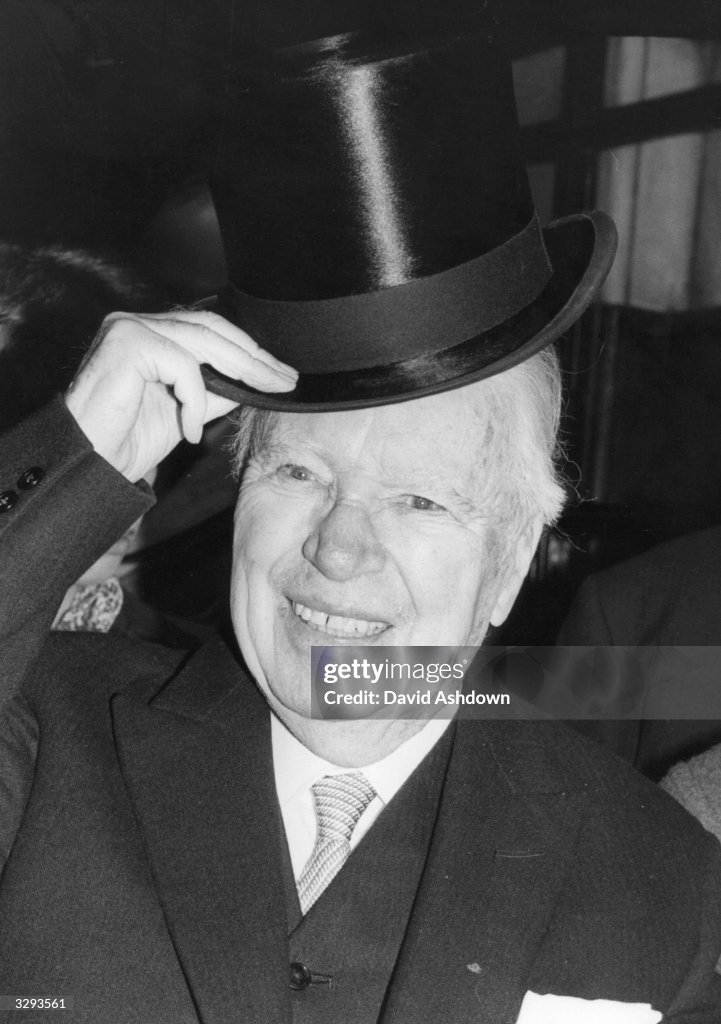
English-born comedy actor Charlie Chaplin was knighted by Elizabeth II.
The Anti-Defamation League of B’nai B’rith in New York accused American shipping and banking industries of violating federal laws by capitulating to Arab boycott regulations against Israel, and called on President Ford to take corrective action. Seymour Graubard, league national chairman, in a letter to the President, enclosed copies of “routine certifications of boycott” signed by the steamship lines as a “custom of trade” and required by banks in honoring letters of credit. The league named 14 steamship companies and four commercial banks.
Secretary of State Kissinger leaves for the Middle East tomorrow, guardedly optimistic that he will persuade Israeli aid Egyptian leaders to make the compromises necessary to bring about a new Sinai agreement. In recent days, Mr. Kissinger his told visitors that he could see the framework of an Israeli‐Egyptian accord emerging and that he believes the chances are 50‐50 or better that he can close the gap that has separated the two sides. He has told aides that he expects to be gone two or three weeks on the trip, his 10th to, the Middle East since November, 1973. If he is successful, it is expected that the Geneva talks would soon be reconvened to take up the crucial issues surrounding final Israeli peace agreements with Egypt and Syria, and settlement of the problems of the West Bank and of Jerusalem. President Ford has said that if Mr. Kissinger’s efforts fail, the Geneva talks would have to be reconvened, for the first time since December, 1973, because of strong Soviet pressure to reopen the meeting.
Secretary of State Kissinger told freshmen Democrats in Congress today that the United States could be faced with surrendering to, or using force against, oil producing countries, one of the freshmen said. Representative Henry A. Waxman of California reported that, Mr. Kissinger had said those options may have to be faced in the next two to five years. Mr. Waxman also quoted Mr. Kissinger as having said that if the United States did not act promptly on an oil independence program, America would not be able to work in concert with the nations of Western Europe. “I thought it was a frightening illustration of the Secretary of State’s perception of our short‐range international options.” Mr. Waxman said after a White House breakfast for the 75 freshmen. Mr. Kissinger said in an interview in Business Week magazine several weeks ago that armed intervention against oil producers was a possibility if the major consuming nations were to suffer economic strangulation at the hands of the producers. He later told reporters that he was referring to a purely hypothetical situation.
President Houari Boumediene of Aiigeria said today that oil‐exporting countries should offer to decrease prices if industrial countries were prepared to reorganize the world economy for the benefit of the poorer, developing nations. As a contribution to this “new economic order,” the Algerian leader proposed at a meeting of the Organization of Petroleum Exporting Countries that they create a fund of $10‐billion to $15‐billion to provide economic aid to the developing countries. President Boumediene’s speech opened the first OPEC summit conference. The assembled leaders included the Shah of Iran and Prince Fand Ibn Abdel Aziz of Saudi Arabia, who represented King Faisal, the ruler of the world’s largest oil-exporting country, who was absent. In his speech, Mr. Boumediene accepted a conference with the industrial and developing‐country oil consumers on “raw materials and development.” But the Algerian leader rejected a “discussion that will crudely consist of blaming the oil‐exporting countries” for the world’s economic problems, and he called for OPEC unity against threats of aggression over oil prices and supplies.
Iran signed a trade deal pledging to spend 22 billion dollars in the United States over a ten-year period. The United States and Iran announced in Washington an economic agreement under which Iran will spend $15 billion on American goods and services in the next five years. At a joint news conference with Finance Minister Hushang Ansary, Secretary of State Kissinger called it the largest agreement of its kind between any two countries. Iran also agreed in principle to spend about $7 billion in the next decade on eight nuclear power plants.
Japan’s Deputy Foreign Minister met today with the Chinese Ambassador to continue their negotiations on a treaty of peace and friendship. Japanese officials said they expected agreement within a few weeks.
Television cameras were first permitted in the Parliament of Canada.
A resolution calling for the retention of “undiluted United States sovereignty” over the Panama Canal Zone was signed by 37 senators, three more than the figure needed to defeat Senate ratification of a draft treaty the Ford Administration is now negotiating with the Panamanian government. The U.S. plan calls for surrender of American jurisdiction over the zone to Panama and a gradual increase in Panamanian operation and defense of the canal. The resolution was drafted by Senators Strom Thurmond (R-South Carolina) and John L. McClellan (D-Arkansas)
Several bombs exploded while being transported in the back of a car near the northern Argentine city of Tucuman, killing at least four persons. Police sources said one of the victims had his hands tied when the bodies were found, indicating he might have been a kidnap victim.
Ethiopia’s ruling military council, the Dergue, issued Proclamation 31, nationalizing all rural land, giving households 10 hectares apiece of land, and assigning 800 hectares apiece to local “Peasant Associations.”
The government of Rhodesia arrested the Rev. Ndabaningi Sithole, a black leader, on charges of plotting to murder black rivals and said he would be tried before a special closed court. Rhodesia’s white-ruled government arrested the Rev. Ndabaningi Sithole, one of the nation’s leading black nationalists, on charges of plotting the assassination of rival African politicians. The action caused the cancellation of planned peace talks between blacks and white in Rhodesia. Mr. Sithole, 54, is the former leader of the Zimbabwe African National Union. He was freed after 10 years of detention last December to attend talks in Zambia with Rhodesian government representatives in an effort to end the two-year-old guerrilla war. Bishop Abel Muzorewa, president of the African National Congress, called off talks with the government until Mr. Sithole was freed.
President Ford announced a 60-day postponement of the last two stages of his oil import tax to encourage Congress to work out a compromise energy program by May 1 and to move faster on cutting the income tax. The word came with his veto of legislation mandating a 90-day delay on the three-stage oil import tariff.
Informed sources in Washington said that William Colby, Director of Central Intelligence, reported orally to President Ford about several plans in the past for assassinating foreigners overseas, rather than including the information in his written report. Officials said the planned killings either failed or were canceled.
The Senate Finance Committee agreed in principle that the issue of repeal of the oil depletion allowance, which was included in the antirecession tax-cut bill passed by the House, should be handled separately. Supporters of this move said it was necessary to make sure that the tax bill gets through Congress before a two-week Senate recess starting March 21.
Anne Randolph Hearst, younger sister of fugitive Patricia Hearst, was arrested on a misdemeanor drug charge in Niagara Falls, New York, and later pleaded innocent before a U.S. magistrate. Miss Hearst, 19, daughter of Randolph A. Hearst, president and editor of the San Francisco Examiner, and two young men were stopped as they crossed into the United States from Canada. U.S. Attorney Richard J. Arcara said customs agents searched the car and found 12 tablets, or 1.2 grams, of amphetamine known as “speed.” Both Miss Hearst and Donald Moffett, 21, were released on $1,000 bond and a hearing set for March 19. A second man was not charged.
The New York Daily News, unable to deliver papers since Sunday evening because of a wildcat strike by deliverers, said it would lay off more than 2,500 employees beginning this afternoon. The News work force is 5,500. W. H. James, News president and publisher, said the layoffs, which will affect almost all departments, were necessary because of “heavy revenue losses. The strike apparently was caused by a change in work schedules. James’ announcement came after arbitrator Herbert Haber and two representatives each from management and the union failed to reach an agreement that would have allowed the drivers to return to work while a settlement was worked out.
The Defense Department said it had selected two new possible sites for a vast underground communication system designed to communicate with submerged submarines anywhere in the world. The Seafarer ELF (extremely low frequency) system would consist of a huge underground grid of 2,500 miles of cable. Environmentalists claim its electronic emissions could be hazardous to people, livestock, and crops. Three states — Texas, Michigan and Wisconsin — already have rejected its construction. A Pentagon spokesman said federal land on Nellis Air Force Base in Nevada and the White Sands Testing Ground in New Mexico were being considered as possible sites.
He plans to run against Chicago Mayor Richard J. Daley in the April election, announced John J. Hoellen, despite earlier statements that he might drop out of the race. Hoellen lost his reelection bid as the only Republican in the City Council last week but easily won the nomination. as the GOP candidate for mayor. After a meeting with GOP leaders, Hoellen called on “independents, disenchanted Democrats and other dissenters from a one-party dictatorship to join with me.”
A Boston architect who designed a prefabricated classroom structure for Maryland, committed suicide shortly after telling a Baltimore Sun reporter of alleged improprieties in the award of a state contract to build the classrooms. Police said the body of Berton V. Phinney Jr. 54, was found in his home in Lincoln, a Boston suburb. His death by a gunshot in the head was ruled a suicide by the medical examiner. Maryland Attorney General Francis B. Burch is investigating whether there were irregularities in the awarding of the prefabricated classroom contracts by Alford R. (Skip) Carey, executive director of the state agency concerned and a close associate of Maryland Governor Marvin Mandel.
A cross-section of the nation’s mayors called for $5 billion in economic recovery money to be pumped through them. Members of the Legislative Action Committee of the U.S. Conference of Mayors also called for $706 million to provide summer jobs for young people at the end of a two-day meeting in Washington. The demand for money repeated a program proposed by the mayors last January, but an emerging new theme was the declaration by several mayors that they could put it to quicker and better use to help the faltering economy than any other plans suggested.
The semi-secret selection of a jury to try former Senator Edward J. Gurney of Florida and four alleged conspirators in a bribery scheme will continue into its eighth day tomorrow with no word from the judge as to how many jurors have been picked nor when testimony will begin.
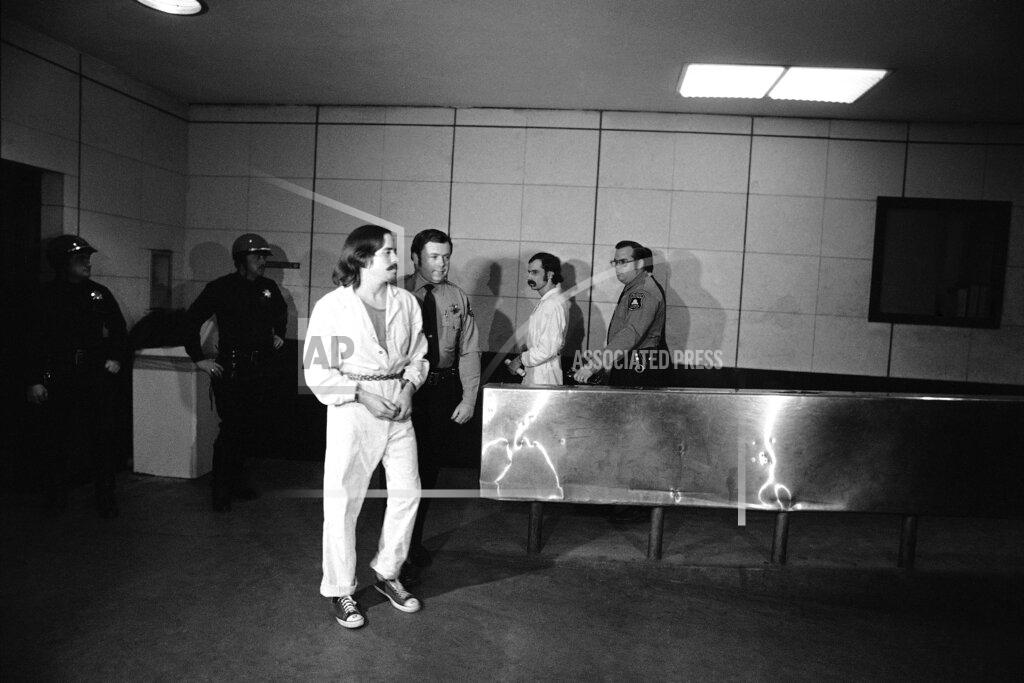
A former Attica inmate testified today that he saw John Hill, one of two defendants on trial for murder in Buffalo, New York, strike correction officers with a club as inmates swarmed through critical checkpoints in the first hour of the prison insurrection that began on September 9, 1971.
Unemployment in major Midwest cities rose more rapidly last week but remained below the adjusted national average. Business and financial leaders in the Midwest expected the difference to continue because of the cushioning effect of the region’s industrial diversity and its general lack of dependence on automotive manufacturing. Farmers remain good customers.
As a result of growing support from the public, the police and legislators, Congress is pushing harder toward passing some type of federal gun control this session. But while there is a possibility of legislative action in an effort to stem homicides by handguns, those supporting such legislation agree that the issue is too emotional — the public too uneducated on its complexities — for passage of a strong bill.
Solutions to the energy crisis can be found without interrupting pollution control efforts, according to 65% of those surveyed for a recent Harris poll A total of 22% said they thought combating the energy shortage would slow down the pollution clean-up. The remaining 13% weren’t sure. The poll also revealed that inflation and unemployment are considered the most serious problems confronting the nation, followed by water and air pollution and the energy crisis.
Dow Jones Industrial Average: 757.74 (+4.61, +0.61%)
Born:
Ladislav Kohn, Czech NHL right wing (Calgary Flames, Toronto Maple Leafs, Mighty Ducks of Anaheim, Atlanta Hawks, Detroit Red Wings), in Uherske Hradiste, Czechoslovakia.
Antti Aalto, Finnish National Team and NHL centre (Olympics, 6th, 2002; Mighty Ducks of Anaheim), in Lappeenranta, Finland.
Kristi Harrower, Australian WNBA guard (Phoenix Mercury, Minnesota Lynx, Los Angeles Sparks), in Bendigo, Victoria, Australia.
Hawksley Workman [Ryan Corrigan], Canadian rock singer-songwriter. and guitarist, in Huntsville, Ontario, Canada.
Kim Jung-Eun, South Korean actress (“Marrying the Mafia”), in Seoul, South Korea.



 History Diaries