Concern grows throughout the world this month about the direction of events in Vietnam. The French, for one, have sent a series of proposals to China calling for support for a neutralized Vietnam with wider powers for the ICC; the hope is that China will use its influence with Hanoi to gain support for this. In fact, when J Blair Seaborn, the Canadian member of the ICC, makes a third secret visit to Hanoi this month, he is informed that the North Vietnamese have lost any interest they might have had in negotiating.
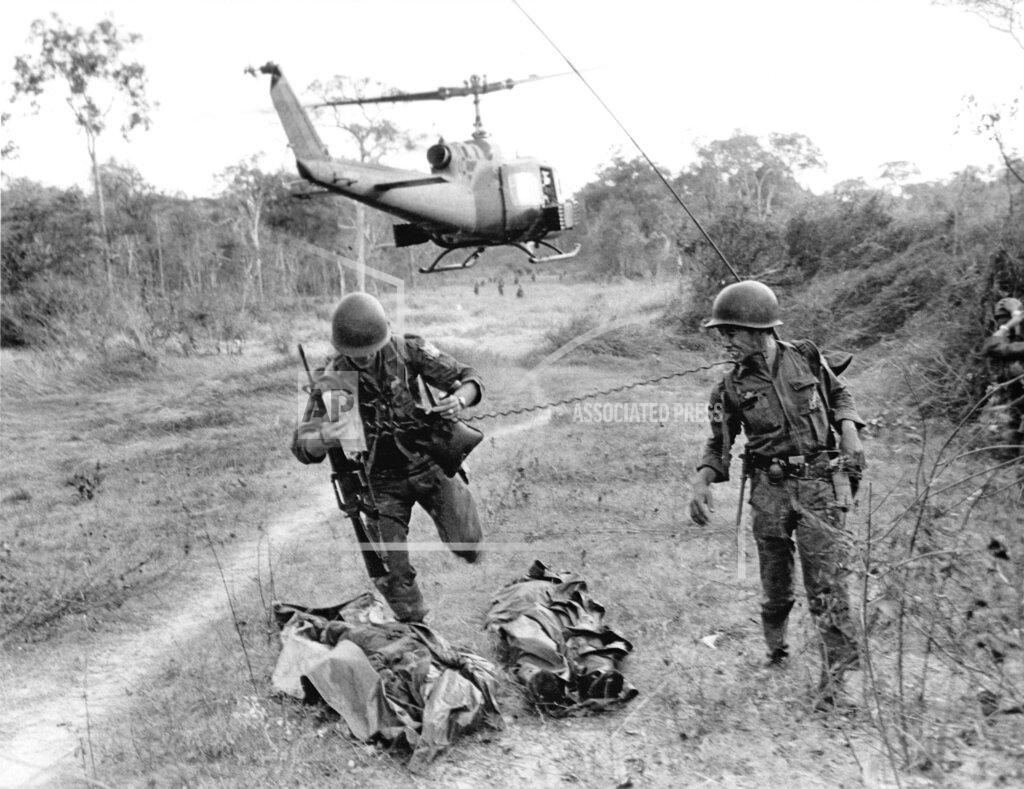
United States helicopters and two battalions of government troops killed 10 Việt Cộng insurgents and captured 10 today in a sweep southwestward from the Đà Nẵng air base, 380 miles northeast of Saigon. This was one in a series of strikes to keep the guerrillas off balance and out of mortar range of the base, where the United States keeps jet planes and Hawk missiles 80 miles from the frontier of North Vietnam. Ten prisoners of the Việt Cộng were freed in the sweep. A United States Army helicopter pilot and five Vietnamese soldiers were wounded.
Ambassador Taylor calls on Premier Phan Huy Quát to inform him that the United States is preparing to send 3,500 U.S. Marines to Vietnam. Three days later, a formal request is submitted by the U.S. Embassy, asking the South Vietnamese government to ‘invite’ the United States to send the Marines. Premier Quát, a figurehead, has to obtain approval from the real power, General Nguyễn Văn Thiệu, chief of the Armed Forces Council. Thiệu approves, but asks that the Marines be ‘brought ashore in the most inconspicuous way feasible.’ Rumors of the imminent arrival of American troops soon circulate in Saigon, but there is no official word from either government.
The New York Times reports this day:
“Another contingent of United States Marines may be landed soon in South Vietnam to act as a security force at major American military installations, Administration sources said tonight. This force would be the second contingent of marines sent to South Vietnam since the present phase of the crisis began last month. The first group accompanied the Hawk ground-to-air missiles now protecting the United States air bases, but it is not a combat infantry unit, as is the contingent that is reported to be preparing for landing now. Such a force, possibly a reinforced battalion (a Marine battalion is 1,200 men), would be assigned to guard air bases and other installations in areas where Việt Cộng guerrillas are particularly active, the Administration sources said, but it would not be sent into combat.”
“Among the installations that might be guarded by the Marines is the big Đà Nẵng Air Base, near Huc, southeast of the North Vietnamese border. The stationing of Marines at Đà Nẵng would place them near a main Communist infiltration route into South Vietnam and within easy distance of North Vietnam. The White House press secretary, George E. Reedy, said he would not comment “on any speculation about the future.” At the State Department. the press officer, Robert J. McCloskey, said he would not comment on “these reports.” A marine battalion of 1,200 men can be reinforced to 1,400 men or to 1,500 men.”
By coincidence, this is also the day that a South Vietnamese government first states conditions for ending the war ‘the Communists have provoked’: they must stop all infiltration, subversions, and sabotage, and offer ‘concrete, efficient, and appropriate means’ to guarantee South Vietnam’s security. Premier Phan Huy Quát insisted today that peace could not be restored until “the Communists end the war they have provoked and stop their infiltration.” Dr. Quát read this as a firm declaration by his government at a news conference while talk of peace through negotiation was being heard increasingly in the capital. A guarantee by the Quát Government that the war would continue was considered here to be a necessity for a United States decision to proceed with further airstrikes against the north. Two reports of planned bombing raids against North Vietnam have circulated in Saigon recently.
Air Vice Marshal Nguyễn Cao Kỳ said last week that he was prepared to lead a strike February 19, but that it was canceled because of an attempted military coup d’état. Qualified American sources said that another strike was set for last Friday, but that the mission was postponed because of bad weather. In neither case would the air strike, involving American and Vietnamese planes, have been announced as a retaliation for a specific action by the Việt Cộng. Both Marshal Kỳ and the American sources agreed on that point. Since the United States retaliation for action against American destroyers in the Gulf of Tonkin last August, bombings in North Vietnam have been in reprisal for attacks on American installations in South Vietnam.
Dr. Quát’s Government, not quite two weeks old, met regularly during the last few days to prepare the statement of purpose. In its preamble, the message said: “The Communists, though they themselves have provoked the present war, seek to exploit the sufferings of the people and slyly maneuver for a false peace in their dark design to undermine the fighting effort and the will to win of the Vietnamese people.” Dr. Quát, surrounded by key members of his Cabinet, then read a proclamation making these points:
- The war in South Vietnam is “obviously a case of self-defense.”
- The government will not settle for a “mere truce,” which the Communists could exploit. The Communists must end the war, infiltration, subversion, and sabotage and offer “concrete efficient and appropriate means” to guarantee the security of South Vietnam.
- The government is committed to take “all necessary measures to smash the fallacious propaganda maneuvers that the Communists are waging with a view to deceive public opinion, sow confusion among the population and take advantage of the credulous.”
The government also said it would reject “any international solution which has not received the agreement of the Government and the people of Vietnam.” Pressed on this point during the period of written questions that followed, Dr. Quat said “The question of negotiation is entirely an internal Vietnamese problem and one the South Vietnamese Government has never tackled.”
Communist and other left-wing newspapers in Italy protested today the presence of Lieutenant General Nguyễn Khánh of South Vietnam in Rome and hinted that there might be demonstrations against him.
A Polish journalist in North Vietnam reported today that stores in villages in North Vietnam near the 17th Parallel were open “only at night when there is no threat of American air raids.”
Despite repeated United States airstrikes, Communist roadbuilders in Laos are pushing several truck routes through the mountains bordering South Vietnam’s frontiers, authoritative sources said today. Major quantities of Chinese arms and equipment are believed to be moving over the routes. Some of the routes are major arteries of the Hồ Chí Minh Trail. Some have reached within miles of the Vietnam border. American fighter-bombers have repeatedly bombed the new roads, but with questionable success. Trucks are reported still moving and construction continues.
President Sukarno of Indonesia flew to Cambodia today to add his voice to an Indochinese peoples’ conference attended by leftist elements from Laos, Vietnam and Cambodia.
A consultative conference of 19 pro-Soviet Communist parties opened in complete secrecy today in a Moscow suburb. There was no official reaction to the new attack on the Soviet leadership issued by the Chinese Communist regime last night. But unofficial Communist sources said the attack was a severe embarrassment to the Kremlin and could have only a further paralyzing effect on the meeting. The statement in the Chinese Communist party’s newspaper accused the Soviet leaders of pressing for a “real split” in the international Communist movement while pretending to favor unity.
It rejected the whole range of Soviet policies from “peaceful coexistence” to the principle of “peaceful transition to Socialism” and accused the present Soviet leaders of adhering to Nikita S. Khrushchev’s form of “revisionism.” The statement did not mention the conference in Moscow. Communist observers said the attack, coming on the eve of the conference, was certain to cause difficulties between the Soviet hosts and some of the parties that had agreed to come to Moscow only when it seemed the conference would be held in a noncontroversial atmosphere. This appears to be especially true of the Communist party of Britain, whose leadership decided only two days ago to attend. Its representatives arrived late today after the conference had started.
Premier Aleksei N. Kosygin of the Soviet Union said tonight that he had sent a letter to President Johnson about a possible meeting with him. He indicated that the letter was sent two months ago and that it had not been answered. “The situation remains unchanged,” the Soviet Premier said in reply to a question about the chances that the two heads of government would meet this year. “We do not intend to change it.” The White House indicated that President Johnson would still like to exchange visits with the Soviet leaders this year.
Mr. Kosygin said “ail the world” knew about his letter toMr. Johnson. But the only indication of communication between the Soviet Premier and the President known in the West was Mr. Johnson’s statement last month that he had reason to believe he might meet Premier Kosygin this year. At a reception at which he had just renewed an attack on the United States for its moves in Vietnam. Mr. Kosygin, replying to a question, declined to say whether the intensification of the Southeast Asia conflict had worsened the prospects of his meeting the President. “It is up to Johnson to say.” Mr. Kosygin said.
Valerian A. Zorin, now a Soviet Deputy Foreign Minister, and an experienced diplomat, is slated to become Ambassador to Paris, informed sources said in Moscow today.
The United Arab Republic signed a $100 million economic-aid package with East Germany today in the wake of authoritative reports that it planned to open a consulate general in East Berlin.
The Congolese rebels are reported to be removing large quantities of gold ore from mines in the northeastern Congo and shipping it out through Sudan and Uganda. It is considered highly probable that some of the ore is being used to help pay for arms the rebels have been receiving from African states hostile to the Government of Premier Moïse Tshombe. The mines in rebel hands form the Moto complex northwest of Watsa, which the rebels have now made their seat of government.
The red and white Indonesian flag was missing today from the row of flags on the United Nations grounds, symbolizing Indonesia’s resignation. There are now 114 members.
The United States charged today that Indonesia allowed “inadmissible” and “totally outrageous” acts yesterday. The protest concerned the invasion of the United States Embassy residence in Jakarta by a mob of Muslim students. Robert J. McCloskey, the State Department’s spokesman, said Ambassador Howard P. Jones had been authorized to deliver a protest to the Indonesian authorities in the “most emphatic and unmistakable terms.” The tone of the protest and the remarks made by Administration officials indicated that the United States was becoming increasingly impatient with recent Indonesian policies aimed at American interests. Mr. McCloskey said “No,” when asked if there were any signs that Indonesia wished to improve relations with the United States.
The first general election in the Bechuanaland Protectorate to feature universal suffrage took place throughout the former British colony and African protectorate. The Bechuanaland Democratic Party won 28 of the 31 seats in the new parliament, and the BDP leader, Sir Seretse Khama, became the first prime minister. Bechuanaland would be granted independence from the United Kingdom in 1966 as Botswana. Khama, who had been destined to become the Chief Khama IV of the Bamangwato tribe, had been ostracized for his interracial marriage to a white British woman, Ruth Williams, and exiled from his homeland until 1956, then returned to even greater popularity.
East African members of the British Commonwealth began negotiations with the “Common Market” (European Economic Community).
At 8:12 a.m., a natural gas explosion at the La Salle Heights Apartments in La Salle, Quebec killed 28 people. Eighteen of the apartment units in the three-story building at Bergevin and Jean Milot Streets were destroyed, and most of the dead were children.
In spite of rain and Sheriff James G. Clark, twice as many Blacks as ever before went through the voter-registration process at the Dallas County Courthouse in Selma, Alabama today. But the pace was almost as slow as ever in neighboring counties of the Alabama Black Belt, where the Blacks’ campaign for equal voting rights is reaching out for a toehold. The Rev. Dr. Martin Luther King Jr. wound up a day of) courthouse tours in the Black Belt by confronting a voting registrar in Hayneville, the county seat of Lowndes County, where Negroes outnumber whites 4 to 1 but no Black is registered to vote. Dr. King asked why that was so. “There is a better relationship between the Blacks and whites here than anywhere in the world,” said the registrar, Carl Gohlson. “If you folks would stay out of Lowndes County, we can take care of the situation.”
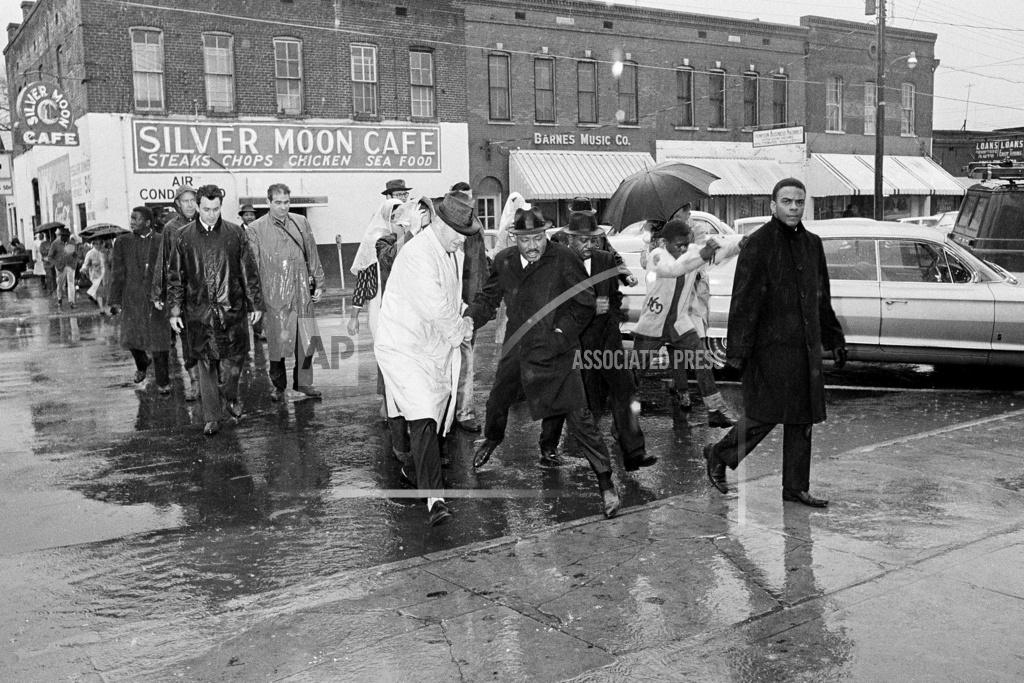
At Selma, the Dallas County Board of Registrars opened a second office and provided extra tables and chairs to speed registration. By the end of the day, 266 persons, most of them Blacks, had completed the application for registration. It will be some time before they know how many passed the test and went on the voter rolls, but the completion of 266 applications is a record for one day in Selma. Not more than 120 had been processed on any previous day. Shortly before noon, about 300 Blacks left the Browns Chapel Methodist Church, where they had heard Dr. King speak, and walked eight blocks through a drenching, chilling rain to the courthouse to try to register. A few dozen whites and Blacks already had gone through the registration process. The 300 arrived and found Sheriff Clark and about 15 deputies waiting at the courthouse door. The sheriff was in charge of calling out priority numbers, which had been assigned earlier, and shepherding the line to the registrar’s office. He allowed 20 or 30 persons to enter the courthouse, then closed the door.
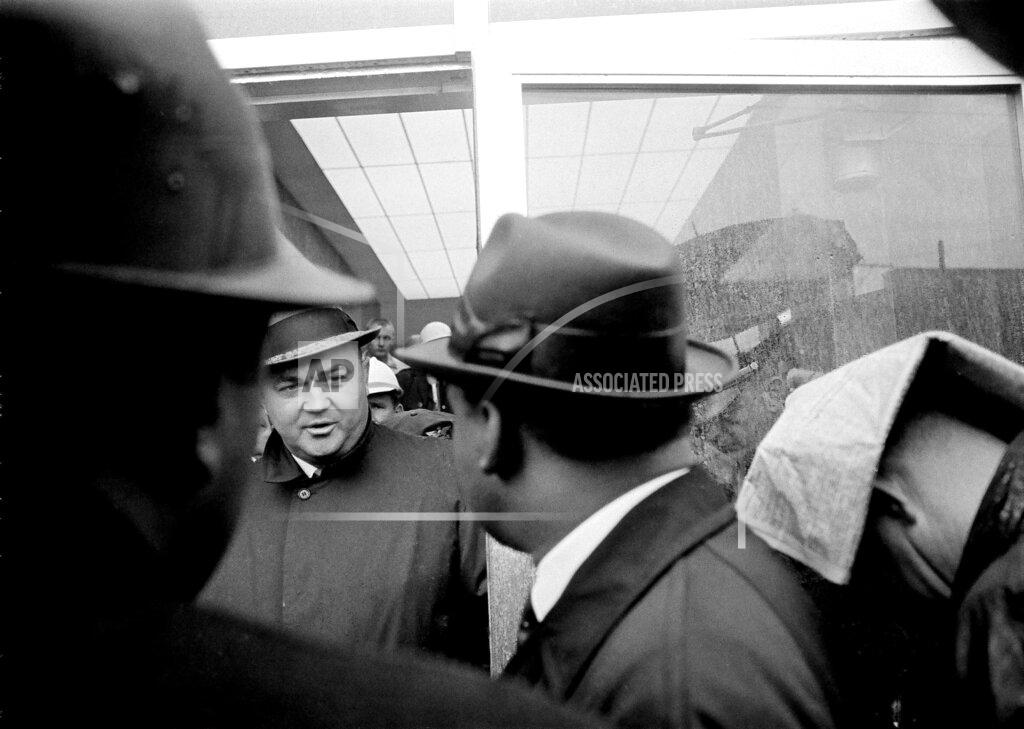
Dr. King, under the protection of a felt hat and a raincoat and flanked by half a dozen friends and aides, stepped up to the door, opened it a crack and spoke to the sheriff. “We’d like to request that the people waiting in line be permitted to wait inside where they would be out of the rain.” he said. The lines stretched through the rain more than a block and ended around a corner. Sheriff Clark, also wearing a felt hat and a raincoat, replied from the other side of the door: “There isn’t room in here. It would interfere with orderly procedures in the courthouse. According to the court injunction (the Federal Court order requiring a registration speed-up) you have to wait in line outside.” Dr. King said: “In the name of humanity. we are asking you to let them come inside.” The sheriff said: “In the name of common sense, they will have to stay out there until their numbers are called.”
Dr. King retreated. In a few minutes, the sheriff walked out and began calling a new group of priority numbers. He reeled them off rapidly and although he spoke in a loud voice, the numbers could be heard only a short distance away. If a person missed hearing his number, he was told to come back on the next registration days, two weeks hence. As the crowd grew increasingly wet and indignant, Dr. King and his advisers decided to turn their back on the sheriff and lead the applicants back to the church. Most of the applicants turned and left with Dr. King.
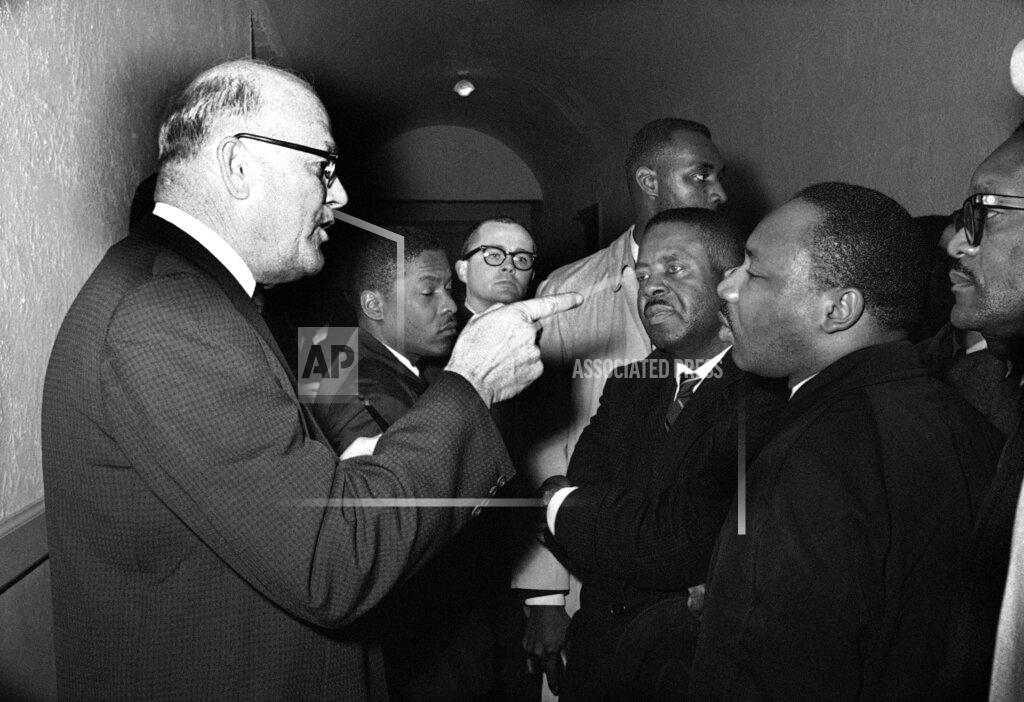
Later today, outside the registrar’s office in Hayneville, Dr. King was confronted by a tall and bald man with white sideburns. During a 20-minute debate with Dr. King and other Black leaders, he refused to give his name, but it was learned that he was Carl Gohlson, a member of the board. Mr. Gohlson said for the first time in his memory Blacks had applied this morning to register. But they had gone and he would not say whether they were successful. “We are going to get Blacks registered and it is not going to be too long.” Dr. King said. “We were wondering if you! could help us with some information.”
“None of you can help the Blacks of Lowndes County,” Mr. Gohlson said. “They have come to us for help.” Dr. King said. “We don’t want to see any violence here. We had heard that if we work here there would be violence.” “I heard there would be violence too.” Mr. Gohlson said. “and you can agitate that. Everywhere you have been there has been violence.” Mr. Gohlson announced that the office was closed and walked off.
Roy Wilkins, executive director of the National Association for the Advancement of Colored People, said today that civil rights leaders would insist on a new voting-rights law this year. His remarks brought a rebuke from Senator Howard W. Cannon. Democrat of Nevada, testifying as chairman of the Leadership Conference on Civil Rights. Mr. Wilkins said: “We expect, and we shall insist, upon a Federal law creating Federal registrars at this session.” After Mr. Wilkins spoke before a Senate Rules subcommittee that is considering an easing of the filibuster rule, Mr. Cannon remarked: “Your language is very unfortunate. You may expect and you may insist, but it is up to Congress to decide, regardless of what you insist or what you expect.”
Mrs. Betty Shabazz, widow of Malcolm X, met yesterday with detectives investigating the militant black nationalist leader. The meeting was at an unannounced place away from any police office, according to her lawyer, Oliver Sutton.
Representative Melvin R. Laird of Wisconsin, one of the most powerful Republican members of the House, denounced the Johnson Administration today for seeking “one party government” and the subjugation of Congress. Mr. Laird issued a clear call for a new coalition of anti-Johnson elements in both parties. Republicans, he said, would speak “for all who reject the federal extremism of this Administration; for all who seek greater roles for the individual, his town, his state, and his region.” The address was the strongest Republican assault on President Johnson since the Presidential campaign. Mr. Laird even attacked the President’s policy in South Vietnam, despite official expressions of support made previously by the Republican leadership.
The United States Supreme Court left standing today an appeals court decision holding, in effect, that de facto school segregation did not violate the Constitution. The case involved the ruling last fall by the United States Court of Appeals for the 10th Circuit at Denver in a case involving the Kansas City, Kansas school system. The appeals court had said. that while the Constitution prohibits the segregation of pupils by race, it does not command integration of the races in the public schools. “Negro children have no constitutional right to have white children attend school with them,” the appeals court had declared.
The case had been initiated by a group of Black parents who contended that the Kansas City School Board had “engaged in policies and activities which have increased and entrenched racial segregation.” The parents had contended that “these acts, rather than the board’s pronouncements, should determine the question of intent and good faith.” The situation in Kansas City is like that in many American cities. School district lines, drawn to control the number of pupils enrolled in various schools, have the effect of making some schools predominantly Black and others predominantly white. In New York on February 18, Judge J. Skelly Wright of the United States Court of Appeals for the District of Columbia predicted that the Supreme Court would eventually hold that de facto school segregation was unconstitutional.
The United States Supreme Court rendered its opinion in Freedman v. Maryland, unanimously striking down a Maryland censorship law that had given the state censor the authority to ban the showing of a film and putting the burden on the film exhibitor to file a lawsuit in order to appeal. Under the new rule, it would become the burden of the censor to prove that a film content was not protected by the U.S. Constitution, and the censor would now have the burden of filing for an injunction against the showing of a film. The guidelines of the ruling would apply to all state censorship laws.
A 36-year-old San Diego housewife, defying Marine Corps efforts to remove her from Okinawa, charged today that the Third Marine Division had pressured United States officials in Naha to persuade immigration authorities to send her home.
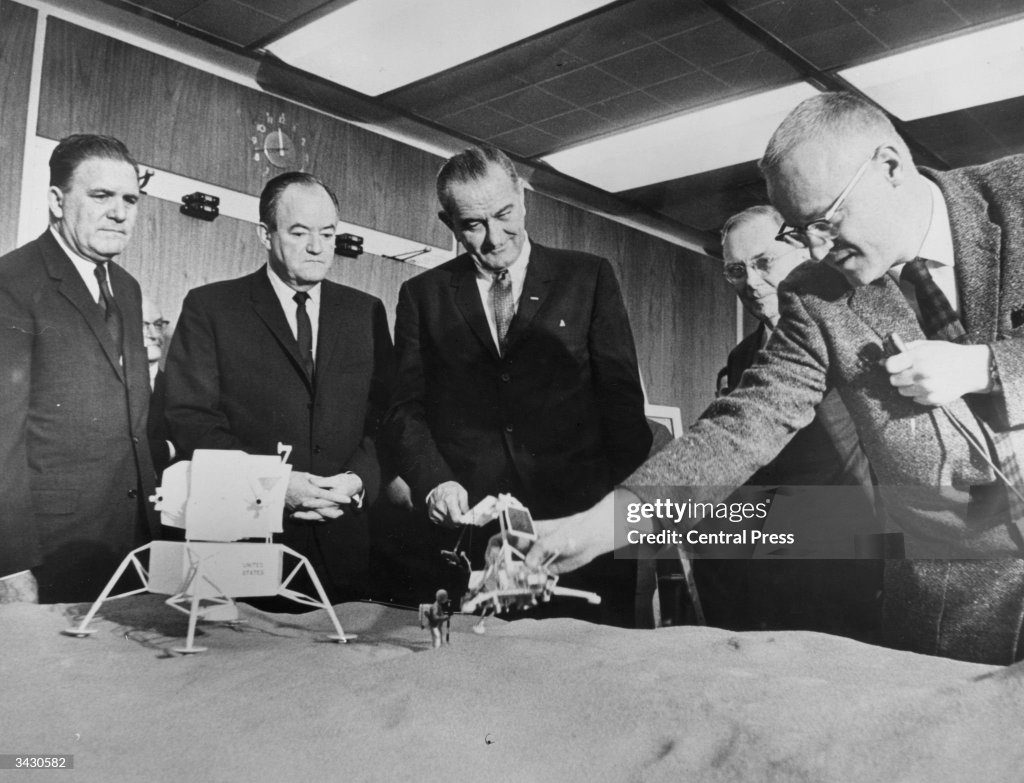
On March 1 and 2, Office of Manned Space Flight held the Gemini crewed space flight design certification review in Washington, D.C.. Chief executives of all major Gemini contractors certified the readiness of their products for human spaceflight. Gemini 3 was ready for launch as soon as the planned test and checkout procedures at Cape Kennedy were completed.
The U.S. made its first underground silo launch of the new Minuteman intercontinental ballistic missile. The test took place at Ellsworth Air Force Base near Rapid City, South Dakota.
Bruce McLaren won the 100-mile (160 km) 1965 Australian Grand Prix, held at the Longford Circuit at Launceston, Tasmania, but the race was marred by a crash that killed driver Rocky Tresise and a cameraman, Robin Babera.
Olympic triple gold medal-winning swimming champion and 1964 Australian of the Year Dawn Fraser was banned from competition for ten years by the Australian Amateur Swimming Union, in apparent disapproval of her partying lifestyle and for her behavior during the 1964 Summer Olympics.
As Pittsburgh’s training camp opens, Roberto Clemente is absent and suffering from malaria. He will report to camp a month late and struggle until mid-May.
Dow Jones Industrial Average: 899.76 (-3.72)
Born:
Booker T [as Robert Brooker Tio Huffman], American professional wrestling champion and promoter, in Plain Dealing, Bossier, Louisiana.
Mike Dean, American record producer, audio engineer and multi-instrumentalist; in Houston, Texas.
Stewart Elliott, Canadian-born American thoroughbred racing jockey (2004 Kentucky Derby & Preakness on Smarty Jones); in Toronto, Ontario, Canada.
Les Miller, NFL nose tackle and defensive end (San Diego Chargers, New Orleans Saints, Carolina Panthers), in Arkansas City, Kansas.
Alfredo Roberts, NFL tight end (Kansas City Chiefs, Dallas Cowboys), in Fort Lauderdale, Florida.
Sheldon White, NFL cornerback (New York Giants, Detroit Lions, Cincinnati Bengals), in Dayton, Ohio.
 History Diaries