The army of North Vietnam, led by General Văn Tiến Dũng, began an attack on the Central Highlands of South Vietnam, starting at Pleiku, before moving on to Ban Mê Thuột.
Six members of the congressional delegation touring Indochina spent less than eight hours in Cambodia and during much of that time were traveling in heavily guarded motorcades or surrounded by television cameras. When the legislators left, they gave no indication that anything they had seen or heard changed their opinions on President Ford’s request for an additional $222 million in military aid. One of the Representatives on the trip, Bella S. Abzug, Democrat of New York, an outspoken critic of further military aid, said on leaving Cambodia that she had an open mind “but I also have an attitude that I am reinforcing by facts.”
“You fear Communism, don’t you?” Representative William V. Chappell Jr., a Florida Democrat who appears to support military aid, asked an elderly refugee woman awed by the group that had surrounded her. “Yes, sir,” she replied through an interpreter, giving the expected answer. President Ford said four days ago that unless the additional money was granted the Cambodian Army would run out of ammunition “in less than a month” and “will be forced to surrender to the insurgents.” The President organized this delegation — with much difficulty and many defections from the original 20‐member list — as a last ditch effort to gain approval from a reluctant Congress for the extra $222‐million for Cambodia as well as for the additional $300‐million he has asked for South Vietnam.
Several members of Congress who were scheduled to come backed out at the last minute, saying that the trip served no useful purpose. Only eight finally flew to Indochina this week, spending most of their time in South Vietnam. Six of them, five Representatives and a Senator, came to Phnom Penh today, the two others staying in Saigon. One Representative, Paul N. McCloskey Jr., Republican of California, complained strongly about finding no sense of urgency or crisis on the part of Cambodians or their government, pointing to the large number of apparently healthy young men of military age on the streets who had been exempted from the draft. However, some officials at the American Embassy and other foreign diplomats here commented on the delegation’s spending less than a day here to gather information.
Because the delegation spent so short a time here the members had no chance to get very close to battle fronts or to see the real devastation in the countryside. Occasionally there was a black spiral of smoke in the distance from bombing or shelling, but in general the legislators, who exhibited no familiarity with the nature of the war here, received a misleadingly quiet impression of the military situation. “The only indication that this town is going to fall,” Mr. McCloskey said to newsmen, “comes from our own Secretary of Defense.” This was a reference to remarks made by Secretary James R. Schlesinger similar to the predictions of collapse made by President Ford.
[Ed: Your observation, Mr. McCloskey, will very quickly age like warm milk.]
The members of Congress did get to hear some battle noises when they visited military bases some distance from the fighting. Troop commanders periodically fired their artillery pieces for show — in an effort to impress the visitors with the drama and immediacy of the war. Each round fired from the 105‐mm. howitzers cost $43.83 and each one fired from a 155‐mm. howitzer cost $102.35. Wherever the legislators went today — to military command posts, refugee camps, the presidential palace, the United. States Embassy — they were continuously surrounded by newsmen recording their remarks in notebooks and on film. Sometimes they asked for privacy, and the press corps withdrew briefly, but mostly they seemed to enjoy the attention. Others in the group also seemed to be enjoying themselves, such as an important civilian official from the Pentagon who wore his tailored combat camouflage uniform and steel helmet throughout the day — although he did take the helmet off for the high‐level lunch at Government House.
The peasants, refugees and soldiers whom the delegation descended upon almost always gave the answers they thought were expected of them, because they traditionally regard Westerners as the ruling class and also because Cambodian Government officials and security guards were always hovering around when the questions were asked. All the members of Congress said they would vote for additional economic aid to relieve hunger and other suffering here. The split was on military aid, with the critics saying it might only prolong the war and the suffering.
For part of the day, the legislators‐who flew back to Saigon in late afternoon — broke up into groups of two. The only solidly hawkish team was Mr. Chappell and Representative John P. Murtha, Democrat of Pennsylvania, a former Marine colonel twice wounded in Vietnam. Dressed in sports shirts and green army trousers, they drove down to see some troops on Route 1 southeast of Phnom Penh. With the local commanding general standing alongside listening to all the answers, Mr. Murtha, a tall and solidly built man, spoke to a small soldier who had no shoes and whose knees were poking through gaping holes in his uniform. “Do you like it in the army,” he asked. “Yes, sir,” the soldier replied, corning to attention. “Are you getting enough food?” the Representative continued. “Yes, sir,” the boy said. “Do you think you can hold out until the rainy season?” “Yes, sir,” came the answer again. “Spoken like a good soldier” Mr. Murtha boomed. “Nice to see you.”
President Lon Nol of Cambodia, whose government is threatened by Communist-led insurgents, reaffirmed he would be willing to step aside if he is a barrier to a peace settlement. American Embassy sources said they saw nothing new in the remark, made to members of a visiting congressional delegation. They said the remark was not a hint that Lon Nol was about to step aside. The remarks of the 61‐year‐old Cambodian leader were made extemporaneously yesterday morning to a delegation of five Representatives and a Senator who visited Cambodia for a few hours yesterday on a trip related to President Ford’s request for an additional $222‐million in immediate military aid for Cambodia.
Lon Nol spoke in Khmer, the Cambodian language, which was translated into English on the spot by a Cambodian official, and this translation was taken down by an American Embassy secretary and later given to the Congressmen on their departure from Phnom Penh. It was Senator Dewey Bartlett, Republican of Oklahoma, who intends to vote for military aid, who apparently brought it to the attention of the newsmen on the plane returning to Saigon and also to other newsmen after arriving in the South Vietnamese capital. The Congressional delegation is on a fact‐finding tour to assess President Ford’s request for $222‐million in supplemental military aid for Cambodia and $300‐million for South Vietnam.
A confused feeling of bafflement rules in this isolated, half‐decayed, half‐dynamic city as 1.6 million voters prepare to elect a Mayor tomorrow—with the main opposition candidate somewhere in the hands of radical leftist kidnappers. Tonight the kidnappers of Peter Lorenz, the 52‐year‐old Christian Democratic candidate, sent a letter to city authorities setting an ultimatum expiring at 9 A.M. Monday. By then Mr. Lorenz, who was abducted Thursday, could conceivably be Mayor‐elect. The abductors, who call themselves the “June 2 Movement,” demanded that six jailed leftists be freed and flown out of West Berlin, together with former Mayor Heinrich Albertz. A West Berlin spokesman said the three Western allies — France, Britain, and the United States — had agreed to make a plane available but only for the flight to an airport in West Germany.
President Fahri Koruturk today asked the caretaker Premier, Sadi Irmak, to form a new coalition government to end Turkey’s five‐month‐old political deadlock. “We are not living through times when parties can afford to remain disunited on the excuse of having different viewpoints,” Mr. Koruturk said in radio and television address. A key issue is how to work out a settlement on Cyprus, where a Turkish invasion force occupies 40 percent of the island nation. Turkey has been run by caretaker governments since the resignation of former Premier Bulent Ecevit last September 18. Mr. Irmak, 71 years old, a professor of medicine and an independent Senator, became premier last November and put together a government of independent parliamentarians and administrators. It failed to win a vote of confidence from the Parliament, however, and has operated on a caretaker basis.
London’s coroner said that at least 37 persons perished in the worst disaster in the 112-year history of the city’s subway system. Coroner David Paul said others were still crushed in the debris. He added that rescuers “working at risk to their lives” may take until Wednesday to reach the last corpse. Rescuers told newsmen they feared the death toll could climb to 50. Officials said the cause of the wreck was still unknown. The crowded train piled into a brick wall of a dead-end tunnel Friday.
Women employees of the U.N. Secretariat petitioned for the appointment of a “qualified and independent ombudswoman” to end discrimination against women in the world organization. The petition also proposed day-care centers for children of women employees.
Dissident Yugoslav writer Mihajlo Mihajlov was convicted in Novi Sad of spreading hostile propaganda against the country and was sentenced to seven years in prison. A five-man tribunal also banned Mihajlov from publishing his works for four years after serving his term. It was the fourth conviction in 10 years for the outspoken foe of President Tito’s one-party system.
U.S. and British authorities said that American U-2 spy planes were monitoring the movements of Arab and Israeli forces to help preserve the Middle East peace. The planes are based at airfields on Britain’s bases on Cyprus, they said. “The reconnaissance operations have been going on for several months with the agreement of the governments of Cyprus, Egypt, Syria, and Israel,” one authorized British source said.
West Germany has assured the Israeli Foreign Minister, Yigal Allon, who has just visited Bonn, of its continued diplomatic and economic support for Israel.
An Iraqi Airways airliner was hijacked by three Kurdish gunmen, shortly after taking off from Mosul to Baghdad with 93 people on board. The hijackers (Ahmad Hasan, Taha Naimi and Faud al-Qeitan) demanded that 85 Kurdish political prisoners be released, that they receive five million dollars, and that they be flown to Iran. After the plane made a forced landing in Tehran on a blocked runway, a gunbattle ensued between Iraqi security guards onboard and the gunmen. One passenger was killed and ten others wounded, including Hasan, who later died of his wounds. The shooting came five hours after the hijacking of the Iraqi jet on a domestic flight. Taimi and al-Qeitan were executed a month later by a firing squad in Iran.
The Persian Gulf emirate of Abu Dhabi, pressed to meet aid promises to poor countries, said it was lowering oil prices about 55 cents a barrel to get oil companies to increase production. The reduction in the $11.20 barrel price was the first such by a country belonging to the Organization of Petroleum Exporting Countries in the past 18 months. An OPEC meeting in Vienna authorized the cutback last week.
The Indian Government, in its struggle to maintain a supply of reasonably priced food, has spent $400‐million to subsidize the price of imported grains during the current fiscal year, and plans to spend a similar sum in the year beginning in April. The finance minister, Chidambaram Subramaniam, who presented a $13‐billion dollar budget in Pariament for the fiscal year 1975–76 yesterday said India had imported five and a half million tons of grains this year at high prices. He indicated that substantial imports would have to be made next year. From now on, the national priorities for spending on development are food and energy, he said, announcing that he had allocated maximum funds for deveopment of agriculture and power generation.
The South Korean government prohibited political activities of government critics, including a former president, in anticipation of an anti-government campaign. South Koreans today commemorated the 56th anniversary of their resistance to the Japanese colonial rule, but last night and early this morning scores of plainclothes men sealed off the houses of leading opposition figures here in anticipation of an opposition demonstration.
The biggest group of Western tourists to enter China has visited factories, schools and communes around the southern city of Canton, according to reports reaching here today. The 535 tourists, among them the British industrialist and former lord mayor of London, Sir Denys Lowson, are on a three‐month world cruise aboard the 65,800‐ton Cunard liner Queen Elizabeth 2. They arrived in Canton yesterday by train from Hong Kong. The group also includes tourists from the United States, France, West Germany, Switzerland and Japan. They return to Hong Kong tomorrow to rejoin the liner’s other 900 passengers before resuming the three‐month 38,564‐mile cruise that began in Britain in January.
Before his full cabinet and the top leadership of the Philippine armed forces, President Ferdinand E. Marcos set forth a foreign‐policy program today that includes a personal visit to Peking later this year to establish full diplomatic ties betweeen the two countries. Under the program, Mr. Marcos will also move closer to the Soviet Union and other communist‐bloc countries, as well as Middle Eastern nations to whom the Philippines will be sending ambassadors for the first time. Mr. Marcos also directed Foreign Secretary Carlos P. Romulo to try to wind up negotiations with the United States on trade and military agreements. The military pacts govern the operation of two large United States military bases here and cover mutual defense commitments. Projected minor revisions in these agreements have been awaiting action for some time. The trade treaty, which dates back to the days when the Philippines was a colony of the United States, lapsed in 1974. Talks on a replacement broke off temporarily while the United, States awaited passage of the trade reform act. President Marcos has now urged action to revive these talks.
Secretary of State Kissinger said that the United States was “prepared to move in a new direction” in relations with Cuba, ending 14 years of boycott, provided that a majority of Latin-American countries agreed. He said that a decision by the United States depended on repeal of sanctions against Cuba by the 23-nation Organization of American States — which could take place in May — and Cuba’s readiness to develop “a new relationship” with the United States. He made the statement on Cuba in a speech before the combined Service Club in Houston.
The President of Brazil, General Ernesto Geisel, announced today that his Government could now concentrate on economic, social and political development because security forces had brought internal terrorism under control.
Officials at the United States Embassy in Buenos Aires believe that the killing of a United States consular agent, John Egan, may be the first in a new wave of kidnappings and assassination attempts against American officials in Argentina. Mr. Egan, 62 years old, who was employed in Cordoba, was found shot to death Friday night two days after he had been kidnapped by leftist Peronist guerrillas. “We have had the most disturbing reports in the last four or five days than any time since I have been here,” said an embassy official who arrived in Argentina last year.
The youngest of the late Che Guevara’s four brothers was arrested in Rosario, Argentina, after a gun battle with police. Officers said they trapped Juan Martin Guevara, 31, and his 25-year-old companion, Liliana Beguan, in a house and that the pair opened fire on them. Both, after their capture, reportedly admitted membership in the People’s Revolutionary Army, a leftist guerrilla group.
Two foreign journalists in Addis Ababa were recently asked how they could report the Ethiopian civil war being fought more than 450 miles away in Eritrea Province since the Government has refused to allow them to travel to the war zone and has declined to issue communiqués on the fighting. “With great difficulty,” answered one. “With great enterprise,” said the other. Rebel guerrillas appear to have the upper hand in the Eritrean independence struggle, says a correspondent of the Chicago Tribune who went behind rebel lines.
Kenya has taken over a rich ruby mine discovered by two Americans who were later deported, Stanley Oliotiptip, natural resources minister, reported in Nairobi. He said the Americans, John M. Saul, 37, of New York, and his partner, known only as Elliot Miller, no longer have a claim to the mine they discovered in 1963 and would be paid no compensation because they are foreigners.
The Department of Agriculture reported that errors in certification by state agencies gave numerous food stamp recipients 23.2 percent more assistance than they were entitled to in the first half of 1974, and it seems that the errors cost the government about $160 million. The department issued its report as another agency, the General Accounting Office, the investigative arm of Congress, completed a study critical of both the structure and the administration of the food stamp program.
The Equal Rights Amendment is scheduled to be voted in the Illinois Senate Tuesday, and its advocates believe the vote will mark the end of a recent series of defeats for the proposed addition to the Constitution. Opponents believe the Illinois vote will be “very close.” The amendment, which would ban any form of discrimination based on sex by the federal, state and local governments, needs approval by 38 states to become the 27th Amendment. So far, 34 states have ratified it, but two have rescinded their ratification, a step of questionable legality.
Congress would try to override President Ford’s expected veto of a bill delaying his oil import fees even if Mr. Ford offered a compromise, Senate Majority Leader Mike Mansfield said. Mansfield said that overriding would be difficult, especially if Mr. Ford agreed to defer imposition of the two remaining stages of the fees. In any case, he said, the vote to override would be very close, probably succeeding in the House but “very doubtful” in the Senate.
President Ford signed today two bills to provide financial aid for the nation’s ailing railroads. One provides an additional $347‐million in authorizations for grants and loan guarantees to lines in the Northeast and Midwest, including the Penn Central. It authorizes operating funds for the Penn Central and other railroads to continue transportation services until the transfer of railroad properties in January, 1976, to Conrail, a new nonprofit Government corporation set up under the Regional Rail Reorganization Act of 1975 to plan for a new rail system for the Northeast and Midwest. Also signed by the President was an urgent supplemental appropriation providing new budget authority for the fiscal year 1975 of $143.1‐million for additional emergency railroad aid and to provide additional facilities for the House of Representatives.
The federal government would pay coastal states for oil found off their shores under a policy change recommended to President Ford by the Department of the Interior. At present, the billions of dollars paid by all companies go into the U.S. Treasury for the use of all 50 states. US officials see the payments as a way to overcome opposition by governors of coastal states to drilling for oil off their shores.
The Department of the Interior said this week that proposed development of ocean oil off Southern California would result each year in accidental spillage that would be four times greater than the oil that was released in the well blowout in Santa Barbara in 1969.
Citing the burden of his official duties and the possibility of a conflict of interest, Vice President Rockefeller resigned as chairman of the National Commission on Critical Choices for Americans, which he established in 1973 to study long-range problems facing the nation. He and his brother Laurance contributed about $2 million in support of the commission, which some observers believed Rockefeller was using as a springboard for a 1976 presidential drive. The Vice President snapped at reporters in New York who asked him about a possible role in the 1976 and 1980 presidential races, saying that “constant harping on the subject was a disservice to the public. He earlier had denied reports that he had told newsmen he would not be a presidential candidate sometime in the future.
William E. Colby, director of Central Intelligence, whose agency is under investigation by two Congressional committees and a Presidential commission, said today that the C.I.A. “will come through it” and he had no intention of resigning.
Sixty-two persons were arrested today when they refused to leave the White House grounds during a protest against United States policies in Indochina and what they called President Ford’s “shamnesty program.”
Fifteen percent of the nation’s working people fear they may lose their jobs in the next year, the Gallup Poll reports.
The factory of the Sponge Rubber Products Company, located in Shelton, Connecticut, was destroyed by a bomb planted by the Weather Underground terrorist group. The three security guards at the plant were overpowered and kidnapped by three masked men, who detonated the bombs, and freed the men later. Although nobody was hurt, the destruction caused the loss of 1,100 jobs.
The Carillon Hotel in Miami Beach, one of the resort city’s larger hotels, will be closed for at least a month during the heaviest tourist season in years because of a small but smoky fire. About 1,600 guests, mostly elderly vacationers from the Northeast, were evacuated from the 17-story, 820-room hotel Friday night after a fire broke out in an electrical control room on the main floor. The building was plunged into darkness and acrid smoke poured into every room through air ducts. No injuries were reported but several dozen persons were treated for smoke inhalation.
After three inmate disorders within 24 hours, and the apparently unrelated slaying of one prisoner, calm returned to the Adult Correctional Institution at Cranston, Rhode Island. Peter Lombardi, 48, an ex-policeman sentenced last week to a two-year term for selling heroin, was stabbed to death in the prison’s maximum security section. The disorders at the prison apparently were related to delays in initiating reforms, with Democratic Governor Philip W. Noel coming under fire for what GOP state Rep. A. G. Garabedian charged was a “hard guy, lock-’em-up and throw-away-the-key approach.”
Watergate burglar James W. McCord Jr. was granted three extra weeks of freedom in which to press his contention that former Attorney General John N. Mitchell had meddled in his trial. U.S. District Judge George L. Hart Jr. approved McCord’s request for extra time to seek a hearing on his assertion that he had been denied a fair trial.
A decision has been affirmed holding two Connecticut women in contempt and ordering them to jail for their refusal to answer grand-jury questions about two fugitives being sought in a 1970 Boston bank robbery and murder case.
A blue-ribbon California commission is expected soon to urge sweeping reforms in secondary schooling that would make educational progress depend on the student’s “demonstrated competence” rather than on time in the class and would broaden the learning opportunities for teen-agers “beyond the dull, rigid and often ineffectual confines of tradition or a building.”
The Covenant of the Goddess was founded in Oakland, California, by 40 witches from 15 Wicca covens.
The popularity of CB radio in the United States was fueled by a decision of the Federal Communications Commission to lower the cost of the required citizens band radio license from twenty dollars to four dollars.
Color television broadcasting was officially introduced in Australia, where black and white TV had started in 1956. ATV (Australia) used the slogan “First in Color” while the Nine Network described its new programming as “Living Color.”
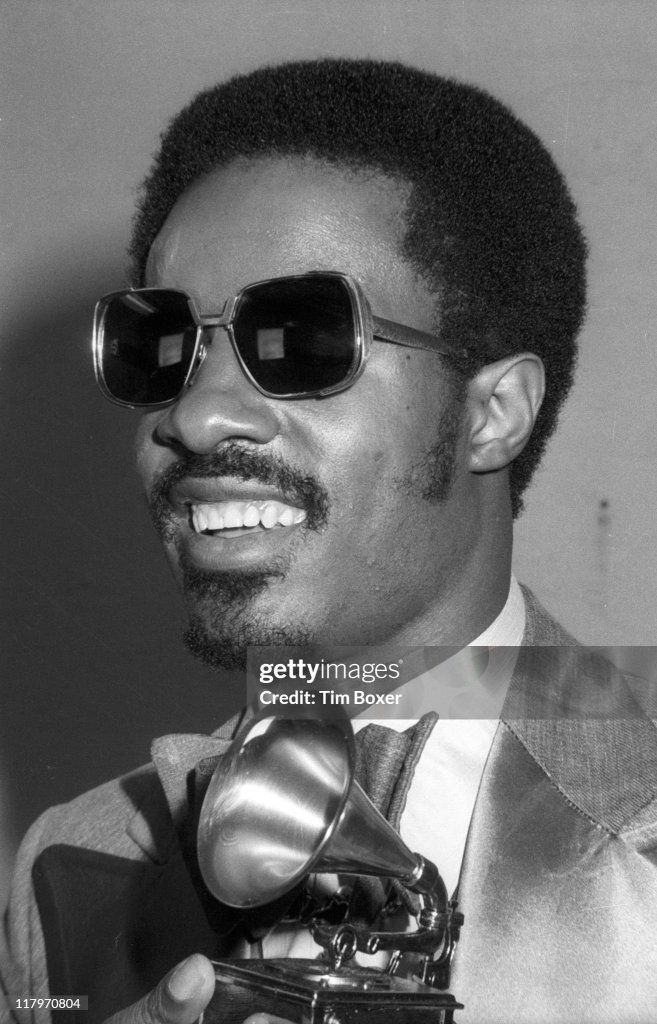
17th Grammy Awards: “I Honestly Love You”, and Marvin Hamlisch win.
Eagles’ “Best of My Love” reaches #1.
Five Nations Rugby Championship match between Scotland and Wales at Murrayfield Stadium in Edinburgh attracts a world record attendance of 104,000; Scots win 12-10.
Aston Villa won the Football League Cup at Wembley, beating Norwich City 1–0 in the final.
Born:
Tate Stevens [Stephen “Tater” Eatinger], American country music artist (“Power of a Love Song”), in Belton, Missouri.
Tara Blaise, British-born Irish female pop, folk, and rock singer (“Paperback Cliché”), in London, England, United Kingdom.
Jeff Lank, Canadian NHL defenseman (Philadelphia Flyers), in Indian Head, Saskatchewan, Canada.
Died:
Clarence Ray Carpenter, 69, American primatologist.



 History Diaries