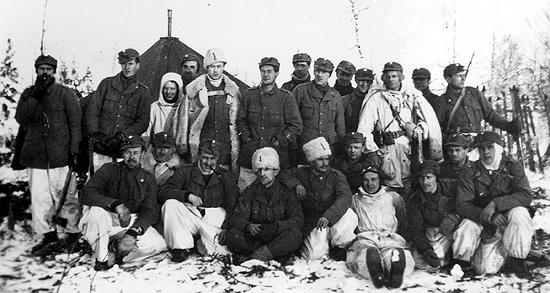
The Soviet Union launches a massive general offensive in Finland. Timoshenko’s Northwestern Front resumes offensive on the Karelian Isthmus against the (final) Finnish T Line.
The Finns retire in the Viipuri area. The Finnish troops on the Karelian Isthmus withdraw from Pulliniemi and Lihaniemi. The Finns are retreating in the Viipuri sector of the Karelian Isthmus, but in some places, they still retain the stronger hand. The Soviet plan drawn up by Semyon Timoshenko focuses the entire military might of the Soviet Union on the Karelian Isthmus, which is the pathway to the heart of Finland. While this strategy is succeeding, the Soviets have all but abandoned their troops in other sectors, which are on their own and, for the most part, not doing well.
During the course of the day Finnish troops beat back three Soviet attacks on the Taipale strongholds.
Farther north, near Salla, the Finns also are successfully keeping the Soviets at bay.
At 0045 hours, Soviet High Command permits 34th Tank Brigade to retreat from East Lemetti Motti. The Finns allow about 2,750 Soviet troops including sick and wounded to escape on foot — about 1,000 make the Red Army lines to the South (250 die en route), but all 1,500 men moving East are hunted down and annihilated by Finns on skis. Finnish attacks continue overnight on the motti, which is notable for the large number of Soviet tanks (105, many of which are dug in as fixed artillery), 200 trucks and field cars.
Further North, Swedish Volunteer Corps (Svenska Frivilligkåren) takes over front line duty at Märkäjärvi in Salla. Although officially non-belligerent, 8,402 Swedes, 1,010 Danes and 895 Norwegians volunteer go to Finland. They will lose 28 dead, 50 wounded and 140 invalids with frostbite. This is freeing Finnish troops for duty where they are needed in the south.
The Defence Union of Finland, Lotta Svärd (the women’s voluntary defence organization) and the Central Organisation of Social Democratic Women decide to organize a joint collection of gold rings and other valuables to buy fighter aircraft for the Finnish Air Force.
Oy Karl Fazer Ab buys Frans Emil Sillanpää’s Nobel Gold Medal, donated by the author to raise money for Finland’s defence. The Finnish confectioners pay 100,000 marks for the medal, which they then return to the author.
Foreign Minister Tanner returns from Stockholm. He says Finland has no choice but to accept the Soviet Union’s peace terms.
A majority of the Finnish Government are inclined to agree, but nevertheless want first to hear the views of the Commander-in-Chief.
The Finnish Council of State convenes to discuss Soviet demands for ending the war, which include major territorial concessions in the Karelian Isthmus, a base at Hango, and the return to Finland of the port of Petsamo.
Allies again promise to send troops to Finland and urge Finland to legitimize their actions with a formal appeal for assistance. The Western Allies promise to send Finland 10,000 troops in April. That is too little, far too late.
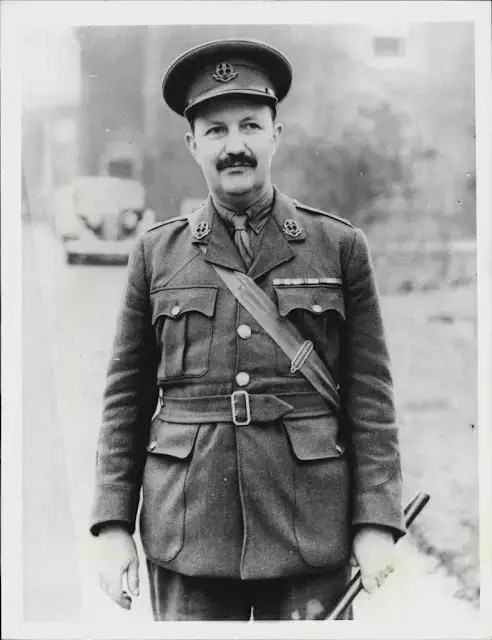
Second Lieutenant Kermit Roosevelt of the Middlesex Regiment is appointed on this day to command British volunteers in Finland. Roosevelt, the second son of President Theodore Roosevelt, is a protege of Winston Churchill. Roosevelt is prepared to resign his commission in the British Army to lead the group but does not do so yet.
The Allies continue with their plan to send troops to Finland via the Narvik railway that passes through Norway and Sweden. Once again, they ask the Finns to request the right of passage from their Scandinavian brothers. There is no sign that such permission, which has been rejected repeatedly, is forthcoming.
France’s diplomatic representative in Helsinki, Monsieur Magny urges Finland to make a formal appeal for assistance.
The U.S. House of Representatives voted to help Finland to the extent of a $20,000,000 loan for non-military purchases in the United States but shied away, emphatically, from taking a record vote on the question.
The Nazi propaganda minister, Dr. Goebbels, tells neutral countries to “curb their public opinion” and warns Sweden against aiding Finland. Propaganda Minister Dr. Joseph Goebbels gave nonbelligerents another lecture on neutrality tonight, declaring that “even in neutral States the precepts of freedom of opinion may not be misused knowingly and systematically to insult the warring powers.”
Germany’s press department chief, Dr. Otto Dietrich, told a group of editors at Wiesbaden today that readers of the controlled German press are the best informed in the world.
Undersecretary of state Sumner Welles left Rome early today for Zurich, Switzerland, en route to Germany to meet with Adolf Hitler and German Foreign Minister von Ribbentrop on his fact-finding tour or Europe as President Roosevelt’s personal emissary.
The German Reich offers to guarantee Rumanian borders for additional oil and wheat. Authoritative quarters said today that Germany had offered a guarantee Rumania’s borders in return for huge increases in oil, wheat and other raw material shipments to the Reich.
Germany closes factories unnecessary for the war effort.
British divers from HMS Tedworth have recovered various items from the conning tower of U-boat U-33. Previously, the British had recovered three Enigma rotors from one of the U-boat’s men who had been instructed to throw them overboard but hadn’t. The U-boat, caught minelaying off Scotland, scuttled herself after being forced to the surface by depth charges from the sloop HMS Gleaner, which marked the spot and sent for the divers. The rotors have been rushed to Bletchley Park in Buckinghamshire where code-breaking scientists are working furiously to solve the secrets of Enigma. The rotors could help break the vital U-boat code.
Prime Minister Neville Chamberlain gave a speech to Chairmen of the County War Agricultural Executive Committees.
Winston Churchill presented a report on the sea war.
Budapest police, said to have been forced to act as a result of German pressure, today laid a virtual siege around the French Legation here, where forty Czecho-Slovak refugees were harbored with new French passports.
The British government limits the acquisition of Arab land by Jews in Palestine. The Land Transfers Regulations were published, dividing Mandatory Palestine into zones of varying land restrictions. The regulations restricted the registry of land by Jews.
The first auxiliary force of 700 Palestine residents, both Arabs and Jews, who enrolled in a military labor corps arrives in France under command of English officers. Their past differences forgotten in a common effort, a force of 700 Palestinian soldiers, about three-fourths of them Jews and the rest Arabs, arrived today to join the British Expeditionary Force.
Four German airmen, the crew of the Heinkel bomber shot down off the Scottish coast the previous day were picked up by a trawler & landed at a port on the east coast of Scotland. One of them, a photographer, was suffering from gunshot wounds in the mouth. The trawler was fishing when the crew saw two British fighters attack the Heinkel, which was shot down in flames. The trawler made for the spot, where the Germans were found up to their knees in water in a collapsible rubber boat. The rescued men appeared overjoyed and shook hands with the trawler’s crew over and over again. One of them declared that war was “no good,” and that there was only one man in Germany who was allowed to open his mouth. During the journey back to port the skipper discovered that one of the Germans had voluntarily picked up a shovel and was cheerfully assisting the stoker.
The RAF performs extensive reconnaissance over the Berlin/Hannover sector in north Germany, including naval bases at Kiel and Cuxhaven. Paris claims to have shot down two Luftwaffe planes.
Kriegsmarine minelayers lay a defensive minefield off the Ems estuary.
Kriegsmarine also conducts minelaying operations along the British coast.
The Swedish coaster Stofoss sank in the North Sea off Craster, Northumberland.
The British passenger ship Ulster Queen ran aground off Ramsey, Isle of Man. All on board, including 88 passengers, were rescued. She was refloated on 27 March. Subsequently repaired and returned to service.
Convoy OA.100G departs Southend.
Convoy OB.100 departs Liverpool.
The War at Sea, Wednesday, 28 February 1940 (naval-history.net)
Submarine TRITON intercepted German steamer WANGONI (7848grt) at 2009 off Kristiansand, north of Hantsholm, but she escaped in the dark and reached Hamburg on 1 March.
Convoy HN.15 with eight British, twenty-nine Norwegian, one Swedish, two Finnish, two Danish ships departed Bergen escorted by destroyers COSSACK, DELIGHT, DIANA, SIKH, and NUBIAN. Anti-air craft cruiser CALCUTTA provided anti-aircraft protection. On 29 February, the convoy split into east and west coast sections; the eight ships of the west coast ships were escorted by destroyers KHARTOUM and SIKH and the east coast section by the convoy destroyers, joined by damaged destroyer IMPERIAL. CALCUTTA arrived at Sullom Voe on 1 March. After escorting the west coast section, destroyers KHARTOUM and SIKH proceeded to the Clyde, arriving on 1 March, for boiler cleaning and gun mounting repairs, respectively. The convoy arrived without event at Methil on 1 March.
Convoy ON.16 departed Methil with six British, nineteen Norwegian, eleven Swedish, two Danish, three Finnish, two Estonian ships escorted by destroyers ESCAPADE, ESCORT, and ENCOUNTER. Anti-submarine trawlers COVENTRY CITY (546grt) and LE TIGRE (516grt) escorting blockship CARRON (1017grt) when abreast of Pentland Skerries was detached from the convoy to Scapa Flow and arrived on 1 March. One other steamer was detached before the convoy crossed the North Sea. The convoy was joined by destroyers ELECTRA and ECLIPSE with six steamers from Kirkwall. (These six included in sailing numbers). Destroyer ELECTRA attacked a submarine contact south, southeast of Duncansby Head in 58-26N, 1-35W on the 29th. Destroyers GALLANT and GRIFFIN were sent to assist. Anti-aircraft cruiser CAIRO departed Sullom Voe on 1 March to provide anti-aircraft support. The convoy arrived at Bergen without further event on 2 March.
Destroyers KASHMIR and KINGSTON arrived at Greenock.
Armed merchant cruisers TRANSYLVANIA and WOLFE departed the Clyde on Northern Patrol.
Submarine STERLET departed Harwich on patrol.
Convoy FN.106 departed Southend escorted by sloop GRIMSBY and destroyers WOOLSTON and JUNO. The convoy arrived at the Tyne on 1 March.
Convoy FS.108 departed the Tyne, escorted by destroyer VIVIEN and sloop PELICAN. The convoy joined convoy FS.107 on the 29th and both arrived at Southend on 1 March.
Convoy MT.20 departed Methil, escorted by destroyer VIVIEN, sloop PELICAN, anti-submarine trawlers of the 3RD Anti-Submarine Group. The convoy arrived in the Tyne later that day.
Destroyer BEAGLE departed Dover at 1710 with the CIGS and arrived at Boulogne at 1840.
Destroyers KEITH and WAKEFUL searched unsuccessfully for a German submarine off St Govan Light Vessel.
21st Anti-Submarine Group, composed of anti-submarine trawlers LADY PHILOMENA, WOLVES, GRIMSBY TOWN, THURINGIA, and BLACKBURN ROVERS were withdrawn from Dover patrol to be fitted with anti-aircraft protection at Hartlepool.
German minelayers ROLAND and COBRA, escorted by minesweepers M.5 and M.7, laid 238 mines in an anti-submarine mine barrier off the Ems Estuary.
Convoy SL.22 departed Freetown escorted by armed merchant cruiser DUNVEGAN CASTLE until 11 March. The convoy merged with convoy SLF.22 on 11 March and both convoys arrived at Liverpool on 15 March.
Naval construction in the United States is well ahead of schedule, and this involves all categories from battleships to submarines, Secretary Edison stated today. The fact that the navy asked Congress to make immediately available $50,000,000 to finance construction in this fiscal year indicated, he said, the progress of the construction program. In dollars this shows the navy is ahead of schedule by that amount of money.
Mr. Edison also indicated that the navy will probably request the Senate to restore a large part of the $112,000,000 which the House Committee on Appropriations lopped off the Naval Fund bill as approved by the Budget Bureau and the President.He also confirmed reports that the navy is considering construction of battleships of more than 45,000 tonnage, but said that there is no immediate prospect that ships of greater than 45,000 tons would be planned. “We will have every reason to be proud of our new battleships,” said Mr. Edison.
The Secretary was asked if the new battleships and the other fighting units, now building, will embody any lessons of the present European war. He said the lessons of the war were not so numerous as many people seem to think. The principal lesson, he said, involves protection. against mine and submarine attack.. All other lessons are as a rule of a minor nature and comparatively simple of solution. “The outstanding lesson is the need of what I might describe as tougher ships, ships less vulnerable to submarine and mine attack,” Mr. Edison went on. “This is taken care of in the ships we are now building and in others the construction of which will begin in the near future.”
If present construction progress is maintained the battleship USS North Carolina, under construction at the New York Navy Yard, will go into commission in the latter part of 1942 and her sister ship, the USS Washington, building at the Philadelphia Navy Yard, in January or February, 1943. The USS Massachusetts, USS Alabama, USS Indiana, and USS South Dakota are also scheduled for commission later in 1943.Early in 1944 the first of the 45,000 tons class, the USS Iowa and USS New Jersey, should be ready to enter service.
With the Senate in recess the Commerce Committee opened hearings in Washington today on the Tobey resolution to eliminate specific questions from the census and the Finance Committee heard further testimony on the resolution to extend the reciprocal trade treaty program.
The House passed the amended bill to increase the lending authority of the Export-Import Bank; debated the War Department Civil Functions Appropriation Bill; passed the amended bill to extend for four years the farm mortgage provisions of the Frazier-Lemke Act, and adjourned at 5:41 PM until noon tomorrow. The committee investigating the National Labor Relations Board heard testimony of NLRB officials and recessed hearings indefinitely to prepare a report for submission to Congress.
The Securities and Exchange Commission announced the beginning of its proceedings to reorganize certain utilities corporations under the “death sentence” clause of the Holding Company Act.
Vice President Garner’s Illinois forces launched a state-wide campaign against President Roosevelt based on the third term issue. The Garner for President Committee outlined plans for organizing support for the Texan for his contest with the chief executive in the April 9 presidential preference primary and Spokesman Julius F. Smietanka announced: “This is the beginning of a mashing fight. The theme of the campaign will be centered around the anti-third term issue. There is a strong undercurrent against the third term as the people see the danger of perpetuating a powerful, autocratic, office holding group. The committee believes, with Mr. Garner, that America should adhere to the tradition of two terms for a President; and that unselfishness should prevail.”
American explorer and shipping president Kermit Roosevelt is waiting for the British war office in London to open so as to resign his commission in the action-less British army and lead an international group to Finland. Roosevelt is the 50-year-old son of the late President Theodore Roosevelt of the United States. He is a major in the British army which he joined shortly after the outbreak of the war with Germany. He served with both the British and American forces in World War I. Early last November he began training as a machine gun specialist with the British Middlesex regiment, having resigned a captain’s commission in the United States Army Reserve to do so. Roosevelt said then he was fighting against Germany for a second time as a matter of “moral principle” without regard to his citizenship.
The right of the federal government to force individuals, under threat of fine and imprisonment, to give census enumerators details of their private incomes and home mortgages was challenged today in hearings before a Senate Commerce subcommittee.
Sunshine through broken clouds today cheered residents of a score of flood-swept northern California towns, from which between 3,500 and 4,000 persons had been displaced. Two deaths were attributed to the flood, which spread torrents out of rivers and creeks from as far north as Dunsmuir, to San Francisco Bay where the Sacramento River spills into the Pacific.
The U.S. population is 131,669,275 with 12,865,518 African American (9.8%).
Richard Wright’s “Native Son” is published.
First televised basketball game (U of Pittsburgh beats Fordham University, 50–37).
Announcement was made in Ottawa today that by arrangement with the British Ministry of Supply, Canadian capacity to produce aluminum will soon be increased sufficiently to make it almost equal to the German capacity.
The text of an alleged secret agreement between the Japanese-dominated Nanking regime and Japan to give the latter monopolistic control of China’s natural resources, transportation, communication and utilities was published today by the Nationalist party organ, the Central Daily News. The paper said that the agreement was presented as an accomplished fact to Wang Ching-wei, chief executive-designate of the larger puppet regime that Japanese leaders say will shortly be set up to “govern” all of the Japanese-occupied areas of China.
Chinese Communist troops retake Anding, near Yenan, from the Japanese.
The Japanese press is watching the European journey of Under-Secretary of State Summer Welles somewhat skeptically. It holds that this trip will achieve nothing and suggests that it is a demonstration to strengthen the President’s political position.
The Australian government decides to form the 7th Infantry Division and corps troops for service overseas.
Dow Jones Industrial Average: 146.56 (+0.39)
Born:
Mario Andretti, racing driver (Indianapolis 500, 1969; F1 World Champion, 1978), in Montona, Italy (present-day Motovun, Croatia).
Joe South [Souter], singer-songwriter (“Games People Play”; “Walk A Mile In My Shoes”; “Rose Garden”), in Atlanta, Georgia (d. 2012).
Gloria Paul, English actress (“Darling Lili”), in London, England, United Kingdom.
Died:
Arnold Dolmetsch, 82, French-Bohemian England-based musician, instrument builder, and promoter of early music.
Johan Braakensiek, 81, Dutch illustrator (Van Allerlei Slag), political cartoonist (De Groene Amsterdammer), and painter.
Naval Construction:
The Kriegsmarine (German Navy) Type VIIC U-boat U-561 is laid down by Blohm & Voss, Hamburg (werk 537).
The Royal Navy Flower-class corvette HMS Dahlia (K 59) is laid down by J. Lewis & Sons Ltd. (Aberdeen, Scotland).
The Royal Canadian Navy Flower-class corvette HMCS Arvida (K 113) is laid down by the Morton Engineering and Dry Dock Co. (Quebec City, Quebec, Canada).
The Royal Navy Hecla-class destroyer depot ship HMS Tyne (F 24) is launched by the Scotts Shipbuilding & Engineering Co. (Greenock, Scotland).
The Royal Navy King George V-class battleship HMS Duke of York (17) is launched by the John Brown Shipbuilding & Engineering Company Ltd. (Clydebank, Scotland).
The Royal Navy Tree-class minesweeping trawler HMS Whitethorn (T 127) is commissioned. Her first commanding officer is Lieutenant William George Howe Bolton, RNR
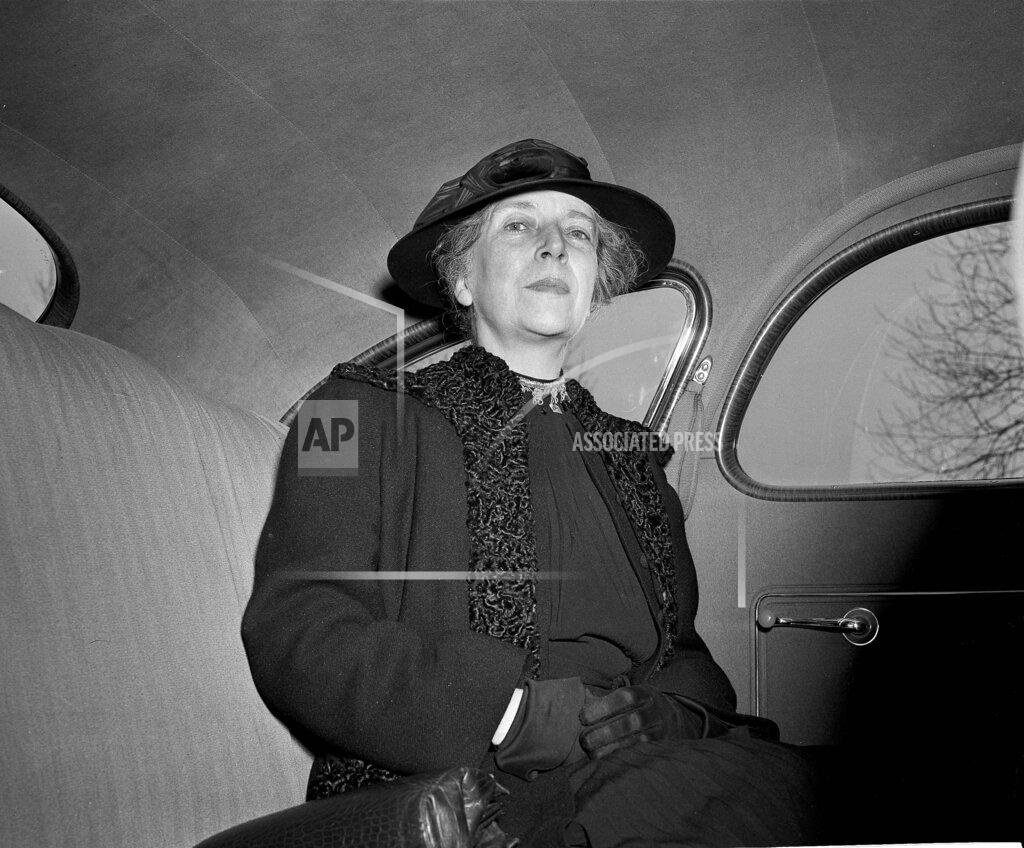
“I can either run the country or I can attend to Alice, but I cannot possibly do both.” – President Theodore Roosevelt on his daughter Alice in 1902. She was, for 1902, a bit of a wild one.
 History Diaries