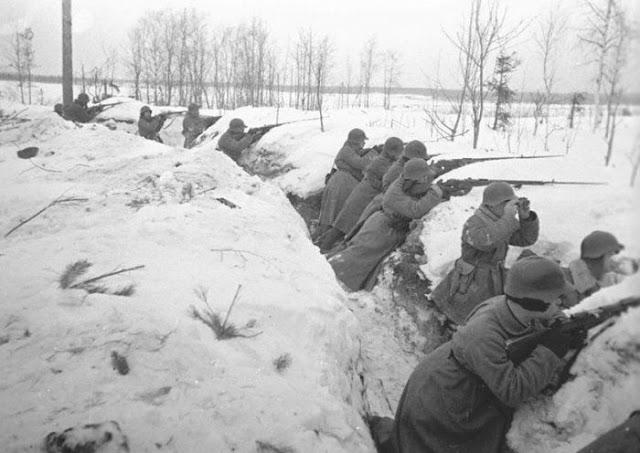
At the end of February, the Soviets move their best troops into the battle in Finland, and the Finns began to give way to the sheer force of numbers.
The massive Soviet offensive continues across Viipurinlahti bay to Häränpäänniemi and Vilajoki.
The battle of Viipuri. Soviet forces launch an all-out effort to crush resistance in the Karelian Isthmus by encircling the city of Viipuri and reaching the Viipuri-Helsinki highway. The Soviet 7th Army is attempting to encircle Finnish defenders at Viipuri. Finns mount a fighting retreat as the Red Army continues its offensive up Karelian Isthmus towards Viipuri. The Soviets follow the Finnish withdrawal closely and immediately begin attacking to surround Viipuri. In addition, Soviets attempt to outflank Viipuri by crossing the frozen Gulf of Finland. They come ashore 15 miles west of Viipuri but cannot reinforce the beachhead and are repelled by the Finns. However, Soviets capture Teikari Island.
Withdrawal from the intermediary and delaying positions in the Suur-Pero sector disintegrates into panic when Soviet tanks get in among the Finnish troops. The defending force manages to defeat the enemy detachments which have come ashore, but later in the evening Tuppura and Teikari islands are lost to the enemy.
Soviets also attack at Taipale for the second day in a row, but all three attacks are repelled. The Soviets begin to lose interest in this extremely difficult sector.
The Finnish 7th Division, fighting in Taipale, has lost around 100 men a day. More than half these losses have come in February.
There also is a Soviet attack at Pitkaerantae, Northeast of Lake Ladoga, but it also is repelled.
Finns overrun East Lemetti (“General”) Motti at 4 AM (3,100 Soviet dead) capturing 5 field guns, 1 antitank gun, 71 tanks, 12 armored cars, 6 antiaircraft machineguns, 206 trucks & 70 machineguns. Brigade Commander Kondratiev, the general after whom the ‘motti’ was named, is killed along with his staff officers in a desperate attempt to break out.
In northern Finland, a fierce artillery bombardment heralds the launch of the third attempt by Soviet troops to come to the aid of the surrounded 54th Division at Kilpelänkangas in Kuhmo. In just the couple of hours before noon the enemy pounds the Finnish positions with around 3,000 shells.
Reserve Second Lieutenant Nyrki Tapiovaara is killed leading a reconnaissance patrol on the Kollaa front. The 28-year-old Tapiovaara, a film director in civilian life, leaves behind an uncompleted film based on F.E. Sillanpää’s novel “Miehen tie” (“A Man’s Way”).
Reserve Corporal Korsola, a fighter pilot in the Finnish Air Force, is killed during the course of the morning.
15 Finnish and 36 Russian fighters engage in a dogfight in the skies above Ruokolahti on the southeast edge of Lake Saimaa. The battle lasts a little under half an hour. Several of the Finnish aircraft are damaged, and seven shot down. Lieutenants Huhanantti, Halme and Kristensen, the latter a Danish volunteer, are killed, and three other pilots are wounded. There is heavy enemy bombing on the home front, in Turku, Haapamäki, Savonlinna and Kouvola. 132 bombers are counted in the skies above Kouvola.
Finland sends a note to the League of Nations over the Soviet Union’s military action against Finland’s civilian population.
Negotiations to end the Winter War between Finland and the Soviet Union began, but fighting continued.
The Finnish Government decides by 17 votes to 3 in favor of opening formal peace talks with the Soviet Union. The Finns decide that they must give in to the Soviet demands but their note to that effect is not sent immediately because of British and French reactions to the news. The French government has become deeply committed to a policy of supporting Finland and persuades the British to join in making rash promises that cannot possibly be kept.
With Undersecretary of State Sumner Welles making the rounds of European leaders, there is a widespread concern throughout Europe about what his meddling in European affairs may portend. Hitler, in particular, is concerned. Hitler issued a secret directive to all Nazi officials who were to be meeting with Sumner Welles. They were told to maintain the narrative that Britain and France had started the war and were determined to destroy Germany, so Germany had no choice but to continue fighting.
Adolf Hitler formally approved Nikolaus von Falkenhorst’s invasion plan for Norway.
The wreck of the Admiral Graf Spee is sold to a local company for scrap. What only becomes known later is that the local company is a front for the British Embassy, which uses these rights to get personnel aboard the wreck for intelligence purposes, especially an evaluation of the German radar. An expert was later flown in from Britain specifically to examine the radar.
Britain returns nine of the 21 Germans removed from the SS Asama Maru on 21 January after the Japanese government agrees not to transport German military reservists attempting to return home.
“Lord Haw Haw,” the English-language announcer of the German radio station at Hamburg whose suave propaganda broadcasts have made him a national figure in Britain, was identified by British officials tonight as William Joyce, a London University graduate and former propaganda chief for the British Union of Fascists. Mr. Joyce, whose former wife and two children are living in a Surrey village, left England for Germany a few days before the start of the war. He resigned from the British Union of Fascists in 1937 to form the National Socialist League, the British version of Adolf Hitler’s party.
The British Labor Party makes a motion in Parliament censoring the government for its action in preventing Jews from buying land in Palestine.
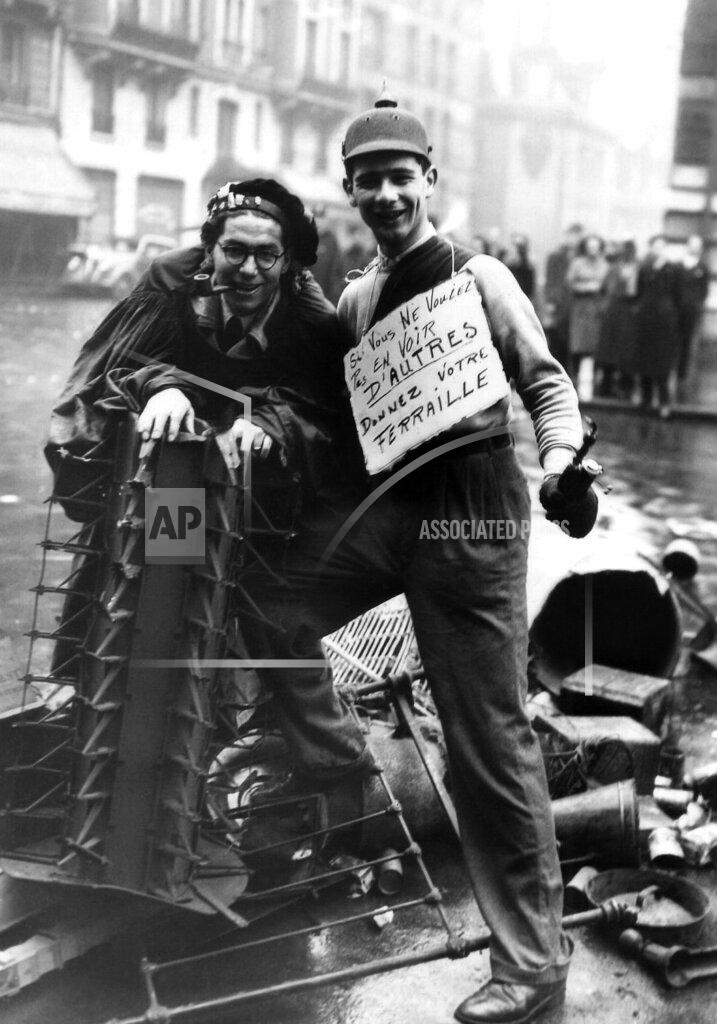
French Minister of Finance Paul Reynaud warns in a broadcast about runaway inflation (le cycle infernal). The words carry weight because of the fairly recent disaster on that score in Weimar Germany. The government is imposing the usual measures to control prices, many of which stretch back to Roman times, including a price freeze, rationing, revaluation of gold reserves, and compulsory use of female labor.
The French government introduces ration cards.
The Estonian Government forbids its ships to travel in the North Sea except by convoy.
Premier Refik Saydam, speaking to the Turkish people tonight over the radio, declared that there had been no change in Soviet-Turkish relations in the last six months.
Anti-British demonstrations take place in Palestine protesting law restricting Jewish purchase of land.
At 2232 hours, the Italian cargo ship Maria Rosa was torpedoed and sunk by the bow in the North Sea southeast of Great Yarmouth, Norfolk, United Kingdom (52°24′N 1°59′E) by U-20, commanded by Kapitänleutnant Harro von Klot-Heydenfeldt. Maria Rosa (Master Antonio Schiaffino) was hit on the port side between #1 and #2 holds by one G7e torpedo from U-20 while steaming on a non-evasive course at 5 knots about 10 miles east-southeast of Lowestoft. The ship had been missed with a first G7e torpedo at 21.45 hours and the Germans apparently failed to notice the illuminated neutrality markings in moderate visibility during both attacks. The explosion broke the ship in two with its bow raising and the aft part settling with a list to port. No distress signal could be sent as all power went out and the crew barely managed to launch two lifeboats in rough seas and strong wind before the forward part sank in less than two minutes. They were forced to leave several men behind who were trapped in the forecastle or the engine room and whose cries for help had been heard. The rest of the ship gradually sank with the stern lifting up until disappearing 20 minutes after being hit. Eleven crew members were lost.
The master and six crew members were in the port lifeboat, while eleven crew members and a British pilot were in the starboard one. The boats then searched in vain for survivors at the sinking position and unsuccessfully tried to attract the attention of a northbound convoy by firing several blue flares. After using the last flare in another attempt to attract a northbound ship one hour later, the survivors huddled underneath the sails and waited until daylight to set sail for the nearby coast. Underway a small collier passed one of the lifeboats in a distance of only 600 meters without noticing the men waving with rags or blowing whistles. Both lifeboats eventually reached the shore between Thorpeness and Aldeburgh around noon on 1 March. Six crew members were taken to a hospital where one of them died of exposure. All survivors were later taken to London and repatriated to Genoa together with the survivors from Mirella on 14 March. The 4,211 ton Maria Rosa was carrying ballast, bound for Hartlepool.
German steamers Heidelberg and Troja left the Dutch island of Aruba in the Caribbean Sea after dark in an attempt to evade Allied patrols. Troja was intercepted 10 miles from Aruba from British cruiser HMS Despatch; her crew set fire to the ship and abandoned her. Troja sank on the next day.
U.S. freighter Cold Harbor is detained at Gibraltar by British authorities.
The British have reinstated the Navicert system used during World War I, which basically clears shipped goods as not being contraband in advance. It also is championed by President Roosevelt, but merchants are not as keen about it. The U.S. and other neutral powers are following this system with varying degrees of enthusiasm and compliance. The German Press Department at The Hague issues a statement that anyone adhering to this system will make themselves suspect to Germany.
Convoy OA.101 departs Southend.
Convoy OB.101 departs Liverpool.
For the month of February 1940, German U-boats sank 51 Allied ships (185,405 tons) and damaged 3 ships (21,114 tons). Total losses are 63 Allied ships (226,920 tons). Four U-boats have been sunk this month.
The War at Sea, Thursday, 29 February 1940 (naval-history.net)
Aircraft carrier FURIOUS departed the Clyde on the 28th escorted by destroyers HARDY, FEARLESS, FIREDRAKE, and KIMBERLEY. The aircraft carrier arrived at Plymouth at 0725/29th for refitting. In the Plymouth approaches on the 29th, FEARLESS was involved in a collision with a trawler. The damage was repaired at Plymouth completing on 10 March. On 2 March, battlecruiser REPULSE escorted by destroyers HARDY, HOSTILE, and VIMY departed Plymouth for the Clyde where they arrived during the afternoon of 3 March. Destroyer VIMY immediately returned to Plymouth, via Liverpool. On 3 March, battlecruiser RENOWN with destroyers ACASTA, KIMBERLEY, and FIREDRAKE departed Plymouth for the Clyde where they arrived at 1230 on 4 March. ACASTA immediately departed after refueling for Plymouth, arriving on 5 March.
Decoy ships PAKEHA and WAIMANA departed Rosyth escorted by destroyers IMOGEN, INGLEFIELD, TARTAR, and GURKHA for Scapa Flow, arriving on 1 March.
Heavy cruiser NORFOLK arrived in the Clyde from Northern Patrol.
Heavy cruiser YORK arrived at Scapa Flow.
Destroyer KELVIN was ordered to proceed to Birkenhead for refitting.
Escort vessel WOOLSTON, escorting convoy FN.106, was damaged in the Humber while docking with a merchant ship. Escort vessel WOOLSTON was repaired in the Humber, completing on 5 March.
Minelayer TEVIOTBANK with destroyers BRAZEN and BOREAS departed Immingham on the 24th for Invergordon where they arrived at 1500/26th. Minelayer TEVIOTBANK escorted by destroyers BOREAS and BRAZEN and minesweepers LEDA and NIGER departed Invergordon on minelaying operation PA 2 in Moray Firth. After the minelay, the ships proceeded to the Tyne. The ships arrived in the Tyne on 2 March and left later that day in convoy FS.10 for passage to the Humber.
Sloop BLACK SWAN, escorted by destroyer WOLSEY, arrived at Rosyth.
Anti-submarine trawler CAPE PORTLAND (497grt) attacked a submarine contact off Dunnett Head in 58-42-45N, 3-18-28W.
Minesweeping trawler AMETHYST (627grt) was damaged in a collision with steamer BRAMWELL (1927grt). The Hailing Station and Tyne Boom Defense were also damaged in this collision. The trawler was repaired in fourteen days.
Convoy OA.101 departed Southend escorted by sloop BIDEFORD and destroyer VETERAN, which were relieved on 1 March by destroyer VANESSA. Destroyer VANESSA was detached on 2 March and the convoy was dispersed the next day.
Convoy OB.101 departed Liverpool escorted by destroyers VANQUISHER and VERSATILE. Both destroyers were detached on 3 March, when the convoy dispersed.
Convoy FN.107 departed Southend escorted by sloop FLAMINGO and destroyers WALLACE and JUPITER. The convoy arrived in the Tyne on 2 March. Convoy FN.108 was cancelled.
Convoy FS.109 departed the Tyne escorted by destroyer VEGA, sloop STORK, and destroyer JUNO. The convoy arrived at Southend on 2 March.
Convoy BC.28 of steamers BARON CARNEGIE (Commodore), BATNA, KERMA, KUFRA, LOCHEE, and PIZARRO departed Bristol Channel escorted by destroyer VIVACIOUS. The convoy arrived at Loire on 3 March.
U-20 sank Italian steamer MARIA ROSA (4211grt) in 52 24N, 01 59E. Twelve crew were lost.
Australian light cruiser HMAS PERTH and light cruiser DIOMEDE departed Kingston, Jamaica, in company, for duty in the Pacific Ocean after being relieved in the Caribbean by light cruisers DUNEDIN and DESPATCH. Cruiser PERTH departed the Caribbean on 2 March and passed through the Panama Canal on 3 March. She arrived at Sydney on 31 March.
At the end of February, the following destroyers were all under repair – ACHERON at Portsmouth, AFRIDI at Hartlepool, ANTELOPE at Cowes, ARROW at Portsmouth, ARDENT at Plymouth, ASHANTI at Cowes, BEDOUIN at Wallsend, BROKE at Plymouth, CAMPBELL at Plymouth, CODRINGTON at Southampton, DUNCAN at Grangemouth, ECHO at Leith, ESKIMO at Southampton, FEARLESS at Plymouth, GARLAND at Malta, GLOWWORM at Hull, GREYHOUND at Hull, HASTY at Plymouth, HAVANT at Plymouth, HAVOCK at Chatham, HERO at Portsmouth, HUNTER at Falmouth, HYPERION at Portsmouth, ILEX at Rosyth, ISIS at Falmouth, JACKAL at Blyth, JERSEY at Hull, KEPPEL at Malta, KIPLING at Tyne, MALCOLM at Cardiff, MAORI at Clyde, MASHONA at Chatham, MATABELE at Plymouth, PUNJABI at Clyde, SABRE at Grangemouth, SALADIN at Plymouth, SOMALI at Middlesbrough, THRACIAN at Hong Kong, WARWICK at Liverpool, WESSEX at Milford Haven, WHITEHALL at Plymouth, WITHERINGTON at Liverpool, WOOLSTON at Rosyth, WREN at Plymouth, WRESTLER at Malta, ZULU at Leith and Polish ORP GROM at Chatham.
President Roosevelt cruised homeward in the Caribbean aboard the U.S. Navy heavy cruiser Tuscaloosa, after a vacation and an inspection trip through the Panama Canal. President Roosevelt disclosed today that he would end his Southern cruise at Pensacola, Florida, about noon tomorrow and would depart by train for Washington, arriving Saturday afternoon.
While President Roosevelt has 64 percent of the major-party vote in support of his second-term activities, compared with 62.5 percent which backed him for re-election in 1936, according to the continuous Presidential index of the American Institute of Public Opinion, a majority of voters still oppose a third term, according to a Gallup Poll released today.
President Roosevelt tonight radioed Federal Loan Administrator Jesse H. Jones the authority to set the machinery of the Export-Import Bank in motion for extension of non-military credits to Finland.
The Senate today completed Congressional action on the resolution enlarging the capital of the Export-Import Bank, confirmed the nomination of Carroll Miller to the Interstate Commerce Commission, heard Senator Reynolds criticize Administration policies with regard to France and Great Britain and adjourned at 1:23 PM until noon on Monday.
The House passed the War Department civil functions appropriation bill, considered the stream-pollution bill, received the President’s request for a $20,000,000 increase in Army Air Corps authorizations and adjourned at 5:17 PM until noon tomorrow. The Foreign Affairs Committee heard Herbert Hoover urge aid for war refugees.
Former President Herbert Hoover told Congress today that it should appropriate up to $20,000,000 immediately to help avert an “acute” food shortage facing about 7,000,000 residents of dismembered Poland. Former President Hoover testified today before the House Foreign Affairs Committee that between $40,000,000 and $50,000,000 would be necessary to feed 7 million persons facing destitution in occupied Poland, and that from a fourth to half the needed funds must come from the United States.
Federal census chiefs vigorously defended themselves today against the charge, raised again before a Senate subcommittee, that the income question planned for the enumeration was a “flagrant example of bureaucratic snooping.”
Major Kermit Roosevelt today threw in his lot with Finland’s weary armies as commander of an international brigade.
In a ceremony held in Berkeley, California (because of the war) physicist Ernest Lawrence received the 1939 Nobel Prize in Physics from Swedish Consul General in San Francisco.
A six-year-old Chicago girl, tossed bloody and crumpled, into the corner of a north side private garage, was discovered tonight, hidden under an old coat. Victim of a hit-and-run automobile driver, police said she had been abandoned by the panic-stricken driver after he had told witnesses he would rush the child to a hospital. The driver was arrested and the child taken to a hospital. Tragically, she died two hours later.
American Jews began to mobilize in protest here yesterday immediately after the decision of the British Government to restrict Jewish penetration into the agricultural areas of Palestine, in order to “protect the Arabs,” and confine the Jews hereafter to cities.
President Roosevelt requested Congress today to increase the contractual authority of the Army Air Corps by $20,000,000. It was one of three budget requests made today through the Bureau of the Budget.
The U.S. Navy Bureau of Aeronautics initiated steps that led to contract with H. O. Croft, State University of Iowa, to investigate the possibilities of a turbojet propulsion unit for aircraft.
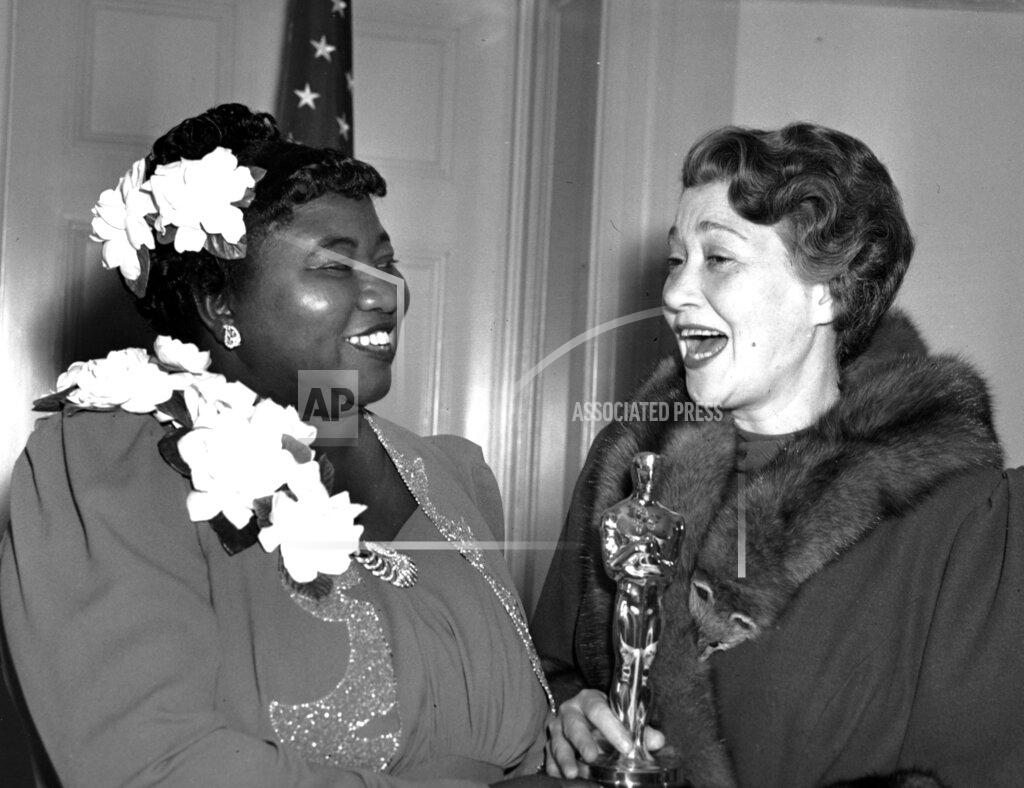
“Gone With the Wind” wins the Academy Award for best film of 1939. The 12th Academy Awards were held in Los Angeles, hosted by Bob Hope for the first of what would be nineteen times. “Gone With the Wind” won eight awards including Best Picture. Director Victor Fleming also wins (he took over partway through). Hattie McDaniel became the first African-American to win an Oscar when she was named Best Supporting Actress. The Los Angeles Times published the names of the winners in its 8:45 PM edition, so most of the attendees already knew the results ahead of time. The Academy would respond by starting a tradition the following year in which the winners were not revealed until the ceremony itself when sealed envelopes were opened.
Perhaps the only mild upset of the evening is Clark Gable’s failure to win Best Actor. It is won instead by Robert Donat against a sterling field that includes Jimmy Stewart for “Mr. Smith Goes to Washington,” Mickey Rooney for “Babes In Arms,” and Laurence Olivier for “Wuthering Heights.” Every nominee for Best Actor would be serving in the military within about three years — except winner Donat, who was too old and sickly.
Judy Garland receives a special Academy Award (Best Juvenile Actress) for “The Wizard of Oz.” It is one of the few awards of the night not given to cast or crew of “Gone With The Wind.”
The First National Bank of Chicago tries to force a sale of the White Sox by the heirs of the late Louis Comiskey. A local judge denies the effort of the club’s principal lender, saying that Mrs. Grace Comiskey can keep the club for their 14-year-old son, Charles II, until he is 35.
Detroit’s Cecil “Tiny” Thompson becomes first goaltender in NHL history to play 40 (or more) games for 12 straight seasons; milestone comes in a 3-1 Red Wings loss at Toronto.
American golfer Jimmy Demaret wins his third PGA Tour event within an 8-day span, taking the St. Petersburg Open by one stroke from Byron Nelson.
The Uruguayan Government sells the wreck of the Graf Spee in the River Platte to a local salvage firm for £14,000. The salvage firm, in fact, is a front for British naval intelligence, which wishes to learn any secrets they can find about, for instance, Kriegsmarine radar. The Admiralty thinks its local representatives paid too much, but useful information is learned about the radar.
The Chinese claimed today to have repulsed the Japanese effort to clean up the guerrilla areas on the Anhwei-Kiangsu border southeast of Nanking. The points initially occupied by the Japanese have been retaken, according to a military spokesman who ridiculed Japanese reports of having surrounded 200,000 Chinese in the disputed area. Only minor activity marks all the Sino-Japanese war fronts, it was stated. At Nanning, small-scale Japanese attacks in the environs of the city were said to feature the situation, while in the extreme North the Chinese report tightening the ring around Wuyuan, the Suiyuan city recently occupied by the Japanese.
Scaling walls in a daring night attack and battling the Japanese garrison in furious street fighting, Chinese recaptured the Kwangtung Province city of Tenghai, the Central (Chinese) News Agency reported today. Tenghai, twelve miles northeast of Swatow on the South China coast, was occupied by the Japanese five months ago.
Dow Jones Industrial Average: 146.54 (-0.02)
Born:
Monte Kiffin, American College football and NFL coach, in Lexington, Nebraska (d. 2024).
Billy Turner Jr., American thoroughbred trainer (Triple Crown, 1977, Seattle Slew), in Rochester, New York (d. 2021).
Ecumenical Patriarch Bartholomew I of Constantinople (1991- ), in Zeytinliköy, Imbros, Turkey.
Gretchen Christopher, American singer (The Fleetwoods), in Olympia, Washington.
Yoshio Harada, actor, in Tokyo, Japan (d. 2011).
Died:
E. F. Benson, 72, English novelist.
Naval Construction:
The Royal Navy Bangor-class (Diesel engined) minesweepers HMS Bridport (J 50) and HMS Bridlington (J 65) are launched by William Denny & Brothers (Dumbarton, Scotland); completed by Harland & Wolff Ltd. (Govan, Scotland).


 History Diaries