
There are no words. God have mercy.
The United States, with a growing sense of futility, continues to urge a negotiated end to the Cambodian war, but State Department officials said they were not even certain with whom the government of President Lon Nol could deal. One official said that “it is not clear to me that if Lon Nol decided to surrender, he would know where to send the surrender offer.” The problem, in fact, has changed little in the nearly, five years of the civil war in Cambodia, which began soon, after Prince Norodom Sihanouk was deposed in a coup in March, 1970, while he was visiting Moscow.
Since then, Prince Sihanouk has maintained headquarters in Peking as the titular head of the insurgent movement, known as the Royal Cambodian Government of National Unity. From there he has sent regular cablegrams to former President Nixon and President Ford and given interviews to newsmen. Prince Sihanouk has unswervingly refused to negotiate with the Phnom Penh Government and has offered “reconciliation” with the United States if it will drop all support for the Lon Nol regime. The Phnom Penh Government has offered since the summer of 1973 to negotiate with the insurgent movement, and the United States has repeatedly endorsed this approach. The current, American position is that because the insurgents refuse to negotiate with the weakened Phnom Penh Government, additional military aid is necessary to spur a settlement.
American officials say that the failure to achieve even the start of negotiations has been largely a‐result of a lack of, visible and clear‐cut insurgent leadership. They say that Prince Sihanouk himself has acknowledged in Peking that he is not the actual leader of the insurgency, which he says is led by the “Khmer Rouge,” or Cambodian Communists. In an interview with Agence France‐Presse yesterday Prince Sihanouk said that if Cambodia was liberated by the insurgents, he would accept only a post as a roving ambassador or representative outside the country. I don’t want to be mixed up with internal questions ever again,” he said. “They have already cost me much too dearly.” Recalling that the Lon Nol Government had sentenced him in absentia to death as a traitor, he said that he had ideological differences with the Cambodian Communists.
To be sure, after the victory, I would become once again a patriot and a hero in the eyes of the Khmer Rouges,” the Prince said. “Very well. I prefer to stop there and end my career rather than risk, one fine day, to have the Khmer Rouges put me on trial and make me a traitor once again.” The Cambodian insurgent government inside Cambodia is officially headed by Penn Nouth, the premier, but he too lives in Peking. The acting premier and head of the insurgent military forces is officially Khieu Samphan. Other leaders who have been identified include Hou Youn, the insurgent minister of the inierior, and Hu Nim, the insurgent minister of information. But American officials believe on the basis of intelligence information that Saloth Sâr, a former teacher, is the key leader, in charge of the Cambodian Communist party. No one here knows where the Communist headquarters is. It is estimated that the insurgent force now numbers from 60,000 to 100,000 troops with some 2,000 to 3,000 North Vietnamese advisers.
Saloth Sâr will soon become notorious under his nomme de guerre: Pol Pot.
Cambodian Government forces today began an effort to push enemy rocket emplacements out of range of Pochentong Airport, the last remaining supply link between the capital and the outside world. But insurgent elements, apparently having learned of plans for the thrust by monitoring field radio broadcasts, themselves attacked before dawn, overrunning the town of Tuol Leap, 12 miles from downtown Phnom Penh, and placing them in even better position to fire their rockets at the airport. The failure of Government troops to dislodge the rocket emplacements was one of a series of small but annoying setbacks on several fronts today:
On the east bank of the Mekong River, Communist forces overran the town of Prek Luong, less than five miles from downtown Phnom Penh. And Government troops failed to make any progress against forces besieging the strategic Mekong. River town of Neak Luong, which controls a bend in the river 38 miles southeast of Phnom Penh. But it was the series of battles west and northwest of Phnom Penh at Tuol Leap that indicated the serious problems of the Government’s forces, weakened by the heavy fighting and stiff resistance on all fronts around the capital. “They’re tired after two imonths of fighting,” said one Western military observer at the forward command post. “Their battalions are depleted; they don’t want to push in where they don’t think they have enough support and enough men to win.”
Brigadier General Yai Sindy, commander of the day’s operation, paced nervously between the map table and the radio operators keeping track of the armored personnel carriers, helicopter gunships and T-28 planes taking part in the coordinated operation. “This has Number One priority,” said General Sindy. “But this is a very serious situation.” Although this was a “top‐priority exercise,” General Sindy’s troops were a mélange of squadrons drawn from the First and Third Battalions and even military police units that rarely see battle, Yet the general had received orders from the top command to clear the enemy from within shooting distance of Pochentong Airport.
The heavy steel grates of Phnom Penh’s shops have been locked and barred for the last week. The stalls in the central market are deserted at what should be the afternoon rush hour. There is fear in the Chinese community and the economic heartbeat of this isolated city of two million people has come to a virtual halt. “The Chinese are simply trying to protect themselves,” said Trieu, President of the Fraternal Federation of Chinese Cambodia. “We fear the rockets and we fear the students. But mostly, we fear the students.” This fear of looting, vandalism, even violence against the ethnic Chinese by roving bands of Cambodian high school and College students has caused the shutdown of more than 90 percent of the estimated 6,000 Chinese shops and 10,000 market stalls that are the lifeblood of this capital city. For the last two decades the Chinese have controlled Cambodia’s monetary economy and now they are being blamed for the sharply rising food prices, the inflation that is leaving Cambodians without enough to eat.
The Administration’s request for $222‐million in emergency military aid for Cambodia now rests with a House Appropriations subcominittee so closely divided that the outcome could depend on whether the vote is taken in secret. After several delays apparently promoted by uncertainty over the vote, Representative Otto E. Passman of Louisiana, chairman of the House Appropriations subcommittee on foreign operations, has scheduled a meeting for next Tuesday to consider a foreign‐aid appropriations bill that would include the requested additional military aid for Cambodia. At this point the 13‐man subcommittee appears to be split five to five, with three men undecided — Representatives Clarence D. Long, Democrat of Maryland, Tom Bevill, Democrat of Alabama, and R. Lawrence Coughlin, Republican of Pennsylvania.
Some members believe determining factor may be whether the panel decides to consider the legislation in closed session. Under new House rules, a committee must meet in public unless it votes to have a closed‐door session. Mr. Passman, who over the years has pushed through foreign‐aid legislation in secret sessions, was reported by his colleagues to be pressing for closed‐door meeting in the hope that it would give the members greater flexibility in working out a compromise acceptable to the Administration.
Representative Paul N. McCloskey Jr said today that the United States Embassy in Saigon appeared to have adopted a policy of “tacit acquiescence” in the arrest of political prisoners by the Saigon Government. Mr. McCloskey, a California Republican who is one of eight Congressmen touring South Vietnam, has been investigating the question of political prisoners since his arrival here Monday. Yesterday, he said, a young woman, accused by the government of “serving as an intellectual proselytizing agent” for the Communists, whispered to him in a Saigon prison that she and other similarly accused prisoners had been beaten.
The 19‐year‐old woman, Trần Thị Phương Thảo, according to a translated charge sheet supplied to the Congressman by the American Embassy, was a member of an “illegal” organization called the Brotherhood Group “which made plans for inciting the students to struggle against the government and demand it to implement the Paris treaty concerning the formation of the third force.”
In 1975, the charge sheet continued, the woman “was given assignment by Huỳnh Ngọc Trảng alias Bảy Thành to write articles for student publications and Saigon newspapers in favor of the third force.” The sheet said that Huỳnh Ngọc Trảng “was a member of the Communist‐sponsored organization, United South and Student Force of South Vietnam.” The “third force” is a political term generally used to designate the non‐Communist or neutralist political groups that were to participate in a reconciliation council with the Communists and the Saigon side under the Paris peace agreenients of January 27, 1973.
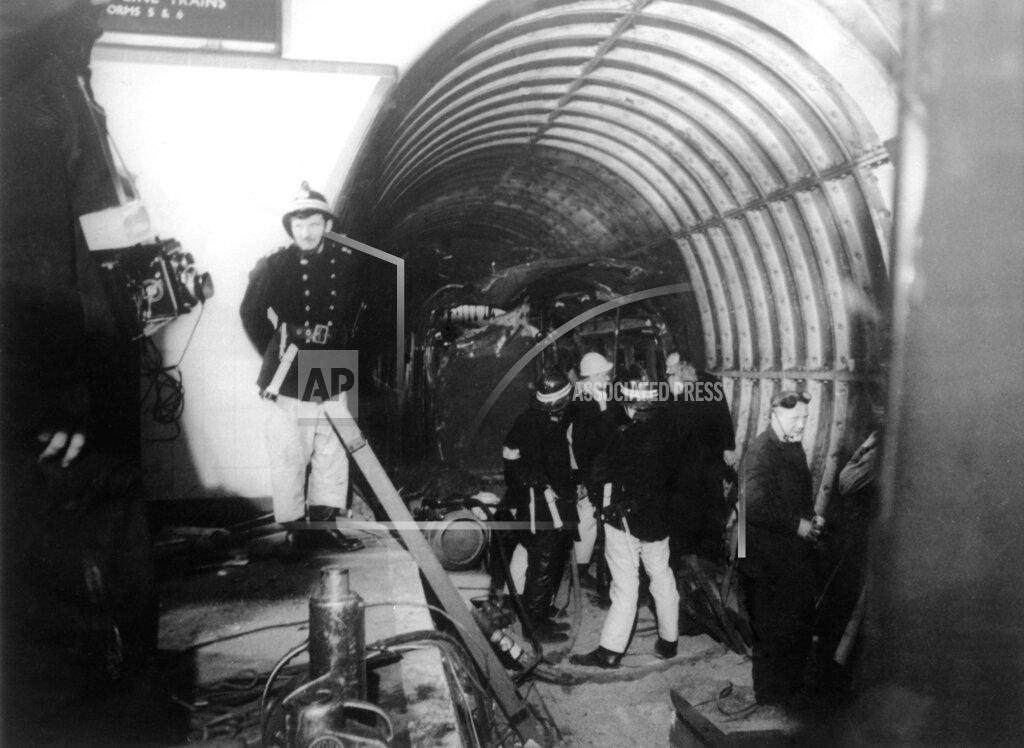
In the worst disaster in the 112-year history of London’s underground subway system, 43 people were killed when their six-car train sped past its stop at London’s Moorgate station and crashed into a wall. A subway train in London sped past its final stop at the Moorgate station in the morning rush hour and smashed into the end of the tunnel, killing at least 29 people on the train and injuring more than 80. It was the worst accident in the history of London’s subway system. A London Transport official said that it appeared that there had been “a lack of application of the brakes.”
The first three cars mounted and crumpled into each other, the wheel carriages tearing into roofs and crushing the passengers beneath them. The twisted metal was so tightly jammed into the tunnel’s end that by this evening, 10 hours after the crash, firemen were still cutting through the first car to try to free two survivors and at least six bodies. They were hampered by the constricted space — only three or four men could work at time and frequently they had to use hack saws instead of power tools — by the heat, the black dust and the lack of air. It seemed likely that one of the bodies still to be recovered was that of the driver, Leslie Newson, aged 55. Because the, front end of the train was still inaccessible, officials of London Transport, which operates the city’s subways and buses, were unable to suggest why it had not stopped.
The kidnappers of Peter Lorenz, the Berlin mayoral condidate who was abducted in his car yesterday, today demanded the release of six radical German leftists from prison. Fifteen hours later, at midnight, the police appealed to the kidnappers to give “convincing proof of the fact that Peter Lorenz is still alive,” and said that two other prisoners jailed after a demonstration in November would be freed tomorrow morning, as they demanded. With a letter to the Berlin office of D.P.A., a German news agency, a group calling itself the Second of June Movement enclosed a photograph showing Mr. Lorenz sitting on a bed with a placard on his lap describing him as a prisoner. If the demands were not fulfilled, the letter said, Mr. Lorenz’s safety would be “threatened.” His death, it implied, might be “unavoidable.”
Mihajlo Mihajlov, the Yugoslav writer accused of having criticized the regime of President Tito in the Western press, was sentenced today to seven years at hard labor. The presiding judge of the Novi Sad District Court, Dragomir Cvetkovic, also prohibited Mr. Mihajlov from any writing, public speaking, or broadcasting for a period of four years after the completion of his sentence. The judge said the sentence should be interpreted as warning, “both personal and general.” An entire class from the University of Novi Sad’s law school was invited to the court to hear the sentence.
Five militant Arab nationalists from the occupied West Bank of the Jordan River and East Jerusalem, detained in Israeli pristons, were expelled today across United Nations checkpoint into Lebanon. Three of the five men, none of whom was widely known in Arab circles, were members of the Palestine National Front who had been held without charges for an unspecified period. Their expulsion reduced the number of Arab nationalists “administratively detained” by Israel as security hazards to 63. An official Israeli source described the Palestine National Front as a military section of the clandestine Jordanian Communist party. The organization is held responsible for acts of sabotage and terrorism, as well as strikes and demonstrations against the Israeli occupation. One of the five expelled Arabs had served a seven‐year sentence on conviction of having infiltrated from Jordan to carry out sabotage. Another was awaiting trial on charges of having participated in throwing a grenade at a military jeep and a fire bomb at a gasoline station at Khan Yunis in the Gaza Strip.
A controversy that has erupted, between Egypt and the Palestine Liberation Organization is regarded by Arab diplomats here as a foretaste of the strain that Secretary of State Kissinger’s coming visit will place on President Anwar el Sadat’s relations with the more radical forces in the Arab world. Last night the official Middle East News Agency announced that Mr. Sadat would not receive a Palestinian delegation that wanted to visit him unless it was made up of the entire 13member Executive Committee of the Palestine Liberation Organization. The Palestinians canceled the visit. Mr. Sadat made his angry gesture after the P.L.O published on Wednesday a declaration it had sent to all Arab governments warning them against Mr. Kissinger’s efforts “to split the Arab world” and saying in effect that any Arab leader dealing with the Secretary of State was disloyal to the Arab cause.
Palestinian guerrillas, facing a crisis with Egypt, have begun talks to tighten their ranks, and they are looking to closer coordination with Syria and more cooperation with Iraq. Informed Palestinians said today that a dialogue was under way between officials of the Palestine Liberation Organization and the Popular Front for the Liberation of Palestine to bring this Marxist‐oriented group back into the P.L.O.
A Korean troupe danced for soldiers of the United States Second Infantry Division north of here recently and a Korean’ veterans’ association threw a party in the capital with a five-tiered cake to commemorate the division’s 5,000 days of service in South Korea. While the party was not lavish in comparison with the tumultuous welcome for President Ford in November, when a million people turned out in storm of confetti and balloons, it was clearly designed to remind Americans of their close ties with Korea. Since the Korean War, governments in Seoul have tried to maintain a close relationship with the United States, primarily for military security. But when President Richard M. Nixon began his policy of detente in 1971 the Koreans shifted to a more independent position. Now they are switching back. “The overriding emphasis of the foreign policy of the Republic of Korea,” a senior official said, “is the closest possible ties with the United States.”
There are many reasons for the shift, stemming from the Seoul Government’s view of the world. Seoul officials believe that detente with the Communists is dying under the threat of war in the Middle East and the continued fighting in Indochina. They also point to American trade disputes with the Soviet Union and say they perceive a cooling United States relationship with China. They also think that Secretary of State Kissinger, the architect of detente, is in trouble at home.
Thirteen opposition politicians said today that they had been tortured by South Korean security agencies soon after President Park Chung Hee seized emergency powers in the fall of 1972. One of the 13 was arrested, and another took refuge in the National Assembly building. The 13 issued a statement charging that torture had been used to make them produce false confessions. Seven of them — former and present opposition members of South Korea’s National Assembly — held a news conference in a downtown hotel here to denounce the Korean Central Intelligence Agency and Army Security Agency. They said these agencies’ men stripped opposition politicians naked in subzero temperatures and beat them, kept them awake for 72 hours or more, or hung them upside down and forced water into their noses while spinning them around. As a result, those at the news conference said, two of the victims must now use canes and several others are still undergoing medical treatment.
The headquarters of a major Japanese construction company in Tokyo and one of it branch offices in a nearby suburb were rocked by bombs almost simultaneously tonight, leaving four persons injured. The police declined to say whether the two explosions were related to a series of unsolved bombings, apparently by radical groups, that have struck four other major Japanese companies since last August. However, later this evening the Asahi newspaper received phone call from an unidentified man who said that a group called the Kei Han Shin Kyoto, or “Struggle Committee,” of the Kei Han Shin District near Osaka, had placed the bomb.
Brazil’s new Congress covenes tomorrow in Brasilia, with a strong opposition minority determined to “press for the restoration of a normal democratic state of law.”
Leftist guerrillas in Argentina killed John Egan, a United States honorary consul whom they had abducted, the police in Cordoba said. Mr. Egan’s body was found on a road outside Cordoba, draped in the flag of the Montoneros guerrillas. The police said a nylon bag covered Mr. Egan’s face. Police sources said that Mr. Egan, who was 62 years old, was wearing the same clothes he wore on the night of the abduction. A piece of cardboard was propped against his chest and scrawled in ink were the words: “Perón or death. Long live the fatherland. Forever my general.” The Montoneros claim allegiance to the late President, Juan D. Perón.
In Lomé, the capital of Togo, the European Economic Community and 46 African, Caribbean and Pacific countries signed a financial and economic treaty, known as the first Lomé Convention. A five-year treaty linking the European Common Market and 46 developing countries in Africa, the Caribbean and the Pacific in a trade and aid partnership was signed in Lome, Togo, in West Africa. The treaty, completed in Brussels January 15 after 18 months of negotiations, is due to expand and replace two conventions that associated 22 mainly French-speaking African countries with the Common Market.
The Ethiopian Army reportedly routed a seccessionist guerrilla force south of the town of Keren early today, after six days of the heaviest fighting of the 28‐day‐old civil war in Eritrea Province. The guerrilla force was said to have broken off contact with more than 1,500 Ethiopian soldiers in the mountainous territory to avoid being trapped. An Ethiopian infantry force had moved into the same region from the south. Keren, a road and rail junction is in the main pass through the mountains between Ethiopia and the Sudan. An ancient, largely Muslim town, Keren was thought to be essential to the guerrilla plan to capture a major population center and declare it an independent region. For this reason, informed foreign and Ethiopian sources have said, both sides committed far more men and equipment to the battle than they had during the recent fighting in and around Asmara, the Eritrean capital 57 miles to the south.
The South African Government denied yesterday that it had expressed any view on the appointment of Nathaniel Davis to be United States Assistant Secretary of State for African Affairs. A report from Johannesburg, South Africa, by Agence FrancePresse — on February 21 said that South African authorities had welcomed the appointment, which has been opposed by several United States Congressmen and questioned by the Council of Ministers of the Organization of African Unity. Mr. Davis’s critics have charged that while serving as Ambassador to Chile from 1971 to late 1973 he was involved in covert political operations against the leftist government of President Salvador Allende Gossens. Dr. Allende was overthrown and died in a military coup in September, 1973.
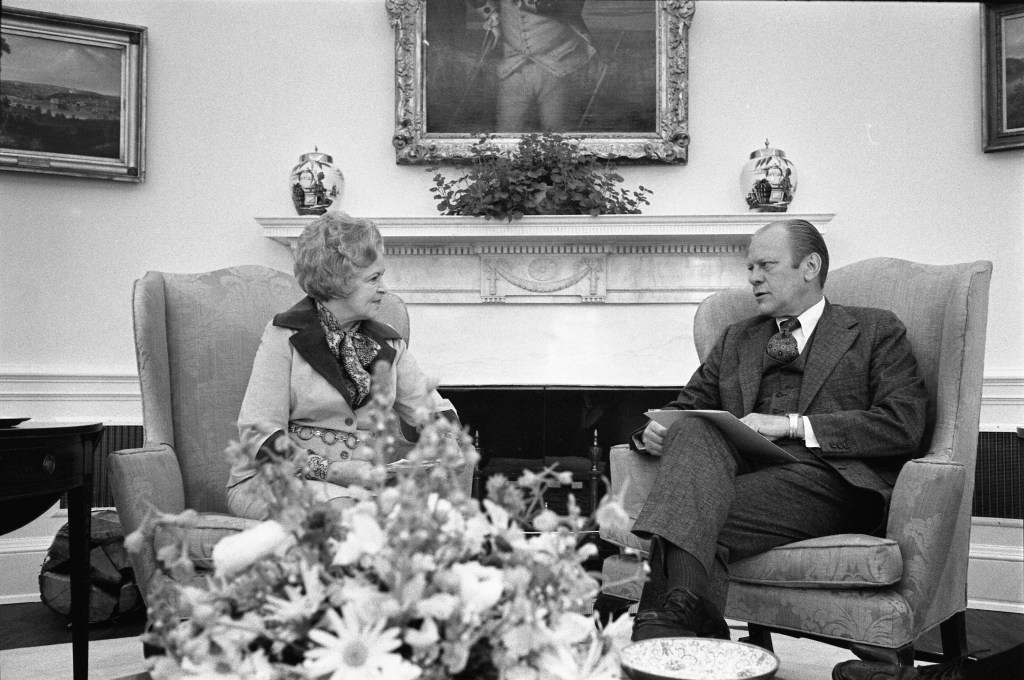
President Ford met with the Democratic leaders of Congress and said afterward that he was ready to negotiate a compromise on energy and economic programs. He disclosed that he may postpone a second $1-a-barrel increase in the tariff on imported oil, which was scheduled to become effective tomorrow. Mr. Ford told the Democratic leaders that he opposed repeal of the oil-depletion allowance, but otherwise indicated that he had no objection to the tax reduction bill passed Thursday by the House.
President Ford’s program to free the United States by 1985 from the threat of an oil embargo, which has been bitterly criticized by members of Congress and governors for economic reasons, has aroused serious doubts among leading energy experts as to its costs, relevance and achievability.
Former President Richard M. Nixon’s tax lawyer and a document appraiser pleaded not guilty to charges that they illegally conspired to backdate a deed for $576,000 worth of Mr. Nixon’s pre‐Presidential papers. In another development, James W. McCord Jr., convicted more than two years ago of burglary, conspiracy and wiretapping in the Watergate break‐in, was granted three more weeks of freedom before beginning his one‐to‐five year sentence. On the issue of Mr. Nixon’s papers, a Federal indictment against Frank DeMarco Jr of Los Angeles, the lawyer, and Ralph C. Newman of Chicago, the appraiser, said that the purpose of the conspiracy was to give Mr. Nixon a tax deduction to which he was not legally entitled. Mr. DeMarco, 49 years old, and Mr. Newman, 63, were arraigned before United States District Judge Oliver Gash.
On the McCord matter, the 50 year‐old former agent of the Central Intelligence Agency and director of security for Mr. Nixon’s re‐election committee, went to court today prepared to begin serving his sentence. The United States Court of Appeals for the District of Columbia said earlier this week that he must start serving his term. But Mr. McCord’s attorney, William A. Mann, asked Federal District Judge George L. Bart Jr for the three additional weeks on grounds that Mr. McCord still had legal actions pending in other courts. Mr. McCord has asked the Supreme Court to overturn his conviction, and he has asked for a new trial on grounds that his original lawyer, Gerald Alch, failed to represent him adequately. “I would urge the court to grant Mr. McCord three weeks to take care of these matters,” Mr. Mann told Judge Hart. The judge then gave Mr. McCord until noon of March 21 to surrender himself at the Federal prison institution in Allenwood, Pennsylvania.
The prospects of finding out what President Nixon and his staff said behind the “buzz” on the White House tapes is “essentially zero,” an audio expert said yesterday. Jay McKnight of Palo Alto, California, a member of the panel appointed by United States District Court Judge John J. Sirica to examine the tapes, said the six‐man advisory panel had considered several methods of reconstructing the erased conversations, including a method of X‐ray defraction and “a destructive method which at best had 10 percent chance of success.” Mr. McKnight, who had been under court orders not to discuss the tapes, told an audience of San Francisco audio engineers that a telltale click and markings made with the application of tiny iron filings had led to the conclusion that the Nixon White House tapes had been erased deliberately.
The Agriculture Department reported that prices farmers receive for their raw produce dropped 4 percent from January 15 to February 15, the fourth consecutive monthly decline. The farm price index began its current decline last November 15 when it dropped 1.5 percent from mid-October. Despite lower farm prices, retail prices are expected to continue rising because of higher middleman charges for transportation, processing and selling the products, but the retail increases are expected to be lower than in 1974.
A Federal court jury heard today a tape recording of a Texas man saying that the former Governor of Oklahoma, David Hall, was to receive part of $50,000 payoff as a legal fee. R. Kevin Mooney, a Fort Worth public relations man who was indicted last month with Mr. Hall and a Dallas financier, W. W. Taylor, was recorded telling John Rogers that. Mr. Hall had said that he could not take the payment “because it’s too fierce right now.” The tape continued, “He’s going to get the $50,000 as a legal fee.” Mr. Rogers, the Oklahoma Secretary of State, had agreed to tape conversations with the suspects for the Federal Bureau of Investigation. Earlier, the jury in the bribery and extortion trial of Mr. Hall and Mr. Taylor heard tape of Mr. Rogers talking with Mr. Mooney about how a $31,250 payoff was to be made. Mr. Mooney has pleaded guilty to a charge of conspiracy in the case. He testified earlier as a government witness.
About 1,600 people were evacuated from the Carillon Hotel in Miami Beach late today when a smoky electrical fire broke out on the first floor, city officials said. Five persons were taken to a nearby hospital for treatment of smoke inhalation and another 25, many of them elderly, were treated at the scene, officials said. No serious injuries were reported. The Miami Beach fire chief, Albert W. Bishop, said that the hotel’s 900 occupants would not be allowed to return to their rooms before daybreak tomorrow.
Cracks were found in fins on the Saturn IB rocket that will launch three Americans to meet two Russians in orbit in July and all eight fins will be replaced, the space agency announced today. The work may delay moving the rocket to the launching pad, but the agency said the problem was not expected to affect the July 15 launching date. A similar problem occurred on the Saturn IB booster that launched three astronauts to the Skylab space station in 1973. The Saturns were built in the mid‐nineteen sixties for early test flights in the Apollo moon landing program. The National Aeronautics and Space Administration described the flaws as hairline cracks about an inch long in parts of the fins used to mount the rocket on its firing pad. The agency said the cracks were in an area that would not affect the flight of the two‐stage rocket.
The U.S. performs a nuclear test at the Nevada Test Site.
The AMC Pacer automobile was introduced by American Motors. Manufactured at the AMC plant in Kenosha, Wisconsin, it would remain in production until December 3, 1979.
The New York Mets purchase first baseman-outfielder Dave Kingman from the San Francisco Giants.
Dow Jones Industrial Average: 739.05 (+7.90, +1.08%)
Born:
Mike Rucker, NFL defensive end (Pro Bowl, 2003; Carolina Panthers), in St. Joseph, Missouri.
Jean-Phillipe Darche, Canadian NFL long snapper (Seattle Seahawks, Kansas City Chiefs), in Montreal, Quebec, Canada.
MarTay Jenkins, NFL wide receiver (Arizona Cardinals), in Waterloo, Iowa.
Ricky Stone, MLB pitcher (Houston Astros, San Diego Padres, Cincinnati Reds), in Hamilton, Ohio.
Juan Moreno, Venezuelan MLB pitcher (Texas Rangers, San Diego Padres), in Maiquetia, Venezuela.
Jordan Willis, Canadian NHL goaltender (Dallas Stars), in Kincardine, Ontario, Canada.
Died:
István Kardos, 83, Hungarian composer.
Neville Cardus, English cricket and music writer (b. 1888).





 History Diaries