
Secretary of Defense James Schlesinger told a House Appropriations subcommittee that the situation in Cambodia was grim, but not irretrievable if the United States were to provide additional military aid. He said he did not believe, as reported in yesterday’s editions of The New York Times, that the Cambodian government would fall whether or not the United States provided the emergency military aid requested by the Ford administration. He said he regarded “the prospects in Cambodia as grim but not hopeless.” The issue was reopened before the subcommittee because of the article in The Times, which said that Mr. Schlesinger was taking a more pessimistic view of the Cambodian Government’s prospects in private discussions than in public statements.
His testimony today underscored the pessimistic theme that he has been sounding in public recently that the Cambodian Government would fall to’ the Communist‐led insurgents without immediate additional military aid from the Unted States. But he went a step further in assessing the long‐term chances of the Lon Nol Government as not completely hopeless, provided it survived in the short term. For the near future, he expressed confidence that the government would survive the present campaign of the insurgents if additional ammunition arrived within the next four weeks. The Ford Administration has asked Congress for $222 million in supplemental military aid, largely for ammunition. The critical question, he said, is whether the Cambodian Government can survive over the long term. He said the Lon Nol Government thus far displayed “incompetency,” adding that “the probability of survival is not particularly impressive.” To a reporter after the hearing, he quoted odds of “less than 50‐50” for Phnom Penh’s long‐term chances.
At the same time, he cautioned that the Cambodian situation always had been full of “uncertainties and surprises.” Repeatedly since 1970, he observed, the fall of the Lon Nol Government has been predicted. Yet “somehow or other this regime has survived,” he said, “in large measure because the Khmer Rouge display the same incompetence.” Judging from his testimony, the Administration hopes that the Lon Nol Government will endure through the current rebel campaign, which will end with the dry season by July, and come out of the fighting strong enough to induce the insurgents to enter into negotiations. “I think there is a distinct possibility, if not a probability, that unless negotiations take place, over the long haul, the regime is in trouble,” Mr. Schlesinger said. He added that all possibilities of the government’s surviving and of an eventual negotiated settlement would be eliminated if Cambodia was not provided with aid. Without more ammunition by early April, he said, the Cambodian Government will “inevitably fall within a month.”
Mr. Schlesinger’s statements of recent days have followed a pattern of pessimistic warnings mixed with hopeful projections. On Sunday, in a statement that apparently began the effort to push the aid request through a reluctant Congress, Mr. Schlesinger said on a national television program that Cambodia would “absolutely” fall into Communist hands if assistance was not provided. Yesterday, before the same House Appropriations subcommittee, when asked whether the Cambodian Government could survive until July with the aid, he replied that “the probability is extremely high but there is no such thing as a guarantee in this world.” Mr. Schlesinger, who was before the subcommittee today to defend the Pentagon’s $92.8 billion budget for the coming fiscal year, was questioned about his assessment of the Cambodian situation in view of The New York Times’ article. Representative John J. McFall of California, the Democratic Whip, said the article gave the impression that Mr. Schlesinger was saying one thing privately and another publicly, an impression Mr. Schlesinger said was unfounded. Mr. McFall also commented — with Mr. Schlesinger’s concurrence — that if the Secretary’s views as presented in The Times were allowed to stand, they could be used “very destructively” on the House floor against the request for additional aid.
Representative Joseph P. Addabbo, Democrat of Queens, said the article made it appear that Mr. Schlesinger had “no real feeling” that the Cambodian Government could survive and that the Administration, therefore, was asking for the money “not really to save a country but to save American prestige while American cities go down.” Mr. Schlesinger insisted that the Administration was not requesting the aid either to cushion the foreign‐policy impact of the expected fall of the Cambodian Government or to shift the blame to Congress if it refused to approve the request. The Times article said that both Mr. Schlesinger and Secretary of State Kissinger believe that “Cambodia’s collapse by itself would be a setback but not a disaster for American foreign policy as long as aid had not been terminated, leaving the United States open to blame.” While insisting that this was not the motivation behind the aid request, Mr. Schlesinger said: “If we are unable to get negotiations and Cambodia goes under, it should clearly be marked as the result of the ineptitude of the government, rather than due to a cutoff of American aid.”
Mr. Schlesinger said the chances for survival of the government now depended on whether it could weather the current campaign with American aid and then demonstrate “a revival of government competency” that could lead the insurgent forces into negotiations. With the coming of the rainy season, he predicted, it should be possible to resupply the government by July along the Mekong River, which is now blockaded by the insurgents. General Geroge S. Brown, Chairman of the Joint Chiefs of Staff, told the subcommittee that the Cambodian Government would run out of ammunition by the end of March or early April. He said Congress had to act by mid‐March if the United States was to replenish ammunition stocks.
Representative Otto E. Passman of Louisiana, chairman of the House Appropriations subcommittee on foreign aid, has scheduled a meeting for next Tuesday in an attempt to win approval of the aid. Even if approved by the subcommittee, Representative George H. Mahon of Texas, chairman of the Appropriations Committee, said to a reporter, “a gargantuan effort would be required” to get the request approved by the full House.
The Defense Department announced that the airlift of ammunition from Thailand to Phnom Penh by Bird Air, a private corporation flying Air Force C‐130 transports, was being raised from 27 to 30 a day. At the daily level of 30 flights, the planes would be able to carry more than 500 tons of ammunition and other military supplies.
The United States Embassy and Cambodian Government opened the military airport iin Phnom Penh to newsmen today to allow them to observe the formal beginning of the expanded supply airlift to this isolated city, but the Americans flying the cargo planes in and the United States Air Force men who come in from Thailand to direct the landings refused to discuss their mission. They said they were under orders to stay silent.
In Saigon, Representative Paul N. McCloskey Jr. said today that a young woman accused of being a Communist agent who had infiltrated the press had told him in a Saigon prison that she and other prisoners had been beaten “very much.” Mr. McCloskey, one of eight Congressmen visiting South Vietnam, told newsmen that the prisoner, 19‐year‐old Trần Thị Phương Thảo, had made the statement in Vietnamese through an American interpreter. At their request, Mr. McCloskey, Republican of California, and Senator Dewey F. Bartlett, Republican of Oklahoma, were permitted by Saigon authorities to visit 19 prisoners who the government claims are members of a Communist ring that infiltrated and subverted the Saigon press.
The Việt Cộng delegation in Saigon said today that it would meet Sunday with eight Congressmen who are on a fact‐finding mission in South Vietnam and Cambodia. A Việt Cộng spokesman said the Americans had asked for the meeting.
The grave concern of the European allies over the congressional decision to cut off arms deliveries to Turkey was expressed by the secretary general of the North Atlantic Treaty Organization in a Washington news conference. If the arms embargo remains, Turkey will remain inflexible on the Cyprus issue, said Joseph M. Luns. But the Dutch statesman, concluding four days of US. talks, including his first meeting with President Ford, said that despite the weakening of NATO’s southern flank, “not all is wrong with the Atlantic Alliance. On the arms issue, he strongly indicated that some of the European allies might fill the vacuum and supply Turkey with military hardware.
The Ford Adminstration, after behind‐the‐scenes soundings, believes it has enough support in the Senate to overturn the military‐aid embargo against Turkey, but is uncertain about the situation in the House. Key Administration officials said today that they expected the Administration‐backed bill that was introduced yesterday to gain the backing of most Senators. Sponsored by Majority Leader Mike Mansfield, Minority Leader Hugh Scott, and key leaders of the Foreign Relations and Armed Services Committee, the bill would allow President Ford to resume military aid to Turkey, cut off by Congress on February 5. Originally, the Administration hoped to attach the bill as an amendment to a temporary foreign ‐ aid appropriations measure scheduled to be discussed tomorrow by the Appropriations Committee. But today, Senate supporters of the bill said it would be referred to the Foreign Relations Committee as an amendment to the foreign aid authorization bill.
The Movement 2 June kidnapped Peter Lorenz, leader of the Christian Democratic Union party in West Berlin and a candidate for the city’s governing assembly. Lorenz, the Christian Democratic candidate for mayor of West Berlin, was kidnapped three days before the election as he was being driven to his office. He and his captors, at least three persons, a woman and two men, vanished despite a wide search by the police, in which the American and British military joined. Lorenz, who would have become the city’s Mayor if the CDU had obtained a majority of seats in the city council, was re-elected to his seat and was released unharmed on March 4 after most of the kidnappers’ demands were met.
The Archbishop of Madrid accused police of entering the city cathedral without authorization to evict about 300 students demonstrating for educational and political reforms. Police countered by claiming that subversive propaganda issued by Marxist groups had been found in the basilica.
Young Christian Democrats seized party headquarters across Italy in open revolt against the party officials who had fired the youthful delegates’ liberal leaders. They said they would not leave until the party secretary, Amintore Fanfani, had resigned. Youths in 10 cities — from Venice to Messina, Sicily ù occupied party branch offices in a revolt which politicians said was highly embarrassing to leaders of Italy’s ruling party, which has dominated politics for 30 years.
Soviet security police have again arrested dissident writer Anatoly Marchenko, a dissident source in Moscow said. Marchenko, 36, has served nine years in prison camps since 1960. He is best known abroad for his book “My Testimony,” which describes life in Soviet prison camps. It is banned in Moscow. The writer has been living in exile in Tarusa, 60 miles south of the capital, since his release from prison four years ago, but has refused to report daily to local police, a condition of his exile. The source said this refusal might have led to Marchenko’s arrest.
Assistant Treasury Secretary Gerald Parsky said today that United States companies that cooperated with the Arab boycott against Israel might be subject to legal action if their compliance was based on religious or ethnic discrimination. Mr. Parsky added that the government, including the Justice Department, was reviewing the entire issue of the Arab boycott against companies doing business with Israel. “If we have any evidence that any United States firm is adhering to the boycott on religious or ethnic grounds, we will take the necessary action,” he said. He made his comments upon the completion of a two‐day meeting of the United States-Saudi Arabian Joint Commission on Economic Cooperation. The Arab boycott was not on the formal agenda, but Mr. Parsky said it had been discussed privately.
Seven Singapore men convicted of a triple bludgeon murder during a gold robbery will go to the gallows today in the second biggest mass execution in local history The seven, ranging in age from 19 to 35, will be hanged at Singapore’s Changi prison complex outside the city, the government announced. The men were convicted after the theft of 120 gold bars and the killing of a gold merchant and his two assistants.
South Korea will grant amnesty to about two-thirds of the 96 dissident students freed from jail under President Park Chung Hee’s recent clemency order so that they can resume studies, a government source in Seoul said. Colleges and universities have been warned by the government not to reinstate the released students, jailed last year by courts-martial for anti-government activities.
Northeastern Asia, where the Interests of four great powers converge in the area around the Sea of Japan, is receiving increased attention from the U.S. Defense Department. Secretary of Defense James R. Schlesinger noted in his recent annual report that because the interests of the Soviet Union, China, Japan and the United States meet there, it “will continue to be an area of concern from the standpoint of collective security.” The importance of Japan and the “special nature” of the American‐Japanese defense relationship, he said, make it important to “maintain forces sufficient to give visible evidence of the seriousness of our commitment to the stability of the region and to provide a credible ability to respond quickly and effectively to unforeseen events.” Defense Department officials and interested civilians have long believed that insufficient attention has been paid to the question of northeastern Asia’s role in the planning of American force levels.
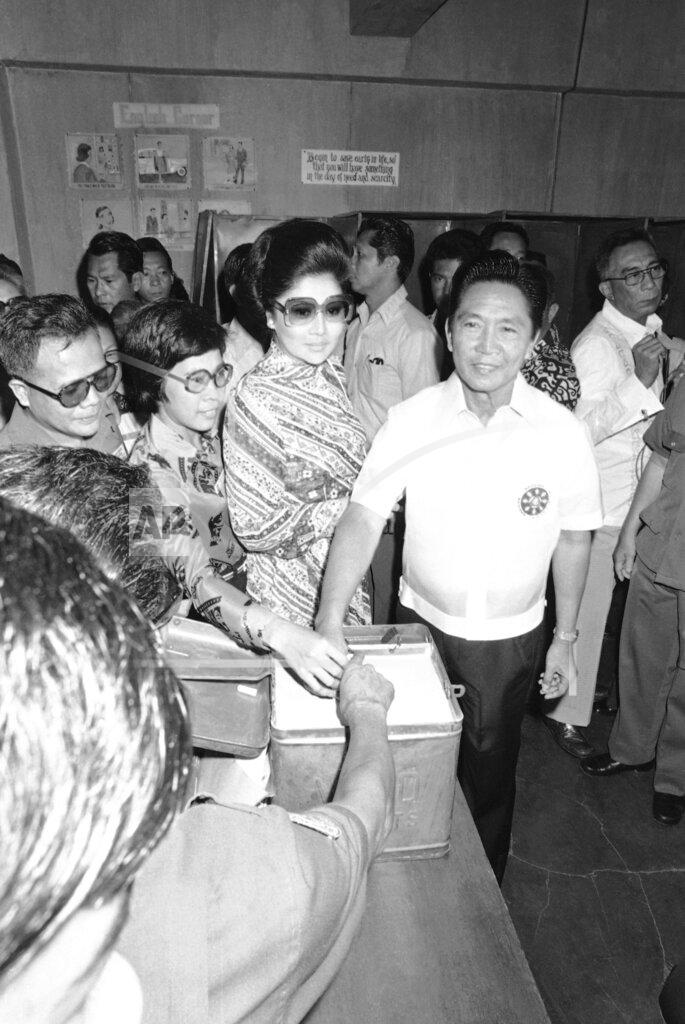
Millions of Filipinos voted in a nationwide referendum on President Ferdinand E. Marcos’ martial law rule and early provincial returns in the compulsory balloting showed an expected endorsement of his regime. Voting trends compiled from partial returns from four provinces showed between 80% to 90% favored continuation of Marcos’ martial law regime. Voting will continue until noon today in metropolitan Manila and final results are not expected for two to three weeks. In Washington, former Senator Raul Manglapus, living in exile in the United States, asked President Ford and Congress to disavow “support for the Marcos dictatorship.”
Leftist guerrillas who last night kidnapped John Patrick Egan, the United States honorary consul in Cordoba, Argentina, said today that they would kill him if the authorities did not announce the whereabouts of four captured guerrillas by tomorrow evening, according to a message delivered to newsmen.
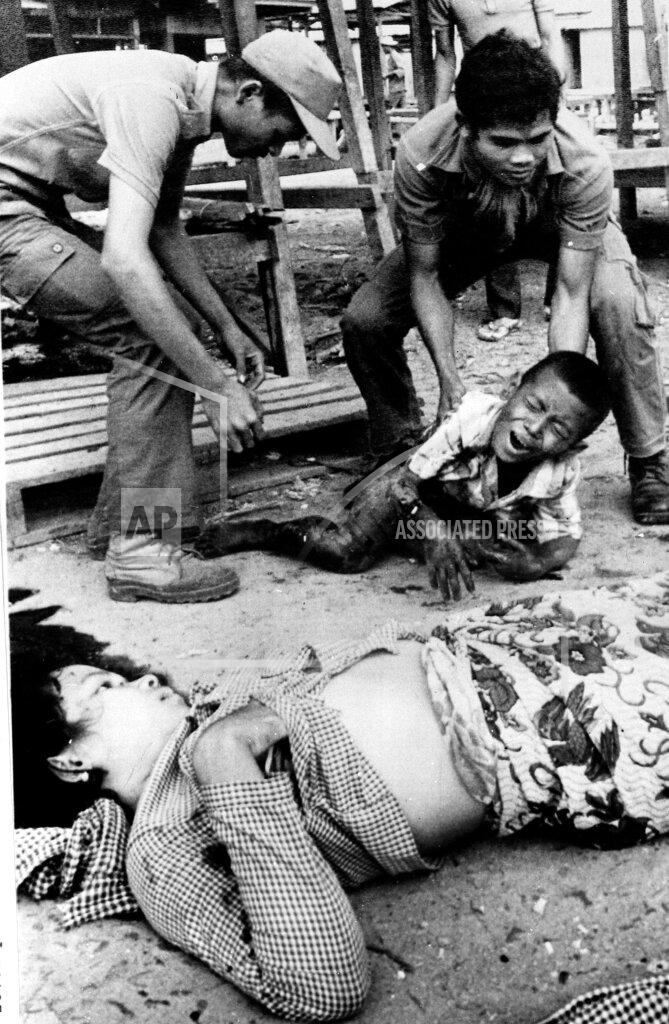
Some of the heaviest fighting in Ethiopia’s 27‐day‐old civil war has reportedly raged for five days over control of the Eritrean town of Keren near the border with the Sudan. The Ethiopian Government has declined to report on its actions against the Eritrean Liberation Front, and the number of casualties and the results of the sustained lighting could not be learned. About 1,500 Ethiopian soldiers were said to be fighting an unknown number of the front’s guerrillas at the town. Keren straddles a road and a rail complex in the only mountain pass leading from Ethiopia to the Sudan. The predominantly Muslim town is said to have been a guerrilla stronghold and a principal supply route for guerrillas before Government troops moved into the region in force. Ethiopian and foreign sources said the battle began shortly after dawn on Sunday when Ethiopian jet fighter‐bombers attacked guerrilla positions on the southern outskirts of Keren. The bombardment was followed by a barrage of 105‐mm. artillery rounds before heavily aimed assault troops stormed the suspected guerrilla positions. The guerrillas reportedly used Soviet‐made automatic rifles, bazookas and mortars from concealed positions in the mountains.
The House passed a $21.3 billion antirecession tax cut bill that included the repeal of the controversial oil depletion allowance for petroleum producers, which has been part of the tax law for nearly 50 years. The repeal vote, 248 to 163, was historic because, it was said by the repeal advocates to be the first ever taken in the House. The overall bill was approved 317 to 97, and it provides a $16.2 billion tax cut for individuals. The rest is for businesses.
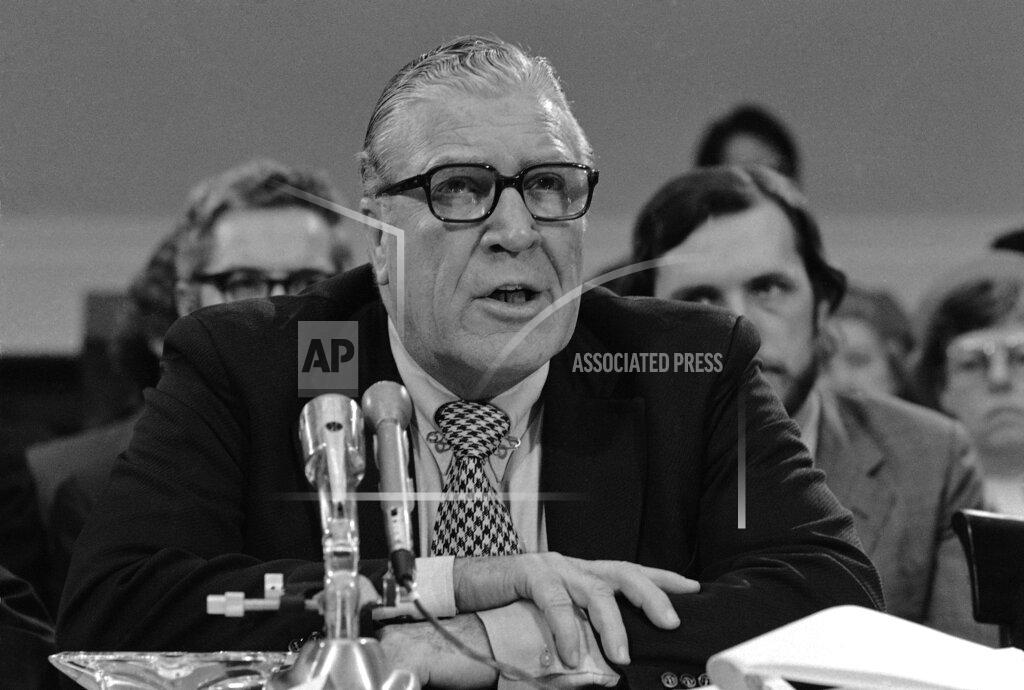
Secret files of derogatory information on presidents, members of Congress, federal officials and others who simply tried to oppose him, were kept by J. Edgar Hoover while he was head of the Federal Bureau of Investigation. This was disclosed by Attorney General Edward H. Levi in testimony to the House Subcommittee on Civil Rights and Constitutional Rights. Mr. Levi also said that he could confirm a series of incidents in which the FBI had been misused for political purposes or to serve the whim of presidents.
Attorney General Levi has locked up a computer intelligence file on several thousand private citizens suspected of being connected with civil disorders and promised not to reopen it without consulting the Senate subcommittee on constitutional rights. The move was disclosed when subcommittee Chairman John V. Tunney (D-California) made public a letter dated February 20 from Levi. It put on public record the fact that the Justice Department last October 17 had deactivated computer operations through which it had made data on private citizens available to government intelligence units, including the CIA and the Internal Revenue Service The file was set up in 1967.
CIA Director William E. Colby has given assurance that agency officials will not be bound by secrecy in testimony before a select Senate investigation committee, Chairman Frank Church (D-Idaho) said. Church said Colby had agreed to provide the committee with a waiver releasing past and present employees from any agreement not to disclose agency activities.
President Ford nominated Commerce Secretary Frederick B. Dent to be his chief international trade negotiator. Dent, 52, would succeed William D. Eberle who resigned January 31. White House Press Secretary Ron Nessen said Mr. Ford had not yet decided on a replacement for Dent.
Vice President Rockefeller had a chat with newsmen while flying from Detroit to Washington and made remarks that appeared to foreclose any chances of his becoming a presidential candidate again. He said that President Ford was “bound to be the candidate” in 1976, and that he wanted to maintain what he said was a “low profile” and help the president.
The House Interior Committee approved a slightly altered version of the strip mining bill President Ford vetoed last year The Senate Interior Committee began work on a similar bill. Rep. Morris K. Udall (D-Arizona) prime House sponsor, said he expected final House action by mid-March. He said he anticipated that Mr. Ford would veto the bill again. “I think we have the votes to override a veto,” he said. The bill sets down federal standards for reclaiming land disturbed by strip mining of coal, a process where the top soil is scraped away to allow easy excavation.
The Congressional Black Caucus, announcing its goals for the 94th Congress, stressed economic issues, voter participation legislation and a review of domestic assistance programs such as revenue sharing. Measures to provide full employment, tax reform and reordering of spending priorities and making cuts in military aid and defense spending led the agenda for the 17 black members of the House who make up the caucus
The American Civil Liberties Union charged that thousands of war resisters have become “permanent political refugees” under the U.S. Immigration and Nationality Act. The law forbids men who have become citizens of other countries after fleeing military service to return to the United States under any circumstances. The Presidential Clemency Program excludes these men even if they face no criminal charges in the United States. ACLU spokesman Henry Schwarzschild said that “after the Justice Department released the names of the 4,400 men who are still in legal jeopardy for draft evasion, thousands of men not on the list believed that they could return.”
Approval of DES as the first “morning after contraceptive should be withdrawn if use cannot be limited to rape and incest victims, said Dr. Frank J. Rauscher, director of the National Cancer Institute. At a Senate hearing marked by testimony from three women who said they or their daughters were DES cancer victims, Rauscher took a stand against the Food and Drug Administration’s pending approval. He said the cancer institute “very strongly recommended that DES, or diethylstilbestrol, no longer be added to animal feed as a fattening agent or used routinely for birth control.
The Federal Communications Commission said that it would approve a $365 million annual rate increase for interstate service by the American Telephone and Telegraph Company and indicated that it would consider another increase later. The $365 million is about half the $717 million that A.T.&T. had requested.
A Federal judge today criticized James Earl Ray’s attorneys and state officials involved in his case but ruled that the confessed assassin had “clearly and deliberately” elected to plead guilty to murder and was not entitled to withdraw that plea and have a new trial. Mr. Ray. 46 years old, has sought a new trial since March 17, 1969, less than a week after he pleaded guilty to the April 4, 1968, assassination of the Rev. Dr. Martin Luther King Jr. and accepted a 99‐year prison sentence.
A blaze at the Manhattan switching station of the New York Telephone Company caused what was described at the time as “the biggest and longest burning fire the city had ever seen”, knocking out telephone service on 300 blocks in the financial district and surrounding residences. While emergency phone service was restored (with mobile equipment trailers) to businesses, most of the nearly 145,000 phones affected were without service for 23 days.
The Wall Street Journal broke the front-page story “Social Security System Is on Way to Going Broke, Analysts Warn”, noting that payments from the 40-year-old American Social Security system had finally become greater than the income received from payroll taxes. When the program began in 1935 for retirement, economists had forecast that Congress might have to appropriate new money by 1980 to close the deficit.
Legislation to give Congress veto power over the Ford Administration’s new offshore oil leasing program was introduced by Rep. John Murphy (D-New York), chairman of a House subcommittee on oceanography. The bill also would allow states to delay offshore leasing in federal areas along their coasts for as much as three years and would assure them of a share of any oil revenue produced by the offshore wells Murphy said he drafted the bill after consulting House and Senate members concerned with finding environmentally sound ways to proceed with offshore development.
High winds forced postponement for the second day of the United States’ first underground nuclear test of the year at the Yucca Flat test site in Nevada. Scientists will evaluate the weather again early today before rescheduling the blast, according to a spokesman for the Energy Research and Development Administration. The device to be detonated has a yield of 200 kilotons, or a power 10 times that of atomic bombs dropped on Japan in World War II.
NSC 68, the document of the National Security Council that had guided U.S. policy against the Soviet Union beginning in April 1950, was declassified by the U.S. Department of State after almost 25 years.
Dow Jones Industrial Average: 731.15 (+3.05, +0.42%)
Born:
Duce Staley, NFL running back (NFL Champions, Super Bowl 40-Steelers, 2005, Philadelphia Eagles, Pittsburgh Steelers) and head coach (Philadelphia Eagles, Detroit Lions), in Tampa, Florida.
Marcus Robinson, NFL wide receiver (Chicago Bears, Baltimore Ravens, Minnesota Vikings), in Fort Valley, Georgia.
Jonathan Quinn, NFL quarterback (Jacksonville Jaguars, Kansas City Chiefs, Chicago Bears), in Turlock, California.
Brandon Williams, NBA shooting guard and small forward (Golden State Warriors, San Antonio Spurs, Atlanta Hawks), in Collinston, Louisiana.
Greg Koehler, Canadian NHL centre (Carolina Hurricanes), in Scarborough, Ontario, Canada.
Prodromos Korkizoglou, Greek decathlete, in Larissa, Greece.
Shelby Walker, American mixed martial artist, in Kingsville, Texas (d. 2006).
Christina Nigra, American actress (“Out of This World”), in Agoura Hills, California.


 History Diaries