
Marshall Timoshenko orders his troops to take Viipuri. The Soviet force is ordered to surround and totally destroy the city’s Finnish defenders. The plan of attack includes an assault by two army corps across Viipurinlahti bay to encircle the city from the southwest. Further east the enemy also attacks to the north along the banks of the Vuoksi with another two army corps.
Finnish 23rd Division counterattacks with 8 Vickers Mark E light tanks (Battle of Honkaniemi, the only Finnish tank attack). Colonel Oinonen, the new commander of the Finnish 23rd Division, decides to launch a counterattack on the enemy troops which have overrun the Honkaniemi area. The counterattacking force includes a strengthened battalion with its own tanks. H-hour is set for 5:00 AM. Finns of the 23rd Division, II Corps have spent the night traveling to the little town of Heponotko, which is about 3 km from the train depot in Honkaniemi. By 04:00, they are in position. The 4th Armoured Company, composed of 13 Vickers 6-ton tanks, has traveled 50 km during the same time and meet them there 30 minutes later. During the journey, the 4th Armoured lost 5 of its 13 tanks due to engine failures and the like.
H-hour has to be put back when the attacking force is unable to establish contact with its own artillery. When contact is finally established about an hour later, part of the preliminary artillery bombardment comes down among the Finnish troops, killing or wounding 30 men.
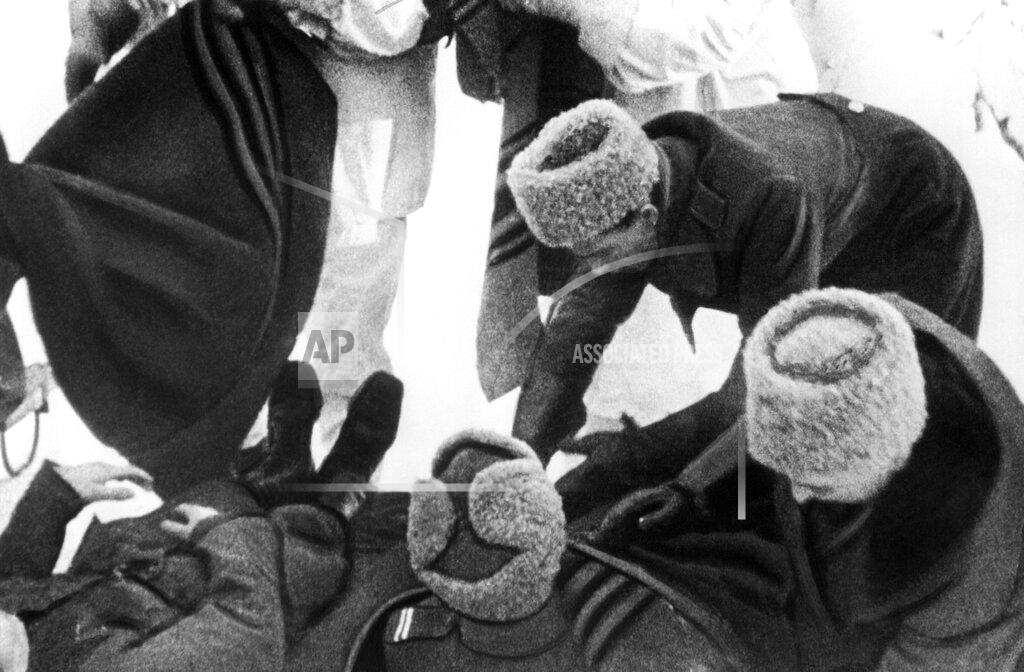
When the troops on the Isthmus at Lake Näykkijärvi move into battle between 6:15 and 10:00 AM, a fierce tank battle ensues in the area around Honkaniemi station. The Finns advance, but are quickly stopped by the Soviet forces. The Finnish tanks prove completely ineffective, being targeted by much larger Soviet T-26 and T-28 tanks as well as 45 mm anti-tank guns. The Finnish tanks did make it to the Soviet line but were quickly knocked out there. The Finns lose five of the six old Vickers tanks used in the attack. By 10:00, Captain Kunnas received orders to retreat. The Soviets reported to headquarters that they had destroyed six Finnish tanks with no losses to their own tank force. The attacking troops are finally forced to withdraw to their starting positions.
The Russians bring more men into the area to support the breakthrough.
Two strongholds are initially lost in the Terenttilä area in Taipale, but are retaken in a counterattack.
Some Finnish units begin withdrawing to the T Line on the Karelian Isthmus. After the failure of counterattacks against the Soviet penetrations, the Finnish command orders their forces to retreat to their third, final line of defense.
80 Soviet bombers pound the marshalling yard and the surrounding district in Kouvola, causing a temporary break in traffic to the east and south.
In Eastern Finland, British pilots bring 12 Bristol Blenheim bombers directly to Jukajärvi airstrip in Juva.
Eight Finnish aircraft bomb the Lotinanpelto airfield near the mouth of the River Syväri and the Murmansk railway line.
Finnish Foreign Minister departs for his third trip to Stockholm to seek terms with Soviet Union for ending the war. Foreign Minister Tanner arrives in the evening in Stockholm and meets Professor T.M. Kivimäki, who has just returned from a fact-finding mission to Germany and urges acceptance of even harsh peace terms. The Ministry for Foreign Affairs communicates the peace terms to Finland’s diplomatic representatives in Paris and London.
A Finnish official revealed today that Finland has placed substantial orders for arms and ammunitions in the United States, including a contract for 50,000,000 rounds of infantry cartridges from the Winchester Arm Company. The total amount of arms orders placed by the Finns was not made public, but the cartridge order alone was understood to aggregate about $2,000,000.
In Stockholm, holders of steel von Döbeln rings bearing the election slogan “Honour – Duty – Will” exchange them for gold rings, the proceeds from the sale to go to help the Finnish cause.
Finland’s good will envoys in the United States, the great runners Taisto Mäki and Paavo Nurmi, are today guests of honour at the US indoor championships in New York’s Madison Square Garden. Finland’s blue and white flags are raised on the flag poles side by side with the Stars and Stripes.
“Increased activity of contact units on various points of the West Front between the Moselle and the Saar” was reported in this morning’s French High Command communiqué. During the day confirmation was given that the rhythm of the war was consistently increasing. Yesterday was marked by extensive patrol work, especially on the German side. It was revealed that the outpost attack described yesterday took place in Alsace between Lauterbourg and Wissembourg. The Germans seem to have thought they destroyed or at least weakened French outpost resistance by their intensive trench mortar attack, but instead their advancing infantry party found itself caught between two fires and had to retire with losses.
East of the Moselle on the Nied and west of the Saar other German. patrols were noted, but none pushed forward in the manner officially described as “productive of incident.” Air activity also grows more intense, each side seeking to keep. informed of the movements of the other. Last night’s German communiqué stated that one French plane had been shot down, but this was denied. This evening’s communiqué describes today as having been “quiet on the whole.”
The German army communiqué reported today that one French fighter plane, a Potez-63, was shot down over Eifel forest yesterday by anti-aircraft artillery. German pursuit planes over the West Front and the North Sea, however, reportedly saw no action. Anti-aircraft artillery is reported to have repelled several British planes flying in over Helgoland Bight. None were shot down.
On the Western Front German and French patrols clashed in several places, but there were no large-scale engagements, it is stated. East of the Moselle, it is reported, a German patrol of fifty men was almost encircled by superior French forces but reportedly escaped without losses. Further south, it is stated, another German patrol met superior French forces. Here the fighting was sharper, and the Germans lost one man, says the communiqué, but succeeded in carrying out their mission. Two other French patrols in a neighboring sector were “repelled without difficulty.”
Deportation of Jews to the Lublin Reservation in Central Poland near the German-Soviet border has been resumed by the Nazis, it is reported in Paris. Nearly 1,000 men and women are said to have arrived there from Northern Germany, mainly from towns along the Baltic.
In Rome, U.S. Undersecretary of State Sumner Welles had his first day of meetings with European leaders during his fact-finding mission. Welles went to the Palazzo Chigi where he found Count Ciano to be very hostile to Germany. They then went together to the Palazzo Venezia where Welles found Mussolini to be hardly better disposed towards Britain and France. Undersecretary of State Sumner Welles spent an hour with Premier Mussolini today going over the European problems which Welles came to Investigate for President Roosevelt. The length of their conversation, as well as the hour and a quarter which the American envoy spent this morning with Foreign Minister Count Galeazzo Ciano, heightened diplomatic interest in his European trip, which is to include visits to Berlin, Paris and London. Welles later recounted being “profoundly shocked” at Mussolini’s appearance, finding him looking old, slow and tired in contrast to the vital-looking Mussolini seen in photographs and newsreels.
The journey of Sumner Welles, United States Undersecretary of State to Berlin, continues to be the sole topic of speculation in neutral diplomatic quarters and if the German Foreign Office is in possession of any information touching on the exact nature of his mission the secret is being rigidly guarded. Beyond recurring assurances that the American diplomat’s visit is being awaited with interest and that he is certain of a hearty welcome and most attentive hearing, nothing is added to the daily announcements. The American Embassy is also maintaining a sphinx-like silence. Mr. Welles is expected to arrive in Berlin Friday. In addition to conferring with Chancellor Hitler and Foreign Minister Joachim von Ribbentrop he will also visit Field Marshal Hermann Göring at the latter’s shooting estate, forty miles from Berlin. Incidentally, Mr. Welles will receive his first European war-time blackout in Berlin. Newspaper reporters of all nations were again warned not to expect any revealing communiqués from the visit, as all conversations will be confined to a small circle in view of their highly critical nature.
RMS Queen Elizabeth leaves Clydebank, Glasgow, Scotland with a skeleton crew on a secret maiden voyage to Halifax & New York. She is equipped with a giant electric “degaussing” cable, to neutralize magnetic mines. She sailed on one of only two tides high enough to carry the 83,673-ton ship down the river Clyde and out to sea. To prevent German attack, false intelligence regarding her destination being Southampton in southern England was generated, but her actual destination was New York in the United States. She would reach New York for her final fitting.
British Foreign Office officials today considered the Norwegian Government’s suggestion that the Anglo-Norwegian dispute over the recent Altmark incident should be submitted to some sort of international tribunal, and while no official statement has been made on the subject it is understood that Britain does not favor such a procedure.
The British war office announces that northern Scotland is to become out of bounds for unauthorized people from March 1th. Due to naval bases being located in the north of Scotland, the British War Offices announces that commencing 1 March 1940, only those with special passes will be permitted north of the Caledonian Canal.
Rumania tonight announced an increase of 12 to 40 percent on railway freight rates on most exports, including oil consigned to Germany.
The British cargo ship Efos collided with some flotsam in the North Sea and sank. All 18 crew were rescued.
The Dutch coaster Ida sank in the Irish Sea 30 nautical miles (56 km) south-southwest of the Smalls Lighthouse, Pembrokeshire, United Kingdom. There were no casualties.
The Swedish cargo ship Nordia in Convoy ON.15 collided with the Royal Navy destroyer HMS Imperial (D 09) in the North Sea (61°12′N 3°08′E) and sank with the loss of two crew.
The German blockade runner Orizaba ran aground off Skjervøy, Norway (70°40′N 20°59′E) and was wrecked. The survivors were rescued by the Finnish ship Margareta.
Convoy OB.99 departs Liverpool.
Convoy HX.23 departs Halifax for Liverpool.
The U.S. passenger liner Washington was detained at Gibraltar by British authorities.
The War at Sea, Monday, 26 February 1940 (naval-history.net)
Destroyer IMPERIAL with convoy ON.15 was in a collision at 0250 with Swedish steamer NORDIA (1316grt) 70 miles WSW of Feistenen in 61-12N, 03-08E. The steamer sank with the loss of two crew, and IMPERIAL, covered by anti-aircraft cruiser CALCUTTA, proceeded to Lerwick for emergency repairs, arriving on the 27th. She left on the 29th to join convoy HN.15 for passage to Rosyth. From Methil, she proceeded on 3 March in convoy MT.22 to the Tyne, where she arrived on the 5th. She did not return to service until 12 April.
Destroyers INGLEFIELD, GRIFFIN, GURKHA, TARTAR, INTREPID, and IVANHOE were sweeping in Moray Firth when GRIFFIN made a contact in 58 10N, 02 22W. INGLEFIELD, GRIFFIN, and GURKHA attacked what later turned out to be a wreck. GURKHA and TARTAR then proceeded to Rosyth arriving on the 27th.
Destroyers KANDAHAR, KELVIN, and KIMBERLEY departed Scapa Flow for the Clyde, arriving on the 27th.
Destroyer ESCORT attacked a submarine contact in 58-08N, 2-30W. Again, this was later found to be a wreck.
Destroyers ECLIPSE, ELECTRA, KHARTOUM, and KINGSTON arrived at Scapa Flow.
Destroyer BASILISK departed Dover at 0700 for refitting at Chatham.
Submarine STERLET was exercising off Harwich with sloop MALLARD.
Submarine TRIAD arrived at Rosyth from patrol.
Submarine SNAPPER departed Harwich on patrol.
Submarine UNITY arrived at Harwich from Portsmouth.
Convoy SA.31 of two steamers departed Southampton escorted by sloop FOXGLOVE, and arrived at Brest on the 28th.
Convoy MT.18 departed Methil, escorted by sloop FLAMINGO and destroyers WALLACE and JACKAL, and arrived later in the afternoon. JACKAL then joined convoy TM.15, escorted by the 3rd Anti-Submarine Group.
Convoy OB.99 departed Liverpool escorted by destroyers WALKER and WINCHELSEA until the 29th, and then dispersed next day on 1 March.
Convoy FS.106 departed the Tyne at 2130 escorted by sloop FLAMINGO and destroyer WALLACE with destroyer JUNO covering. They were to have escorted an MT convoy which was cancelled, and before leaving with FS.106 spent the day covering convoys TM.14 and MT.18. Convoy FS.106 arrived at Southend on the 28th.
Sloop SCARBOROUGH, on escort duty, attacked a submarine contact SW of the Scilly Isles in 49-36N, 6-47W.
A British Gladiator of 770 Squadron from aircraft carrier ARGUS crashed into the sea at Hyeres. Midshipman (A) R W Kearsley was rescued.
Convoy HX.23 departed Halifax at 0800 escorted by Canadian destroyers HMCS FRASER and HMCS ST LAURENT until 1710/27th, when they turned the convoy over to ocean escort, armed merchant cruiser AUSONIA. She detached on 9 March. Before then, on the 28th, destroyer HEREWARD departed Halifax, overtook the convoy and arrived at Plymouth before going on to Portsmouth on 11 March for refitting which completed on 12 April. HX.23 arrived at Liverpool on 12 March.
German steamer ORIZABA (4354grt) of the Vigo group ran aground off Skjervoy near Hammerfest on the north coast of Norway in 70 04N, 20 59E and was lost. Survivors were rescued by Finnish steamer MARGARETA (2155grt).
Today in Washington, the Senate passed the $107,079,000 State-Justice-Commerce Departments Appropriation Bill, confirmed the nomination of James J. McEntee to be director of the Civilian Conservation Corps, heard Senator Guffey criticize the Republicans for reviving the poll tax in Pennsylvania and adjourned at 5:45 PM until noon on Thursday. The Agriculture Committee heard Secretary Wallace urge additional funds for the farm program and the Commerce Committee heard Secretary Hull advocate extension of the reciprocal trade treaty program.
The House passed the $90,890,843 First Deficiency Bill, defeating an attempt to eliminate funds for the housing census, and adjourned at 6:27 PM until 11 AM tomorrow. The Rules Committee approved the bill for enlarging the capital of the Export-Import Bank and the Naval Affairs Committee heard Secretary Edison on Naval Department reorganization proposals.
Citing precedent, Attorney General Jackson refused today to advise a House committee whether the National Labor Relations Board had violated a law designed to prevent legislative lobbying by Federal agencies. The House committee investigatIng the Board asked Mr. Jackson for the opinion after it received evidence purporting to show that for several years board officials sought to organize opposition to a series of amendments to the Wagner act which they administer. The text of Mr. Jackson’s letter to Chairman Smith follows:
“I have your letter of February 13, asking if I could with propriety give your committee my opinion as to whether the testimony before the committee established a violation within the prohibition of U. S. C., Title 18, Section 201. Almost from the beginning of the government my predecessors have, with great unanimity, taken the position that the statutes prescribing the duties of the Attorney General do not authorize him to render opinions to the Congress or to its committees or members.
“These statutes have not been substantially changed since 1789. As early as 1818 Attorney General Wirt, and as late as October 4, 1939, Attorney General Murphy each ruled that under the statutes Attorneys General are not authorized to give official opinions on questions of law except upon call of the President or the head of an executive department to enable him to decide a question pending in his own department for action.
“It has been pointed out that the effort to advise both the executive and the legislative branches of the government would be inappropriate under our doctrine of separation of the powers of the two branches, and that, like other efforts to serve two masters, such a practice would likely introduce conflict of duties. Congress has never seen fit to change the statutes so construed, and I take it that in spite of frequent requests for opinions Congress in its deliberate judgment has acquiesced in the meaning so uniformly ascribed to these statutes for well over a century.
“I have been constrained to reach this conclusion notwithstanding the chairman of the National Labor Relations Board, who I understand was furnished a copy of your letter to me, has urged that in responding to you, I fully consider and discuss the legal principles involved. I think you will agree that the rule, both well established and wise, requires me to answer your inquiry that I could not with propriety render the opinion which you suggest.”
After refusing decisively to withhold approval of an appropriation for the salary of the American Ambassador to Moscow as a reflection of national resentment toward Soviet Russia, the Senate today passed the $107.079.000 supply bill for the State, Justice, and Commerce Departments and sent the measure to conference with the House. Senator Lodge, Republican, of Massachusetts, made the proposal to strike out a $17,500 item representing the salary of Ambassador Steinhardt. The vote came after protracted debate, in which Senator Vandenberg of Michigan fought single-handed against a united Democratic majority. On a standing division only ten Senators voted for the amendment. The chair made no effort to count those opposed, who numbered between thirty and forty members.
Defeat of the proposal followed a succession of Democratic triumphs. An exception was the deletion from the bill of a proposal which was written by the Senate committee into the House version, to appropriate $162,000 for the Commerce Department’s efforts to expand the nation’s trade with Latin America. An amendment by Senator Barkley, majority leader, to restore the House provision for $20,000 to finance this country’s participation in the annual meeting of the Interparliamentary Union also went down to defeat, but this item had not been endorsed by the Appropriations Committee.
Secretary of State Hull, whose trade agreements program has come under fire from many republican congress members, cited in support of it today the recent report of the republican program committee.
In response to a radiogram from President Roosevelt, the house votes to make $60,000,000 of next year’s agriculture fund available immediately to keep crop control subsidy checks flowing to farmers.
Under the Wagner act, an employer is obliged to put into writing any agreement that may be reached through collective bargaining with his employes, the United States Circuit Court of Appeals ruled yesterday, upholding an NLRB decision.
The U.S. Supreme Court today rejected a plea from Martin T. Manton to give him a last chance to vindicate himself “for the honor of the American judiciary.” The high court rejected his appeal for a hearing.
A message from the U.S. Antarctica Expedition announced Monday that Admiral Richard E. Byrd and two assistants had reached and mapped from the air the long sought South Pacific coast of Antarctica, goal of explorers of many nationalities for the last 166 years. Triumphing over fog, gales and ice pack, the aerial explorers not only mapped 200 miles of the new land, which is 1,200 miles east of the Little America base, but discovered a vast mountain range to the southward, rearing thousands of feet above sea level.
In the United States, the Air Defense Command was created by the War Department. As a component of the U.S. First Army, its mission was to plan for and execute the air defense of the continental United States.
Captain Raymond A. Spruance relieves Commander Reuben L. Walker as Commandant Tenth Naval District
It was officially announced today that nine persons had died and thirtytwo had been injured in the railroad wreck that occurred on the National Railroad line near Queretero, Mexico yesterday when a passenger train ran head on into a freight traveling in the opposite direction.
Sharp limits for the movement of auxiliary vessels of belligerent nations in Pan-American territorial waters and differentials between merchant ships and auxiliaries were recommended today by the Inter-American Neutrality Committee of experts meeting in Rio de Janeiro.
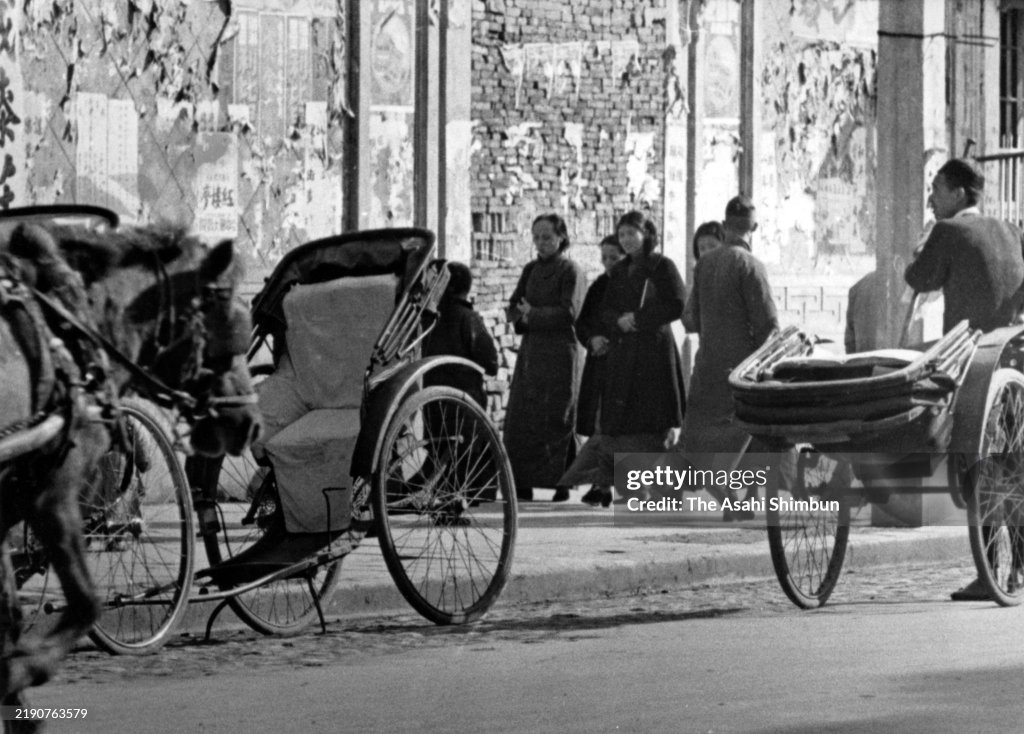
Japanese military dispatches today reported Chinese were massing in Kwangsi Province in the south for another attempt to recapture Nanning, the provincial capital. Chinese reports said 1,000 Japanese were killed and eight armored cars and two field guns destroyed in sharp fighting Saturday at Wutang, fifteen miles northeast of Nanning. Japanese dispatches confirmed reports of action, saying Japanese infantry had engaged three Chinese divisions forty miles northeast of Nanning.
The Japanese also said “about 30,000 Chinese troops were believed trapped” about sixty miles south of Nanning near the Kwangtung-Kwangsi border.
The Central News Agency (Chinese) reported Chinese troops had penetrated Tsiaotso, important railway and coal mining town in Honan Province, Central China, after artillery had blown up a Japanese ammunition dump.
Japanese forces in January killed 77,600 Chinese troops, an army announcement said today. During the same month the Japanese lost 1,790 men. The announcement said that in January Japanese forces engaged 903,300 Chinese, including 29,700 in North China, 317,500 in Central China and 288,800 in the South. It said the Chinese lost 18,800 dead in the North, 25,700 in Central China and 33,100 in the South, while 4,678 Chinese prisoners had been taken. in the month.
Efforts of foreigners to import emergency supplies of foodstuffs in the face of North China’s threatened starvation met concerted Japanese opposition here tonight. The starvation threat is a result of famine conditions throughout North China caused by last Summer’s floods and war conditions. In an emergency conference attended by the British and Japanese. Consuls and by British, American, French and Japanese business men, the Japanese announced that they “believe it is undesirable to import supplies from countries other than the yen-bloc nations.” These nations are Japan, Manchukuo and China. The Japanese declaration apparently nullified a foreign-sponsored plan to bring in large quantities of American, Australian, Canadian and other foodstuffs, especially flour, because execution of the plan would depend upon the Japanese easing foreign exchange control sufficiently to permit banks to supply the required financing. The Japanese said this will not be permitted.
An American, James R. Young, Tokyo manager for the International News Service, who was arrested January 21, has been indicted on charges of violating the Japanese Army penal code, it was announced today. Mr. Young will have a public trial in the Tokyo District Court. The date has not been set. The Foreign Office announced February 2 that Mr. Young had been charged with violation of the Army Penal Code by allegedly disseminating in Japan and abroad slanderous articles and rumors regarding the Japanese military forces. Mr. Young’s arrest followed his return from a long tour of China.
That Japan’s military and economic activities in China will continue on a large scale and the Japanese people must tighten their belts for an indefinite time is the substance of the army’s reply to recent outcries about scarcity. Several articles constituting the reply have been published in the newspaper Asahi and signed by Major Cho Kato of the War Office. Published with official authority, the articles sketch a far-reaching program, the ultimate aim of which is control of China’s resources for enhancement of Japan’s power. They envisage long-term Japanese military occupation of China and assume that the Japanese Army will undertake China’s “defense.” Major Kato observes that the cries of scarcity are growing louder and that consequently some Japanese are becoming apprehensive regarding the outcome of the war. “We understand this feeling,” he writes, “but it is likely to discourage our morale and create an anti-war sentiment.”
Dow Jones Industrial Average: 146.44 (-0.28)
Born:
Mac Percival, NFL kicker (Chicago Bears, Dallas Cowboys), in Lubbock, Texas.
Died:
Michael Hainisch, 81, First President of Austria (1920-1928).
Naval Construction:
The Royal Navy Dance-class ASW trawler HMS Rumba (T 122) is laid down by A & J Inglis Ltd. (Glasgow, Scotland); completed by Aitchison Blair.
The U.S. Navy Elco 70-foot motor torpedo boat USS PT-10 is laid down by the Electric Launch Company Ltd. (Elco), (Bayonne, New Jersey, U.S.A.).
The Royal Australian Navy Bathurst-class minesweeper-corvette HMAS Lismore (J 145) is laid down by Morts Dock (Sydney, New South Wales, Australia).
The Royal Navy Tree-class minesweeping trawler HMS Olive (T 126) is launched by Hall, Russell & Co. Ltd. (Aberdeen, Scotland).
The Вое́нно-морско́й флот СССР (ВМФ) (Soviet Navy) “M” (Malyutka)-class (3rd group, Type XII) submarine M-32 is launched by Krasnoye Sormovo (Gorkiy, U.S.S.R) / Yard 112.






 History Diaries