
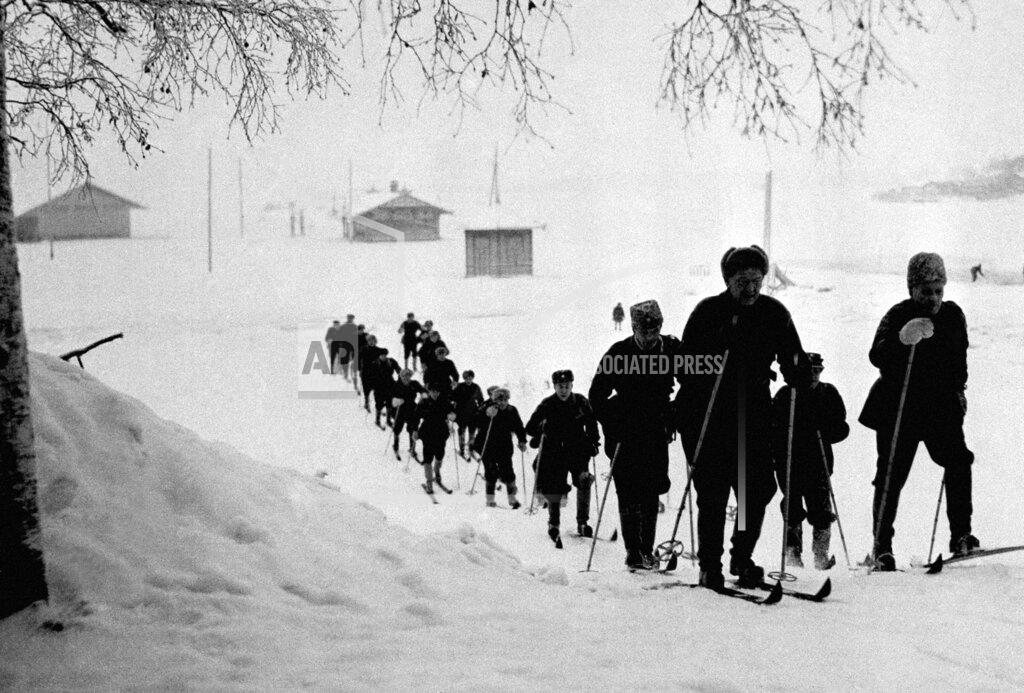
The Soviets attempt some offensive action on the Karelian Isthmus, but heavy snow and fog prevent large-scale operations.
On the Karelian Isthmus, the Finnish 23rd Division takes advantage of a momentary lull in enemy pressure to attempt a counterattack to improve their defensive positions to the east of Lake Näykkijärvi. The counterattack is launched at 2.30 AM, but almost immediately breaks down. At daybreak the Finnish troops withdraw to their defensive positions.
Soviet attacks on the intermediary defensive positions are unsuccessful.
In the north, the Finnish guerrillas operating in Salla are suffering from stiffer countermeasures by the Soviet troops in the area.
The independent Company Kojonen pulls off a successful surprise attack on a Red Army logistics centre at Kuusivaara in Salla, causing considerable losses among the Soviet troops.
In Petsamo, a 180-strong Soviet ski company attacks Heteoja, bringing to an end a phase of guerrilla activity which had lasted almost two months. They are surrounded by Finnish troops, but half their strength manage to break out.
In Kuhmo, Finnish troops take the Reuhkavaara ‘motti’. Enemy dead total 174. Finnish casualties are three dead and five wounded. The Finns capture a considerable amount of material, including two tanks, four lorries and over 200 small arms.
The exhibition of captured war material in Helsinki Exhibition Hall is a great success. 13,000 people have visited the exhibition during the first week alone.
The Finnish Cabinet confers with British military representative about dispatch of Anglo-French expeditionary force. Finland’s Foreign Minister meets the new British diplomatic representative in Finland, Mr. Vereker, and the military envoy, General Ling, who has just visited General Headquarters in Mikkeli. According to Vereker, the Allies are ready to send 20,000 soldiers to Finland on March 15.
The foreign ministers of Norway, Denmark and Sweden meet in Copenhagen. The Nordic countries make a joint decision not to give military assistance to Finland nor to allow foreign troops to pass through their territory. Finland therefore stands alone. Foreign ministers from Norway, Denmark, and Sweden reasserted the neutrality of their home countries, jointly declaring that they would not assist Finland and would not allow foreign troops to enter their territories. Ignoring this declaration, British envoy to Finland Sir George Gordon Vereker continued to promise 20,000 to 22,000 Allied troops for Finland if Finland would make such a request by 5 March 1940. Where Vereker comes up with this outlandish projection is unclear.
Rigid restrictions on the export of capital and on dealings in foreign exchange or gold were passed into law today at two sessions of the Swedish Parliament, one following immediately on the other.
An Associated Press article takes note of the ‘Phony War.’ Half a year of war between Germany and the Franco-British allies is drawing to a close with no battle of major consequence yet fought on land, in the air or at sea. This will soon be rectified.
The Manstein Plan for Fall Gelb was fully adopted by a new OKW directive. Hitler gave approval to detailed plans for the invasion of France and the Low Countries. Revised orders for the attack in the west are issued. OKH has been conducting exercises throughout the winter and especially in the early days of this month because of dissatisfaction with the attack plan. Following Manstein’s conversation with Hitler on March 17th and an OKH presentation to him on the 18th it has been decided to revise the plans to emphasize the role of Army Group A and an attack through the Ardennes. As far as technique goes the plans are fairly traditional. The emphasis is still not yet fully on the possibilities of the panzer advance. Rundstedt and Bock, who will be the principal commanders are, despite their considerable abilities, wedded to the conventional infantry-based ideas. Although the direction of the attack is certainly bold, the old school see early problems when it becomes necessary to cross the Meuse River. The tank enthusiasts, like Guderian, are more concerned about exploiting the advance after the crossing.
This first draft of the revised plan will see five panzer divisions and motorized divisions headed through the Ardennes Forest (von Rundstedt), north of the Maginot Line but south of the bulk of the BEF. The mobile divisions are to take bridges across the Meuse on the fly, with the assistance of paratroopers, and then race to the coast. There is still a “right hook” to the north (General von Bock), but its importance is vastly diminished and intended more as a decoy to make the BEF look north and away from the main effort. The plan is still subject to revision, but it is now much more along the lines that Manstein and Hitler wanted.
Hitler made a speech in Munich on the 20th anniversary of the founding of the Nazi Party in which he declared that Germany must be and would be victorious. He repeats the “stab in the back” thesis of the post-war years, with the slight twist that all that Germany needed at the time was someone like him in charge: “Germany would not have lost the last war if I had been Reichs chancellor in 1918.” This, of course, ignores the huge battle losses and retreats of 1918, an empire on the verge of revolution (and actual revolution in places such as the navy), and many other aspects of historical reality.
British Prime Minister Neville Chamberlain condemned Hitler’s aggression but said that he was prepared to negotiate with an alternative German government. Speaking in his home city of Birmingham in an address broadcast to the United States, Neville Chamberlain outlined Britain’s aims: the independence of the Poles and Czechs, and “tangible evidence to satisfy us that pledges and assurances when they are given will be fulfilled … Therefore, it is for Germany to take the next step and to show us conclusively that she has abandoned that thesis that might is right.” Chamberlain gave his formula for restoration of peace and issued an invitation to other nations to help Great Britain and France establish a new order in Europe in which gradual disarmament would be possible.
A Picture Post article was published that explored civilian responses to the British army’s blood donor recruitment campaign during World War II. The article suggested that this campaign was an underutilized way to examine the role of women in Britain’s war effort.
Germany and Italy sign a trade agreement giving the Italians an increased coal supply.
United States Ambassador William Phillips saw the Italian Foreign Minister, Count Ciano, for twenty minutes this morning in Rome to discuss the final arrangements for the visit of Under Secretary of State Summer Welles.
Rumania asserted today that the recent measure forbidding the export of aviation gasoline was directed against none of the belligerents, but was adopted solely in the interest of her own national defense.
For the past three days all the Balkan capitals have been alarmed by unconfirmed but persistent reports that a contingent of Russian troops had penetrated into Turkish territory on the Caucasus front. Turkey now denies this.
The RAF conducts reconnaissance over Germany and Austria, with one aircraft making a forced landing in Belgium. It also carries out daylight reconnaissance over the Heligoland Bight and the German bases in northwest Germany.
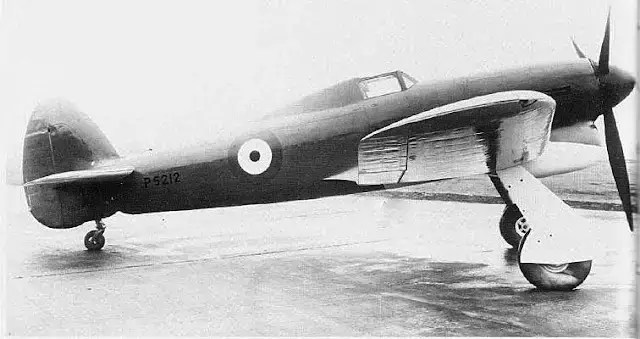
The first flight of the Hawker Typhoon prototype, P5212, is made by Hawker’s test pilot Philip Lucas. It is another Sydney Camm design, he who had designed the Hawker Hurricane which is the fighter currently arming most RAF front-line squadrons.
The British cargo ship Clan Morrison in Convoy FN.102 struck a mine in the North Sea north of Cromer Norfolk (53°07′N 1°22′E) and sank with the loss of one of her 32 crew. The survivors were rescued by the Royal Navy trawler HMT Nogi.
British cargo ship Jevington Court in Convoy FS.103 struck a mine and sank in the North Sea off Cromer, Norfolk. All 35 crew were rescued by the Royal Navy Hunt-class minesweeper HMS Dunoon (J 52).
The British steam merchant Royal Archer (Master Charles A. Piper), dispersed from convoy FN.100, struck a mine laid by U-21 on 4 November, 1939, in the Firth of Forth (56°06′N 2°55′W) and sank. All 28 crew were rescued by the Royal Navy Falmouth-class sloop HMS Weston. Royal Archer was bound for Leith out of London with general cargo.
At 2100 hours, the Swedish motor merchant Santos in Convoy HN.14 was torpedoed and sunk in the North Sea off Kirkwall, Orkney Islands, United Kingdom, (59°17′N 0°42′W) by the German U-boat U-63, commanded by Oberleutnant zur See Günther Lorentz, with the loss of 31 of the 43 people on board, which included survivors from Liana ( Sweden), six of the eight survivors from that ship were killed. The twelve survivors were rescued by the Royal Navy destroyer HMS Gallant (LtCdr C.P.F. Brown, RN) after being directed to their raft by a Hudson aircraft about 50 miles east of Duncansby Head and landed at Invergordon later the same day. Santos was carrying general cargo, bound for Gothenburg, Sweden.
The Danish fishing boat Ejjam was rammed and sunk off the Dogger Bank, North Sea by M-1 (Kriegsmarine). The German ship deliberately avoided rescuing survivors. All four crewmen died.
The Danish fishing boat Gerlis was rammed and sunk off the Dogger Bank, North Sea by M-1 (Kriegsmarine). The German ship deliberately avoided rescuing survivors. All four crewmen died.
The Danish fishing boat Merkator was rammed and sunk off the Dogger Bank, North Sea by M-1 (Kriegsmarine). The German ship deliberately avoided rescuing survivors. All four crewmen died.
The Danish fishing boat Polaris was rammed and sunk off the Dogger Bank, North Sea by M-1 (Kriegsmarine). The German ship deliberately avoided rescuing survivors. All four crewmen died.
Swedish steamer Bohus (1761grt) was taken in prize by German warships in the North Sea, and renamed Gerrit Fritzen for German service.
U.S. freighter Scottsburg is detained for several hours at Malta by British authorities, but is allowed to proceed the same day.
Convoy OA.98GF departs Southend.
Convoy OB.98 departs Liverpool.
The War at Sea, Saturday, 24 February 1940 (naval-history.net)
Battleship RODNEY and battlecruiser HOOD with destroyers FAULKNOR, HARDY, FORTUNE, FORESIGHT, FIREDRAKE, and FEARLESS arrived at Greenock.
Destroyers KHARTOUM and KINGSTON rendezvoused at sea with armed merchant cruiser CIRCASSIA.
Polish submarine ORP ORZEL arrived at Rosyth from patrol.
Submarine TETRARCH conducted diving trials with destroyer FAME.
Destroyers IVANHOE, GALLANT, and GRIFFIN were submarine hunting.
Destroyer INTREPID arrived at Invergordon.
Destroyer FURY and FOXHOUND arrived at Greenock.
Minelayer TEVIOTBANK and destroyer BOREAS and BRAZEN departed the Humber for Rosyth.
Destroyers JACKAL and WALLACE and sloop WESTON were submarine hunting in the Firth of Forth.
A German submarine attacked Norwegian steamer BRITTA (6214grt) 100 miles south of Queenstown. Destroyer ACASTA was dispatched to assist, and after being joined by destroyers WAKEFUL and VESPER carried out a search off Cape Clear in 51‑07N, 09‑39W. Attacks were made on a submarine contact and they were joined by destroyer VOLUNTEER on the 25th, but the search was unsuccessful.
CONVOY HN.14
Convoy HN.14 had departed Bergen escorted by destroyers ESCAPADE, ECLIPSE, ESCORT, ELECTRA, and submarine NARWHAL, and was reinforced by destroyers INGLEFIELD and IMOGEN at 0700/24th. Still on the 24th, U-63 (O/L Guenther Lorentz), which left Wilhelmshaven on the 17th on her first patrol, attacked the convoy and sank Swedish steamer SANTOS (3840grt) in 59‑17N, 00‑42W. Thirty-one crew were lost, and the fourteen survivors (12 from SANTOS and two from steamer LIANA) were later picked up by destroyer GALLANT and landed at Invergordon on the 25th.
At 0752/25th, NARWHAL sighted U-63 on the surface near the convoy in 58-35N, 1-05NW and signaled ESCAPADE, after which ESCORT, INGLEFIELD, and IMOGEN sank her SE of the Orkneys in 58‑40N, 00‑42W. One crewman was missing, but three officers and twenty-one ratings were picked up by INGLEFIELD and IMOGEN which arrived at Leith with them on the 27th. The east coast section of the convoy arrived on the 26th, escorted solely by NARWHAL, while ELECTRA and ECLIPSE escorted the five ships of the west coast section, the two destroyers reaching Scapa on the 25th. The destroyers of HN.14 had all detached for refueling prior to its arrival.
Convoy FN.103 departed Southend, escorted by destroyer WHITLEY and sloop EGRET. The convoy was delayed by fog and anchored shortly after departure in Knock Deep, but reached the Tyne on the 28th.
Convoy MT.17 departed Methil and arrived later that day.
Light cruiser EDINBURGH attacked a submarine contact ESE of Muckle Flugga in 60-34N, 1-04W.
Anti-submarine trawler LOCH TULLA (423grt) attacked a submarine contact south of Hoxa Gate in 58-49N, 3-05W.
Anti-submarine trawler COVENTRY CITY (546grt) attacked a submarine contact in Pentland Firth in 58-45-30W, 3-01-30W.
Anti-submarine trawler ARSENAL (389grt) attacked a submarine contact off the Smalls in 51-47-30N, 5-49W.
Destroyer BOADICEA was withdrawn from patrol for repairs to her port propeller shaft.
Steamer ROYAL ARCHER (2266grt) was sunk 6.7 miles 48° from Inchkeith Island, in 56‑06N, 02‑55W, on a mine laid by U-21 on 3 November 1939. Twenty-seven crew and one gunner were rescued.
Swedish steamer BOHUS (1761grt) was taken in prize by German warships in the North Sea, and renamed GERRIT FRITZEN for German service.
Finnish steamer RIGEL (3779grt) was brought into the Downs by a French destroyer for examination.
Destroyers DIAMOND, DECOY, and DEFENDER arrived at Freetown.
French submarines MARSOUIN, NARVAL, and REQUIN of the 11th Submarine Division departed Oran on the 23rd for Casablanca, and passed Gibraltar on the 24th, escorted by torpedo boat POURSIVANTE.
President Roosevelt and Vice President Garner will face each other in the Democratic Presidential preferential primary in Illinois, on April 9. This became a fact today when midnight passed and no withdrawal of the President’s name had been received at Springfield, the State capital. The petition for the President was filed by the Democratic organization several weeks ago, but without the usual accompanying certificate of candidacy. Mr. Roosevelt knew that he was being presented as a candidate, but took no steps to stop the move. Mr. Garner’s petition bears a statement of candidacy.
On the Republican side, District Attorney Thomas E. Dewey of New York is the only candidate. He authorized the filing of his name. A petition in behalf of representative Hamilton Fish Jr. of New York had been filed without a statement, but late last night a telegram from Mr. Fish to the Board of Elections at Springfield instructed that his name be withdrawn. Mayor F. H. La Guardia of New York withdrew Friday a Republican petition bearing his name which had been filed, he said, without his permission. He declared he didn’t want to split the liberal vote in Illinois and urged support of the President.
Patrick A. Nash, Democratic national committeeman from Illinois, promoted the Roosevelt petition. When the organization’s routine petitions were being circulated he decided that a Roosevelt petition would help the local candidates. The Nash-Kelly machine, of which Mayor Edward J. Kelly of Chicago is co-leader, also wanted to have a Roosevelt petition ready in case. the President should suddenly decide to seek another term. Opinions differ on whether Illinois law requires a statement of candidacy. Edward J. Hughes, Secretary of State, one of Mr. Nash’s closest associates, has held that a statement is not necessary and it is probable that the State Certifying Board will concur.
The board must, under the law, meet in Springfield before March 5. Its members are Mr. Hughes, Governor Henry Horner and State Auditor Edward Barrett. Mr. Horner and Mr. Hughes are supporting the “harmony” State slate, which omitted Mr. Barrett’s name, but there is little possibility that Mr. Barrett will create dissension in the meeting — at least on the Roosevelt petition. Mr. Garner’s managers there, led by Julius F. Smietanka, Collector of Internal Revenue under Woodrow Wilson, have not been openly active to date. Whatever organizing they are doing is being done quietly. There have been rumors that they would fight to keep the President’s name off the ballot.
Senator John H. Bankhead II (D.-Alabama), an administration supporter, said today that “It would be better for all concerned” if President Roosevelt announced at once his attitude toward a third term. The Alabama senator, who is supporting his brother, Speaker Bankhead, for the democratic presidential nomination, told reporters: “The president should give expression to what he is going to do. I don’t think there is much disagreement on the point that he should make his intentions known. It would be better for all concerned, including ·the president, if he would make a statement.”
President Roosevelt fished for several hours off the West Panama coast today, but the honors for the biggest catch went to Rear Admiral Ross T. McIntire, the President’s physician. The admiral landed a forty-pound red snapper.
Representative Dies, chairman of the committee investigating un-American activities, stated today that he had transmitted to David A. Pine, Federal District Attorney here, all the “testimony, facts and exhibits,” relating to the alleged forging of letters purporting to show that he, Mr. Dies, entered into an arrangement with William Dudley Pelley, head of the Silver Shirts. Mr. Dies said the entire committee approved the move. The District Attorney has been asked to consult the Federal grand jury so that “appropriate action may be taken,” Mr. Dies said. The chairman asked Mr. Pine to determine also whether the asserted forgery and subsequent use of the letters in question constituted a violation of the criminal statute forbidding intimidation of a Congressional committee.
Charles Evans Hughes rounded out today ten years of service as Chief Justice of the United States. Friends of the 77-year-old jurist said he was in good health and had no intention of retiring in the near future. Appointed by President Hoover in 1930, the Chief Justice presided over the Supreme Court during perhaps the most turbulent decade of its history — climaxed by the Congressional struggle over President Roosevelt’s Court Reorganization Bill.
The Senate Appropriations Committee voted today to report favorably its subcommittee’s recommendation of $107,241,000 for the State, Commerce and Justice Departments for the next fiscal year, an increase of $15,340 to the amount already voted by the House. Senator Lodge’s move to strike from the bill money for the maintenance of the American Embassy in Moscow was voted down by the full committee, as by the subcommittee. It is expected that he will raise the question on the floor next week, as did Representative McCormack of Massachusetts, during the debates in the House.
To prevent possible foreign domination of international communications and better to serve the needs of the United States, the Federal Communications Commission is recommending to Congress the consolidation into a single system of international radio, telegraph and cable carriers.
Harry Bridges, West Coast C.I.O. leader, asked the Supreme Court today to set aside a contempt of court conviction resulting from a telegram he sent to Secretary Perkins criticizing a Los Angeles Superior Court decision.
Chester P. O’Hara, special prosecutor for the grand jury investigating gambling and graft in Detroit, said today that other and bigger things “would follow” the indictment of Duncan C. McCrea, Wayne County prosecutor, against whom Governor Dickinson has started removal proceedings.
Coastwise steamship operations were threatened with a costly tieup yesterday as a result of unsuccessful wage negotiations between the International Longshoremen’s Association and operators in Atlantic Coast ports of the Southern range.
The U.S. Navy Bureau of Aeronautics issued a contract for airborne television equipment capable for use in transmitting instrument readings obtained from radio-controlled flight tests, and for providing target and guidance data should radio-controlled aircraft be converted to guided missiles.
Frances Langford records “When You Wish Upon a Star.”
The British cargo ship Golconda ran aground near Chittagong, India and was wrecked.
Although it is officially reported that North China has enough food supplies to last an additional five months and although it is officially announced that large consignments of food are being shipped from Japan, neutral observers in Peiping believe that food shortages and price increases in North China are certain to become worse before they get any better. Little faith is put in the Japanese assertion that food is coming from Japan. It is known that there has been a failure of the rice crop as well as some other crops in the Empire, where the Japanese also are suffering from shortages and rocketing prices despite attempts at control. Already the situation has become so acute in Peiping and Tientsin that food riots are frequent. On at least one occasion the police fired their rifles, killing half a dozen starving civilians who were attempting to raid food trucks.
An arrangement has been reached between the Chinese Communists and the Central Government authorities whereby the latter will recognize the increase in the strength of the Eighth Route Army since the start of the war and agree to give a larger supply of money and war materials to the Communist forces. Heretofore funds and materials have been provided for the Eighth Route Army on a basis of three divisions, while actually the strength of the Communist army has been much larger as the result of the expansion of these forces in the course of the war with Japan. Appropriations of money and munitions will now be made for six divisions.
Premier Mitsumasa Yonai does not share the popular hope that warfare in China will end soon after the establishment of Wang Ching-wei’s new central government. This appeared from his statement made Thursday night in the House of Peers regarding Japanese economic preparations for a long war. The prospects that the Chungking regime will disband and join the new government, which some circles here profess to believe to be bright, are not so definite in Premier Yonai’s view. The Premier said that Wang Ching-wei’s government would mark the first step toward a settlement but even after it is established Japan must watch the trend of Chungking and the attitude of the neutral powers.
“Japan will never lay down her arms till Chungking reorganizes its personnel and takes part in the construction of the new order,” the Premier said. “Since that is our immutable policy we must prepare to remain on a war footing for a long time.” The Premier then pointed out that the power to prosecute a long war depends on Japan’s economic conditions. Count Michimasa Soyeshima, English-educated peer, who is a liberal, proposed that military officers be sent abroad as a regular part of their training so that they might acquire some knowledge of the world. He held that the army required experience similar to that given to naval officers in training cruises. Foreign Minister Hachiro Arita did not express an opinion on that point but disagreed with Count Soyeshima’s suggestion that Japan’s foreign policy was misunderstood abroad. Powers disagree on Japan’s policy in China, he said, not because they failed to understand it but because they differed with Japan on fundamental points.
New Zealand labor leaders issue a statement supporting Britain’s war effort.
Dow Jones Industrial Average: 146.72 (-0.63)
Born:
Pete Duel [Peter Ellstrom Deuel], American television actor (“Gidget”; “Love on a Rooftop”; “Alias Smith and Jones”), in Rochester, New York (d. 1971, suicide).
Jimmy Ellis, American boxer (WBA heavyweight title 1968-70), in Louisville, Kentucky, (d. 2014).
Nicolae Martinescu, Romanian Greco-Roman wrestler (Olympic gold medal, 100kg, 1972), in Vişani, Romania (d. 2013)
Denis Law, Scottish footballer, in Aberdeen, Scotland, United Kingdom (d. 2025).
Princess Maria Gabriella of Savoy, daughter of last Italian King Umberto II, in Naples, Italy.
Died:
Elsbeth Schragmüller, 52, German World War I spy (bone tuberculosis).
Naval Construction:
The Royal Navy Flower-class corvette HMS Peony (K 40) is laid down by Harland & Wolff Ltd. (Belfast, Northern Ireland). Transferred to the Royal Hellennic Navy in 1943 and served as the Greek RHS Sakhtouris.
The Royal Navy Flower-class corvettes HMS Hepatica (K 159), HMS Snowberry (K 166), and HMS Spikenard (K 198) are laid down by the Davie Shipbuilding and Repairing Co. Ltd. (Lauzon, Quebec, Canada). All are transferred to the Royal Canadian Navy before completion.
The Royal Navy Tree-class minesweeping trawler HMS Chestnut (T 110) is launched by the Goole Shipbuilding & Repairing Co. Ltd. (Goole, U.K.); completed by Amos & Smith.
The Royal Navy Tree-class minesweeping trawler HMS Hickory (T 116) is launched by Henry Robb Ltd. (Leith, U.K.); completed by Whites M.E.
The Nihon Kaigun (Imperial Japanese Navy) Type B1 submarine I-21 is launched by the Kawasaki shipyard (Kobe, Japan).
The Royal Navy Flower-class corvette HMS Periwinkle (K 55) is launched by Harland & Wolff Ltd. (Belfast, Northern Ireland). Through reverse lend-lease, this will become the American USS Restless (PG-66) in 1942.
The Royal Navy King George V-class battleship HMS Anson (79) is launched by Swan Hunter and Wigham Richardson Ltd. (Wallsend-on-Tyne, U.K.); completed by Wallsend.




 History Diaries