
The commander of the Army of the Isthmus orders his group commanders to prepare for withdrawal to the backline defensive positions.
A Finnish force in Viipurinlahti bay retakes Lasisaari island, but the general situation forces it to withdraw from the island in the evening and during the night.
The Soviets mount a forceful attack on Petäjäsaari island in Lake Ladoga and take control of the southern tip of the island for 24 hours.
In the far north, army intelligence reports that the Soviets have 23 fighter aircraft and 49 bombers in Petsamo.
In Ladoga Karelia, the Red Army attacks in Pitkäranta across the entire breadth of the front, but without success.
The Soviet Union responded to Sweden’s protest over the bombing of Pajala in northern Sweden. The TASS news agency described the reports of the bombings by Soviet aircraft as “mendacious and malicious allegations.”
Izvestija, the chief organ of the Soviet Government, praises the achievements of the Soviet forces in the Finnish war by saying that despite the “treachery” of the Finns the Red Army will in the end prevail.
The Soviet ambassador in Stockholm, Madame Kollontai, delivers a list of Soviet demands for peace to the Finnish Foreign Minister Väinö Tanner. The Finns are displeased at the terms. The Finnish Foreign Affairs Committee meets to consider them. The terms are a shock, and the shock is further compounded by Sweden’s refusal to allow Allied troops to pass through Sweden en route to Finland.
Soviets fear the imminent arrival of foreign aid or troops in Finland. They scale back the Summa offensive towards Viipuri and offer peace terms to Finland. USSR demands the entire Karelian Isthmus (including Viipuri, Finland’s second largest city) and the areas surrounding Lake Ladoga, as well as the islands in the Gulf of Finland and a 30-year lease on the Hanko (“Hangö” in Swedish) Peninsula (at the mouth of the Gulf of Finland) and a mutual assistance treaty; they will evacuate Petsamo region in the North of Finland in return. The Soviet offer will expire on March 1.
Looked at from the cold gaze of 75 years later, the terms are not too onerous. There are no reparations demanded, Finland would retain its heartland along the Gulf of Finland and its independence, and it would still have an outlet to the sea in the north. All things considered given an unwinnable war…
Finland repeats its request to Sweden and Norway to grant transit rights for foreign troops.
Sweden denied British and French troops passage across her borders with Finland.
Openly calling on Britain and France to intervene in Finland, “by sea, air and land,” Leslie Hore-Belisha, former British War Secretary, declared tonight that the strategic benefits of such action outweighed any risk the two countries would run and would also hasten the end of the war. Finnish resistance, he said, encouraged the belief that Russian power rested on insecure foundations and gave the Allies an opportunity to intervene with weight. A strong tone was taken in the speech by the former War Secretary, whose newspaper article of last Sunday urging stronger support for Finland was censored.
Finland, he told his constituents of Devonport, besides fighting for the principles for which the Allies went to war, was also fighting for Britain’s food and supplies, and he went on to suggest that if Russia won she would not be satisfied with Finland and that she would give Germany advantages in Scandinavia. Control of Norway, Sweden and Finland by Germany and Russia, he said, would mean that Britain’s considerable purchases of ores, timber and foodstuffs could be stopped, but “our successful intervention in Finland would thwart these possibilities.”
It would, moreover, place the Allies in the vicinity of the Gallivare iron ore mines in Sweden, which supplied no less than half of Germany’s requirements, he said. “Well planned, adequate and decisive action now would curtail the duration of the war,” he declared, but it would have to be done resolutely, for “half-hearted intervention would be abortive from the start.” As for the difficulty of getting Norway and Sweden to agree to permit the passage of Anglo-French forces over their territory, he said they were under obligation by the Covenant of the League of Nations to facilitate such transmission to help a victim of aggression.
German artillery raked French advance posts east and west of the Saar today while planes of both nations scouted the Western Front on photographic missions. Infantry and aerial activities increased all along the front. Despite the movement of troops and patrols, no no offensive operations were reported. Brilliant sunshine. bathed the entire front. The cold and mud of Winter were disappearing. German artillery in the Saar sectors swept French advance posts with heavy barrages. French batteries opened up in reply, throwing shell for shell. No infantry action followed the barrages, military dispatches reported.
Reports from the Rhine frontier indicated that the Germans had attempted three times this morning to send planes across the frontier into Alsace. French anti-aircraft batteries and pursuit planes were reported to have driven them back over the Rhine. The Nazis sent out six flights over eastern territories of France while the French pushed several signal corps squadrons far over the German lines, covering railroad salients, interior towns and supply stations of which photographs were taken. All the flights were escorted by fleets of fighter planes. No encounters were reported.
The Imperial Regalia of the Holy Roman Empire, including relics of Christian mythology, were removed from public display in Nürnberg, Germany. They were moved after dark to a secret location for safe storage.
Berlin signs trade agreement with Norway.
Authoritative sources said tonight that the Norwegian Government would propose to Great Britain that the Atlmark incident be settled by arbitration if the two countries fail to reach an agreement shortly.
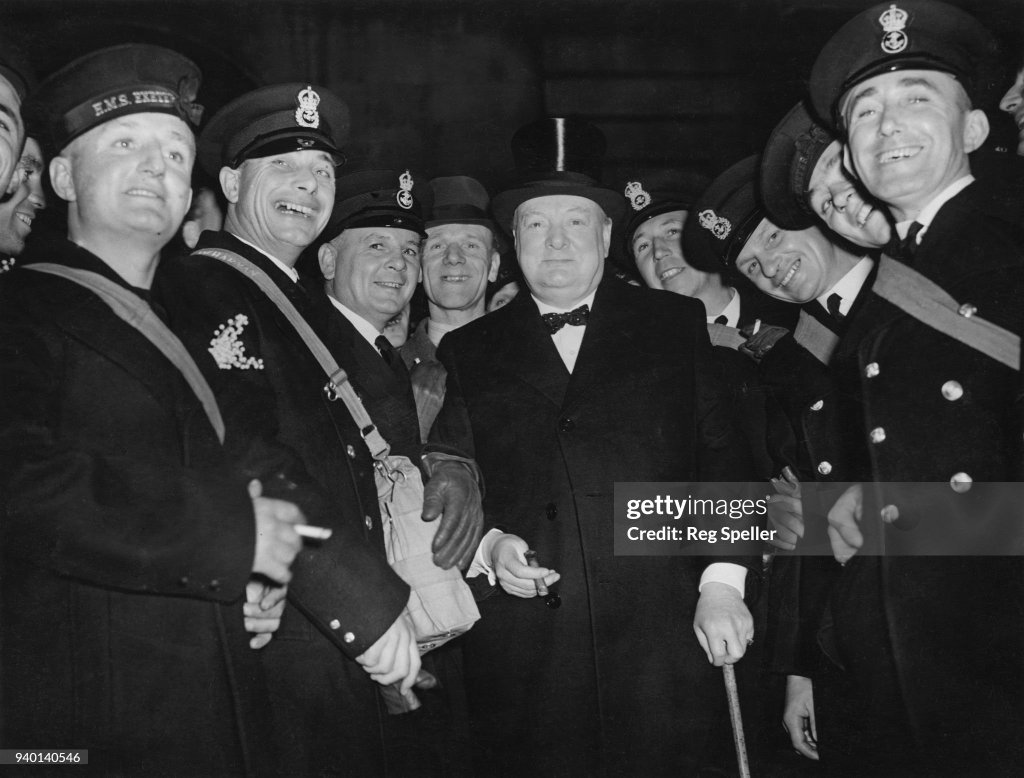
The Lord Mayor of London gave a luncheon party at the Guildhall to officers and ratings of the HMS Exeter and HMS Ajax to celebrate their victory at the Battle of the River Plate. Huge crowds turned out to cheer them. The citizens of London, England, United Kingdom cheered the officers and men of Exeter and Ajax in a victory parade celebrating the destruction of the German pocket battleship Graf Spee in the battle of the River Plate after their return from South American waters.
Sumner Welles, United States Under-Secretary of State, will have an interview with Chancellor Hitler in Berlin, it was learned today after the German Foreign Office had been officially apprised of his impending visit. This notification was transmitted to Secretary of State Baron Ernst von Weizsaecker by Alexander Kirk, United States Chargé d’Affaires. The date of Mr. Welles’s reception is not yet fixed, but he is expected in Berlin the middle of next week unless a change in itinerary is decided on in Rome, where he is due Sunday.
The Turkish government declares a state of emergency following a (false) report of a Soviet unit crossing the frontier.
In Moscow, the Red Army celebrates its 22nd anniversary with exceptionally little pomp and without the traditional parade through Red Square. The twenty-second anniversary of the Red Army was celebrated with great zest but restrained enthusiasm today; there have been no important speeches by War Commissar Klementy E. Voroshilov or other leaders yet recorded.
A conjunction of five visible planets is visible in the sky tonight. Such a conjunction occurs not more than once in a century. The five planets appear like a string of Japanese lanterns in the western sky. These planets, all very bright, will be in order upward above the last glow of the setting sun, Mercury, Jupiter, Venus, Saturn and Mars.
During the night (February 23-24), RAF bombers conduct a leaflet reconnaissance raid on Prague.
The RAF bombs German warships in the Heligoland Bight during the night, with one aircraft failing to return.
The Luftwaffe returns the favor, attacking British shipping by moonlight. The freighter Gothic is strafed.
The Type VIIB German U-boat U-53, commanded by Korvettenkapitän Harald Grosse, is sunk in the North Sea in the mid Orkneys (60°32′N 6°14′W) by depth charges from the Royal Navy destroyer HMS Gurkha (F 20). All of the ship’s complement of 42 dies. During its career under two commanders the U-53 sank 7 merchant ships for a total of 27,316 tons and damaged 1 merchant ship for a total of 8,022 tons.
The Royal Navy trawler HMT Benvolio struck a mine and sank off the mouth of the Humber with the loss of ten of her 15 crew.
The Norwegian cargo ship Torbrand ran aground at Skudenes, Rogaland and was wrecked. There were no casualties.
The Belgian fishing trawler Steur struck a mine in the North Sea 10 nautical miles (19 km) north west of the West Hinder Lightship and sank with the loss of all four hands.
The U.S. freighter Lehigh was detained for several hours at Gibraltar by British authorities, but was allowed to proceed the same day.
Convoy OA.97 departs Southend.
Convoy OB.97 departs Liverpool.
Convoy OG.19 forms at sea for Gibraltar.
The War at Sea, Friday, 23 February 1940 (naval-history.net)
Heavy cruiser BERWICK departed the Clyde for Scapa Flow.
Light cruiser NEWCASTLE departed Scapa Flow for Northern Patrol.
Light cruiser SOUTHAMPTON departed Scapa Flow.
Destroyer JACKAL exercised in the Firth of Forth and then left as cover for a TM convoy.
Sloop GRIMSBY and destroyers WOOLSTON and ENCOUNTER exercised in the Firth of Forth.
Submarine SEAL arrived at Rosyth after patrol.
Submarine SALMON stopped Belgian trawler HELENE (145grt) ten miles east of Smith’s Knoll, and put a prize crew on board. Both vessels reached Harwich on the 23rd.
Trawler BENVOLIO (352grt, Chief Skipper S M Aldred RNR) was sunk on a mine in the Humber, with the loss of the Skipper and nine ratings.
Convoy ON.15 of two British, twenty Norwegian, six Swedish, three Danish, six Finnish and three Estonian ships departed Methil, escorted by destroyers COSSACK, DELIGHT, DIANA, SIKH, NUBIAN, and IMPERIAL. One steamer detached before the convoy crossed the North Sea. Close cover was provided by light cruisers AURORA and PENELOPE which departed Rosyth on the 24th and anti-aircraft cruiser CALCUTTA, which departed Sullom Voe on the 25th, while on the 24th, NUBIAN attacked a submarine attack north of Kinnaird Head in 58 00N, 1 19W. The convoy arrived safely at Bergen on the 27th.
Convoy OA.97 departed Southend, escorted by destroyer VANESSA, and was joined on the 24th by sloop FOWEY. Both escorts detached on the 25th and the convoy dispersed on the 26th.
Convoy OB.97 departed Liverpool escorted by sloop ROCHESTER and destroyer VOLUNTEER. Both escorts detached on the 26th and the convoy dispersed on the 27th.
Convoy BC.26 of six steamers, including BARON KINNAIRD and DUNKWA (Commodore) departed the Loire escorted by destroyer MONTROSE, and arrived in the Bristol Channel on the 24th.
Convoy FN.102 departed Southend, escorted by destroyer VALOROUS and sloop HASTINGS, and reached Rosyth on the 25th.
Convoy FS.103 departed the Tyne, escorted by destroyers WESTMINSTER and JERVIS and sloop LONDONDERRY, all three of which had been supporting convoy MT.16. The convoy arrived at Southend on the 25th. Convoy FS.104 was cancelled.
Convoy MT.16 departed Methil, escorted by anti-submarine trawlers of the 23rd Anti-Submarine Group. This convoy had been supported by destroyers WESTMINSTER and JERVIS and sloop LONDONDERRY before they joined FS.10 (see above). The convoy arrived in the Tyne the next day.
Destroyer GURKHA, then 54 miles SSE of the Faroes in 60 32N, 06 14W attacked and sank U-53 in 60 32N, 06 10W with the loss of all 42 crew. Destroyers KHARTOUM and KINGSTON joined GURKHA at 0630/24th in patrolling the area and early on the 25th, KINGSTON in company with GURKHA, made a submarine contact west of Sumburgh Head in 59 55N, 04 27W.
Destroyers GALLANT and GRIFFIN attacked U-61 east of Copinsay in 58 54N, 1 05W and inflicted some damage.
Sloop BIDEFORD, on escort duty, attacked a submarine contact WSW of Ushant in 46-51N, 10-31W.
French submarine PROTÉE attempted to stop French steamer ARAGAZ (5009grt) in 32-10N, 11-00W, assuming her to be German. ARAGAZ opened fire and the submarine was forced to submerge.
French destroyer SIMOUN, escorting convoy 2F from Gibraltar to Brest, reported attacking and ramming a German submarine SW of Cape St Vincent in 36 15N, 09 55W. Although no submarine was reported sunk, a drydock inspection at Casablanca revealed the blades of SIMOUN’s port propeller turned up and two yards of the outer keel torn away. The “submarine” may have been a submerged wreck.
Sub Lieutenant G A Skinner was killed when his RAF Hart of RAF No. 1 Flying Training School crashed near Lower Clatford, Wilts.
New Zealand light cruiser HMNZS ACHILLES arrived at Auckland for repairs and refitting after being relieved on the South America Station.
Destroyer DAINTY arrived at Freetown.
French large destroyer ALBATROS sailed from Toulon on the 21st and troopship VILLE D’ORAN from Oran on the 22nd, and both passed Gibraltar on the 23rd on passage for Brest. The ships arrived on the 26th as convoy 3.F in preparation for allied operations in Finland.
A new “economy” drive is being organized in the Senate with the object of finding savings in general appropriations to finance more than $200,000,000 of farm benefits, which were rejected in the House as a result of a warning by President Roosevelt that new taxes would have to be levied to finance such continued payments. This movement gathered momentum today, under the leadership of farm group leaders, as preparations were made to start next week a study by an Agriculture subcommittee of the relatively small bill carrying $713,896,084 to finance the Department of Agriculture in the next fiscal year. The bill has already been passed by the House. It was indicated that the principal effort to find the $200,000,000 for farm benefits, without either forcing an increase in the $45,000,000,000 national debt limit or levying new taxes, while at the same time reducing current budget totals by the $460,000,000 already necessary to maintain the debt-tax status quo, would be made in connection with future consideration of arms appropriations.
Senate farm leaders, led by Senator Russell of Georgia, chairman of the Senate Agriculture subcommittee which will begin hearings next week on the House bill, have the prospective support of several cross-sectional groups in the Senate. Among these, in addition to the Senators from predominantly agricultural States, are the isolationists. Senators Clark of Missouri and Nye of South Dakota have. stated the belief that the extraordinary enlargement of the armed services of the United States planned by the Administration is more likely to involve this country in war than to keep it at peace. In addition, Senator Adams, an important leader of the Senate economy group, delivered early in the session a strong speech denouncing cuts in Federal appropriations for general social welfare if these cuts were to be translated. into additional funds for arms and armaments.
Besides all these various attitudes, the farm group is bolstered considerably by the demonstrated fact that the Senate thus far this session has been much less enthusiastic about economy than has the House. Senator Barkley, the majority leader of the upper branch, has expressed confidence that sufficient economies can be made in the budget estimates to forestall new taxes or the need for borrowings above the statutory ceiling. However, in two large appropriation bills already passed by the House and Senate, the Senate increased by about $35,000,000 the amount voted for the independent offices by the House, while making almost no reductions in the Treasury and Post Office Bill. The net reductions in these measures, by combined House and Senate action, amount to about $57,000,000, compared with budget requests.
If funds for the Agriculture Department are to be increased by the Senate rather than reduced, and if there is to be compensation for this reduction, it apparently must be taken from the War and Navy Departments’ appropriations, or from relief. There is, of course, the always present possibility that the Congress may adopt in the end a type of election-year strategy involved in appropriating sums generally known to be inadequate for various services, with the understanding that deficiency appropriations will be made at the next session, after the elections are out of the way and when talk of new taxes has less political risk for those in office.
The House passed without amendment and sent to the Senate today the Administration’s resolution to extend for three years the authority for executive negotiation of reciprocal trade agreements. The vote was 216 to 168. Just before that the House had declined, by 221 to 163, to recommit the measure to the Ways and Means Committee for changes. “I am, and I am sure the supporters of the program everywhere are, immensely gratified at the vote,” was Secretary Hull’s comment tonight.
Of the 216 members voting for the resolution, 210 were Democrats, five Republicans and one AmericanLabor. Among the opposing 168 were twenty Democrats, 146 Republicans, one Farmer-Laborite and one Progressive. For more than eight hours Democratic whips kept enough votes available to beat off twenty-four amendments. The closest the Administration came to defeat was on an amendment by Representative Disney, Democrat, of Oklahoma which would have exempted from the field of trade agreement negotiation the excise taxes on imported oil, copper, coal and lumber. This was beaten by 164 to 155 on a teller vote.
Additional orders for aircraft that may amount to as much as $1,000,000,000 in business will be placed with manufacturers in the United States, the British and French Purchasing Commissions announced yesterday.
Without a word of debate, the U.S. House of Representatives voted today to give another $50,000 to its special committee investigating the Wagner Act and the National Labor Relations Board.
A proposal in the New Jersey Senate would disenfranchise anyone from voting if they have been on public relief for three years or more. Under the state constitution, anyone declared a “pauper” cannot vote.
Walt Disney’s animated movie “Pinocchio” is released.
The Philadelphia A’s waive Lynn Nelson to Detroit. Nelson was the A’s top winner last year with 10 victories, but he’ll go 1–1 with Detroit before bowing out.
The Chinese Government, it was learned today, has rejected the British plan to settle the Anglo-Japanese-Chinese dispute over $3,200,000 worth of silver which is now stored in the bank vault basement of the British Consulate at Tientsin. The British suggested that about 10 percent of the money should be turned over immediately to relieve the suffering and homeless in North China and that the rest be transferred from the British Concession and deposited in a neutral bank until the end of the war. This plan was accepted by the Japanese, who asked that it be put into operation immediately. The British, however, insisted upon getting the approval of the Chinese, whose National Government originally stored the silver at the British Concession.
Partly to try to settle the question, the British Ambassador to China traveled to Chungking to see Generalissimo Chiang Kai-shek, who, after consultation with the officials of the Chinese Ministry of Finance, rejected it on the ground that the money belonged entirely to his government. Japan’s view is that the money belonged to the people of North China who are now under the control of the Japanese and should, therefore, be handed over to Tokyo. Since the Chinese people were going to benefit from the funds under the British compromise, Sir Archibald Clark Kerr, the Ambassador, urged General Chiang Kai-shek to draft a counterplan along similar lines. This has now been done and it is hoped that some kind of agreement can be reached.
Dow Jones Industrial Average: 147.35 (-0.99)
Born:
Peter Fonda, American actor (“Easy Rider”), in New York, New York (d. 2019).
Jackie Smith, NFL tight end (Pro Football Hall of Fame, inducted 1994; Pro Bowl, 1966-1970; St. Louis Cardinals, Dallas Cowboys), in Columbia, Mississippi.
Died:
Yang Jingyu, 35, Chinese Communist and political commissar (killed in action against the Japanese).
Naval Contruction:
The Вое́нно-морско́й флот СССР (ВМФ) (Soviet Navy) “S” (Stalinec)-class (2nd group, Type IX-modified) submarines S-35 and S-36 are laid down by Marti Yard (Nikolayev, U.S.S.R.) / Yard 198.




 History Diaries