
The Soviet press hinted for the first time that that Konstantin U. Chernenko, the Soviet leader, was ill. An announcement was made after Mr. Chernenko, who has not appeared in public for nearly two months, failed to deliver an important scheduled address in Moscow. The Soviet public was officially advised that Konstantin U. Chernenko had stayed away from an important speaking engagement today “on the recommendation of his doctors.” Although Soviet officials have told foreigners on several occasions, both in Moscow and abroad, that Mr. Chernenko was ailing, the fact had not been acknowledged, implicitly or otherwise, by the Soviet press. Western diplomats said they could not remember when a Soviet leader’s absence had ever been explained by the recommendation of doctors. The announcement was made by Soviet television and the official press agency Tass after the Soviet leader failed to deliver a scheduled address to his constituents from his Moscow electoral district.
Reagan Administration officials today applauded the Soviet Union’s decision to open some of its civilian nuclear power plants to international inspection, but said they were skeptical of Soviet assertions that the agreement might have implications for arms control. In an accord signed Thursday in Vienna, the Soviet Union agreed for the first time to inspections by the International Atomic Energy Agency.
President Reagan contradicted his own report to Congress when he said Thursday night that Moscow violated strategic arms agreements in converting old ballistic missile submarines to fire nuclear cruise missiles. “One of the violations of theirs is that they were taking nuclear missile submarines out of action, but they were cutting them down and rebuilding them as cruise-missile-carrying submarines,” the President told reporters. It appears that this is in fact not a violation of the treaty.
A fugitive leader of the outlawed Solidarity union called today for a nationwide boycott of parliamentary elections this fall. The fugitive union leader, Zbigniew Bujak, interviewed in the underground newspaper Tygodnik Mazowsze, also called for a 15-minute strike next Thursday to protest food price increases of 12 percent to 13 percent, saying such a move could block similar government measures in the future. Referring to elections to renew the 460-member Parliament this fall, Mr. Bujak said: “The best form of protest is not to go to the polls. I think 50 percent of the voters will boycott the elections.”
Two investigations have started into the crash of a commercial airliner in northern Spain on Tuesday, a Department of Civil Aviation spokesman said today. The plane, an Iberia Air Lines Boeing 727 en route from Madrid to Bilbao, was three miles off course and 990 feet below recommended altitude when it hit a television tower and crashed, the spokesman said. All 148 people aboard were killed.
A former Lebanese village mayor was reported to have died of exposure in southern Lebanon today after Israeli troops kept him and other Lebanese prisoners out all night in the cold. At the same time, Lebanese security officials said Israeli troops wounded five civilians, including a woman and two children, in shooting incidents in the area today. Two Israelis were reported wounded in guerrilla attacks.
President Reagan meets with the Minister of Foreign Affairs of the Kingdom of Morocco Abdellatif Filali.
Five suspects in India’s espionage scandal were reported to have retracted their confessions today, charging they were tortured into making them. The Press Trust of India said all 17 Government officials and businessmen arrested since the scandal started a month ago appeared before a magistrate today and were ordered held until March 6. The news agency said S. Sankaran, personal assistant to President Zail Singh’s press officer, and two officials from Prime Minister Rajiv Gandhi’s office were among the five who wanted to retract their confessions. In a written confession on February 3, Mr. Sankaran said he had sold information to an Indian businessman for as little as $4 an item since 1982.
American military officers indicated today that it would take at least a month to begin identifying remains found at a site in Laos where an American gunship crashed during the Vietnam War. At the same time, they praised Laos for its “extreme cooperation” in assisting in the search. The Laotian-American excavation took place last week at a site near Pakse, in eastern Laos, where an American C-130 went down in December 1972 with 16 servicemen aboard. Two survived the crash, one body was found, and 13 men have been reported missing in action.
The Philippines’ armed forces Chief of Staff and 25 other men went on trial today in the 1983 assassination of the opposition leader Benigno S. Aquino Jr. The defendants are also charged in the killing of Rolando Galman, the man the military accused of shooting Mr. Aquino. Prosecutors offered little today to support accusations of a broad military conspiracy, relying almost entirely on testimony given in a 10-month independent inquiry into the killing. The board concluded that Mr. Aquino was killed by one of two military escorts on a stairway leading from the airliner.
A top U.S. State Department official warned New Zealand today that its refusal to permit a port call by United States ships carrying nuclear weapons amounted to abandonment of its operational role in the Anzus alliance. In a speech prepared for delivery to the National Defense University in Honolulu, Assistant Secretary of State Paul D. Wolfowitz said the result of New Zealand’s decision would be to weaken an important link in the treaty and thus increase rather than decrease the threat of nuclear war. “With words, New Zealand assures us that it remains committed to Anzus,” Mr. Wolfowitz said. “But by its deeds, New Zealand has effectively curtailed its operational role. A military alliance has little meaning without military cooperation. New Zealand can’t have it both ways.” The Anzus alliance is made up of the United States, Australia and New Zealand.
President Reagan pledged to President Miguel de la Madrid of Mexico today that traffic crossing the United States-Mexican border would be returned to normal “in the briefest possible period,” Mr. de la Madrid’s office announced tonight. In addition, the Attorneys General of the two countries will meet soon “with the end of extending the cooperation between both countries in the campaign against the traffic of drugs,” Mr. de la Madrid’s office said. The agreements were reached during a telephone conversation between the two Presidents today. Mr. de la Madrid’s office said the leaders had spoken for “several minutes” and that their talks were of the “greatest cordiality and friendship.” Mexican officials have been highly critical of a decision by the United States to increase inspections at the border, a move that has delayed traffic for hours, in some cases, and cut into business on both sides of the border.
Denial of more U.S. aid to Nicaragua would cause it to fall into “the endless darkness of Communist tyranny,” Secretary of State George P. Shultz said. He said direct and costly American action might be required later, and that Americans had a moral duty to help “the freedom fighters” against the Government of Nicaragua. His suggestion that failure to help the rebels might eventually force the United States into action in Nicaragua was the first such public statement by a senior Administration official. But President Reagan, at a meeting with editorial writers, said that he did not expect an American invasion of Nicaragua.
Congress will not approve more aid for the rebels in Nicaragua despite an intensified effort for it by President Reagan, Republican and Democratic members said. The chairman and vice chairman of the Senate Select Committee on Intelligence called on Mr. Reagan to formulate a new policy in conjunction with Congress. They said that although they wanted changes in the leftist Government in Nicaragua, that did not mean that they or the President could support the overthrow of that Government. “That’s wrong because he cannot do that,” said Senator David F. Durenberger, Republican of Minnesota, the intelligence committee chairman.
Guatemalans will elect a civilian President and members of Congress on October 24, and the nation’s military chiefs will hand over power on January 14, 1986, the Government announced today. General Oscar Humberto Mejiia Victores, Guatemala’s chief of state, the Supreme Electoral Tribunal and the National Constituent Assembly announced the election plan in a joint statement.
The police in Lima shot and killed two Maoist guerrillas and detained more than 1,000 people Thursday night after rebels carried out their biggest assault on the Peruvian capital this year.
An Air Mali passenger plane crashed in the Sahara outside Timbuktu today, killing 50 of the 51 people on board and leaving the sole survivor, a Malian, in critical condition. A United States Embassy official, David Kyzner, said “a few” Americans were among the dead. Reports reaching Bamako from Timbuktu, 400 miles northeast of the capital, said at least five of the dead were from international relief agencies working in refugee camps in drought-stricken areas of the sub-Saharan region. Air Mali officials said the airliner, an Antonov An-24 turboprop, carried 43 passengers and 8 crew members. They said that an engine caught fire and exploded shortly after takeoff from Timbuktu and that the plane crashed about two miles from the airport.
By tradition, the white-minority nation of South Africa has been Africa’s great breadbasket, a supplier of food to its black-governed neighbors. But these days, after three years of drought, things look slightly different. The farmers in South Africa say some crops have not been good, so they may not grow enough to feed the millions of black people who depend on corn as a staple. But to the north, in Zimbabwe, the corn crop will be abundant, and some farmers there are suggesting that, this year, they may reverse the tradition so that a black-ruled country will sell a surplus to the white- ruled giant whose politics it abhors, but whose hard currency it desperately needs.
South Africa’s only nuclear power station, which employs some American personnel, has been closed indefinitely because of flaws in water-carrying stainless steel pipes, the state-run company that operates it said today. Environmentalist groups opposed to the Koeberg plant, 20 miles north of Cape Town, expressed concern about the shutdown, but the South African Electricity Supply Commission said the problem was not serious. “We could probably have run for years with these faults and nothing would happen,” a spokesman for the commission said.
As the Senate struggled through a fourth day of a filibuster blocking the confirmation of Edwin Meese 3d as Attorney General, the outgoing Justice Department chief, William French Smith, prepared for departure and was honored at parties. The mood at the department remained expectant throughout the day, with officials eager for news of a compromise on the farm credit dispute that has prevented action on the nomination on the Senate floor. Meanwhile, in a farewell address to employees at the department, Mr. Smith made fun of his delayed departure. Motion Picture Farewell “It is purely rumor that the movie ‘The Long Goodbye’ is a Department of Justice documentary,” he told the department’s assembled employees, more than a year after he first announced his plans to resign.
The Senate neared a compromise with the Reagan Administration that could break a deadlock over farm-credit legislation and open the way for the confirmation of Edwin Meese 3d as Attorney General.
President Reagan meets with Officers of the Reserve Officers Association.
A gradual cut in farm subsidies, an eventual end to Government storage of crop surpluses and the elimination of direct Government farm loans are part of an Administration-backed farm bill whose details were disclosed by Agriculture Secretary John R. Block. He conceded that Congress, which has given the bill scant chance of approval, would probably change many of its details. “But I’m convinced,” he said, “that if we can come out with our basic objectives, not every detail of them, we’ll achieve what we are asking for.” The current farm law expires this fall. Congress must pass new farm legislation this year or price support programs will be governed by the Farm Act of 1949, which neither the Administration nor farm commodity groups likes.
The Administration today proposed a five-year extension of the Federal program for cleaning up toxic wastes, a new tax on the disposal sites where wastes are dumped and a doubling of the states’ share of the cost. “This bill fulfills our commitment to the American people to address the legacy of abandoned hazardous waste sites in an expeditious manner,” President Reagan said of the $5.3 billion proposal. “It will allow us to move aggressively forward to eliminate the health and environmental risks associated with past waste disposal practices.” At a news conference outlining the proposal, Lee M. Thomas, the head of the Environmental Protection Agency, said the plan would limit use of the so- called Superfund to hazardous waste problems and emergency spills, as Congress originally intended. Under the new limits, the fund would not be used to alleviate such other problems as mining and pesticide residues or contaminated drinking water.
Amtrak, opposing President Reagan’s plan to halt Federal support, said today it would ask Congress to renew its subsidy in 1986 at this year’s level, $684 million. In announcing his plans to oppose the Administration’s efforts, W. Graham Claytor Jr., president and chief executive officer of the passenger railroad, warned again that “without question” the national rail passenger service would cease operation October 1, the first day of the fiscal year 1986, if Federal support was ended. He said the Administration’s rationale was “not realistic” and “made no economic sense” and contended that it would cost more to shut the railroad down over the long run than it would to keep it running. Mr. Claytor also said, “I think we’re providing an important and essential social service.”
Two Philadelphia police officers and four former officers were indicted today by a Federal grand jury on charges of extortion and conspiracy to protect illegal vice activities. United States Attorney Edward Dennis Jr. said the latest indictments brought to 29 the number of the city’s police officers who have been accused of using their positions to collect bribes to protect prostitution, gambling or after-hour drinking.
The bitter battle over the 2.4-mile parkway in Atlanta that is to serve the Carter Presidential Library has taken a new turn, with a state judge halting work on the project. Judge Osgood Williams granted a temporary restraining order in Superior Court Thursday, barring further construction on the road until a hearing February 28 on questions of irregularities in the awarding of the prime contract. Construction on the road, including the cutting of trees and the sinking of steel pylons for a bridge, began January 19. Judge Williams said he hoped to make a decision in the suit soon after next week’s hearing.
Two Roman Catholic priests and two other people were convicted in Federal District Court today of conspiring to impede the national defense by damaging a Minuteman 2 missile silo. The four defendants, the Rev. Carl Kabat, his brother, the Rev. Paul Kabat, Helen Woodson and Larry Cloud-Morgan, admitted entering a Kansas City area missile site and damaging the silo lid with a jackhammer and other tools last November. But they contended they were correct in breaking laws they deemed unjust. However, Federal attorneys told the jury the case was not a forum for debating the issue of nuclear weapons, but for deciding decide a criminal case. The four activists face a maximum sentence of more than 25 years in prison and $33,500 in fines.
Mississippi’s largest teachers union has called for a statewide walkout starting Monday to protest the Legislature’s failure to provide teachers a $7,000 raise over two years. It would be the first widespread teachers’ walkout in Mississippi, where the average teacher’s salary of $16,000 is the lowest in the nation. The Mississippi Association of Educators, which represents half of the 26,000 public school teachers in the state, says the $7,000 raise is needed to bring teacher salaries to the Southeastern average. Lawmakers are considering a bill that would provide $4,000 in raises over three years.
Toxic fumes from a malfunctioning boiler room spread through a downtown Boston hotel today, sickening dozens of people and forcing at least 54 to seek hospital treatment. Deputy Fire Chief Paul Christian said dozens of guests at the Howard Johnson’s 57 Park Plaza Hotel passed out when the fumes came out of a boiler room adjacent to sixth-floor conference rooms. “There were fumes and smoke,” he said. “People outright collapsed.” He said the gas-operated hot water boiler apparently did not ignite properly and gave off a combination of carbon dioxide and carbon monoxide. He said ambulances at the scene gave oxygen to about 30 people.
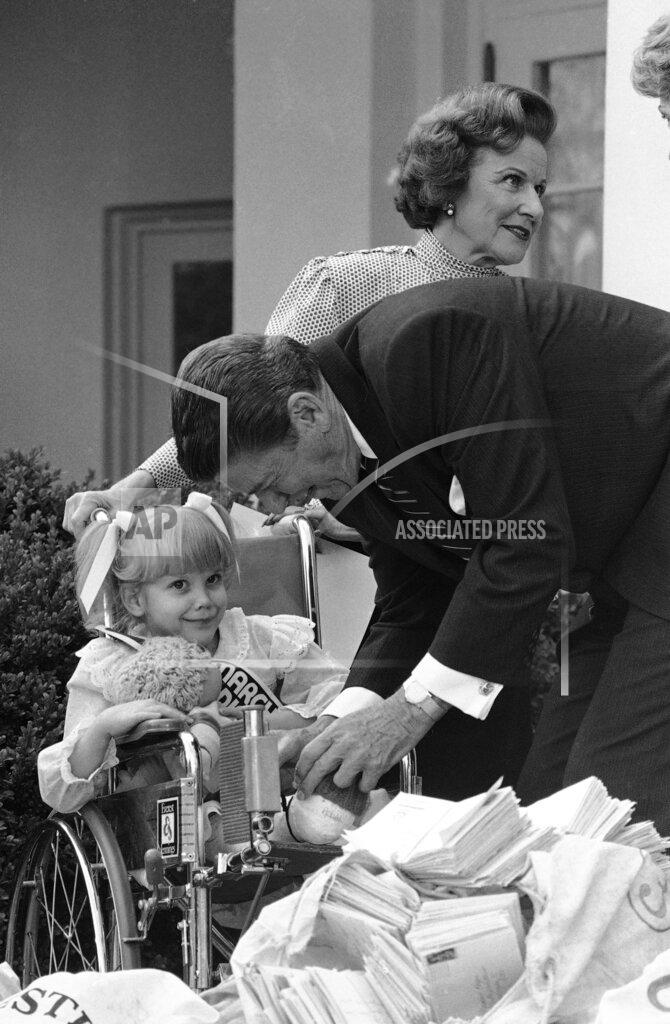
A 7-year-old boy who was taught the Heimlich maneuver by his mother a year ago and practiced on a stuffed monkey used the procedure to save the life of his 4-year-old brother, his parents said. Jeremy Castel and his brother Nicholas were playing in the living room and the rest of the family was elsewhere in their mobile home Wednesday when Nicholas swallowed a small rubber piece from a toy and started choking, according to the boys’ mother, Pam Castle. Jeremy applied the life-saving hug and dislodged the piece, she said. “He’s my hero,” Mrs. Castel said of her son.
The designation of Northern Michigan University as the nation’s third Olympic training center is being welcomed here as a bit of good fortune for an area that has not had much in recent years. Officials of the university and the local citizens group that sought the endorsement from the United States Olympic Committee for almost 10 years hope they will be able to attract hundreds of applicants for the Games, to live and to develop their skills. The other training centers are at Olympic headquarters in Colorado Springs and at Lake Placid, New York, site of the 1980 Winter Games. “In a sense, we’re developing a people industry,” said Karen Kunkel, director of the Great Lakes Olympic Training Site on the Northern Michigan campus. “It’s economically sound, because it will maximize the use of facilities that are now unused. And it is clean environmentally. We won’t have people ravaging the countryside.”
Diane Dixon set a world indoor best and an American record in the 440-yard run in the USA/ Mobil Indoor Track and Field Championships in Madison Square Garden. Miss Dixon’s time of 52.20 seconds broke a record she had set only hours earlier, when she ran 52.77 in a heat. That time had broken a 20-day-old record of 52.99 seconds, set in Dallas by Valerie Brisco-Hooks, the winner of three gold medals at the Los Angeles Olympics, who also ran consecutive world indoor bests yesterday.
Dow Jones Industrial Average: 1275.84 (-3.2)
Born:
Fernando Velasco, NFL guard and center (Tennessee Titans, Pittsburgh Steelers, Carolina Panthers), in Harris, New York.
Sean Garballey, American politician (Democrat, Massachusetts House of Representatives), in Arlington, Massachusetts.
Died:
Efrem Zimbalist Sr, 95, Russian-American violinist composer, and educator (Curtis Institute, 1928-68).
Alexander Scourby, 71, American actor (“Victory at Sea”, “Ransom”).






 History Diaries