
Soviet 7th Army and 13th Army resume offensive in the Karelian isthmus.
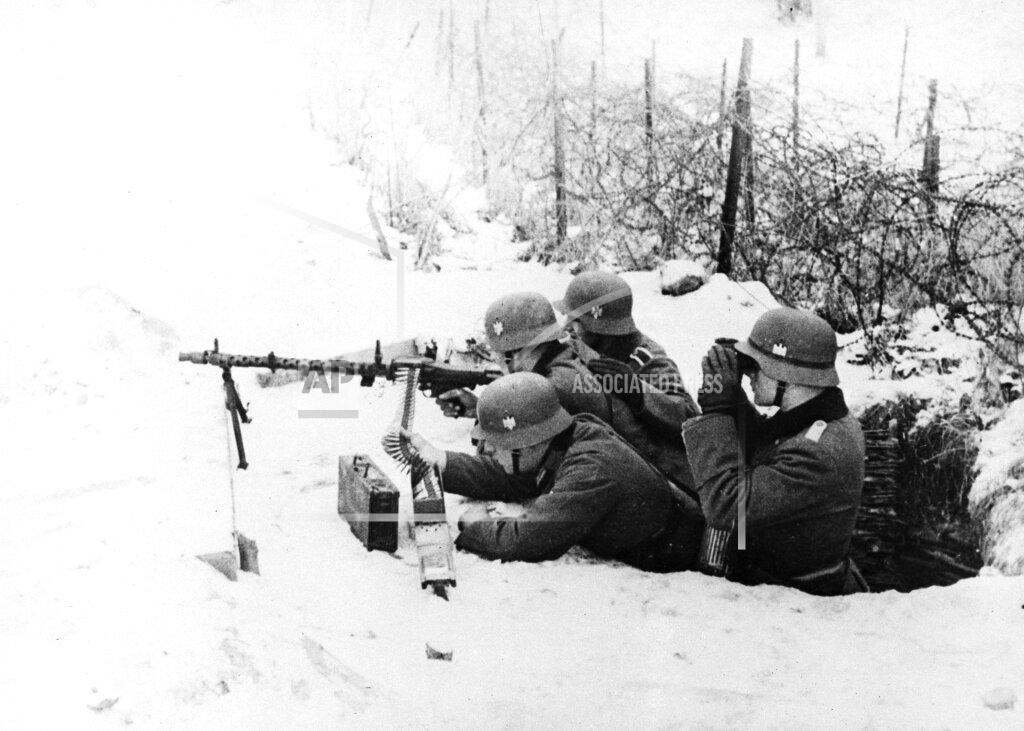
Blizzards hamper the Soviet offensive operations in the Karelian Isthmus.
The Finnish V-line on the Karelian Isthmus continues to crumble. Soviet forces penetrate towards the city of Viipuri. The Soviet forces on the Karelian Isthmus penetrate ever deeper towards Viipuri.
The Russian breakthrough in the intermediary position at Mustalampi is halted in a renewed counterattack by a reinforced Finnish brigade.
The Finns lose control of one of the strongholds in the Terenttilä area in Taipale and are unable to retake it.
Jaeger Colonel A.E. Martola is placed in command of the Finnish 1st Division. His predecessor, Jaeger Major-General Taavetti Laatikainen is transferred to command I Army Corps.
Viipuri marshalling yard is the target of incessant enemy bombing. Over 1,000 wagons and a dozen engines are trapped in the yard by the damaged track.
The Russian fire control planes and captive balloons are becoming more and more accurate in directing the enemy artillery.
An artillery casemate in Patoniemi on the western edge of the Taipale sector is destroyed by two direct hits. Over 700 artillery shells explode and two guns are badly damaged. One man is killed and six wounded by flying shrapnel.
In Ladoga Karelia, during the course of the morning Finnish troops take the final remnants of the ‘regimental motti’ to the north of Lake Ladoga.
In northern Finland, the Soviet offensive in Kuhmo runs out of steam.
In northern Sweden, shortly after noon, at 12:46 p.m., seven Soviet aircraft begin to bomb the Swedish village of Pajala in the Tornedal valley nine kilometres from the Finnish border. Altogether 34 explosion and 100 incendiary bombs fall in the centre of the densely populated village. A quarter of the village is set ablaze. Despite the considerable destruction, by some miracle there is no loss of human life. The all-clear is sounded at 12:55.
The Swedish Government presents a stiffly worded protest to the Soviet Union over the incident.
Finnish Foreign Minister Väinö Tanner gives an account of the exploratory peace talks to the Foreign Affairs Committee of Parliament. The majority view is to grasp the chance of peace even at the cost of heavy sacrifices.
In Western Finland, Vaasa Town Court convicts five young men of looting.
Helsinki Town Court hands down fines for infringements of the blackout regulations.
The wife of Georg Gripenberg, Finland’s diplomatic representative in London, introduces the British Women’s Council to the work of Finnish women in defending their country.
John D. Rockefeller Jr. gave $100,000 yesterday to the Finnish Relief Fund on behalf of himself and his family. A letter with his check was sent to Herbert Hoover, chairman of the Fund.
Despite the war, US exports to the Soviet Union continue unabated. During the five months to the end of January, 90% of Soviet imports from the USA have been munitions to the value of 35 million dollars.
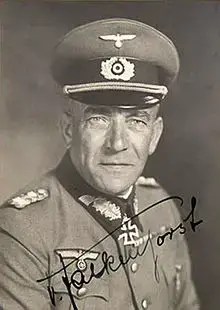
Hitler authorized Operation Weserübung, the invasion of Norway. Hitler gives command of the invasion of Norway, now named Operation Weserübung (“Exercise on the Weser”), to Generalleutnant Nikolaus von Falkenhorst & demands a plan by 5 PM. Demonstrating the speed and flexibility of the German military, von Falkenhorst buys a Baedeker tourist guide to Norway. Working from maps in the book, he has draft operational plans ready for Hitler’s approval at 5 o’clock. Falkenhorst had fought in Finland during World War I and therefore was familiar with arctic warfare.
French war communiqués today indicated a renewal of activity on the Western Front with improvement in the weather. The morning communiqué read: “Some artillery and infantry fire at different points on the front, notably in the Vosges and on the Rhine.” The evening communiqué carried matters a step further with, “Local infantry and artillery actions. Renewal of aviation activity.” Noncommittal as they are and without details, both communiqués confirm the conclusion that the testing period is beginning. Until now movement has been largely confined to French patrol action and less frequent but often more pronounced German attacks against French outposts.
Germany challenged Rumania’s ban on shipments of high test aviation gasoline to the Reich by deciding to send her ace economic negotiator, Dr. Karl Clodius, to Bucharest to insist in crucial conversations upon full delivery of her quota, it was learned authoritatively here. Not only will Germany’s future attitude toward Rumania most likely depend upon the outcome of Clodius’ mission, but also her view of all other neutral southeastern European countries. Rumania’s shipments of oil to Germany dropped to 26,000 tons in January, though she had agreed to deliver 130,000 tons. Caught in a perilous economic grapple between German and Allied demands for the major portion of her oil exports, Rumania earlier today was reported to have assured Britain and France she would prohibit the export of aviation gasoline to the Reich. A government decree to this effect was understood to have been issued in direct contradiction to a recent arrangement with Germany.
Germany has effectively barred American Red Cross aid for Poland except in the district about Warsaw established by the Nazi conquerors as the Gouvernement General, where prescribed activities by Red Cross representatives will be permitted. This was revealed tonight when Norman H. Davis, chairman of the American Red Cross, announced an agreement had been made with the German Government concerning the Gouvernement General. Under this, the United States representatives will be permitted to observe the distribution of about $400,000 worth of medicines as well as warm clothing sent from the United States. Allocations of these relief supplies will be made to the Polish Red Cross and other representative Polish and Jewish agencies, working in conjunction with the German Red Cross.
Concentration Camps Inspectorate head Richard Glücks recommended a location for a “quarantine” camp in Poland. The site was a former Austro-Hungarian cavalry barracks near the town of Oświęcim, known in German as Auschwitz.
The British Government Treasury announces a token defense estimate of 100 pounds for the Army, Navy and Air Force for 1940. The actual figures are concealed for security reasons.
Emergency measures were introduced in Britain to deal with a coal shortage caused by the severe winter. On the railways, passenger train services are cut back.
Birmingham University conducts the first successful test of the cavity magnetron. This is the basis for short-wave radar. Britain is in the lead in developing effective, practical radar. Professors John T. Randall and Henry A.H. Boot are researchers in the group of Australian physicist Marcus Oliphant. Randall and Boot run the first cavity magnetron, an essential element of centimetric radar sets. The cavity magnetron operates for the first time at the University of Birmingham in the UK. It soon becomes apparent that this crude device — with vacuum seals of sealing wax and penny coins — is producing several hundred watts of power on the undreamed of wavelength of ten centimeters. The microwave era has begun.
The French government issued an official decree depriving Maurice Thorez, French Communist party leader, of citizenship on grounds that he had “acted as a citizen of a foreign power.” The move against Thorez followed a unanimous vote to oust 60 Communist members of the chamber of deputies. Thorez last October was officially declared a deserter from the French army.
A charge that the European tour of Undersecretary of State Sumner Welles is a prelude to entrance of the United States into the European war was broadcast by the Moscow radio. “Welles’ mission is a prelude to American entry into the war,” the announcer asserted. “It will consist in discovering what compensation the Anglo-French war bloc is ready to give the United States for its participation in the war front strangling Germany.” Against the will of the majority of Americans, the present American rulers want to have a hand in shaping Europe after the war.”
Russia today called home hundreds of Russian technical experts who had been employed for years in Turkish industries under a Russian-Turkish agreement.
A new Turkish earthquake in the Kaysori Province kills 40.
The RAF conducts reconnaissance over the Heligoland Bight.
The Royal Navy light cruiser HMS Manchester and destroyer HMS Kimberley capture another of the six German merchant vessels which the Royal Navy is hunting, the freighter Wahehe, south of Iceland. The German ship is boarded and seized as a war prize.
A British escort depth-charged U-19 off Ronaldsay in the Orkney Isles, causing minor damage.
At 0254 hours, the Dutch steam merchant Tara was hit by one torpedo and sunk after being hit by a coup de grâce at 0312 hours by the U-50, commanded by Kapitänleutnant Max-Hermann Bauer, west of Cape Finisterre, Spain (42°45′N 10°25′W). The U-boat had spotted the steamer at midnight, which was according to Bauer en route without visible neutrality markings and missed her with a first torpedo at 01.38 hours. All hands abandoned ship in two lifeboats of which one made landfall at the Spanish coast, while the survivors in the other boat were picked up by the Spanish fishing trawler Milin and landed at La Coruna, Spain. The 4,760 ton Tara was carrying grain and was bound for Rotterdam, Netherlands.
A straggler from Convoy HX.19, the British steam merchant Loch Maddy was torpedoed at 1809 hours by the German submarine U-57, commanded by Kapitänleutnant Claus Forth, south-southwest of Rockall in the North Atlantic Ocean. Loch Maddy (Master William James Park), which had been detached on 15 February 1940 from convoy HX.19 to take the ‘northern route’ direct to Leith, was hit on starboard side amidships in the engine room by one G7e torpedo from U-57 (Korth) and was abandoned about 20 miles south-southeast of Copinsay, Orkney Islands. Four crew members were lost. The master and 34 crew members were picked up by HMS Diana (H 49) (LtCdr E.G. Le Geyt, RN) and landed at Scapa Flow. The drifting Loch Maddy was sunk the next day by U-23. The 4,996 ton Loch Maddy was carrying wheat, timber, and aircraft and was bound for Leith, Scotland.
The Dutch trawler YM 49 struck a mine in the North Sea and sank.
The Greek coaster Georgios Karavias disappeared in a storm in the Aegean Sea between Creta and Piraeus with the loss of all thirteen hands.
The U.S. freighter Exhibitor, detained since February 17, was allowed to proceed.
Convoy OA.96 departs Southend.
Convoy OB.95 departs Liverpool.
Convoy OB.96 departs Liverpool. The U.S. freighter Sahale was detained by British authorities at Gibraltar.
The War at Sea, Wednesday, 21 February 1940 (naval-history.net)
Destroyer KELVIN had been escorting armed merchant cruiser CIRCASSIA since the 19th and on the 21st reported that side plating had split while at sea NW of the Shetlands. She arrived at Scapa Flow on the 22nd.
Destroyer KASHMIR’s asdic dome and oscillator were defective and docking was required to repair them.
Destroyers GRIFFIN and GALLANT were detached from patrol to escort steamer CYPRIAN PRINCE (1988grt) from Aberdeen to Kirkwall. At Kirkwall, they joined destroyer IVANHOE on patrol.
Armed merchant cruiser LETITIA departed the Clyde on Northern Patrol.
Armed merchant cruiser DERBYSHIRE arrived in the Clyde from Northern Patrol.
Heavy cruiser YORK departed Liverpool to relieve heavy cruiser BERWICK on Northern Patrol. BERWICK reached Greenock on the 21st.
Light cruiser MANCHESTER and destroyer KIMBERLEY on Northern Patrol south of Iceland captured German steamer WAHEHE (4709grt) in 62 50N, 14 20W following her escape earlier in the month from Vigo. She was towed towards Kirkwall by KIMBERLEY, joined by destroyer KHARTOUM during the afternoon of the 22nd and arrived in the Clyde on 8 March. WAHEHE was renamed EMPIRE CITIZEN for British service.
Submarines TRIBUNE and TRIDENT exercised in the Firth of Forth.
Destroyers BRAZEN and ENCOUNTER arrived at Rosyth.
Minesweeping trawler SOLON (348grt, Lt Cdr W Gillett Rtd) was near missed and damaged by He111 bombers of German KG26 (X Air Corps) off Yarmouth, but was able to enter the port. Gillet and one rating were wounded by machine gun fire.
Convoy OA.96 departed Southend escorted by destroyers VERITY and BEAGLE. Destroyer VETERAN relieved BEAGLE on the 22nd, VERITY detached on the 23rd, and VETERAN left on the 24th when the convoy dispersed
Convoy OB.96 departed Liverpool escorted by destroyers VANQUISHER and VERSATILE from the 21st to 24th, when they detached to SL.20.
Convoy FN.100 departed Southend escorted by destroyers JERVIS and WESTMINSTER and sloop LONDONDERRY, the escorts of convoy FN.99 which had been cancelled. The convoy was delayed off Cromer Knoll waiting for minesweepers, but arrived in two parts on the 23rd. Convoy FN.101 was cancelled.
U-22 attacked trawler STRATHCLOVA (210grt) north of Fair Island, but torpedo defects allowed her to escape unharmed.
U-50 sank Dutch tanker TARA (4760grt) 60 miles SW of Vigo in 42 45N, 10 25W. French destroyer FANTASQUE made unsuccessful attacks on U-50 and rescued the entire crew from the tanker.
U-57 torpedoed and badly damaged steamer LOCH MADDY (4,996grt), 20 miles 70° from Copinsay as she was straggling behind convoy HX 19. Destroyer DIANA, which had been detached by D.3 due to a defective steam pipe, attacked a submarine SE of Copinsay at 58 50N, 02 28W, but without success. Tug ST MELLONS was dispatched to tow the damaged and sinking ship which had lost four crew, and the survivors abandoned her, 33 of them being rescued by DIANA. Early on the 22nd, U-23 finished her off, although the after part was beached at Inganess Bay and some salvage carried out.
Destroyers IMOGEN and INGLEFIELD were hunting five miles 346° from Noup Head in 59 43N, 01 50W for a contact reported at 0530 by armed boarding vessel NORTHERN ISLES (655grt) in 59-25N, 3-06. 5W. She claimed to have grazed a submerged object which she attacked, and had in fact lightly damaged U-19.
Destroyers IVANHOE and INTREPID were searching for a submarine contact reported by aircraft in 58-40N, 00-30E.
British Battle aircraft en route to France reported sighting a German submarine ten miles south of Beachy Head. Destroyer VERITY was escorting convoy OA.96 as far as 00-30W and destroyer BEAGLE was sent to reinforce her. Destroyers ACHATES and ANTHONY departed Portsmouth to search for the sighting which was later determined to have been a mine. BEAGLE was recalled and arrived at Dover at 2230.
Anti-submarine trawlers YORK CITY (398grt) and HUDDERSFIELD TOWN (399grt), escorting the Milford Haven section of an outbound convoy, attacked a submarine contact off Milford Haven in 51 28N, 5 20W. Destroyer WAKEFUL relieved them and made an anti-submarine attack.
Minesweepers HARRIER, SKIPJACK, NIGER, and SPEEDWELL were sweeping off Wick in 58-21N, 2-35W when an aircraft reported an oil patch on the water. NIGER and SPEEDWELL attacked a contact 30 miles SE of Duncansby Head and in all dropped 32 depth charges.
Anti-submarine trawler STOKE CITY (422grt) attacked a submarine contact off Morecombe Light Vessel in 53-54N, 3-33. 5W.
Anti-submarine trawler SCALBY WYKE (443grt) attacked a contact in Shapinsay Sound in 58-59. 50N, 2-50. 30W.
Convoy BC.27 of steamers BALTRAFFIC, BARON GRAHAM, BOTHNIA, BRITISH COAST, and MARSLEW (Commodore) departed Bristol Channel escorted by destroyer MONTROSE, and arrived in the Loire on the 23rd.
Dutch steam trawler YM 49 (250grt) was mined and sunk in the North Sea.
German steamer ANTONIO DELFINO (13,589grt) sailed from Bahia. She reached Haugesand on 23 March, Sandefjord on the 27th escorted by Norwegian destroyer ODIN and two torpedo boats, left there on 1 April, arrived at Gotenhafen and finally reached Kiel safely on the 7th.
With the U.S. Senate in recess, its Foreign Relations Committee heard State Department officials on American-Japanese relations and the Monopoly Committee continued its study of life insurance company practices.
The House concluded general debate on the resolution to extend the reciprocal trade treaty program and adjourned at 6:05 PM until tomorrow. The Committee to Investigate the National Labor Relations Act heard further testimony on NLRB practices and the Banking and Currency Committee discussed the export-import bank bill.
The demand of Senator Edwin C. Johnson of Colorado that President Roosevelt declare his third-term intentions, and accompanying efforts to “smoke out” the President on his political plans, were generally put down as futile gestures today by Democrats in Congress.
Although many Democratic Senators and Representatives privately wince at the idea of a third term for Mr. Roosevelt, and many agree with Senator Johnson that “it is beneath the dignity of the office of the President of the United States to plan the manipulation of delegates,” the majority have apparently become convinced that the nomination is the President’s to accept or refuse. They felt that his refusal or assent would not be made, and certainly not accepted as definite, until just before, or perhaps during, the national convention in July. There was no disagreement between the views of conservative members of Congress and the New Deal engineers of the Roosevelt draft, who declared they had the stage set.
The ball will start rolling with the New Hampshire primary on March 12, the latter said, when a slate of delegates pledged to Mr. Roosevelt will be chosen practically without opposition. The New Dealers predicted victories in Wisconsin on April 2 and in Illinois on April 9 which would, as one put it, “dispose” of Vice President Garner. Others, on May 7 in California, and May 17 in Oregon, they figured, would settle all question of a Western drive for Senator Wheeler. As to Postmaster General Farley, they look to him to become the head of the third-term movement before many weeks have passed. “We have bombed every airdrome, and there’s not a plane in the sky,” was the way one New Deal leader expressed it.
But one large question the New Dealers themselves conceded had not been answered. It was whether the President would accept the nomination, even if tendered. A lesser question, which persisted despite the belief of the Roosevelt men, was whether Mr. Farley would go along with the draft movement. The most definite sign any of the Washington groups have noted as to Mr. Roosevelt’s intentions is the fact that he has not sought in any apparent way to discourage the draft proposal. And, in the absence of resistance from the President, the movement has gained such backing that many doubt that anything he can say now will or can be definite enough to end it in advance of the convention.
Louisiana’s next governor, 42 year old Sam H. Jones, turned from his smashing ballot victory over the old Huey P. Long dictatorship to plan the “rehabilitation of Louisiana.” Jubilant at his triumph by more than 20,000 votes over Gov. Earl K. Long for the four year term beginning May 14, Jones nevertheless soberly called his “the greatest job any Louisiana public official has faced since reconstruction days.” In an interview he said “our simple objective is to restore constitutional, democratic, decent government.” The second thing is to put Louisiana on a sound financial basis. And the third is, we must never let this thing happen again in Louisiana this set of conditions that for years has made every honest Louisianan bow his head in shame.” Governor Long declined comment, saying only that he would issue a statement when he saw official returns from yesterday’s runoff primary for the Democratic nomination, tantamount to election. He summoned his crestfallen administration leaders to Baton Rouge for a conference. He refused to concede defeat, although unofficial returns tonight showed 1,651 of 1.703 precincts gave Jones 278,593 votes, Long 257,829. – Mayor Robert S. Maestri of New Orleans, the machine leader, however, extended Jones his congratulations, despite the fact Jones pledged on the stump to prosecute Maestri for the recovery of more than a million dollars the portly mayor made in an oil deal the federal government has questioned.
The House committee investigating the National Labor Relations Board is studying a proposed bill for the abolition of the board and the creation of a five-man commission with added powers to investigate, conciliate, and arbitrate strikes and lockouts, it was learned today. Soon after the committee concluded its morning session today, Representative Howard W. Smith, the chairman, dropped a bill in the House hopper calling for an additional appropriation of $50,000 so that the House committee may continue its deliberations for several months. The first appropriation of $50,000 is nearly exhausted and the committee will probably call a halt to public hearings next week, possibly for a month. In the meantime, it would complete its interim report and recommendations for changes in the act, and in April, if the new money is voted, resume its hearings.
Aiming at adjournment June 1, Congressional leaders tentatively fixed the legislative program today and passed the word about that members who have Summer primaries could make their plans accordingly.
A Michigan State referee ruled that nearly three million dollars in unemployment compensation benefits should be paid to 27,000 of the more than 50,000 Chrysler corporation workers thrown out of their jobs by a prolonged labor dispute last October. The ruling, announced by Referee Charles Rubinoff of the Michigan unemployment compensation commission, excludes from benefits approximately 23,000 employees of three Chrysler plants in which the long strikes had occurred.
The Illinois Supreme court knocked out the proposed 60 million dollar Chicago superhighway financing program, calling it unconstitutional. The plan contemplated issuance by the city of Chicago and by Cook county notes to be retired from gasoline tax shares within 20 years, for the purpose of constructing a metropolitan trunk highway system.
Two men were killed and 15 persons including three women injured in a powder blast that wrecked four small buildings at the plant of Triumph Explosives Inc. in Elkton, Maryland, and rattled windows a mile away.
Generalissimo Chiang Kai-shek today headed a group of government officials who sent congratulatory telegrams to La-Mu-Tan-Chu, 6year-old boy who tomorrow will be installed in Lhasa as the fourteenth Dalai Lama of Tibet.
The Soviet Union’s attitude toward China appears to have not been changed by events of the past six months. The radio nightly broadcasts news from Generalissimo Chiang Kai-shek’s headquarters, in Chungking, which is regularly featured in Moscow newspapers. The newspapers also attack and cartoon Wang Ching-wei and other Chinese lenders of puppet governments formed by the Japanese. They also publish the French protests against the Japanese bombings of the railway between Indo-China and China. No reference is made to British and French aid to the Chinese. Izvestia and Pravda commentators today stress the importance of the Chinese victories in the south which are reported to have culminated in the recapture of Nanning.
Nanning is still held by the Japanese according to reports from both sides in the South China fighting.
Chiang Kai-shek opens military conference for assessing the winter offensive, airing grievances, and apportioning blame.
Shangtung Operation: Japanese 21st Infantry Division, 32nd Infantry Division, and 5th Independent Mixed Brigade conclude sweep through Shangtung peninsula.
Dow Jones Industrial Average: 148.34 (-0.31)
Born:
John Lewis, American politician (Rep-D-Georgia) and prominent civil rights leader (Big Six), in Troy, Alabama (d. 2020)
Peter Gethin, racing driver, in Ewell, Surrey, England, United Kingdom (d. 2011).
Doug Gallagher, MLB pitcher (Detroit Tigers), in Fremont, Ohio (d. 2017).
Peter McEnery, English actor (“Game is Over”, “Moonspinners”), in Walsall, England, United Kingdom.
Naval Construction:
The Royal Navy Shakespearian-class minesweeping trawler HMS Hamlet (T 167) is laid down by Cook, Welton & Gemmill (Beverley, U.K.); completed by Holmes.
The Royal Navy Bar-class boom defense vessel HMS Barnehurst (Z 84) is commissioned.
The Royal Navy armed boarding vessel HMS Chantala is commissioned. Her first commanding officer is Lieutenant Commander (retired) Christopher Ernest Inman Gibbs, RN






The cavity magnetron was a radical improvement introduced by John Randall and Harry Boot at the University of Birmingham, England in 1940. Their first working example produced hundreds of watts at 10 cm wavelength, an unprecedented achievement. Within weeks, engineers at GEC had improved this to well over a kilowatt (kW), and within months 25 kW, over 100 kW by 1941 and pushing towards a megawatt by 1943. The high power pulses were generated from a device the size of a small book and transmitted from an antenna only centimeters long, reducing the size of practical radar systems by orders of magnitude. New radars appeared for night-fighters, anti-submarine aircraft and even the smallest escort ships, and from that point on the Allies of World War II held a lead in radar that their counterparts in Germany and Japan were never able to close. By the end of the war, practically every Allied radar was based on the magnetron. It also led to the fielding of radar proximity fuses which made anti-aircraft fire by the Allies more potent.

 History Diaries