
The 15 generals comprising South Vietnam’s High National Council — Nguyễn Văn Thiệu, Nguyen Van Cao and Nguyễn Cao Kỳ — voted to remove General Nguyễn Khánh from leadership as Prime Minister. General Khánh bowed today to a unanimous decision of the Armed Forces Council to replace him with Major General Trần Văn Minh as commander in chief. After the council voted late yesterday to oust him, General Khánh spent the night telephoning military commanders throughout the country to rally support. Unsuccessful, he called the council’s headquarters in Saigon early this morning from the resort of Đà Lạt, northeast of the capital, to admit defeat. Council members said they hoped to bring General Khánh into the capital later in the day for a news conference.
Lieutenant General Nguyễn Khánh formally announced his resignation, but generals of the South Vietnam Armed Forces Council maintained a full military alert. Earlier, Brigadier General Nguyễn Chánh Thi, commander of the army’s I Corps, said the South Vietnamese Air Force would bomb any troops or tanks that moved toward Saigon. General Thi, who helped to keep General Khánh in power in the past, had become a leader in the movement to drop him. Unusual troop movements and some mortar fire on the outskirts of the capital kept Saigon wary after the broadcast announcement of General Khánh’s removal. But the mortar fire and flares dropped around Tân Sơn Nhứt Air Base were apparently connected with operations against the Việt Cộng.
The ouster came a day after General Khánh, aided by loyal paratroops and air units, defeated a brief and bloodless attempt at a military coup d’état. Some of the officers who backed him were among those who now voted for his dismissal. General Khánh did not attend the council meeting. The council’s announcement did not specify whether General Minh, who was named acting commander in chief, would also inherit General Khánh’s second post, the chairmanship of the Armed Forces Council. A council delegation called on the chief of state, Dr. Phan Khắc Sửu, to tell him about the vote. The new Premier, Dr. Phan Huy Quát, was present. Dr. Sửu readily agreed to sign an order to dismiss General Khánh and appoint General Minh. In his order, Dr. Sửu said General Khánh would be reassigned. The general’s ambitions and his courting of Buddhist political support have long made him suspect among his colleagues.
Unless General Khánh musters unexpected resources, the council move will have marked the end of almost 13 months of political and military preeminence. General Khánh seized power January 30, 1964, in a bloodless coup d’état. His successor, General Minh, is often called Little Minh to distinguish him from the officer whom General Khanh overthrew in coming to power; that officer is Major General Dương Văn Minh (Big Minh), who led in unseating President Ngô Đình Diệm in November, 1963. The United States Embassy was understood to welcome the appointment of General Minh, although his was not one of the names most frequently heard in embassy circles as General Khánh’s likely successor. Among the activist young Vietnamese generals, sometimes termed the Young Turks, General Thi was most outspoken about himself. There was little doubt that General Thi would have welcomed a chance to step into General Khánh’s position. Military observers noted that General Minh was a devotedly professional soldier who had seldom been involved in politics.
Colonel Phạm Ngọc Thảo, leader of Friday’s attempted coup against Lieutenant General Khánh, had appealed earlier this month for U.S. support for his plans, but received no encouragement.
Wounds suffered by an American led to the greatest victory yet over the Việt Cộng, it has been disclosed in South Vietnam.
Barry Goldwater predicted that the conflict with communism in South Vietnam eventually will engulf all Southeast Asia. Goldwater picked up today where he left off in the Presidential campaign by advocating more United States bombing raids in North Vietnam, even at the risk of war with Communist China. He said President Johnson should order air strikes even at Hanoi, the North Vietnamese capital, “if that were necessary,” and “extend the attacks to what you might call strategic depots, materiel-gathering points, much as I think we should have done in Korea.” The former Senator from Arizona conceded that China and North Vietnam might send ground forces into South Vietnam as a result, but he said they could be beaten with South Vietnamese troops and United States air and naval power.
The Laotian army was reported building up in northeastern Laos to retake a key Strong point lost to Communist forces.
Deputy Premier Stanko Todorov of Bulgaria today endorsed France’s position on Vietnam and declared his country’s interest in President de Gaulle’s approach to the reunification of Germany.
Maurice Couve de Murville, the French Foreign Minister, urged before a nationwide American television audience today that negotiations for a settlement in Vietnam be attempted “as soon as possible.” His public advocacy of negotiations followed three days of private talks with President Johnson, Secretary of State Dean Rusk and other officials during which he was unable to win them over to the idea. In reply to a question, Mr. Couve de Murville said: “We think that the negotiations [to end the fighting in Vietnam] should be engaged as soon as possible.”
The new Soviet regime has Indicated it will allow increased freedom of creativity for intellectuals. The Soviet Union’s ruling Communist Party announced a liberalization of its former policy of discouraging creativity and an end to what it described as former Secretary Nikita Khrushchev’s campaign against the “intelligentsia.” Speaking through Alexei M. Rumyantsev, then editor-in-chief of Pravda, the party issued a statement that “genuine scientific creativity” was “possible only under conditions of search and experiment, free expression and the clash of opinions… different schools and trends, different styles and genres, competing with each other and united at the same time by their common dialectical-materialistic outlook and unity of the principles of socialist realism.” The policy, however, did not extend to free expression of criticism of the Communist Party’s political decisions.
The Chinese Communist party today resumed its attack on the Soviet party’s proposal to hold an international Communist meeting in Moscow March 1. It published a statement by pro-Peking Communists in Australia, who predicted that the successors of Nikita S. Khrushchev, the ousted Soviet Premier, would suffer the fate he suffered if they did not desist. The Communist party newspaper Jinmin Jih Pao placed at the top of its foreign news page the Australian statement, which said “revisionism” remained the main danger for the Communist movement.
The prestige of both the United Nations and the United States suffered severely when the General Assembly adjourned last Thursday without even debating the refusal of the Soviet Union and France to pay their assessments for peacekeeping forces.
East Germany’s radio network confirmed that the Soviet Union was publicly acknowledging that Nazi German dictator Adolf Hitler had, as believed, committed suicide on April 30, 1945, by shooting himself in the head, and that Hitler’s charred body had been identified beyond any doubt after its recovery from the burial site within the garden of the Chancellery in Berlin.
Walter Ulbricht, Communist East German leader, left for a visit to Egypt that is straining West Germany’s relations with Israel and the United Arab Republic. Ulbricht, the East German head of state, will receive a 21-gun salute and a personal welcome from President Gamal Abdel Nasser when he arrives in Cairo for a visit Wednesday. But East German officials said they had agreed to some curtailment of Mr. Ulbricht’s activities in an effort to help lessen the irritation of West Germany over the visit.
Premier Moïse Tshombe rushed white mercenaries to the Uganda border to try to recapture a Congolese frontier town. Reinforcements of white mercenaries have been rushed to the aid of Congolese troops staging a new attack on the town of Mahagi, near the Ugandan border, a reliable source said today. The Congolese Government has maintained that the town is being held by a force of Ugandans and Congolese rebels. Uganda denies any of her troops are involved and has countered with the charge that Congolese troops have violated Uganda’s border. The source said other white mercenaries were being sent to reinforce a Government detachment at Bunia, the only major airport in the region.
The Congolese Government sent an urgent message to Athens today inviting the UNESCO, teachers it expelled yesterday as subversives to return to their classes here as soon as possible.
Three rightist parties balked tonight at an attempt by Premier Sir-el-Khatim el-Khalifa to solve the Sudan’s political crisis by forming a new Cabinet with continued Communist representation.
A Finnish construction worker was pulled from the remains of a bunkhouse in Canada Saturday after surviving 79 hours under tons of snow and ice from an avalanche.
A 25-year-old member of the Peace Corps who was shot and seriously injured by policemen late Friday night said today that it had been “a terribly stupid mistake.” Another Peace Corps worker was killed.
Vice President Humphrey paid strong tribute tonight to Americans who are aiding the economic development of Israel. He said they were helping “construct a nation where freedom flourishes.”
Several thousand Africans cheered, sang and chanted nationalist slogans today when Arthur Bottomley, Britain’s Secretary of State for Commonwealth Relations, arrived for 10 days of talks on the problem of independence for Rhodesia.
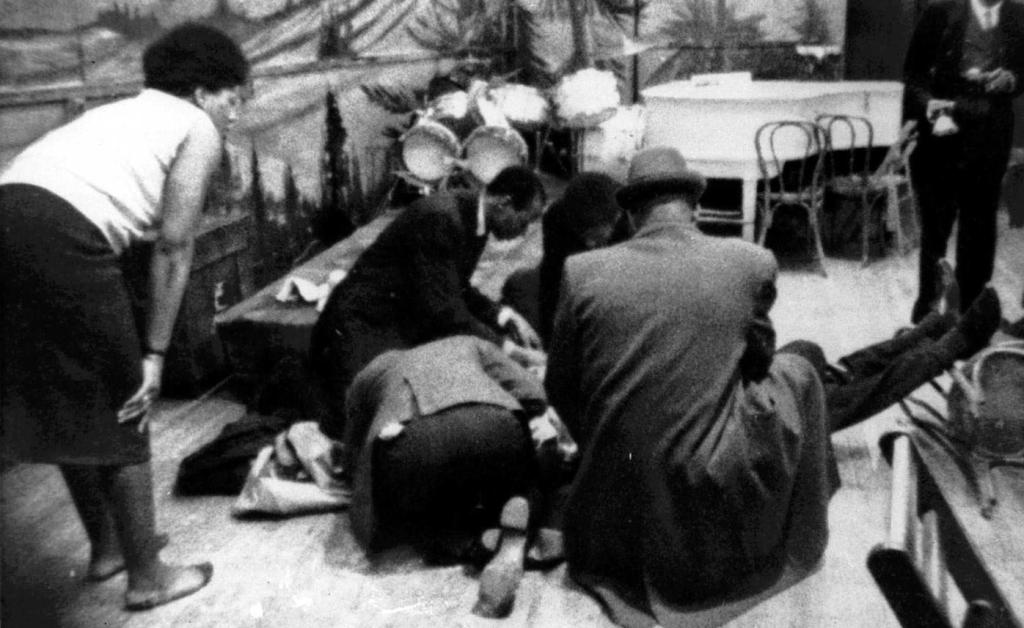
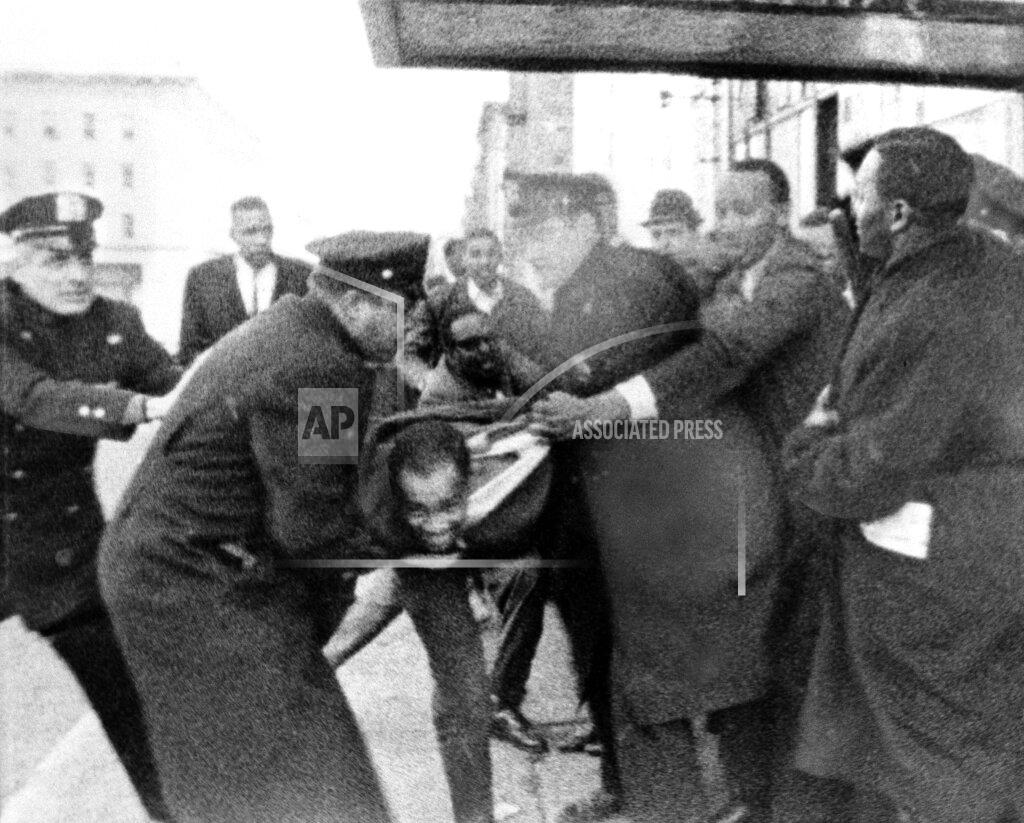
Malcolm X was assassinated at Manhattan’s Audubon Ballroom at 564 West 166th Street in Washington Heights. Shortly before 3:10 p.m., as he was preparing to deliver a speech to the Organization of Afro-American Unity, he opened with the greeting As-Salaam Alaikum and the audience acknowledged with Wa-Alaikum-Salaam. At that moment, a man in the crowd shouted “N****r! Get your hand outta my pocket!” to a person sitting next to him, an apparent signal for four other spectators to stage a fight. Malcolm said, “Hold it. Let’s cool it, brothers”, and was shot in the chest by a man who approached the stage with a Luger pistol. As a second man fired from a sawed-off shotgun, a third fired multiple times with a pistol. In all, Malcolm X was shot 16 times at close range, and was pronounced dead at the nearby Vanderbilt Clinic at Columbia Presbyterian Hospital at 3:30 p.m.
Although the myth persists that the identity of the assassins was “never determined”, the third gunman, Thomas Hagan (a.k.a. Talmadge Hayer), was shot and wounded by one of Malcolm’s bodyguards, arrested at the ballroom, and confessed to the crime. Two other men, Norman 3X Butler and Thomas 15X Johnson, would be arrested later and convicted of Malcolm’s murder, although Hagan testified that they were not involved and may not have even been at the Audubon at all. Born as Malcolm Little in Omaha, Nebraska, in 1925, Malcolm X, described as “arguably the most important contributor to the Black Power movement and a leading figure in American history”, died at the age of 39.
“I live like a man who’s already dead,” Malcolm X said last Thursday in a two-hour interview in the Harlem office of his Organization for Afro-American Unity. “I’m a marked man,” he said slowly as he fingered the horn-rimmed glasses he wore and leaned forward to give emphasis to his words. “It doesn’t frighten me for myself as long as I felt they would not hurt my family.” Asked about “they,” Malcolm smiled, shook his head, and said, “those folks down at 116th Street and that man in Chicago.” The references, Malcolm quickly confirmed, were to his former associates in the Black Muslim movement and to Elijah Muhammad, the organizer and head of the movement. Before Malcolm X left the movement 18 months ago, he was the minister of the Black Muslims’ Harlem mosque at 116th Street and Lenox Avenue.
The killing of Malcolm X brought expressions of deep concern from Black leaders across the nation. The major civil rights organizations expressed shock yesterday over the assassination of Malcolm X and pledged to continue policies of nonviolence. Roy Wilkins, executive secretary of the National Association for the Advancement of Colored People, said that the “gunning down” of Malcolm was a “shocking and ghastly demonstration of the futility of resorting to violence as a means of settling differences.” “Violence is not the answer to disputes,” he continued, “either between warring factions within a group or between groups in the large society.”
The Rev. Dr. Martin Luther King, president of the Southern Christian Leadership Conference, said in a statement that “we must face the tragic fact that Malcolm X was murdered by a morally inclement climate.” “It revealed that our society is still sick enough to express dissent through murder,” he added. “We have not learned to disagree without being violently disagreeable. This vicious assassination should cause our whole society to see that violence and hatred are evil forces that must be cast into unending limbo.” A spokesman for the Congress of Racial Equality echoed Mr. Wilkins by saying that the murder of Malcolm “emphasizes again the need for finding nonviolent solutions to human conflicts.”
Three generations of one Black family were in Selma, Alabama hospitals today as a result of Thursday night’s assault by state troopers on a crowd of demonstrators in the Marion Town Square. Cager Lee, an 82-year-old retired farmer, and a daughter, Mrs. Viola Jackson, 50 years old, were in Burwell Infirmary with broken scalps and bruises: they said had been inflicted by the troopers’ night sticks and feet. Mrs. Jackson’s son, 26-year-old Jimmy Lee Jackson, remained in critical condition in Good Samaritan Hospital with a bullet wound in the stomach. He also had a head abrasion. Black witnesses said he had been shot by a trooper in Mack’s Cafe and later clubbed down on the street.
President Lyndon Johnson said his administration’s program to develop thousands of new jobs is “off to a good start” in training programs.
A business group has recommended that Congress reject key provisions of President Johnson’s Great Society program as a start toward bringing federal expenditures under control.
The Administration is determined to get House committee action this week on the $1.25 billion school aid bill, a virtual legislative truant in the last few weeks. This was to have been the week that the bill was to have come up for floor action in the House. Instead, the measure has not even been brought up before the full House Education and Labor Committee. President Johnson and House leaders are “deeply concerned” over the failure of Representative Adam Clayton Powell, Democrat of Manhattan, to move the bill out of his committee, sources close to the President said today. The bill, which has top priorIty on the President’s legislative list, got off to a fast start early in the new Congress, but is now stuck in Powell’s committee.
The Labor Department issued new projections today indicating that the nation’s labor force would grow to 86 million in 1970 and 101.4 million in 1980. It was 77 million in 1964 and 73 million in 1960. Although the projected increase between 1970 and 1980 — 15.4 million — is 2.4 million higher than the projected increase between 1960 and 1970, the rate of gain would be about the same, 17.7 percent from 1960 to 1970 and 17.9 percent from 1970 to 1980. An increase of 24 million workers between 1964 and 1980 would mean that 1.5 million new jobs would have to be created each year, on average, merely to absorb the growth in the labor force. Sull more jobs would be needed to offset gains in output per man-hour and to reduce the level of unemployment.
Mississippi Governor Paul Johnson said that sending federal voter registrars into the state could “almost bring civil war.”
Samuel Pearson Goddard Jr., Arizona’s new governor, has assailed the “totally regressive” tax situation of his state.
It is a widely held belief among those close to the steel industry’s wage negotiations that there will be no strike by steelworkers this year.
During the week, the Gemini 3 prime crew participated in egress training from static article No. 5 in the Gulf of Mexico. After half an hour of postlanding cockpit checks with the hatches closed, Astronauts Virgil I. Grissom and John W. Young practiced the emergency egress procedures developed by the flight crew training staff for Project Gemini. Both pilots then egressed through the command pilot’s hatch after first heaving their survival kits into the water. Each astronaut then practiced boarding a Gemini one-person life raft. Swimmers were standing by in a larger raft.
NASA officials announced that Vanguard 1, the American satellite launched on March 17, 1958, had finally stopped transmitting after nearly seven years, but that it would continue to orbit the Earth. No other satellite had continued to function for that period of time, and by transmitting data, it had “paid rich scientific dividends” during its operation, including “the startling fact that the earth is not round, but pear-shaped.”
Born:
Anthony Blaylock, NFL cornerback (Cleveland Browns, San Diego Chargers, Chicago Bears), in Raleigh, North Carolina.
Óscar Azócar, Venezuelan MLB outfielder and pinch hitter (New York Yankees, San Diego Padres), in Soro, Venezuela (d. 2010, of a heart attack).
Mark LaVarre, NHL right wing (Chicago Blackhawks), in Evanston, Illinois.
Died:
Malcom X [born Malcolm Little], 39, African-American Black Nationalist human rights activist and Muslim minister, assassinated in New York City.

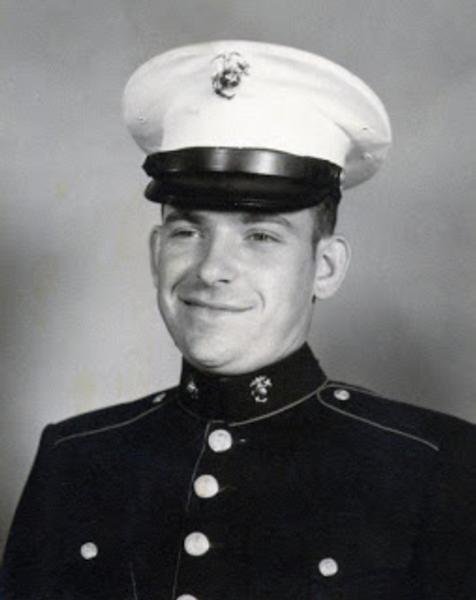
Captain Jordan is buried at Fort Rosecrans National Cemetery (VA) in San Diego, California. He is remembered on the Wall at Panel 1E, line 93


 History Diaries