
The day begins on the Isthmus with heavy enemy bombing.
The flashpoint now is in the Taipale sector. The Soviet 13th Army remains on the attack. While they repelled an assault by the 123rd and 19th Rifle Regiments across the ice at Lake Suvanto on the 19th, things remain tenuous. The Taipale River is frozen and remains an easy way to exploit any transient Finnish weakness.
Finnish forces old on against Soviet forces attacking across the frozen Taipale River. The Russians maintain the heavy pressure in the Taipale sector. In Terenttilä they break through the Finnish defences to a depth of 1.5 kilometers. Intense enemy bombing hampers Finnish countermeasures. By evening, part of the front line has been retaken in a counterattack.
The situation of the Finnish troops in the intermediary positions on the Isthmus has decisively deteriorated.
In the Mustalampi area, Soviet tanks dragging sled personnel carriers break through the intermediary defences during the night. By the afternoon the breakthrough extends to a depth of one kilometer. The defending Finns manage to deal with the enemy infantry, but are unable to destroy the tanks. About twenty tanks push through the Finnish positions. One of the reasons for the Finnish failure is a lack of artillery shells. Finnish losses are 74 dead and wounded.
Defence of Viipurinlahti bay is transferred from the navy to the Army of the Isthmus.
Finnish gunners shoot down nine enemy aircraft today.
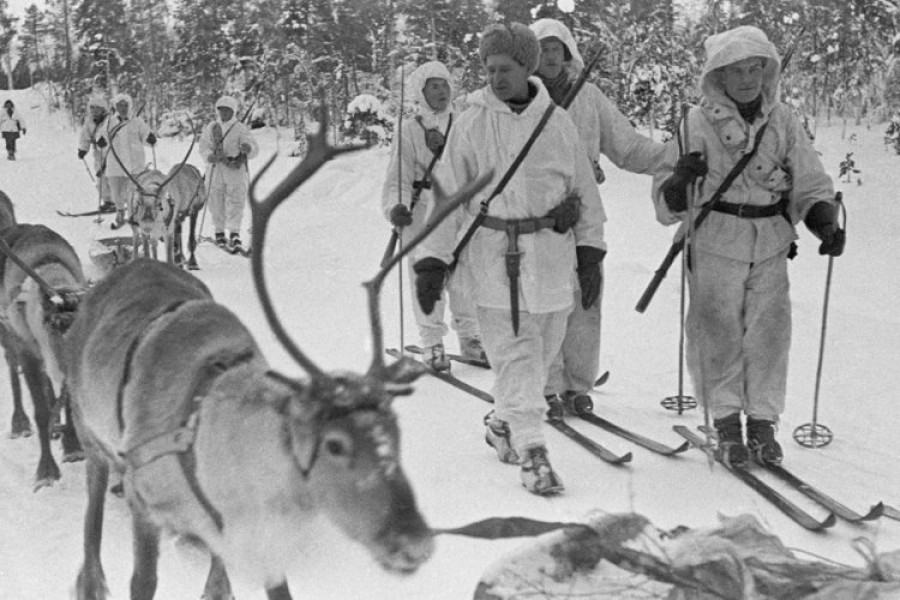
A detachment of Swedish volunteers, Svenska Frivilligkåren, is attached to the Finnish field army. The volunteers prepare to assume responsibility for the front in the far north, taking over from the Lapland Group.
An ambulance sent by the Swedish Red Cross is working close to the front lines in northern Finland.
In Sweden, the national collection and the women’s fighter aircraft fund are both growing rapidly.
Back in Finland, the Martha Organization is opening a service centre for veterans of the front in Helsinki.
Seven Soviet aircraft bombed the Swedish village of Pajala in the Tornedal valley 5 miles from the border between Sweden and Finland. No one was killed, but the incident renewed calls in Sweden for aid to Finland.
Representatives of the Western Allies are negotiating with Mannerheim over possible military aid for Finland.
The Soviet government offers fresh peace talks to Finland.
Norway refuses to accede to Britain’s demand that the Altmark be seized, and prepares to release the ship as soon as it is repaired. Foreign Minister Halvdan Koht, replying to British Prime Minister Neville Chamberlain, reaffirmed tonight that Norway recognized the German ship Altmark as a warship and that as such the Altmark could not have been subjected to an examination that would have disclosed British prisoners on board.
Before a cheering House today Prime Minister Neville Chamberlain declared Great Britain had no apologies to make to Norway or any one else for the “admirably conducted operation” whereby a boarding party of the British destroyer HMS Cossack freed prisoners held aboard the Altmark.
On the Western Front the thaw is restricting activity on both sides because it is difficult to move through the mud and icy water. The Germans attempted to raid a post during the night but withdrew as soon as fire was opened. This occurred east of the Nied River, the sector where a French detachment suffered about thirty casualties early yesterday morning. Confusing early reports gave an incorrect version of the affair. The facts are that a second lieutenant in charge of two motor trucks, bringing reliefs for an outpost, lost his way and drove into the German lines. The trucks were raked by machine-gun fire and the officer was among the killed.
Representatives of the German Gestapo organization (including Adolf Eichmann) and the Soviet NKVD organization (including Grigoriy Litvinov) met at Zakopane, Poland to coordinate the suppression of Polish resistance efforts.
The Royal Air Force poked fun today at Germany’s failure to wage a Blitzkrieg — lightning war — against Britain. In a memorandum pointing out that the Allies had obtained time to carry out their air development program, the RAF referred to the war as a “Sitzkrieg,” which it translated as “sit-down war.”
Opinion has been crystalizing in Italy against the British in the Altmark incident, and today the newspapers come out flatly with criticism and even aspersions on British courage.
The pressure that the British have been putting on Rumania in recent weeks to force the government not to favor Germany in its oil exports became known today. It almost literally amounted to a strangulation of Rumania’s foreign trade.
It is considered possible at the Vatican Secretariat of State that Sumner Welles, United States Under-Secretary of State, who is to study European conditions for President Roosevelt, will be received by Pope Pius next week.
In the midst of new military preparations by the government, the Turkish press declared flatly tonight that any attack against the Balkans would bring Turkey into the European war.
A Iraqi coup d’etat against the regime of the “four colonels” led by General Amin al-Umari fails. One of the chief sources of the complaint by General al-Umari and his confederates is the regime’s decision to send Iraqi forces to join the Allied forces in the Balkans. Thus, this could be interpreted as positive for the Allies.
Operation Nordmark, the naval exercise by the Gneisenau, Scharnhorst and Admiral Hipper, ends without the fleet sighting any convoys or being discovered by the British.
North Sea shipping is again attacked by the Luftwaffe. The Royal Navy trawler HMT Fifeshire is bombed and sunk in the North Sea (59°00′N 0°25′E) by Heinkel He 111 aircraft of KG26, Luftwaffe with the loss of 20 of her 21 crew.
RAF Bomber Command dispatches 20 aircraft to attack German shipping without success overnight.
German U-boat U-54 went missing in the North Sea. Its fate remains unknown but it probably struck a naval mine. U-54 was reported missing in the North Sea and her crew of 41 was never seen again. It was believed that she ran into mines laid by HMS Ivanhoe and HMS Intrepid in early Jan 1940.
The British cargo ship Fox collided with the ship Lord Elgin (also British) in the Solent and sank.
The British cargo ship Hawnby struck a mine and sank in the Thames Estuary north of Herne Bay, Kent.
Convoy OA.095G departs Southend.
The War at Sea, Tuesday, 20 February 1940 (naval-history.net)
He111 bombers of German KG26 (X Air Corps) attacked anti-submarine trawlers of the 11th Anti-Submarine Striking Force operating 52 miles 090° from Copinsay. FIFESHIRE (540grt) (S/Lt J V Searles-Wood) was sunk in 58 53N, 1 12W with Searles-Wood, Acting S/Lt J C Cooper RNR and nineteen ratings lost. Temporary S/Lt N F Villiers-Stewart RNVR, was the only survivor. AYRSHIRE (540grt) was attacked and badly damaged, and CAPE SIRETOKO (590grt) also attacked. Destroyer INGLEFIELD departed Scapa Flow to support them. (Note: German X Air Corps flew He111’s of KG26, Ju88’s of KG30, and two reconnaissance squadrons flying He59’s or Do17’s.)
Submarine L.23 was depth charged by a German destroyer off the Danish coast, and sustained damage to her OF tanks. She reached Rosyth on the 22nd, left on the 23rd for Blyth and was repaired there from the 27th until March.
Destroyer ILEX was damaged at Rosyth while berthing alongside destroyer SIKH, and was repaired at Rosyth completing on 11 March.
Destroyers GALLANT, GRIFFIN, INTREPID, and IVANHOE departed Rosyth for Scapa Flow to operate under the Orkneys and Shetlands Command.
Destroyer KIPLING arrived in the Tyne.
Destroyer ECHO arrived at Leith for refitting.
Destroyers DELIGHT and INGLEFIELD arrived at Scapa Flow.
Submarine URSULA departed Rosyth on patrol.
After arriving at Kirkwall on the 19th to avoid contact with the German Battlecruiser force, convoy ON.14 left there escorted by destroyers ESCAPADE, ECLIPSE, ESCORT, and ELECTRA and submarine NARWHAL. It was met by light cruisers EDINBURGH and ARETHUSA which departed Scapa Flow on the 20th. Anti-aircraft cruiser CAIRO departed Sullom Voe on the 21st and joined en route. EDINBURGH attacked a submarine contact east of Copinsay in 58-55N, 1-43W on the 20th, and also east of the Shetland Islands in 60-35N, 1-44W on the 21st. ON.14 arrived safely at Bergen on the 22nd.
Polish destroyer ORP BURZA attacked a submarine contact east of Orfordness in 52-04N, 1-59E.
Destroyer KEITH, alongside depot ship SANDHURST in Dover Harbour, was rammed by armed yacht GULZAR. She left on the 22nd for repairs at Chatham, after which she returned to Sheerness on the 28th.
Convoy FS.100 arrived at Humber. Destroyers ESK and EXPRESS joined the convoy for passage to Portsmouth.
Convoy MT.15 departed Rosyth escorted by destroyers WHITLEY and JAGUAR and sloop EGRET. The three escorts joined convoy FS.101 when it sailed from the Tyne at 2230, and EGRET attacked a submarine contact seven miles 290° from Flamborough Head in 54-04. 6N, 00-06.6W. WHITLEY remained in the area for a time before rejoining FS.101, which arrived at Southend on the 22nd. Convoy FS.102 was cancelled.
Trawler LADY ELEANOR (324grt) attacked a submarine contact eight miles SE of Flamborough.
French destroyer FOUDROYANT and aircraft operated south of Colbart Ridge at dawn on anti-submarine patrol.
Cable ship MONARCH departed Dover for Calais to complete laying loops 16 and 17. The operation continued on the 22nd.
Destroyer VORTIGERN departed Gibraltar to escort cable ship MIRROR. When it was found further cable repairs were needed, the destroyer escorted her to Lisbon and returned to Gibraltar.
French large destroyers VAUTOUR and GERFAUT departed Oran on the 19th, escorting three French transports to Brest as convoy 1F. They passed Gibraltar on the 20th, and were joined by large destroyer BISON, en route. This movement was in preparation for allied operations in Finland. Troopship CHAMPOLLION, arrived at Brest on the 23rd, escorted by the three destroyers. Torpedo boats BOUCLIER, MELPOMONE, LA FLORE of the 14th Destroyer Division departed Lorient on the 22nd and joined troopships VILLE D’ALGER and MARECHAL LYAUTEY, and they arrived at Cherbourg on the 24th. Due to turbine vibration, GERFAUT was replaced by destroyer VERDUN for the operation.
Today in Washington, the Senate was in recess. Its Commerce Committee agreed to split the Rivers and Harbors Bill into four separate measures, authorized hearings on a bill to prohibit transfer of American ships to foreign registry, and ordered an investigation of a resolution to eliminate certain questions from the census.
The House debated the resolution to extend the reciprocal trade treaty program and adjourned at 4:14 PM until 11 AM tomorrow. The Judiciary Committee reported favorably the Senate bill to extend the Frazier-Lemke Mortgage Moratorium Law, the Smith committee continued investigation of procedure of the National Labor Relations Board, and the Labor Committee heard Oliver Holden oppose a closed shop for news or editorial employees of newspapers.
U.S. Senator Edwin C. Johnson (D-Colorado) accused President Roosevelt today of “demoralizing the democratic party” by failure to make known his intentions in regard to a third term. Johnson has been boosting Senator Burton K. Wheeler (D-Montana) for the democratic nomination. Senator Edwin C. Johnson of Colorado, a middle-of-the-road Democrat, who has supported most New Deal legislation except the proposal to enlarge the Supreme Court, today denounced manipulation of delegates to the Democratic National Convention and called on the President to take the public into his confidence if he had a choice to succeed himself. “The President will be drafted unless, in a most vigorous manner, he makes it perfectly clear to the American people that he will decline the nomination,” Senator Johnson said.
“If it be his intention, in the final analysis, to submit to draft, his present attitude of silence is smart politics. If, on the other hand, the President has no intentions of accepting the nomination, his continued silence is terrible and he must accept the full responsibility for demoralizing and disrupting the Democratic party. If this silence continues, the Democratic nomination will be worthless to anyone other than himself, including his favorite. If the President has a personal choice, there is no reason why he should not take the people into his full confidence now. It is far beneath the dignity of the office of the President of the United States to plan the manipulation of delegates.”
Sam H. Jones defeated Earl K. Long in the Louisiana gubernatorial election, sweeping the old political machine created by Huey Long out of power. Louisiana’s Democratic voters, aroused by eight months of ever-widening State political scandals, swept the old Huey P. Long political machine to destruction today.
House of Representatives investigators received evidence today that the labor board had carried on an intensive campaign last year to bring witnesses before congress who would oppose amendments to the labor relations act proposed by the AFL and others. The house committee investigating the board learned that the agency had detailed eight or ten lawyers to do “legislative work” while the senate labor committee was conducting hearings on the proposed amendments.
The results of a Gallup poll were published asking Americans, “If it appears that Germany is defeating England and France, should the United States declare war on Germany and send our army and navy to Europe to fight?” 77% said no and 23% said yes, not counting the 7% who expressed no opinion. The trend of public opinion shows a sharp decline in the number of voters in the United States who believe this country should take up arms against Germany, even if the Allied powers are losing, according to the results of a survey of the American Institute of Public Opinion made public yesterday. Seventy-seven percent now oppose war with Germany under such circumstances, compared to 56 percent last September.
Joseph P. Kennedy said tonight that he would bring his political career to a close on completion of his duties as Ambassador to Great Britain. “When I leave London, I’ll be all finished as far as politics are concerned,” he said on arrival in Boston for a physical check-up. He declined to say when he planned to end his duties as Ambassador and made no comments on the coming Presidential campaign. Mr. Kennedy was met by his sons, John and Joseph P. Jr. He expects to return to New York by plane tomorrow and sail for London by way of Genoa Saturday on the Manhattan.
A step toward large economies in appropriations, involving an unprecedented division of the Omnibus Rivers and Harbors Authorization bill into four separate measures, was taken by the Senate Committee on Commerce today.
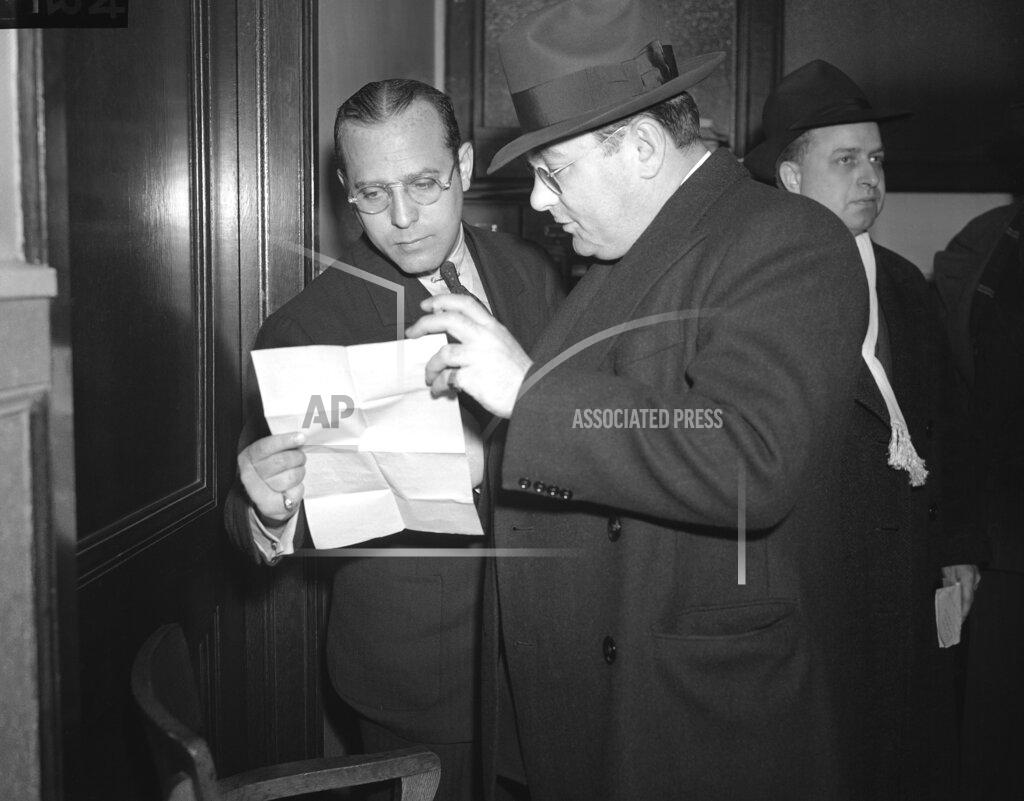
William Bioff, West Coast motion picture labor leader, returned to Chicago today from Los Angeles and was promptly arrested in the State of Illinois’ attempt to force him to serve out an 18-year-old sentence on a pandering charge. He was released later on bond of $5,000 after a hearing on a writ of habeas corpus had been set for Friday by Chief Justice John Prystalski of the Criminal Court.
Larry Clinton & his Orchestra record “Limehouse Blues.”
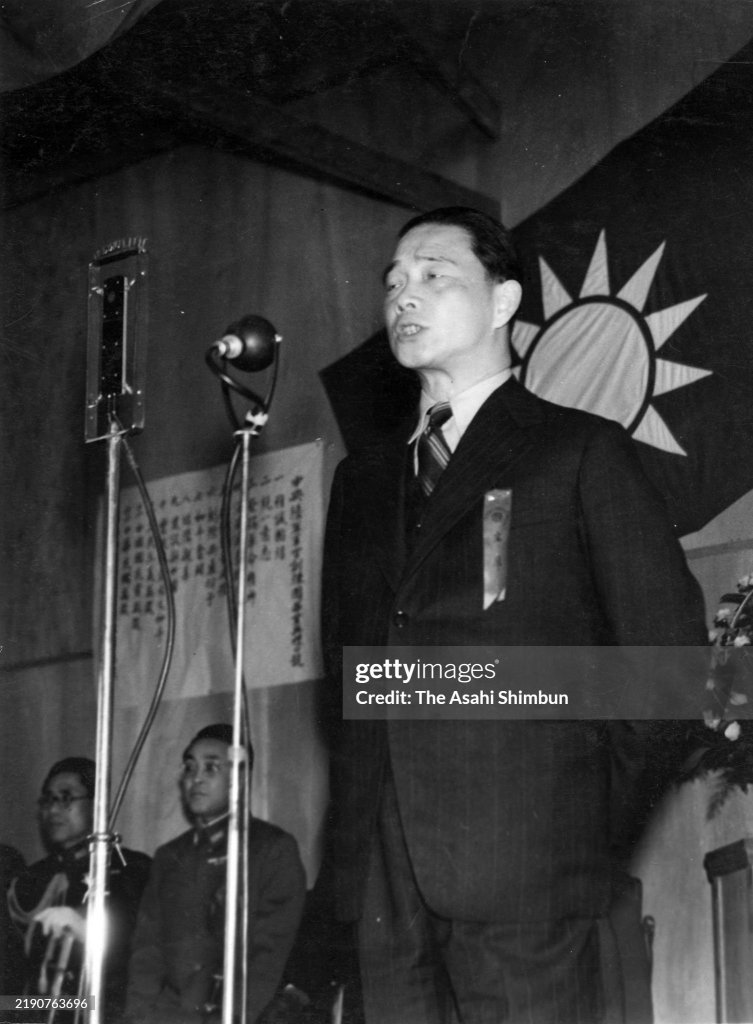
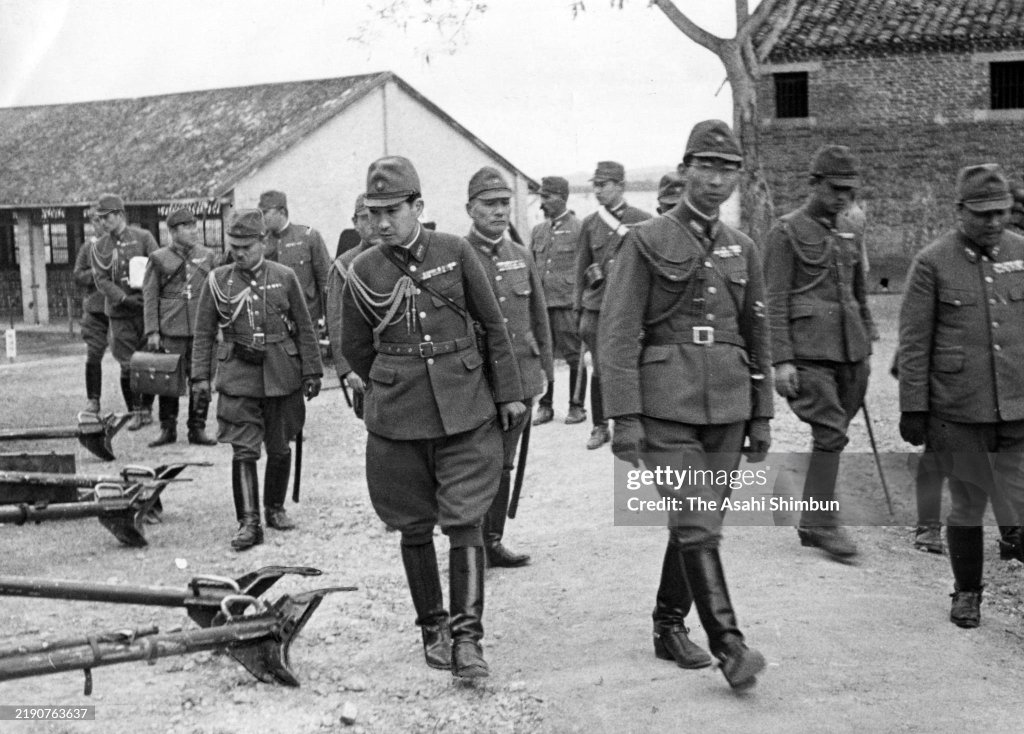
Mutiny and defeat have disrupted a Japanese-sponsored army of Chinese within a week of its first move against the Chinese Government forces, the Chinese Central News Agency reported today. Japanese military authorities announced on February 13 that a new army of Chinese supporting Japanese-sponsored Wang Ching-wei had been landed on the coast of Fukien province and was fighting the troops of Generalissimo Chiang Kaishek. They indicated that the army was 50,000 strong. Central News, an agency of General Chiang’s Government, said that 1,800 men of this army had surrendered in Fukien, taking with them to the Chinese Government side 1,500 rifles and 20 machine guns. A mixed force of Japanese and the dissident Chinese was said to be engaged on three sides fifteen miles west of Amoy. Five hundred other members of this army were said by Central News to have mutinied at Lanfeng, in Honan Province, killing their Japanese officers.
Meanwhile reliable sources indicated the Chinese had been overoptimistic in reporting that the Japanese were withdrawing entirely from the Kwangsi Province city of Nanning. Latest reports said that the Chinese advance guard still was ten miles north of the city and that the Japanese were building new fortifications to prevent its recapture. It was estimated 1,500 truckloads of Japanese had moved southward, but that a large garrison still remained.
French Ambassador Charles Arsene Henry protested today for the third time to Japan over repeated bombings of the French-operated Hanoi-Kunming railway running from Indo-China into the Chinese southwest. In a 40-minute interview with Vice Foreign Minister Masayukl Tani, the French Ambassador was believed to have demanded that the Japanese pay for damage to the railroad.
Driven to desperation by the food shortage, rising prices and depreciating currency, the poor of Peiping and Tientsin have been taking part in food riots for two days according to heavily censored messages from North China. In Tientsin’s Italian Concession, mobs attacked flour trucks yesterday. They were fought off with clubs and finally a fire hose was turned on though it was below freezing. Riots in the native city of Tientsin today were accompanied by the sound of rifle fire but foreigners were not permitted to investigate. Rice prices in North China cities broke all records today, rising to more than 100 Chinese dollars for a sack weighing 152 pounds which is normally consumed by a family of two persons in one month. A forty-nine-pound sack of flour costs $20 in North China. Before the war in China a sack of rice cost $12, a sack of flour $3.60.
Because of increased export of scrap iron, refined copper and metal working machinery, the dollar value of United States shipments to Japan in 1939 was almost as high as in 1938, the Department of Commerce reported today. The United States shipped Japan goods valued at $231,405,000 in 1939, against $239,662,000 in 1938, despite losses in exports of raw cotton, petroleum products, automotive products and aircraft and parts, the department revealed. The report mentioned “restrictive measures imposed on imports into Japan during 1939.” United States imports from Japan increased from $126,762,000 in 1938 to $161,196,000 in 1939. As a result the balance of trade in favor of the United States was reduced to $70,209,000 last year, compared with. $112,900,000 in 1928. The Commerce Department held that the increased price of raw silk was largely responsible for the increase in the value of American imports from Japan, even though the volume of raw silk imported decreased 13 percent.
Dow Jones Industrial Average: 148.65 (+0.19)
Born:
Barbara Ellis, American pop vocalist (Fleetwoods – “Mr. Blue”; “Come Softly To Me”), in Olympia, Washington.
Christoph Eschenbach, German pianist and conductor (Houston Symphony, 1988-99; Philadelphia Orchestra, 2003-08: National Symphony 2010-17), in Breslau, Germany (now Wrocław, Poland).
Naval Construction:
The Kriegsmarine (German Navy) Type IXB U-boat U-111 is laid down by AG Weser, Bremen (werk 976).
The Royal Indian Navy Black Swan-class sloop HMIS Jumna (U 21) is laid down by William Denny & Brothers (Dumbarton, Scotland).
The Royal Canadian Navy Flower-class corvette HMCS Chambly (K 116) is laid down by Canadian Vickers Ltd. (Montreal, Quebec, Canada).
The Royal Navy Flower-class corvettes HMS Eyebright (K 150), HMS Trillium (K 172), and HMS Mayflower (K 191) are laid down by Canadian Vickers Ltd. (Montreal, Quebec, Canada). All are transferred to the Royal Canadian Navy before completion.





 History Diaries