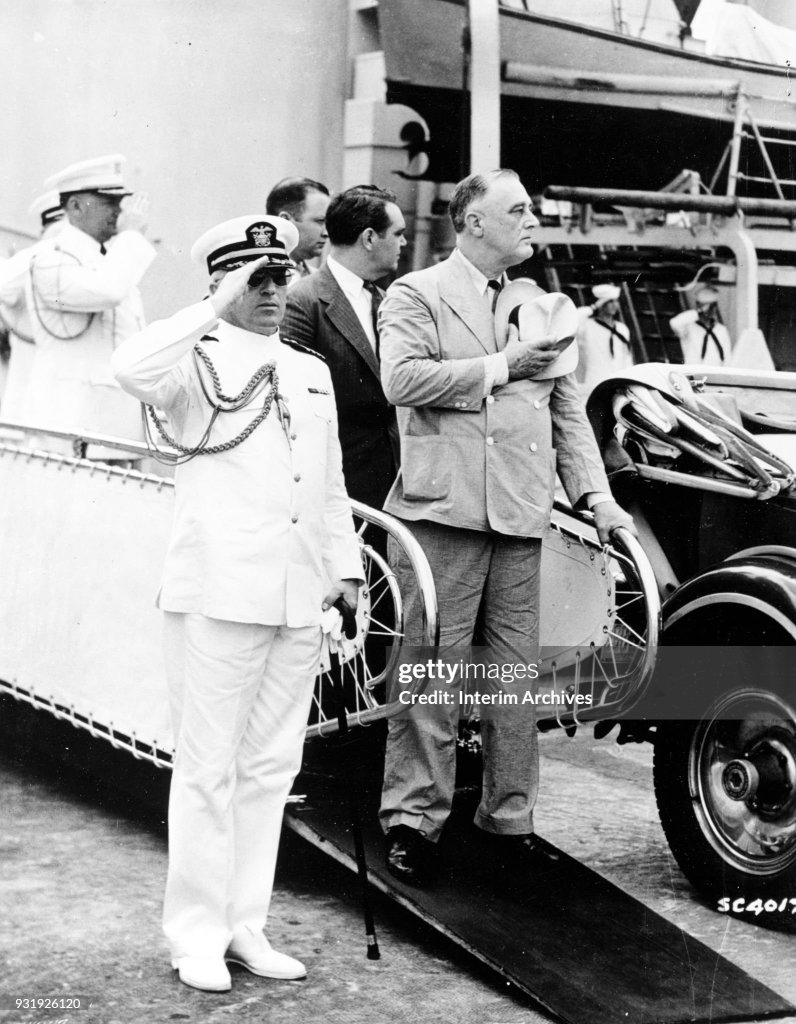
Callaghan will die at Guadalcanal.
The Soviet 13th Army is assaulting the Taipale sector of Mannerheim Line.
In Kirvesmäki the infantry assault is preceded by a brief preliminary bombardment from the Red Army artillery.
The Finnish front line has just been replenished with troops from the 21st Division in their clean snow suits and freshly painted white vehicles. The new arrivals are quickly dubbed the ‘porcelain division’.
The artillery bombardment kills the commanding officers of the strongholds, and Soviet bombers cripple most of the Finnish machine guns. Soon the whole front line is in enemy hands.
On the Karelian Isthmus, Soviet tanks break the secondary V-line in two places. The danger to the city of Viipuri is now grave.
Finnish forces destroy a pocket of over 1,200 troops of 18th Rifle Division of Soviet 8th Army north of Lake Ladoga, the ‘regimental motti’ north of Lake Ladoga & capture 32 field guns, 30 antitank guns, 1 mortar, 20 tanks, 15 machineguns, 25 trucks & 32 field kitchens. Also captured is the Soviet division’s flag embroidered in gold and silver. Soviets losses are high. Russian dead number between 1,000 and 1,200 men, in addition to which around 250 are taken prisoner, including two officers and two political instructors. 166 Finnish troops die in the battle, equivalent to 30% of the unit’s combat strength.
Northern Finland: in Kuhmo, around 1,000 Soviet troops attack the Kuusijoki line with the support of artillery and assault tanks.
Russian bombers raided Viipuri, Lappeenranta, and Kakisalmi during the day. Farther away from the battle zone the Kotka, Kouvola, Iisalmi and Pori districts also were raided and a number of civilians wounded.
Viipuri suffers unprecedentedly ferocious bombing. The first aircraft appear over the city at 8:45 in the morning. The air raid continues without a break until evening. During the course of the day over 200 Soviet aircraft are in action over the city. The old town suffers the worst damage, including the 500-year-old garrison church and the old cathedral containing the grave of the Finnish Lutheran reformer Mikael Agricola. Numerous medieval buildings are damaged in the bombing. The electricity and water mains are cut, the newspapers fail to appear, and the last civilians finally leave Karelia’s devastated capital.
There is growing pressure from Soviet troops around Viipurinlahti bay, and the defending Finnish troops are forced to evacuate the mainland for the islands on the eastern side of the bay. The departing Finnish troops set fire to the houses in the municipality of Johannes.
The Finnish cargo ship Bore III was bombed and sunk off Mäntyluoto, Finland by Soviet aircraft.
The Finnish cargo ship Bore IV was bombed and sunk off Mäntyluoto, Finland by Soviet aircraft.
The Finnish cargo ship Rigel was bombed and sunk off Mäntyluoto, Finland by Soviet aircraft.
300 Danish volunteer metal workers have arrived in Finland.
In France, the leader of the Garibaldi League, General Marabini, is assembling a force of Garibaldi legionnaires for Finland.
Following his meeting with General von Manstein, Hitler instructs German Army General Franz Halder to re-cast the Fall Gelb plan to include a major thrust through the Ardennes Forest. This is the decisive moment in the transition of the Fall Gelb plan for the invasion of France and the Low Countries from a conventional regurgitation of the von Schlieffen Plan of August 1914 into its final 1940 form.
General Halder, reluctantly, as ordered by Adolf Hitler, incorporated General Erich von Manstein’s planned thrust through the Ardennes Forest into the invasion plans for France.
German patrol raids French outposts on the western front. A German infantry detachment, with heavy mortar support, makes an unsuccessful raid on a French outpost near the Moselle River.
The French government agrees to allow the reconstitution of the Polish air force on French soil.
Six members of, or sympathizers with, the Irish Republican Army entered a house in the Nationalist section of Belfast today and smashed windows and furniture because the occupants refused to draw their blinds in mourning for I.R.A. men executed at Birmingham recently.
Irish Prime Minister Eamon de Valera, at a meeting of the Fianna Fail party, today reaffirmed his opposition to the Irish Republican Army’s desire to annex Ulster by force while Great Britain is concentrating her efforts in the war with Germany.
Prime Minister Nuri al-Sa’id of Iraq resigns.
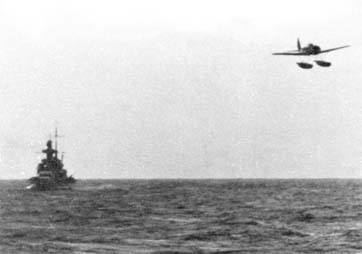
German battlecruisers Gneisenau and Scharnhorst and heavy cruiser Admiral Hipper, along with destroyers Wilhelm Heidkamp, Karl Galster, and Wolfgang Zenker, make an unsuccessful sortie against the “HN” convoy route between Britain and Scandinavia as part of Operation Nordmark. In the evening, Wolfgang Zenker has to return to port when it takes on water. German U-boats providing escort for the capital ships, however, will sink 12 merchant ships & destroyer HMS Daring.
The British government presses Norway to intern the Altmark. The British protest to the Norwegian government that it should intern the Altmark for violating the neutrality laws.
At 0354 hours, British Royal Navy D-class destroyer HMS Daring (Commander Sydney Alan Cooper, RN), while escorting Allied convoy HN.12 from Norway, was hit by two torpedoes and sunk by German U-boat U-23, commanded by Kapitänleutnant Otto Kretschmer, in the North Sea off Duncansby Head, Caithness, Scotland, United Kingdom (58°40′N 1°40′E), killing 157 of her 162 crew. Daring capsized and sank very quickly after having her stern blown off. One officer and three ratings were picked up from a Carley float by HMS Inglefield (D 02) (Capt P. Todd, RN) and landed at Scapa Flow on 20 February. One rating was rescued from wreckage by HMS Ilex (D 61) (LtCdr P.L. Saumarez, RN), assisted by HMS Thistle (N 24) (Cdr R.W. Stirling-Hamilton, RN) and landed at Rosyth on 19 February.
The British cargo ship Ilsenstein was scuttled as a blockship in Skerry Sound at Scapa Flow, Orkney Islands.
HMS Hasty brings the German freighter Morea, which it intercepted trying to run the blockade, into a West Country port.
German submarines today sink six merchant vessels that each flew French, Spanish, Greek, Panamanian, Dutch, and Norwegian flags. A total of 82 men are killed on the six vessels. It is one of the costliest days of the Battle of the Atlantic thus far, and is a grim foreshadowing of the ordeal to come.
At 0023 hours, the Panamanian-flagged steam merchant El Sonador was torpedoed and sunk in the North Sea east of the Shetland Islands (59° 09’N, 1° 00’E) by the German U-boat U-61, commanded by Oberleutnant zur See Jürgen Oesten, with the loss of all 17 crew. U-61 fired one G7a torpedo from a distance of only 350 meters at a steamer of about 3000 grt about 90 miles southeast of the Shetlands and observed it to sink in less than one minute after being hit on starboard side amidships. This must have been the El Sonador, which was reported missing since 17 February. She was carrying 713 tons of coal and was bound for Gothenburg.
At 0045 hours, the Greek steam merchant Ellin was torpedoed and sunk in the Atlantic Ocean 25 nautical miles (46 km) north west of Cape Finisterre, Spain (44° 03’N, 9° 42’W) by the German U-boat U-37, commanded by Korvettenkapitän Werner Hartmann. All crew were rescued by the Spanish fishing boat Manin and landed at Á Coruña. The Ellin was carrying coal, bound for Piraeus, Greece.
At 0420, the neutral Spanish steam merchant Banderas was torpedoed and sunk in the Atlantic Ocean 8 nautical miles (15 km) northwest of Cape Villano (42° 51’N, 9° 26’W) by the German U-boat U-53, commanded by Korvettenkapitän Harald Grosse, with the loss of 22 of her 29 crew. The Germans apparently mistook her for a straggler from Convoy 65.KS. The survivors, two of them badly injured, were picked up by the Spanish fishing trawler Tritonia and landed at Coruna, Spain. The Banderas was carrying 3,400 tons of phosphates, bound for Pasajes, Spain.
At 0609 hours, the Norwegian motor merchant Sangstad was torpedoed and sunk in the North Sea east of Kirkwall, Orkney Islands, United Kingdom (59°03′N 1°08′E) by the German U-boat U-61 (Oberleutnant zur See Jürgen Oesten) with the loss of one of her 29 crew. Sangstad (Master Leif Bryn) was hit on the port side by one torpedo from U-61 east of Kirkwall and sank with a heavy list to port after 15 minutes. The port lifeboat had been destroyed by the explosion, so the survivors abandoned ship in the starboard boat and a raft and were rescued about 12 hours later. The master was last seen swimming towards the lifeboat but he drowned. The six survivors on the raft were picked up by HMS Diana (H 49) (LtCdr E.G. Le Geyt, RN) and the 22 in the lifeboat by HMS Brazen (H 80) (LtCdr Sir M. Culme-Seymour, RN) and landed at Kirkwall on 21 February. The 4,297 ton Sangstad was carrying grain to Stavanger, Norway.
At 0823 hours, the French steam merchant PLM 15, a straggler from Convoy 65.KS, was torpedoed and sunk in the Atlantic Ocean off Cape Finisterre (43°37′N 9°15′W) by the German U-boat U-37 (Korvettenkapitän Werner Hartmann) with the loss of all 42 crew. The ship was observed to sink within 40 seconds. She was carrying a cargo of ore from Sierra Leone to Brest, France.
At 0926 hours, the Dutch steam merchant Ameland was torpedoed and sunk in the North Sea off the Maasbank Buoy (51°54′N 3°01′E) by the German U-boat U-10, commanded by Oberleutnant zur See Joachim Preuss. She began to sink and the 48 crew members (3 of them injured) abandonded the ship. The master A. Kokké returned to rescue the documents and the ship sank later by the stern. The survivors were picked up by the Dutch merchant Montferland (master K.C. Decker) and were transferred to the tug Zwarte Zee. The wounded men were brought to Vlissingen and the crew was put ashore in Maassluis. Ameland was bound for India, carrying general cargo.
Convoy OA.94 departs Southend.
Convoy OB.94 departs Liverpool.
Convoy SL.21 departs Freetown for Liverpool.
Convoy HX.21 departs Halifax for Liverpool.
The War at Sea, Sunday, 18 February 1940 (naval-history.net)
Destroyer DARING (Cdr S A Cooper), escorting convoy HN.12, was sunk by U-23 off Duncansby Head in 58 40N, 01 40E. Cdr Cooper, executive officer Lt P L Roberts, Lt P C Gordon RNVR, engineering officer Lt W J K Shaxby, S/Lt L G M Potts, Gunner W H Easton, Midshipman A V Dumfrey RNR, Surgeon Lt G J Kearney MB, ChB, Probationary Temporary Midshipman J L Coleman RNVR and 145 ratings were lost. Destroyers BRAZEN and ENCOUNTER, which had been hunting in the area, were ordered to search for the submarine responsible. They were joined by the convoy escort and by destroyers DIANA, which had departed Rosyth on the 17th, KIPLING, which had left Scapa Flow on the 14th, INGLEFIELD, ILEX, DELIGHT which earlier were released from HN.12’s escort, and anti-submarine trawlers of the 11th Anti-Submarine Striking Force. Submarine THISTLE rescued Lt L A Rogers and four ratings from DARING. The 11th A/S Striking Force did make an attack on U-23 east of Duncansby Head in 58-37N, 1-18W, but did no damage.
Destroyers GALLANT, JAGUAR, NUBIAN, and SIKH departed Rosyth as convoy escorts and joined HN.12 bringing it into Methil on the 19th without further interference. After a loop crossing had been detected, destroyers GRIFFIN, IVANHOE, and INTREPID hunted for another submarine in the Forth of Forth and were joined by escort vessel VALOROUS.
KIPLING reached Scapa Flow on the 18th and because of prior defects, went on to the Tyne for repairs arriving on the 20th.
ABORTIVE GERMAN BATTLECRUISER SORTIE
German Admiral Marschall departed Wilhelmshaven for Operation NORDMARK with battleships SCHARNHORST and GNEISENAU, heavy cruiser ADMIRAL HIPPER, and destroyers KARL GALSTER, WILHELM HEIDKAMP, and WOLFGANG ZENKER with the object of attacking allied shipping between the Shetlands and Bergen. However, ZENKER was damaged by ice and forced to return at the start. The remaining force was escorted through the Skagerrak by destroyers PAUL JACOBI, THEODOR RIEDEL, HERMANN SCHOEMANN, and LEBERECHT MAAS and torpedo boats LUCHS and SEEADLER which raided in the Skagerrak after being detached. U-boats were disposed to support this operation. Three operated between the Shetlands and Norway, two in the Fair Isle Channel, three off the Pentland Firth and three held in reserve near the north coast of Scotland. Submarines deployed were U-60, U-61, U-57, U-23, U-22, U-62, U-19, U-13, U-63, U-18, U-14, U-18, and U-14, including some off Kinnaird Head.
Submarine SALMON in the Heligoland Bight was ordered to attack the German surface ships, and convoy ON.14 was ordered into Kirkwall to avoid any contact with the enemy force, arriving on the 19th. Admiral Forbes was in the Clyde having only arrived on the 17th from supporting the ALTMARK hunt. After refueling, he departed, still on the 19th with battleship RODNEY, battlecruiser HOOD, and destroyers FAULKNOR, FEARLESS, FOXHOUND, FURY, FORESIGHT, FORTUNE, and FIREDRAKE. Destroyers HARDY left Greenock on the 19th, KHARTOUM Scapa Flow the same day, and KANDAHAR and TARTAR from Scapa on the 20th and joined Forbes at sea. With the British out and extreme cold immobilizing his seaplanes, Admiral Marschall was forced to return to Wilhelmshaven empty handed. Ice breakers were required to clear the Rivers Jade and Weser before they could reenter on the 20th. On the 21st/22nd, ENE of Muckle Flugga in 61 19N, 01 30E, HARDY attacked a submarine contact, was joined by FORTUNE, but the search was unsuccessful.
Minelayer TEVIOTBANK and minelaying destroyers EXPRESS and ESK laid Deep Line S in operation DML.8 east of Outer Gabbard escorted by destroyers KEITH and BOADICEA. Minesweeper FRANKLIN had already laid the marker buoys on the 16th. After the lay, the minelaying ships proceeded to Immingham on the 19th.
Anti-aircraft cruiser CALCUTTA and destroyer KELVIN arrived at Sullom Voe, refueled and departed again later that day.
Motor torpedo boats MTB.22, MTB.24, and MTB.25 departed Rosyth on patrol.
Submarine SEALION arrived at Harwich after patrol.
Submarine TETRARCH and tender CUTTY SARK were to depart the Clyde for Portsmouth, but TETRARCH engine defects prevented them leaving.
Armed merchant cruiser ASTURIAS on Northern Patrol picked up the survivors of fishing vessel SEA RAMBLER.
Convoy OA.94 departed Southend escorted by destroyer WITCH. Destroyer ACASTA joined on the 19th, detached the next day and on the 21st, the convoy dispersed.
Convoy OB.94 departed Liverpool escorted by destroyers WALKER and VENETIA. They detached on the 20th and 21st respectively, with VENETIA joining HXF.20.
Convoy SA.30 of two steamers departed Southampton, escorted by sloops FOXGLOVE and ROSEMARY, and arrived at Brest on the 20th.
Convoy MT.14 departed Methil escorted by the 3rd Anti-Submarine Group, supported by destroyers VEGA, JAGUAR and sloop STORK, and arrived in the Tyne later that day.
Convoy FN.97 departed Southend, escorted by destroyer WESTMINSTER and sloop LONDONDERRY, and arrived at Methil on the 20th.
Convoy FS.99 departed the Tyne, escorted by destroyers VEGA, JAGUAR and sloop STORK, which had just arrived from Methil with MT.14. The convoy arrived at Southend on the 20th.
U-10 sank Dutch steamer AMELAND (4537grt) in 51 54N, 03 01E and the entire crew, 48 survivors, was rescued by Dutch steamer MONTFERLAND. Patrol sloops PINTAIL, GUILLEMOT and two motor torpedo boats were searching in the area.
U-61 sank Panamanian steamer EL SONADOR (1406grt) east of the Shetlands and Norwegian steamer SANGSTAD (4297grt) east of Kirkwall in 59 00N, 00 25E. The Master of the Norwegian ship was lost and destroyer BRAZEN picked up 22 of the crew and took them into Kirkwall.
Sloop ABERDEEN, on escort duty with convoy OB.93GF, attacked a submarine contact south of Wolf Rock in 49-42N, 5-45W.
Anti-submarine trawler CAPE PORTLAND (497grt) attacked a submarine contact off Aberdeen in 57-19N, 1-50W.
Convoy HX.21 departed Halifax at 0800 escorted by Canadian destroyers HMCS OTTAWA and HMCS SAGUENAY, which detached on the 19th. Ocean escort was armed merchant cruiser ALAUNIA, which left on 1 March. Destroyers WINDSOR and WOLVERINE escorted the convoy 2 to 4 March, when it arrived at Liverpool.
Convoy SL.21 departed Freetown escorted by armed merchant cruiser DUNNOTTAR CASTLE until 4 March. Destroyers WANDERER joined on the 4th, VERSATILE on the 5th and the convoy arrived on the 7th.
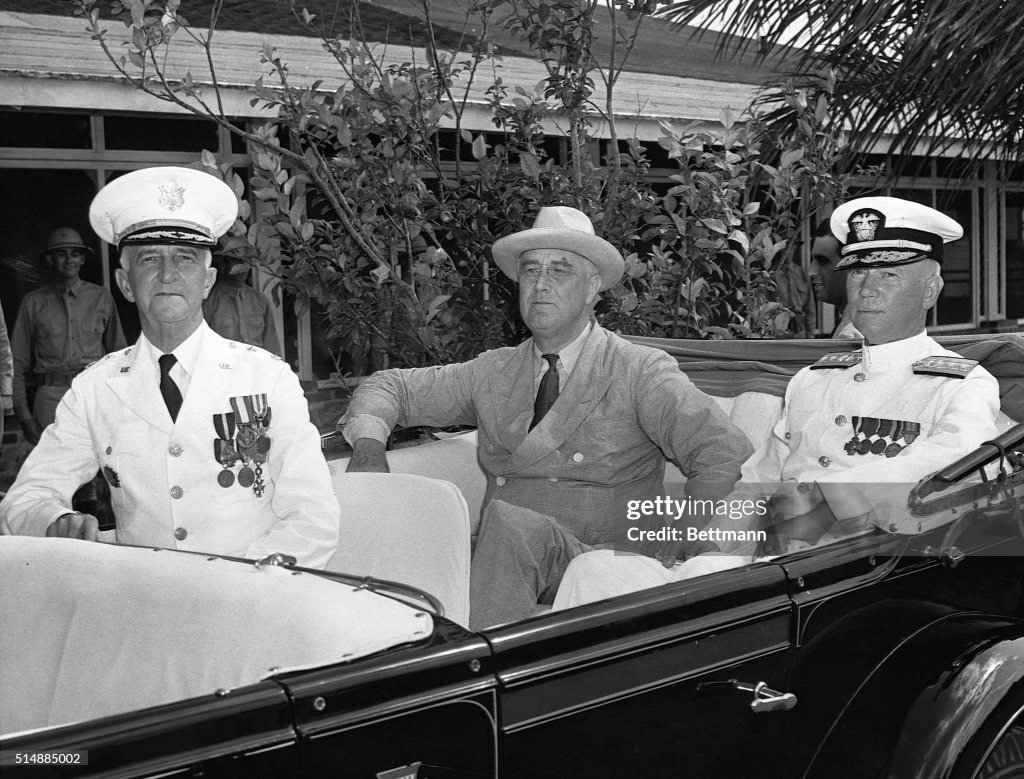
President Roosevelt made an inspection tour across the heavily fortified Panama canal zone and sailed into the Pacific ocean toward an undisclosed destination. He crossed the isthmus by train after debarking from the cruiser Tuscaloosa at Cristobal and re-boarded his ship, which had passed through the locks, on the Pacific aide. With the President aboard, the Tuscaloosa was believed heading for Pearl or Cocos island, but it was announced that his destination would not be revealed until Monday. The President expects to confer with President Augusto Boyd of Panama on his return after fishing In the Pacific.
President Roosevelt arrived at the Gatun Locks aboard the cruiser USS Tuscaloosa at 9 AM today and went ashore for a two-hour inspection of the Atlantic defenses of the Panama Canal. He then crossed the isthmus by special train, lunched at the Officers Club at Fort Clayton, went back aboard the Tuscaloosa at midafternoon and sailed into the Pacific this evening. He gave no press interview and his destination and the date of his probable return were not announced. It was said, however, that he was much impressed by the canal defenses he had seen. His return is expected later this week and he will meet President Augusto S. Boyd of Panama. He probably will make an inspection of the Pacific defense of the canal.
His departure into the Pacific increased the mystery which has been suggested by his cruise. Even those closest to him confessed today that they were completely baffled by the present expedition, the object of which, they said, they could not even surmise. Before the start of his trip the President chose not to deny a report that he would meet representatives of the British and French Governments at sea. At a press conference just before the departure of the Tuscaloosa from the United States he refused to comment on the report, although reporters pointed out that a noncommittal answer might give rise to fantastic speculation concerning the object of his cruise. He still refused to comment when the Tuscaloosa left Balboa to sail into the tropic sunset this evening and the mystery remained.
The Tuscaloosa, accompanied by the destroyers USS Lang and USS Jouett, arrived at the outer Atlantic entrance to the Canal at 7 AM today. Navy planes met the cruiser and escorted it to the breakwater of Colon harbor. Then eighteen army silver bombers took up the escort to Gatun Locks. A party of officials who came from the Pacific side on a rail scooter and other officials went aboard the Tuscaloosa for a brief conference with the President.
After two years of research, the Republican Program Committee today made public its report outlining a course for adoption as a platform by the party’s national convention. The document, of 33,000 words, prepared under the chairmanship of Dr. Glenn Frank, former president of the University of Wisconsin, by a group of 200 persons representing various sections of the country, was submitted Friday to the national committee for consideration by the resolution committee in preparing the party. platform for the convention in June.
The report stands out chiefly for its constructive suggestions rather than indictment of the New Deal. In effect, it attributes the inability of the New Deal to reduce unemployment to failure to encourage private enterprise, which it said was restricted by embarrassing laws. As the result, the report asserted, “public enterprise of the State must be expanded to take up slack in the private enterprise of the people.” It added: “The long-term confidence that produces the willingness to risk will not return until there is a change in the temper and attitude of government toward the leadership, the processes and the possibilities of American enterprise, until Americans willing to risk their savings in enterprise, in the hope of sufficient profit to justify their taking the risk of loss, are considered by the government as benefactors instead of malefactors.”
The chief recommendations of the committee were as follows:
- A 20 percent reduction in government spending, with a balanced budget by 1942.
- Elimination of all tax exemptions of future issues of Federal, State and municipal securities.
- Reduction of high individual surtaxes, repeal of the capital stock and excess-profits tax, and abolition of the normal tax on dividends.
- Repeal of emergency monetary powers of the President and appointment of a commission to study and recommend plans to restore stability in our monetary system.
- Amendment of the National Labor Relations Act, to the benefit of labor and in the interest of productive functioning of American enterprise.
- Repeal of the Reciprocal Trade Agreement provision giving the President power to negotiate such treaties without approval by the Senate, with an amendment that such agreements shall be approved by both houses of Congress.
- Wages and hours to be determined by collective bargaining between representatives of labor and industry.
- Reduction of relief expenditures, with the government bearing a just share of the cost but with the administration divorced from politics and centered in state and municipal governments.
- Strengthening of national defense and support of all efforts for safeguarding our welfare to keep the United States out of war.
- Improvement of the Social Security Act with a view to extending its provision to farm labor and domestic help.
Senator Robert A. Taft of Ohio, carrying his campaign for the Republican Presidential nomination into the Philadelphia district, tonight urged the Republican party to adopt a “working program” of cooperation with industry and agriculture for its 1940 platform.
Thomas E. Dewey departed this afternoon for New York. After a day in Chicago ending a 7,500-mile tour in the interest of his candidacy for the Republican Presidential nomination.
Senator Robert F. Wagner of New York will introduce in the Senate tomorrow a “United States Mediation Bill,” designed to further industrial peace by assisting employers and employes to settle their labor problems by direct negotiation, mediation and voluntary arbitration.
Key Pittman, chairman of the Senate Foreign Relations Committee, tonight advocated economic retaliation against belligerent governments who violated American rights under international law, and expressed his belief that Great Britain would cease taking United States vessels into port for contraband search. If such searching were stopped he said, Germany would have no excuse to start torpedoing our vessels.
The political siege guns of both parties are expected to be unlimbered this week in the House over extension of the Reciprocal Trade Agreements Act, a subject that has shaped up as one of the most important issues of the coming Presidential campaign.
Purchases of United States products by foreign countries either in preparation for war or as a result of the war had an appreciable effect in maintaining our position last year as a country with a large surplus of merchandise exports over imports.
Fifty five persons in the United States had incomes of one million dollars or more in 1938. This was six more than in 1937, but six less than in 1936.
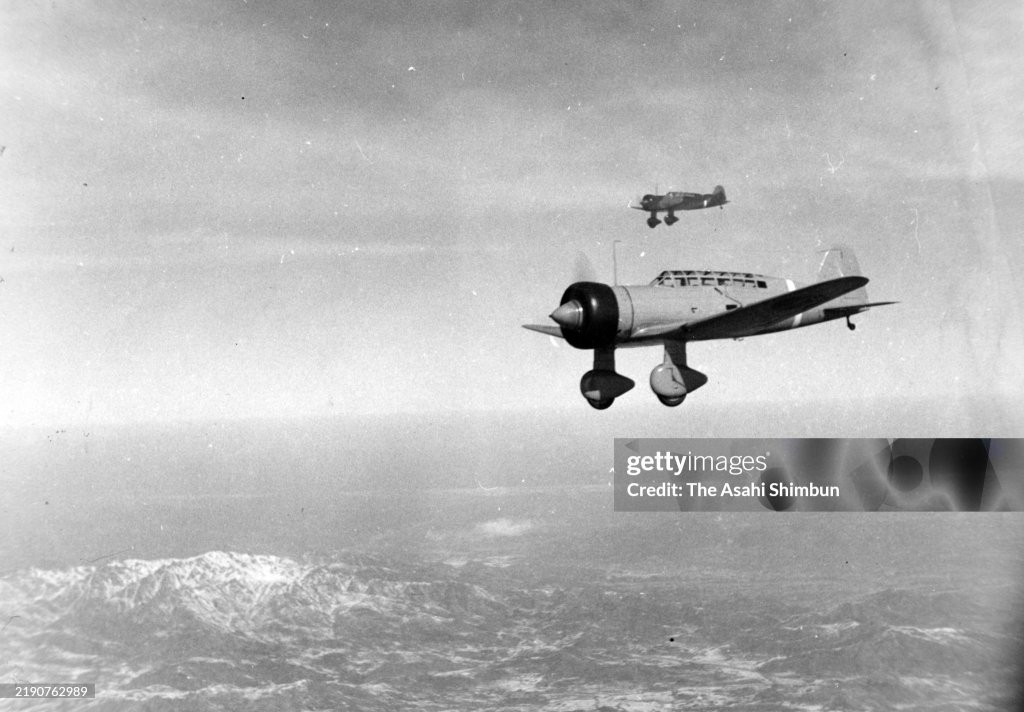
Shangtung Operation: Japanese 21st Infantry Division, 32nd Infantry Division, and 5th Independent Mixed Brigade continue sweep through Shangtung peninsula.
Shangtung Operation: Japanese naval troops land at tip of Shangtung peninsula to support ground sweep.
Battle of South Kwangsi: As Japanese 22nd Army withdraws south toward Nanning, Chinese forces recover Kaofengyi.
Advancing along the Pinyang-Nanning highway, Chinese troops have pushed within a mile northeast of Nanning, according to military reports from Kwangsi. Although the movement of Japanese troops continues from Nanning southward along the highway to the seacoast, Chinese reports say the city is still garrisoned by the invaders. A Chinese scouting plane, which flew over Nanning yesterday afternoon, reported long lines of trucks, troops and artillery were moving southward from Nanning. The aerial observers said there were many fires in the city. They believed the Japanese had burned a number of their planes on the Nanning airfield.
Cloudy weather today barred air activity by either side and prevented Chinese pursuit planes from attacking the Japanese columns moving out of Nanning. The Chinese reported they had cleaned up all Japanese northeast of Nanning and firmly re-established control of the important Kunlung Pass. North of the city 700 Japanese, holding the Takaofeng Height, were said to be surrounded. The Chinese hope the Japanese march from Nanning means their abandonment of the city, but are accepting all reports with great caution.
Japanese forces which landed near Amoy were reported to be sweeping into the southeast province of Fukien, hitherto immune from invasion. Japanese dispatches said the troops landed the previous day and that they had encountered little resistance.
Born:
Prue Leith, South African restaurateur, chef, and television presenter (“The Great British Bake Off”), in Cape Town, South Africa.
Fabrizio De André, singer-songwriter, in Genoa, Italy (d. 1999).
Naval Construction:
The Regia Marina (Royal Italian Navy) Marconi-class submarine Alessandro Malaspina (MP) is launched by Odero-Terni-Orlando (OTO), Muggiano, Italy.
 History Diaries