
Silver Star
Awarded for actions during the Vietnam War
The President of the United States of America takes pride in presenting the Silver Star (Posthumously) to Gunnery Sergeant Robert Woodrow Grove (MCSN: 306455), United States Marine Corps, for conspicuous gallantry and intrepidity in action while serving as a Light Weapons Infantry Advisor with the United States Military Assistance Command, Vietnam, during operations against the enemy near Tú Thuận Village, Quảng Ngãi Province, Vietnam, on 16 February 1965. Sergeant Grove was accompanying three companies of Vietnamese trainees on a march from their training center to a firing range when Việt Cộng snipers began firing on one of the companies. The enemy fire increased until it was apparent that a Việt Cộng platoon was firing from positions in a nearby hamlet. Thereupon the commander in charge of the friendly troops committed the reserve company to the action. Sergeant Grove went forward with this element, advising and assisting its leaders in the employment of the platoons in maneuvering toward the enemy position, exhibiting conspicuous bravery in exposing himself to the heavy fire of the enemy unit. Disregarding his own safety, he moved to an automatic weapon position and directed effective fire upon the enemy positions until he was mortally wounded. His heroic actions encouraged aggressiveness and bravery in the young troops with whom he served and the Vietnamese trainees, inspired by his courageous example, pursued the Việt Cộng and successfully routed them from their prepared positions. Sergeant Grove’s calm and competent actions under hostile fire reflect great credit upon himself and the Marine Corps and were in keeping with the highest traditions of the United States Naval Service. He gallantly gave his life for his country.
GSGT Robert Woodrow Grove is buried at Drake Cemetery, Van Buren County, Tennessee. He is honored on the Wall at Panel 1E, line 92.
The State Department sends secret cables to U.S. ambassadors in nine nations advising of the forthcoming bombing operations over North Vietnam and instructing them to inform the government concerned ‘in strictest confidence’ and to report reactions.
U.S.-piloted jet planes attack guerrilla forces in Bình Định Province to support ARVN troops; in the first raid in which no South Vietnamese airmen have participated, indicating an escalation in U.S. involvement.
South Vietnamese forces suffered at least 73 casualties today as they rushed in to reinforce an outpost that the Việt Cộng attacked yesterday with mortars. First information reaching Lanang, 30 miles north of the battle in Quảng Tín Province, indicated that 16 Government soldiers were killed, 28 wounded and 29 missing. Việt Cộng casualties were not known.
A United States Embassy spokesman said today that the South Vietnamese Navy had a right to operate off the shores of North Vietnam. He said “hard evidence” that Communist forces were infiltrating by sea and launching other naval activities against the South justified retaliation. To launch a seagoing action would be the prerogative of South Vietnam and would not require the kind of consultation with the United States that has preceded air strikes against the North, he added. However, the South Vietnamese Navy has American advisers who keep the United States Government informed. The embassy spokesman declined to comment on specific reports from the Hanoi radio that four American and South Vietnamese “commando boats” were intercepted this morning in North Vietnamese waters. North Vietnam said the four vessels shelled installations only 120 miles south of the capital city of Hanoi, United Press International reported.
South Vietnamese troops, planes and patrol boats closed in today on a strongly defended cove 235 miles northeast of Saigon, in the hope of choking off a flow of seaborne supplies to the Việt Cộng. The immediate aims were to wipe out guerrilla nests rimming the cove and to get a look at a steel-hulled ship — a camouflaged 100-foot vessel — capsized there by Vietnamese aerial bombs Tuesday. Lieutenant General Nguyễn Khánh, commander of the armed forces, assumed personal charge of the operation. A number of patrol boats and a large landing craft took up positions off the cove, standing out of range of very heavy fire from the shore. Planes kept watch on the arca while two columns of troops, totaling about 500 men, marched to close the pincers. One of General Khánh’s staff officers said they suspected that the Communist supply line through Eastern Laos might account for only a small part of the Communist infiltration into South Vietnam. “The bulk may actually have been by ship,” he said.
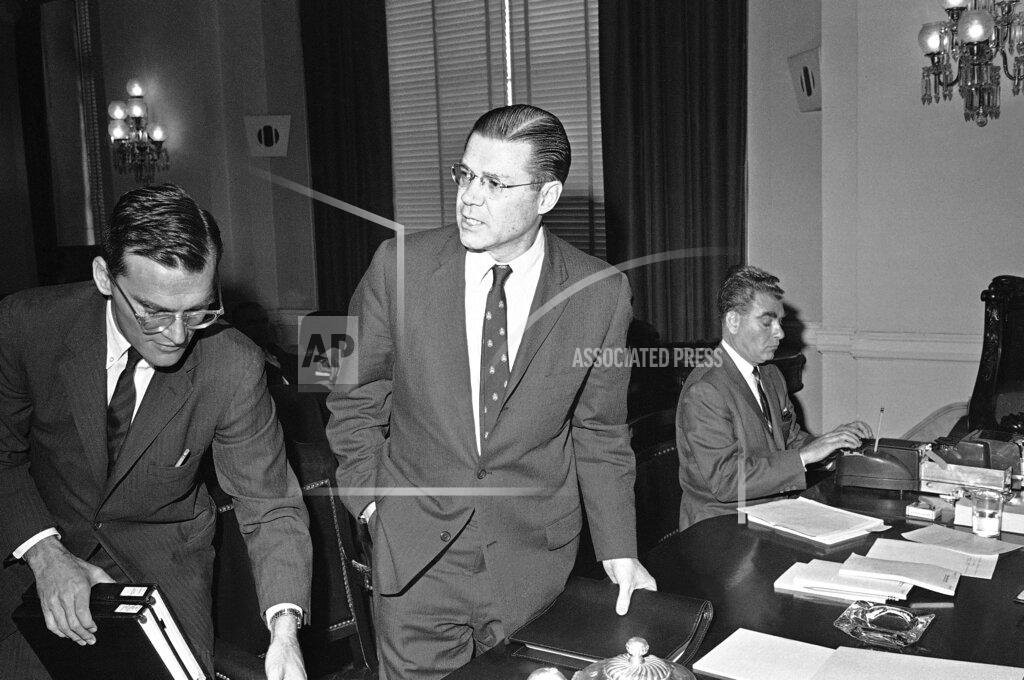
U.S. Secretary of Defense Robert S. McNamara, in his annual defense review before Congress, said today that the United States had no alternative but to continue the struggle in South Vietnam. He said that the Chinese Communists had made South Vietnam a “decisive test” in their dispute with the Soviet Union over the efficacy of violence in Communist expansion. “If the choice is the latter, as I believe it should be, we will be far better off facing the issue in South Vietnam,” he said.
The Defense Secretary’s exposition of the nation’s military position was made public as he appeared before the House Armed Services Committee in a closed-door session. Republican leaders, meanwhile, were accusing advocates of a negotiated settlement of proposing to “run up the white flag” and of “a retreat to Pearl Harbor.” “The choice is not simply whether to continue our efforts to keep South Vietnam free and Independent,” Mr. MacNamara said, but rather whether to continue our struggle to halt Communist expansion in Asia. “If the choice is the latter,” he said, “as I believe it should be, we will be far better off facing the issue in South Vietnam.”
The situation in Vietnam was “grave but not hopeless,” he observed in his statement. Upon leaving the committee room, accompanied by General Earle G. Wheeler, Chairman of the Joint Chiefs of Staff, he said the South Vietnamese Government would have to make a greater effort in the coming year. He said the United States probably would send more combat equipment and a relatively small additional number of soldiers to help with training, he added. There are about 23,500 American officers and men in South Vietnam now. While the Defense Secretary sought in his committee testimony to underscore United States stakes in the South Vietnamese struggle, Senator Everett McKinley Dirksen of Illinois accused advocates of a negotiated settlement of proposing to run up the white flag of defeat.
The Republican minority leader said that speeches in the Senate yesterday advocating some form of negotiation had the ring of the truce talks of 1954 affecting Vietnam and of 1962 affecting Laos, both of which, he said, had disappointing results. Senators Leverett Saltonstall. Republican of Massachusetts and George A. Smathers, Democrat of Florida, endorsed Senator Dirksen’s speech. Representative Gerald R. Ford of Michigan, the House Minority Leader, also assailed talk of negotiation as “a retreat to Pearl Harbor” in a speech to a national Young Republican leadership group.
On the diplomatic front, the subject of Vietnam dominated discussions today between the French Foreign Minister, Maurice Couve de Murville, and Secretary of State Dean Rusk The French official arrived here last night to explain President de Gaulle’s views on a variety of subjects, According to United States sources, Mr. Couve de Murville stressed the situation in South Vietnam, but nothing new developed. He will see President Johnson tomorrow.
Marshal Chen Yi, Communist China’s Foreign Minister, declared tonight that there could be no Vietcong cease-fire before the United States withdrew from South Vietnam.
Chinese Nationalist intelligence sources suggested today that Peking was altering its reactions to United States actions in Indochina. They said Peking was moving air squadrons rather than just troops, as in the past.
U.S. Secretary of Defense Robert S. McNamara, in an unusual exposition of nuclear war studies, estimated today that more than 120 million Americans would die in the event of a Soviet missile attack on the United States in the early nineteen-seventies. The population of the United States is 192 million. The Soviet population is about 220 million. If such a Soviet attack were limited to military targets, the toll would be 122 million lives, Mr. McNamara estimated. If it were to include urban centers, which he indicated he believed more likely, the death toll would be 149 million, he said.
Mr. McNamara disclosed the estimates in his annual “military posture” statement to the House Armed Services Committee. A version of his statement that did not include secret material was made public as he appeared before the panel in a closed session today. By comparison, he repeated previous estimates that a United States retaliatory blow against the Soviet Union would result in a similarly high toll of more than 100 million dead and would destroy 80 percent of that nation’s industrial capacity. Mr. McNamara used these estimates and related material to argue on behalf of a nationwide fallout shelter program but against proposals for producing new manned bombers and a new jet interceptor. Such aircraft, he said, would provide “insufficient extra protection per billion spent.”
The Defense Secretary indicated that, for purposes of military planning, he had abandoned the “no cities” strategy he once suggested to the Soviet Union. In a speech June 16, 1962, at the University of Michigan, Mr. McNamara pointed out that both major nuclear powers could wreak devastation upon each other. But he enunciated the thesis that the United States was so strong as to make it prudent for the Russians to limit any attack upon the United States to military targets only, lest a broader provocation result in destruction of Soviet society itself. In the report released today, he said that if the Soviet Union ever undertook a nuclear missile strike against United States military targets, it was “unlikely” the Russians would delay to any significant extent an assault upon urban centers.
The United States and the Soviet Union joined today in defeating Albania’s attempt to force a showdown in the General Assembly on the question of unpaid assessments for United Nations peace-keeping forces. This enabled the Assembly to adjourn its 19th session at 7:52 PM. It will meet again September 1 unless efforts to be undertaken by a new committee on the question of arrears achieve some success in the meantime. In Washington it was reported that the United States decision to let the Soviet Union cast a vote in the General Assembly was regarded as a tactical retreat from earlier Administration policy. The action. was said to stem from a decision to avoid at all costs a showdown with Moscow.
Some air and sea extensions of the distant early warning line (DEW line) will be eliminated by the middle of next year at an eventual saving of $266 million, Secretary of Defense Robert S. McNamara said today.
A mob of Communist-inspired youths attacked the United States consulate in Medan today in the fifth such assault on official American properties in Indonesia in the last six-months, as United States diplomats protested.
Gambia, at 11,295 square miles (29,250 km2) the smallest nation in Africa, became independent from the United Kingdom, with the lowering of the British Flag at midnight and the raising of the new Gambian flag at McCarthy Square in Bathurst (now Banjul). Sir Dawda Jawara continued as Prime Minister, and Sir John W. Paul, a British colonial administrator who had served as the Governor since 1962, became the first Governor-General of The Gambia. It would become a presidential republic on April 24, 1970, with Jawara as the first president. On July 22, 1994, after 29 years as a parliamentary democracy, the Gambia would be ruled by a military government. The nation, only 29 miles (47 km) wide and surrounded on all sides by the former French colony of Senegal, except for its coastline, would continue to have British support, with 25 British officers assisting transition as part of the nation’s civil service.
President Gamal Abdel Nasser declared tonight that the United Arab Republic could get along without West Germany’s economic aid. “The West Germans believe they can threaten us,” he told a cheering rally at Aswan. “We would tell them that we are the owners of our present life. We can build our future with our sweat, with our blood if necessary, and with our own money.” President Nasser was replying to a warning yesterday by Chancellor Ludwig Erhard of West Germany that if Walter Ulbricht, the East German head of state, came here as scheduled next week, Bonn would cease all economic aid to Cairo and reserve the right to take political countermeasures as well.
Ugandan troops were reported today to have crossed into the Congo, at two widely separated points. Military sources here said that in the north attackers had taken the town of Mahagi and gone on to Nioka, a point 40 miles inside the frontier. The Congolese Army reported that it had killed one Ugandan and captured another as it made its retreat. The Ugandans appeared to be acting as a spearhead for a force of Congolese rebels. Far to the south, beyond the end of Lake Albert, a platoon of Ugandan troops was said to have attacked the frontier village of Kasindi; 75 miles southeast of Beni. This report, also from the Congolese Army, conflicted with one from Kampala.
Hastings Banda, the Prime Minister of Malawi and its Minister of Defence and Public Security, announced new regulations to increase his dictatorial power over the African nation. He designated a new group, the Malawi Young Pioneers, to be his “eyes and ears” in every village in Malawi, gave the police and his public security forces the power to detain suspects indefinitely, and authorized his agents to shoot suspected dissidents if they resisted arrest.
President de Gaulle invited Prime Minister Harold Wilson today to visit him in Paris in April in a significant move to mend relations with Britain.
An East German espionage organization has bean discovered in Austria and four of its members arrested, Interior Minister Hans Czettel said in the Parliament today.
Senator Suat Hayri Urguplu attempted without success today to weld Turkey’s four opposition parties into a new government. He said tonight that he would resume his efforts tomorrow and expected to be successful.
Archaeologist Margherita Guarducci announced in Rome that she had located and identified the remains of Saint Peter, the chief apostle of Jesus Christ. “Today, everything is clear”, Guarducci told the Vatican press service. “The original tomb was empty because at the time of the Emperor Constantine, Peter’s bones had been transferred to a secret place. This hiding place was inside a wall with inscriptions, which was then closed in the monument put up by Constantine in honor of the apostle.” Shimon Bar-Yona, later designated as Simon Peter and honored as the first Pope of the Roman Catholic Church, was believed to have been crucified not long after the Great Fire of Rome in AD 64, and Guarducci concluded that the skeletal remains were those of an individual between the ages of 60 and 70.
At 9:57 in the morning, an avalanche of snow buried the Leduc Camp in British Columbia, killing 27 copper miners working for the Newmont Mining Corporation workers and destroying several buildings. Another 42 of the 68 people buried were rescued on the same day, while a carpenter, Einar Myllyla, was saved three days later from the ruins of a collapsed building. “To their everlasting credit”, author Jay Robert Nash would write later, “rescuers refused to abandon their search until every man in the camp had been accounted for.”
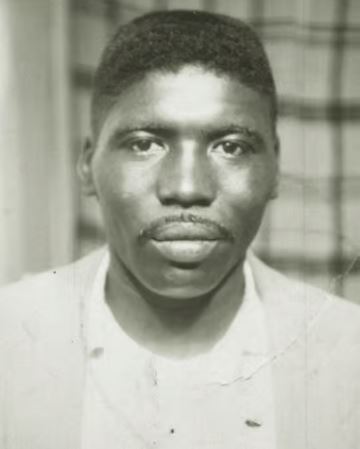
In Marion, Alabama, Jimmie Lee Jackson, an unarmed African-American protester, was shot during a peaceful march by an Alabama Highway Patrol trooper, James Bonard Fowler. Jimmie would succumb to his wounds eight days later. About 500 people who were organized by the SCLC activist C. T. Vivian left Zion United Methodist Church in Marion and attempted a peaceful walk to the Perry County jail, about a half a block away, where young civil-rights worker James Orange was being held. The marchers planned to sing hymns and return to the church. Police later said that they believed the crowd was planning a jailbreak. Among the marchers were Jackson, his 16-year-old sister, Emma Jean, mother, and maternal grandfather Cager Lee.
They were met at the post office by a line of Marion police officers, county sheriff’s deputies, and Alabama state troopers. During the standoff, streetlights were abruptly turned off (some sources say they were shot out by the police), and the police began to beat the protesters. Among those beaten were two United Press International photographers, whose cameras were smashed, and NBC News correspondent Richard Valeriani, who was beaten so badly that he was hospitalized. The marchers turned and scattered back toward the church.
Jackson, his sister, his mother Viola Jackson, and his 82-year-old grandfather Cager Lee, ran into Mack’s Café behind the church, pursued by state troopers. Police clubbed Lee to the floor in the kitchen; when Viola attempted to pull the police off, she was also beaten. When Jackson tried to protect his mother, one trooper threw him against a cigarette machine. A second trooper shot Jackson twice in the abdomen. It was not until 2005 that trooper James Bonard Fowler was publicly associated with the shooting. In an interview with The Anniston Star, he admitted to shooting Jackson, saying it was self-defense, as he thought Jackson was going for his gun. The wounded Jackson left the café, suffering additional blows by the police, and collapsed in front of the bus station. He was taken to the hospital.
In the presence of FBI officials at the hospital, Jackson told lawyer Oscar Adams, of Birmingham, that he was “clubbed down” by state troopers after he was shot and had escaped from the café. Before his death, Jackson was served with an arrest warrant by Colonel Al Lingo, head of the Alabama State Police. The Alabama State Senate responded to national criticism and “formally denounced charges of dereliction by Lingo’s Troopers in Marion.”
Dr. William Dinkins first attended Jackson when he arrived at the Good Samaritan Hospital in Selma. In a 1979 interview for “America, They Loved You Madly,” a precursor to “Eyes on the Prize,” Dr. Dinkins recounts the actions he took in caring for Jackson and what he witnessed leading up to (and after) the death of Jackson eight days later on February 26, 1965. Dr. Dinkins believed that Jackson died as a result of an overdose of anesthesia after a white attending surgeon decided to conduct a second surgery. Sister Michael Anne, an administrator at the hospital, later said there were powder burns on Jackson’s abdomen, indicating that he was shot at very close range.
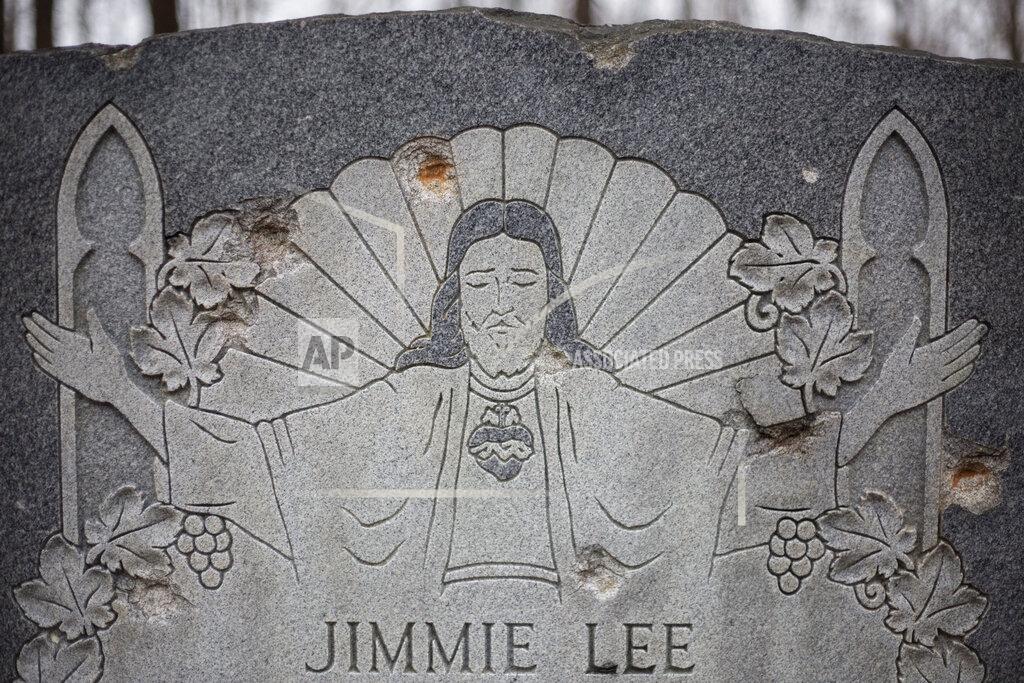
Jackson was honored at his memorial service, eulogized as a martyr to a moral cause. He was buried in Heard Cemetery, an old slave burial ground, next to his father. His headstone was paid for by the Perry County Civic League. In the decades since, his headstone has been vandalized, bearing the marks of at least one shotgun blast.
His death helped inspire the Selma to Montgomery marches in March 1965, a major event in the civil rights movement that helped gain congressional passage of the Voting Rights Act of 1965. This enabled millions of African Americans to vote again in Alabama and across the Southern United States, regaining participation as citizens in the political system for the first time since the turn of the 20th century. Most had been disenfranchised since then by state constitutions and discriminatory practices that made voter registration and voting more difficult.
In 2005, former Alabama State Trooper James Bonard Fowler admitted that he had shot Jackson, in what he said was self-defense soon after street lights had gone out and a melee had broken out. Former trooper Fowler was indicted in 2007 in Jackson’s death. In 2010, he pleaded guilty to manslaughter. He was sentenced to six months in prison.
The U.S. Civil Rights Commission heard sworn testimony of sadistic slayings, floggings and other violence directed against Mississippi Blacks.
Three hundred rampaging Black students from boycotted schools swept through streets in downtown Brooklyn yesterday, hurling bricks at policemen and breaking windows of stores in a second day of rioting.
President Johnson hosted prominent American bankers and investment leaders (including David Rockefeller, Sidney Weinberg and Thomas S. Gates Jr.) at a White House meeting and asked them to voluntarily limit foreign lending in order to reduce the American balance of payments deficit. “The bankers acted against their own profit motives and for the economic strength of the United States”, an author would later note, “possibly for the last time in American history…” The Johnson Administration also asked American corporations today to draw up their own individual balances of international payments and to reduce by 15 to 20 percent this year their net flow of dollars out of the country.
The House voted 288 to 92 to provide an additional $750 million toward loans for Latin America.
Photo probe Ranger 8, rocketing to the moon, is on course after a eritical mid-space maneuver, says the Jet Propulsion Laboratory.
Testifying before the House Committee on Science and Astronautics during hearings on NASA’s Fiscal Year 1966 budget, Associate Administrator for Manned Space Flight George E. Mueller briefly outlined the space agency’s immediate post-Apollo objectives: “Apollo capabilities now under development,” he said, “will enable us to produce space hardware and fly it for future missions at a small fraction of the original development cost. This is the basic concept in the Apollo Extension System (AES) now under consideration.” Mueller stated that the Apollo Extension System had “the potential to provide the capability to perform a number of useful missions utilizing Apollo hardware developments in an earlier time frame than might otherwise be expected. This program would follow the basic Apollo manned lunar landing program and would represent an intermediate step between this important national goal and future manned space flight programs.”
A “bugged” olive in a martini was the ultimate in electronic snooping devices exhibited before a panel of senators investigating electronic eavesdropping.
An eight-man coroner’s jury found that Eugene (Stormy) McDonald, 23, heir to the vast Zenith Radio Corp. fortune, did not take his own life.
Sinoite, which does not occur naturally on Earth, but which has been found in meteorites, was first identified as a distinct new mineral. A team of scientists working at Moffett Field in California said that the mineral, a silicon oxynitride, had been isolated from a meteorite that had fallen in Pakistan in 1926. The name itself was coined from the chemical designation (Si2N2O) and meteorite.
Betty Comden & Adolph Green and Jule Styne’s musical “Fade Out-Fade In”, featuring Carol Burnett, Dick Shawn (replacing Jack Cassidy), and Tina Louise, returns from lay-off at Mark Hellinger Theater, NYC.
Frank Gifford announces his retirement from football for broadcasting.
Dow Jones Industrial Average: 883.69 (+0.76)
Born:
Dr. Dre (stage name for Andre Young), American rapper; in Compton, California.
Masaki Saito, Japanese baseball pitcher (Nippon Professional Baseball Most Valuable Player Award, 1990; Tokyo Yomiuri Giants); in Kawaguchi, Saitama Prefecture, Japan.
Todd Howard. NFL linebacker (Kansas City Chiefs), in Bryan, Texas.
In 2007 former trooper James Fowler was indicted in Jackson’s death, and in 2010 he pleaded guilty to manslaughter. He was sentenced to 6 months in prison.


 History Diaries