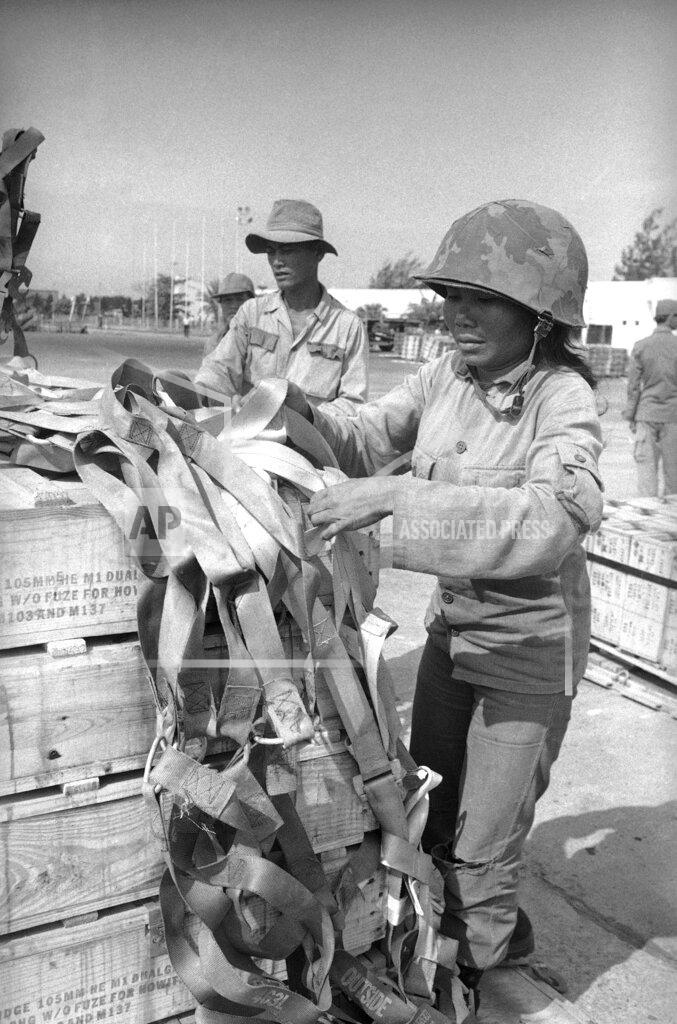

Insurgent Khmer Rouge forces renewed their attacks against Neak Luong, Cambodia, breaking a three-week lull around the main government position along the vital Mekong River shipping channel, military sources in Phnom Penh said. The reports said the rebels shelled the naval base 32 miles southeast of Phnom Penh and launched a ground attack against the town’s eastern defense line. More than 50,000 refugees crowd the town and rice is in critically short supply, the reports said.
The military situation for the Cambodian Government continued to deteriorate today with setbacks on several fronts, including the loss of a district capital in the northwest where a large store of rice was kept. From a number of provincial capitals and countryside garrisons close to Phnom Penh came reports of increased pressure by the insurgents. Government casualties were reported heavy everywhere, but the worst loss came at Muang Russei, a district town on Route 5 about 150 miles northwest of Phnom Penh. It fell to the insurgents after a night and a day of bloody fighting in the center of the small town.
Huge stocks of rice were stored in Muang Russei, which sits in the heart of Cambodia’s rice-growing region, and these stocks were believed either destroyed in the fighting or carried off by the insurgents. Elsewhere, an attempt to open the blockaded Mekong River, the main lifeline to this supplyshort capital, went on unraveling today. Casualties remained heavy and no progress was reported in dislodging the Communist-led insurgents from the banks of the river.
Reliable military sources said the insurgents were mauling the government troops, who had been reduced to two positions on the lower Mekong and were clinging to them tenuously. Fifty percent or more of the capital’s supplies of food, fuel and ammunition — all provided by the United States — used to flow up the Mekong from South Vietnam. A few ships made it through to Phnom Penh in the early days of the insurgent offensive, which began New Year’s Day, but since February 5 no supply convoy has been attempted.
The Americans may have to expand even further the airlift from Thailand that they began enlarging some days ago to try to keep the situation from becoming critical. The airlift is bringing in mostly ammunition. It does nothing toward providing crucial civilian needs of food and fuel. When the airlift reaches its present planned rate, it will involve 20 cargo flights a day. bringing in a total of 500 tons of ammunition, which is about the daily requirement. But this capital of two million people needs 500 tons or more of rice every day plus the fuel needed to keep its power and water supply going. The city’s rice and fuel stocks could last two months, if rationed. Some rice rationing has been imposed, and food prices are going up as the shortages and speculation are beginning to tell.
Fuel is also being conserved, with the power supply cut by up to 80 per cent and most of the city in darkness at night. The Government’s handling of these austerity measures is erratic and arbitrary. Power is being supplied to the air-conditioned homes of officials, but today the transmitting station that is the country’s cable and telephone link with the outside world was forced to shut down most of the day because it was not provided with fuel for its generators.
The U.S. Navy quietly reduced the alert status of some of the ballistic missile submarines it keeps on constant patrol around the world, an Atlantic Fleet spokesman confirmed. The change marks the first major revamping in Navy patrolling procedures since the first strategic deterrence submarines were sent to sea nearly 15 years ago. No reduction in overall strategic capabilities will be caused by the change, the spokesman said.
The Senate Foreign Relations Committee has decided to establish a new subcommittee for foreign aid legislation. The panel will be headed by Sen. Hubert H. Humphrey (D-Minnesota). Foreign assistance legislation previously has been handled by the full committee.
Senator Mark O. Hatfield, Republican of Oregon, proposed today that all American food aid abroad go to the most needy “regardless of their or our political inclinations” as long as a world food shortage continued.
General Alexander Haig Jr. said North Atlantic Treaty Organization allies are confronted with a socio-economic crisis “every bit as grievous as the traditional military threat (from Russia) we know so well.” Making his first public speech as allied commander in Europe, Haig told a luncheon audience in Brussels that there were no simple answers to the economic crisis, but that “we in the West must work collectively” to overcome it.
Night watchmen switched off the burglar alarm system in the Milan Modern Art Gallery hours before thieves stole 28 paintings worth nearly $5 million, police said. Investigators were looking into the possibility that the theft had been an inside job, but first indications were that the watchmen had switched off the alarm because it was oversensitive and often a gust of wind rattling a window would set it off.
The first major protest against the building of a nuclear power plant took place in the city of Wyhl in West Germany, where several hundred people turned out at the site of a proposed reactor that had been authorized on January 22. After the eviction of the protesters, a larger demonstration would take place five days later.
The Constitutional Court of Italy ruled that abortion was legal if the physical or psychological health of the mother was threatened by an early pregnancy.
The Soviet Union has resumed shipment of advanced weapons systems to Egypt by delivering six MiG-23 fighter planes, according to American intelligence sources. Allied sources say they are the first of 48 aircraft. Soviet T-62 tanks and surface-to-air missiles are said to have been promised as well. Syria has already received 45 MiG-23’s and Iraq 40. New pressure is expected for Israel to balance these by buying American F-15 fighters.
Seventy-seven developing countries wound up a conference in Algiers with a resolution asking participants who export oil and other basic raw materials to give favorable payment terms to less developed nations. The resolution was a compromise. An earlier one demanded special financing terms from exporting nations and was opposed by two major oil producers, Libya and Iraq.
Highly placed informants in Kuwait said the government of the oil-producing Arabian emirate, concerned about a possible confrontation with Iraq, planned to obtain American instructors in the use and maintenance of missiles, planes, and transport vehicles bought from the United States in December. The move expands the U. S. military role in the Persian Gulf area.
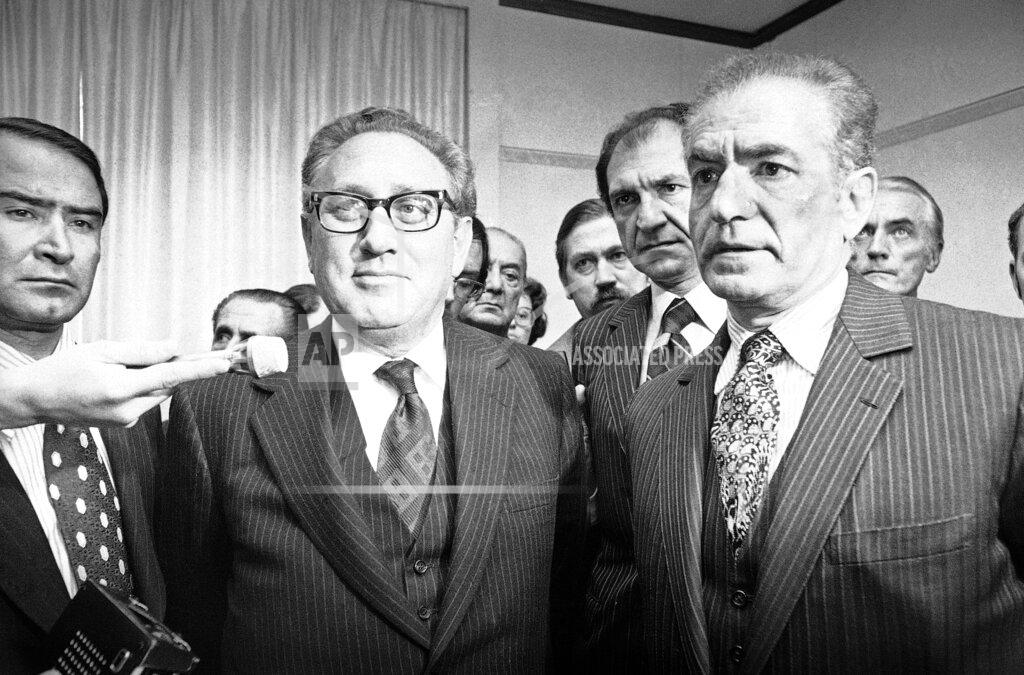
The Shah of Iran indicated to reporters in Zurich that Israel could buy additional Iranian oil if the Egyptian oilfields were returned to Egypt in the next round of Sinai negotiations. Secretary of State Kissinger had a working lunch with the Shah and reporters later were advised that the Shah’s answer to the question about oil for Israel was significant. During an Impromptu news conference at the Dolder Hotel in Zurich, the Shah was asked if Iran would step in with additional oil supplies if Israel was “compelled” to give up the Abu Rudeis fields — which provide 55 percent of Israel’s oil supply — as a result of Mr. Kissinger’s mediation efforts. “Our policy is to sell oil to those who will buy it,” he replied. “Once the tankers are loaded, where it goes is of no importance to us. We don’t mind where it goes, because it is a purely commercial transaction for my country.”
India has officially warned the United States that any decision to resume arms supplies to Pakistan would jeopardize Indian-American relations. Foreign Minister Y. B. Chavan said in Parliament today that he had written a letter to Secretary of State Kissinger on Jan. 28 conveying the warning. Official sources here said no reply or acknowledgment had yet come from Washington. “I conveyed to him our deep concern about the harmful effects of arms supplies to Pakistan on the peace of this region as well as on Indo‐American relations,” Mr. Chavan said in a statement.
The Korean opposition charged there was large-scale ballot-stuffing in last week’s massive vote of confidence for the regime of President Park Chung Hee. Kim Mu Kil, who said he was a member of the ruling Democratic Republic Party, said at the headquarters of the opposition New Democratic Party that he saw several officials stuff ballot boxes with at least 1,000 “yes” votes at a polling station in Seoul.
France agreed to pull out half of the special police contingent it sent to the French islands of St. Pierre and Miquelon. Sixty police officers had been sent to St. Pierre as a precaution against possible violence in the tiny islands off the Canadian coast following a strike over salary claims by civil servants there.
Mail delivery in Canada has been disrupted by a two-day-old general strike of federal employees. The walkout by the Public Service Alliance also halted grain shipments from the West Coast and closed Winnipeg airport for a while. The alliance called the strike after contract talks broke down.
The deputy chairman of Ethiopia’s ruling military council declared today that this nation has more than six million volunteer militiamen prepared to “sacrifice themselves” to prevent the “dismantling” of Ethiopia. Major Mengistu Haile Mariam, considered Ethiopia’s strongman, was addressing more than 5,000 army veterans at a rally here. Many thousands of Ethiopians demonstrated in four other cities against attempts by seccessionist guerrillas to gain independence for Eritrea, the country’s northernmost province.
The Tigrayan People’s Liberation Front was created to fight for the rights of the Tigre people in Ethiopia.
Residents of Asmara reported tonight that guerrillas had launched their second attack of the day against military targets in the city. The 35‐minute attack, they said, came about an hour after a 65‐minute battle between the rebels and Ethiopian troops.
The Eritrean Liberation Front announced today that it would not take part in peace talks until the military council in Addis Ababa had declared its willingness to give independence to Eritrea. The announcement was made by Osman Saleh Sabbe, the secretary general of the front, at a press conference here. He was responding to a proposal by the Sudanese President, Gaafar al‐Nimeiry, that representatives of the front and the Ethiopian Government meet in Khartoum.
Senate Democratic leaders agreed unanimously on a program to stimulate the economy this year, with energy conservation given a much lower priority. Senator John Pastore of Rhode Island, chairman of a special committee that devised the program, said he hoped that Democratic caucuses in both houses would adopt it in a week or so. The program was said to give relatively low priority to reducing reliance on imported oil. The Senate sent to the White House another measure raising the ceiling on the national debt by $36 billion.
Burke Marshall, an assistant attorney general for civil rights in the Kennedy and Johnson administrations, was reported to be a leading candidate for chief counsel of the Senate’s 11-man Select Committee on Intelligence Activities. Marshall, 52, was present at a committee session when members decided they would meet soon with President Ford to seek his full cooperation in their upcoming investigation of the Central Intelligence Agency and the FBL Chairman Frank Church (D-Idaho) said Marshall and John M. Doar, who was special counsel for the House Judiciary Committee’s impeachment inquiry of Richard M. Nixon, were present “to give us the benefit of their counsel with respect to organizing the committee staff.”
Former Attorney General John N. Mitchell was fond of his wife, Martha, “to a degree,” but “basically” he kidnapped her to keep her ignorant of Watergate, said convicted Watergate conspirator James W. McCord Jr. Mrs. Mitchell had not lied when she complained that on the weekend the Watergate break-in was discovered in June, 1972, she was held “political prisoner” at the Newporter Inn at Newport Beach, California. “Her story is true — basically the woman was kidnapped,” McCord said in a Washington interview. They kept her locked up and she began to be afraid for her life.” McCord, who had been Mrs. Mitchell’s bodyguard before becoming security chief for the Nixon reelection campaign, added that H. R. Haldeman and other top Nixon aides were jealous of her popularity and wanted to embarrass her.
The House passed by voice vote a $563 million authorization bill for the Maritime Administration, but without an amendment that led to its veto late last year. The measure, sent to the Senate for technical changes before going on to the White House, contained $517 million in subsidies to the shipping industry to help it compete with foreign shipbuilding and shipping operations President Ford last December pocket-vetoed the bill because of a provision that would have made interest-free, no-fault loans to owners of American fishing vessels involved in an accident with a foreign flag ship.
Senator Frank Church, chairman of the Special Committee on the Aging, announced that he had offered Bernard Bergman, a major figure in investigations of nursing-home abuses, what he called an unusual package of rights for a witness at a congressional hearing. The Idaho Democrat met in whole or in part each suggestion of Mr. Bergman’s lawyer, who said the subpoenaed witness would claim his constitutional right not to appear unless they were granted. Mr. Church said Mr. Bergman could study documents he might be questioned on, suggest witnesses to be called and questions to hostile witnesses, and submit addenda to the record of his testimony.
George Meany, head of the American Federation of Labor and Congress of Industrial Organizations, announced that it would stay out of political party affairs and would not take part in the selection of delegates to the 1976 Democratic National Convention. He said in Bal Harbour, Florida, where the Federation’s Executive Council is meeting, that the declaration, apparently a major policy shift, had won unanimous support.
The Governors of New York, New Jersey and Connecticut, all Democrats, in Washington for the midwinter session of the National Governors Conference, variously accused President Ford of proposing an economic program based on “planned unemployment,” failure to address the “economic undertow” and failure to appreciate the full impact of “this depression.” Governors Hugh Carey of New York, Brendan Byrne of New Jersey and Ella Grasso of Connecticut said they planned their economic hopes on the Democratic Congress.
The Supreme Court ruled unanimously that President Nixon had no right to impound $69 billion in funds to fight water pollution. It held that the legislation had not given him that authority. The decision did not resolve the more complicated question still in the lower courts — whether a President has the implied power under the Constitution to refuse to spend money that Congress has appropriated.
Governor George C. Wallace of Alabama found himself today in the novel position of fighting direct challenges from fellow Southerners to his credibility as a Presidential candidate. Governor William Waller of Mississippi told a news conference. this morning that in his state, which Mr. Wallace won easily as an independent Presidential candidate in 1968, “he is not considered to be a viable potential candidate because of his disability, or physical infirmity.” Governor Dolph Briscoe of Texas also remarked at the national governors’ conference here that Senator Lloyd M. Bentsen, a Texas Democrat who announced for the Presidency yesterday, could defeat Mr. Wallace in a Texas primary. Former Governor Jimmy Carter of Georgia, who entered the Democratic Presidential race two months ago, has been presenting himself as a Southern alternative to Mr. Wallace.
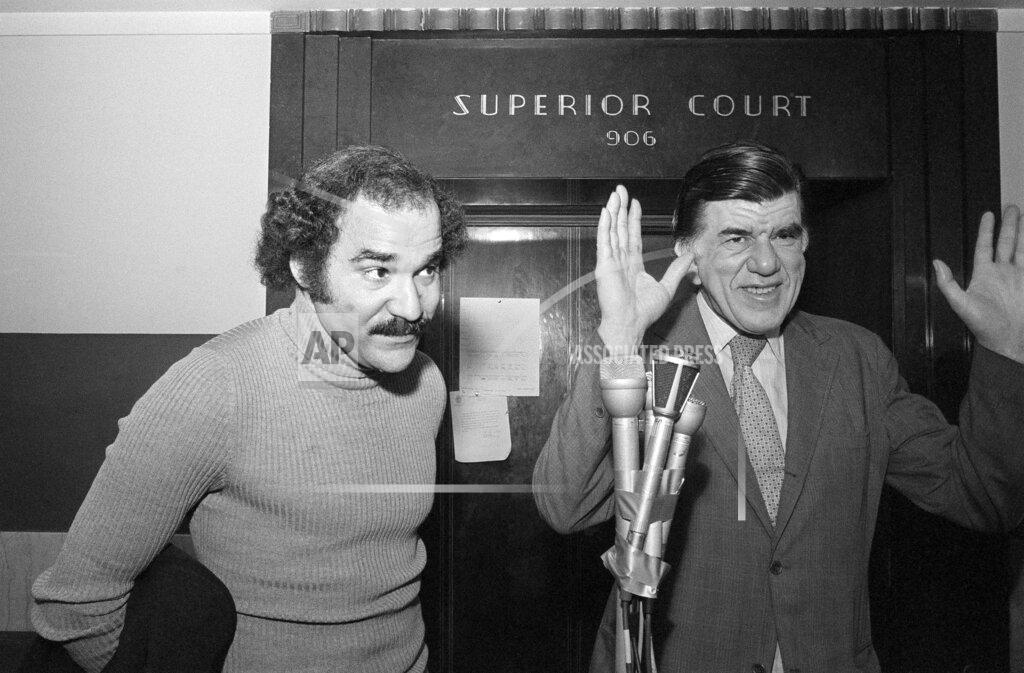
Dr. Kenneth Edelin, convicted by a Boston jury of manslaughter of a male fetus in connection with a legal abortion, was sentenced to one year’s probation by Superior Court Judge James McGuire. Judge James P. McGuire of Suffolk Superior Court immediately stayed the sentence pending outcome of an appeal of the case and released Dr. Edelin on his own recognizance. A spokesman for Boston City Hospital said he would continue to practice there. The light sentence pleased the doctor and his supporters, who had been shocked by the jury’s verdict. “The judge was extremely fair,” Dr. Edelin said. Three of the members of the jury have reported to the Boston police that they have received threatening telephone calls and one has said that his car windows were smashed.
A spokesman for the nation’s Roman Catholic hierarchy said today that news media coverage of the manslaughter trial of Dr. Kenneth C. Edelin contained “innuendo and unfounded accusation directed against the Catholic community.” The spokesman, Russell Shaw, secretary for public affairs of the National Conference of Catholic Bishops, and its action arm, the United States Catholic Conference, did not comment on the trial. But Mr. Shaw expressed “dismay” at what he called religious overtones in much of the media coverage “during the trial and especially since the verdict was announced.”
Angered by Governor Sherman W. Tribbitt’s veto of a pay raise, Delaware’s largest teachers’ union struck schools across the state, shutting nearly half of them and giving 79,000 students an unscheduled holiday. A temporary restraining order was quickly issued by a Wilmington court against the Delaware State Education Association. The strike is illegal under state law. Tribbitt said he vetoed the pay increases last week because he had been forced to veto a 1-cent per gallon tax on crude oil refined in the state. Getty Oil Co. threatened to close its only US. refinery — the only refinery in Delaware — if the tax was imposed.
In its second major recall of the year, General Motors said it had begun notifying owners of 220,000 midsized 1975 model cars of a defect that could cause a rear wheel to fall off. The cars are Chevrolets, Pontiacs, Oldsmobiles, Buicks, and GMC Sprints built between September 13 and November 20 of last year. They will be inspected and repaired at no cost to the owners, GM said. One accident has occurred when wheel bearings failed but there were no injuries.
2nd American Music Awards: Olivia Newton-John and John Denver win.
Dow Jones Industrial Average: 731.30 (-2.90, -0.39%)
Born:
Scott Tucker, American swimmer (Olympic gold medal, 4×100 freestyle relay, 1996; silver, 2000), in Birmingham, Alabama.
Chad Moeller, MLB catcher (Minnesota Twins, Arizona Diamondbacks, Milwaukee Brewers, Cincinnati Reds, Los Angeles Dodgers, New York Yankees, Baltimore Orioles), in Upland, California.
George McCullough, NFL defensive back (Tennessee Oilers-Titans, San Francisco 49ers), in Galveston, Texas.
Sarah Brown, American soap opera actress and 3-time Daytime Emmy award winner (“General Hospital”), in Eureka, California.
Died:
Chivu Stoica, 66, former Prime Minister of Romania (1955–1961) and President (1965–1967), committed suicide after being called before Romanian Communist Party officials and accused of incest with his niece.
Raymond Moley, 88, U.S. advisor to President Franklin Roosevelt; member of the “Brain Trust”.





 History Diaries