
The Soviet 123rd Division has opened up a 1 to 2 mile wide and nearly 4 mile deep gap in the Lähde sector in Summa by evening.
The 2nd Battle of Summa ended in victory for the Soviets, who overran the Mannerheim Line. That night the Finnish Commander-in-Chief Carl Gustaf Emil Mannerheim ordered the II Army Corps to withdraw from the line. Mannerheim ordered the II Army Corps to abandon the Mannerheim Line at 2000 hours. Mannerheim decided to abandon the Mannerheim Line and pulled Finnish troops back to the “V-line,” the intermediary defensive positions on the Isthmus.
The troops begin to pull back to the Samolanlahti-Näykkijärvi-Muolaanjärvi-Äyräpäänjärvi line. It is not as well-prepared as the Mannerheim Line, but has some natural advantages. The question is whether the Finns still have enough men to hold it.
Even units still holding their forward positions in the Summa sector are down to fractions of the men they started with. The 274th Rifle Regiment, for instance, has lost 30-40% of its men. The brigade has resorted to reinforcing it with the unit’s horse drivers who are not trained infantry. The Finnish 1st Brigade has lost about 60% of its men, with only 400 men remaining. Some units are wiped out completely, not all units are even able to report casualty figures. Of course, Soviet casualties are high as well — but there are endless streams of men and supplies backing the Soviet troops up, which is not the case for the Finns.
Lappeenranta is hit by heavy enemy bombing: 17 die and 53 are injured in the raid.
At Lake Ladoga, a battalion of Russian reconnaissance parachutists attacks the island of Petäjäsaari and manages to hold on there for almost 24 hours.
Fierce fighting is currently going on for control of Pukitsanmäki.
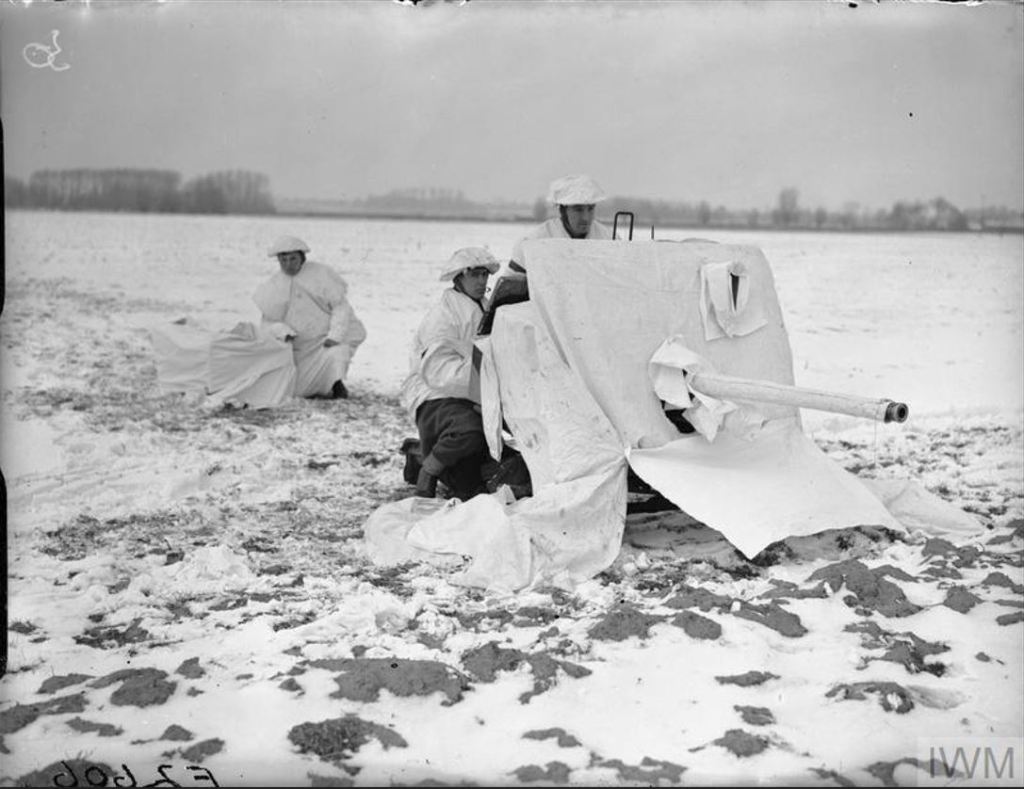
North of Lake Ladoga, Finns destroy the motti around Lavajärvi village. Finnish 9th division surrounds Soviets “Dolin” ski brigade (Colonel Dolin is already dead; his brigade is reduced to 800 men). The Soviets had so far been successful in supplying the troops inside the ‘motti’ from the air.
In taking Lavajärvi village the Finnish troops capture several pieces of artillery, three armoured cars, eight lorries, four field kitchens and a large number of guns and ammunition.
The Finnish Social Democratic Party has resolved its differences with the Civil Guard, ending over 20 years of conflict between the two organizations. SDP members are now free to join the Civil Guard.
The Isänmaa (‘fatherland’) postage stamp goes on sale today.
The Ministry of Supply has confirmed the price controls on firewood. The maximum permissible price per cubic metre for good-quality, fresh birch logs is 103 marks in Tampere and 93 marks in Viipuri.
Olympic champion Lauri Lehtinen is to donate his gold medal from the 5,000 metres at the Los Angeles Olympics in 1932 to be awarded to an as-yet-unnamed soldier who has served with distinction on the Karelian Isthmus. Lehtinen’s gesture is also to be seen as a mark of respect for fellow athlete Gunnar Höckert, who was killed in action four days ago on the Isthmus. Höckert took the gold medal over the same distance in the Berlin Olympics in 1936.
Sir Stafford Cripps, a British Labour politician who is open about his Marxist leanings, visits Moscow.
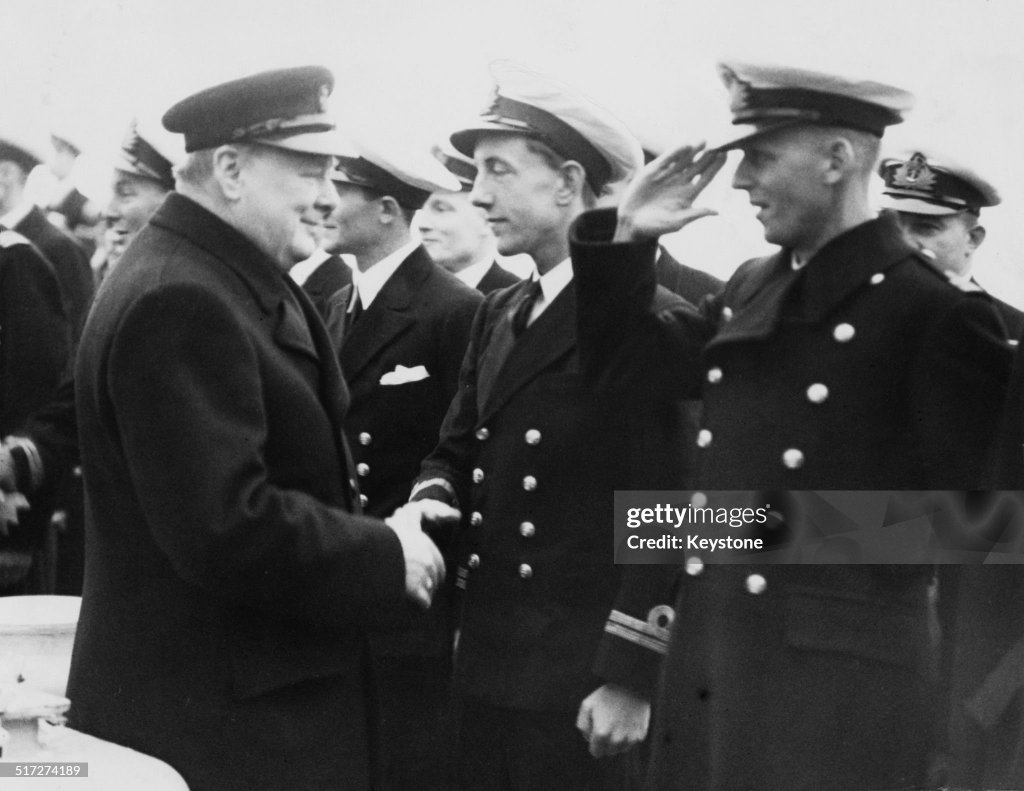
The cruiser HMS Exeter, which bore the brunt of the battle with the Admiral Graf Spee off Uruguay, arrived in Plymouth, her home port, today to be received by thousands of cheering citizens who lined the shore and service men who manned every ship in the harbor.
Bogdan Filov replaced Georgi Kyoseivanov as Prime Minister of Bulgaria.
More than 1100 Jews were deported from the German city of Stettin to the Lublin region of the General Government.
Brigadier General Erwin Rommel took over command of the 7th Panzer Division from Major General George Stumme who had been preparing it for the invasion of France. After commanding German Chancellor Adolf Hitler’s personal protection battalion for the duration of the Polish Campaign Rommel lobbied for a command of a panzer division although he had no panzer experience. After rejecting a specialized mountain division Hitler interceded on Rommel’s behalf. In essence, he calls in his favor with Hitler to get the panzer division that he wants.
Hubert Lanz was made the Chief of Staff for XVIII Armeekorps.
General Wavell’s position is recast as Commander-in-Chief Middle East.
The American Friends of a Jewish Palestine, an organization that is openly aiding the smuggling of Jews into Palestine despite a British ban on immigration, announced yesterday, The Associated Press said, that 2,300 Jewish emigrants from Austria and Czecho-Slovakia have been landed there.
No. 110 Army Co-operation (Auxiliary) Squadron of the Royal Canadian Air Force departed from Halifax, Nova Scotia, Canada for Britain.
Germany announces that all armed British merchant ships will be treated as warships. In reply to the British governments announcement that British merchant ships in the North Sea will be armed, the German government announces that all such ships will be treated as warships. U-boat commanders are ordered attack without warning any ship which is likely to come under British control. This directive means that any neutral ship sailing towards a British-controlled war zone — such as the English Channel, can be attacked without warning. Any ship following a zig-zag course is also liable to be sunk without warning.
The German tanker Altmark was investigated three times by the Royal Norwegian Navy. In each instance, the men who boarded the ship carried out cursory searches and took the Germans’ word that the vessel was conducting purely commercial business and did not inspect the hold and allowed the ship to continue on its way. The Altmark was carrying 299 British merchant seamen who been captured by the German pocket battleship SMS Admiral Graf Spee in late September and October of 1939. The prisoners held in the ship’s hold reportedly made strenuous efforts to signal their presence to the point where the German crew had to drown out the noise by running winches.
Danish newpapers are full of protests against the sinking of the 5,177 ton Chastine Maersk by a U-boat. U-boat commanders have been ordered by Hitler to torpedo any ship under British control without warning in order to stop the supply of food and war materials reaching Britain. This directive means that any ship sailing towards a British-controlled war zone, such as the English Channel, the world’s busiest shipping lane, can be attacked without warning. Any ship which is following a zigzag course is also to be sunk without warning. The policy is already in effect as evidenced by the sinking of Danish, Dutch, Norwegian and Swedish ships in the last few days. Danish, Norwegian and Swedish ship owners have been meeting here and have decided to press for urgent action by their governments; one possibility is that neutral ships should henceforth travel in convoys protected by naval vessels. Last night the British Admiralty announced the sinking of two more U-boats, including the one that sank a 12,000-ton meat ship in the Bay of Biscay. Any joy at these sinkings needs to be countered by the news that German shipyards are now building U-boats faster than Britain can sink them.
The Kriegsmarine reclassified two Panzerschiff (“armored ship”) — the Lützow and the Admiral Scheer — as heavy cruisers. The British initially nicknamed these types of ships “pocket battleships” due to the fact they significantly outgunned the cruisers of any other navy
At 0207, the Danish steam merchant Maryland was torpedoed and sunk by the German U-boat U-50, commanded by Kapitänleutnant Max-Hermann Bauer, in the North Atlantic, west of the Hebrides, United Kingdom (57°09′N 12°00′W). The ship sank within seven minutes. A first torpedo fired at 0154 had detonated prematurely. The ship was reported missing after sending her position the last time on 10 February. All of the ship’s complement of 34 died; only a wrecked lifeboat was later found at North Uist. The 4,895 ton Maryland was carrying oil cake and was bound for Copenhagen, Denmark.
At 0545 hours the Danish steam merchant Aase was torpedoed and sunk by the German U-boat U-37, commanded by Korvettenkapitän Werner Hartmann, southwest of Cornwall, England (49°17′N, 8°15′W). Of the ship’s complement, 15 died and 1 survivor was picked up by the Royal Navy destroyer HMS Verity two days later. The 1,206 ton Aase was carrying fresh fruit and was bound for Bristol, England.
At 0837 hours, the unescorted and neutral Norwegian steam merchant Steinstad was torpedoed and sunk by the U-boat U-26, commanded by Kapitänleutnant Heinz Scheringer, about 75 miles west of Aran Island, Ireland (53° 03’N, 11° 55’W). The ship sank within seconds. The U-boat had sighted the ship at 1912 the evening before, noticed the Norwegian flag and followed her during the night to stop the vessel according to the prize rules at the first daylight. At 0750, the Germans fired a shot across the bow of Steinstad, which did not react apart from turning towards the U-boat after the third shot was fired. So the following shots were aimed more closely to the ship without actually hitting her and shortly thereafter the crew abandoned ship in two lifeboats. The master and 12 crewmembers in one of the lifeboats were never seen again, despite of an aircraft search in the area. The other lifeboat with 11 survivors made landfall at Arranmore Island on 20 February. The 2,477 ton Steinstad was carrying ore and was bound for Aalvik, Norway.
At 1400, German U-boat U-48, commanded by Kapitänleutnant Herbert Schultze, sank the Dutch motor tanker Den Haag (carrying 11,800 tons of oil) 150 miles west of Ouessant in the Bay of Biscay (48°02′N 8°26′W), killing 26. The British ship Glenorchy rescued 13 survivors in a lifeboat. The other lifeboats with bodies were later found adrift; some bodies washed ashore on the French Coast. The Den Haag was bound for Rotterdam, Netherlands.
At 2315, the German U-boat U-14, commanded by Oberleutnant zur See Herbert Wohlfarth, spotted two steamers in a line with an escort. At 2340 a torpedo which detonated prematurely was fired at the second ship. This ship was the Danish cargo ship Sleipner, which sank in the Moray Firth (58°18′N, 1°48′W) after being hit in the bow by a second torpedo at 2355. The other steamer, the Rhone (also Danish) stopped to rescue survivors and send distress signals, but was also hit by a torpedo at midnight and sank. All of the crew of the Sleipner are later rescued but nine men from the Rhone perish. A total of 51 survivors were rescued by the Royal Navy destroyer HMS Kipling and the Swedish fishing trawler Standard. On the 19th, HMS Eclipse found a raft from the Rhone at 58-40N, 1-05W with two dead.
The U.S. Navy destroyer USS Goff (DD-247) collided with and sank the harbor tug USS Wicomico (YT 26) in Hampton Roads, off the Naval Operating Base, Norfolk, Virginia. The USS Goff, her bow damaged in the mishap, rescued the USS Wicomico’s 11-man crew. The wreck was later raised and scrapped.
Convoy OA.92 departs Southend.
Convoy OB.92 departs Liverpool.
Convoy OG.18 forms at sea for Gibraltar.
The War at Sea, Thursday, 15 February 1940 (naval-history.net)
Light cruiser MANCHESTER departed Scapa Flow on Northern Patrol.
Armed merchant cruiser CARINTHIA arrived in the Clyde from Northern Patrol.
Submarine TETRARCH and tender CUTTY SARK arrived in the Clyde.
Submarine SWORDFISH and destroyer IMPERIAL departed Rosyth for Scapa Flow. From there IMPERIAL was to join the west coast section of convoy HN.12, but on the 16th, the order was cancelled and she was ordered to the Norwegian coast.
Submarine TRIBUNE was exercising in the Firth of Forth.
Submarine SEAWOLF departed Sheerness with convoy OA.92 for Portsmouth.
Anti-aircraft cruiser CAIRO departed Scapa Flow for Sullom Voe.
Destroyer TARTAR departed Scapa Flow to relieve armed merchant cruiser FORFAR in 64-22N, 12-05W.
Destroyer MOHAWK arrived in the Clyde escorting tanker MONTENOL (2646grt).
Destroyers ESCAPADE, ECHO, and ECLIPSE arrived at Rosyth, and ELECTRA separately from Dover.
Destroyer JERVIS arrived at Rosyth from the Humber.
Motor torpedo boats MTB.22, MTB.24, and MTB.25 carried out a night patrol off Farne Island.
Convoy OA.92 departed Southend, escorted by destroyers BROKE from the 15th to 16th, and VANESSA from 16th to 18th when the convoy dispersed. Submarine SEAWOLF joined the convoy for passage to Portsmouth.
Convoy OB.92 departed Liverpool escorted by destroyers VANOC and WINCHELSEA from the 15th to 18th, when VANOC joined HX.19.
Convoy OA.90G sailed from Southend on the 12th escorted by destroyers VISCOUNT and VANQUISHER, and OB.90G from Liverpool with 45 ships, also on the 12th, escorted by sloops DEPTFORD and SCARBOROUGH. They merged on the 15th as OG.18, escorted by French destroyer PANTHÈRE and auxiliary patrol ship MERCEDITA from then until the 21st, and arrived at Gibraltar on the 22nd, escorted by destroyer VELOX of the local escort. Destroyer ACTIVE, also of the local escort, arrived the next day with steamer MACLAREN (2330grt), which had broken down on the 22nd.
Convoy FN.95 departed Southend escorted by sloops FLEETWOOD, BITTERN, and HASTINGS, and joined by destroyer JANUS on the 16th. The convoy arrived in the Tyne on the 17th.
Convoy FS.97 departed the Tyne, escorted by destroyer VIVIEN and sloop PELICAN, and with submarine STERLET joining from Blyth for the passage south. The convoy arrived at Southend on the 17th.
Convoy MT.11 departed Methil, escorted by destroyer VIVIEN, sloop PELICAN, and anti-submarine trawlers of the 19th Anti-Submarine Group, and arrived in the Tyne later that day.
Convoy MT.12 departed Methil, escorted by sloops FLAMINGO and WESTON and anti-submarine trawlers of the 3rd Anti-Submarine Group, and arrived in the Tyne the next day. Convoy MT.13 was cancelled.
Destroyer VENETIA, escorting the Liverpool section of a homebound convoy, attacked a submarine contact east of Fastnet in 50 59N, 8 38W.
Destroyer DARING attacked a contact NNE of Kinnaird Head in 58 10N, 1 45W. Destroyers KIPLING and IMPERIAL were also hunting in the area, and the search continued on the 16th.
Anti-submarine trawlers NORTHERN SPRAY (SO), NORTHERN DAWN, NORTHERN GEM, NORTHERN WAVE, and NORTHERN PRIDE of the 12th Anti-Submarine Striking Force were on patrol north of the Shetland Islands in 61-27N, 1-09W, when NORTHERN DAWN attacked a submarine contact.
Mine destructor ship BORDE was damaged by a mine off the Kent coast near the Downs, and repaired at Chatham from 25 February to April.
U-14 sank Danish steamers RHONE (1064grt) with the loss of nine crew and SLEIPNER (1066grt) in 58 18N, 01 48W. Destroyer KIPLING rescued twelve men and Swedish fishing boat STANDARD thirty-nine from the two ships – the survivors from RHONE and all the crew of SLEIPNER. On the 19th, ECLIPSE found a raft from RHONE in 58-40N, 1-05W with two dead.
U-26 sank Norwegian steamer STEINSTAD (2476grt) west of Ireland, 50 miles off Clare coast, with the loss of thirteen crew.
U-37 sank Danish steamer AASE (1206grt) in 49 17N, 08 15W. Fifteen crew were lost and the only survivor was rescued by destroyer VERITY on the 17th.
U-48 sank Dutch tanker DEN HAAG (8971grt) in 48 02N, 08 26W. The 13 survivors were rescued by steamer GLEN ORCHY.
U-50 sank Danish steamer MARYLAND (4895grt), which left Madeira on the 7th for Copenhagen, in 57 09N, 12 00W. There were no survivors.
The Northern Patrol sighted 61 eastbound ships between the 15th and 29th and sent 24 into Kirkwall for inspection.
German supply ship ALTMARK (10,847grt), received a perfunctory contraband check at Bergen, and put to sea for her return to Germany escorted by Norwegian torpedo boats SKARV and KJELL.
Heavy cruiser EXETER finally arrived at Plymouth, screened by aircraft carrier ARK ROYAL, battlecruiser RENOWN and light cruiser GALATEA, but without destroyer HERO. In the South Western Approaches, she had been joined by her close destroyer escort, starting with HASTY on the 13th, ACASTA and WHITSHED earlier on the 14th, and ARDENT, HEARTY, WOLVERINE, and WREN later in the day. ARK ROYAL also reached Plymouth on the 15th escorted by destroyers KEITH, WAKEFUL, VETERAN, and ANTELOPE, and EXETER repaired at Devonport until 10 March 1941.
Minesweeper FERMOY arrived at Gibraltar from Malta to replace minesweeper GOSSAMER, which had returned to England with convoy HG.18F.
French armed merchant cruiser KOUTOBIA, large destroyer CASSARD and torpedo boat BAYONNAISE passed Gibraltar eastbound – KOUTOBIA sailing from Casablanca for Marseille for repairs, where she arrived on the 17th, CASSARD from Dakar for Toulon after duty in the South Atlantic, also arriving on the 17th, and BAYONNAISE from Casablanca, arriving at Oran on the 16th.
Today in Washington, the Senate passed and returned to the House the $1,032,784,115 Treasury-Post Office Appropriation Bill; received from Senator Clark of Missouri a proposed amendment to the Neutrality Act to prohibit the landing at Bermuda of American clipper airplanes and heard Senator Pittman Pittman assail Great Britain and Germany for interference with United States shipping; received the nomination of James McEntee to be director of the Civilian Conservation Corps; confirmed the nominations of Claude Wickard to be Undersecretary of Agriculture, Grover Bennett Hill to be Assistant Secretary of Agriculture and James W. Young to be director of the Bureau of Foreign and Domestic Commerce, and adjourned at 5:14 PM until noon on Monday.
The House debated the $966,772,878 Navy Appropriation Bill; heard Representatives Eaton and Reed urge a loan to Finland; approved a resolution providing for a committee to investigate campaign expenditures of candidates for the House, and adjourned at 4:10 PM until 11 AM tomorrow.
The great blizzard in the U.S. northeast ends, with at least 71 deaths reported. Huge snow drifts still block roads in a dozen states as the cleanup begins. Clear skies and a diminishing wind last night found New York and a large section of the Atlantic seaboard with a toll of seventy-one or more dead, hundreds injured, highways blocked and facing a bill of millions of dollars as one of the severest snowstorms on record roared out into the North Atlantic.
U.S. President Franklin D. Roosevelt embarked in the heavy cruiser USS Tuscaloosa (CA-37) at Pensacola, Florida, for a cruise to Panama and the west coast of Central America to discuss Pan-American defense and to inspect the Panama Canal. Following the booming of light guns from shore batteries of the naval air station here, President Roosevelt put to sea on his vacation. cruise aboard the cruiser USS Tuscaloosa today under circumstances suggesting a possibility that the trip might include developments bearing on efforts to lay a basis for European peace. Previously, at an unexpected press conference on the Presidential special train, Mr. Roosevelt refused to encourage or to discredit a suggestion that he might meet high officials of the British, French and Italian Governments at sea, supposedly to consider means of ending the European war.
After Mr. Roosevelt had replied evasively to renewed attempts to draw him out on the subject, he was reminded that his “no comment” replies might be construed to mean that a meeting at sea with representatives of foreign powers for peace talks was a possibility. But he replied only that he had nothing to say. One reporter told the President that his auditors had expected that the mere mention of a rendezvous at sea with representatives of foreign powers would be declared ridiculous. But again the only reply was to say that he could not comment. Another reporter suggested that the secrecy with which he had surrounded his departure from Washington plus the refusal to confirm or deny the possibility of peace talks at sea had all the elements of a “mystery novel.” The Chief Executive merely shrugged and smilingly awaited the next question.
Indignant Senators and Representatives rise in both houses of the U.S. Congress to denounce England’s tampering with the U.S. mail in the Atlantic. British censorship of American mail aboard transatlantic Clipper planes stopping at Bermuda and the taking of neutral vessels into belligerent ports for search were denounced in Senate debate today, but the Senate voted down, 46 to 25, an attempt to implement protests by banning further stops of American planes at Bermuda.
The Commander in Chief, U.S. Fleet, noting that reports on air operations in the European War stressed the need of reducing aircraft vulnerability, recommended that naval aircraft be equipped with leak-proof or self-sealing fuel tanks and with armor for pilots and observers. Although the Bureaus of Aeronautics and Ordnance had been investigating these forms of protection for two years, this formal statement of need gave added impetus and accelerated procurement and installation of both armor and self-sealing fuel tanks.
The financial secretary of the Communist party, who is known as Welwel Warszower and Robert William Wiener, was convicted of misuse of an American passport yesterday by a jury that took barely half an hour to reach a verdict.
Alleged subversive organizations on the Pacific Coast will be the next field of investigation by the House Committee on Un-American Activities, Chairman Martin Dies asserted on his return today to the capital. Some focus will be on the Hollywood movie industry.
The fear that the nation might be drawn into the European war has declined greatly in the last four months, a survey by the American Institute of Public Opinion shows, according to Dr. George Gallup, its director. 68 percent of Americans now think we will stay out.
“Superman” #4 was published, marking the first appearance of the villain Lex Luthor.
The Detroit Tiger roster lists Hank Greenberg as an outfielder. The willingness of the team’s leading power hitter to switch, at a contract boost, from first baseman allows manager Del Baker to find a position for Rudy York. Also on the list are Dick Bartell, picked up from the Cubs for Billy Rogell, and Pinky Higgins, who had been shopped around. The four, along with Barney McCosky and Charlie Gehringer, produce the stuff that will move the Tigers from fifth to first, although its .588 mark will be as low as that of any pennant-winner yet.
China’s defenders reported that they were forcing the Japanese Army to retreat in campaigns at opposite ends of their far-flung country today, while foreign military observers expressed the belief that the Japanese invasion had spent its force, still short of its goal. The Chinese said the Japanese forces in Kwangsi Province, in South China, were being driven back southward over the path of their onslaught of the past two weeks, with the Chinese vanguard now only fourteen miles north of Nanning, main Japanese base for that area. Thirteen hundred miles to the north, in Inner Mongolia, the Chinese said they had recaptured the town of Wuyuan, forcing the Japanese into a general retreat southward toward Paotow, the railhead base of the Japanese campaign in Suiyuan Province. The Japanese withdrew so hurriedly there, it was said, that they suffered heavy casualties and abandoned numerous supply trucks.
The Japanese denied both Chinese victory claims, stating they simply were withdrawing to their respective bases, Nanning and Paotow, after highly successful expeditions in which menacing Chinese concentrations were scattered with heavy Chinese losses. Neutral military experts nevertheless expressed the opinion that the Japanese now, after two and a half years of war, finally had reached the limit of their ability to win and hold new Chinese territory. This was their interpretation of Wednesday’s Japanese proclamation urging Generalissimo Chiang Kai-shek to surrender, and stating that the invaders would not extend their operations further but would “await” any Chinese offensive. The foreign observers say the invaders’ men and materials are beginning to wear out and that their drive is so scattered over China’s vastness that it has no punch left. Furthermore, they say, Japan does not have the reserve manpower at home for new operations.
Dow Jones Industrial Average: 148.46 (+0.13)
Born:
John Hadl, College and AFL-NFL quarterback (College Football Hall of Fame-Univ. of Kansas; AFL Championship-Chargers, 1963; AFL All-Star, 1964, 1965, 1968, 1969; Pro Bowl 1972, 1973; San Diego Chargers; Los Angeles Rams), in Lawrence, Kansas (d. 2022).
Don Shows, multi-sport athlete and coach, in Ruston, Louisiana (d. 2014).
Trygve Madsen, Norwegian pianist and composer (“The Dream of the Rhinoceros”; “Aurora”), in Fredrikstad, Norway
Died:
R. E. B. Crompton, 94, British electrical engineer, industrialist and inventor.
Naval Construction:
The Royal Navy Bangor-class (Reciprocating engined) minesweeper HMS Peterhead (J 59) is laid down by the Blyth Shipbuilding & Drydock Co. Ltd. (Blyth, U.K.); completed by Whites M.E.
The Royal Navy Tree-class minesweeping trawler HMS Mangrove (T 112) is launched by Ferguson Bros. Ltd. (Port Glasgow, Scotland).
The Kriegsmarine (German Navy) Type IXB U-boat U-65 is commissioned. Her first commanding officer is Kapitänleutnant Hans-Gerrit von Stockhausen.
The Royal Navy “T”-class (First Group) submarine HMS Tetrarch (N 77) is commissioned. Her first commanding officer is Lieutenant Commander Ronald George Mills, RN.



 History Diaries