
President Johnson decides to undertake the sustained bombing of North Vietnam that he and his advisers have discussed — and avoided — for a year. U.S. President Lyndon B. Johnson agreed with advisers that a campaign of sustained reprisal in air strikes against North Vietnam would be necessary in order to end the war there. The attacks, described officially as “a program of measured and limited air action jointly” with South Vietnam, would be ordered by the President on February 24 as Operation ROLLING THUNDER, and would begin on March 2, the first of many over the rest of the decade. ROLLING THUNDER will continue, with occasional suspensions, until President Johnson halts it on 31 October 1968.
A company of South Vietnamese home guardsmen deserted four United States military advisers and five of their own men during a Việt Cộng attack Wednesday, United States military informants said yesterday. Three Americans and the tribesmen were killed and the other American is believed to be a prisoner. The informants gave this account: The home guards — described as Vietnamese and mountain tribesmen inexperienced in fighting — threw down their weapons and left a hill fortification as the Communist guerrillas approached in the dark with loudspeakers, calling: “We only want to kill the Americans. All the rest can go free if they leave their weapons.”
The next morning the three Americans and five tribesmen were found dead on the hilltop at Đức Phong, 85 miles north South Vietnam. The Việt Cộng launched the attack before dawn Wednesday — the same day Communist terrorists blew up a United States enlisted men’s billet at Quy Nhơn and attacked in other areas of South Vietnam. The Americans killed in the Đức Phong attack, the first major assault of the war in that area, were identified in Saigon as Captain Carlton J. Holland of Junction City, Kansas; Staff Sgt. Emmett J. Bryant of Greensburg, Louisiana, and Pfc. John W. Malapelli of Burlington, Kentucky. The missing man was identified as Specialist 4 James H. McLean of Los Angeles.
The United States sources said that after the Vietnamese company of about 130 men left the scene, the Việt Cộng pounded the fortification with 57-mm. recoilless rifles and mortars. “Those few guys left up there on the top of the hill really put up a wonderful fight.” said a United States officer who reached the area.
The bodies of two more Americans were removed late last night from the rubble of the enlisted men’s billet at Quy Nhơn, blown up by Việt Cộng terrorists Wednesday. United States military spokesmen said the toll of known dead in the explosion now was six, with 15 others still missing and believed dead.
The Johnson Administration is considering sending a small number of additional troops to South Vietnam, particularly to protect United States installations against Việt Cộng guerrilla attacks. According to highly placed officials, such a step is being considered by the White House as a countermeasure to a stepup in Communist terrorism marked by the attacks on installations at Pleiku and Quy Nhơn. President Johnson met with staff advisers during the day to review the Vietnamese crisis, particularly to discuss a subject of debate within the Administration: the extent to which bombing raids should continue in North Vietnam and the possible reaction of Hanoi, Peking, and Moscow.
The purpose of the attacks this week on North Vietnamese bases is described here as more political than military; an attempt to warn the North Vietnamese Government against supporting a more aggressive strategy in South Vietnam. In Saigon, Ambassador Maxwell D. Taylor said the bombing of North Vietnam had demonstrated to the Việt Cộng that their sanctuary was no longer absolutely safe. Administration officials say it remains unclear whether this policy of “measured response” will have the desired effect on the Hanoi Government. It is as a precaution, therefore, that the Administration contemplates sending additional troops.
One step under study is the assignment of a detachment of military police, probably only a few companies, to help provide perimeter defense for the more vulnerable bases. At this point the Administration is not considering any sizable increase in American military missions in South Vietnam; they now number 23,500 men. But if South Vietnam goes through with plans to increase the size of its forces, additional Americans are likely to be sent as advisers, officials say. In this connection, officials said they were not startled or alarmed by Communist China’s warning that the United States bombing raids had given the North Vietnamese the right to strike “counterblows” at South Vietnam with Chinese support. While seemingly unusually bellicose, the Chinese statement was viewed as only a continuation of ambiguous threats “not to stand idly by” if North Vietnam is attacked. One key official observed, “The statement doesn’t seem any worse than what they have been saying all the past week.”
The administration still assumes that Communist China, and especially the Soviet Union do not favor a direct clash with the United States in South Vietnam. At this stage, it is believed, they have no intention of committing forces in the Vietnamese war. Thus far, the Chinese threats, including the new statement, have been viewed as devices to maintain Chinese influence in Hanoi against any inroads by the Soviet Union. Officials believe China is also seeking to stir world indignation and fear over the American attacks. Officials are doubtful that the American air attacks could serve as provocation for invoking the Chinese-Soviet Friendship Treaty, as hinted in statements from Peking and Moscow. Increased Soviet and Chinese military support to North Vietnam is viewed as a likely outcome of the recent Hanoi visit of the Soviet Premier, Aleksei N. Kosygin.
But so long as the American raids are restricted to the southern part of North Vietnam, officials suggest, Russian and Chinese aid will be limited to equipment. A question still being debated is what the Chinese or the Russians would do if American planes struck further to the north, within range of Chinese MIG fighter planes near Hanoi. The White House remained silent on the proposal of U Thant, the United Nations Secretary General, for discussions among the interested nations” on the Vietnamese war. The White House press secretary, George Reedy, said he would have no comment.
In considering the dispatch of additional security forces to Vietnam, Administration sources voice no hope of providing absolute security for the bases. In guerrilla warfare, some officials say, it is virtually impossible to guarantee against infiltration. But some Administration officials suggest that the addition of some military-police detachments might strengthen the efforts of South Vietnamese forces, who now have primary responsibility for “perimeter defense.” Perimeter defenses constitute outposts around a base to intercept any infiltrators. These are normally supplemented by roving patrols outside the perimeter, but difficulty has arisen in inducing South Vietnamese forces to carry out night patrols.
The last sizable build-up of American military force in South Vietnam took place last summer, when the advisory contingent was increased from 16,000 men. This force is viewed as sufficient for advisory services, which have been extended in the last six months to the battalion level of the South Vietnamese Army. The United States has offered aid to increase the size of the South Vietnamese forces by about 100.000 men over the present strength of about 350,000.
[Ed: “The Johnson Administration is considering sending a small number of additional troops to South Vietnam.”
…
And So It Begins.]
Peking hinted today at the possibility of a direct attack by North Vietnam against South Vietnam. It also made pointed reference to the Korean War, in which Chinese “volunteers” intervened after United Nations forces had crossed the 38th Parallel.
The Sunday Times in London reported that two battalions of Chinese Communist troops had been seen moving into North Vietnam and that large concentrations of Chinese forces were massing on the border, according to The Associated Press. Officials in Washington said they had heard such reports for two days and were checking them, but suggested caution in evaluating them at the present time.
An official Chinese Government statement declared: “Now that the U.S. bandit chieftain Lyndon B. Johnson has twice personally directed the aircraft of the South Vietnamese puppets to bomb the Democratic Republic of Vietnam, the latter has secured the right to take the initiative in dealing counterblows to the South Vietnamese puppets.”
The Laotian Foreign Ministry charged today that North Vietnam was issuing maps depicting Laotian and Cambodian territory as part of North Vietnam. A complaint filed on the ministry yesterday said that a map “published by Hanoi on July 10, 1964, infringed, in several places, on Laotian territory. The complaint recalled a North Vietnamese protest asserting that American and Laotian aircraft attacked villages on North Vietnamese territory on October 28, 1964. The villages of Ta Rua, Ta Pang, and others cited by North Vietnam were actually on Laotian territory, the ministry said. Copies of the Hanoi maps, shown here, gave to North Vietnam parts of Laos’s northeastern province, Samneua, and the area east of the Laotian Communist supply base of Xépôn (Tchepone) on the Hồ Chí Minh Trail and gave to Laos parts of northeastern Cambodia, where South Vietnam and Cambodia and Laos meet.
Premier Aleksei N. Kosygin, ending visits to Peking, Hanoi, and Pyongyang, left North Korea Sunday and flew to Vladivostok, Siberia, the Soviet press agency Tass reported.
The Soviet Government declared today that “present circumstances” lent “special importance” to the Chinese-Soviet friendship treaty, which deals with peace and security in the Far East. The declaration by Boris P. Beshchev, Minister of Railways, was made at a meeting celebrating the 15th anniversary of the treaty tomorrow. The celebration was attended by 2,000 invited guests, including the Soviet party leaders and the Chinese Ambassador. Mr. Beshchev’s reference to: the defense clauses of the treaty was regarded by Westerners in Moscow as a significant change of emphasis. The Soviet Union and Communist China called for unity against imperialism just as Premier Alexei N. Kosygin declared “victory will be ours.”
About 200 African and Asian students broke into the United States Legation today in Budapest in protest against United States policy in Vietnam. They smashed windows to get inside and wrecked some of the furniture. The United States chargé d’affaires, Elim O’Shaughnessy, protested to the Hungarian Deputy Foreign Minister, Bela Szilagyi. He said Hungarian authorities had failed to maintain order when the students converged on the legation. In a strong protest to Hungary, the United States warned that such “intolerable” acts could damage relations between the two countries.
Mao Tse-tung, Chinese Communist leader, confided to an American acquaintance that he thinks he will die soon, and reflected on the uncertainty of China’s future after it passes into the hands of new and untested generations.
By a margin of 225 to 197, İsmet İnönü, the longtime leader of Turkey as president and later as Prime Minister, lost a vote of no confidence in the Turkish National Assembly and was forced to resign. Suat Hayri Ürgüplü would form a new government on February 20.
France’s Foreign Minister, who will visit the United States next week, will urge a widening of the search for German unity to include soundings of the East European governments, according to qualified sources.
West German Foreign Minister Gerhard Schroder warned the United Arab Republic today that “grave consequences” would ensue if the proposed Cairo visit by Walter Ulbricht, the East German chief of state were not canceled.
An organization of Jewish war veterans charged today that West Germany “has begun” to turn its back on its moral obligations to the world and might become a threat to world peace.
Congolese military aircraft bombed the villages of Paidha and Goli, Uganda, located on the African nation’s border with the Democratic Republic of the Congo, prompting Ugandan Prime Minister Milton Obote to activate all former Ugandan Army members and to call on the citizens to defend the country. In response to the Ugandan charges, the Congo government in Leopoldville said that Ugandan troops had assisted Congolese rebels in attacking the Congolese town of Mahagi on February 5. By the end of the year, the Ugandan Army would more than double in size, to 4,500 men.
King Hussein chose Wasfi al-Tal as the new Prime Minister of Jordan. Hussein dismissed Bahjat Talhouni from the job after concluding that Talhuni had conceded too much in summits with Egypt’s President Nasser, and chose al-Tal, who was “anti-Egyptian and “anti-PLO.”
The Soviet Union and Communist China called for unity against imperialism just as Premier Alexei N. Kosygin declared “victory will be ours.”
An anti-Castro action group said that it bombed a Pinar del Rio Province sugar mill at dawn today. The Insurrectionist Revolutionary Recovery Movement said the plane that carried out the mission “with positive results” returned to its base “somewhere in the Caribbean.” The announcement said fire bombs and explosives were dropped by a two-engine plane. Orlando Bosch, Miami coordinator, said it was the organization’s ninth air assault on Communist Cuba. No mention of an attack has been carried by the Cuban radio.
A study of the Hallstein Doctrine under way in Bonn could result in diplomatic relations with Poland and Czechoslovakia.
The executive council of the British Medical Association votes this week on whether to recommend that 23,000 family doctors resign from the National Health Service. It is the service’s gravest crisis.
The British Broadcasting Corporation is being criticized for conducting Malcolm X, the militant U.S. Black Nationalist, around Smethwick, the town on the outskirts of Birmingham that has become a symbol of Britain’s racial problems.
The police in Rome broke up an attempt tonight to present to a private audience the play “The Deputy,” which depicts Pope Pius XII as passive on the issue of Nazi persecution of Jews.
Harvard University’s Russian Research Center is studying the hidden facets of the Soviet Union’s secretive society with persistence, scholarship and imagination.
American members of the International Longshoremen’s Association returned to work after reaching a settlement in their 33-day-long strike, which had started on January 11. A record weekend workforce of 17,214 longshoremen swarmed back to hiring centers and piers in New York as the 33-day waterfront strike ended. Thousands of longshoremen returned to work at Atlantic and Gulf ports Saturday, but a smaller number continued the 33-day walkout, keeping piers idle at some cities.
Nicholas Katzenbach was sworn in as U.S. Attorney General. President Johnson gave an affectionate and witty salute today to Nicholas deB. Katzenbach and Ramsey Clark, who were sworn in as Attorney General and Deputy Attorney General, respectively.
When Barry Goldwater consented to the removal of the man of his choice as Republican National Chairman and renounced his own Presidential aspirations, the leadership of the Republican party lay there for the taking. But not for long. Richard M. Nixon has firmly grasped the leadership role, which, being unofficial, can become anything he wants to make it. He intends, apparently, to make much of it. Republicans shrink from talking publicly about 1968. Their argument that 1966 comes first is unassailable. Still, individual behavior is observed and discussed privately.
Unless California’s minority Republicans unite after the 1966 primary, Gov. Brown will win a third term, former Vice President Richard M. Nixon warned.
Senate investigators found that Soviet-bloc countries are making the United States “a dumping ground” for surplus weapons.
Breakup of the Justice Department “Hoffa task force” and a change in attitude among Teamster Union leaders have apparently given James R. Hoffa a new lease on his job-at least temporarily.
I. W. Abel said his followers will file vote protests which could take many thousand votes away from David J. McDonald in the Steelworkers’ election.
A team of New York University doctors has found that babies who contract German measles long before birth can spread the viruses for long afterward without showing signs of infection. This ability of the virus to persist and be shed in such a manner was called a hazard to nurses, wives of doctors, and friends of the contagious infants’ mothers who thereby unwittingly risk infection when they might be in an early stage of pregnancy, perhaps unknowingly. The danger comes from the ability of the virus to produce birth defects, such as heart disease and cataracts, in babies whose mothers contracted German measles — or rubella — during the first 12 weeks of pregnancy.
Four Navy and Coats Guard divers brought up small pieces of metal late yesterday from the wreckage of the Eastern Air Lines DC-7B that plunged into the Atlantic near Jones Inlet, Long Island, New York, Monday night.
Legal, social and domestic problems by the score have descended to plague Lawrence Joseph Bader, alias Fritz Johnson, whose fingerprints reveal that he has led two lives.
The U.S. Ladies’ Figure Skating championship is won by Peggy Fleming.
The U.S. Men’s Figure Skating championship is won by Gary Visconti.
Born:
Kenny Harrison, American athlete (Olympic gold medal, triple jump, 1996), in Milwaukee, Wisconsin.
Daryl Reaugh, Canadian NHL goalkeeper (Edmonton Oilers, Hartford Whalers), in Prince George, British Columbia.
Craig Colbert, MLB catcher, pinch hitter, and third baseman (San Francisco Giants), in Iowa City, Iowa.
Stephen Manley, American actor (Donny-“Married the 1st Year”), in Los Angeles, California.
Died:
General Humberto Delgado, 58, a former Portuguese Air Force commander who had been exiled and was an opponent of the regime of Portugal’s dictator, António de Oliveira Salazar, was kidnapped and murdered by PIDE secret police forces near the border town of Olivenza. Murdered also was Delgado’s Brazilian secretary, Arajaryr Moreira de Campo.
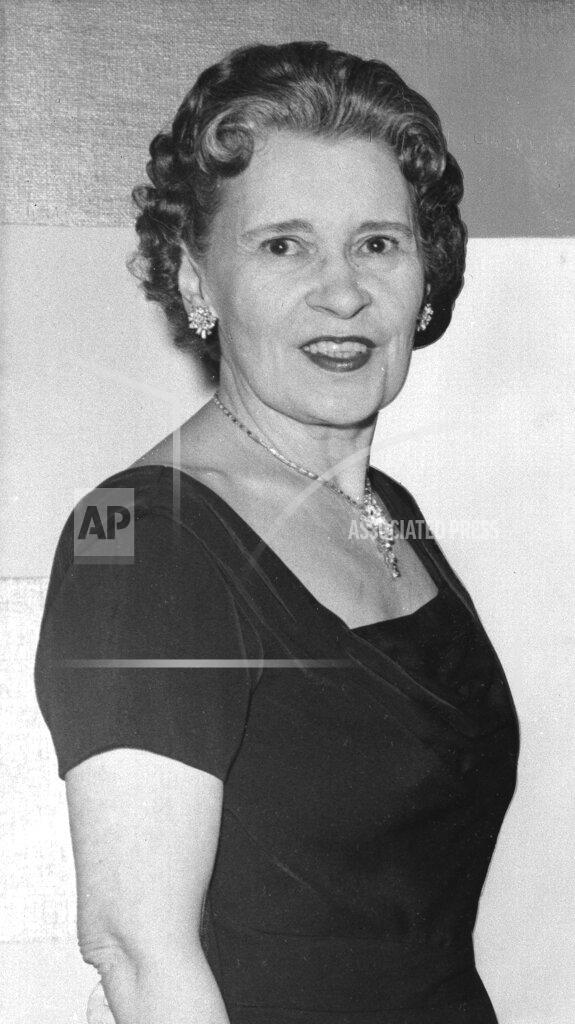
Gloria Morgan Vanderbilt, 60, Swiss-born American socialite, mother of Gloria Vanderbilt.
Jerry Burke, 53, American easy-listening pianist and organ player (Lawrence Welk Orchestra, 1934-65), of cancer.
William Heard Kilpatrick, 93, American mathematician and philosopher.




 History Diaries