Heavy fighting continues in Summa. The Red Army enlarges its breakthrough in the Lähde sector. The enemy fails to break through in other sectors of the front.
At 0500 hours, Soviet tanks dragged sleds with explosives on board up to the Millionaire Fort on the Mannerheim Line in Finland. When the sleds were detonated, all defenders inside the fort were killed, but the Soviet 7th Army did not pass through this breach on the Mannerheim Line. After capturing it, the Soviets hold it against all counterattacks.
On the Merkki sector, the Soviet 90th Rifle Division assaults a narrow front of 2.5 km. It is supported by massive artillery, including 48 152 mm guns, 20 122 mm guns, 37 76 mm guns and 24 45 mm guns. The main assault is on Hill 44.8, which is held by the 3d Battalion of Major Ruotsalo. The Soviets capture the Finnish trenches, and a night counter-attack fails to dislodge them. The Finns know that they must recapture their line or a major breakthrough will result.
Later on this day, near the eastern end of the Mannerheim Line, Soviet troops captured the Kirvesmäki stronghold in Taipale (now Solovyovo, Russia). A counterattack late in the day by the Finnish 5th Division fails to expel the Soviet forces from their hold on the Summa position. It becomes apparent the Karelian defense line will not hold. By the end of the day, the Finnish government agreed that it has little hope other than to seek peace.
While there are breaches in the Mannerheim Line, the Soviets patiently work to expand their advantage.
The Soviets continue to attack on the Muolaanjärvi-Punnusjärvi isthmuses.
In Northern Finland, Colonel Dolin, commander of the Soviet ski brigade bearing his name, is killed in a skirmish with a Finnish patrol in Kuhmo.
The Finnish Ministry of Supply announces new maximum prices for coffee: the maximum permitted retail price for roasted ersatz containing at least 25% coffee is 20 marks per kilo, with Rio blend at 34 marks, the Central American Santos blend 32 marks and Quality blend at 50 marks per kilo.
Karl J. Ewerts, the director of volunteer recruitment in Sweden, returns from a trip to the Karelian Isthmus and issues a statement to the press calling for weapons, men and vehicles to be sent to Finland.
The first 10 Finnish flying cadets arrive in Stockholm for training provided by the Royal Swedish Aero Club.
In the United States, the ‘one dollar collection’ organized by the Finnish committee has already raised over a million dollars.
The Finnish Foreign Affairs committee meets to discuss prospects for ending the war. The Finnish cabinet authorized the government to seek peace terms with Moscow.
In the diplomatic negotiations the Soviets raise their terms a little further to match their growing military success. The Finnish cabinet now favors peace and authorizes moves to end the war against the USSR. At the same time, Finland requests aid from Sweden (which Stockholm rejects).
Simultaneously with a report by the Leningrad military staff that the Russians had made a new bite into Finnish fortifications south of Viborg, the Soviet army newspaper Red Star publishes today an article predicting increased Anglo-French pressure on the Scandinavian countries to help Finland. It includes a caustic attack on U.S. President Roosevelt for his pro-Finnish, anti-Soviet speech to the American Youth Congress on Saturday.
Referring to the aid Finland is expecting from the international community, Foreign Minister Väinö Tanner issues a statement in his own name via the Finnish News Agency in which he denies claims of attempts to broker a peace. Prime Minister Ryti and Minister without Portfolio J.K. Paasikivi describe Tanner’s statement as ill-considered.
While in Turku en route for a secret trip to Stockholm, Tanner receives details from Chargé d’Affaires Erkko of the Soviet Union’s terms for peace. The Soviet terms are passed on to the Finnish Government.
General Berkins, chief of the Latvian army, was reported to have gone to Estonia to negotiate with Gen. Johan Laidoner, commander in chief of the Estonian army, in connection with co-operation to strengthen the national defenses of the two states. Visitors to Finland from the two countries said there was wide popular dissatisfaction with increasing Soviet pressure and with military agreements by which Russia last fall obtained the right to establish military, air and naval bases in Estonia and Latvia.
An official Nazi decree deprived industrialist Fritz Thyssen and his wife, living in Switzerland since November, of their German citizenship. Fritz Thyssen, once one of the wealthiest men in Europe and an industrialist whose support did much to raise Adolf Hitler to power, became a man without a country today. A decree published in the official gazette, signed by Interior Minister Wilhelm Frick with the approval of Foreign Minister Joachim Von Ribbentrop, deprived Thyssen and his wife of their German citizenship. Informed quarters described the action as the final break between the Nazis and their one-time supporter.
The first deportations of German Jews into Poland take place.
The German Government’s refusal to permit resident American supervision of relief work in occupied Poland continues to block distribution of funds and supplies there, the Commission for Polish Relief, Inc., announced yesterday.
Erwin Rommel was named the new commanding officer of the 7th Panzer Division.
Italy is secretly speeding up the building of fortifications in the Brenner Pass — gateway in the Alpine barrier which separates Italy from Germany — Yugoslav workmen reported to military authorities.
The strained relations between Hungary and Rumania are causing much anxiety in Rome and even at the Vatican, where the Pope today saw Mircea Cancicoff, Rumanian Minister of State. Italian newspapers are publishing alarming reports and it is clear that a critical period is expected soon.
Paper rationing is introduced in Great Britain, with supplies cut by 40 percent.
The first troops from Australia and New Zealand arrived in Egypt in convoy US 1. The first echelon (4th Brigade) of the New Zealand Division and the Australian Imperial Force arrive at Suez.
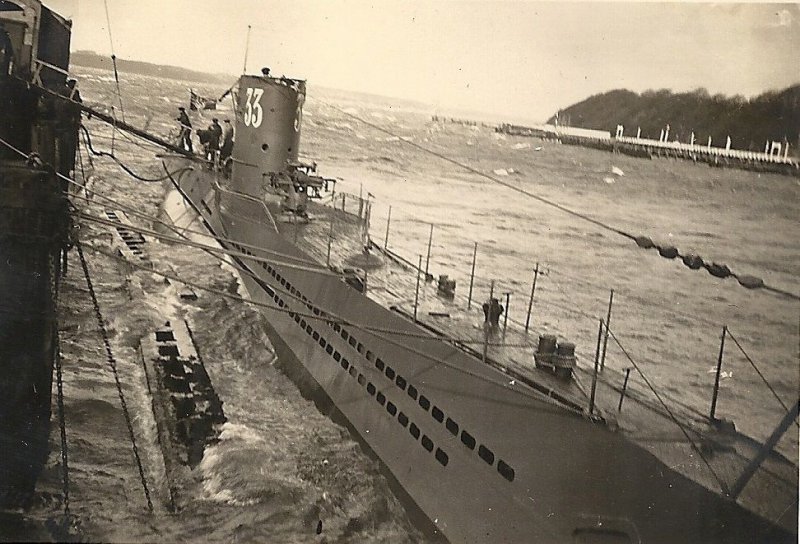
German U-boat U-33, commanded by Kapitänleutnant Hans-Wilhelm von Dresky, was sunk in the Firth of Clyde by the minesweeper Gleaner. British Royal Navy minesweeper HMS Gleaner (J 83) located the German submarine U-33 laying mines in the Firth of Clyde, Scotland at 0250 hours. U-33 was badly damaged by depth charges and surfaced at 0522 hours, but the submarine began to sink shortly after surfacing, killing 25 men, including the commanding officer. Despite orders to remove the rotors from the secret Enigma code machine and throw them into the sea, one man among the 17 survivors has 3 rotors in his pockets (he apparently forgot to throw them in the sea). These are sent to Alan Turing’s naval cryptanalysis section of Government Code and Cypher School. Two of the rotors (VI and VII), while extremely valuable, are only used by the Kriegsmarine, so they are not universally helpful for solving the critical “Dolphin” key. Unbeknownst to the British, Chief Engineer Schilling also has rotors on his person, but he is not properly searched and he manages to throw them overboard later. During its career under Kapitänleutnant von Dresky the U-33 sank 10 merchant ships for a total of 19,261 tons and damaged 1 merchant ship for a total of 3,670 tons.
The U-33’s mission had been a major priority for the Kriegsmarine. The hazards of laying mines in the Clyde were apparent to the Germans, but closing it down would have been a major success. Hitler himself is said to have ordered the mission, and Admiral Doenitz, in charge of U-boats, saw the U-33 off on its mission from Wilhelmshaven.
The Type VIIB German U-boat U-54, commanded by Korvettenkapitän Günter Kutschmann, departed from Wilhelmshaven, Lower Saxony on her first patrol, and vanished. She is presumed to have struck a mine in the Skagerrak (55°07′N, 5°05′E) on or about 13-14 February with the loss of all 41 crew.
The Swedish cargo ship Dalarö was torpedoed and sunk in the Atlantic Ocean north west of Ireland (56°44′N, 11°44′W) by the German U-boat U-53, commanded by Korvettenkapitän Harald Grosse, with the loss of one of her 29 crew (the captain). The survivors were rescued by the Belgian trawler Jan de Waele and landed at Buncrana, Loch Swilly. The 2,937-ton Dalarö carried a cargo and linseed and was heading for Malmö, Sweden.
At 0955, the unescorted Norwegian cargo ship Nidarholm was hit amidships by one torpedo from the German U-boat U-26, commanded by Kapitänleutnant Heinz Scheringer, in the Atlantic Ocean (50°50′N, 14°10′W), after she had been stopped at 0925 by two shots across her bow. The ship broke in two. The bow sank and the afterpart remained afloat. The U-boat fired two coups de grâce at 1009; one torpedo detonated prematurely while the other sank the wreck. The crew of 25 was picked up about 10 hours later by the Norwegian SS Berto, which was enroute from Torrevieja to Bergen via Gibraltar and Kirkwall. The 3,482-ton Nidarholm had been bound for Liverpool with a cargo of cotton and grapefruit.
The Belgian trawler Ons Heer Bewaar Ons struck a mine in the North Sea and sank. Her crew were saved by another trawler.
The Belgian trawler Steur struck a mine in the North Sea 10 nautical miles (19 km) north west of the West Hinder Lightship and sank.
The Belgian cargo ship Flandres collided with Kabalo (also Belgian) in The Downs, Kent, United Kingdom (51°12′51″N 1°27′41″E) and sank. Her crew survived.
British Royal Navy destroyer HMS Hasty intercepted and captured German blockade runner Morea 300 miles west of Porto, Portugal. Morea had departed from Vigo, Spain and was bound for Germany.
German vessel Herrlichkeit captured by Royal Navy cruiser HMS Glasgow off Norway.
The French fishing trawler Vierge de Boulogne ran aground near Omonville-la-Rogue, Manche (49°43′N 01°51′W) and was wrecked. All 21 crew were rescued by the local lifeboat.
The American schooner Doris Hamlin disappeared in the Atlantic Ocean with the loss of all ten crew. She was carrying coal from Hampton Roads, Virginia to the Canary Islands.
Convoy OA.90G departs Southend.
Convoy HXF.20 departs Halifax for Liverpool.
The War at Sea, Monday, 12 February 1940 (naval-history.net)
German fishing trawler HERRLICHKEIT (268grt) was captured near Tromso in 69 56N, 16 49E (68-24N, 11-05E in the Rosyth War Diary) by light cruiser GLASGOW. HERRLICHKEIT was in poor shape, capable of only four and a half knots and had to be towed part of the way by GLASGOW. She was forced to put into Fraserburgh due to heavy weather, and finally arrived at Aberdeen on the 21st. Taken over later by the Ministry of War Transportation, she was renamed EMPIRE FISHER for British use.
Anti-aircraft cruiser CALCUTTA departed the Humber for Sullom Voe, and arrived on the 13th.
Light cruiser MANCHESTER arrived at Scapa Flow after Northern Patrol.
Armed merchant cruiser FORFAR departed the Clyde on Northern Patrol.
Destroyer KIMBERLEY arrived at Scapa Flow.
Destroyers KANDAHAR, KASHMIR, and KHARTOUM arrived at Greenock.
Destroyer INTREPID relieved destroyer GRIFFIN on patrol in Moray Firth. GRIFFIN arrived at Rosyth on the 13th.
Destroyer HARDY departed Portland for the Clyde.
Steamer CYPRIAN PRINCE (1988grt) departed Stromness for Aberdeen.
Submarines THISTLE and TRITON exercised in the Firth of Forth.
Submarine SALMON and destroyer ESCORT exercised off Harwich.
Submarine NARWHAL arrived at Rosyth after patrol.
Submarines L.23 departed Blyth on patrol, and STURGEON for the Tyne to refit.
Submarine SWORDFISH departed Dundee on trials to arrive at Rosyth on the 13th, but was diverted and arrived at Blyth on that date.
Minelayer PRINCESS VICTORIA with destroyers EXPRESS and ESK laid 38 mines in operation LD 3 (second half) in the North Sea. After the minelay, the ships proceeded to the Thames.
Destroyer VIMIERA completed conversion to fast escort vessel, and after working up at Portland, was assigned to Convoy C working from Rosyth.
Convoy BC.26 with six steamers, including BARON KINNAIRD, DUNKWA (Commodore), and RONAN departed the Bristol Channel escorted by destroyer MONTROSE, and arrived safely in the Loire on the 14th.
Convoy MT.9 departed Methil, escorted by sloops FLEETWOOD, BITTERN, and HASTINGS, and arrived in the Tyne later that day.
Convoy FS.94 departed the Tyne, escorted by sloops FLEETWOOD, BITTERN, and HASTINGS, which had just arrived from Rosyth with MT.9.
Belgian fishing vessels O. H. BEWAAR ONS (62grt) was lost in the North Sea and STEUR (61grt) ten miles NW of West Hinder Light Vessel due to mining.
Attempting to lay mines in the Firth of Clyde, U-33 was damaged by minesweeper GLEANER at 0440 halfway between Pladda Lighthouse and Ailsa Craig in 55 25N, 05 07W in a depth charge attack which seriously affected the minesweeper’s electrical system and put asdic and searchlights out of action. U-33 surfaced, the crew surrendered and she sank after her scuttling charges went off at 0530. Twenty-five of the crew were lost and 17 saved. Destroyer KINGSTON recovered 20 bodies.
U-26 torpedoed Norwegian steamer NIDARHOLM (3482grt) in 50 50N, 14 10W. She was abandoned and broke in two with the fore section sinking on the 12th and the aft section later. Sloops WELLINGTON and ROCHESTER searched for survivors, and twenty-five were rescued by Norwegian steamer BERTO.
U-53 sank Swedish steamer DALARO (3927grt) in 56 44N, 11 44W with the loss of one crewman. Survivors were rescued by Belgian trawler JAN DE WAELE (324grt) and landed at Buncrana, Loch Swilly.
Sloop ROSEMARY attacked a submarine contact ESE of Start Point. Sloop SANDWICH passed nearby at 0840/13th, joined ROSEMARY and carried out her own attack. Destroyer BROKE also joined in the search at 1030, and the operation continued until 1630 when ROSEMARY was ordered to return to harbour.
U-54 (Kptlt. Gunter Kutschmann) set out from Wilhelmshaven on the 12th on her first patrol, which was to be off Cape Finisterre, and was never heard from again. It is now presumed that she was lost on the 12th/13th with all 41 crew, sunk by a mine laid by the 20th Destroyer Flotilla on the 9/10 January in 55-07N, 5-05E. On the 14 March, German patrol vessel Vp.1101 (trawler PREUSSEN, 425grt) found one of U-54’s torpedoes, and later, on the 16 April, naval auxiliary ship Schiff 37 (trawler SCHLESWIG, 433grt) found another one in the Skagerrak.
Belgian steamer FLANDRES (5827grt) was sunk in a collision with Belgian steamer KABALO (5186grt) in the Fairway of the South Downs.
Convoy HXF.20 departed Halifax at 1400 escorted by Canadian destroyers HMCS FRASER and HMCS ST LAURENT, which detached on the 13th. Ocean escort until the 22nd when she left, was armed merchant cruiser LACONIA. On that day, the convoy was joined by destroyers ACASTA and VENETIA and escorted until its arrival at Liverpool on the 25th.
Destroyer HASTY captured German steamer MOREA (1927grt), which had departed Vigo on the 9th/10th, off the Portuguese coast in 41 42N, 15 03W. MOREA joined convoy HG.17, arrived at Falmouth on the 17th, and was renamed EMPIRE SEAMAN for British service.
French submarine ACHERON and British steamer SOMME (5265grt) exchanged gunfire around 1815, in 34-25N, 18-08W, each believing the other to be German. ACHERON was hit in the bow by a shell which did not explode.
In Washington, President Roosevelt participated in ceremonies at the Lincoln Memorial in observance of the anniversary of the birth of Abraham Lincoln. He discussed foreign affairs with Ambassadors Bullitt and Kennedy; Pennsylvania politics with J. David Stern and John Kelly of Philadelphia, and conferred with Senator Byrnes.
The Senate was in recess. The Monopoly Committee resumed its investigation of insurance companies, hearing testimony of Thomas A. Buckner and others.”
The House considered District of Columbia bills and adjourned at 2:03 PM until noon tomorrow.
The U.S. Supreme Court decided Chambers v. Florida, an important case dealing with the admissibility of coerced confessions. The lives of four young Florida Black farmhands, sentenced to death for robbery and murder of an aged white merchant in 1933, were saved today when the Supreme Court held that their confessions and pleas of guilty had been obtained in gross violation of the guarantees of civil rights provided by the Constitution. The court’s unanimous and extended opinion was based on the constitutional “due process” clause in the Fourteenth Amendment, passed after the Civil War to protect the newly granted rights of Blacks from arbitrary State judicial action.
It was handed down on the anniversary of the birth of Abraham Lincoln, who was chiefly responsible in obtaining the basis of these rights for the liberated and enfranchised Black race, and it was voiced eloquently by Justice Black, who admitted, after his nomination to the high bench, that he had once been a member of the Ku Klux Klan. The drama of the occasion, due to the date of the opinion, the background of the justice rendering it, the defense of constitutional principles and the broad overtones of the court’s denunciation of the exercise of dictatorial power by any government, was not lost upon the audience which crowded the great marble court chamber.
The essence of the Florida courts’ failure to uphold the guarantees of the Fourteenth Amendment, Justice Black said, lay in the extortion of confessions from the four prisoners after a week’s persistent questioning, with some evidence of physical brutality, during which they were held without warrant and were not permitted to have counsel or see any possible friends.
This “wrong,” the justice said, was accentuated by the fact that the four were picked out of a group of nearly two score Blacks arrested also without warrant in a general “dragnet” procedure. “We are not impressed by the argument that law-enforcement methods such as those under review are necessary to uphold our laws,” Justice Black said. “The Constitution proscribes such lawless means irrespective of the end. And this argument flouts the basic principle that all people must stand on an equality before the bar of justice in every American court.”
“Today, as in ages past, we are not without tragic proof that the exalted power of some governments to punish manufactured crime dictatorially is the handmaid of tyranny. Under our constitutional system, courts stand against any winds that blow as havens of refuge for those who might otherwise suffer because they are helpless, weak, outnumbered, or because they are non-conforming victims of prejudice and public excitement.
“Due process of law, preserved for all by our Constitution, commands that no such practice as that disclosed by this record shall send any accused to his death. No higher authority, no more solemn responsibility rests upon this court than that of translating into living law and maintaining this constitutional shield deliberately planned and inscribed for the benefit of every human being subject to our Constitution — of whatever race, creed, or persuasion. The Supreme Court of Florida was in error and its judgment is reversed.”
Republican notables celebrated Lincoln day yesterday with speeches in many cities extolling the Civil War president and condemning the New Deal. The orators included three avowed candidates for the GOP’s presidential nomination, Thomas E. Dewey of New York, Senator Robert Taft of Ohio, and Senator Styles Bridges of New Hampshire, and while they refrained from pressing their candidacies, their expressions on current problems were searched with care by political observers.
The United States is suffering from an “erosion of capital” which has worn down its entire productive plant to the extent of $7,000,000,000 in the seven years of the New Deal, Thomas E. Dewey declared in an address prepared for delivery in Portland, Oregon tonight. He asked if it was any wonder that one-third of the population were ill-clothed, ill-housed, ill-fed, as President Roosevelt has said, and that 9,000,000 persons were out of work. The New York District Attorney, a candidate for the Republican nomination for President, received a great welcome from Oregon. Hundreds of people flocked to his suite all day and in the evening many more than the 5,500 who received tickets flocked to the Civic Auditorium, where he spoke at the Lincoln Day celebration.
The response to the visit led New Dealers to plan a counter move. At Sacramento, Governor Olson of California said he would speak there Saturday under the auspices of the Commonwealth Federation in reply to the Dewey speech. Mr. Dewey, in this, the fourth of his major speeches analyzing New Deal philosophy and performances, quoted Lincoln’s words, “A house divided against itself cannot stand,” and said that the political strategy of the Roosevelt Administration was the opposite, “Divide and rule.” “Our crisis is again a house divided,” he declared. The consequent disruption, friction, bickerings between government and the citizens, he asserted, had caused continued idleness for 9,000,000 Americans.
Unemployment is the chief problem calling for solution in America, Herbert Hoover said at Omaha, but it cannot be solved until the nation turns away from “statism” and unshackles free enterprise.
Senator Taft of Ohio told a Greensboro (North Carolina) rally that the nation must choose Lincoln’s republic or New Deal dictatorship.
John D. M. Hamilton, Republican National chairman, at Lincoln Day Dinner in New York, said the nation was tired of “drifting” and looked to the Republican party for a return of Lincoln-Americanism.
Asserting that the Roosevelt Administration in seven years had failed completely to find a cure for unemployment, Governor Arthur H. James of Pennsylvania charged tonight that the only solution which it had advanced for unemployment was war.
After ruling out of order a resolution by a Socialist delegate which would have barred all supporters of totalitarian governments from the American Youth Congress, the National Assembly of the Youth Congress adopted today a broad program with the avowed aims of keeping this country out of war, getting jobs and governmental ald for young people and safeguarding civil liberties. Approving a suggestion made last night by José Luis Perez, president of the Brotherhood of Cuban Youth, the assembly voted in favor of an Inter-American Youth Congress to be held in Havana about September 1. It also adopted a message to the youth of the world promising them that American youth would work unceasingly “until the slaughter of our generation is stopped.”
William Dudley Pelley, leader of the Legion of Silver Shirts, was released from jail under $2,500 bond today pending a hearing on March 12, his birthday, to determine whether he must return to North Carolina to face charges of violating probation. He had been taken into custody Saturday by District of Columbia police after completing testimony before the Dies committee, which contends that his organization is Fascistic.
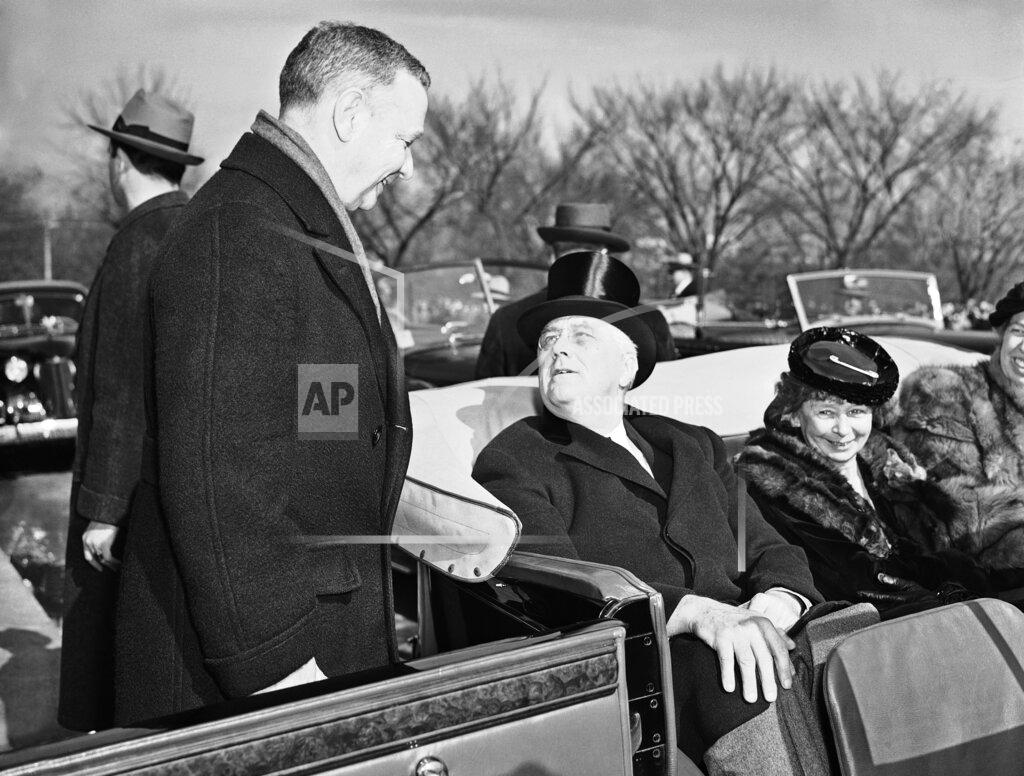
President Roosevelt led the nation in honoring the memory of Abraham Lincoln, before whose marble shrine near the Potomac River he stood bareheaded in solemn tribute today while an aide placed a huge floral wreath at the foot of the statute of the Great Emancipator.
President Roosevelt is expected to leave this week for a two-week fishing cruise in southern waters, probably the Gulf of Mexico. He has been advised by the White House physician, Admiral Ross T. McIntyre, to get away from official routine. Recent callers at the White House have commented on his tired appearance and urged him to take a Southern vacation as soon as possible.
The radio serial “The Adventures of Superman,” adapted from the comic book character Superman, premiered as a syndicated show.
The Brooklyn Dodgers purchase outfielder Joe Vosmik from the Red Sox.
The body of Lord Tweedsmuir, the first Governor General of Canada to die in office since confederation in 1867, will be brought to this black-draped capital from Montreal tomorrow morning by special train arriving at noon.
U.S. Ambassador to Brazil Jefferson Caffery reports to Secretary of State Hull on 20 March 1940 that the Brazilian government’s protesting Dorsetshire’s stopping Wakama had not pleased the British. The British maintained that they were protecting Brazilian commerce. “Indeed you are not,” the Brazilian Minister for Foreign Affairs Oswaldo Aranha retorts, “you are definitely not protecting our commerce by maintaining your warships off our coast. It is apparent to me that your blockade of Germany is plainly ineffective. If it were effective, you could stop the German boats [sic] on the other side before they entered German ports.”
The Japanese forces that have been battling fiercely east of Nanning for the last sixteen days are now “shortening their lines,” having achieved their objectives and mopping up is almost completed. the Japanese Army spokesman in Shanghai announced this evening. He asserted that the Japanese had dispersed and virtually annihilated more than half of a huge Chinese Army of almost 500,000 men massed with the avowed aim to attempt to recapture Nanning and then confirmed that the Japanese Army had evacuated both Pinyang and Kaotien.
“As announced, at the beginning of this particular campaign, our aim was not to occupy new territory nor to seize cities, but to shatter the Chinese possibility of counter-attack,” the spokesman insisted. When the Japanese forces withdrew from Pinyang and Kaotien, he said, they plastered huge posters on the walls of both towns inviting the Chinese to re-enter, saying: “If the Chinese armies continue their ill-advised attempts against any Japanese positions we will immediately repeat the dispersing process.”
Japan cancels their arbitration treaty with the Netherlands. The Japanese Government has given notice of the abrogation of the arbitration treaty with the Netherlands, which consequently expires next August.
Convoy US.1 carrying the New Zealand 4th Brigade and the Australian 16th Brigade arrives at Ismailia, Suez, Egypt. The convoy had left Auckland on 6 January and Sydney on 10 January.
Born:
Hank Brown, American politician (Senator-R-Colorado, 1991-97, Rep-R-Colorado, 1981-91), in Denver, Colorado
Richard Lynch, American actor (“The Sword and the Sorcerer”), in Brooklyn, New York, New York (d. 2012).
Ralph Bates, England actor (“Poldark”), in Bristol, England, United Kingdom (d. 1991).
Kent McCloughan, AFL-NFL cornerback (AFL All-Star, 1966, 1967; Oakland Raiders), in Scottsbluff, Nebraska.
Naval Construction:
The Kriegsmarine (German Navy) Type IXC U-boat U-501 is laid down by Deutsche Werft AG, Hamburg (werk 291).
The Royal Navy Hunt-class (Type II) escort destroyer HMS Avon Vale is laid down by John Brown Shipbuilding & Engineering Company Ltd. (Clydebank, Scotland).
The Royal Navy ASW trawler HMS St. Zeno (FY 280) is launched by Cook, Welton & Gemmill (Beverley, U.K.).

 History Diaries