
Operation FLAMING DART II began as 99 U.S. Navy carrier aircraft attacked enemy logistics and communications at Chánh Hòa barracks in southern North Vietnam near the DMZ. Some 160 U.S. and South Vietnamese planes, both land- and carrier-based, carry out a third series of retaliatory raids; bombing the barracks and staging points at Chánh Hòa and Chap Le, 160 miles and 40 miles, respectively, north of the 17th parallel;. A United States military spokesman said at a news conference that three Navy aircraft had been lost. Two fell into the sea, presumably after being hit by ground fire. One pilot was rescued, and a search was begun for the other.
Less than an hour before the air strikes were announced, two explosions ripped a Saigon hall in which students were meeting. “Terrorists had attached charges to bicycles standing against a wall of the meeting place in the center of the city. Three Vietnamese women students were wounded. United States officials, asked about a connection between Việt Cộng terrorism and Hanoi’s role in the war, said they were certain that the general pattern of attacks on Americans had been agreed to or ordered by the North Vietnamese capital. There was less certainty about Hanoi’s responsibility for raids such as the one against Quy Nhơn.
The new assault on North Vietnam lasted three and a half hours. It was larger than those of Sunday and Monday in retaliation for the Việt Cộng attacks on two camps in the Pleiku area, in which 8 Americans were killed and 126 wounded. For 18 minutes, Navy planes from the aircraft carriers USS Ranger, USS Hancock and USS Coral Sea strafed and bombed the area of Chánh Hòa, 160 miles north of the 17th Parallel, which divides North and South Vietnam. Navy fighters, in successive wing-tip-to-wing-tip formations of four, rolled over and went into shallow dives to strafe and bomb the installations. Smoke was seen over many buildings in the area.
The third Navy plane that was lost had been unable to drop all its bombs because of mechanical failure. It returned to the big South Vietnamese air base at Đà Nẵng, 375 miles northeast of Saigon. The pilot scrambled out of his plane after the landing gear collapsed. Then one of the bombs detonated, demolishing the aircraft.
The attacks were pressed below a low broken cloud cover that compelled the planes to operate at an altitude of less than 800 feet. They were exposed to heavy small-caliber anti-aircraft fire. Twenty-eight United States jet fighters F-100’s and F-105’s and 28 Vietnamese fighter-bombers returned safely to Đà Nẵng. Eight United States fighters from Saigon Airport also participated. The planes hit barracks and depots in the area of Chap Le, about 40 miles north of the 17th Parallel. This center, comprising about 125 buildings and motor-pool areas, was also a target of the South Vietnamese Air Force on Monday.
According to a United States spokesman, the area was hit again because “there was a lot of target.” About half the targets were destroyed in the Monday raid, he said. The attacked installations, the spokesman added, were “adjacent to routes that lead into South Vietnam.” United States intelligence agencies reported last month that at least 19,000 North Vietnamese, together with supplies, had infiltrated South Vietnam, together with supplies, since 1959 to reinforce the Việt Cộng. The raid on Chap Le was led by Colonel Nguyễn Ngọc Loan, deputy commander of the South Vietnamese Air Force. Eighty tons of bombs, varying from small fragmentation devices to 750-pound ones, were dumped over Chap Le, the spokesman said. Before the Vietnamese planes struck, he added, United States fighters came in low over the targets and delivered suppressive fire and bombs on anti-aircraft-gun positions.
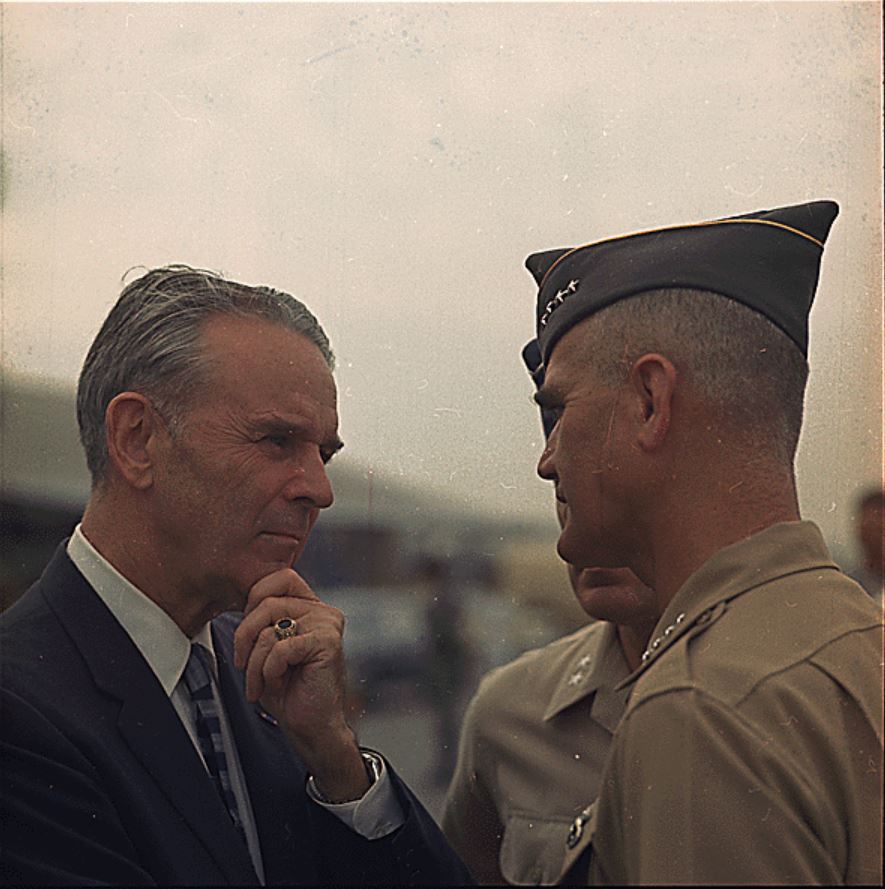
Then Saigon’s propeller-driven Skyraider fighter-bombers zoomed in and went into 15-degree dives to drop bombs and fire rockets. Six fighter-bombers were hit by antiaircraft fire, mostly from 30-caliber weapons. “They did a damn good job,” the United States briefing officer said. About an hour before the strike, Ambassador Maxwell D. Taylor conferred in Saigon with acting Premier Nguyễn Xuân Oánhh on the Quy Nhơn explosion and on the plan for retaliatory action. They agreed on a joint communiqué, which was issued at 8:15 PM.
North Vietnam asserted that its armed forces had shot down seven United States planes and had captured an American named Robert H. Shumaker. The Pentagon confirmed today that the Navy pilot missing after the air strike against North Vietnam was Lieutenant Commander Robert H. Shumaker of New Wilmington, Pennsylvania. He is a graduate of the United States Naval Academy and is 31 years old.
[Ed: Shumaker would spend eight years and one day as a prisoner of war (POW) in North Vietnam. He notably coined the term “Hanoi Hilton” for the notorious Hỏa Lò Prison. Shumaker was finally released in Operation Homecoming on February 12, 1973. He had been promoted to the rank of commander during his captivity. His fellow POWs consider him as a resister, leader, and patriot.]
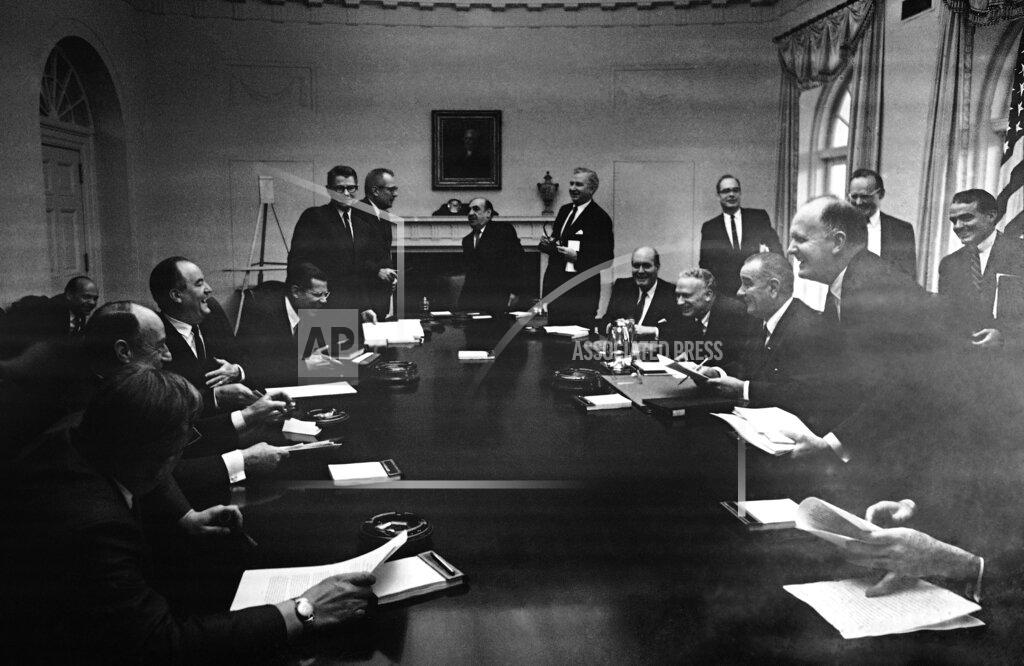
Johnson Administration officials insisted today that there remained in their own minds a distinction between outright war against North Vietnam and retaliatory air strikes of the kind they ordered three times in five days this week.
American sources said the bodies of four United States soldiers, recovered from the district town of Đức Phong, 100 miles north of Saigon, bore signs that they had been beaten to death. Communist troops overran Đức Phong yesterday. but it was recaptured by government forces today.
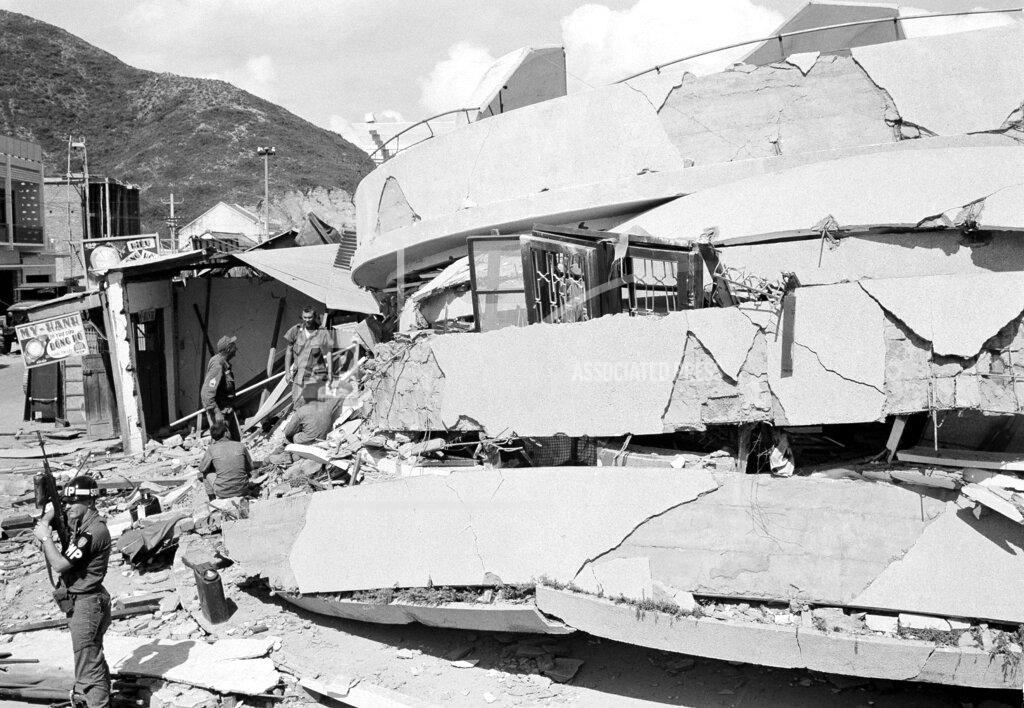
The last American known to be alive in the wreckage of the bombed United States barracks in Quy Nhơn was dragged free this morning after almost 36 hours in the rubble. Army and Marine Corps engineers were preparing to sift through the ruins for the bodies of 20 American soldiers still missing. The survivor was brought out grinning and joking with his rescuers, “Don’t tell me I need a shave,” he said. Barring the discovery, considered unlikely, that some of the buried men are still alive, the explosion will have taken 21 American lives — the largest number lost in a single incident in Vietnam.
By late yesterday, a day after Vietcong terrorists blew up the building, the body of an American and 25 wounded servicemen. had been pulled from the wreckage. A foot of one man was amputated so he could be freed. At least eight Vietnamese civilians were killed by three explosions of TNT, now believed to have been carried in suitcases by Communist guerrillas who entered the building. The bodies of two women and five children were taken from a small house next door. As exhausted rescue teams dug by hand through beams and plaster, they spoke most often of retaliation against North Vietnam. “I hope we blast the hell out of them,” a sergeant said.
Prime Minister Harold Wilson has given a personal assurance to President Johnson of strong British support for United States policy in Vietnam.
South Vietnam told the Security Council today that United States military help would “cease to be necessary” if North Vietnam halted aggression.
Cambodia’s head of state, Prince Norodom Sihanouk, has sent a message of solidarity to President Hồ Chí Minh following the latest United States air raids on North Vietnam, the North Vietnamese press agency reported today.
Pope Paul VI made an appeal for peace today that was interpreted by informed sources as indirect support for a negotiated settlement in Vietnam sponsored and guaranteed by the United Nations.
On his way back to Moscow from Hanoi, Soviet Prime Minister Alexei Kosygin stopped in Beijing for the second time in less than a month, and met with China’s Communist Party General Secretary, Mao Tse-tung (Mao Zedong), with a suggestion that the two nations help the United States to “find a way out of Vietnam” that would end the continuing war there; Mao’s response was a warning that the Soviets should not use Vietnam as a bargaining issue in negotiations with the U.S., and refused to agree.
An article prepared for a West German pictorial magazine quotes Mao Tse-tung as having said that the crisis in Vietnam will not lead to war between the United States and Communist China so long as China itself is not attacked. Mr. Mao, chairman of the Chinese Communist party, made the remark during an interview that Stern, a leading Hamburg weekly, is to publish Monday. A summary of the Mao interview, given to Edgar Snow, an American journalist, was made public today. The interview took place several weeks ago. Mr. Mao said that Communist China did not maintain any troops abroad, nor did it intend to fight as long as its own territory was not attacked.
The Prime Minister, Sir Robert Menzies, said today that there were no differences between Australia and the United States on aid commitments under the ANZUS treaty in the event of serious fighting between Australian and Indonesian forces in Malaysian Borneo. On February 3, the Australian Government announced that it would send troops to Borneo to help Malaysia against threats of attack from Indonesia. Spokesmen said at that time that Australia would expect assistance under the treaty, which allies Australia, New Zealand and the United States, if intensive fighting developed. At a news conference, Sir Robert said the Australian view of the defense-treaty commitments had been “entirely accepted by the United States.” “The fact is that Indonesia is shooting and is an aggressor,” he added. “When they give up shooting there will be plenty of room for peace.”
A Malaysian patrol ship captured 10 armed Indonesian guerrillas aboard a sampan before dawn today, off the southwestern coast of the Malayan mainland, the police reported.
Chancellor Ludwig Erhard received Israel’s diplomatic representative in West Germany today to explain his government’s decision to suspend military aid to that country. No statement was issued after Felix Shinnar, head of the Israeli mission in nearby Cologne, had left the Chancellery, nor did the government officially acknowledge that it had put a stop to further arms deliveries to Israel. The Parliamentary leadership of the governing Christian Democratic party, however, reiterated its recommendation “as before” that the government should not submit to “Egyptian blackmail.”
Bonn’s decision to suspend the aid was made under a threat by the United Arab Republic to establish diplomatic relations with Communist East Germany if the shipments continued. Premier Ali Sabry of the Cairo Government broke the news, which was confirmed by authoritative sources here. Having won its point, the Egyptian regime is moving quickly to ease relations with West Germany, strained by the pending visit to Cairo of the East German chief of state, Walter Ulbricht.
A campaign to stiffen resistance of American companies to the Arab boycott against Israel was announced by a business group in New York. The drive by the American-Israel Chamber of Commerce, according to Maxwell M. Rabb, its president. will be based mainly on information stressing that the boycott is an unwarranted interference with trade. Companies will be urged not to answer questionnaires sent out by the boycott headquarters in Damascus, Syria, Mr. Rabb said. The questionnaires, Mr. Rabb asserted, amount to blackmail, since they demand “satisfactory” answers on companies’ trade and business ties with Israel and whether officers and stockholders are Jewish.
India’s Prime Minister Lal Bahadur Shastri announced that his government was abandoning plans, announced on January 26, to have Hindi replace English as the nation’s official language. The decision followed more than two weeks of rioting in southern India and the deaths of over 100 people in clashes with police. Student mobs engaged in widespread arson, looting and destruction of government property across Madras yesterday. Two government ministers resigned tonight because they disagreed with the regime’s adoption of Hindi as India’s official language. The two government ministers resigned as Indian rioting over the language issue spread to the state of Kerala and Mysore and new student strikes threatened. “For an indefinite period”, Shastri said in a nationwide address, “I would have English an associate language… I do not wish the people of the non-Hindi areas to feel that certain doors of advancement are closed to them.” The “indefinite period” never expired, and India would later have 23 official languages, with English as the lingua franca.
Former Vice President Richard M. Nixon, at a Los Angeles press conference, said he favors President Johnson’s idea of a visit to Moscow to confer with Soviet leaders.
France launched a new attack on the dollar with the declaration that it will demand gold in settlement of foreign debts and will cash in for gold all but a small amount of its reserves.
The European Community’s program for attainment of political unity was sharply attacked tonight by Britain’s new Foreign Secretary, Michael Stewart.
All of Britain’s 23,000 general practitioners were advised tonight by their leaders in the British Medical Association to resign from the National Health Service to enforce their demand for higher pay.
The police arrested today a Sudanese student who threw a tomato at the mortorcade in which Queen Elizabeth II was touring Khartoum. The tomato sailed harmlessly past a motorcycle escort.
The Johnson Administration is reexamining its long-standing policy of extending a helping hand to all interested nations in developing the peaceful uses of atomic energy.
At least 100 Soviet fishermen are believed to have drowned in the sinking of four oceangoing trawlers in icy gales in the Bering Sea. There was one survivor.
A Spanish newspaper editor was court-martialed and sentenced to six months and a day in prison here today for “insults to the army.”
The Swiss Government announced today a plan to reduce the number of foreign workers employed in the country beginning March 1.
The Organization of African Unity’s first on-the-scene approach to the Congolese Government ended in failure today before it began.
Striking longshoremen in the Port of New York were ordered back to work by a federal judge in New York this afternoon as President Johnson’s special panel opened an inquiry. Federal Judge Sidney Sugarman signed a five-day temporary order enjoining the 24,000 New York dockers on a petition filed by the National Labor Relations Board regional office in New York. The New York Shipping Association had asked for the injunction on Tuesday, charging unfair labor practice. The 145-member employer group said that New York had a contract with the International Longshoremen’s Association and that the union was continuing to strike in support of other ports that have not yet reached agreement.
President Johnson signed without comment today a $1.6 billion supplemental appropriations bill that prompted one of the first big battles of the 1965 session of Congress. Congress sought to amend this measure to prevent the Administration from shipping surplus foods to the United Arab Republic and to delay closing Veterans Administration hospitals in an economy move. Basically, the measure provides funds for the Commodity Credit Corporation to carry on the farm price-support program for the remainder of the fiscal year. Congress agreed on the measure this week after watering down in a conference committee the various restrictions the Senate and the House had tried to write into it.
Four hundred American students picketed the Soviet Embassy in Washington today — at a distance of a block and a half. The demonstration was an orderly retaliation for a rock-throwing, ink-splattering attack on the United States Embassy in Moscow by 2,000 students two days ago.
The Senate Republican leader, Everett McKinley Dirksen of Illinois, spoke out today against a proposed constitutional amendment endorsed by President Johnson to deal with Presidential disability.
Donald C. Cook, president of the American Electric Power Company, will be nominated for Secretary of the Treasury next month.
Mrs. Lyndon B. Johnson proposed a six-point program today to make Washington a more beautiful showcase for the nation.
A judgment of $46,500 for defamation of character that Representative Adam Clayton Powell has avoided paying was increased in New York State Supreme Court yesterday to $210,000. The court awarded Mrs. Esther James $210,000 in her suit charging that Rep. Adam Clayton Powell (D-New York) illegally transferred property to relatives to keep her from collecting $46,500 from him under a previous court judgment.
The administration wants to move swiftly to carry out the California-Arizona compromise on Colorado River water, Interior Secretary Stewart L. Udall said.
Myer Feldman, one of the behind-the-scenes powers in Washington for the last four years, will leave the White House this month to enter private law practice.
President Johnson announced today that his Council of Economic Advisers had sent a questionnaire to the eight largest steel producers “requesting relevant information not otherwise available” in its study of steel prices.
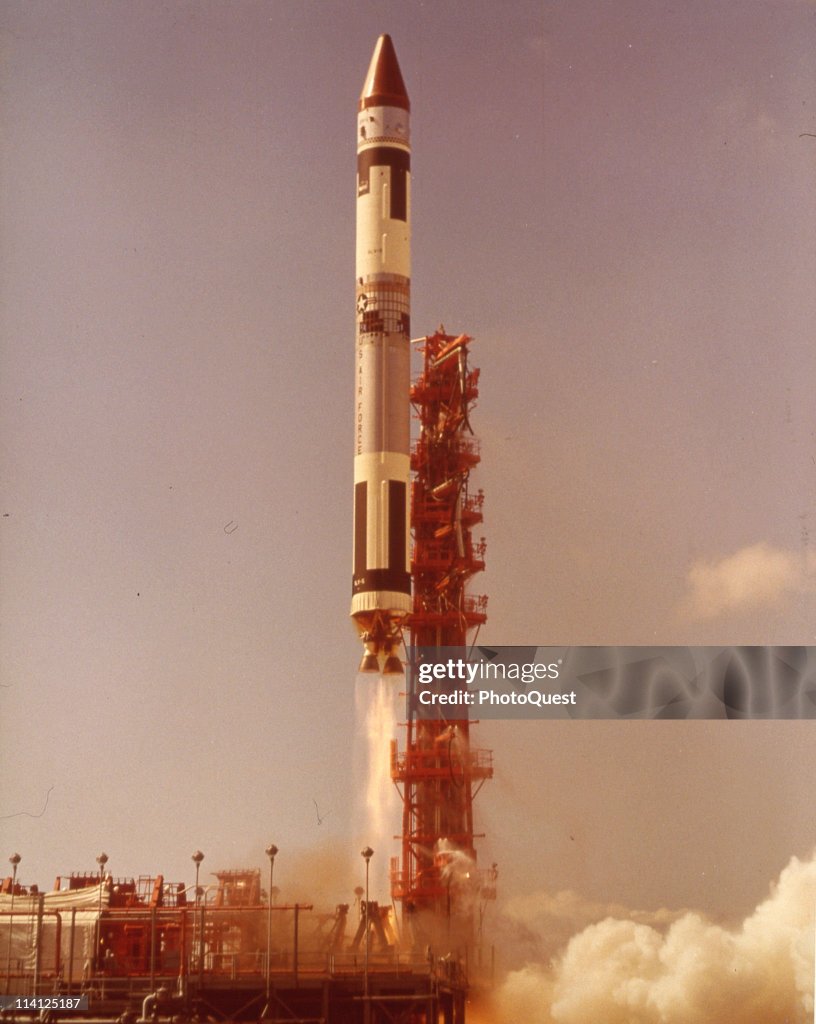
A Titan-3A rocket was put into three different orbits today in a test of maneuverability needed for possible use on trips to space stations. After executing a four-and-a-half-hour series of space acrobatics, the Titan’s third stage swung out into space to launch a 69-pound experimental communications satellite.
A storm that dumped snow at the rate of two inches an hour trapped thousands of motorists in vast traffic jams in Nebraska and Iowa cities
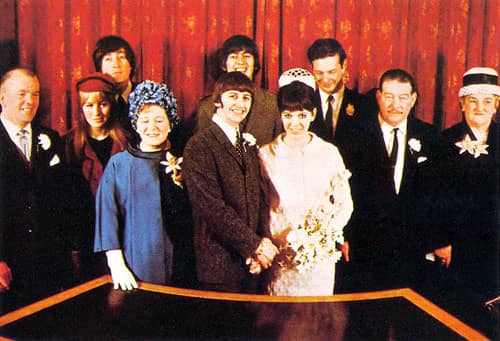
Beatle drummer Ringo Starr (25) weds British hairdresser Maureen Cox (18) at the Caxton Hall Register Office, London; they divorce in 1975.
The Pittsburgh Pirates obtained Del Crandall today in a two-for-one trade with the San Francisco Giants. The Giants got a right-handed pitcher, Bob Priddy, and a first baseman, Bob Burda, who goes from the Pirates’ Columbus farm to the Giants’ Tacoma, Washington, farm club.
Braves officials propose to pay 5 cents from each ticket sold to a fund for the purpose of bringing a new Major League team to Milwaukee. Teams, Inc., a civic group, accepts the offer, buys out the park for Opening Day, and stages Stand Up for Milwaukee Day.
Dow Jones Industrial Average: 881.88 (-11.04)
Born:
Vicki Wilson, Australian netballer (Commonwealth Games, gold medal, 1998), in Brisbane, Queensland, Australia.
Ted Gregory, NFL nose tackle (New Orleans Saints), in Queens, New York, New York.



 History Diaries