Commander-in-chief Field Marshal Mannerheim takes personal control of the fighting on the Karelian Isthmus.
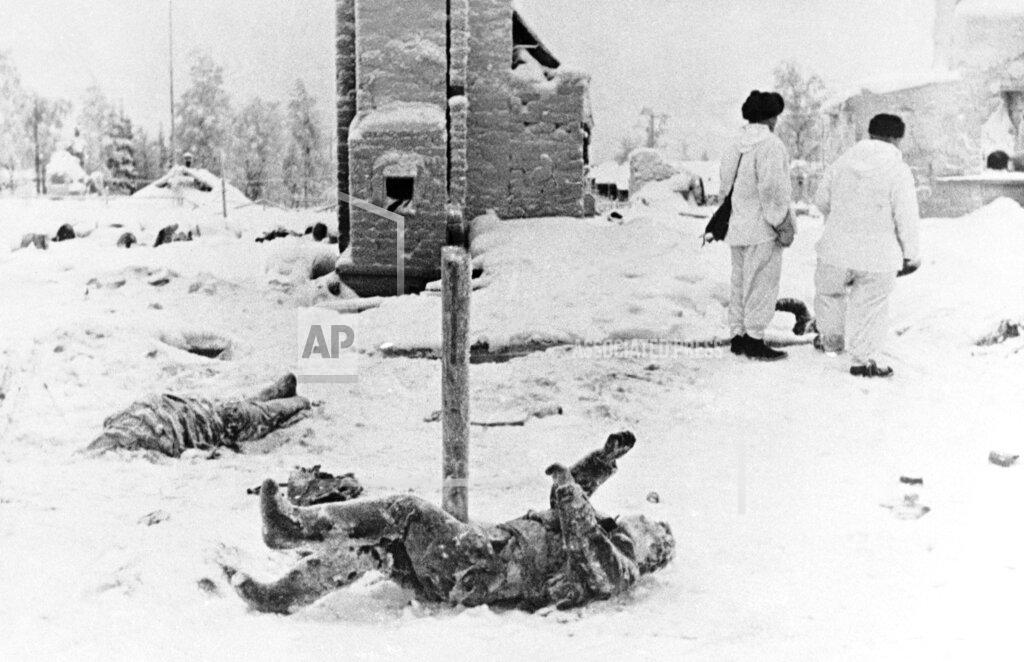
Soviet troops finally began breaking through the Mannerheim Line. A crack opens in the Mannerheim Line. The Red Army attacks again across the Karelian Isthmus from Summa to Taipale. The Mannerheim Line holds in most places but the Soviets wade across the Munasuo swamp and through several rows of barbed wire to achieve a breakthrough in the swampy but poorly fortified Merkki sector.
On the Central Isthmus, the commander of the Finnish 3rd Division says the main defensive position in Summa is under attack from three Soviet divisions and a tank brigade.
Soviet 7th Army and 13th Army make final preparations for major offensive against Mannerheim Line.
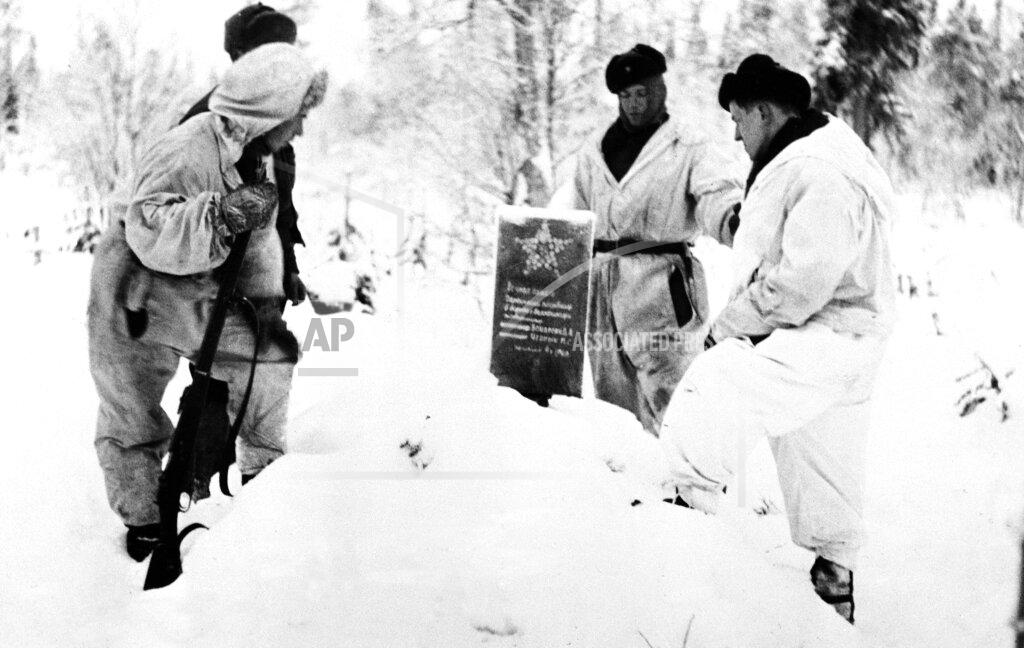
A force of Soviet ski troops begin an unsuccessful attempt to advance against the Finnish defenses which continues until February 13th. This force is wiped out.
Finnish troops successfully repulse the enemy assaults in Marjapellonmäki, but are unable to retake the Karhu stronghold.
On the Eastern Isthmus, the fighting in Taipale continues with increasing ferocity. The enemy artillery opens fire at 10:30 in the morning. At 12 minutes past noon the enemy infantry launches its assault with the support of six assault tanks. At 2.30 PM Major Saarelainen announces that the enemy assault has been successfully repulsed and four of their assault tanks destroyed.
In the Aittojoki sector of Ladoga Karelia, troops belonging to Detachment Pajari carry out a new assault on the River Kuukkausjoki. After fierce close combat the Finnish troops manage to clear the enemy from the west bank of the river by the evening.
At Viipuri, enemy bombing destroys the Dominican monastery built in 1481 and currently serving as the church for the rural congregation around Viipuri.
A train from the Finnish Centre for Nordic Aid arrives in Stockholm with 300 Finnish children.
A Danish officer, Colonel Tretow-Loof is travelling to Finland to lead the Danish volunteer battalion.
An association called “Wings for Finland” is founded in New York to procure aircraft for Finland.
The Swedish Government protests to Moscow about the sinking of the Swedish freighter Wirgo by Soviet bombers on 5 February 1940.
Sweden is doing her best to cope with one of her main problems, the Finnish frontier. Should Finland decide with the approach of Spring to shorten her front by abandoning the Petsamo sector and other districts as far as Rovaniemi the Swedish Army would have to face the Soviet troops along great stretches of her own border.
An unexpected, major-scale drive by the Swedish authorities against Communists led today to the arrest of ten persons, two of whom were stated to be foreigners, on charges of carrying on activities “harmful to the Swedish State.”
President Roosevelt condemns the USSR, saying the U.S. backs Finland.
In Mikkeli, the Finnish Defense Council meets to discuss measures for ending war with Soviet Union. Prime Minister Ryti, Foreign Minister Tanner and Commander-in-Chief of the Defence Forces, Marshall Mannerheim discuss possible terms for peace. Mannerheim urges the Government to seek peace.
A French communiqué from the Western Front reads: Rien à signaler (Nothing to report.) Although fighting on the Western Front is still confined to skirmishes between small detachments, it appears to be increasing in fierceness.
Rising above all party differences and all political discord the French Chamber of Deputies voted this evening by unanimity of the 534 members present that France is firmly united and resolved to defend her frontiers and her ideal of liberty in the world against all enemies. It was the first time since the war began that there had been a unanimous vote and the fact stands out as the most important outcome of the two-day secret session that preceded it. By its terms the motion before the House was a motion of confidence in the government. But it was much more than that. It was a motion by the representatives of the French people of defiance to Nazi Germany, of confidence in France and of reassurance to France’s allies. It was an indication to everyone in this country and abroad, friend or foe, that France was determined. to continue this war to victory and that no enemies, acting from without or within, would change that decision.
Count Ciano, Italian Foreign Minister, received United States Ambassador William Phillips this morning, when the envoy formally communicated to him President Roosevelt’s decision concerning Under-Secretary of State Sumner Welles’s trip to Italy and the belligerent nations.
Germany and the Soviet Union agreed to a new trade treaty to provide 660 million Reichmarks worth of raw materials within 18 months to be paid for within 27 months by German supplies. Among the items that the Soviet Union agreed to deliver were 1 million tons of grain, 900 tons of fuel, 91,000 tons of cotton, 100,000 tons of chrome arrant, and 500,000 tons of phosphate. The Germans agreed to turn over the partially completed battle cruiser Lützow, naval artillery, shipbuilding material, samples of war planes, machines and industrial equipment.
First mass deportation of Poles from Soviet-occupied territories to prison and labour camps in Siberia/northern Russia. On the night of 9/10 February 1940, 79 years ago, 140 000 Polish civilians were deported into Russia. The forced deportation to “Nieludzka ziemia” (The Inhuman Land) just began. Up to 1.5 million Polish citizens, including over 200,000 Polish prisoners of war, were deported by the NKVD from Soviet-occupied Poland to the Gulags. They were deported in four waves that occurred from February 10th 1940 through mid-June 1941. Most died of starvation and disease under forced labour.
Stepan Bandera becomes the leader of his group of the Ukrainian National Movement (OUN-B) in Krakow. Their goal is the creation of an independent Ukrainian state.
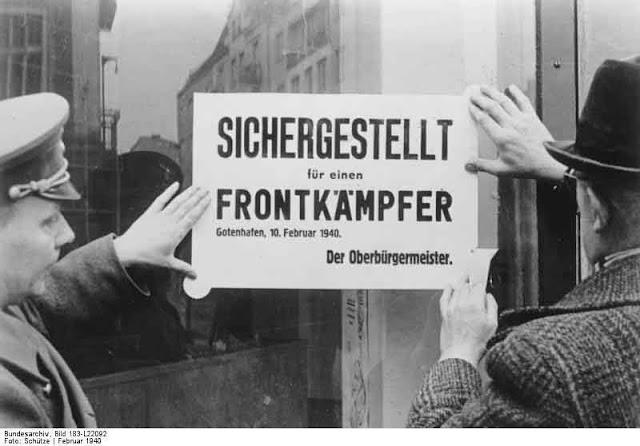
Czech Jews were ordered to close their shops and cease economic activity. Nazi authorities order the closing of all Jewish-owned textile, clothing and leather goods stores and warn the Baron von Neurath, the German Reich Protector of Bohemia-Moravia, may order all other Jewish business to shut. Neurath has also ordered the sale of all jewellry, gold, platinum, silver and works of art owned by Jews. The measures are seen as part of a plan to eliminate Jews from the economic life of former Czechoslovakia.
Jews from Stettin (now Szczecin, Poland) and Stralsund in Pommern, Germany were deported to ghettos in Lublin, Poland.
The first magnetic mine is swept, by the HMS Salve and HMS Servitor, off a sunken lightship.
Luftwaffe pilot Adolf Galland is transferred from ground support aircraft to fighters with JG 27.
The Dutch government announces the decision to build three battlecruisers, with technical assistance from Italy, for the defense of the Netherlands East Indies. The ships are never completed.
Six German merchant ships leave Vigo, Spain to run the British blockade. Allied warships intercept four, one runs aground off northern Norway and one, the passenger liner SS Wangoni, reaches Kiel on 1 March.
Two wooden British ships HMS Salve and HMS Servitor successfully swept for magnetic mines on the sea bed, dragging a long charged electrical cable which detonated the mines in their wake.
The Royal Navy heavy cruiser HMS Suffolk is involved in a collision with steamer Masirah (6578grt) off Little Cumbrae and was badly damaged abreast B-turret with three men killed, five missing and eight injured, three of them seriously. The steamer was seriously damaged and anchored in Rothesay Bay. HMS Suffolk arrived at Govan and began repairs on the 12th which were not completed until 10 April 1940.
The British trawler Theresa Boyle was bombed and sunk in the North Sea 115 nautical miles (213 km) east by north of Aberdeen by Heinkel He-111 aircraft of KG26, Luftwaffe. All ten crew were rescued by the Royal Navy armed trawlers HMT Almandine and HMT Brabant.
At 1703 hours, the German submarine U-48 stopped Dutch steamer Burgerdijk, inspected the cargo, and then sank the ship 40 miles from Land’s End in southwestern England ( 49° 45’N, 6° 30’W) at 1845 hours. The master came with the papers on board and it was discovered that he had orders to go to The Downs, so the crew and passengers had to abandon ship. The ship’s crew, floating in lifeboats, were rescued by the Dutch steamer Edam 12 hours later. The 6,853-ton Burgerdijk was carrying wheat and maize from New York to Rotterdam.
At 2059 hours, the German submarine U-37 torpedoed and sank Norwegian steamer Silja, transporting salt from Gibraltar to Bergen, southwest of Ireland (51° 21’N, 11° 32’W). The ship was struck aft and broke in two. The stern sank immediately and the foreship followed after a few minutes. All 16 men aboard were killed. The 1,259-ton Silja was carrying salt to Bergen, Norway.
The British cargo ship Branksea sank in the North Sea off Montrose, Angus, United Kingdom. At the time she was being towed by the tug Prizeman to Scapa Flow to be used as a blockship. The mate of the tug was lost attempting to free the tow.
The British cargo ship Sea Rambler foundered in the Atlantic Ocean north west of the Azores, Portugal (47°16′N 41°18′W). The 25 crew members were rescued in difficult conditions by the Norwegian ships Mosdale and Kaia Knudsen.
The French fishing boat Charles-Marguerite struck rocks off Île d’Yeu, Vendée and was wrecked. All five crew members were lost.
The U.S. freighter West Chatala was detained for several hours at Gibraltar by British authorities but was released to continue her voyage.
Convoy OA.89 departs Southend.
Convoy OB.89 departs Liverpool.
Convoy SL.20 departs Freetown for Liverpool.
The War at Sea, Saturday, 10 February 1940 (naval-history.net)
Heavy cruiser SUFFOLK was in a collision with steamer MASIRAH (6578grt) off Little Cumbrae and was badly damaged abreast B-turret with three men killed, five missing and eight injured, three of them seriously. The steamer was seriously damaged and anchored in Rothesay Bay. SUFFOLK arrived at Govan and began repairs on the 12th which were not completed until 10 April.
Destroyer HAVELOCK (Captain E B K Stevens DSC) was completed, and after working up at Portland, joined the 9th Destroyer Flotilla.
Armed merchant cruisers WOLFE and FORFAR departed the Clyde for Northern Patrol, and armed merchant cruiser LETITIA arrived back.
Submarines SEAL and TRIAD departed Rosyth on a special mission to investigate the courses of German iron ore ships off the Norwegian coast.
Polish submarine ORP WILK departed Rosyth on patrol.
Convoy SA.29 of two steamers departed Southampton, escorted by sloops FOXGLOVE and ROSEMARY, and arrived at Brest on the 12th.
Convoy FN.91 departed Southend, escorted by destroyers WESTMINSTER and JAVELIN and sloop LONDONDERRY, and arrived in the Tyne on the 11th.
Convoy FS.92 departed the Tyne, escorted by destroyers WHITLEY and JUPITER, and sloop EGRET. WHITLEY and EGRET attacked a submarine contact NNW of St Abbs Head, in 56-01. 5N, 2-14. 5W, and the convoy arrived at Southend on the 12th.
Convoy MT.7 departed Methil, and arrived in the Tyne the next day. Convoy MT.8 was cancelled.
Destroyer WINDSOR made an attack on a submarine contact south of the Scilly Isles in 49 16N, 6 19W.
Armed boarding vessel NORTHERN ISLES (655grt) attacked U-53 north of North Rona in 59-58N, 5-43W.
Destroyers COSSACK, SIKH, and MOHAWK departed Scapa Flow to escort convoy HN.10B from the Norwegian coast.
Destroyer GURKHA was involved in the escort of tanker ATHELKNIGHT (8940grt).
Destroyers IVANHOE and GRIFFIN arrived at Aberdeen. GRIFFIN departed again that day to relieve destroyer BOREAS on patrol off the northeast coast, and BOREAS reached Aberdeen on the 11th.
Destroyer INGLEFIELD departed the Clyde for Rosyth.
Steamer HOUSATONIC (5559grt), escorted by destroyers DIANA and DARING, departed Muckle Flugga for Rosyth. Tanker BRITISH GOVERNOR (6840grt) joined them on passage and all four ships reached Rosyth on the 11th.
Minelayer PRINCESS VICTORIA with destroyers ESK and EXPRESS departed Rosyth to lay 60 mines in minefield LD 2 during the night of the 10th/11th.
Motor torpedo boats MTB.22, MTB.24, MTB.25 departed the Nore for Blyth to act under the command of Commander in Chief, Rosyth.
Auxiliary minesweeper SALVO swept the first magnetic mine with an LL sweep off Sunk Light Vessel.
Convoy OA.89 departed Southend escorted by sloop FOWEY. Destroyer WITCH joined the escort on the 11th, both warships detached on the 12th, and the convoy dispersed on the 13th.
Blockship BRANKSEA (214grt) sank off Girdle Ness at 0500 for no apparent reason, and the mate of the tug was lost attempting to free the tow.
U-37 sank Norwegian steamer SILJA (1259grt) in 51 21N, 11 32W with all hands.
U-48 sank Dutch steamer BURGERDIJK (6853grt) in 49 45N, 06 30W, but her entire crew was rescued by Dutch steamer EDAM (8871grt).
Trawler THERESA BOYLE (224grt) was bombed and sunk by He111’s of German KG26 (X Air Corps) 115 miles east by north of Aberdeen, and her survivors rescued by minesweeping trawlers BRABANT (240grt) and ALMANDINE (295grt) after they were located by British aircraft.
Dutch steamer GALLIA (9974grt) was damaged on a mine off the Downs.
Destroyers HASTY and HERO departed Gibraltar for England, screened heavy cruiser EXETER, after joining her on the 13th in 43-00N, 17-40W, and searched for German blockade runners before arriving at Plymouth and Portsmouth, respectively, on the 15th. Both destroyers joined the Home Fleet in mid-March after refitting.
U-26, U-37, and U-48 were deployed west of the English Channel to intercept warships ARK ROYAL, RENOWN, and EXETER returning to England from the South Atlantic. This deployment continued until the 14th, without any contact being made.
Destroyer DECOY departed Gibraltar for Freetown.
Convoy SL.20 departed Freetown on the 10th escorted by armed merchant cruiser ESPERANCE BAY until the 25th, and SLF.20 departed Freetown on the 14th, escorted by armed merchant cruiser CHESHIRE. The two convoys merged on the 25th and were joined by destroyers VANQUISHER, VANSITTART, VERSATILE and VETERAN until the 28th, when they all arrived in the UK.
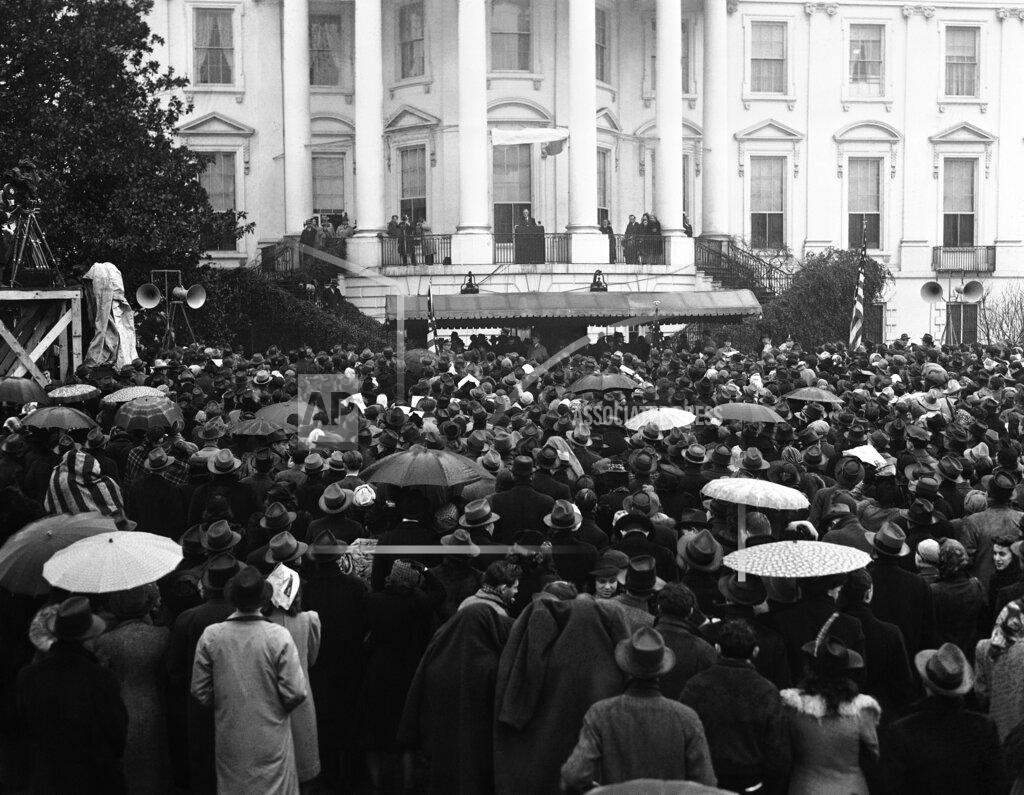
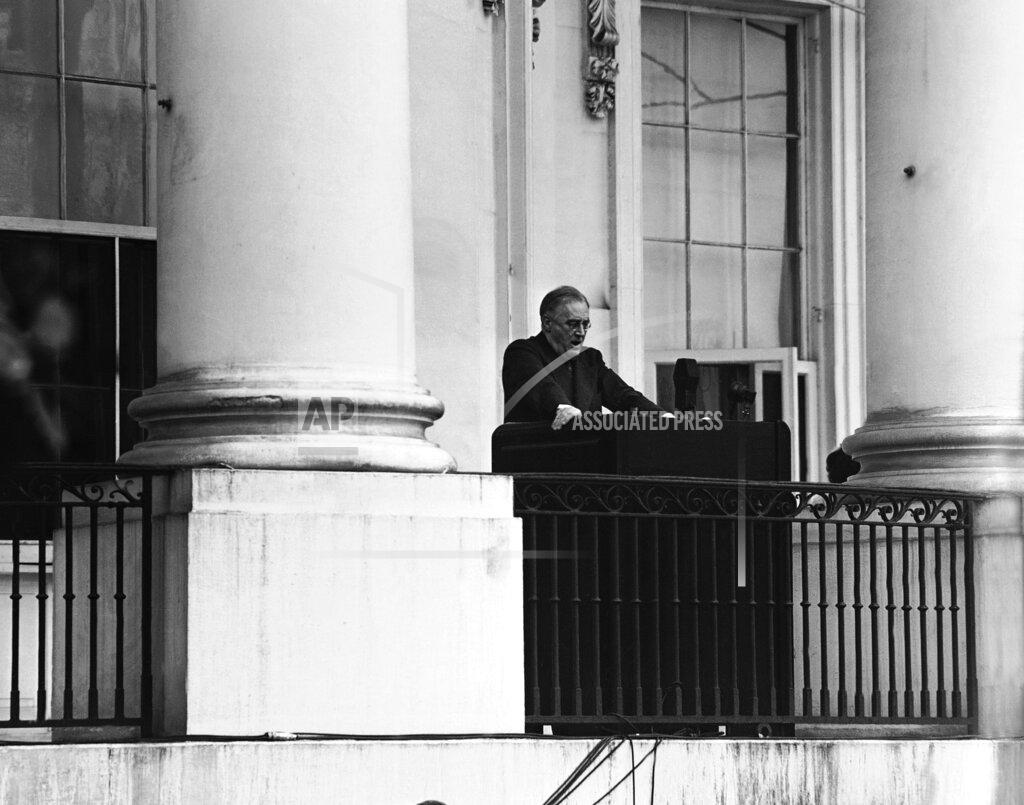
From the south portico of the White House, U.S. President Franklin D. Roosevelt confronted a gathering of 4,500 members of the American Youth Congress, which had recently passed a resolution declaring that granting aid to Finland was an “attempt to force America into the imperialistic war” against the Soviet Union. Roosevelt told them that it was “a grand thing” for youth to be interested enough in government to come to Washington, but offered “some words of warning or perhaps I should say of suggestion … do not as a group pass resolutions on subjects which you have not thought through and on which you cannot possibly have complete knowledge.” The president continued, “That American sympathy is ninety-eight per cent with the Finns in their effort to stave off invasion of their own soil is by now axiomatic. That America wants to help them by lending or giving money to them to save their own lives is also axiomatic today. That the Soviet Union would, because of this, declare war on the United States is about the silliest thought that I have ever heard advanced in the fifty-eight years of my life. That we are going to war ourselves with the Soviet Union is an equally silly thought.” The organization responded by booing the president, but the event was politically useful to Roosevelt in that it served as a rejoinder to accusations from his opponents that he was sympathetic to communism.
The youth contingent stood in a drenching rain as the President spoke from the south portico of the White House. He reviewed a wide range of questions, bringing up once more the question of private and governmental debts in 1932 and 1939, discussing unemployment and chiding some local branches of the Youth Congress for voting opposition to a loan to Finland. But his attack on Soviet Russia as a dictatorship allying itself with another dictatorship to invade a small neighbor was the high point of his address. Mr. Roosevelt contended that “nobody with any pretense at common sense” believes that Finland was any threat to the integrity or safety of Russia.
John L. Lewis, president of the Congress of Industrial Organizations, replied to the President at an afternoon meeting of the Youth Congress. He said that the common people of this country were in fear that “the politicians and statesmen” would drag this country into war, and that any statesman who involved this country in war either in Europe or the Pacific would be held “strictly accountable” by the American people.
President Roosevelt reiterated today the statement, first made at a press conference at Hyde Park last Monday and since seriously disputed, that the total debt of the United States — public and private combined — was less in 1939 than 1932. He put the reduction at “around two billion dollars.”
Thomas E. Dewey, Republican Presidential aspirant, asserted tonight that President Roosevelt in a statement of government debt “made an error of twenty-six and a half billion dollars, the greatest financial error in history.”
William Dudley Pelley, anti-Semitic Silver Shirt leader, who has been before the Dies Committee most of this week, was arrested as the committee dismissed him this afternoon on a charge of violating the good behavior proviso involved in a suspended one to two-year jail sentence imposed on him in North Carolina several years ago in a stock fraud case. He will be arraigned here Monday and said he would fight extradition. Otherwise he had no comment. It is understood the North Carolina officers who brought the warrant here will ask for a $10,000 bail bond. They informed committee counsel that Mr. Pelley’s general conduct and subversive agitational activities in recent years had been the basis of the charge that he had violated the conditions of his sentence.
Mr. Pelley was seized after Representative Starnes, Democrat of Alabama, acting chairman, had dismissed the witness, charging that he had admitted the un-American activities of which the committee accused him. “You have fulsomely praised Hitler and his dictatorial policies,” Mr. Starnes said. “You have defended and advocated vigilantism as American despite the fact that vigilantism on any significant scale is un-American; you have advocated the segregation of certain of your fellow-citizens, and the menace you speak of in defending yourself is largely the creature of your own imagination. The committee is through with you.” Accompanied by his attorney, a detective and the North Carolina officers, Mr. Pelley was taken to police headquarters, where it was said he probably would be held until his court appearance.
Britain and France, reiterating their determination to crush forever German threats to their concept of world security, issued a blunt new declaration against “patched up” peace today as they watched with interest President Roosevelt’s latest diplomatic moves in the European situation.
The current consultations with European neutrals are for the purpose of determining an equitable economic basis for peace after the war rather than of seeking an immediate cessation of hostilities in Europe, Secretary of State Cordell Hull said today.
A constantly rising trend in Russian imports from the United States despite virtual closing of the Atlantic shipping lanes was indicated today in an analysis of authoritative trade figures.
A proposal that the CIO and AFL meet March 15 and take a vote on the question of merging came today from John L. Lewis. Immediate reunion of the American Federation of Labor and the Congress of Industrial Organizations, with the terms of the “peace” to be decided upon later, was proposed today by John L. Lewis, chairman of the C.I.O., as his answer to President Roosevelt’s statement yesterday that he had refused to reopen peace negotiations. Mr. Lewis made his proposal in an extemporaneous speech before the American Youth Congress. About a year ago Mr. Lewis, in response to pleas for peace in labor’s ranks, suggested that the C.I.O., the A.F.L. and the independent railroad brotherhoods all unite immediately in one big confederation and discuss issues later. A.F.L. leaders at that time ridiculed his suggestion as utterly impractical and as smacking of communism. Mr. Lewis made his latest offer in his speech to the Youth Congress an hour after President Roosevelt had gently chided members of that organization for adopting resolutions on matters of which they had little knowledge. Mr. Lewis admitted that he had refused to reopen formal peace negotiations with the A.F.L. because they would do no good, but said that if the President and William Green were sincere they would consider his latest formula for settling the dispute “in one day.”
William Green, president of the American Federation of Labor, said in Miami that first Mr. Lewis. should submit his proposal to the A.F.L.-C.I.O negotiations committee. Then federation members of that committee would report the proposal to the A.F.L. for consideration. He intimated he was skeptical of Mr. Lewis’s sincerity.
Declaring that the American people were “tired of life on a flying trapeze” and “tired of bureaucrats, boon-dogglers, barnacles, brain trusts, ballyhoo and bankruptcy,” Michigan Senator Arthur H. Vandenberg presented tonight in St. Paul, Minnesota a specific program for recovery, including definite suggestions for solution of the farm problem.
District Attorney Thomas E. Dewey continues to lead all other Republicans as the choice for his party’s candidate for President, according to surveys by the American Institute of Public Opinion, of which Dr. George Gallup is director.
Postmaster General James A. Farley today authorized the announcement of his candidacy for the Democratic Presidential nomination. His name will be entered in the Massachusetts State primary to be held April 30.
New York Mayor LaGuardia said today he wanted to “make it absolutely clear I am not a candidate” for president of the United States in 1940.
A powerful tornado causes major damage and a number of deaths in Albany, Georgia. A devastating tornado swept through thes Southwest Georgia Winter resort and industrial city shortly before dawn today, leaving at least twenty-three dead, nearly 500 injured, and damage estimated between $5,000,000 and $10,000,000.
In a proclamation issued today, President Roosevelt declared it to be the duty of every person over 18 years of age to answer questions in the 1940 census and warned that any person refusing to do so was subject to a penalty.
U.S. Coast Guard cutters Bibb and Duane make first transmissions as floating weather stations.
The biographical film “Young Tom Edison” starring Mickey Rooney had a special preview in Port Huron, Michigan, the place where Thomas Edison spent his childhood.
“Tom and Jerry” made their debut in the short film “Puss Gets the Boot,” under their original names of Jasper and Jinx.
The U.S. Women’s Figure Skating championship is won by Joan Tozzer.
U.S. Navy light cruiser USS Helena (CL-50) departs Santos, Brazil, winding up her shakedown cruise.
The Marquess of Zetland, Secretary of State for India, appealed today to the leaders of the Indian National Congress to escape from the tyranny of phrases and descend from idealism to realism in an effort to settle the controversy over India’s constitutional status.
Shangtung Operation: Japanese 21st Infantry Division, 32nd Infantry Division, and 5th Independent Mixed Brigade continue sweep through Shangtung peninsula.
Fighting continues southeast, north and northeast of Pinyang, where the Japanese apparently are making quick attacks against Chinese concentration points. Only fragmentary reports of the Chinese reverses in Kwangsi Province are being revealed in Chingking.
Japanese Army headquarters at Nanning in Southwestern China charged today that Chinese troops were trying to “destroy peace and order” in Japanese-occupied territory and hamper the establishment by Japan of a new central government in Japanese-occupied areas, a Domei news agency dispatch said. The army communiqué, Domei reported, said Chinese regular troops and guerrillas were cooperating in destroying communications. In their offensive in the Nanning area, the communiqué was quoted as saying, the Japanese had disorganized the commands of three Chinese generals, who now were unable to find their units. The generals were trying to reorganize, it was added.
A new longterm pact in which Japan and the United States would agree not to interfere with each other’s sphere of activity was proposed today by Baron Yoshiro Sakatani in the House of Peers. Between the lines of his speech could be read advocacy of peace with China on terms that would attract even Chungking’s supporters.
To mark the 2,600th anniversary of the traditional founding date of Japan, Pope Pius XII sent Emperor Hirohito a telegram that said in part: “We ask God that may you cease hostilities and that through Divine aid may the Japanese people and their sovereigns attain greater glory and happy years.” Japan celebrated today the 2,600th anniversary of the founding of the empire and establishment of the world’s oldest dynasty. Emperor Hirohito, 124th of the line, was the heart of deeply religious and fervently patriotic observances in which 70,000,000 Japanese turned their faces toward the palace in Tokyo.
The decommissioned U.S. Navy river gunboat USS Monocacy (PG-20) is scuttled off China.
Dow Jones Industrial Average: 148.84 (-0.1)
Born:
Cornell Green, NFL cornerback and safety (NFL Champions, Super Bowl VI-Cowboys, 1971; Pro Bowl, 1965-1967, 1971, 1972; Dallas Cowboys), in Oklahoma City, Oklahoma.
Mary Rand, English field athlete (Olympic women’s long jump gold 6.76m World Record, 1964), in Wells, Somerset, England, United Kingdom.
Jimmy Merchant, American rock vocalist (Frankie Lymon & Teenagers – “Why Do Fools Fall In Love”), in New York, New York.
Kenny Rankin, American singer-songwriter (“Peaceful”), in Washington Heights, New York, New York (d. 2009).
Naval Construction:
The Royal Navy aircraft carrier HMS Hermes completed a period of refitting in Britain.
The Royal Navy minelayer HMS M 4 (M 68) is laid down by George Philip & Sons Ltd. (Dartmouth, U.K.).
The Royal Australian Navy minesweeper-corvette HMAS Bathurst (J 158), lead ship of her class of 60, is laid down by the Cockatoo Docks and Engineering Co. Ltd. (Sydney, New South Wales, Australia).
The Royal Australian Navy Tribal-class destroyer HMAS Warramunga (I 44) is laid down by the Cockatoo Docks and Engineering Co. Ltd. (Sydney, New South Wales, Australia).
The Royal Australian Navy sloop HMAS Warrego (L 73; later U 73) is launched by the Cockatoo Docks and Engineering Co. Ltd. (Sydney, New South Wales, Australia).
The Royal Navy Havant-class destroyer HMS Havelock (H 88) is commissioned. Her first commanding officer is Captain Eric Barry Kenvyn Stevens, DSC, RN. She had originally been ordered by the Brazilian Navy with the name Jutai in the late 1930s, but was requisitioned by the Royal Navy after the beginning of the Second World War in September 1939 and later renamed.
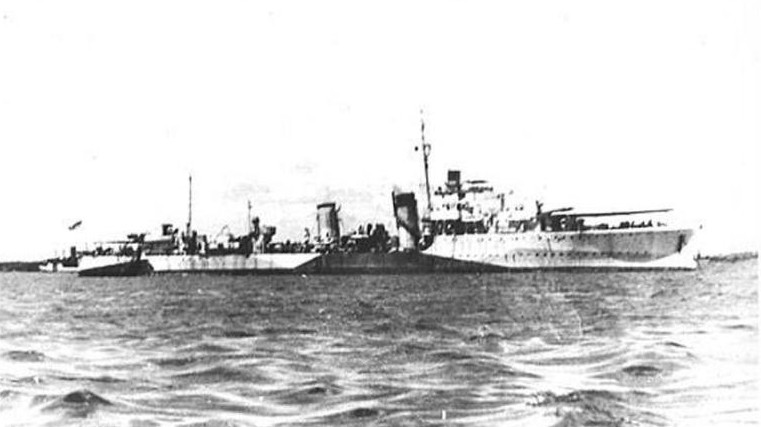
Havelock participated in the Norwegian Campaign in May 1940 and was assigned to convoy escort and anti-submarine patrols with the Western Approaches Command afterwards. The ship was briefly assigned to Force H in 1941, but her anti-aircraft armament was deemed too weak and she rejoined Western Approaches Command. Havelock became flotilla leader of Escort Group B-5 of the Mid-Ocean Escort Force in early 1942 and continued to escort convoys in the North Atlantic for the next two years. The ship was converted to an escort destroyer and sank one submarine during the war. After the end of the war, she escorted the ships carrying the Norwegian government in exile back to Norway and served as a target ship through mid-1946. Havelock was scrapped beginning in late 1946.
Battle Honours: NORWAY 1940 – ATLANTIC 1940-45 – BISCAY 1943 – ENGLISH CHANNEL 1944 – NORMANDY 1944
 History Diaries