The Mannerheim Line starts to crack in the Summa sector. Around midday, the Soviet infantry launches a tank-supported assault in the Finnish 4th Division’s positions in Marjapellonmäki. Soviet troops take a bunker near the village of Karhula, north of Marjapellonmäki (Hill 38). Finns are unable to retake the position despite bringing up reserves.
In Summa, a fresh battalion is sent in during the course of the evening to relieve the battalion fighting in the Lähde sector.
The Soviet main ground offensive against the Mannerheim Line is confirmed for 11 February.
Finnish troops surround a Red Army regiment in Vorojenkivi, to the east of the great Kitelä ‘motti’ in Ladoga Karelia, establishing what was later to become known as the ‘regimental motti’ to the north of Lake Ladoga. The name came naturally from the fact that an entire Russian regiment (JR 203) was trapped there.
The Finnish attempt to immediately take the ‘motti’ grinds to a halt in face of the Soviet tanks trapped inside. A bloody struggle ensues.
In Helsinki, graduation as a qualified nurse is to be made easier and more courses provided for trainee nurses in the Helsinki area.
The Finnish armed forces payment system is to be overhauled by presidential decree. Every soldier is to receive a monthly salary, ranging from 500 markkaa for a private soldier up to 2,500 markkaa for a general. This basic salary will be further supplemented by 150 markkaa for the first child in the family and an additional 100 markkaa for each subsequent child. The government is also to decide on the payment of maintenance benefits to the wife, child or disabled and dependent parents or siblings of a man called up to serve in the armed forces.
Several hundred British volunteers have arrived in Finland to fight against the Russians and have swelled the number of foreigners in the Finnish ranks to about 8,000, it was reported reliably tonight.
More than two out of every hundred Swedish doctors are now in Finland, and the Swedish Medical Association’s collection for Finland has already brought in over 100,000 krona.
A collection organized by a Lutheran priest in Gothenburg has raised 240,000 krona to buy a fighter aircraft for Finland.
10,000 Danes have volunteered to go and work in Finland.
A credit agreement has been signed in London to facilitate Finland’s purchase of war material from the United Kingdom.
In Germany, OKH Chief of Staff Halder tires of Erich von Manstein’s criticism of Case Yellow, his invasion plan for France, Belgium and Holland. Halder promotes Manstein to command an army corps garrisoning Poland, well away from planning forthcoming campaigns. Although this promotion is well deserved it seems that the German Army High Command hopes to shift Manstein to a less influential post than his present appointment as Chief of Staff to Rundstedt at Army Group A. He has had considerable influence in policy making and has been the leading figure arguing for a radical change in the plans for the attack on the west. This will be a study in unintended consequences for Halder. As part of his promotion, Manstein will be invited to dine with Hitler. It will be a fateful meeting for Manstein, and for France.
There are patrol clashes and artillery duels in the area between the Moselle and the Saar on the Western Front. Day by day the Western Front is becoming more active. Following the resumption of intensive infantry patrolling after the frost, the artillery has come into action again, and today there were a number of gunners’ duels, with many shells being exchanged.
The Turkish Government dismisses 80 German technical advisers engaged in work in a munitions factory, a naval dockyard and in coalfields.
The French Chamber of Deputies met for a secret session. Prime Minister Édouard Daladier had resisted holding the meeting behind closed doors out of concern that its secrecy would have a negative effect on national morale.
Winston Churchill made a radio broadcast to warn Bulgaria against joining the Tripartite Pact.
A bill in the Irish Republic allowing for the detention of IRA members without trial becomes law. A Supreme Court decision today gave Premier Eamon de Valera power to suppress the Irish Republican Army under his “Offenses Against the State” Bill.
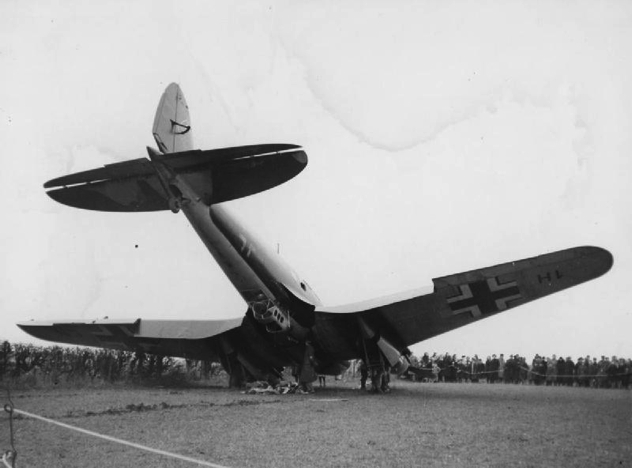
Luftwaffe aircraft attacked shipping off the East Coast. RAF fighters intercept Luftwaffe bombers along the coast. A Heinkel He 111 is shot down at North Berwick near the Firth of Forth, and there are other raids as far north as Peterhead. Two enemy aircraft were reported destroyed, 2 Royal Naval trawlers were sunk, 3 merchant ships damaged. Two more German aircraft were reported severely damaged.
German destroyers Z3, Z4, and Z16 deployed 110 mines in the Shipwash, a busy sea lane in the North Sea east of Harwich, England.
The Royal Naval trawler HMT Fort Royal was bombed and sunk in the North Sea northeast of Aberdeen by Heinkel He 111 aircraft of KG26, Luftwaffe with the loss of seven of her crew. The survivors were rescued by HMT Ohm and HMT Thomas Altoft (both Royal Navy).
The Royal Naval Castle-class trawler HMT Robert Bowen was bombed and sunk in the North Sea 20 nautical miles (37 km) north east of Aberdeen by Luftwaffe aircraft with the loss of all 14 of her crew.
The British cargo ship Britannic in convoy HG.53 was bombed and sunk in the Atlantic Ocean (35°42′N 14°38′W) by Focke-Wulf Fw 200 Condor aircraft of the Luftwaffe with the loss of one of her 37 crew.
At 0105, the British steam merchant Chagres (Master Hugh Roberts), carrying 1,500 tons of Cameroonian bananas, hit a mine deployed by German submarine U-30 on 6 Jan 1940 and sank 5.5 miles 270° from the Bar Lightvessel, Liverpool (53° 33’N, 3° 25’W). The 5,406-ton Chagres sank 10 miles from her destination (Garston), killing two. The remaining 62 men were rescued by the Royal Navy anti-submarine trawler HMT Loch Montreith.
The British trawler Agnes Allen struck a mine and sank in the Irish Sea. She was on a voyage from Holyhead, Anglesey to Workington, Cumberland. Six crew were killed.
The French motorboat Chaumoise foundered in the Bay of Biscay off Les Sables d’Olonne, Vendée. Her crewmen were rescued.
The U.S. freighter Scottsburg, detained at Gibraltar by British authorities the previous day, was released.
Convoy OB.88 departs Liverpool.
Convoy HG.18 departs Gibraltar for Liverpool.
The War at Sea, Friday, 9 February 1940 (naval-history.net)
Battleship WARSPITE and battlecruiser HOOD with destroyers FAULKNOR, FAME, FOXHOUND, FORTUNE, FURY, FORESIGHT, FIREDRAKE, and FORESTER departed the Clyde at 1130 on patrol. FAME and FORESTER refueled at Sullom Voe on the 11th and returned to the force, FAULKNOR, FOXHOUND, and FORTUNE refueled on the 13th, FURY, FORESIGHT, and FIREDRAKE on the 14th, and FORESTER again on the 15th.
Destroyers NUBIAN and GURKHA arrived at Scapa Flow from the Clyde.
Destroyers KASHMIR, KANDAHAR, and KHARTOUM departed Rosyth for the Clyde.
Armed merchant cruiser CIRCASSIA escorting Norwegian steamer SOLFERINO (2580grt) requested a destroyer, and GURKHA was detailed to take over escort.
Heavy cruiser DEVONSHIRE brought in Norwegian steamer TRAFALGAR (5542grt) for investigation. She was later boarded and released.
Armed merchant cruisers PATROCLUS and AURANIA departed the Clyde for Northern Patrol.
Light cruiser GLASGOW departed Rosyth to relieve sister ship SOUTHAMPTON on patrol off North Cape in Operation WR. SOUTHAMPTON was to proceed to Scapa Flow for a week and then relieve another sister ship NEWCASTLE, also on Northern Patrol.
Destroyers KIMBERLEY and KIPLING departed Scapa Flow.
Destroyers GALLANT and BOREAS were patrolling in the vicinity of Rattray Head.
Destroyer TARTAR was patrolling between Muckle Flugga and a position 20 miles north.
The second half of Minelaying operation LD 1 was conducted when 42 mines were laid the night of the 9th/10th by minelayer PRINCESS VICTORIA and destroyers ESK and EXPRESS.
Destroyer GRAFTON of the 1st Destroyer Flotilla departed Harwich for Humber where she arrived later that day. She was attached to the Humber for patrol operations.
Convoy AXS 12 departed Southampton escorted by sloop ABERDEEN, and arrived at Brest on the 11th.
Convoy ON.11 with seven British, thirteen Norwegian, one Swedish, two Danish, three Finnish and one Estonian ship departed Methil escorted by destroyers ECHO, ESCAPADE, ECLIPSE, and ENCOUNTER. Three ships were detached and did not proceed to Norway, including blockship BRANKSEA (214grt) bound for for Scapa Flow in tow of tug PRIZEMAN. Submarine NARWHAL sailed with the convoy, but lost touch during the night of the 10th/11th February, and was ordered to patrol and then return to Rosyth. Anti-aircraft cruiser CAIRO departed the Humber on the 10th and joined the convoy in support on the 11th. ON.11 arrived safely at Bergen on the 12th.
Convoy FN.89 departed Southend, escorted by sloops FLEETWOOD, BITTERN, and HASTINGS, and arrived at Methil on the 11th.
Convoy FN.90 departed Southend, escorted by destroyers WOOLSTON, JANUS, and sloop GRIMSBY, and arrived in the Tyne on the 10th.
Convoy MT.6 departed Methil, escorted by destroyers WHITLEY and JUPITER and sloop EGRET, and arrived in the Tyne the next day.
Destroyer GRIFFIN departed Aberdeen and joined destroyers BOREAS, IVANHOE, and ESCAPADE sweeping for a submarine reported one mile SSE of Buchan Ness in 57-34N, 1-42W. During the sweep, GRIFFIN dropped depth charges on a contact four miles NNE of Buchan Ness in 57-34N, 1-42W.
Convoy OB.89 departed Liverpool escorted by destroyers WINCHELSEA and VENETIA from the 9th to 12th, when they detached to join HX.18 and HXF.19 respectively. OB.89 dispersed on the 14th.
U-9 laid mines off Tarbett Ness in Cromarty Firth during the night of the 9th/10th which accounted for one merchant ship on 4 May.
GERMAN DESTROYER MINELAYING IN ORFORDNESS-SHIPWASH and CROMER KNOLL AREAS
During the night of the 9th/10th, German destroyers FRIEDRICH ECKHOLDT, RICHARD BEITZEN and MAX SCHULTZ laid 110 magnetic mines in the Orfordness-Shipwash area. Destroyers WILHELM HEIDKAMP, THEODOR RIEDEL, HERMANN SCHOEMANN were at sea supporting this minelay as well as one off Cromer Knoll being laid at the same time (following). Six merchant ships totaling 28,496 tons were lost in the Orfordness-Shipwash field.
On the 11th, trawler HALIFAX (165grt) southeast of Aldeburgh in 52-06-30N, 1-59-40E. The entire crew was rescued by steamer IPSWICH (5671grt).
On the 13th, tanker BRITISH TRIUMPH (8501grt) from convoy FS.93, in 53 06N, 01 25E. Four crew were lost, sloop STORK rescued some of the survivors, and tanker BRITISH OFFICER (6990grt) sailing in company rescued the remainder as well as trying unsuccessfully to tow BRITISH TRIUMPH. Tug IRISHMAN was sent out instead, but the stricken tanker sank before her arrival.
On the 14th, Italian steamer GIORGIO OHLSEN (5694grt) in 53 17N, 01 10E. Seventeen crew were lost and steamer LOLWORTH (1969grt) rescued the sixteen survivors.
On the 17th, steamer BARON AILSA (3656grt) in 53 17N, 01 12E. Two crew were lost and minesweeping trawler BEECH (540grt) rescued the survivors.
On the 24th, steamer JEVINGTON COURT (4544grt) from convoy FS.103, 8¼ miles 161° from Cromer Knoll Light Vessel in 53 08N, 01 22E. The entire crew was saved by minesweeper DUNOON.
Also on the 24th, steamer CLAN MORRISON (5936grt) from convoy FN.102 in 53 07N, 01 22E. Survivors were picked up by minesweeping trawler NOGI (299grt).
The Cromer Knoll field of 157 mines was laid the same night by destroyers BRUNO HEINEMANN, WOLFGANG ZENKER, ERICH KOELLNER with three merchant ships totaling 11,855 tons being lost:
On the 27th, French steamer PLM 25 (5391grt) from convoy FS.106, 5 miles 302° from Cromer Knoll Light Vessel in 53 19N, 01 12E. She ran aground 3½ miles 150° from Outer Dowsing Light Vessel, sloop FLAMINGO took her in tow, but she struck a second mine and sank. Four crew were lost and escort ship WALLACE rescued the survivors.
On 9 March, steamer CHEVY CHASE (2719grt) in 53 18N, 01 13E. Trawler MONIMIA (374grt) rescued all her crew.
On 12 March, steamer GARDENIA (3745grt) in 53 04N, 01 33E. Again all her crew were rescued, by escorting anti-submarine trawler VIVIANA (452grt).
Steamer CHAGRES (5406grt) sank on a mine 5½ miles 270° from Bar Light Vessel off Mersey Light laid by U-30 on 9 January, with the loss of two crew.
Trawler AGNES ELLEN (293grt) sank on a mine sailing from Holyhead to Workington on the west coast.
Minesweeping trawlers FORT ROYAL (550grt, Lt Cdr Edgar King Rtd), ROBERT BOWEN (290grt, Skipper J. Clark RNR), THOMAS ALTOFT (290grt) and OHM (302grt) were operating off Aberdeen when they were attacked and bombed by He111’s of German KG26 (X Air Corps). FORT ROYAL was sunk with the loss of King, Temporary S/Lt R H Gill RNVR and five ratings, and ROBERT BOWEN with her entire crew – Clark, Temporary S/Lt A S Wilson RNVR and twelve ratings. OHM was damaged by near misses, but she and THOMAS ALTOFT rescued survivors and returned to Aberdeen.
Steamer BOSTON TRADER (371grt) was bombed and damaged by aircraft of German X Air Corps (Note: He111’s of KG26 or Ju88’s of KG30, also following) one quarter mile SE by S of Blakeney Bell Buoy.
Hopper barge FOREMOST 102 (833grt) was bombed and damaged by aircraft of German X Air Corps, four miles west of Bell Rock. Paddle minesweeper BRIGHTON QUEEN stood by, and the barge was towed to Dundee by minesweeping trawler EQUERRY (369grt).
Steamer CLINTONIA (3106grt) was bombed and damaged by aircraft of German X Air Corps, two miles east of Flamborough Head.
Steamer LAURIESTON (1304grt) was bombed and damaged by He111’s of German KG26 (X Air Corps) seven miles east of Coquet Island.
Steamer CREE (4791grt) was bombed and damaged by aircraft of German X Air Corps, five miles east of Rattray Head. Steamer DALLINGTON COURT (6889grt) stood by and was joined by destroyer GRIFFIN as destroyer ACHATES headed for them to assist. Tug STALWART was sent to take the damaged ship in tow. During this time, GRIFFIN was herself machine gunned by aircraft of German X Air Corps three miles 137° from Buchanness, and two crew wounded.
Trawler LOWDOCK (276grt) was bombed and damaged by aircraft of German X Air Corps, two and a half miles east of Scarborough.
Paddle minesweeper PLINLIMMON was attacked by aircraft of German X Air Corps, four miles 330° from Bass Rock.
Convoy HG.18 with 34 ships departed Gibraltar escorted by destroyer ACTIVE from the 9th to 10th, and French destroyer VALMY and French armed trawler VIKING from the 9th to 16th. The convoy split In Home Waters, with HG.18 being escorted by destroyer VISCOUNT and HG.18B by destroyer VANQUISHER, both from the 16th to 19th, when the convoys arrived at Liverpool.
On the 8th at 0800, Vice Admiral J C Tovey CB, DSO, transferred his flag as Vice Admiral, Destroyers, Mediterranean Fleet, from light cruiser GALATEA to light cruiser DELHI, and then to destroyer WRESTLER at sunset the same day. GALATEA then left Malta on the 9th to return England, called at Gibraltar on the 11th/12th and on leaving, was attached to Western Approaches Command to intercept German merchant ships which had departed Vigo on the 9th/10th (following). She arrived at Plymouth on the 15th after screening heavy cruiser EXETER on the final leg of her voyage back to England.
During the night of the 9th/10th, German steamers ROSTOCK (2542grt), MOREA (1927grt), WAHEHE (4709grt), WANGONI (7848grt), ORIZABA (4354grt) and ARUCAS (3359grt) slipped out of Vigo to attempt to return to Germany.
Polish troopship BATORY (14, 287grt) and French destroyer L’ALCYON arrived at Gibraltar from Marseilles, and left on the 10th to return to Marseilles.
In Washington today, Presldent Roosevelt at his press conference charged unfairness critics of his fiscal policy who point to the public debt without consideration for offsetting assets. He also blamed John L. Lewis, C.I.O. head, for the failure of his labor peace efforts.
The Senate debated a bill to add $100,000,000 to the revolving fund of the Export-Import Bank and agreed to a final vote on Tuesday. It confirmed the nominations of George H. Earle as Minister to Bulgaria, David Gray as Minister to Ireland, Louis Dreyfus Jr. as Minister to Iran and Afghanistan, and Marriner S. Eccles and Chester Davis as members of the Federal Reserve Board. The Senate recessed at 4:53 PM until noon on Tuesday.
The House passed the Ramspeck Civil Service Bill, defeating an amendment to require competitive examinations. The District of Columbia subcommittee heard Mrs. Roosevelt criticize conditions in local welfare institutions. The House adjourned at 6:15 PM until noon Tuesday.
President Franklin Roosevelt announced that Undersecretary of State Sumner Welles would travel to Europe to determine the war aims of the belligerent powers and to determine the possibility of negotiating a just and lasting peace. Undersecretary Welles issued his report to the president on March 28th. In private Roosevelt conceded that the chances of finding a peaceful solution to the war were remote.
President Roosevelt charged unfairness today to critics of the Administration’s fiscal policy who continually drew attention to the size of the national debt without at the same time explaining that the nation had assets far surpassing the extent to which it is obligated. Such criticism gave only a half of the picture and was not quite honorable, he asserted. Replying to published attacks on his recent Hyde Park statement that there had been no increase in total governmental debt during the past seven years, Mr. Roosevelt said that a transcript of his press conference remarks on the subject showed that he had included debts of individuals and corporations as well as of the various governments in his conclusion that the total obligations had remained substantially unchanged since 1932.
President Roosevelt broke his silence on the feud between the American Federation of Labor and the Congress of Industrial Organizations today, and attributed to John L. Lewis, head of C.I.O., the responsibility for the failure of his efforts to bring about! a resumption of peace negotiations between the organizations. Taking up a suggestion of William Green, president of the A. F. of L., that he make public replies of both labor chiefs to his proposal that they compose their differences, the President said that Mr. Lewis had informed him during a White House visit just before Christmas that he thought no useful purpose would be served by resuming negotiations “at this time.”
The President also told of a telegram received from Mr. Green last October in which he quoted a resolution of the A.F.L. executive council to the effect that its committee was prepared to resume negotiations “whenever it is accorded an opportunity to do so” and cited the A.F.L. invitation to the C.I.O. to return to the fold at its pleasure. It was the first time that Mr. Roosevelt had discussed the labor schism since Mr. Lewis told the United Mine Workers convention at Columbus, Ohio, last month that the President would go down to “ignominious defeat” at the polls in November if he ran for a third term.
The replies of the labor leaders to his peace overtures were made known by the President when he was reminded at his press conference that he had been asked by the A.F.L. executive council yesterday to do so. An aide promptly brought to the President a sheaf of correspondence and he read first from the telegram he received in October from Mr. Green. Then he disclosed that he had never received a formal reply from Mr. Lewis and seemed to emphasize the words “at this time” in telling of the verbal report he received when Mr. Lewis visited him just before Christmas. He did not indicate whether he entertained any further hope of bringing the rival organizations together, nor did he refer to Mr. Lewis’s statement to the mine workers’ convention regarding the President’s political prospects.
Overriding efforts by three young delegates, among them Archibald Roosevelt, grandson of former President Theodore Roosevelt, to force it to take a stand condemning the Soviet invasion of Finland, the American Youth Congress opened a four-day citizenship institute here with a turbulent meeting tonight. Mrs. Franklin D. Roosevelt, stanch defender of the American Youth Congress from charges that it is unduly influenced by Communist elements within it, watched from a seat in the second row as her distant kinsman and his two associates became involved in scuffles on the floor in their vain attempts to present resolutions dealing with the Finnish invasion. After two of the interrupting trio had been forcibly ejected, and young Roosevelt had voluntarily walked out after engaging in a brief wrestling match with Joseph Cadden, executive secretary of the American Youth Congress, Mrs. Roosevelt was asked if she would comment.
“My only comment is that this was a meeting with a pre-arranged. program and was not intended for discussion purposes,” she replied. “Any one who tries to get up and offer a resolution would be violating parliamentary procedure.” At the time there was some slight doubt as to whether one of the three was actually Archibald Roosevelt, grandson of the former President, but Mrs. Roosevelt confirmed his identity, saying: “Yes, I know Archie.”
The disturbances at the meeting followed a day of increasingly bitter debate and controversy over the question of Communist influence in the Youth Congress. President Roosevelt at his press conference intimated that he might have something to say about this question when he addresses the congress tomorrow noon. The President, who will speak to several thousand members of the congress from the south portico of the White House after they have paraded up Constitution Avenue from a point near the Mellon Art Gallery and filed to the White House lawn, advised reporters, who questioned him about reports he would discuss this issue, to wait and see.
Jack McMichael, national chairman of the American Youth Congress, was speaking early in the evening when the first attempted interruption took place. After a veiled but unmistakable criticism of President Roosevelt’s retrenchment and foreign policies, Mr. McMichael turned his attention to the Dies committee, which has been a sharp critic of the Youth Congress. Asserting that Blacks in the South were being deprived of their constitutional rights and were being terrorized by the Ku Klux Klan, Mr. McMichael suggested that if the Dies committee was really interested in un-American activities it would investigate these conditions instead of “trying to tell us how to run the Youth Congress.” “I rise to a point of order!” cried a young man two-thirds of the way back in the auditorium, who later identified himself as F. Stephen McArthur, president of the Young Democrats of New Jersey. He attempted to offer a resolution, but his voice was lost in uproar as most of the 2,200 persons present, who had been anticipating some attempt of the sort, started shouting and turning towards him.
Howard Ennes, chairman of the Washington Youth Council, who was presiding, kept banging his gavel and declaring Mr. McArthur was out of order, while half a dozen individuals tried to get him to sit down or “shut up.” neither of which he would do. Meanwhile Peter Tropea of the Beaumont Democratic Club of Jersey City, from a seat near the front of the auditorium, kept shouting that Mr. McArthur was in order and had a right to be heard. After a minute or two of this, Mr. Ennes directed the sergeant-at-arms to eject Mr. McArthur, who was forcibly escorted to a room off the lobby of the departmental auditorium, where the special federal police in charge of the building kept him for a little time until the crowd, which had followed him out, was dispersed.
[Ed: Jack R. McMichael was a known communist and Soviet propagandist, and was a sponsor of the Scientific and Cultural Conference for World Peace which ran from March 25 – 27, 1949 in New York City. It was arranged by a Communist Party USA front organization known as the National Council of the Arts, Sciences, and Professions. The conference was a follow-up to a similar gathering, the strongly anti-America, pro-Soviet World Congress of Intellectuals which was held in Poland, August 25–28, 1948.]
The Senate agreed today to vote not later than 5 PM Tuesday on the Administration-sponsored bill providing means whereby Finland might negotiate an additional $20,000,000 export credit from the Export-Import Bank.
The conflict between the American Federation of Labor and the Congress of Industrial Organizations cannot be ended until the membership of the C.I.O. compels John L. Lewis, its chieftain, to agree to resumption of peace negotiations, according to the picture of the situation drawn today by William Green, president of the A.F.L.
Thomas E. Dewey, of New York, Republican candidate for President, asserts that the United States must live within its income to bring back prosperity.
Vice-president John Nance Garner files to enter the Illinois Democratic Primary as a candidate for president.
Leaders of the Veterans of the Abraham Lincoln Brigade have been subpoenaed to appear before a federal grand jury next Monday, it was learned yesterday after the disclosure that agents of the Federal Bureau of Investigation had raided the headquarters of the organization.
A report by the Securities and Exchange Commission, issued today, shows that assets of the nation’s twenty-six largest legal reserve life insurance companies increased from $14,892,330,000 in 1929 to $24,290,000,000 at the end of 1938, a gain of 63.1 percent.
Mrs. Franklin D. Roosevelt, setting another precedent by testifying before a Congressional committee, recommended today major improvements in District of Columbia welfare institutions.
The comedy-Western film “My Little Chickadee” starring Mae West and W. C. Fields was released.
Joe Louis defeated Arturo Godoy by a split decision in 15 rounds at Madison Square Garden in New York City to retain the world heavyweight boxing title.
Battle of South Kwangsi: Japanese 22nd Army headquarters established under General Seiichi Kuno to control forces around Nanning.
Japanese 22nd Army forces around Pinyang, with rear areas threatened by Chinese advance from the east, begin withdrawing south toward Nanning.
French officials are reported to have warned Japanese army and naval officers today at a conference in Shanghai that if the Japanese bombings of the French-owned Haiphong-Kunming Railway did not cease they would urge Paris to bar Japanese ships from French ports in the Far East, in Africa and on the Mediterranean. The Haiphong-Kunming Railway, running from French Indo-China to the capital of Yunnan Province in China, has been heavily bombed in Japanese air raids. In one attack, in which a train was destroyed, more than 100 persons were reported killed, including five French citizens.
The rising anger against United States opposition to Japan’s China adventure, long soft-pedaled, now is bitterly and openly expressed. The critics, however, seem unable to discover practical methods of retaliation. The suggestion of a member of the House of Representatives that the Nine-power Treaty be abrogated has been taken up by the press but for three years the same voices. have asserted the treaty was obsolete and they do not explain what difference formal abrogation would make.
The newspaper Asahi today urges Japan “to liquidate her erstwhile dependence on the United States and prepare for the worst.” As the United States supplied 45 percent of Japan’s foreign imports last year, liquidation would be a disastrous blow to Japan. Asahi further threatens that unless the United States recognizes the new realities it cannot hope to preserve American interests in China, but does not seem to realize how this threat contradicts assurances, repeated by Foreign Minister Hachiro Arita a few days ago, that the “new order” would protect foreign interests in China.
The press menaces cannot yet be taken as revealing a new policy or a displacing of more solid evidence that the Japanese Government will continue its policy of trying to prevent Japanese-American relations from becoming worse. They do reveal their anger, due to fear that disapproval of Japan’s actions in China may take a more concrete form since termination of the trade treaty. Yakichiro Suma, the Foreign Office spokesman, in suitably official language today expressed Japan’s dislike of further American credits to China. He viewed “with concern” the reports of a $20,000,000 loan to China. He said he understood it was intended for reconstruction, but that if it was used for military supplies it would be a serious matter, and if it was meant to rehabilitate the Chiang Kai-shek regime Japan would be gravely concerned, because her avowed policy was to crush that government.
He said that if Senator Key Pittman’s embargo bill was passed Japanese-American relations would be brought “to a very serious point.” He also pointed out that measures toward adjusting relations continued. He stressed that Japanese bombings in China had decreased recently, that there had been a decrease of damage to Americans’ property and preparations to reopen the Yangtze were progressing, including reopening of custom houses for the reception of foreign trade.
In contradiction to that tangible evidence, the newspaper Kokumin declares the United States arrogantly and mistakenly thinks pressure may force Japan to give up the China war and abandon construction of the “new order.” It says it is rumored in the United States that Washington intends to ask Britain, France and Russia not to recognize the proposed Wang Ching-wei regime at Nanking and then impose an export embargo. In such circumstances, Kokumin holds, Foreign Minister Arita’s policy of watchful waiting is useless, and urges abrogation of the Nine-power treaty. It is still not clear whether all this press smoke reveals unseen official fire or is a spontaneous outburst of anger and disappointment.
Dow Jones Industrial Average: 148.94 (+0.54)
Born:
Brian Bennett, drummer for The Shadows, in Palmers Green, North London, England, United Kingdom.
J. M. Coetzee, novelist and Nobel laureate, in Cape Town, South Africa.
Seamus Deane, poet, novelist and critic, in Derry, Northern Ireland, United Kingdom (d. 2021).
Bobby Jancik, AFL cornerback and safety (Houston Oilers), in Houston, Texas (d. 2005).
Joe Hernandez, NFL wide receiver (Washington Redskins), in Bakersfield, California (d. 2021).
Ed Chlebek, AFL quarterback (New York Jets), in Uniontown, Pennsylvania.
Died:
William Dodd, 70, American historian, author and diplomat.
Naval Construction:
The salvaged U.S. Navy Sargo-class submarine USS Squalus (SS-192) is renamed USS Sailfish (SS-192).




 History Diaries