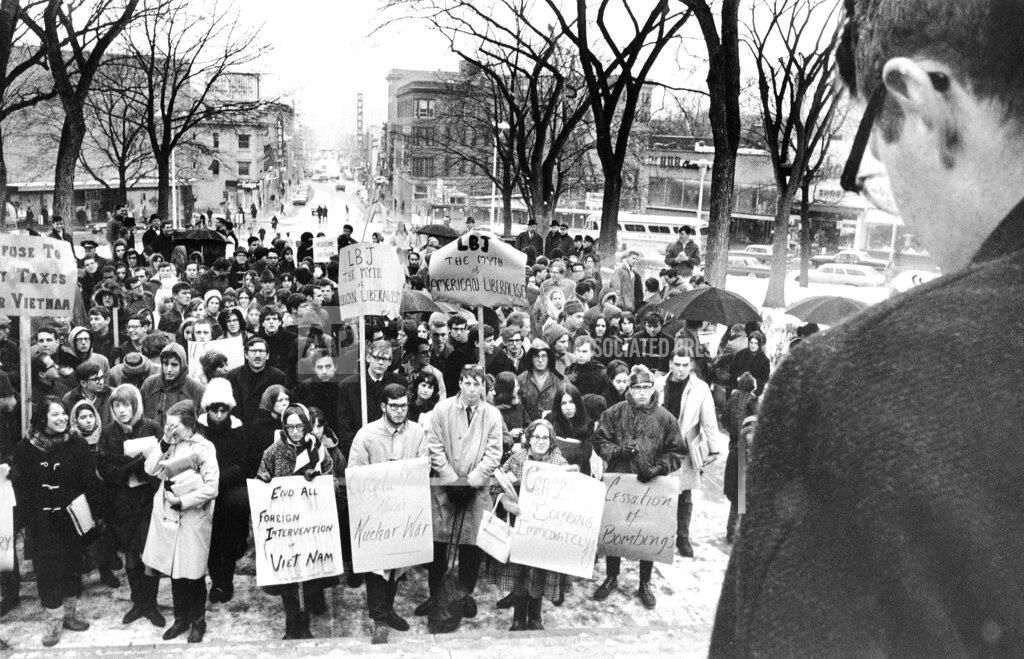
As the U.S. bombing of North Vietnam continued, the People’s Republic of China issued a statement that, “We warn U.S. imperialism: You are overreaching yourselves in trying to extend the war with your small forces in Indochina, Southeast Asia, and the Far East. To be frank, we are waiting for you in battle array.” On the same day, U.S. National Security Adviser McGeorge Bundy told Senator Mike Mansfield that the Johnson administration “was willing to run the risk of a war with China” if an invasion of North Vietnam was deemed necessary. There is considerable reaction around the world to this new stage of U.S. involvement in Vietnam. Predictably, both Communist China and the Soviet Union threaten to intervene if the United States continues to apply its military might on behalf of the South Vietnamese. Britain and Australia support the U.S. action, but France calls for negotiations.
Soviet Premier Aleksei N. Kosygin announced in Hanoi today that agreement had been reached on measures to strengthen North Vietnam’s defense potential, the Soviet press agency Tass reported. A Soviet Government statement issued Tuesday forewarned that Moscow would be “forced” to take “further measures” to aid North Vietnam’s defense against United States air attacks. Tass said Premier Kosygin made the announcement in a speech at Hanoi Airport before leaving the North Vietnamese capital after four days of talks. He was scheduled to stop in Peking on his homeward flight. There was no indication of what Soviet aid might be offered. There has been speculation that the Soviet Union would give the Hanoi regime missiles capable of knocking down the high-flying United States jet fighters and reconnaissance planes.
In his announcement Premier Kosygin said: “We had frank discussions on a number of international issues and analyzed attentively the situation in the Indochinese peninsula, particularly in connection with the recent armed provocations staged by American imperialists and their Saigon puppets. We reached agreement on measures which will be taken for strengthening the defense potential of the Democratic Republic of Vietnam (North Vietnam) and on holding regular consultations on these questions.” Mr. Kosygin’s mention of “frank discussions on international issues” may have been a reference to talk on the Communist bloc’s ideological split. The Russians have a clear interest in withdrawing North Vietnam from the Chinese ideological orbit. “Frankness” in Communist terminology usually indicates marked differences of viewpoint.
A mob of about 3,000 Asian and Russian students who were protesting against the American bombing of North Vietnam attacked the U.S. Embassy in Moscow. Two reporters, Adam Clymer of The Baltimore Sun and Bernard Ullman of the Agence France-Presse news agency, were injured, and more than 200 windows in the ten-story building were shattered before Moscow police intervened.
The United States urged South Vietnamese leaders today to form an effective government quickly to take advantage of the psychological lift afforded by the bombing of North Vietnam. Ambassador Maxwell D. Taylor called on Interior Minister Nguyễn Lưu Viên, an influential figure in the caretaker government, to explain the United States’ views. Action on an expanded United States aid program has been slowed by the lack of a competent administration. The expanded aid would include support for 100,000 additional men in South Vietnam’s armed forces. Qualified sources said the ambassador was told of the difficulties besetting Lieutenant General Nguyễn Khánh, commander in chief, in his efforts to assemble a new government. Roman Catholic leaders and representatives of the Cao Đài and Hòa Hảo religious sects are balking at joining the 20-man military-civilian council that would select a new premier and chief of state. Religious leaders have objected to the dominant influence of the armed forces and the Buddhists in the proposed council.
General Khánh, who joined other military leaders in seizing power in a bloodless coup d’état on January 27, said that he might set up a government in the next 24 hours without the promised council, which was also to have acted as an interim legislature. General Khánh, who has been maneuvering to win a dominant political position, has been encouraged to move forcefully by the spur to morale provided by the bombing raids yesterday and Sunday. Saigon newspapers have enthusiastically welcomed the joint air strikes by the United States and South Vietnam against the North. This action has eased many of the frustrations encountered in years of ineffectual operations against the often elusive Việt Cộng guerrillas and terrorists. It was more difficult to gauge the attitudes of the public, especially the peasants, who react slowly to political and military developments that seem remote to them. In Saigon, more than three-fourths of the Vietnamese who ventured opinions warmly endorsed the strike against the Communist North.
However, spirits have been somewhat dampened — and many Vietnamese are puzzled — by the withdrawal of United States dependents. No other foreign missions have followed the lead of the United States in ordering out dependents. Fifteen thousand Frenchmen in the country are unaffected. It was understood that other foreign missions had been told that, in the absence of further large Việt Cộng attacks on Americans, there would be no further action against the North that might invite military retaliation. Some nervousness was evident in Saigon as American dependents began to leave — a move that will also depress business somewhat. The sound of artillery fire could be heard in the center of the capital tonight. It apparently came from a nearby area in which government forces had engaged Việt Cộng guerrillas. South Vietnamese sources said that General Khánh was considering the appointment of Major General Nguyễn Văn Thiệu as Premier. The young general is serving as second Deputy Premier. General Thiệu would be responsible to an armed forces council rather than to the military civilian council proposed earlier.
Others mentioned for the post are Dr. Viên, who is also first Deputy Premier, and Nguyễn Xuân Oánh, Acting Premier. There was also talk among military leaders of the need to postpone the elections for a National Congress, which was scheduled to convene March 21. When the armed forces council toppled the Government of Premier Trần Văn Hương on January 27, it promised to abide by the electoral law. Former Premier Hương left the residence of Gordon Etherington Smith, the British Ambassador, this morning, six days after he had sought refuge there. Mr. Hương and his son were admitted to the British residence when they said they felt they were in personal danger. Mr. Hương apparently was fearful that some action would be taken against him because of Buddhist agitation. The Hương Government, which was supported by the United States, was overthrown after violent demonstrations against it by Buddhists in major cities. Mr. Hương left the British residence accompanied by Vietnamese friends and went into hiding.
The first twenty of 1,819 wives and children of South Vietnam-based American civilian and military personnel departed that nation, by order of President Johnson. The rest, including the dependents of Ambassador Maxwell Taylor and General William Westmoreland, would depart over the next 15 days.
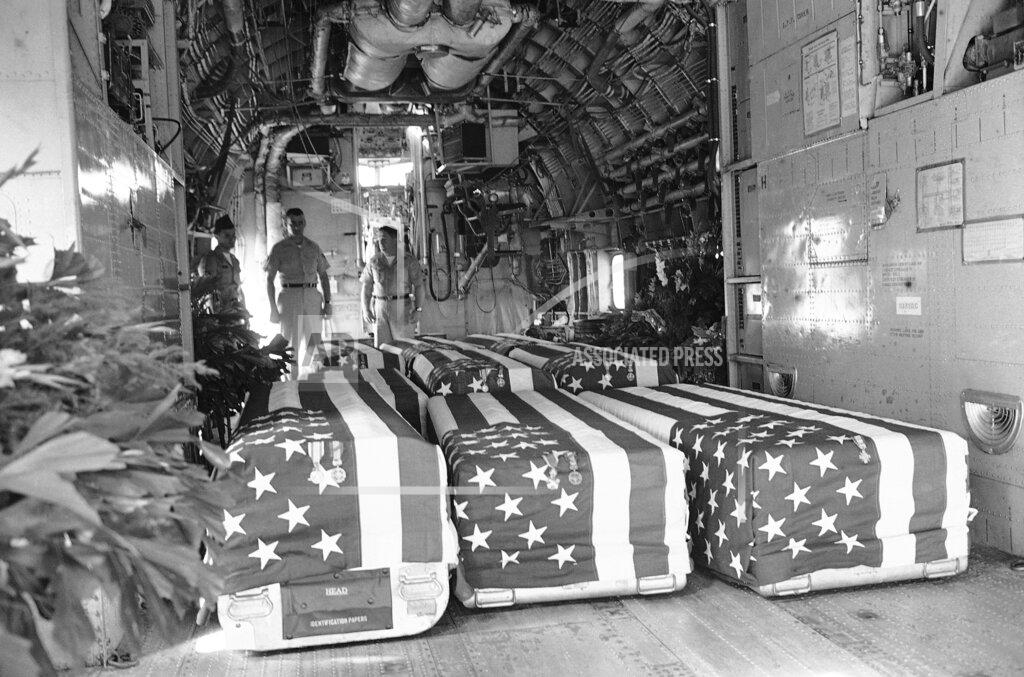
At Saigon Airport, nine dead American soldiers were honored and their bodies sent home. On the other side of the field crowds and a brass band welcomed the South Vietnamese pilots who bombed Communist North Vietnam yesterday.
The first group of American servicemen wounded in the surprise Communist Việt Cộng attack on Pleiku, South Vietnam, on Sunday, arrived today in San Francisco.
Britain and Australia have purchased $1 billion in U.S. military equipment, a transaction called a major step toward reducing American balance of payments problems abroad. The United States sold $1 billion worth of military equipment to Britain and Australia today, most of it warplanes for Britain. It is understood that the sales to Britain, amounting to about $650 million, provide for credit terms giving her seven years to pay. The interest rate will be 4 percent. The British purchase was largely for Phantom F-4 jet fighter planes and the latest type of C-130E transport planes. The credit facilities were made available to Britain because of her balance-of-payments problems.
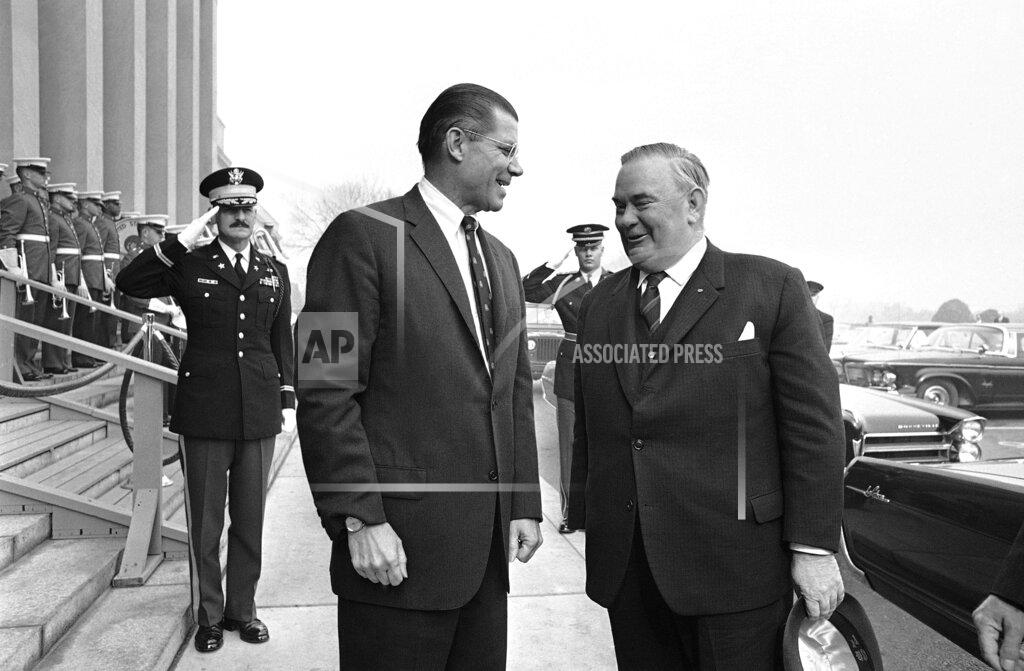
Secretary of Defense Robert S. McNamara announced the sales agreements after he had met with the Australian Defense Minister, Shane Paltridge, and put his signature to a contract previously signed by the British Defense Minister, Denis Healey. The contract was flown here last night. A similar credit arrangement for the military sales to Australia, amounting to about $350 million, also was made available. However, the Australian Government does not now have a balance-of-payments problem and plans to pay cash for its purchases for the next two years at least.
The Australian purchases, in addition to previously announced plans to buy $125 million worth of F-111 fighter planes and three destroyers at a cost of $130 million, were earmarked for a variety of military supplies to support the new expanded Australian defense program. The F-111 was formerly the TFX. The supplies include weapons systems such as Tartar surface-to-air guided missiles, anti-submarine torpedoes and rapid-fire gun batteries. Secretary McNamara, in announcing the military sales. called attention to them as a factor easing the United States’ own balance-of-payments difficulties. He pointed out that four years ago the Pentagon’s worldwide defense obligations alone caused an annual $3 billion net outflow to foreign countries. In the last four years, he estimated, the Pentagon has sold $6 billion worth of military equipment as part of a special effort to reduce the imbalances attributable to defense programs.
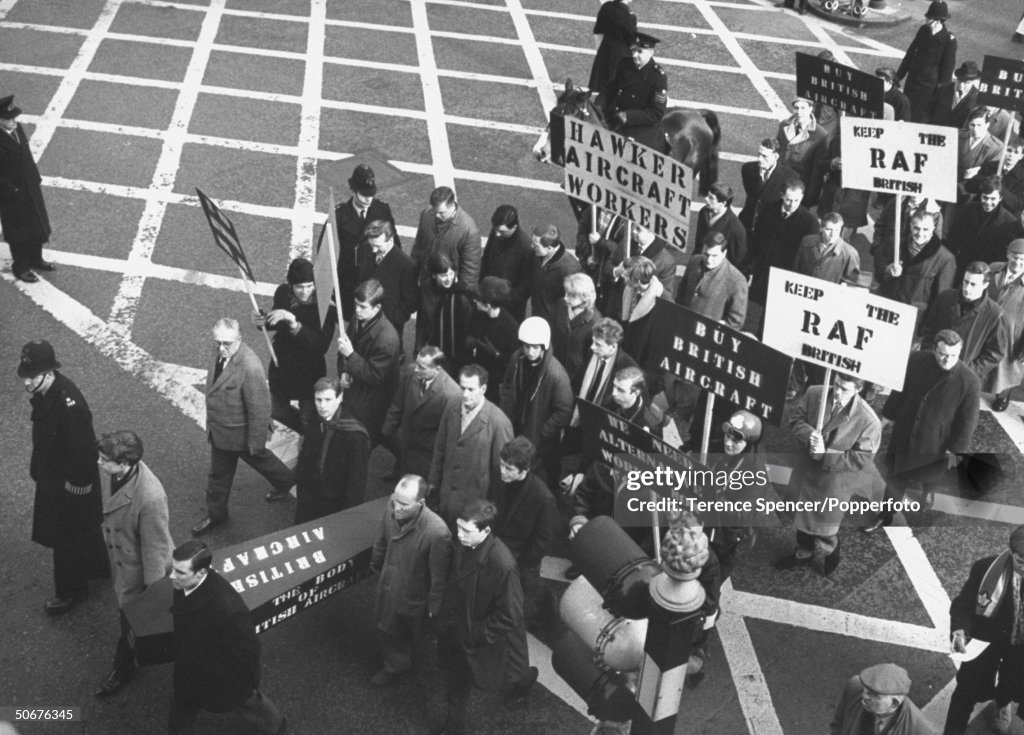
The Minister of Aviation, Roy Jenkins, told the House of Commons today that Britain could no longer go it alone in the development of new weapons systems. “Whether we like it or not,” he said, “the all-British plane is out.” “We are at the end of the road in the production of complicated weapons systems for an exclusively British market,” he added. These statements brought a hush to the crowded house during a debate on a Conservative motion attacking the Labor Government’s record on aircraft. When the vote came, Labor turned back the censure motion by 306 votes to 301. The margin of five, the smallest for the government to date in this Parliament, resulted from the decision of the nine Liberal members to vote with the Conservatives. Labor’s majority is four at the moment, including vacancies, but one Conservative was absent without a pair.
President Johnson declared America’s full support for German reunification and urged “all the responsible powers” to join in seeking that objective. President Johnson received a plea from Chancellor Ludwig Erhard today on the reunification of Germany and responded with a pledge of “full and continuing support” for that goal. The West German Ambassador to the United States, Heinrich Knappstein, called on Mr. Johnson at the White House to deliver a letter from Dr. Erhard and to discuss its contents. After the meeting, Malcolm Kilduff, White House associate press secretary, read a statement by Mr. Johnson. It said: “Ambassador Knappstein and I have had a good talk this morning. He delivered a message from Chancellor Erhard which reaffirmed the deep community of interest between the Federal Republic and the United States. I told the Ambassador of the full and continuing support of the United States for serious progress toward the reunification of Germany, and I expressed my clear agreement with Chancellor Erhard that the struggle for the reunification of Germany requires the interest and active participation of all of the responsible powers.”
The Soviet Union has redeployed its troops in East Germany, moving them from areas close to the East-West German frontier to positions inside the country where they can operate in depth.
Western diplomats are working for the resumption of disarmament negotiations in Geneva by the middle of March. They see a growing urgency for measures to prevent the further spread of nuclear weapons. These diplomats, in talks with other delegates, have been emphasizing that Communist China’s explosion of an atomic device last October underscores the threat that nuclear arms may be acquired by a widening group of states. They say there is a need for international controls to prevent such arms from falling into irresponsible hands. Since the beginning of the latest phase in the Vietnam crisis, these experts have been saying that every day that goes by without controls is dangerous. They contend that the greatest progress in negotiations has always been made when such crises lent additional urgency to efforts to reach accords.
The United States and other Western representatives are known to believe it is unwise to let more than six or seven months elapse without making an attempt to obtain agreements. The last round of talks in the disarmament conference in Geneva was broken off last Septembe 17. The Soviet Union and the United States blamed each other for the lack of progress.
Indonesian Foreign Minister Subandrio said today that the current lull in the Indonesian-Malaysian conflict was a favorable moment for renewing negotiations for a political settlement.
A convocation of world leaders to discuss the requirements for word peace and cooperation will open in the U.N. General Assembly Hall on February 17 with an address by Vice President Hubert H. Humphrey.
Britain announced today a pledge of $11.75 million for United Nations development and technical-assistance work, an increase of $1.75 million over her last contribution.
Rebels have ambushed a Congolese Government column in the northeastern Congo, inflicting heavy losses of men and equipment.
Britain will send two Cabinet Ministers to Rhodesia for 10 days this month to sound out the African colony’s views on independence.
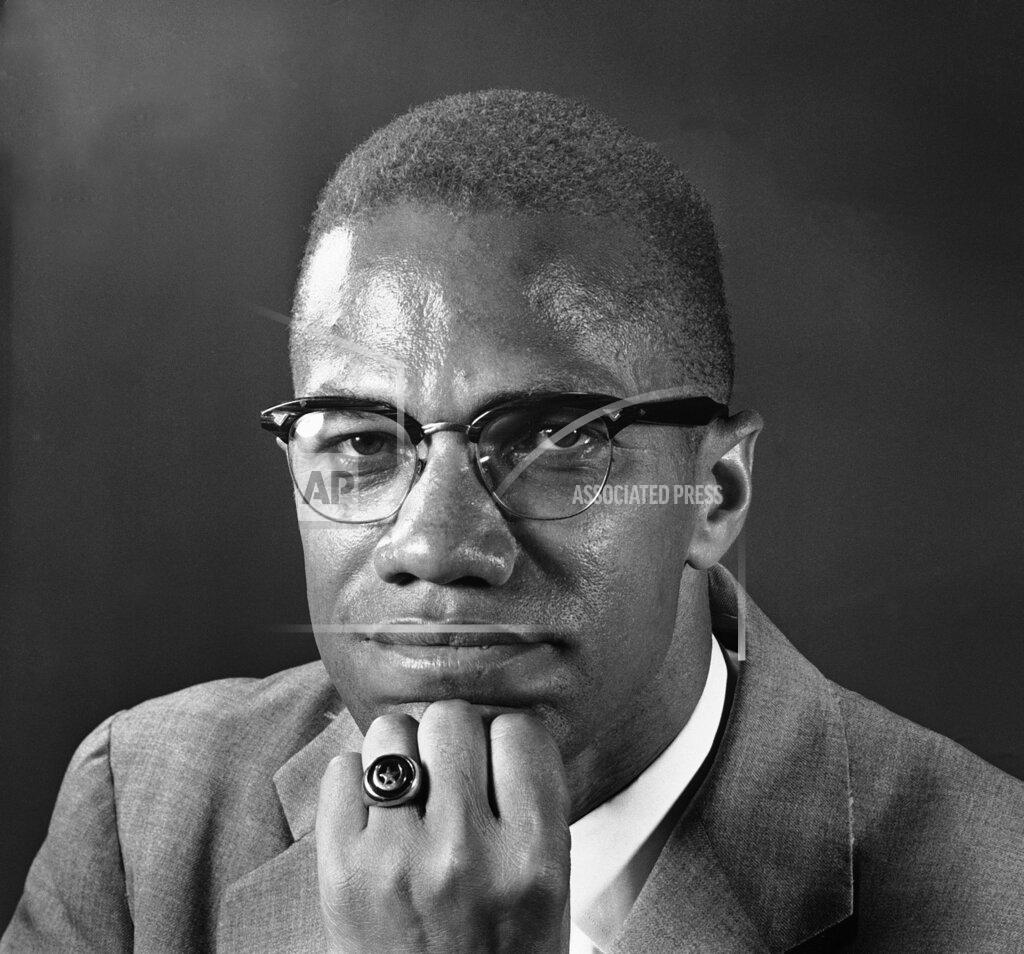
Malcolm X, an American black nationalist leader, was refused entry by France today. He returned to London and said defiantly, “I never go to any place where I am not wanted.”
Israel has begun a counter-boycott of foreign concerns that have obeyed the Arab economic boycott against her. Israeli importers have been officially notified that dealings with seven foreign concerns, all telecommunications or electrical equipment companies, will require a special license that will not be forthcoming. The foreign companies affected by the measure are Allge-Telefunken AG, Siemens AG and Imperial Rundfunk und Fernwerk GMBH of West Germany; Pye, Ltd., of Britain, and Hitashi and Matsushita of Japan.
The official Czechoslovak press agency, Ceteka, distributed today a denial that the detention of the Most Rev. Josef Beran at Radvanov, near Mlada Vozice, amounted to imprisonment.
An unexpected storm left up to a foot of snow in Rome’s streets today, paralyzing the normal life of the city.
President Tito of Yugoslavia was awarded the Grand Star of the Decoration for Services to the Republic of Austria.
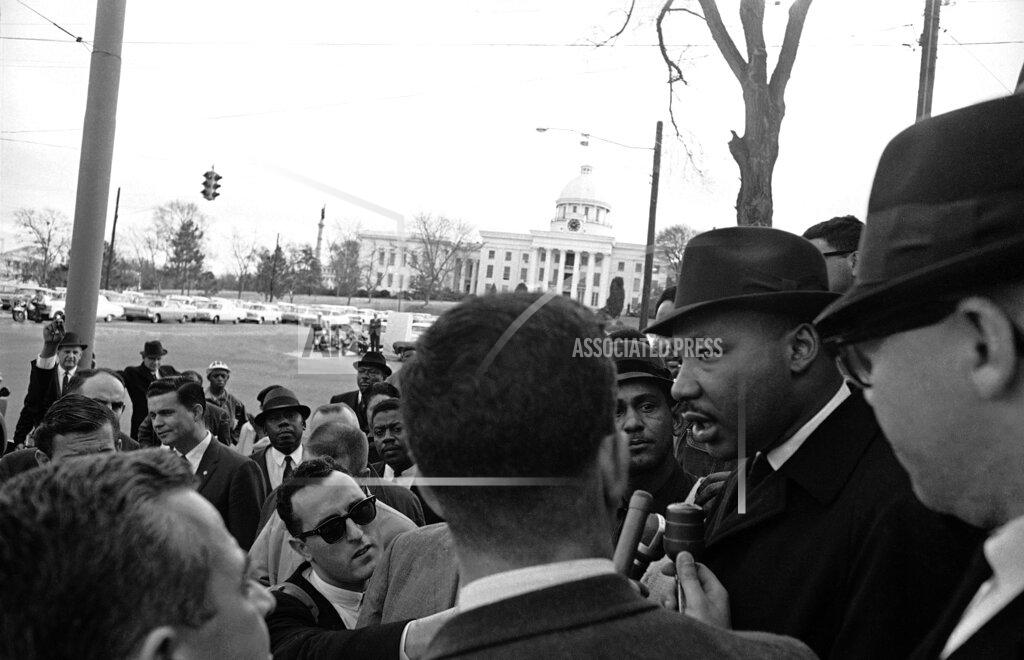
The Rev. Martin Luther King Jr. appealed personally to President Johnson for a new civil rights bill that would secure voting rights for Blacks “without delay and harassment.” President Johnson and the Rev. Dr. Martin Luther King Jr. discussed broad new guarantees sought by Dr. King to secure the right to vote for Blacks in Washington today. Dr. King’s proposal included a provision for enforcement of the legislation by Federal registrars appointed by and responsible to the President. The President told him, Dr. King said, that the Justice Department was working on voting-rights legislation and that he would send a message to Congress about it “very soon.” The White House disclosed last Saturday that the President would make “a strong recommendation” on the subject to this session of Congress. The timing of the message and the nature of the legislation to be sought have not yet been determined.
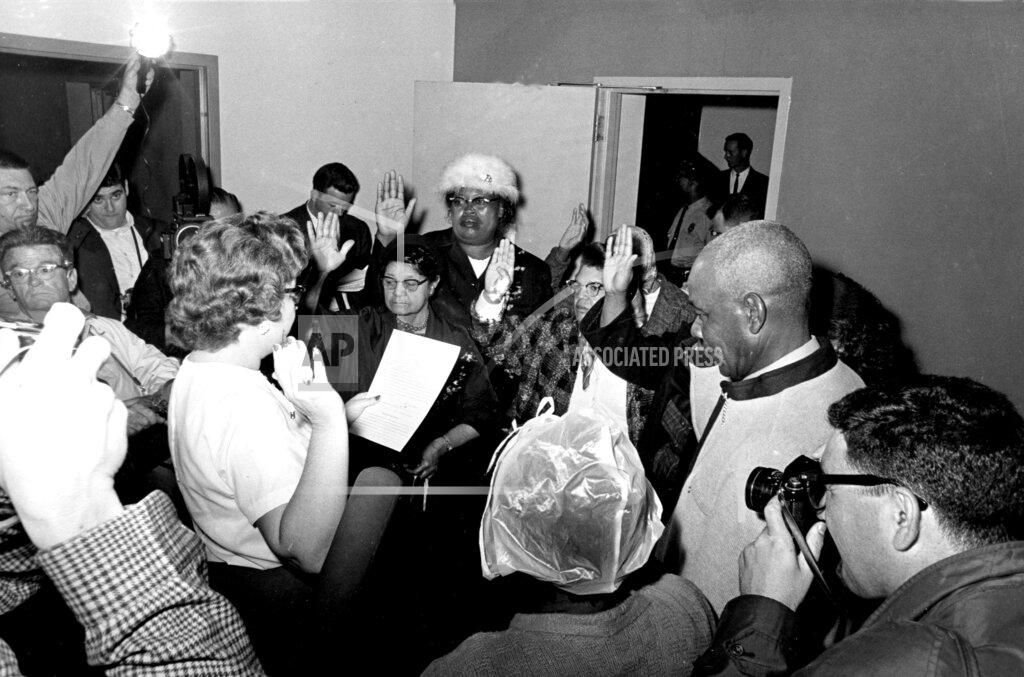
President Johnson indicated in his State of the Union Message on January 4 that he would propose measures to help Blacks win the right to vote where it was denied to them because of race. Dr. King, head of the Southern Christian Leadership Conference, flew here from Alabama, where he is leading a Black voter registration drive, to discuss the situation with Mr. Johnson, Vice President Humphrey and Attorney General-designate Nicholas deB. Katzenbach. Dr. King said that he would return to Selma, where about 3,400 Blacks have been arrested during a registration drive, to plan future strategy. He said he would continue the Alabama drive, and might now concentrate on Lowndes County, where, he said, no Blacks were registered.
After meeting with Mr. Johnson, Dr. King said: “The President made it very clear to me that he was determined during his Administration to see all remaining obstacles removed to the right of Blacks to vote.” He described the meetings with the President and other federal officials as “very successful” and praised Mr. Johnson’s “deep commitment to obtaining the right to vote for all Americans.”
Dr. King added that the President and the other Administration officials did not endorse his proposals, but said that they would consider them. One of the legislative proposals “mentioned in passing”, by the President, according to Dr. King, was the possibility of registering Blacks at federal post offices if they are refused registration elsewhere. After arriving here this morning in a chartered plane, Dr. King met for about an hour with Mr. Humphrey and other Federal officials in the Vice President’s office at the Executive Office Building. He then went across the street to the White House with Mr. Humphrey, talking with the President for about 15 minutes, and returned to continue his session with the other Administration officials for nearly half an hour.
Mississippi leaders were urged today by Governor Paul B. Johnson Jr., to give voluntary testimony before the United States Civil Rights Commission, which opens its first on-the-spot hearing here tomorrow onBlack complaints in the state. The six-member Federal commission, headed by Dr. John. Hannah, president of Michigan State University, will hear testimony on reports of denial of voting rights and civil rights violence against Negroes over the past few years. Governor Johnson told a group of sheriffs earlier today that the state had made a mistake in the past in “turning its head” on civil rights hearings. Later he issued a statement urging leadership to appear before the commission.
“I call upon the leadership of Mississippi in government, in business, in the professions, in: education and in every field of worthwhile endeavor in our state to offer their testimony to the commission to the end. that justice will be served and that at long last the true story of Mississippi can be presented to the nation.”
The Civil Rights Commission will hold closed sessions the remainder of the week after opening with a brief statement. tomorrow in the Federal Court House here. Dozens of local law-enforcement officers and others connected in some way with Mississippi civil rights incidents have been invited to testify during the closed sessions. Next week the commission will command the appearance of an unknown number of witnesses under subpoena. Dr. Hannah said in a preliminary statement to the arrival of the commission that the purpose of the hearing was to “obtain a balanced picture of the status of civil rights in Mississippi.” “Our job is to find the facts and to report them to the President and the Congress with recommendations for any corrective action which seems necessary,” ” he asserted.
The Louisville, Kentucky Board of Aldermen approved an ordinance tonight prohibiting racial discrimination in employment practices.
White House objections derailed congressional plans for a face-saving compromise of issues raised by a multi-purpose emergency appropriations bill. President Johnson risked a major foreign policy reversal in Congress today by intervening personally to forestall a Senate-House conference agreement on a relatively minor appropriations bill. The immediate result of the President’s action was the collapse of a previously announced agreement between the Senate and House negotiators. This agreement included the President’s hard-fought victory yesterday in which the House gave him a virtually free hand to permit or prevent surplus food shipments to the United Arab Republic. Two other riders the Senate had added to the $1.6 billion agriculture supplemental appropriation provided that none of the money could be used to carry out the Administration’s program of closing 14 veterans hospitals and old soldiers’ homes or to terminate several unpromising agricultural research projects.
Incumbent President David J. McDonald edged into the lead in unofficial returns from the AFL-CIO United Steelworkers’ crucial quadrennial election. Voting began for the next president of the 1.2 million member United Steelworkers of America (USWA) labor union, at 3,300 union offices, plants and other locations. In a close election, I. W. Abel would defeat incumbent President David J. McDonald by only 6,228 votes.
Attorney General-designate Nicholas D. Katbenbach raised some questions about a Senate proposal dealing with Presidential disability.
The cause of the New York airline disaster that took 84 lives remains hidden by the sea, but investigators hope to find and raise the hulk.
The Joint Congressional Atomic Energy Committee urged the National Aeronautics and Space Administration today to find a way to continue work on its SNAP 8 project to use nuclear power in satellites.
Senator J.W. Fulbright proposed today that $1 billion worth of nonconvertible foreign currencies owned by the United States be used to establish private binational educational foundations abroad.
A New York court reversed a lower court ban on the motion picture and book, “John Goldfarb, Please Come Home.” The University of Notre Dame had objected to the fictional reference to its football team. The five justices of the Appellate Division unanimously reversed the ban.
Serious crimes, such as robberies, muggings and assaults with weapons, rose by 52.5 percent in New York City’s subways last year. The increase in felony complaints was the largest in the history of the New York transit system.
Dow Jones Industrial Average: 901.24 (+3.35)
Born:
David Brandon, NFL linebacker (San Diego Chargers, Cleveland Browns, Seattle Seahawks, Atlanta Falcons), in Memphis, Tennessee.
Mark Mraz, NFL defensive end (Atlanta Falcons, Los Angeles Raiders), in San Gabriel, California.
Doug Linton, MLB pitcher (Toronto Blue Jays, California Angels, New York Mets, Kansas City Royals, Baltimore Orioles), in Santa Ana, California.
Winston Bennett, NBA small forward (Cleveland Cavaliers, Miami Heat), in Louisville, Kentucky.
Michel Mongeau, Canadian NHL centre (St. Louis Blues, Tampa Bay Lightning), in Montreal, Quebec, Canada.
Igor Babailov, Russian-born American portrait and figurative painter, in Udmurtia, Russian SFSR, Soviet Union.
Died:
Khan Bahadur Ahsanullah, 91, Bengali educator who assisted in the formation of the University of Dhaka; the Ahsanullah University of Science and Technology, founded in 1995 by the Dhaka Ahsania Mission that he had established, would be named in his honor.


 History Diaries