Saigon’s leading political cartoonist, who pilloried Government figures and the Communists with equal vigor, has been arrested, well‐placed sources reported today. Nguyễn Hải Chi, a 29 year‐old‐sergeant assigned to the Joint General Staff, was arrested by military policemen three days ago, one of those sources said. The sources said that the cartoonist, known to thousands here by his pen name, Choé, subsequently was turned over to the civilian national police yesterday afternoon. But Mr. Chi’s exact whereabouts could not be firmly established. At a news conference yesterday morning, Major General Nguyễn Khắc Bình said that the government had cracked a ring of Communist agents who purportedly had penetrated the Saigon press corps.
General Binh, who commands the national police, gave the names of 18 persons as Communist agents. The cartoonist’s name was not among them. When asked about the disappearance of Mr. Chi, the police commander said flatly that he had not been arrested, and that he was not involved in the plot. A police spokesman said this afternoon that “so far, we have received no further information on cartoonist Choé.”
In the space that the English-language Saigon Post usually reserved for Choé’s cartoons, the following notice was placed today: “Following the arrest of our cartoonist Choe by the national police, his column is left vacant beginning Thursday. We hope that he would be freed soon to resume his work for our readers’ service.” The Saigon Post, a conservative, anti‐Communist paper, is largely owned by Bùi Diễm, a former Vietnamese Ambassador to Washington who on occasion undertakes diplomatic missions, for President Nguyễn Văn Thiệu. One of Choé’s last published cartoons showed an unmistakably Thiệu‐like figure confronting the Communists, holding a rifle under his arm. But the rifle was pointed at figures, representing the Vietnamese people, not the Communists.
[Ed: Nguyễn Hải Chi was indeed arrested on nebulous charges of being a Communist. The Fall of Saigon just three months into his sentence allowed Choé to escape prison, but in 1976 he was rearrested as the Vietnam government cracked down on journalists they deemed “culture commandos” and was sent to a re-education camp at Chí Hòa Prison until the end of 1985, and was moved twice more until 1990 when the government could not find probable cause to keep him incarcerated. He remained in Vietnam until his health failed. In 2003 he died in Virginia.]
A group of 48 opposition legislators cut their fingers with razor blades today and signed a petition in blood calling on the United States to “withdraw all support to the dictator Nguyễn Văn Thiệu.” The incident occurred during an hour‐long demonstration, which included Buddhist nuns, on the steps of the National Assembly building. It was called to protest against President Thiệu’s closing of opposition newspapers and the arrests of newsmen. Policemen kept an eye on the demonstration but made no attempt to break it up. Half a dozen of the legislators dripped blood into a bowl. Then they and others signed the petition, which an opposition leader, Trần Văn Tuyên, said would be sent to President Ford and President Thiệu.
The U.S. Defense Department said today that United States Air Force experts are in South Vietnam helping distribute aircraft carts. But‐a spokesman denied that this violated the cease‐fire accord signed in Paris two years ago. Article 7 of the agreement says in part: “The two South Vietnamese parties shall not accept the introduction of troops, military advisers and military personnel, including technical military personnel.” The Pentagon spokesman, William Beecher, said that up to 17 experts from Clarke Air Force Base in the Philippines were temporarily helping in the supply of spare parts critically needed for the South Vietnamese Air Force. “I am advised this is not regarded as a contravention of the Paris accords,” he said. Mr. Beecher said that the supply experts were not performing any maintenance work on the South Vietnamese aircraft.
The 18 countries of the International Energy Agency agreed in Paris today that measures must be taken to protect the search for new sources of fuel, to cut back dependence on Arab oil and eventually force down the price. Etienne Davignon of Belgium, chairman of the agency’s board of governors, said at a news conference that, as a result of agreements now reached, “we believe it’s reasonable to foresee a preliminary consumerproducer conference in March. That is our opinion — it is not a decision.” An American official who declined to be otherwise identified said later that the consumer countries will also have to agree on what kind of measures they will adopt to protect investments in new energy sources before they can meet with the producers.
Developing countries agreed today to work for a common front in using their raw materials to obtain better terms of trade with the industrial nations. The conference of developing countries on raw materials authorized experts to draw up technical details of such concerted action and place their proposals before a second ‘meeting on raw materials to be held before the conference on primary products between industrial, oil and developing nations proposed by France. The Dakar conference called for greater cooperation among producers of raw materials to obtain higher and more stable prices. The conference expressed full support for members of the Organization of Petroleum Exporting Countries and adopted a Latin American resolution condemning “threats to use force against oil producers.”
Several thousand Portuguese workers went into the streets of Lisbon tonight to protest rising unemployment, defying a government ban on demonstrations. The workers, many wearing hard hats and dungarees, responded to a call from extreme leftist organizations. They formed a long column that marched through the center of Lisbon, denouncing capitalism and calling for “the right to work.” The government made no effort to enforce its ban, and not a soldier or policeman was in sight except for troops guardlog the the United States Embassy and policemen directing traffic. The noisy scene reflected some of the tensions that the country is experiencing as it attempts to organize a new political system to replace the dictatorial regime overthrown last April, and to renovate its antiquated economy. The Cabinet, deeply divided on political and economic doctrine, continued its discussions on an emergency economic program as workers gathered at various rallying points from more than a score of factories in the Lisbon area, which have been discharging workers because of severe economic depression. The number of unemployed in Portugal is now estimated at 200,000, about 7 percent of the work force.
The Los Angeles Times revealed the existence of Project Azorian, the American CIA’s attempt to recover the Soviet submarine K-129, which had sunk in 1968. According to the investigative report, confidential files on the operation were “believed to have been among the documents stolen by safecrackers” during a burglary of the offices of the Summa Corporation the previous June, and had been held by the thieves who demanded one million dollars to prevent their leaking.
Major European banking houses connected with prominent Jewish families have reportedly been excluded from a series of routine international finance transactions in recent months because of pressure from Arab governments. High-level banking sources in London report the existence of what they call a “blacklist” of banks that the Arab governments want kept out of any transactions that have Arab participants. Among the institutions on the list are N. M. Rothschild & Sons, S. G. Warburg & Sons, and Lazard Freres. Bankers said that the source of the list was Kuwait and Arab banks dominated by Kuwaiti interests.
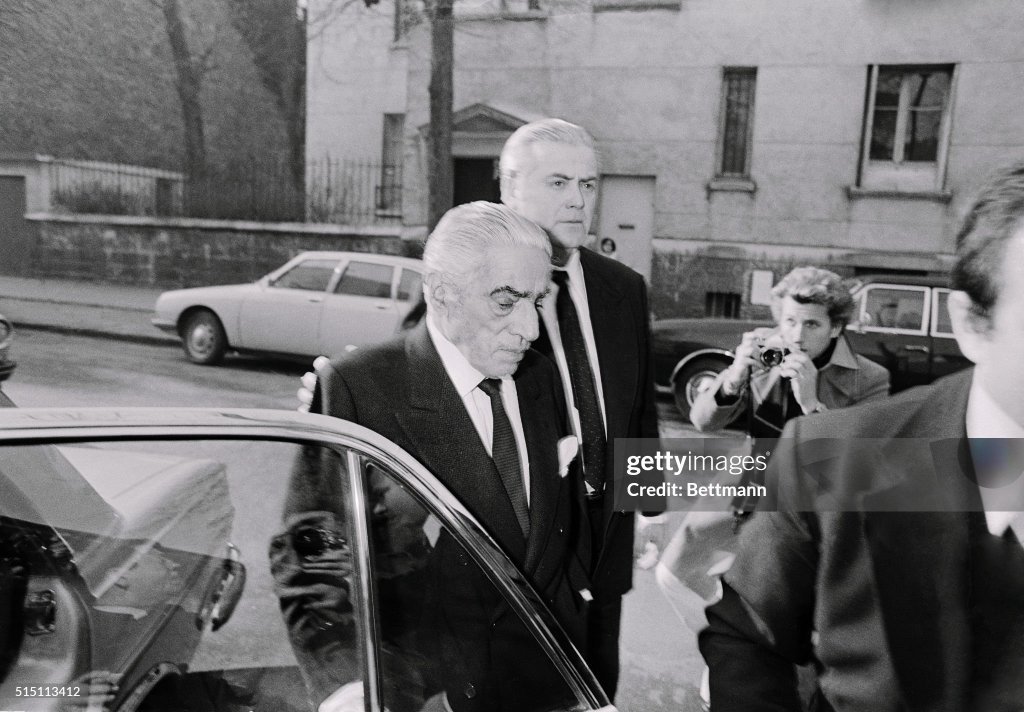
Aristotle Onassis entered the American Hospital here today for treatment for a muscular complaint affecting his heart. Mr. Onassis, 69 years old, arrived in Paris last night from Athens with his daughter, Christina, and his wife, Jacqueline. He spent the night at home he maintains in Paris.
The Greek Government said today that it would submit its final settlement offer for control of Olympic Airways to Aristotle Onassis next week. Mr. Onassis, who has operated the Greek national airline since 1956, renounced his contract last December, citing increased costs and the government’s refusal to provide a $16.7 million loan. The government originally offered Mr. Onassis an estimated $68‐million for the company’s assets, but he demanded more.
General Ariel Sharon, the flamboyant and controversial commander who led the Israeli crossing of the Suez Canal in the 1973 war, has since become the leading spokesman for the Israeli right wing. His views and those of many Israelis who agree with him are increasingly important at this time, when Israel is about to begin a new and crucial round of negotiations with Egypt. General Sharon made clear in an interview that he is staunchly opposed to Secretary of State Kissinger’s effort to negotiate another partial agreement between Israel and Egypt.
A young Israeli military deserter who is alleged to have stolen weapons and grenades has been arrested with four other men in connection with a grenade blast at a cellar discotheque in Natanya on Wednesday in which six persons were killed.
Egypt has received four shiploads of ammunition and spare parts from the Soviet Union in the last month but, according to highly qualified Israeli sources, any decision to supply heavier military equipment has been made conditional on a return of Soviet military advisers and instructors to Egypt. The Soviet Foreign Minister, Andrei A. Gromyko, told President Anwar al‐Sadat in their talks at Cairo this week that aircraft and other advanced weapons systems would be provided only if Soviet military personnel were readmitted, the Israeli sources said. The Soviet offer remains open. The Israeli estimate is that Egypt would require approximately 200 high‐performance fighters and fighter‐bombers to challenge the Israeli Air Force. The 22 Mirage F‐1E fighters purchased from France will not be delivered until the end of 1978, at the earliest. Approximately 6,000 Soviet military personnel, according to United States estimates, were expelled from Egypt in July, 1972, by President Sadat. At present, military analysts estimate that the number of Russians in Egypt is about 500.
Fighting broke out again in the Eritrean capital of Asmara tonight only hours after the Ethiopian Government had made it clear that it had no intention of granting independence to the northern province. Residents of Asmara said the city had been shaken by three explosions shortly before midnight, followed by long bursts of heavy machine gun fire and the sound of light automatic weapons. They said the battle had subsided after about 30 minutes. Reliable sources said there had been a clash between government forces and secessionist guerrillas. The exact site of the engagement could not immediately be learned. Earlier, the governing military council said in a statement broadcast on the national radio that Ethiopia’s unity was inviolable. The statement condemned what it called acts of sabotage in Eritrea and added that the government would under no circumstances allow “wanton killings” to continue there.
The United States plans to announce in the next two to three weeks a decision on whether it will lift the 10‐year‐old embargo on the sale of military equipment to Pakistan, Administration officials said today. Prime Minister Zulfikar Ali Bhutto left Washington this morning for New York after pressing for an end to the embargo in three days of talks here with President Ford, Secretary of State Kissinger, Secretary of Defense James R. Schlesinger and Congressional leaders. Officials said that the Administration was now strongly inclined to modify the embargo, but that Mr. Ford had delayed a final decision pending consultation with key Congressional leaders to assess sentiment on Capitol Hill. The Administration also was said to want to explain the contemplated moves to Indian officials in an effort to mollify Indian opinion, which strongly supports the embargo. The Government of India has said publicly and through diplomatic channels that the lifting of the embargo could wreck the efforts of the last two years to improve relations between India and the United States. The embargo applies to both India and Pakistan and stems from the use of American‐supplied weapons in wars between them. Only Pakistan opposes it, however, because she says she needs American military equipment while India relies on Soviet weapons and India’s own arms industry.
Rhodesian black leaders have flown to Tanzania for more discussions aimed at getting under way a constitutional conference on the future of this racially divided country. But the chances that such a constitutional conference would succeed seem increasingly gloomy. Sources close to Prime Minister Ian D. Smith indicated strongly that the white government was still unwilling to move quickly toward majority, or black, rule and would ask for a prolonged transition period. This would almost certainly be unacceptable to the African nationalist leaders. The black leadership appears remain divided on tactics and policy, however, despite a formal unity agreement signed in December. It is felt that militants may ask for such a rapid transfer to majority rule as to drive Mr. Smith and his colleagues from the bargaining table.
Calm returned to Lima, Peru after two days of rioting and looting that left about 100 people dead, according to the Peruvian military government’s estimates. A new police chief took over leadership of the 20,000‐man national police force whose strike was put down by an army assault on a garrison here Wednesday morning that led to large‐scale civilian riots. The disorders have been confined to Lima, mostly the downtown section, which today was a scene of burned out buildings, shattered windows, and deb‐is from stores looted by large bands of youths. The rioting was apparently set off by anger over the army’s heavy‐handed tactics against the striking police and was fed by an underlying public antipathy to the six‐year‐old millitary government. Inflation, which last year reached 20 percent, has also been an issue, and factory workers, public employes, and miners have staged strikes during the weeks preceding the police walkout.
The unemployment rate jumped to 8.2 percent in January, one full percentage point over the 7.2 percent rate in December, confirming fears that the current recession in which 7.5 million persons are out of work was, by far, the most serious of the post-World War II era. Unemployment rose for every major class of workers. The sharp increase in unemployment brought criticism from members of Congress, especially Democrats, and a statement from the White House that President Ford would consider further antirecession measures if the economic situation continued to deteriorate more than administration experts had expected. In all, the increase in the number of jobless workers was 930,000 individuals after elimination of the normal post-Christmas upturn in unemployment. The increase in the unemployment rate for January amounted to one percentage point over the 7.2 percent rate for December. That increase was the largest for a single month since December, 1953, when the nation was also well into a recession, but one that proved much shallower than the present one. It cannot be said exactly when the last time was that unemployment in a single month exceeded January’s 8.2 percent rate. It has never done so since the Labor Department began, in 1948, to compile monthly unemployment data under definitions and procedures comparable to the ones in use now.
President Ford was described as “concerned” about the sharp increase in unemployment last month. His press secretary, Ron Nessen, said that Mr. Ford held a meeting shortly after the latest unemployment figures were announced, to discuss “a number of steps” the President might take. Mr. Nessen said that any such steps would involve executive action by the President rather than any new legislation, but he would not specify what possible steps had been discussed.
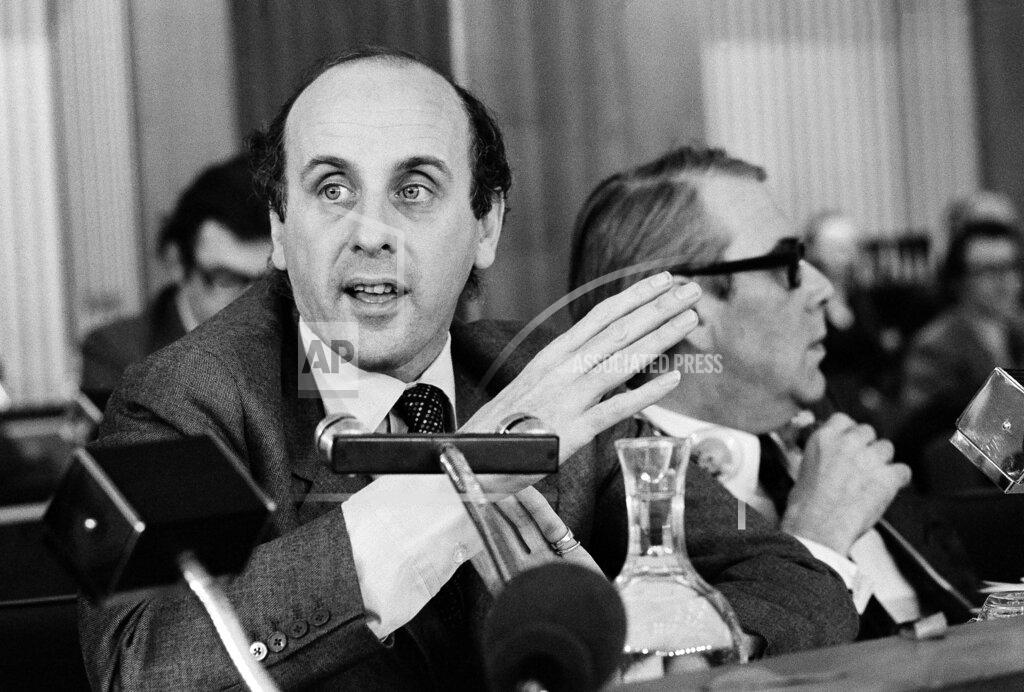
Representative Augustus F. Hawkins said today that the House equal opportunities subcommittee of which he is chairman, was looking into reports that the Federal Bureau of investigation hired informants in local antipoverty programs, and might conduct full‐scale inquiry. The California Democrat said he had asked the Justice Department for the facts, adding that he hopes the answer will include details on the FBI’s confirmation that it hired a legal aid worker in New Orleans to spy on black activiites. Representative Robert W. Kastenmeier of Wisconsin said the inquiry that the House civil liberties subcommittee, of ;which he Is, chairman, had albeady begun on FBI intelligence operations might also get into the area of informers and undercover agents. The FBI confirmed that it had hired a black community organizer for the New Orleans Legal Assistance Corporation as an informer from April to November in 1968. The informer, who asked not to be named, said in an interview that the FBI had asked him for such information as whether black activists had guns or used drugs.
Senator Henry M. Jackson of Washington said today that he intended to pursue the Democratic Presidential nomination largely on Capitol Hill rather than the campaign trail. In his first public appearance since announcing his candidacy last night, Mr. Jackson said that he would conduct “a campaign not of rallies and slogans but of proposals and issues.” He will seek support, he said, “on the basis of effective programs and solid accomplishments demonstrated in the United States Senate.” Mr. Jackson has apparently decided that he could never generate glamour on the hustings and would thus do better to rely on “the charisma of competence,” as his Democratic colleague, Senator Robert C. Byrd of West Virginia, once called it.
Senator Jackson told an audience of about 200 at the Washington Press Club that President Ford was not “attuned to the hardest problems facing this country, and they are in the fields of energy and the economy.” In the Ford White House, he said, “There’s no one in charge of the store” on these issues. Mr. Jackson described Mr. Ford as “an honest, honorable man, a decent man” who had failed on economic issues and also in foreign policy. He warned against “blank checks” for South Vietnam and “fantasies of gunboat diplomacy” in the Middle East. By contrast, the Democrat described himself as a man whose time had come after 34 years in the Congress. “I’m identified with the issues that are bugging people every day,” he said.
Mr. Jackson appeared shortly after Tass, the Soviet pres service, had described him as the captive of “reactionary circles of the military‐industrial complex, the right‐wing leadership of the trade union confederation and the Zionist organizations.” He was asked for comment. “I would make it an overriding priority to have good relations with the Soviet Union,” he replied, in what sounded like an effort to soften his image as Moscow’s public antagonist number one. “I would talk to their leaders, as I always have, straight from the shoulder.”
Former White House aide Charles W. Colson told the “Today Show” that President Nixon had talked to him on December 18, 1973, about resigning, but did not do so because he was afraid that Vice-President Ford “couldn’t control Henry Kissinger.” Nixon’s resignation had taken place almost eight months later, on August 9, 1974. He quoted Mr. Nixon as saying. “You know, Henry really is unstable at times.” Mr. Colson, who was recently released after serving a prison term resulting from the Watergate scandal, made the remark during an interview on the NBC “Today” program. Mr. Nixon’s chief spokesman, Ronald L. Ziegler, later responded in another television broadcast, the CBS evening news: “Mr. Nixon does not feel and never did feel that Henry Kissinger was unstable. He wouldn’t have appointed him as Secretary of State if he did.”
In an effort to develop energy and fiscal alternatives to the administration’s proposals, a committee of senior Democratic Senators is studying a staff outline of a plan that would give first priority to reducing unemployment. The draft plan would defer direct measures to reduce oil imports until unemployment begins to decline. At that time, an additional one-cent-a-gallon federal tax would be levied on gasoline, with more one-cent increments following the decline in unemployment.
The Army estimated today that it could cost $2.5‐billion over the next five years to increase the size of its combat forces from 13 to 16 divisions. The Ford Administration’s decision to add three divisions, returning the Army to its 1964 combat strength, is likely to be one of the more critical issues in Congressional consideration of the $92.8‐billion defense budget. Senator John C. Stennis, chairman of the Senate Armed Services Committee, emphasized to reporters, in discussing the new military budget, that “Congress has not given a green light” to increasing the number of Army divisions. Two issues are emerging in Congress about the Administration’s decision: the need for three additional divisions and the additional cost. In testimony today before the Senate Armed Services Committee on the Army’s $22.7‐billion budget for the coming fiscal year, Howard H. Callaway, Secretary of the Army, and General Fred C. Weyand, the Army Chief of Staff, dealt with the military need and somewhat more guardedly with the cost.
A $50,000 reward was offered yesterday for information leading to the capture and conviction of any of the persons responsible for the fatal Puerto Rican terrorist bombing of the Fraunces Tavern annex in New York on January 24.
A bomb placed in a student’s locker blew out a classroom wall at MacArthur High School in Hollywood, Florida today 25 minutes after classes were dismissed for the day, Sally Brown, Broward County school spokesman, said. The blast tore a hole four by eight feet in the wall. There were no injuries.
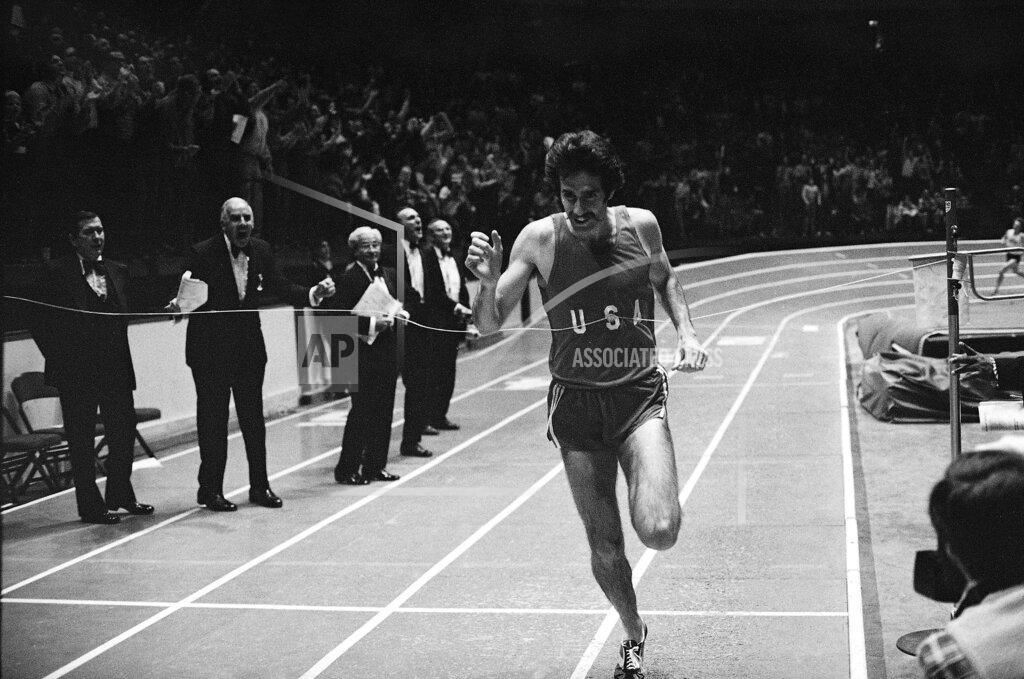
With a bad tooth and an embarrassing race out of his system, Marty Liguori let loose and won the mile in 3 minutes 55.8 seconds at the Philadelphia Track Classic tonight, the second fastest performance anywhere indoors. One week after he was booed for his flat, fourth-place finish in the Wanamaker Mile at Madison Square Garden, the 25‐year‐old Liguori had a Spectrum crowd of 7,184 on its feet during the last three laps as he pursued Tony Waldrop’s indoor mark of 3:55.
Stock prices declined in much lighter trading as nervousness over the widening recession weakened the list and kept many investors on the sidelines.
Dow Jones Industrial Average: 711.91 (-2.26, -0.32%)
Born:
Alexandre Daigle, Canadian NHL center and right wing (Ottawa Senators, Philadelphia Flyers, Tampa Bay Lightning, New York Rangers, Pittsburgh Penguins, Minnesota Wild), in Montreal, Quebec, Canada.
Alexandre Boikov, Russian NHL defenseman (Nashville Predators), in Chelyabinsk, Russian SFSR, Soviet Union.
Wes Borland, American rock guitarist (Limp Bizkit), in Richmond, Virginia.
Died:
Brendan Fay, 54, American actor (“Hustler”, “Man on a Swing”).


 History Diaries