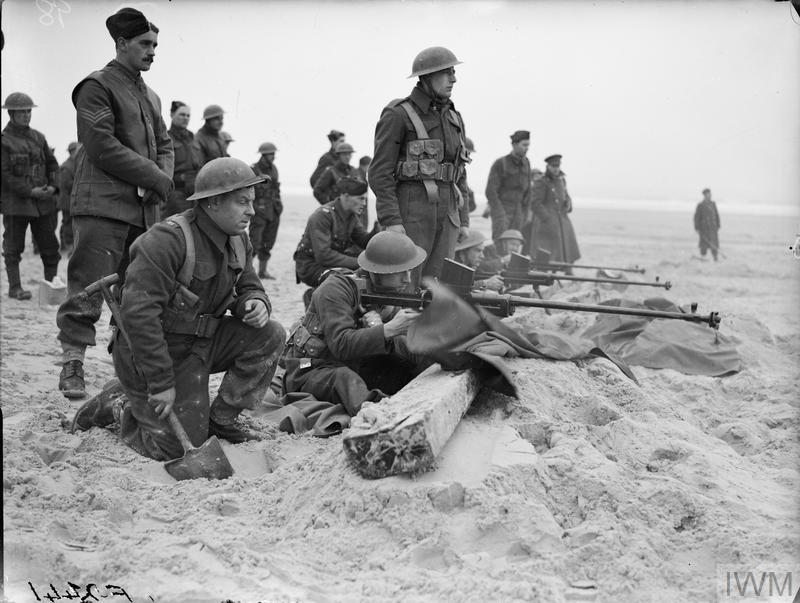
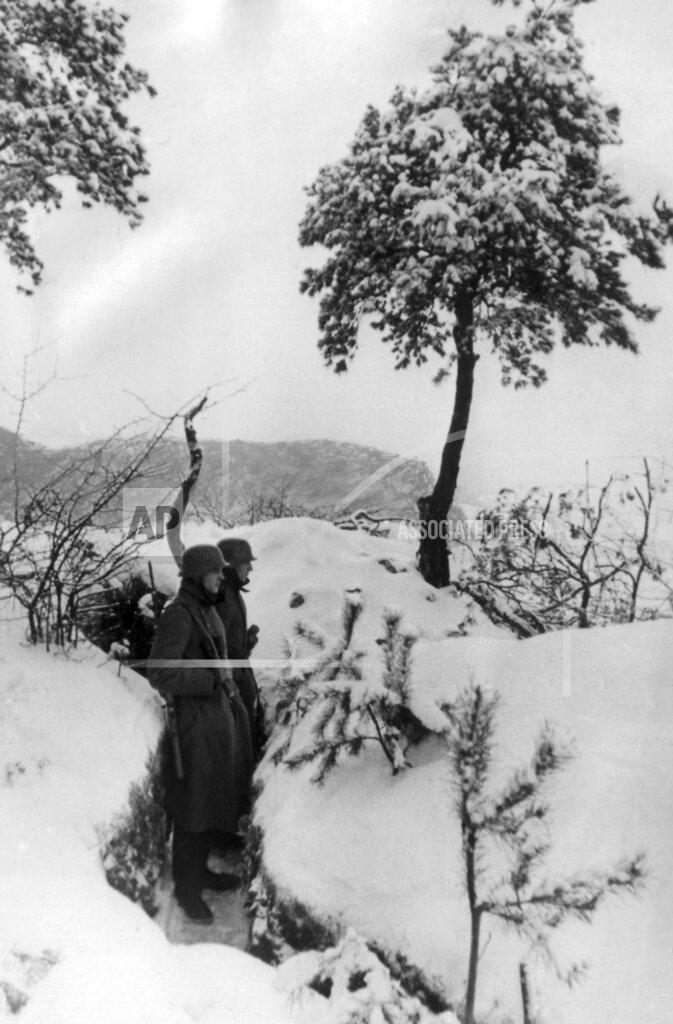
The Soviet shelling of the Mannerheim Line fortifications continues on the Karelian Isthmus, but probing infantry and tank attacks are restricted to Summa village and Marjapellonmäki in the nearby Karhula sector (Hill 38).
The Finnish 9th Division completed its encirclement of the Soviet 54th Division in a series of ‘mottis’ at Kuhmo.
To the south, Soviet troops continued to shell Finnish defensive positions on the Mannerheim Line on the Karelian Isthmus, but actual advances were limited. The Mannerheim Line holds firm. Finnish troops repulse the attempted Soviet breakthrough in Summa village and Marjapellonmäki.
The first enemy tanks are destroyed in the early morning twilight, with the accompanying infantry also suffering heavy losses. The Soviets send a tank landing party behind the Mannerheim Line in an effort to turn it. The 335th Rifle Regiment task force includes five T-28 tanks which tow armored infantry sleds, three flame-thrower tanks, 105 men with four heavy machine guns, and two mortars. The men in charge ae Senior Lieutenant Lobodin and Commissar Chausov.
The mission is a disaster from the start: Finnish artillery and mortar shells pound the landing force immediately, and the tanks run out of control and almost run over the armored infantry sledges. When the men in the sleds run to a ditch to take cover, one of the tanks mistakes them for Finns and opens fire on them. The Finns destroy all five tanks, and the unit is withdrawn to its original starting point.
By 7.30 in the evening the Finnish front line is entirely under Finnish control. The retreating enemy suffers heavy losses from the Finnish artillery and machine-gun fire.
Finnish troops capture an enemy base to the northeast of Lake Ladoga. The enemy loses over 500 men and a considerable amount of war material.
The northern Norwegian province of Ruija announces that there are currently 1,179 Finnish refugees in the province: 381 men, 359 women and 429 children.
A question is asked in the British House of Commons on the urgent dispatch of aircraft to Finland. Due to the sensitivity of the issue no detailed information can be provided.
Finnish Foreign Minister Väinö Tanner has another meeting with the Soviet Ambassador in Stockholm, Madame Alexandra Kollontai. Madame Kollontai passes on her government’s view that Tanner’s suggestion of the previous day does not provide a sufficient basis for opening peace talks. Tanner leaves for home. The Finnish Foreign Minister returns to Helsinki from peace negotiations with intermediaries in Sweden in effort to end war with Soviet Union.
The newspaper Paris Soir said Tuesday that Adolf Hitler wants to terminate the Russian Finnish war and had instructed Foreign Minister Joachim von Ribbentrop to offer mediation. The newspaper said that Hitler had instructed the German foreign minister to convey to Moscow the willingness of the Reich government to mediate. The German foreign minister was described by the Paris Soir as having previously suggested a 30 day armistice in the Finnish war with provision for a plebiscite which would permit the Finns to choose between the Helsinki government and the regime set up at Terijoki under protection of the Red army. French official dispatches recently have indicated that the Russians were unwilling to discuss any settlement in Finland until the Red army wins at least one important victory. After that, some French sources believed, the Moscow government might be willing to consider dropping support of the Terijoki regime.
The Western front remained quiet today, as indicated in the following communiqués, issued by French General Headquarters:
“No. 311 (morning): Nothing to report.
“No. 312 (evening): Local activity of our patrols in the region west of the Saar River.”
Military dispatches said that today was the quietest day on the Western Front since the war started. Warmer weather was thawing out the front lines and caking the area in fresh mud. Melting snow was taxing river banks to capacity. Artillery was silent and so were machine-gun units in the Rhine sector. No German aviation was sighted all day, military dispatches said.
The “Careless Talk Costs Lives” propaganda campaign began in Britain, aimed at preventing war gossip. Pressure from the Admiralty led to new guidelines for BBC war reporting being agreed at Broadcasting House. From now on the sinking of a small ship may be mentioned only once on a BBC news bulletin. Sinkings of larger ships, like the Canadian Pacific freighter Beaverburn, can be mentioned in consecutive bulletins. The government is concern by the rising effectiveness of German U-boats, and fears that zealous reporting by the BBC will give the impression that British losses are even greater than they are. Meanwhile, a nationwide campaign is launched to end war gossip, under the slogan “Careless Talk Costs Lives.”
General Henri Winkelman comes out of retirement to assume position of commander-in-chief of Dutch armed forces after the resignation of General Reynders.
The Vultee Aircraft Corporation received an order from the Swedish government for 144 Vanguard fighters.
German Jews lose their eligibility for clothing coupons.
At Euston Station, in London, a parcel bomb injures 4 people. Members of the IRA are reported to be responsible. A new wave of bombings, attributed to the Irish Republican Army swept England today as the government of Ireland sought to stay the scheduled execution of two IRA men in Birmingham tomorrow. Explosions from balloon and acid type bombs used previously by the IRA in its campaign of terrorism shook London’s crowded Euston railroad station, and post offices in Birmingham and Manchester. Four people were injured at Euston and two more in Birmingham.
The UK Government produces a white paper on the SS Asamu Maru incident where light cruiser HMS Liverpool stopped the passenger liner on 21 January 35 miles off the Japanese coast and removed 21 German citizens from the ship.
Food Minister W.S. Morrison announced today that fresh meat would be added to the list of rationed foods which already include sugar, butter and ham and bacon. The meat ration will become effective March 11.
The French Naval (Marine Nationale) auxiliary minesweeper Veteran collided with the British cable ship Alert in the English Channel off Cap Griz Nez, Pas-de-Calais (58°50′20″N, 1°43′54″E) and sank. All crew were rescued. The bow of the Alert was slightly damaged.
The Estonian steam merchant Anu struck a mine, laid on December 12, 1939, by the U-13 in the entrance to River Tay (56° 27’N, 2° 36’W) and sank. The master, his wife and four crew members were lost. The cook later died of burns in a hospital in Dundee. The 1,421 ton Anu was carrying general cargo and was bound for Dundee, Scotland.
The Swedish coaster Wirgo was bombed by Soviet Air Force aircraft on 5 February when at anchor at Berghamn, Åland Islands, and was damaged by near misses. Damage seemed minor and she sailed during the night to Gärso where the crew went ashore. In the morning she suddenly heeled over to starboard and sank 20 minutes later. There were no casualties.
The Spanish cargo ship Delfina ran aground at Bonanza, Spain and was wrecked. Her crew were rescued.
The British cargo ship Highcliffe ran aground on Forewick Holm, off Melby, Shetland Islands (60°19′08″N 1°39′35″W). All 35 crew survived. She was declared a constructive total loss.
The British cargo ship Verbormilia ran aground at Fast Castle Point, Berwickshire (55°56′10″N 1°14′30″W) and was wrecked. All 32 people aboard were rescued by the lifeboats Annie Ronald and Isabella Forrest.
The British cargo ship Zitella ran aground at Boddam, Aberdeenshire (57°28′15″N 1°46′30″W) and broke in two. All 33 crew were rescued by Coastguard life-saving apparatus. She was declared a total loss.
German freighter SS Konsul Horn, which had departed Aruba, Netherlands West Indies, on 7 January, reaches Norwegian waters having eluded or deceived the U.S. Neutrality Patrol as well as British and French warships.
Convoy HG.18F departs Gibraltar for Liverpool.
Convoy OG.17 forms at sea for Gibraltar.
The War at Sea, Tuesday, 6 February 1940 (naval-history.net)
Battlecruiser REPULSE and destroyers ISIS, KASHMIR, KHARTOUM and KANDAHAR departed the Clyde for Devonport. ISIS called in at Falmouth for refitting, while REPULSE arrived at Plymouth for repairs and degaussing.
Light cruiser SHEFFIELD departed Scapa Flow, arrived at Rosyth on the 5th, then began repairs at South Shields on the 6th. These were completed on 15 March and she returned to duties with the 18th Cruiser Squadron.
Light cruisers AURORA sailed from Scapa Flow and EDINBURGH from Rosyth, and rendezvoused to cover convoy ON.10.
Armed merchant cruisers CALIFORNIA, escorted by destroyer GURKHA, and AURANIA arrived in the Clyde after Northern Patrol.
Destroyer BOADICEA (D 19) carrying the Prime Minister, the First Lord, the First Sea Lord and other important personages, departed Dover escorted by destroyer BEAGLE for Boulogne. The two ships returned to Dover that evening.
Heavy fog “completely disorganized” the east coast convoys. FN.86, FS.88 and FN.87 were postponed for 24 hours, and FS.89 and FN.88 cancelled. The escort for FN.88 was to proceed to Rosyth, unless required to augment FN.89.
Estonian steamer ANU (1421grt) was mined and sunk between Number 2 and Number 1 Buoy at the entrance to the River Tay on a mine laid by U-13 on 12 December. Seven crew were lost.
Steamer VERBORMILIA (3275grt) went ashore west of Fast Castle Point.
Steamer HIGHCLIFFE (3247grt) went ashore on Fitful Head in the Shetlands, and one of her lifeboats went adrift. Destroyers GALLANT and GRIFFIN searched unsuccessfully for the boat.
Convoy OG.17 was formed just from the 23 ships of convoy OA.85G (OB.85G did not sail), escorted by destroyers WOLVERINE and AMAZON. They were relieved off the Lizard by destroyer VIMY and sloop SCARBOROUGH, while the escort from the 6th to 13th was French destroyer TIGRE and escort ship MINERVE. The convoy arrived on the 14th.
Convoy BC.25 departed Barry with steamers BARON CARNEGIE and BATNA escorted by destroyer MONTROSE, and arrived safely in the Loire.
French auxiliary minesweeper VETERAN (253grt) was sunk in an accidental collision with British cable ship ALERT off Calais near Cape Griz Nez in 50-58-20N, 1-43-54E. There were no casualties and ALERT’s bow was only slightly damaged.
Convoy HG.18F departed Gibraltar with 33 ships. In the escort force was minesweeper GOSSAMER and submarine OTWAY which were returning to England for service in Home Waters. Both continued with the convoy until the 13th with OTWAY reaching Portsmouth on the 14th. Destroyer VORTIGERN escorted from the 6th to 8th, sloop FOLKESTONE from the 6th to 14th, sloop ENCHANTRESS from the 8th to 15th after detaching from convoy OG.17F, and destroyer VERSATILE from the 12th to 15th after detaching from OG.18F. The convoy arrived at Liverpool on the 15th, by which time FOLKESTONE had reached Portsmouth – on the 14th.
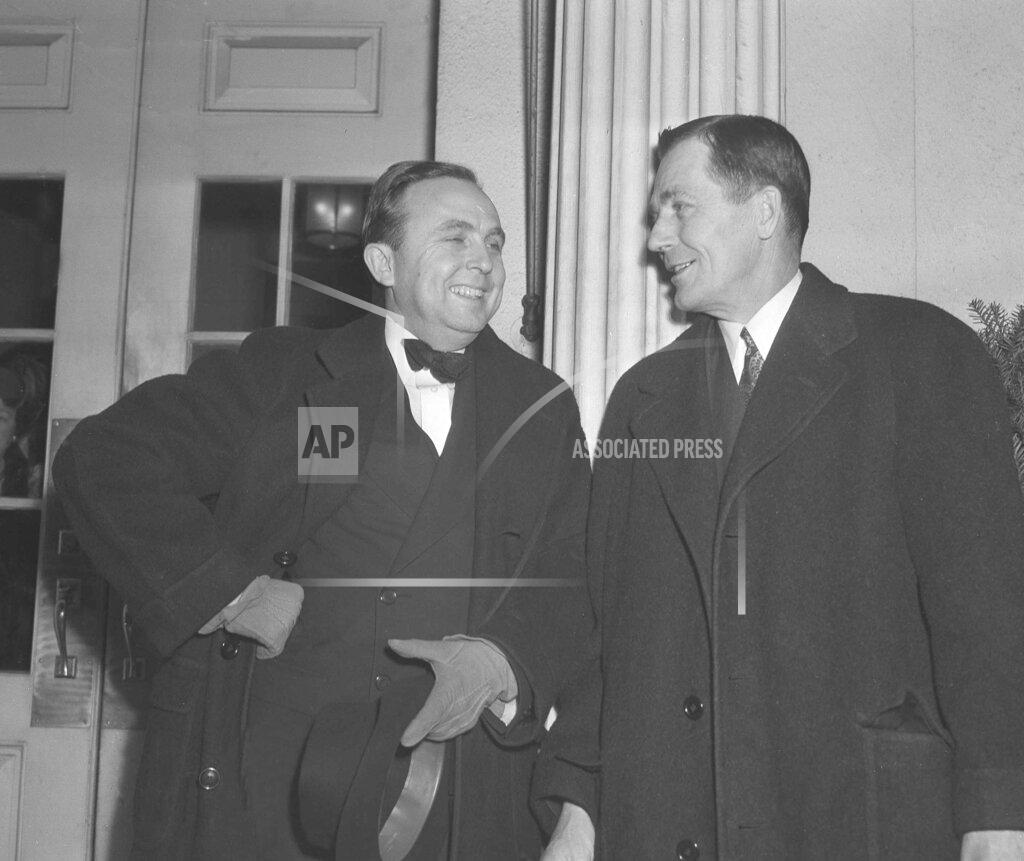
In Washington today, President Roosevelt returned from Hyde Park, conferred with legislative leaders, and received members of the Democratic National Committee.
The Senate considered the Independent Offices Appropriation Bill, completed Congressional action on the Urgent Deficiency Bill, and recessed at 5:17 PM until 1 PM tomorrow. The Foreign Relations Committee questioned Securities and Exchange Commission officials on proposals to aid Finland and the Education and Labor Committee heard Philip Murray oppose certain amendments to the National Labor Relations Act.
The House began consideration of the $107,379,000 State, Justice and Commerce Department Appropriation Bill, permitted Representative Hook of Michigan to expunge from The Congressional Record documents and remarks. reflecting upon Representative Dies, chairman of the Committee. to Investigate Un-American Activities, and adjourned at 5:27 PM until noon tomorrow. The Rules Committee questioned William Dudley Pelley, head of the Silver Shirts, and the Committee to Investigate the National Labor Relations Board requested $50,000 to continue its inquiry.
President Roosevelt returned to the White House today from a weekend visit at Hyde Park to assume personal command over the Administration effort to head off drastic cuts in his budget estimates. He warned in a statement at Hyde Park yesterday that these cuts might have unfortunate results for the nation. An hour after reaching the Executive Mansion the President was closeted with the legislative “big four” Vice President Garner, Speaker Bankhead, and the majority leaders, Senator Barkley and Representative Rayburn.
House slashes which reduced the Administration’s farm bill to $722,000,000 over his protest furnished the chief topic, according to the President’s conferees. Senator Barkley said after the conference that, pending a survey of Senate sentiment, he would make no prediction on plans to have the cuts restored. President Roosevelt warned Friday, before the House vote which ignored his protest, that any substantial cuts in the agricultural budget estimates would be at the expense of the national economy and the farmer in particular. He followed up this attack only yesterday with the implied reminder that any sudden or drastic curtailment of federal spending might precipitate a business recession such as was experienced in the latter part of 1937.
After his conference with the legislative leaders, the President saw Chairman Vinson of the House Naval Affairs Committee, who said after the talk that the President had approved the $654,902,270 Naval Expansion Bill when the committee planned to report Thursday. Mr. Vinson added that he had shown the President a draft of the measure. The Senate leadership, meanwhile, demonstrated on the floor its control of its program for modified economy as exemplified in a few amendments made by the Appropriations Committee in the billion-dollar appropriation bill to supply the independent offices of the government for the next fiscal year.
The leadership was able to insert in the bill funds to continue the National Resources Planning Board and to maintain two cuts recommended in items for the Civil Aeronautics Authority. At adjournment the Senate was in the midst of debate over an effort by Senator McCarran to restore a $1,000,000 cut from a House appropriation of $12,000,000 for the maintenance of air-navigation facilities.
The Senate Appropriations Committee reported the bill with appropriations of $1,138,693,528, an increase of $38,506,261 over the House bill but $56,010,945 under the total requested by the Bureau of the Budget. In consideration of committee amendments, the Senate approved by a roll-call, 38 to 35, an appropriation of $710,000 for the Planning Board, an item omitted by the House. This is equal to the board’s current allowance. The budget request was for $1,060,000.
President Roosevelt can win the Democratic nomination and break down the third-term tradition, in the opinion of many Democratic leaders who favor drafting him, but members of the Democratic National Committee, many of whom hold the same view, went to the White House today to shake hands with the President and came away having learned nothing from him about his attitude.
Representative Frank E. Hook, Democrat of Michigan, apologized to the House today for inserting in The Congressional Record letters tending to link Chairman Dies of the Committee to Investigate Un-American Activities with the Silver Shirts and the Christian Front. Mr. Hook said he was convinced the letters were forgeries, after William Dudley Pelley, head of the Silver Shirts, made a surprise appearance before both the Dies committee and the House Rules Committee to assert that he did not write the letters and had no knowledge of them. Mr. Pelley, sought for months by the Dies committee for questioning, appeared at the committee room just before noon and was heard in executive session. He was then summoned before the Rules Committee, which was considering a resolution by Representative Clare Hoffman, Republican, of Michigan, to expunge Mr. Hook’s remarks and the alleged forged letters from The Record.
District Attorney Thomas E. Dewey, aspirant for the Republican Presidential nomination, took issue yesterday with President Roosevelt’s opinion as to the fiscal position of the nation, charging that the President was “nine billion dollars wrong” in his calculation of the national financial status.
A small majority of persons questioned in a survey by the American Institute of Public Opinion, of which Dr. George Gallup is director, favors a United States governmental loan to Finland to purchase non-military supplies, according to a statement released yesterday by the institute.
Charles S. Deneen, veteran Republican leader who served two terms as governor of Illinois and one as United States Senator, died Monday at his home. His death, at the age of 76, was attributed to heart disease. Deneen was stricken in the midst of a program designed to rebuild the powerful organization during the current primary campaign. He had been relatively inactive in recent years but had planned to reenter the political arena where he had engaged in a score of battles. He was elected governor twice, in 1904 and 1908, and was sent to the senate in 1924.
A high-ranking U.S. military officer, Lieutenant General Hugh Drum, and a senior Federal judge joined yesterday in calling for an army, navy and air force “flexible and adequate enough to meet any emergency” and to prevent any possible invasion of the Western Hemisphere.
Earl Browder, American Communist leader under a four year federal prison sentence, was overwhelmingly defeated for a New York seat in the U.S. Congress Tuesday in a special election in which he had no right to vote, due to his recent criminal convictions. The winner was M. Michael Edelstein, a Tammany Democrat who pledged support of the New Deal.
Federal agents moved again today in the government’s campaign to crush subversive activities, arresting twelve reputed Communists and fellow-travelers who are accused of recruiting soldiers for the Spanish Republican Army.
A new scale of rations for Canadian troops, far exceeding anything previously sanctioned, was announced by Norman Rogers, Minister of Defense, today. It includes fresh milk, eggs, fish, fresh vegetables, raw apples and a wider variety of meats.
Lord Tweedsmuir, Governor General of Canada, fainted in his bath at Rideau Hall this morning and fell, striking his head against the wall and sustaining a concussion that left him unconscious for an hour. His scalp was cut by the fall, but there was no fracture of the skull.
Mohandas K. Gandhi, Indian Nationalist leader, said today that Great Britain and the Indian Nationalist Congress would never settle their dispute until Britain allowed India to determine her own constitutional status.
Japanese military spokesmen today announced that their northern forces had penetrated Ningsia Province, in far Northwest China, for the first time since the war started. The Japanese also said that 10,000 Chinese had been killed in fighting in Suiyuan Province, just east of Ningsia, since December 25.
The Japanese invasion of China rounded out its thirty-first month today, with the rival armies in the southern province of Kwangsi locked in a bitter battle that both sides indicated was one of the greatest of the war. The Japanese said that in the now nine-day-old battle they had cut off the westward flight of 50,000 Chinese and killed 8,000 and captured 1,000 Chinese regulars in the vicinity of Wingshun. This town, fifty miles east of the provincial capital, Nanning, is one that the Chinese said yesterday they had retaken from the Japanese.
Chinese dispatches, however, said that the defenders still held Pinyang and controlled the road for twenty-five miles southward. They said they had hurled back with substantial losses successive waves of Japanese who tried to recapture Wingshun. Guerrillas back of the Japanese lines are accounting for great numbers of Japanese dead and wounded, said the Chinese Central News Agency. The agency also reported that 300 men were killed when Chinese artillery sank a Japanese transport in the Yangtze River thirty miles above Kiuklang.
France has made a second protest to Japan against repeated bombings of the French-operated Yunnan Railway in Southwestern China by the Japanese air force, informed sources. said today.
The foreign office spokesman in Tokyo, referring to an “exchange of protests” over Japan’s bombing of the French-operated Yunnan Railway in South China, said today that his country was prepared to “take reasonable measures” to indemnify the French Government, if an investigation disclosed any Frenchmen had been killed.
Prime Minister Chamberlain announced today in the House of Commons a partial settlement with Japan in the dispute over a British cruiser’s seizing of twenty-one Germans from the liner Asama Maru January 21. Britain will hand over to Japan nine of the German sailors. Though the Japanese authorities still insist on the delivery of all the Germans and though the incident is not closed, Japanese shipping companies have been instructed to cease carrying subjects of belligerent countries who are thought to be in the armed forces. Mr. Chamberlain, in announcing the agreement today, said, “It is anticipated that such incidents as that in connection with the Asama Maru will be avoided in the future.”
Correspondence between the two countries on the incident, released in the form of a White Paper tonight, shows the approach of the two countries to the question was different. Britain considered it purely in the light of international law. Japan took it as a question of national dignity and prestige. The day after the British warship stopped the Asama Maru fifty miles from the Japanese coast Japan sent a note to Britain, regarding the action as “a serious unfriendly act against Japan,” and demanded “a full valid explanation promptly.” Sir Robert Craigie, the British Ambassador to Tokyo, has been protesting to Japan since last April about the detention by the Japanese of two British ships but they are still in Formosa.
The Japanese note reserved in advance the right to demand the delivery of all twenty-one Germans and suggested that in the interest of friendly relations Britain should give the question serious consideration. Meeting Japan’s demand for a prompt answer, Britain sent to Foreign Minister Hachiro Arita five days later a long legal statement of her case. The German Government, the British note said, was attempting to get all her mercantile officers back in Germany for naval service. The note then argued: “There has existed for centuries the practice of taking enemy nationals from a neutral ship without prize court proceedings being taken.” It pointed out that the German Prize Ordinance of 1939 supported the contention that any one traveling on a neutral ship to join enemy forces could be seized.
Japanese Foreign Minister Arita Hachiro told the members of the Diet that the Japanese Government had decided to accept Britain’s offer to return nine of the 21 Germans seized from the ocean liner Asama Maru on January 21, 1940 without regarding the case as settled until all the 21 were released. Correspondence between the British and Japanese Governments on the removal of German citizens from the Asama Maru, was issued as a “White Paper.” The correspondence ended with a British communication in which, as announced by Lord Halifax and Prime Minister Neville Chamberlain in Parliament, the British Government stated that although reserving all their legal rights, they are prepared to release nine out of the 21 men removed from the Asama Maru.
A leader of Nationalist elements in the Diet (Japanese Parliament) tonight bitterly denounced as “obsequious diplomacy” the Japanese Government’s attempt to appease the United States by announcing a plan to reopen the lower Yangtze River in China to international trade.
Dow Jones Industrial Average: 145.93 (+0.93)
Born:
Tom Brokaw, television journalist and news anchor (NBC Nightly News, 1982-2004), and author (“The Greatest Generation”), in Webster, South Dakota.
Danny Doyle, NBA power forward (Detroit Pistons), in Long Island City, New York.
Jimmy Tarbuck, comedian, in Liverpool, England, United Kingdom.
Naval Construction:
The Royal Navy “P”-class destroyer (Flotilla leader) HMS Pakenham (G 06) is laid down by Hawthorn Leslie & Co. (Hebburn-on-Tyne, U.K.).



 History Diaries