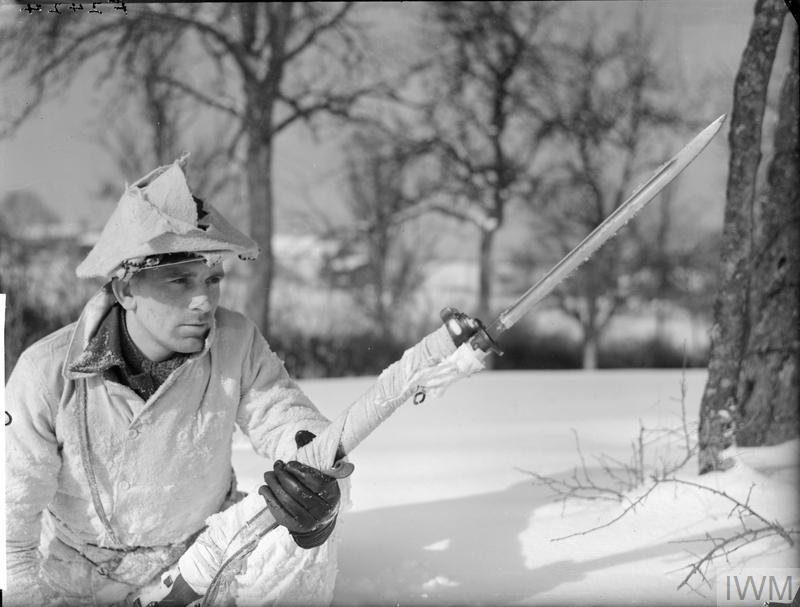
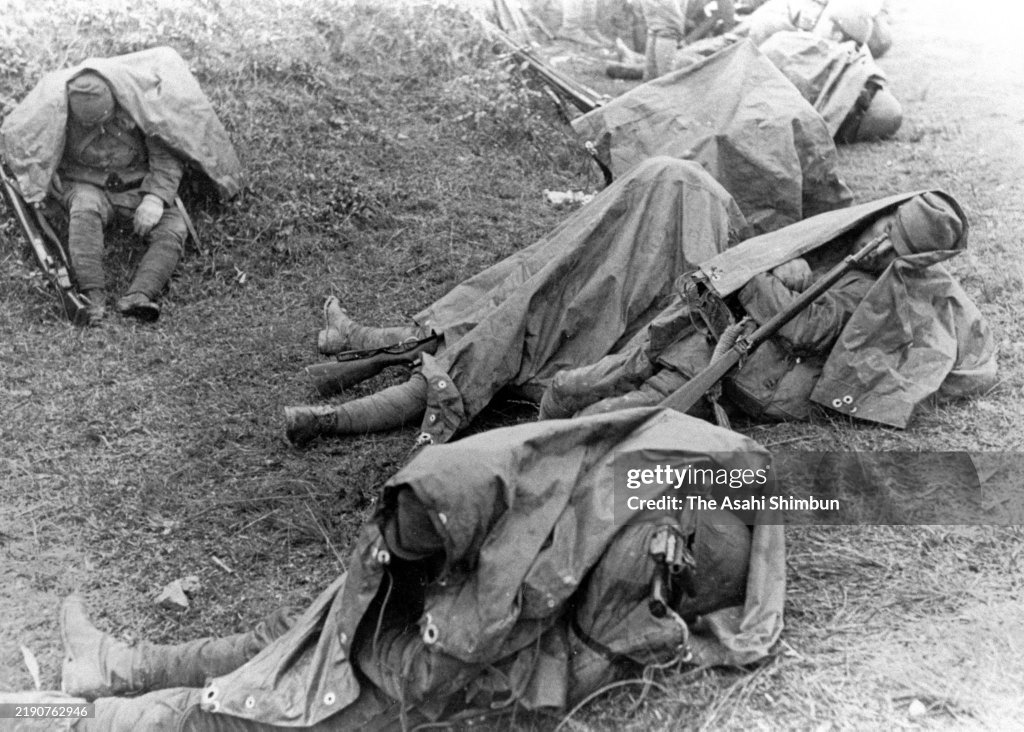
The Soviet 7th Army and 13th Army continue ‘demonstration operations’ against the Mannerheim Line. Consistent with Timoshenko’s small unit tactics, Soviet artillery, aircraft and tanks bombard Finnish positions in the Summa gap but Red infantry only advance on Summa village. Only in Summa village does the Soviet infantry attempt an advance, using its overwhelming superiority in numbers in an attempt to exhaust the Finnish troops, who are forced to fight and sleep in the open in temperatures of almost 30 degrees below zero. The Finns are fighting fiercely in return from the woods while the Soviets consolidate their capture of Finnish bunkers. Soviet artillery, aircraft and assault tanks shell the Finnish positions in Summa and Lähde.
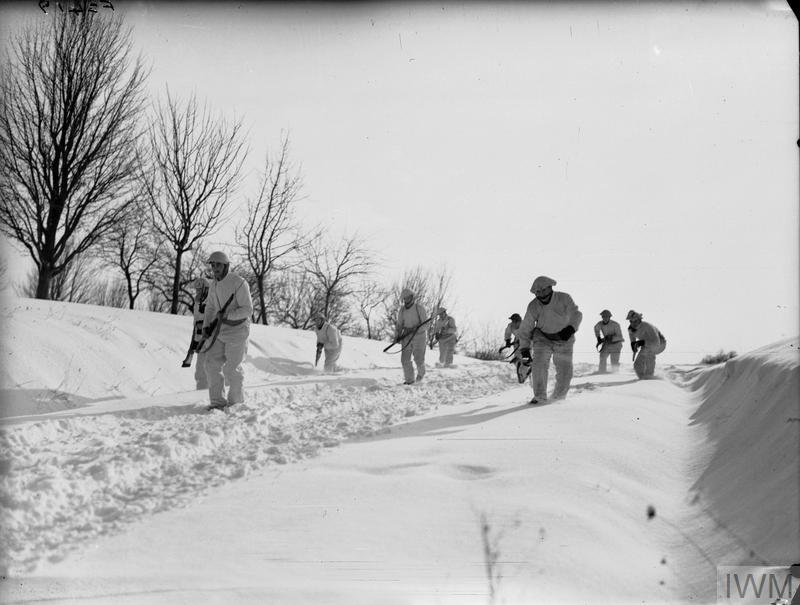
Above Lake Lagoda, Colonel Dolin’s Siberian ski battalion arrives near the village of Kuhmo and counterattacks Finnish 9th division. After a week of pressure, Finnish IV Corps completes the destruction of West Lemetti motti in the early hours of the morning, capturing 4 field guns, 2 antitank guns, 1 mortar, 32 tanks, 6 machineguns, 120 rifles and 26 trucks. Only around one hundred enemy troops manage to break out of the ‘motti’ before its final destruction. Orders for the attack are notable for the first official use of the term “motti”.
On the Eastern Isthmus, Taipale enjoys its quietest night of the year. Less than 50 mortars are fired in 7th Division’s sector.
In Northern Finland, the Russian Dolin ski brigade launches a counterattack in Kuhmo.
The Finnish Army is unable to find any more reserves or transfer those it has in time to cover areas where the Russians are threatening to break through.
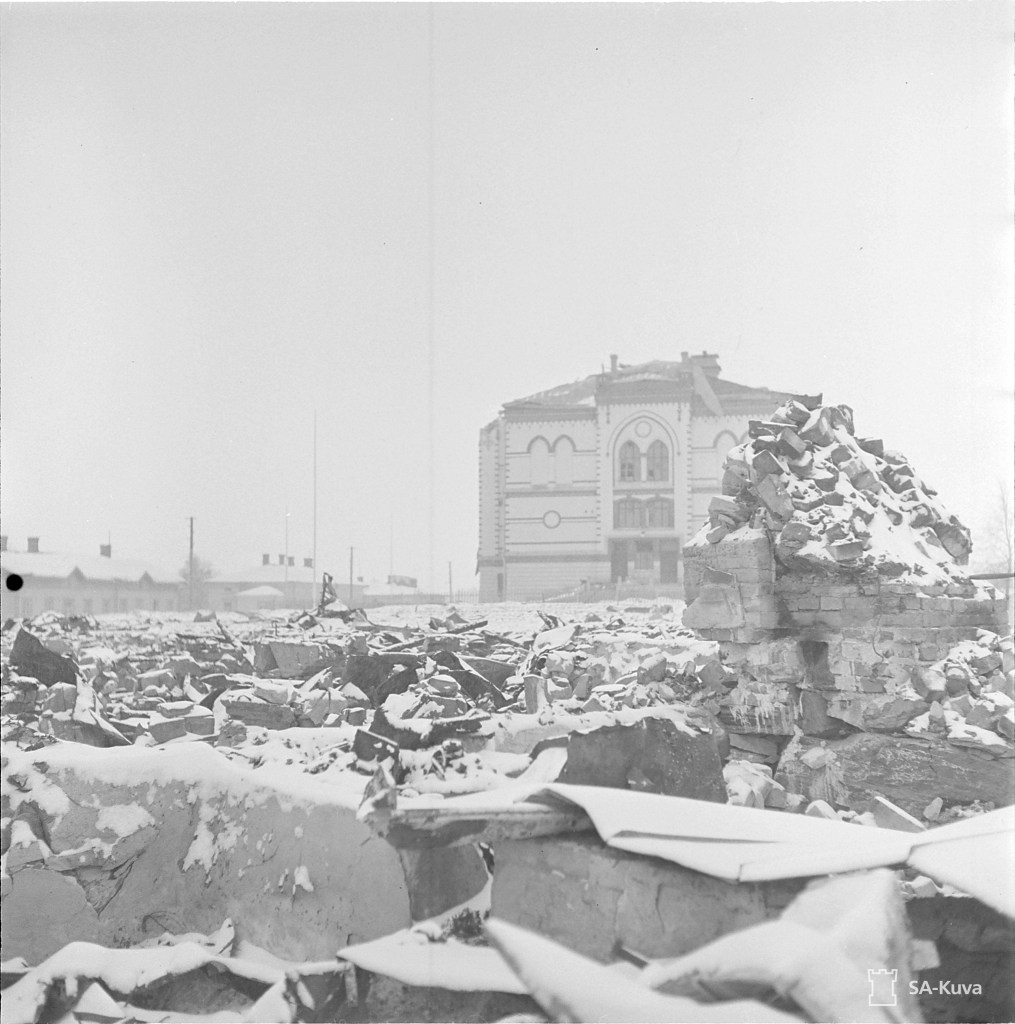
The Soviet air force conducts heavy attacks on Finnish targets. Fourteen are killed and 179 injured in heavy Soviet air raids on Helsinki and the surrounding area. Viipuri suffers terribly, with other attacks on Ekenaes and Rovaniemi. A total of 141 targets (towns, rail junctions, harbors) are attacked. The Soviets drop about 6,800 bombs. Overall, there is a total of 193 casualties, mostly civilians. The Finns claim to have shot down 11 more Soviet planes.
In Helsinki, children, the elderly, and the disabled are to be compulsorily evacuated from the city. Those who do not leave voluntarily will be forcibly removed.
At 1 o’clock in the afternoon, Moscow’s propaganda radio announces that Finland is continuing to hound its workers, with “officer devils” spurring their troops on to burn and loot working-class homes.
Paavo Nurmi and Taisto Mäki, the famous Finnish runners currently on a tour of the USA, attend a flag-raising ceremony in the Finnish pavilion at the New York World’s Fair.
The Finnish Foreign Minister travels to Stockholm for secret negotiations with Soviet ambassador Madame Kollontai.
On the Western Front the outposts seem to be reverting to the activity that ruled before Arctic weather came as a paralyzing factor. Several German raiding parties, for instance, attempted to surprise French posts today, but they were driven off by machine-gun fire.
After two days of talks, the Balkan Pact issued a 7-point communiqué indicating it would remain neutral in the conflict. Members of the Balkan Entente (Rumania, Yugoslavia, Greece, and Turkey) declared neutrality.
Germans today hailed as a blow to the Allies and a defeat for Turkey’s alleged efforts to line up support for the Allies the decisions announced by the four Balkan Entente States at the conclusion of their Belgrade conference.
Grigore Gafencu’s and Alexander Cincar-Markovitch’s statements last night in Belgrade have caused satisfaction in Roman political quarters owing to their warm references to Italy and to Rumania’s avowed willingness to seek an understanding with Hungary and Bulgaria.
Stalin has Nikolai Yezhov, his former head of the NKVD (later the KGB), executed for disloyalty. Not only is Yezhov executed, but Stalin orders him removed from all known photographs of him with Stalin in an early version of photoshopping. This incident and others like it perhaps informs George Orwell as he writes his classic “1984” later in the decade.
Reports surface today that the Germans are sending arms by sea to the Soviets at Petsamo (occupied by the Soviet 14th Army) and Murmansk.
The emigrant ship Sakarya with about 2,200 Jewish refugees from Czecho-Slovakia, Austria and Rumania on board has left the Black Sea port of Sulina, on the Danube delta, it was learned today, bound for Palestine.
An agitation that began like a murmur among a few public bodies in Ireland has now become a strong national movement demanding that the government reprieve Peter Barnes and James MacCormick, the two young Irishmen whose execution in the Birmingham jail is set for Wednesday morning. Barnes and MacCormick were tried on charges of being concerned in the bomb explosion at Coventry last August when five persons lost their lives. An appeal to the Court of Criminal Appeal in London failed and only intervention by the British Home Secretary can now save both Irishmen from the scaffold.
Officials in North England and Scotland eased the coal shortage today by making Sunday deliveries of fuel and chopping down trees in parks to meet the demands of freezing citizens. In Glasgow residents lined up and watched workers cut down the trees and then carried off the logs in barrels and perambulators.
The French decorate RAF Flight Lt. R.V. Jeff with the Croix de Guerre.
The United States and Saudi Arabia established full diplomatic relations for the first time when Bert Fish presented his credentials as American Envoy Extraordinary and Minister Plenipotentiary.
The Royal Navy destroyers HMS Basilisk & Brilliant sail from Dover; the former with the Prime Minister, War Cabinet & Chief of Staff, destined for Boulogne.
The Royal Navy minesweeper HMS Sphinx capsizes in heavy weather in the North Sea a day after being bombed by German aircraft, and comes ashore a total wreck. Five officers and 49 crew perish. It is the first Halcyon-class ship lost at sea.
At 0417 hours, the Norwegian steam merchant Hop was torpedoed and sunk by the U-37, commanded by Korvettenkapitän Werner Hartmann, near the Shetland Islands in the North Sea (58° 55’N, 0° 14’W). All of the ship’s complement of 17 died. The 1,365 ton Hop was carrying ballast and was bound for Middlesbrough, England.
At 2125 hours, the unescorted British steam merchant Leo Dawson was torpedoed and sunk by the U-37 approximately 15 miles east of Bressay, near the Shetland Islands (60° 10’N, 0° 39’W). The ship had been missed by a first torpedo at 2111 hours. All of the ship’s complement of 35 died. The 4,330 ton Leo Dawson was carrying iron ore and was bound for Immingham, England.
The Yugoslavian cargo ship Vid was torpedoed and sunk in the North Sea (58°15′N 0°48′W) by the German submarine U-21.
The Belgian cargo ship Eminent ran aground on the east coast of the United Kingdom. All eleven crew were rescued by the lifeboat Augustus and Laura (Royal National Lifeboat Institution). The ship was raised and resumed service, being lost in 1941.
The Dutch coaster Flores ran aground in the Thames Estuary near the Kentish Knock Lightship and was wrecked. All seven crew were rescued, one of them after drifting three days.
The Royal Navy anti-aircraft cruiser HMS Cairo collided with steamer Lulonga (821grt) while entering the Humber. HMS Cairo was not damaged, but the steamer was beached to prevent her sinking.
The French collier Marie Dawn (2157grt) was damaged by a mine six miles NE of the Sunk with one crewman killed. She was abandoned by the survivors who reached Harwich, but was then towed in by tugs.
U-17 had to break off her patrol due to serious engine trouble in the North Sea.
The U.S. passenger liner Manhattan, detained at Gibraltar the previous day, was released, but not before British authorities seized 390 sacks of German mail. American diplomatic mail pouches, however, were not disturbed.
U.S. freighter Exford is detained at Gibraltar by British authorities (see 13 February).
Convoy OB.85 departs Liverpool.
Convoy HXF.19 departs Halifax for Liverpool .
The War at Sea, Sunday, 4 February 1940 (naval-history.net)
Light cruiser AURORA arrived at Scapa Flow, and armed merchant cruisers ASTURIAS and CALIFORNIA in the Clyde, all from Northern Patrol.
Light cruiser NEWCASTLE sailed from Scapa Flow, and armed merchant cruiser CARINTHIA from the Clyde, both on Northern Patrol.
Anti-aircraft cruiser CAIRO collided with steamer LULONGA (821grt) while entering the Humber. CAIRO was not damaged, but the steamer was beached to prevent her sinking.
Destroyers EXPRESS, IVANHOE, INTREPID, and ESK arrived in the Humber at 1255 after Minelaying Operation JB in the North Sea. The minelaying was screened by Motor Torpedo Boats 22, 24, 25 which arrived in the Humber at 1228.
Submarines SEAL and NARWHAL exercised in the Firth of Forth. Afterwards SEAL set off on patrol, while NARWHAL was to have joined convoy ON.10. When the convoy was delayed, NARWHAL returned to Rosyth.
Destroyer BRAZEN departed Invergordon to hunt for a submarine off Lossiemouth reported by aircraft, but was later recalled.
Destroyers JERVIS and JUPITER departed Rosyth on the 4th, patrolled in the vicinity of Farne Island and then proceeded to the Humber. Destroyer WOOLSTON and sloop GRIMSBY, waiting for convoy FS.87, also patrolled the area.
Destroyer COSSACK departed Rosyth for Scapa Flow, where she arrived on the 5th.
Destroyer KANDAHAR departed Rosyth for the Clyde, where she arrived on the 5th.
Destroyers KIPLING and KIMBERLEY departed Greenock for Scapa Flow with steamers KYLE FISHER (520grt) and FLORISTAN (5478grt). FLORISTAN arrived at Scapa Flow on the 6th.
Destroyers BASILISK, carrying the Prime Minister, the War Cabinet and the Chiefs of Staff, and BRILLIANT departed Dover for Boulogne. Both ships returned to Dover that evening.
Destroyers WHITSHED, HAVANT, and ARDENT departed Plymouth for a position 40 miles 270° from Cape Finisterre.
Destroyers WOLSEY and WINCHELSEA and sloop SANDWICH, escorting convoy SLF.18 west of Ushant in 48 23N, 09 27W, attacked a submarine contact.
Submarines UNITY and H.34 accompanied convoy FS.85 on the 3rd and 4th, when they arrived in the Nore. They were then escorted by patrol sloop PUFFIN on to Portsmouth on the 7th.
U-21 sank Yugoslav steamer VID (3547grt) in 58 15N, 00 48W with all hands.
U-37 sank British steamer LEO DAWSON (4330grt) in 60 10N, 00 39W and Norwegian steamer HOP (1365grt), which had departed Bergen on the 3rd for Middlesbrough, in 58 55N, 00 14W. There were no survivors from HOP.
Steamer BARON RUTHVEN (3178grt) ran aground off the Tees.
Norwegian steamer JERNFJELD (1369grt) ran aground off Whitby Bay.
French collier MARIE DAWN (2157grt) was damaged by a mine six miles NE of the Sunk with one crewman killed. She was abandoned by the survivors who reached Harwich, but then towed in by tugs.
Convoy HXF.19 departed Halifax at 1400 escorted by Canadian destroyers HMCS SAGUENAY and HMCS SKEENA, which detached on the 5th. Ocean escort was armed merchant cruiser AUSONIA which left on the 14th. The convoy was joined in Home Waters by destroyers VENETIA from convoy OB.89 and WITCH from convoy OA.89 from the 14th to 17th, when it arrived at Liverpool.
President Roosevelt’s recent proposal for a late Democratic National Convention and a short Fall campaign will be approved by the National Committee, it was predicted today, when it meets in Washington tomorrow. The meeting is expected to select the convention city and authorize. Chairman Farley or a subcommittee headed by Mr. Farley to fix the time for the convention. Discussions by the party leaders today revolved mainly about the third term movement and the party’s chances of winning with the President as the nominee. Most of the committeemen said that the President was the strongest man in the party, although some thought that the third-term tradition might weaken his appeal.
The view of some leaders was that New Deal policies are the chief issues before the electorate. Not a few of the party leaders thought that the President should be renominated to perfect his policies and ditch those found to be unworkable. The liberalism of Roosevelt overshadowed all other questions, committeemen reported, and the feeling was that with him at the head of the national ticket the chances of county and State candidates would be enhanced.
The third-term, or draft Roosevelt, program, already lusty because of many declarations by State leaders, seemed to gain a definite and serious impetus as reports today told of the strength of the President in different parts of the country. The views expressed today, coming on the heels of the action of New Jersey, Pennsylvania and Illinois leaders in filing petitions for Roosevelt delegates in their States, has paved the way for a definite statement from the President regarding his plans, the leaders assert. Whether the third-term issue will crop up at tomorrow’s meeting remains to be seen.
Some zealous Roosevelt followers may inject the question into the discussion and cause a lively and much-desired discussion by those supporting other candidates for the nomination. Several committeemen declared tonight that they hoped the matter would come before the committee because they wanted to vote for a third term resolution as a means of bringing clarification long in advance of the convention of what to expect from the President. One aim of the suggestion for a late Democratic convention is to force the Republicans to write their platform and select their nominee first.
Congressional economy leaders, bracing themselves for further fights during the coming week to retain cuts in pending supply bills, turned a wary eye tonight toward the House veterans pension bloc, which in serving notice that liberalized pension bills would be pushed, declared that economies should not be effected at the expense of the disabled veteran or his dependents. The immediate objectives of the economy leaders are to get the Independent Offices Supply Bill through the Senate without any increases, and to prevent the farm bloc in the Senate from restoring the drastic cuts in the Agriculture Department Bill which brought pointed criticism from President Roosevelt.
The fifth supply bill of the session will be brought up in the House Tuesday, when the State, Justice and Commerce Departments’ 1941 fiscal appropriation will be reported by the Appropriations Committee. This bill is reported to have suffered the same sharp axe which has been applied to other measures.
The Farm Bill fight will continue for two or three weeks, however, to be the bone of contention between the economizers and the spenders. Now that President Roosevelt has come to their aid, the farm fund supporters seem emboldened to attempt not only to restore cuts from budget estimates, but to press for an unbudgeted $212,000,000 in farm parity payments. The parity payments, opposed by President Roosevelt unless the cost is financed through new taxes, are regarded by Secretary Wallace as necessary to the success of the farm program.
Senators Lucas of Illinois and Russell of Georgia prepared to call the farm forces to a meeting early in the week to decide upon strategy in the Senate. Unlike the case of the House last week, it was regarded as probable the Senate farm bloc would attempt to stand or fall on a program calling for about the same benefits as were provided for agriculture this year. This would call not only for $212,000,000 in parity payments, but the $72,000,000 item slashed from the bill by the House for additional funds for surplus crop disposal. In addition, the Senate friends of the farmer are expected to ask for restoration of the $25,000,000 item for tenant loans, a program sponsored in the past by Senator Bankhead.
The Senate boiling point on spending is considerably lower than that of the House, as is shown by a comparison of amounts voted originally by the two branches for the past two years. So the farm bloc, relying upon the record of these past two years, expects to get farther in the Senate than it did in the House.
The New Deal has failed completely to solve the economic problems of the United States and its “tinkering” has served only to aggravate adverse conditions with which the country is confronted, according to a statement made public here today by ten prominent labor leaders representing some of the most powerful unions and groups affiliated with the American Federation of Labor. The labor leaders declared the New Deal had divided labor into warring camps, depressed capital, left the country still with 10,000,000 unemployed, dislocated the country’s finances, embittered the relations of employers and employees, saddled the nation with a $40,000,000,000 debt and established the “growing dominion of the federal government over the lives and fortunes of the American people.”
Declaring that the country was suffering from a “jittery state of mind,” with investors frightened and business afraid to expand, William Green, president of the American Federation of Labor, today called on government and business to get together and effect a “lasting peace.”
Restriction placed upon expenditures for relief in President Roosevelt’s “economy” budget is the chief factor contributing to an immediate economic outlook described as “unpromising” by the Congress of Industrial Organizations.
The Republican party will not send a representative to the American Youth Congress, which will meet here next Sunday, because the youth group has failed to expel “communistic organizations and elements,” John Hamilton, chairman of the Republican National Committee, said today. He based his allegation that communistic elements, “though a minority of the Youth Congress, frequently control its actions” on disclosures of the Dies committee. The Republican National Committee made public a letter written by Mr. Hamilton to Joseph Scadden, executive secretary of the American Youth Congress, who had called the attention of the national chairman to the fact that no one had been designated to represent the Republicans at the meeting of the congress.
Webster N. Jones, a Harvard sophomore of 19, missing since yesterday, was found barefoot and half asleep on the southern slope of Mount Washington today after surviving a terrifying night of snow, wind and a temperature of 20 below zero.
The expiration of the trade treaty between the United States and Japan has caused Japan to seek new sources of supply for goods formerly purchased in the United States and she is now making an effort to conclude a large contract for Mexican oil.
First Battle of Wuyuan: The Japanese 26th Division drives back Chinese 8th War Area forces and captures Linhe, Suiyuan Province, China.
Battle of South Kwangsi: Japanese forces capture Shanglin and are attacking Wuning.
Chinese 64th Army is counterattacking around Pinyang.
Chinese counterattack captures Yungshun, threatening to cut off Japanese spearheads from base at Nanning.
Born:
George A. Romero, filmmaker (“Night of the Living Dead”), in the Bronx, New York, New York (d. 2017).
John Schuck, American actor (“McMillan & Wife”, “Holmes & Yoyo”), in Boston, Massachusetts.
Billy Neighbors, AFL guard (AFL All-Star, 1963; Boston Patriots, Miami Dolphins), in Tuscaloosa, Alabama (d. 2012).
Gary Cutsinger, AFL defensive end (Houston Oilers), in Perry, Oklahoma.
Jerry Inman, AFL-NFL defensive tackle (Denver Broncos), in Manhattan, Kansas.
Nick DeFelice, AFL tackle (New York Jets), in Derby, Connecticut.
Martin Jones, British concert pianist, in Witney, England, United Kingdom.
Theodore “Ted” Stanley, American anesthesiologist and medical entrepreneur (created the fentanyl lollipop), in Manhattan, New York, New York (d. 2017).
Died:
Nikolai Yezhov, 44, Soviet secret police official, head of the NKVD from 1936 to 1938, during the height of the Great Purge (executed during continuing purge).
Samuel M. Vauclain, 83, American engineer and inventor.


 History Diaries