McGeorge Bundy, President Johnson’s special adviser for national security affairs, said on his arrival in Saigon today that “the United States remains determined” to defeat the Communist guerrillas. Here for a three-day, fact-finding visit, Mr. Bundy went immediately into a conference with American officials. He is also expected to see Lieutenant General Nguyễn Khánh, leader of the military officers who took over the South Vietnamese Government last month.
U.S. officials in Saigon denied widespread rumors that Presidential assistant McGeorge Bundy is in Saigon to seek a basis for a negotiated peace in the war against the Communist Việt Cộng.
South and North Vietnam McGeorge Bundy, Johnson’s special assistant for national security, arrives in Saigon today; two days later Soviet Premier Aleksei Kosygin arrives in Hanoi. There is worldwide speculation that their visits are linked — that the United States and the Soviet Union have agreed to pressure their ‘clients’ into negotiations — but this is denied by all the principals. Bundy, in fact, seems to be there to confer with Ambassador Taylor on the best way to deal with the political situation. And although Kosygin will publicly proclaim continued Soviet Union support for North Vietnam and the Communist war, a Soviet participant in the talks will later describe the North Vietnamese as “a bunch of stubborn bastards.”
President Johnson declared today that the Administration was determined to continue its policy of “helping the people of South Vietnam preserve their freedom.” Discussing the Vietnamese problem at his news conference, the President conveyed no indication of any change in policy, such as an expansion of the anti-Communist war, and no feeling of crisis brought on by deterioration in the political and military situation. He declined to speculate on the implications of the visit of the Soviet Premier, Aleksei N. Kosygin, to North Vietnam. He also insisted that the current Saigon visit of McGeorge Bundy, his special assistant for national security affairs, was a routine consultation.
Mr. Johnson refused to consider any suggestion that the United States might be forced to withdraw from South Vietnam. If a potentially significant theme emerged in the President’s replies, it was in his relatively narrow justification for the extensive American commitment there. Repeatedly Mr. Johnson said that the United States was in South Vietnam in response to a commitment made 10 years ago under President Dwight D. Eisenhower “to try to help the people of Vietnam help themselves to preserve their freedom.” In asserting that the Administration intended to abide by this commitment, he added that its attention was focused on making this assistance “more effective and efficient.”
Mr. Johnson declined to present a further argument that had been offered: that the commitment in South Vietnam was in the long-range strategic and diplomatic interest of the United States to prevent Chinese Communist expansion through Southeast Asia. It was not clear whether the limitation of Mr. Johnson’s explanation was due to the impromptu nature of his comments and to a reluctance to discuss Vietnam, or to an intent to leave the door open for change in the United States commitment. Some Administration officials said the purpose might have been to soften the psychological defeat in any eventual withdrawal from South Vietnam, either at the request of the South Vietnamese or after a negotiated settlement.
The Chinese Communist leader Mao Tse-tung has told an American journalist that the Việt Cộng will win the war in South Vietnam with their own power, a Japanese newspaper said today.
Communist North Vietnam has been put on a war footing following a meeting of the National Defense Council last month, Hsinhua, Peking’s press agency, said today. The announcement said President Hồ Chí Minh presided. It followed repeated charges that the United States was striking at North Vietnam. The United States has denied the charges.
An attempt to regain power by General Phoumi Nosavan, former rightist strongman of Laos, has apparently been crushed, Western sources said today. Laotian Government soldiers were pursuing General Phoumi Nosavan and General Siho Lamphouthacoul, the head of the national police force, in the mountains north of Vientiane. The two men are reported to be headed for Phou Khaokhouai, General Siho Lamphouthacoul’s redoubt 17 miles north of Vientiane, after troops loyal to the government shelled police headquarters last night and wrecked General Phoumi Nosavan’s villa.
Prince Souvanna Phouma, the Premier and leader of the neutralist faction, who has often jousted for power with General Poumi Nosavan in the past, urged the army today to press its offensive against the fleeing generals. About 600 policemen surrendered during yesterday’s fighting. Many of them are being held in a cigarette factory on the outskirts of Vientiane, the country’s administrative capital.
The Prince has estimated that General Siho Lamphouthacoul and General Phoumi Nosavan, who is Deputy Premier in the Laotian Government coalition of rightists, neutralists and pro-Communists, have two police companies of about 200 men at the mountain camp. Western military officials believe they have twice that many policemen plus possible army reinforcements from Paksane to the south. With some reservations, however, Western observers agree with the Premier that the rebels have been decisively routed.
General Oane Rathikone, the Army Chief of Staff who has remained loyal to Prince Souvanna Phouma through the two uprisings since last Sunday, said he would have General Phoumi Nosavan arrested if he reappeared. Ambassador William H. Sullivan, who has met frequently with the Premier during the last five days, conferred with him again this morning. The Vientiane civilian airport and cable office were still closed today.
The major battling of the revolt began before noon yesterday and ended shortly before midnight. The Government’s army, led by General Kouprasith Abhay, reported that some army dissidents loyal to General Phoumi Nosavan had opened fire on a Government camp at Chinay. But Western officials, who believe that General Kouprasith Abhay wanted to provoke a showdown with the rebel faction, said there were indications that the Government general was the first to attack. About 60 persons have been reported killed in the barrage of mortar, machine-gun and bazooka fire that followed. Most of them were civilians.
In Vientiane one block of buildings that included the Pan American World Airways office, eight Chinese shops and the central police station was largely destroyed. No Americans were injured during the 12-hour battle. For much of the nineteen fifties the United States supported General Phoumi Nosavan against the neutralist army and the pro-Communist Pathet Lao forces. He has often expressed dissatisfaction with the shift of political alignments that removed much of his military influence and his direct access to foreign-aid funds. His position was undercut still further last April when General Kouprasith Abhay and General Siho Lamphouthacoul combined to stage a revolt that strengthened their own positions. Later General Phoumi Nosavan unsuccessfully opposed a reshuffling of the Laotian Cabinet and a reorganization of the army.
At a press conference in Paris, President Charles de Gaulle of France urged changes in the United Nations and the world’s monetary system which would downgrade what he indicated as the too-dominant role of the United States in each. General de Gaulle cut across a major United States policy by his proposal that Communist China, which is not a member of the United Nations, play a role in examining and revising its Charter. While the United States considers that China’s seat in the world organization is held legally by the Government of President Chiang Kaishek on Taiwan, France maintains diplomatic relations with Communist China.
France’s intention is to restore the United Nations to its original role, General de Gaulle said. He maintained that the United Nations had changed from a forum for the discussion of world affairs into a participant in the rivalry between the United States and the Soviet Union. The United Nations, he said, used force in certain areas, initiated military intervention in the Congo and, in consequence, has undergone profound transformations that have made it lose its prestige. His principal points were these:
- A five-power conference, including Communist China as well as France, Britain, the United States and the Soviet Union, should be held at Geneva to examine and revise the Charter of the United Nations.
- The “essential objective” of French policy is the negotiation of the reunification of Germany “by Europe itself” because unity is a European question even though the United States, the Soviet Union and Britain are committed, by agreement, to take part with France in any decisions on the future of Germany.
- France demands a return to the gold standard, a change that would reduce reliance on the dollar and the pound sterling.
President Johnson indirectly rebuffed French President Charles de Gaulle’s call for a five-power conference to review the charter of the United Nations. At a news conference, Mr. Johnson was asked for comment only on that part of General de Gaulle’s remarks earlier that were devoted to the United Nations and the proposal for a five-power conference. Mr. Johnson said he would “much prefer to await a full report on the exact statement before getting into any detailed discussion involving the general’s observations.”
Then he added: “It is the position of this country, however, we believe that the problems of the United Nations are traceable not to the United Nations Charter but to those countries which have violated either the spirit or the letter of the Charter, because we believe that the framework for world progress and peace is in the Charter. I will be glad to respect any review, any observations the general has made and give due consideration in due time.”
French President Gaulle called for an end to the Bretton Woods system that had been in force since 1958, and a worldwide return to the gold standard. Over the next two years, de Gaulle would lobby for transfer payments between nations to be made in gold and would ultimately abandon the idea in favor of closer cooperation with France’s European partners.
House Democratic leaders postponed until Monday a showdown fight over President Johnson’s plea for flexibility in shipping surplus food to Egypt. President Johnson appealed to the House of Representatives today to follow the Senate’s lead and permit him to decide whether continued surplus food shipments to the United Arab Republic were in the national interest. In an opening statement to his news conference the President said it was obvious that relations between the United States and the United Arab Republic must be improved. He said this improvement would require an effort from both countries and continued: “I cannot predict whether improvement can be achieved. But if we are to have any degree of success in this sensitive relationship the President must have some freedom of action. I earnestly suggest to the Congress that they consider this need, which I believe is truly in the best interest of all of our people and is not in any manner a partisan matter, as demonstrated by the very fine speech made by the minority leader, Senator [Everett McKinley] Dirkens, yesterday.”
Indian Prime Minister Lal Bahadur Shastri urged today that the United States and the Soviet Union “evolve a formula to settle the issue” of payment of United Nations peace-keeping assessments.
Trofim Lysenko, whose opinions on genetics and biology held Soviet research isolated from the rest of the world scientific community, was dismissed from his position as Director of the Institute of Genetics at the Soviet Academy of Sciences. Lysenko, who had been made Director in 1940 by Joseph Stalin, was removed after Academy Director Mstislav Keldysh condemned his policies.
Peter N. Landerman, 24, of Riverside, the only American in a Soviet Prison, was released on order of the Presidium of the Supreme Soviet.
The four-day official visit of the Greek Premier, George Papandreou, ended on a friendly note today with agreement between Athens and Belgrade on an elastic formula for solution of the Cyprus crisis.
The British Labor Government disclosed tonight that it would tighten the Commonwealth Immigration Laws. Two years ago, before it came to power, the Labor party opposed the adoption of those laws, which are a focus of controversy over racial prejudice.
A Conservative easily won a seat in the British House of Commons in one of three special elections regarded as another test of sentiment toward the Labor government of Prime Minister Harold Wilson. The Conservatives comfortably held the constituency of Altrincham and Sale in northwestern England in the by-election today.
Queen Elizabeth II of the United Kingdom was given the “Freedom of the City” honor (referred to in the United States as the “key to the city”) in a ceremony at Addis Ababa City Hall during her visit to Ethiopia.
The Confederation of British Industry was founded.
The United States offered today to the Philippine Government broader legal jurisdiction over key United States military bases.
A former witch doctor for the Congolese rebels predicted today that the rebellion would soon collapse because “it has run out of magic.”
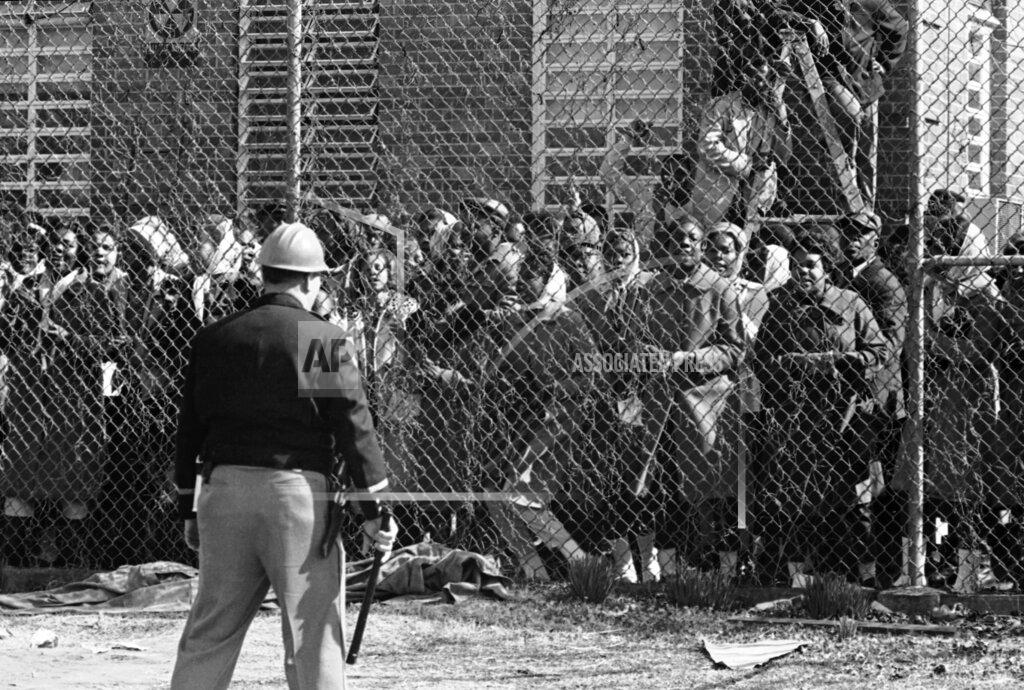
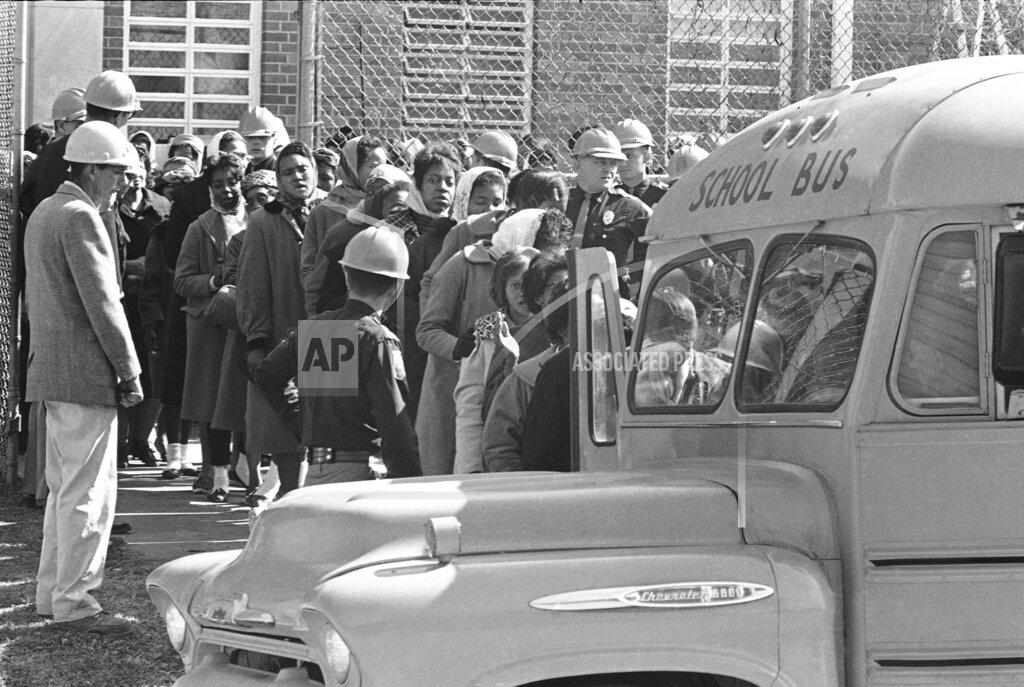
The Dallas County voter registration board in Selma, Alabama, was ordered by a federal judge to speed up registration of Blacks and prohibited use of a disputed test on civics and government. A federal judge issued an order today to make it easier for Blacks to register to vote in Dallas County. The Rev. Dr. Martin Luther King Jr., who spent his fourth day in jail, called for a suspension of street demonstrations until Black leaders could evaluate the order. Federal District Judge Daniel H. Thomas issued the order in Mobile in response to a suit filed last year by the Justice. Department.
He ordered the Dallas County board of registrars to stop using a literacy test set up by the State Supreme Court, to process at least 100 applications each day the board is sitting, and to refrain from failing applicants on technicalities. The literacy test has been attacked as being too difficult. Judge Thomas said that if the board did not process all who sought to register by next July, he would appoint a voting referee under the terms of federal civil rights laws. Justice Department officials were reported to believe that the decision was as favorable to the Black community as could be obtained. But the initial reaction of Black leaders was one of disappointment. The Rev. Andrew Young, an assistant to Dr. King, said at first that the decision was “disappointing” and that demonstrations probably would continue on a larger scale. A few hours later he said: “We are so emotionally caught up in the movement that it is hard for us to be objective. We feel like we can have very little faith in this unless something is done about Jim Clark.”
Sheriff James G. Clark has become a symbol of white opposition to Selma Negroes. The order, Mr. Young said, held out the prospect of six months more of what he called the sheriff’s “brutality and humiliation.” As for Dr. King’s reaction to the order, Mr. Young said, “He would like to think about it overnight.” However, Dr. King sent word that planned demonstrations should cease at least for the time being.
The order, served on members of the board of registrars here tonight. was effective immediately. While it did not require the board to be in session more than the normal two days a month, the prospect of having a referee appointed after five months should make the board open its doors on additional days, an informed source said. Almost 2,800 persons have been arrested since Dr. King opened his campaign here last month in an effort to speed Black registrations throughout the Alabama Black Belt. Dr. King was among those arrested Monday.
In his order, Judge Thomas said, “The court specifically finds the defendant has deprived Blacks of the right to vote and such deprivations have been pursuant to a pattern and practice.” The Civil Rights Act of 1964 permits the federal government to sue for injunctions against “a pattern or practice” of voter discrimination. The judge said that, at the time the suit was filed last year, 9,543 whites and 335 Blacks were registered. There are 15,115 Blacks and 14,440 whites of voting age in Dallas County. From May, 1962, to August, 1964, Judge Thomas said, 795 Blacks applied to register but only 93 were enrolled. In the same period, 1,232 whites applied and 945 were accepted.
Earlier today. Malcolm X came to Selma and unintentionally delayed street demonstrations inspired by Dr. King. The black nationalist leader,” who opposes Dr. King’s doctrine of nonviolence, paid a surprise visit to the Browns Chapel Methodist Church while scores of Blacks were preparing to march on the Dallas County Courthouse. His visit delayed the march for several hours. At midafternoon. Dr. King sent word from his jail cell that he thought it would be a good idea to slow the direct-action campaign against barriers to Black voting. The meeting broke up without a demonstration.
In adjoining Perry County, however, almost 200 Blacks were arrested when they marched on the courthouse in Marion to demand faster registration of Blacks. Approximately 300 Blacks are registered in that county, where 66 percent of the 17,000 residents are Black. The arrests brought to about 2.800 the number that have been made in Selma and Marion since Dr. King opened his campaign last month. The authorities would not say where the Blacks were being taken. Overflow, prisoners have been confined in four State Highway Department work camps used to house convict labor.
The Federal Bureau of Investigation began today an investigation of conditions in the camps after Black leaders complained of cold and overcrowding. Hosea Williams, an assistant to Dr. King, was released today from Camp Camden in Wilcox County, where he had spent two nights on a contempt charge. He said that the barracks where the prisoners were confined were not heated and that the prisoners slept on the floor under thin cotton blankets and subsisted on black eyed peas and cornbread. Mr. Williams said several women at the camp had become ill.
President Johnson, denouncing denial of Black voting rights in Alabama or elsewhere, pledged to see that the right to vote is made safe for all Americans regardless of their race. In one of his most strongly worded denunciations of racial discrimination, President Johnson deplored today the infringement of voting rights in Alabama and pledged vigorous legal action. Nothing is more fundamental to American citizenship than the right to vote, he said at his news conference. “I intend to see that that right is secured for all of our citizens,” he declared. The President’s remarks were directed mainly to the situation in Selma, Alabama, where hundreds of Blacks have been arrested in recent voter registration demonstrations. All Americans, he said, should be “indignant” when anyone is denied the right to vote because such denials undermine the freedom of every citizen. “This is why all of us should be concerned with the efforts of our fellow Americans to register to vote in Alabama,” he said. “The basic problem in Selma is the slow pace of voting registration for Blacks who are qualified to vote.” In promising to enforce voting rights, the President said he would use “the tools” of the Civil Rights Act of 1964.
The Neshoba County grand jury in Mississippi says it cannot investigate the case of the three slain civil rights workers until the Federal Bureau of Investigation turns over its evidence. In its report to Circuit Court Judge O. H. Barnett, the jury said, “We submit that it is impossible for us to complete our inquiry into this matter.” A federal grand jury indicted 18 white men on charges of conspiracy in a plot to execute the civil rights workers, Michael H. Schwerner and Andrew Goodman, both white men from New York, and James E. Chaney, a Meridian Black man.
Louisiana Governor John J. McKeithen said today that if two civil rights workers were beaten in Bogalusa he believed their wounds were self-inflicted because they wanted to “stir something up.”
The drive to pit economic sinew against racial extremists continued today with the Mississippi Manufacturers Association siding against the extremists.
President Johnson, in his farm message to Congress, proposed to retire from 10 to 20% of the nation’s farmland over the next decade. President Johnson called in his Farm Message to Congress today for agricultural programs geared to “the needs of tomorrow.” While asking Congress to continue the present federal price-support and income-support programs, with modifications, he said there was a need for a “fundamental examination of the entire agriculture policy of the United States.” He emphasized that the policy should encompass the whole of rural America, from the commercial farmers who produce most of the country’s food and fiber to the low-income producers and blighted rural areas. Rural America, he said, should be “a full partner in our national economic progress.”
Two psychiatrists said under oath that former White House aide Walter Jenkins is in no condition to testify in the Bobby Baker investigation. Walter W. Jenkins, former White House aide whose name has figured in the investigation of Robert G. Baker, did not answer a subpoena to appear before the Senate Rules Committee today. He sent his lawyer and two psychiatrists in his place. The three were questioned behind closed doors for more than three and a half hours regarding Mr. Jenkins’s fitness to testify in person. They apparently argued that Mr. Jenkins was not well and should not be asked to testify. In a brief discussion with reporters afterward, the committee chairman, Senator B. Everett Jordan, Democrat of North Carolina, said the committee had not decided whether to excuse Mr. Jenkins from testifying. The panel will meet Monday to discuss the question, he said. The usual penalty for disregarding a committee subpoena is a citation for contempt of Congress, which is punishable in the courts upon conviction.
The constitutional amendment dealing with Presidential inability and insuring against Vice Presidential vacancies won unanimous approval from the Senate Judiciary Committee. The Senate Judiciary Committee approved unanimously today a constitutional amendment to establish procedures for dealing with Presidential disability and keeping the office of Vice-President filled. Only minor changes were made in the proposal of Senator Birch Bayh. Democrat of Indiana. Mr. Bayh called the changes clarifying ones and said that the basic provisions of his original version had been preserved. Senator James O. Eastland, Democrat of Mississippi. chairman of the committee, said that some members who favored sending the proposal to the Senate floor had reserved the right to support amendments in the debate. The Senate Democratic leader. Mike Mansfield of Montana, announced that the measure would be called up for Senate action on February 17.
Despite Senate resistance and many protests from the affected communities, President Johnson stood fast today on the decision to close veterans’ facilities in 12 states.
Senator Robert F. Kennedy told a Democratic audience in New York last night that the party had failed so far to keep faith with the mandate it received from the voters last November.
A public hearing into a private Internal Revenue ruling that will reportedly save members of the du Pont family over $100 million in taxes was demanded today by Senator Albert Gore, Democrat of Tennessee.
Three hold-out shopcraft unions and the nation’s railroads settled their protracted wage dispute today.
Secretary of Labor W. Willard Wirtz opened the Administration’s drive today to have the federal manpower training program made permanent.
A top-ranking official of the National Council of Churches struck back yesterday at right-wing extremists who have labeled the council “pinko” and a “dupe of the Communists.”
Mrs. Lyndon B. Johnson accepted today the honorary chairmanship of Project Head Start, a program to prepare children of poor homes to compete with their more fortunate classmates.
An experimental transport plane, the XC-142A, which its builder says could open the entire world to aerial transportation, made its first public flight. The XC-142A plane showed publicly today that it could take off and land like a helicopter and still fly like a conventional craft.
Fear gave way to relief for thousands of coastal residents on both sides of the Pacific who spent much of Wednesday night waiting for earthquake-spawned tidal waves that never came.
Dr. Paul C. Aebersold, one of the world’s leading nuclear scientists, was rescued from the icy Potomac River after he plunged from a bridge.
The U.S. performs a nuclear test at the Nevada Test Site. The Atomic Energy Commission set off an underground nuclear test here today while most of the 5,000-man labor force was on strike over safety conditions in the testing tunnels deep in the desert floor. The low-yield shot, with a power equivalent of less than 20,000 tons of TNT, was the second test of the year. The strike was the first labor dispute of 1965. Four workers have been killed in industrial accidents here since last September. Three workers have been hospitalized in recent weeks. A union spokesman said protests had been lodged for the last six months about “bad air and poor ventilation” in one of the tunnels.
Dow Jones Industrial Average: 904.06 (-2.24)
Born:
Jerome Brown, NFL defensive tackle (Pro Bowl, 1990, 1991; Philadelphia Eagles), in Brooksville, Florida (d. 1992, following an automobile accident in Brooksville, Florida, in which both he and his 12-year-old nephew were killed when Brown lost control of his ZR1 Chevrolet Corvette at high speed and crashed into a palm tree).
Warren Powers, NFL defensive end (Denver Broncos, Los Angeles Rams), in Baltimore, Maryland.
Petr Muk, Czech new-wave and pop musician, and singer-songwriter (Oceán; Shalom), born in Český Krumlov, Czechoslovakia (d. 2010).
Died:
J. B. Danquah, 69, Ghanaian independence leader who had run for president against Kwame Nkrumah; of a heart attack while in solitary confinement at Medium Prison in Nsawam.
Greyhound ‘The Great Grey Ghost’, 33, American horse, most outstanding champion trotter of its day.


 History Diaries