
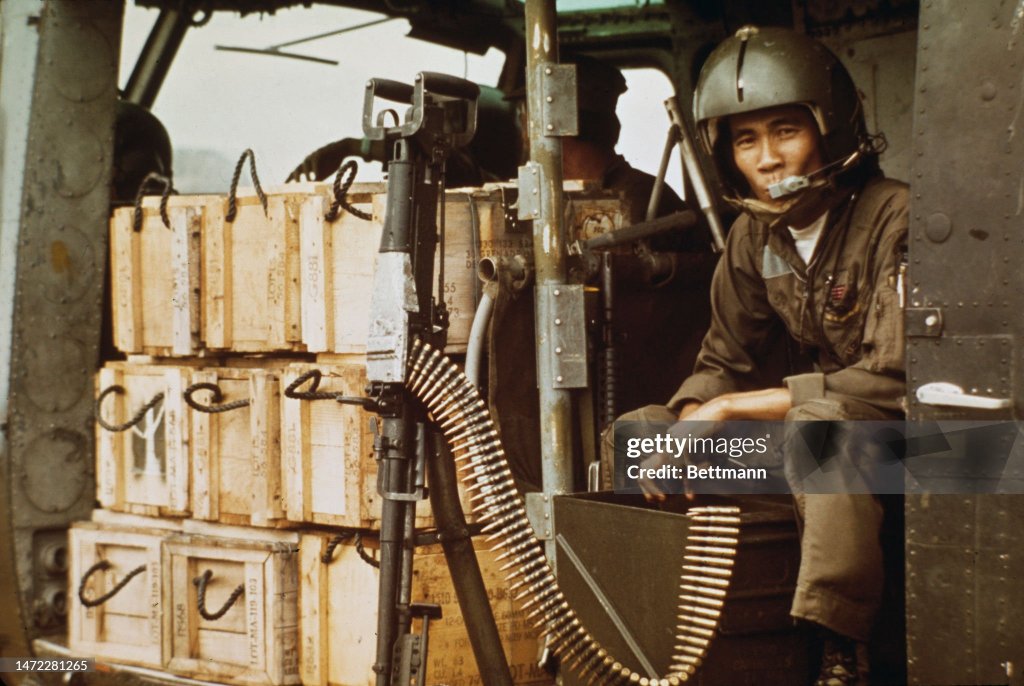
Cambodian insurgents apparently used mines in the Mekong River for the first time to cause what became the biggest shipping loss of the five-year Cambodian war. At least four and possibly 10 supply vessels returning empty from Phnom Penh to South Vietnam were sunk. Americans are concerned for the future of the route, the only surface way of sending supplies to the isolated capital. The convoy of supply ships returning empty to South Vietnam from Phnom Penh was torn apart on the Mekong River when it reportedly ran into a minefield laid by the Communist‐led Cambodian insurgents who control most of the river. Cambodian and American military sources said today that at least four, and possibly 10, vessels were sunk — some possibly by insurgent artillerymen along the river banks but most apparently by the mines.
It was the biggest loss of shipping in the five‐year Cambodian war, and has raised concern among Americans, who provide virtually all the vital supplies for President Lon Nol’s Government, over the future supply convoys to Phnom Penh. The Mekong is this capital’s last remaining surface supply line to the outside world, all the others having been cut by the insurgents long ago. As yet, there has been no official confirmation of the mines in the river, but the American and Cambodian military sources said the first reports were fairly positive. If so, this would be the first major use of mines by the insurgents. American and other military analysts here have long wondered why the insurgents have not used mines on the river before, instead of just firing guns from the banks. Some analysts are now speculating that the mines used yesterday may have come from fresh Chinese supplies provided through North Vietnam.
From the start five weeks ago of the insurgents’ latest offensive, the Cambodian rebels have made the Mekong one of their primary targets, in an apparent attempt to strangle the capital. They have been able to seize control of the banks along most of the river’s 60‐mile course from Phnom Penh southeast to the South Vietnamese border. But despite some losses of ships, this did not prevent the Americans from running their chartered convoys of private commercial vessels up the river from their starting point in South Vietnam, where they take on their crucial cargoes of food, fuel and ammunition. However, yesterday’s losses were of much greater magnitude than my previous ones and they create uncertainty about future convoys. Shipping sources here have reported that another sizable convoy has already been formed in South Vietnam in preparation for run to Phnom Penh within the next few days, but the mining losses may delay that schedule. Some shipping officials speculated today that the mines might have been meant for this next resupply convoy but by a mistake in timing caught the empty convoy returning South Vietnam after it had run the insurgent blockade to Phnom Penh last week.
Until yesterday the only supply ship losses on the convoy runs since the offensive began were two fuel tankers sunk in last week’s convoy. The only fortunate thing for the Phnom Penh Government about yesterday’s events was that the ships were empty. Reports reaching Phnom Penh today said that at least one tanker and three ocean‐going tugs were sunk by the mines. Four barges were also reported sunk, though this is not yet confirmed, and some smaller boats were also said to have been lost. Though details are still sketchy, the ships reportedly ran into the minefield at a narrow point in the river about 46 miles from Phnom Penh and about 16 miles from the South Vietnamese border. The minefield has raised the question here whether the Cambodian Navy is capable of clearing them. The navy is basic and unsophisticated, made up of small patrol boats and gunboats, with nothing even vaguely resembling a minesweeper.
In South Vietnam, cars, jeeps, buses and trucks move briskly along Route 22 to Tây Ninh. Lately, guerrillas have set up roadblocks on the highway, blown up culverts, attacked a big military convoy, and lobbed mortar rounds into government outposts along the thinly held corridor. In the city of Tây Ninh, which was hit by shells and rockets for seven weeks, an eerie, ambiguous stillness prevails. The market is empty. Lone bicyclists pedal along empty streets. Strangely, the rocketing stopped six days ago. No one is sure why; nobody is sure when or if it will resume. “I am selling but I am still worrying,” said a woman who just reopened a small South Vietnamese institution known as a “beer and hug.” “Two days ago you wouldn’t have seen anyone here.” At noon clusters of soldiers and policemen were drinking beer and hugging hostesses provided by the owner. “If your boss tells you to come here day after tomororow,” a policeman cautioned a Vietnamese interpreter, “tell him that your wife is sick.”
The policeman said he expectcd a ground attack on the city in two days. On Saturday night. he said, Vetcong agents scattered leaflets around Tây Ninh warning those people who remained not to make preparations for Tết, the week‐long Lunar New Year holiday. When the rockets start landing, many people in the downtown area — including doctors, medics and wounded soldiers in the military hospital — rush to the Long Hoa section of town, which abuts the rambling headquarters of the eclectic Cao Đài sect. The “sacred ground,” as it is invariably called, and its environs do not get shelled, and few people have fled Long Hoa. The North Vietnamese and the Việt Cộng do not want to alienate the influential Cao Đài hierarchy or the numerous Cao Đài faithful. It’s very secure here,” said a jovial watch salesman. “Like a belly button.”
At the Cao Đài administrative headquarters, religlous functionaries in white robes were washing down the red-tiled floors. Today is the beginning of Tết — the 23d day of the 12th lunar month — when the “kitchen god” reports to higher celestial authorities on the year‐long behavior of family members. “Whether we will have a quiet, and enjoyable Tết day I don’t know,” said a high-ranking Cao Đài official. “It depends on God.” On January 15, in the midst of the rocket attacks, the Cao Đài headquarters issued a somewhat “neutralist” appeal to the communists and the Saigon Government to “sit down at the same table to resolve together an internal Vietnamese question, like brothers of the same family, in an atmosphere of love, concord and mutual concessions, in order to halt this awful war definitively.”
The statement asked that the sect’s headquarters and the city of Tây Ninh be exempted from hostilities and said that the two sides could use the sacred ground for negotiations. Neither side responded. In Saigon some government officials saw this unusual appeal as a sign of defeatism among the Cao Đài, who, for all their protestations that they are above the political fray, are fairly anti-Communist. Others detect the hand of a pro‐Việt Cộng faction in the sect’s splintered leadership. Political factions in the Cao Đài could become important if the North Vietnamese and the Việt Cộng succeeded in encircling Tây Ninh, which some military analysts consider a possibility.
On January 6 the North Vietnamese captured the top of Bà Đen Mountain, which broods over Tây Ninh seven miles to the northeast. The South Vietnamese tried and failed to retake the bulbous green mountain. Now it is silent, like half-empty Tây Ninh itself. Few believe the quiet will last for long.
North Vietnamese gunners fired 10 122‐mm. rockets into Tây Ninh late today, wounding five soldiers and civilian, the Saigon command announced.
President Nguyễn Văn Thiệu today replaced the commander of the strategic area around Saigon with a general who had been removed from his post three, months ago as a gesture to demands for a clean‐up of corruption in the army. Lieutenant General Nguyễn Văn Toàn was named to replace Lieutenant General Dư Quốc Đống as commander of the vital and politically sensitive III Corps area. In the last two months, General Đống has suffered a series of significant reverses, including the loss of Phước Long Province to the Communists, the fall of a district capital in Bình Tuy Province and the capture of the strategic Bà Đen Mountain in Tây Ninh Province. General Toàn, who has been accused of corruption, was also known as an aggressive corps commander and a protege of Mr. Thiệu. General Đống was more a professional soldier and not as close to the President.
Despite his reputation for aggressiveness, General Toàn had also lost considerable ground to the Communists in his most recent command, the Central Highlands’ II Corps, which he he assumed at the height of the 1972 spring offensive by the Communists. In particular last summer North Vietnamese units overran a number of key outposts and district towns in his command. General Toàn has been called by the nickname “the cinnamon general” for reputed dealings in the spice trade in the highlands. The general allegedly used army trucks to transport spices to markets. On October 30, 1974, at the time of Roman Catholic led demonstrations against the Government, President Thiệu replaced General Toàn and two other corps commanders who had reputations for corruption or incompetence. At that time, the government simply announced the transfers without comment, although most people understood them as a bow to the opposition demand for strong action against corruption in the military.
Seventeen Saigon journalists have been arrested as “Communist agents” in the government’s crackdown on the press, an informed government source said today. About a dozen others have been detained, questioned, and released by the police. Many journalists have gone into hiding. The Association of Newspaper Publishers today denounced the government’s closing of five opposition dailies yesterday and said that the four remaining newspapers that regard themselves as independent of the government would not publish tomorrow in protest. But, well‐placed informants said, at least one of these remaining independent newspapers, and possibly a second, had decided not to go along with the boycott. The government, the army and the police subsidize three other newspapers in Saigon.
The Soviet Union jolted the opening session of a United Nations legal conference here today with a demand that the Việt Cộng’s Provisional Revolutionary Government be invited to take part. If the move succeeds, it will give the Provisional Revolutionary Government, now recognized by more than 40 countries, its first seat at a United Nations meeting. It could also provoke an angry response from the United States and other Western nations. The matter is likely to come to a vote tomorrow. The chief American delegate, Frederick Smith Jr., told reporters he could not predict how many votes Washington and its allies would rally among the 70 to 80 participating countries to block the Soviet move.
Former British Prime Minister Edward Heath stepped down as chairman of the Conservative Party after former Education Minister Margaret Thatcher outpolled him 130-119, less than a majority of the 276 needed to become the party’s leader; she will become the first woman leader for any British political party. Former Prime Minister Edward Heath yielded the leadership of Britain’s Conservative party after losing a party election to Margaret Thatcher, the favorite of the party’s right wing. Mr. Heath, who was party chief for 10 years, led the Conservatives to defeat in two elections last year. Another vote of Conservative members of Parliament will be held next week because Mrs. Thatcher did not win by the required margin. The party’s chairman, William Whitelaw, entered his candidacy after Mr. Heath withdrew.
John Scali, delegate to the United Nations, told a Congressional subcommittee today that the United States should continue paying its full share of assessments and remain an active member despite third‐world actions found objectionable by the United States. In testimony before the House Foreign Affairs subcommittee on international organizations and movements, Mr. Scali said he had some reason to hope that third — world countries would modify their policies to conform with the United Nations Charter. He said the United States viewed some of the votes by those countries in the last General Assembly as insupportable or even illegal. Among these actions, he said, were the exclusion of South Africa from the session, imposition of restrictions on the Israeli delegation and the invitation extended to Yasser Arafat, the Palestinian leader. He said positive actions by the United Nations in peacekeeping efforts in the Middle East, disaster relief and the control of narcotics merited United States support and were worth the price of the assessment, which amounts to $2 year for each American citizen.
A United Nations report predicted that the world population would double by the year 2007 from the present 3.9 billion, assuming that the annual growth rate continued at 2.1%. It said Africa has the most rapid growth rate and that Asia is still the most populous continent, with nearly 60% of the world population. It said the two largest cities were Shanghai, with 10.8 million people in 1970, and Tokyo, with 8.8 million in 1972.
The 16-nation International Energy Agency opens a three-day meeting in Paris today and will consider U.S. Secretary of State Henry A. Kissinger’s new proposal for an oil price floor to intensify oil conservation measures and spur development of alternative energy sources. European sources suggested that there would be strong opposition to Kissinger’s proposal.
The boom in abortions in Britain dropped off slightly last year, mostly because of more liberal abortion laws. in other countries, the British Pregnancy Advisory Service reported. The service said fewer foreigners were coming to Britain for abortions since they are easier to obtain at home. The number of abortions performed in England and Wales last year was put at 163,000 — 3,000 fewer than in 1973.
The confrontation between the Irish government and the Provisional wing of the Irish Republican Army over hunger-striking IRA prisoners reached a crisis stage with reports that one of the fasting men might die soon at Curragh military hospital. Patrick Ward, 27, is in the 33rd day of his fast and refused an appeal from his girlfriend to resume eating. Fourteen other IRA prisoners in Portlaoise Jail are also on hunger strike to back demands for political prisoner status.
The official Soviet press denied today that the Soviet Union had sought to obtain a naval foothold in Portugal, but it did not rebut a report last week that Moscow had asked Lisbon for fishing port facilities.
Chancellor Helmut Schmidt and President Valery Giscard d’Estaing agreed today on plans for a conference of oil consumers and producers to start in March even though, a West German spokesman said, the Common Market countries have still not agreed On a joint energy policy.
Portugal’s Social Democratic Party said it plans to reconvene a national convention sometime before the end of this month despite the threat of further Communist-led violence. Eleven days ago when the party tried to hold the meeting, leftist demonstrators armed with clubs and firearms besieged the 600 delegates inside the convention hall in Porto for 14 hours. The Social Democrats have been castigated by the country’s various Communist parties and allied groups as being a fascist party.
The Vatican, trying to make ends meet in the face of financial losses, has raised the prices it charges its 350 citizens and 3,000 employees for everything from gasoline to spaghetti. Vatican sources said food prices at the Vatican supermarket went up 8% to 13% in the last few days. Gasoline prices have been raised to two-thirds of the Italian level and cigarettes will go up next month, they said.
Two more leading members of the Greek junta that was toppled last year were ordered into custody on charges of high treason and insurrection in connection with the army takeover in April, 1967. One is Colonel Constantine Papadopoulos, brother of former President George Papadopoulos, who is already in prison with six other junta leaders on similar charges. The other is Colonel Michael Balopoulos. Both men denied the charges.
Premier Sadi Irmak of Turkey announced after a meeting of the National Security Council that the severance of United States military aid due tomorrow would compel a review of ties with the North Atlantic Treaty Organization. Ankara reports have indicated Turkey would tell her allies she could not protect the southeastern flank of the alliance without the aid.
President Anwar el‐Sadat and Foreign Minister Andrei A. Gromyko of the Soviet Union announced today that Leonid I. Brezhnev was again scheduled to come to the Middle East. No date was specified for the trip. At an appearance before reporters with Mr. Gromyko, after four hours of talks, Mr. Sadat made it clear that not all the differences between Cairo and Moscow had been removed. saying that some “outstanding issues” had to await Mr. Brezhnev. The Soviet Communist party leader was originally scheduled to come in mid‐January but he canceled his visit abruptly and Egyptians said he had cited ill health as the reason. Diplomats familar with the outcome of today’s talks said that agreement had been reached on delivery by the Soviet Union of modern arms to Egypt. The diplomats gave no details.
The Haicheng earthquake killed 2,041 and injured 27,538 in Haicheng, Liaoning, China. In a possible example of successful earthquake prediction, the Chinese government had issued warnings at 2:00 in the afternoon to the three million residents of the southern Liaoning province, advising them to spend the night outdoors in tents. At 7:36 pm, a 7.8 magnitude quake flattened Haicheng.
The Philippine military, responding to charges of torture made by religious groups, took action yesterday against seven enlisted men and five officers. Defense Secretary Juan Ponce Enrile ordered the five officers charged before a pretrial board, which will determine whether general court‐martial will be called. The seven privates were immediately dismissed from military service. A military investigative commission led by the chief of staff. Gen. Romeo C. Espino, recommended action against them after a thorough investigation of charges brought by religious groups that political detainees at Camp Olivas, 52 miles north of here, had been tortured. Two Roman Catholic priests held at Camp Olivas in connection with subversion charges said that detainees were given electric shocks and burns during interrogation. The two priests went on a hunger strike, during the Christmas season to call attention to the cases.
Philippine soldiers have killed the leader of a dissident group believed responsible for the ambush murders of three U.S. Navy officers near Manila last year, Manila police said. A spokesman said he was Teofilo Valenzuela, alias Commander Rico, who was killed last week when his group clashed with soldiers on Luzon Island. The Americans slain last year were Captain Thomas J. Mitchell, Commander Leland B. Dobler and Lieutenant Charles H. Jeffries II.
The Canadian government and two provinces announced that they would invest about $1.4 billion to save a project to extract oil from the Athabasca tar lands in Alberta. An agreement was reached with a consortium of three United States companies that had said they would drop the plan because of soaring costs under the impact of inflation.
The police in Lima and reportedly in other Peruvian cities have gone on strike, mainly for higher wages. The strike began yesterday afternoon but went unreported by broadcasting stations, which are government‐controlled, and by newspapers, which were expropriated by the leftist military Government six months ago. The Interior Ministry declined to give any information on the strike or how many of the 20,000 policemen in the civil guard had joined in. A spokesman for the strikers at the 12th Police Garrison here said that 90 per cent of the 7,000 policemen in Lima were on strike. A tour of six police garrisons in the city inclicated that five were on strike. No policemen or patrol cars could be seen on the streets.
More than 100 Americans, mostly women and children, were airlifted along with other foreigners yesterday from the embattled Eritrean capital of Asmara to the safety of Addis Ababa.
South African Prime Minister John Vorster continues to drop tantalizing hints that he is willing to dismantle some of South Africa’s elaborately constructed system of racial segregation and discrimination. But in a recent series of statements and actions he has been equally careful to assure his constituency, the white minority, that change will be slow and modest. Above all he has reiterated warnings that he will never permit the whites’ political power to be shared by blacks, those of mixed ancestry, and Asians.
President Ford’s annual economic report to Congress warned that more government stimulus through a larger budget deficit would not improve the grim economic outlook. It was accompanied by a longer report from his Council of Economic Advisers. Its chairman, Alan Greenspan, told reporters that to go beyond the stimulus suggested by Mr. Ford “would be trading off some small reduction in unemployment for inflation later” and an undesirably high average unemployment level.
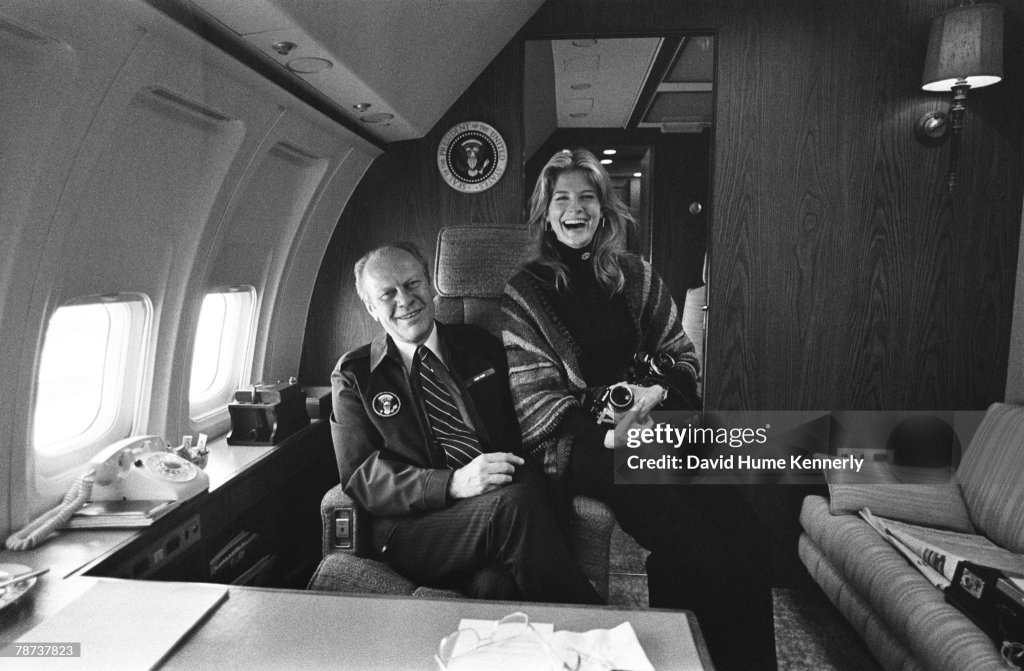
President Ford told reporters in Atlanta that economic conditions would be favorable enough in 1976 for him to run for a full term. He praised the offer of rebates by auto and appliance companies as an “application of good old free enterprise” and saw trends toward restoring consumer confidence which would in turn speed recovery.
The House of Representatives rejected the administration’s plan to raise the price of food stamps for most participants and passed, 374 to 38, a bill to freeze the price to the end of 1975. A Senate vote is expected today or tomorrow.
Spokesmen for local governments expressed disappointment today over President Ford’s proposed budget and predicted a fiscal emergency if Congress goes along with it.
Senator Howard K. Baker Jr. of Tennessee says he is exploring the possibility of seeking the Republican presidential nomination in 1976 even though President Ford has said he intends to run. Baker said he had based a series of casual political conversations with about 30 fellow Republicans on the assumption that Mr. Ford might change his mind and drop out of the race. Mr. Ford’s popularity has hit a new low, with 60% of those surveyed rating him negatively, the Harris Poll said Monday. Baker said the ground rules of national politics had been changed and the power of an incumbent President diminished by passage of the new campaign financing law.
New Hampshire Republican Gov. Meldrim Thomson said he and about 30 other nationally prominent conservatives from both parties would attend a ‘summit meeting” shortly to discuss forming a third party. “The whole question of what might be the future of party politics is being reviewed by carefully thinking politicians,” he told a news conference in Concord.
White House Press Secretary Ron Nessen reinstated Fred Barnes, correspondent for the Washington Star-News, as one of the questioners at President Ford’s news conference in Atlanta. Nessen earlier had banned Barnes because his newspaper had broken the Monday embargo on the new federal budget by two hours. He also barred the paper from receiving an advance copy of the President’s economic message but the Star-News chief economic correspondent, Lee Cohn, privately obtained one.
The Federal Reserve Board reduced its discount rate on loans to commercial banks to 6¾ percent from 7¼ percent — a signal for easier credit conditions. The action was interpreted as another move to stimulate the economy, retreating from its tight-money policy of last year.
The Ford Administration is using its rule-making powers to put into force many of the environmental standards of a coal strip-mining bill vetoed by President Ford a month ago. Interior Secretary Rogers C. B. Morton ordered the proposed standards, which would apply to the strip mining of all federally owned coal. The standards, which included features the Administration favored in the vetoed bill, would require stripmine operators to reclaim land which they mine, set special standards for strip mining on steep slopes and river beds in the West and require operators to obtain licenses. An Interior Department spokesman said interested parties have until March 3 to file objections to the standards, after which they will go into effect.
United States District Judge Charles R. Richey cleared the way today for the personal memorabilia and nonpresidential documents of Richard M. Nixon to be shipped to the former President at his home in San Clemente, California.
U.S. energy firms apparently are not hoarding natural gas in anticipation of higher prices, a Ford Administration official told a House Interior subcommittee. Jack W. Carlson, assistant interior secretary for energy and minerals, said a preliminary investigation has shown that only relatively small amounts of natural gas under federal lease are being withheld from production. Nationwide cutbacks of natural gas this winter have triggered charges that gas is being hoarded by petroleum companies that favor gas price deregulation.
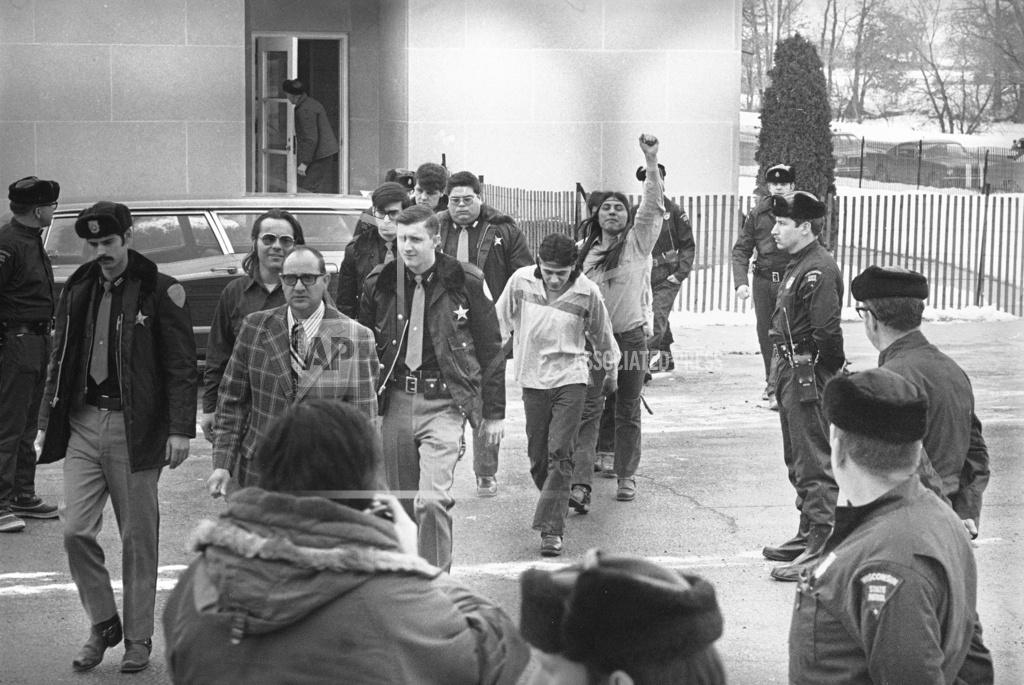
Two leaders of the 34-day Indian occupation of a monastery near Shawano, Wisconsin, were charged with armed robbery and a series of other counts that carry sentences of more than 90 years in prison. Indians appeared in a Shawano court in batches after 39 left the monastery and were brought to jail in handcuffs along a 10-mile route guarded by 200 state policemen. The Indians agreed to leave after the Chicago-based Roman Catholic order of Alexian Brothers agreed to hand over the unused building to the local Menominee tribe in return for what was described as a fair reimbursement. Most of the Indians faced only minor charges but two of the leaders, Michael Sturdevant and John Waubanascum, were charged on a total of 19 counts and held in lieu of $50,000 bail each.
Representative Bella Abzug said she would seek the Democratic nomination for the New York Senate seat of James Buckley, Conservative-Republican. Other Democrats believed to be considering the race include former Mayors John Lindsay and Robert Wagner and former Representative Ogden Reid. Lt. Gov. Mary Anne Krupsak has been mentioned but is committed to support the candidacy of Mrs. Abzug, a feminist from Manhattan.
Services will be held in Schenectady, New York. Thursday for William D. Coolidge, the scientist who is credited with inventing the X-ray tube. Coolidge died Monday at his home. He was 101. For most of his career, he worked at the General Electric Co. Research Laboratories in Schenectady and served as its director from 1932 until his retirement in 1945. Coolidge, who held 83 patents, was credited with the 1910 invention of ductile tungsten, the filament material used in most electric lamps today. His Coolidge tube,” invented in 1913, was credited with completely revolutionizing the field of X rays.
McDonnell Douglas Corp. announced in St. Louis that its new F15 Eagle had broken eight world speed-climbing records, including three formerly held by the Russian MIG-25 Foxbat. The new fighter streaked from a dead stop on the runway to 18½ miles high in less than 3½ minutes Saturday at Grand Forks Air Force Base in North Dakota, the company said. It said the records demonstrated the F-15’s capability to intercept any known fighter threat at extremely high altitude. The plane also captured records for the time-to-climb to 3,000, 6,000, 9,000, 12,000, 15,000, 20,000, 25,000 and 30,000 meters.
Dow Jones Industrial Average: 708.07 (-3.37, -0.47%)
Born:
Natalie Imbruglia, Australian actress and singer, in Sydney, New South Wales, Australia.
Died:
Louis Jordan, 66, American jazz bandleader (“Caldonia”; “Choo Choo Ch’Boogie”; “Ain’t Nobody Here But Us Chickens”), in Los Angeles, California, of a heart attack.






 History Diaries