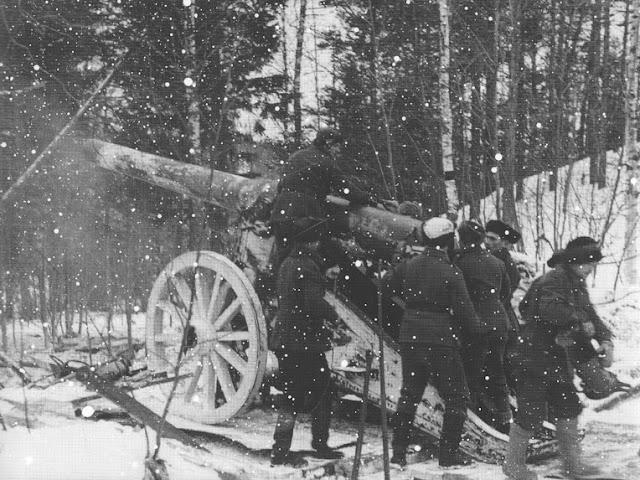
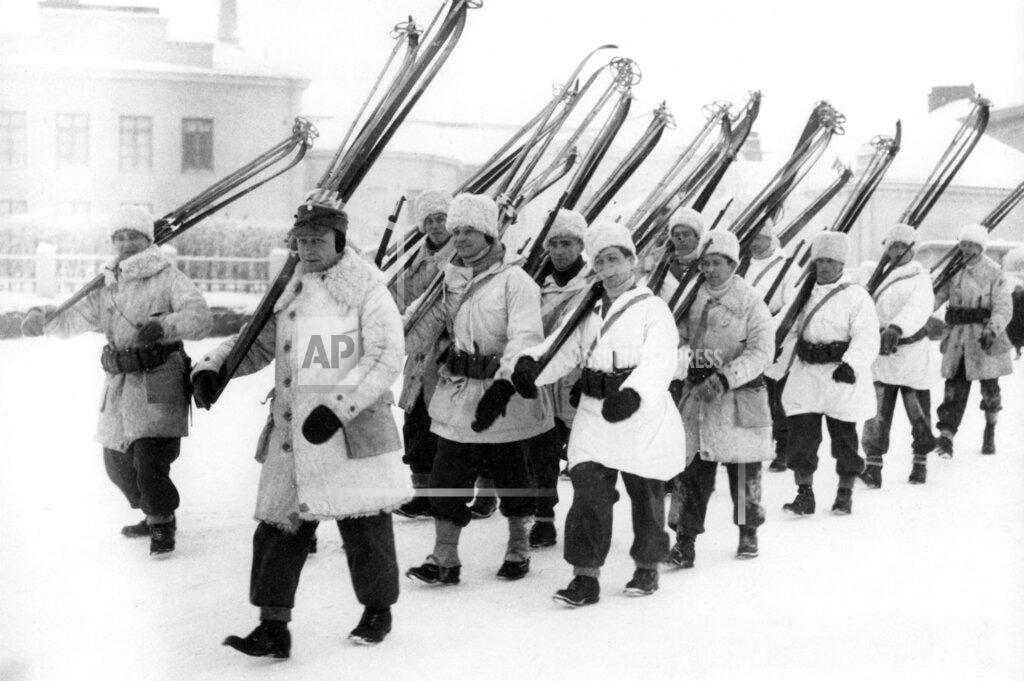
Soviet losses in the Winter War are estimated at 200,000 men. The Soviet leadership, of course, did not contemplate nearly that many losses in the entire war, but the Finns have been fighting in a steadfast and crafty fashion.
The Soviets, however, have plenty of men to spare. They are continuing their meticulous preparations for an offensive on the Karelian Isthmus, with massive and unceasing artillery barrages. At Lähde, 10 km east of Summa, the artillery pounding is wrecking the Mannerheim Line.
The Kremlin has completely lost interest in its troops further north such as the 54th Rifle Division, which has been surrounded by Finnish 9th Division. Essentially, the divisions that began the war have been written off as losers that are now on their own. The war has become a battle of attrition which the Soviets know they cannot lose.
In Stockholm, Finnish Chargé d’Affaires Eljas Erkko passes on the main points of the Soviet Union’s peace terms. The central question is the Soviet demand for bases on the Gulf of Finland. The Finnish answer is no.
In Ladoga Karelia, the Soviet offensive on the River Aittojoki ends in failure as Group Talvela holds its ground.
In the Salla sector the Russian 88th Division launches an offensive on the northern front at Saija, south of the River Tenniöjoki:
Finland intercepts a telegram from the Soviet 9th Army’s new commander, V.I. Chuikov, in which he asks the commander of the 54th Division fighting in Kuhmo whether he thinks his division is surrounded or not.
The famous Spanish fighter pilot Nicolas Beries is on his way to Finland as a volunteer.
Eleven fast United States pursuit planes for Finland’s war against Russia have been landed at Bergen, Norway, for shipment to the Finnish front, it was disclosed here yesterday at the offices of MooreMcCormack Lines, Inc., operators of the American Scantic Line.
In Oslo, Finland’s Minister of Social Affairs K.-A. Fagerholm explains the situation in Finland and appeals for Norway to send civilian labour to Finland. A group of iron and metal workers have already volunteered.
Viktor Smeds, Chairman of the Finnish Amateur Boxing Association and President of the International Amateur Boxing Association proposes an international boxing tournament between Finland and Sweden to be held in Stockholm in February.
In Britain, the little princesses Elizabeth and Margaret have stopped knitting socks for British servicemen in favour of clothes for Finnish children.
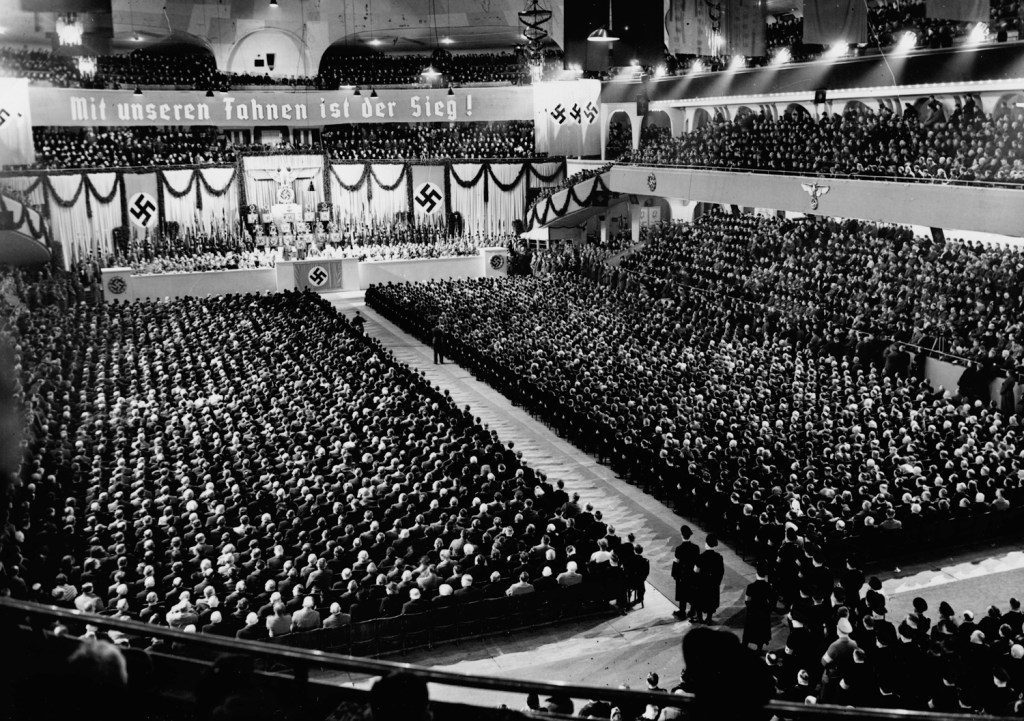
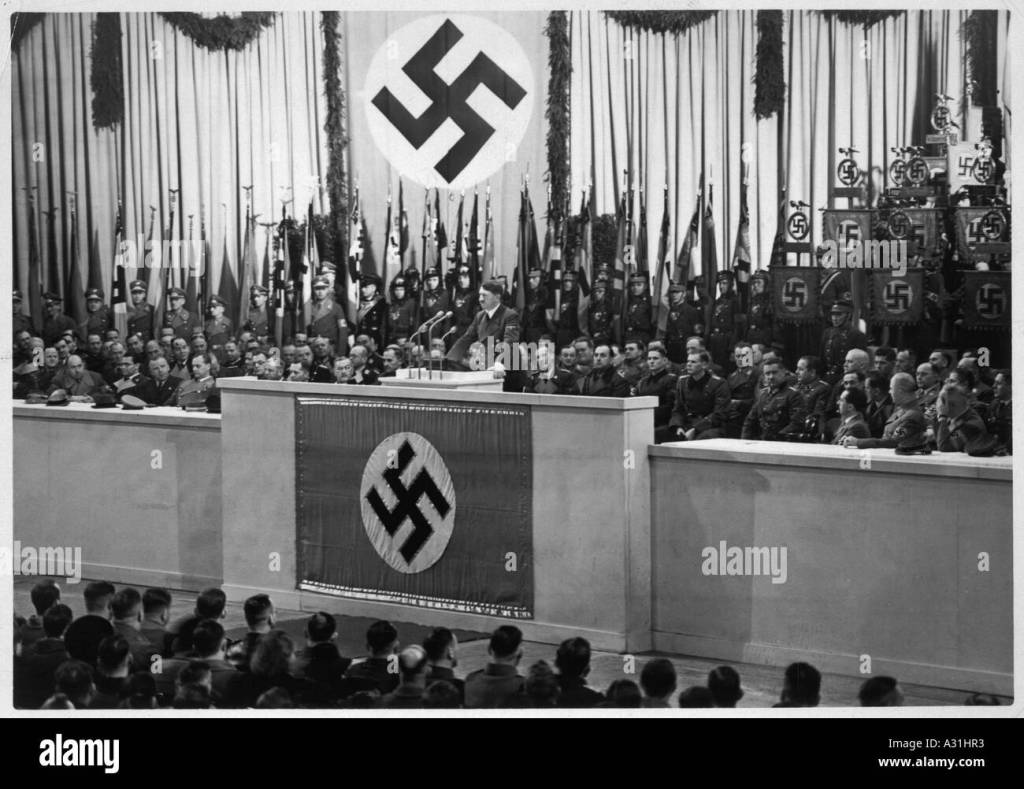
Adolf Hitler threatens UK with a ‘war of bombs’. Hitler gave a speech at the Berlin Sportpalast on the seventh anniversary of the Nazis taking power, his first formal address since narrowly avoiding the attempt on his life in November. The location of the speech was kept secret up until a few hours before it began. Hitler claimed that Britain and France “wanted war” and he vowed that they would “get their fight”. He also reiterates a point from his “Mein Kampf” that Germany still needs Lebensraum (“living space”), which can only come in the east. The war, he hints, is now going to become more of a strategic bombing campaign, saying it will be a “war of bombs.” He is particularly contemptuous of Britain’s “wonderful war aims.”
While Chancellor Hitler in his address tonight significantly ignored last night’s speech by Premier Daladier, the German press unanimously described it as “an outbreak of rage that reveals the internal difficulties of France as clearly as it reveals the desire to harness the neutrals to the Franco-British war machine.”
Heinrich Himmler issued a statement clarifying his “procreation” order of last October 28. The “worst misunderstanding”, Himmler wrote, was that the order encouraged SS men to approach the wives of serving soldiers.
Heydrich orders more expulsions of Jews from the Reich to Lublin in eastern Poland. Meanwhile, Himmler authorizes the deportation of 30,000 gypsies.
Diplomats expressed surprise today at the disclosure that Rumania had exported less than 30,000 tons of oil to Germany during January as against her promise of 130,000 tons.
The German oil shortage has resulted in the compulsory transfer to the Reich of 3,000 tons of lubricating oil from Prague railroad stations, it was learned tonight from a reliable Czech source.
In the speech that Premier Edouard Daladier broadcast to his countrymen last evening he repeatedly dropped the warning that they must be prepared for a “total” war at almost any minute, and today there was a new outbreak of speculation in the press as to when, where and how the next move will be made.
As was inevitable, with the whole country deep in snow and mud, with rivers flooded and the cold only slightly less intense than before, the series of “nothing to report” communiqués continued this morning, although the evening communiqué was livelier reading: “There was marked activity of contact units west of the Saar. In the same region on either side artillery was in action during a large part of the day.”
Britain’s reply to Chancellor Hitler’s speech tonight was swift and bitter. In the opinion of the Foreign Office it was a remarkable combination of bad history and bad manners, an inferior imitation of his own tirades in the past.
The British public prefers Neville Chamberlain to Winston Churchill as Prime Minister and favors less strict blackout conditions, according to surveys being made by the British Institute of Public Opinion.
In Britain, the cancellation of army leaves for some days to come and a shortage of fuel and certain food supplies brought home to the public today the widespread effects of the traffic tangle caused by wintry weather of a severity not experienced in Great Britain in many years. Coal rationing was reintroduced today as existing stocks ran low and fresh supplies crawled along blocked railroad lines. Deliveries to householders throughout England are to be limited to 224 pounds a week by order of the Mines Department.
A national campaign in Britain is launched today to utilize almost all of the 120 million tons of household waste that are disposed of every year. Scrap iron and steel as well as waste paper are singled out as being urgently required.
Benjamin Britten’s song cycle “Les Illuminations” premieres at Aeolian Hall, London, England with soprano Sophie Wyss and the Boyd Neel Orchestra.
An attack on Communist sympathizers throughout the world was made over the Vatican City radio in two English broadcasts today. It was directed particularly at those who say that Stalinism and not communism is to blame for Russian policy since the war started.
There were grave disorders in Lwow, in Russian-held Poland, on Sunday when Russian police fired into a crowd of Ukrainian sympathizers going to a religious ceremony, according to a dispatch from Cernauti, Rumania, published by today’s Lavoro Fascista.
German torpedo boat Iltis misidentified German U-boat U-15, commanded by Kapitänleutnant Peter Frahm, as a hostile vessel and rammed her 50 miles north of Wilhelmshaven, Germany. U-15 sank, killing the entire crew of 25. During its career under a different commander the U-15 sank 3 merchant ships for a total of 4,532 tons.
German Luftwaffe Heinkel He 111 aircraft of X Fliegerkorps bombed shipping in the English Channel and the North Sea, sinking British cargo steamers Giralda and Bancrest off the Orkney Islands in northern Scotland (58°53′N 1°52′W). British cargo ship Voreda was badly damaged and beached near Winterton, England.
The British cargo ship Royal Crown was bombed and strafed by Luftwaffe aircraft 15 nautical miles (28 km) south of Smith Knoll Lightship. Four of her 37 crew were killed and all others left the damaged ship in two boats. One reached the coast but capsized, and seven of the 22 men aboard drowned. The other boat with eleven men disappeared without trace, bringing the total of dead and missing to 22. The burning ship ran ashore at Covehithe, Suffolk on 2 February. She was repaired and returned to service.
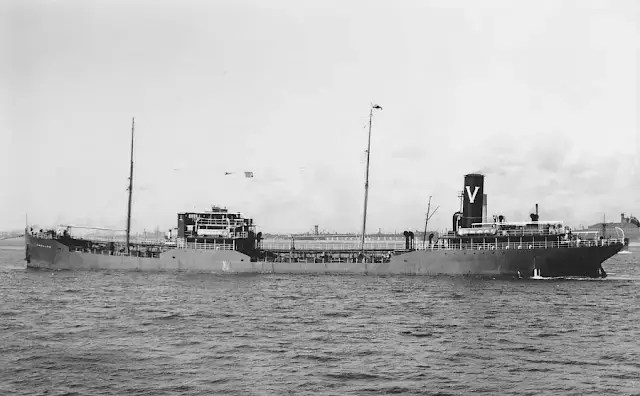
At 0700 and 1105 hours on 30 January 1940, U-55 attacked convoy OA.80G (later designated OG.16) and sank Vaclite in the first and Keramiai in the second attack. The U-boat was herself sunk by the escorts after the second attack. U-55, commanded by Kapitänleutnant Werner Heidel, attacked convoy OA.80G SW of the Isles of Scilly which was escorted by sloop HMS Fowey. Two ships were hit & sunk, The Greek ship Keramiai (5,085 tons) and the British ship Vaclite (5,026 tons) sank in position 49.20N 07.04W. Of the Keramiai’s complement, all 28 survived. The 5,085-ton Keramiai was carrying ballast and was bound for Ciudad Trujillo, Santo Domingo. Of the Vaclite’s complement, all 35 survived. The 5,026-ton Vaclite was carrying ballast and was bound for New York, New York.
In the follow up attack, HMS Fowey was joined by destroyer HMS Whitshed, the French destroyers Valmy & Guepard and an RAF No. 228 Squadron Sunderland aircraft.
The first confirmed U-Boat kill by an aircraft occurred when British destroyer HMS Whitshed, British sloop HMS Fowey, French destroyer Valmy, French destroyer Guépard, and a British No. 228 Squadron S.25 Sunderland aircraft engage German submarine U-55 with depth charges. After a sustained depth charge attack, the U-boat surfaced and carried out a running gun battle before her deck gun jammed. Kapitänleutnant Heidel ordered the boat to be scuttled and abandoned, then apparently went down with it. Of the submarine’s complement, 1 died and 41 survived. During its career under Kapitänleutnant Heidel the U-55 sank 6 merchant ships for a total of 15,853 tons.
The Norwegian cargo ship Fingal I suffered an explosion in her hold and sank off Barra, Outer Hebrides, United Kingdom. All 11 crew were rescued.
U-boat U-25 was refueled by the German tanker Thalia.
U.S. freighters Examelia (detained at Gibraltar since 20 January) and Cold Harbor (detained there since 27 January) are released by British authorities.
The War at Sea, Tuesday, 30 January 1940 (naval-history.net)
Anti-aircraft cruiser CURACOA departed Chatham to work up at Portland after conversion to an anti-aircraft ship.
Armed merchant cruiser CILICIA departed the Clyde for Northern Patrol.
Submarine SEAWOLF departed Lowestoft on patrol.
Convoy MT.1 departed Methil with destroyer ECHO and escort vessel VEGA.
Convoy MT.2 departed Methil with destroyers ENCOUNTER and ESCAPADE, but the convoy returned to Methil.
Destroyer INGLEFIELD arrived in the Clyde after escorting the west coast portion of HN.9A. Destroyer MOHAWK returned to Scapa Flow.
Escort vessel/destroyer WESTMINSTER arrived at Rosyth.
Destroyers JAVELIN and SIKH arrived at Scapa Flow, but SIKH left the same day to assist anti-submarine trawler SCOTTISH (558grt) which was being bombed.
Convoy BC.23S of steamers BALTRAFFIC, BARON KINNAIRD, DUNKWA (Commodore) and FABIAN departed the Loire escorted by destroyer MONTROSE, and arrived safely in the Bristol Channel on the 31st.
In an Admiralty release – as of 30 January 1940, twenty-four German merchant ships had been captured for 103,037 tons and twenty-three ships intercepted scuttled themselves for 139,236 tons. When compared to German releases (see 8 February) and post war studies, all three basically agree. The largest discrepancy rests on the fact that a scuttled ship was not always scuttled by the German crew but by the capturing warship for any number of reasons (no prize crew, poor state of ship, etc.). German wartime sources regarded a scuttled ship as one that was not capable of further use regardless of who scuttled it, while British sources would count a ship captured even if they later scuttled it.
Sloop FOWEY was escorting convoy segment OA.80G to join convoy OG.16, and tanker VACLITE and steamer BEAVERBRAE (9956grt) were straggling. U-55, on her first war patrol, torpedoed and sank VACLITE (5026grt) at 0150, 100 miles west of Ushant in 49 20N, 07 04W and Italian steamer POLLENZO (6470grt) rescued the 28-man crew; BEAVERBRAE quickly caught up with the convoy. Then at 1105, U-55 sank Greek steamer KERAMIAI (5085grt) in 48 37N, 07 46W and her 35 survivors were rescued by FOWEY and tanker BRITISH UNITY (8367grt). Destroyers WHITSHED, ACASTA and ARDENT were escorting light cruiser AJAX to Plymouth, received the Greek steamer’s distress signals, and while ACASTA remained with AJAX, WHITSHED and ARDENT detached to assist the convoy. One of the convoy escorts, French large destroyer VALMY, aircraft of RAF 228 Squadron and WHITSHED attacked the submarine, but without damaging her. U-55 was then damaged by depth charges dropped by FOWEY, and she was scuttled SW of the Scillies in 48 37N, 07 46W. WHITSHED and FOWEY picked up the survivors – three officers and thirty-eight ratings – all the crew, except the commanding officer Kptlt. Werner Heidel, who went down with his command.
Destroyer WREN attacked a submarine contact SW of the Scillies in 49-30N, 6-52W.
Armed merchant cruiser WOLFE at Portland dragged her anchor and collided with steamer WESTERN COAST (1390grt), which was not damaged.
Steamer GIRALDA (2178grt) carrying coal for the Northern Patrol trawlers, was bombed and sunk by He111’s of German X Air Corps three miles east of Grimness, S. Ronaldsay, Orkneys with the loss of all twenty-three crew.
Steamer BANCREST (4450grt) was bombed by He111’s of the German X Air Corps in 58 53N, 01 52W, and went ashore at Wick with the loss of one crewman. Destroyer JAVELIN rescued the survivors.
Steamer ROYAL CROWN (4364grt) was bombed and damaged by HE111’s of German KG26, 15 miles south of Smiths Knoll Light Vessel.
Steamer JERSEY QUEEN (910grt) was damaged by German bombing in 53 06N, 01 30E.
U-15, setting out on patrol from Wilhelmshaven on the 30th, was sunk in an accidental collision with German torpedo boat ILTIS in the North Sea in 54-21N, 4-50E. The entire crew of 25 men was lost, and ILTIS was under repair at Wesermunde until May.
German tanker THALIA (1122grt) was in Cadiz Bay to refuel U-44 in Operation MORO. U-44 did not appear, but U-25 arrived at 2200/30th, taking four hours to refuel.
French heavy cruiser TOURVILLE and destroyers VAUBAN and AIGLE departed Beirut for patrol and arrived at Malta on 3 February.
Destroyers HUNTER and the Canadian HMCS ST LAURENT, HMCS FRASER, HMCS OTTAWA and HMCS RESTIGOUCHE departed Halifax escorting Canadian convoy TC.3 of troopships EMPRESS OF BRITAIN (42,348grt, carrying 1588 troops), MONARCH OF BERMUDA (22,424grt, 1334), EMPRESS OF AUSTRALIA (19,665grt, 1577), AQUITANIA (45,647grt, 2733) and Polish CHROBRY (11,442grt, civilian labourers). Ocean escort was battleship VALIANT, and light cruiser ENTERPRISE which returned to Halifax on 4 February. HUNTER arrived at Plymouth on 8 February and went on to Falmouth for docking and refit until 9 March prior to joining the Home Fleet.
Australian heavy cruiser HMAS CANBERRA departed Fremantle for Eastern Australian waters where she carried out patrols until April.
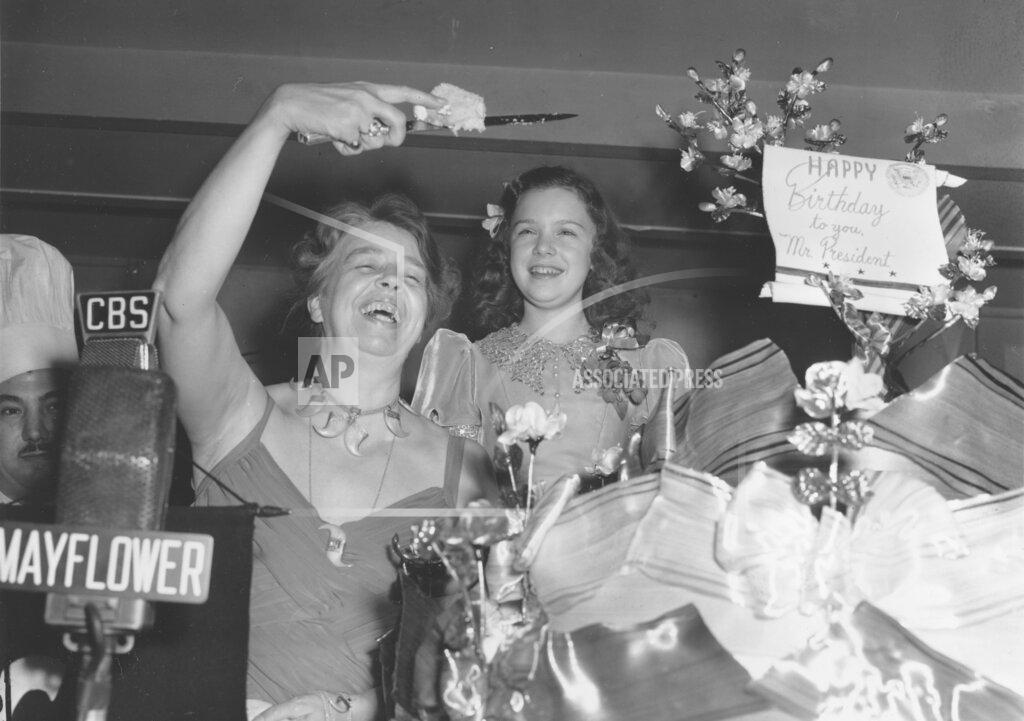
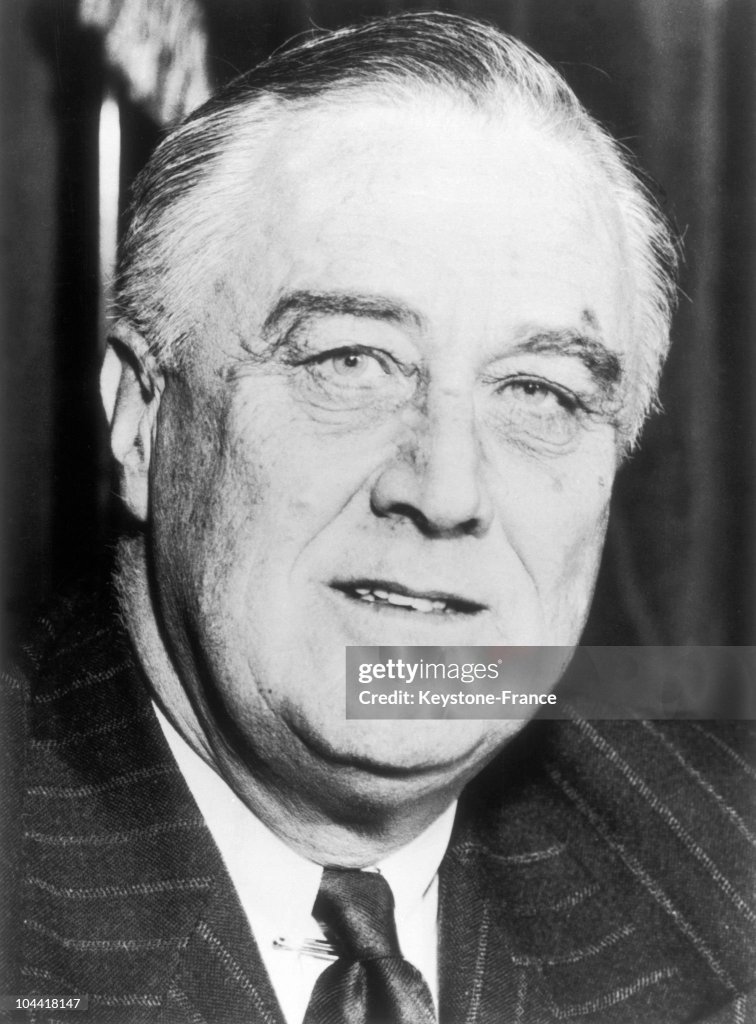
President Roosevelt observed his fifty-eighth birthday, participating in celebrations for the benefit of the infantile paralysis fund and broadcasting a message of greeting to the nation. He sent a message to Congress requesting appropriations for the construction of hospitals in small communities and signed a bill authorizing acquisition by the Federal Government of the estate of Patrick Henry in Charlotte County, Virginia.
The Senate was in recess. An appropriations subcommittee voted to restore to the Independent Offices Appropriation Bill numerous items deleted by the House.
The House received and debated the $634,399,256 Agricultural Appropriations Bill, received the annual report of the Securities and Exchange Commission and adjourned at 5:42 PM until noon tomorrow. The Naval Affairs Committee heard Secretary Edison urge passage of the full $1,300,000,000 Naval Expansion Bill.
Passage of the $1,300,000,000 Naval Expansion Bill in the form approved by the Navy Department was urged today by Charles Edison, Secretary of the Navy. He asserted before the House Naval Affairs Committee that “predatory nations will think twice before risking conflict with a strong and prepared United States.” But unless this country is strong “our interests, our treasured liberties and our wealth are almost certain to be targets” of aggression.
The United States, he said, had been reluctant to admit certain unpleasant facts about the structure and workings of international society. “But we are now disillusioned,” he continued, “and are alive to the fact that the importance and security of a nation are measured directly in terms of her ability to defend herself.” Mr. Edison pointed out that many keen observers were certain a few months ago that there would be no war in Europe in 1939. Failure to readjust opinions to meet changing conditions, he described as “an inexcusable form of stubborness.”
“I want to make it plain,” he continued, “that in my opinion the navy would be in an indefensible position were it not to abandon 1939 ideas which do not meet 1940 conditions.” He referred to the violation of treaties and declared that the course of wisdom is to face the situation squarely and act to the best interests of the nation.
“Our present fleet as of January this year,” Mr. Edison asserted, “is inadequate and the question is will our present building program provide adequate defense. The answer is ‘No.’ Our fleet, even when augmented by all ships now building or ordered, plus all ships authorized but not yet appropriated for, will still be inferior to the combined strength of possible enemies. Theoretically to be secure we should build to superiority over the strongest, likely enemy coalition. Theoretically we should build to sustain a 5-3 ratio in the Pacific and a 4-3 ratio in the Atlantic over the combined naval strengths of our possible enemies. Theoretically the sea power of England and France must be reckoned with. Theoretically our navy must be based on its ability to stand alone.
“Practically we must consider the elements of time, building facilities, available labor, etc. While the navy must not go beyond reason in presenting any program the cost of which is exorbitant, nevertheless in the final analysis it is for the Congress to decide questions of costs in the sense of the availability of funds. Time is a vital factor and the time element necessarily influences our recommendations as to types and numbers of types to lay down; also any shipbuilding program from a practical point of view must take account of available shipbuilding facilities, the possibilities for expansion, labor and material markets, etc.
General George C. Marshall testifies to the U.S. Congress that an effective air raid warning system will cost $40 million. General Marshall told the House Military Committee privately, members said today, that the army plans to ask Congress for $40,000,000 to give the nation an air-raid warning system. Asserting that the air-raid warning system was of “first priority,” General Marshall said that funds would be sought in the War Department Appropriation Bill. Committee members said that he told them that the army also proposed to devote $300,000,000 to construction and completion of coast defenses and $240,000,000 to the acquisition of so-called “critical” equipment.
President Roosevelt told Congress today that “the most elementary health needs are not being met” in many rural areas and requested an appropriation of from $7,500,000 to $10,000,000 for building fifty hospitals under the supervision of the Public Health Service as a modest beginning in improving present conditions.
The move for financial assistance by the United States Government to the Republic of Finland in its desperate fight with Soviet Russia received a severe blow tonight, when Senator Pat Harrison, chairman of the Senate Finance Committee and ranking member of the Foreign Relations Committee, announced his opposition. The Mississippi Senator, who proposed to state his position at tomorrow’s Foreign Relations Committee meeting to discuss the proposed Finnish credit bill, called upon the friends of the beleaguered little country to join in subscribing to a bond issue instead of attempting to pass the burden of aid to the Federal Government. In the same formal statement in which he published his opposition specifically to extending $20,000,000 in new credits through the Export-Import Bank, Mr. Harrison said he would be willing to vote for a current resolution calling upon the Securities and Exchange Commission to expedite the registration of a bond issue for the Finnish Government. He revealed that he had discussed the details with Jerome Frank, SEC chairman.
“If the sympathetic understanding of the American people for Finland in her present troubles is as universal and warm as we believe it to be, I have no doubt that the American people who are able to purchase these bonds will do so in large amounts,” he said. Although Senator Harrison gave these as his own views they are known to be shared by a goodly number of the Foreign Relations Committee and by certain key officials in the administrative arm of the government. While outlining his stand on the Finnish matter, Mr. Harrison took the occasion to warn this government to go slow on any proposal to place an embargo on certain articles to Japan. Later he expressed himself as constitutionally opposed to the idea of embargoes in general.
The 1941 Agriculture Department Appropriation Bill, in which every major item of the Administration’s farm program had been either eliminated or drastically reduced, was reported to the House today by its Appropriations Committee, with the total of $788,929,519 requested through the Bureau of the Budget cut to $634,399,256. The total, with its reductions of $154,530,263 from budget estimates, was $666,841,059 below the amount. appropriated by Congress last year for the department and its parity, soil conservation and other programs.
Absent from the bill was the $212,000,000 desired by Secretary Wallace for farm parity payments, an item not requested by the Budget Bureau, since President Roosevelt opposed it unless taxes were provided to meet its cost. The cuts to date by the appropriations Committee from budget estimates total about $271,000,000 and, with further cuts by the Senate Appropriations Committee in pending bills, reach about $302,000,000, or enough to offset almost two-thirds of the $460,000,000 in new taxes called for by the President to prevent the raising of the national debt limit above forty-five billion dollars.
President Roosevelt’s fifty-eighth birthday was the occasion of a celebration in Washington today which began well before noon and continued far into the night.
The office of the Dies Committee issued a statement tonight saying that a witness had admitted at a secret committee session that he forged letters purporting to connect Representative Martin Dies with the Silver Shirt Legion.
District Attorney Thomas E. Dewey of New York leads all other aspirants for the Republican nomination for President in popular support in the eight farm States immediately west of the Mississippi River.
The return, “as rapidly as possible,” of all building construction now being done by the government to private industry was urged by the executive council of the American Federation of Labor in a statement issued by President William Green after today’s session.
With the huge Soviet Pavilion at the New York World’s Fair being partitioned by workmen and rapidly nearing demolition, it became known yesterday that Finland had signed a contract to maintain its attractive pavilion at the Fair during the 1940 season, which begins May 11.
The Pittsburgh Pirates announced today that Forbes Field would be equipped with lights for night baseball and that seven night games would be scheduled there for the 1940 season.
In an effort to speed up England’s airplane pilot training program, the Canadian Government has opened, more or less quietly, negotiations in the United States to obtain experienced American fliers for instructors’ positions in the Dominion
Renewed Hindu-Muslim rioting in Rangoon, Burma since Saturday results in 12 killed.
The Japanese-Russian negotiations for the demarcation of the Manchukuo-Outer Mongolia frontier in the Nomonhan region broke down yesterday and the commission decided to disband.
Generalissimo Chiang Kai-shek is hastening his measures to consolidate Chinese control of Tibet, according to advices from Chungking today, and expects during this year to make that formerly semiindependent State an integral part of Nationalist China.
Japan’s economic warfare against British interests in North China took a new turn yesterday when the Japanese-controlled Peiping Regional Government began enforcement of a decree rescinding a previous exemption from exchange control regulations of export’s valued at 100 yuan [about $7] or less. The effect of the move was virtually to abolish Britain’s export trade, since the control regulations can be enforced against the British in a manner to prohibit them from receiving any export licenses. The same weapon, it was pointed out, can be applied against United States traders should the Japanese decide to retaliate against Washington’s abrogation of the commercial treaty between the two countries. The economic regulations, combined with the Japanese Army’s blockade of Britain’s Tientsin Concession, has reduced this once important British commercial stronghold to a near-zero position as far as North Asian commerce is concerned.
The widely advertised electrification of the wire barriers that the Japanese have erected around the British Concession appeared more a matter of psychology, designed to frighten the Chinese, than an effective military precaution. The wires were supposed to have been. electrified at 5 PM Sunday, but dogs were seen touching the wires yesterday without effect. The British Consulate General was investigating an incident reported on Saturday when two Japanese soldiers landed from a small boat on the British waterfront facing the Pei River. The soldiers, carrying rifles with fixed bayonets, were ordered by a British officer to leave. They departed when the officer called for reinforcements. The British thereafter ordered night patrols in the area.
Americans were suffering increasing inconvenience today in the Japanese Army’s intensified blockade of the British Concession in Tientsin and it was understood that the United States Consul General, John K. Caldwell, is reporting to Washington on incidents in which Americans have been involved with the blockade guards. William J. Bowen of Los Angeles, a reporter for the North China Star, American-owned newspaper here, said that he would report to Mr. Caldwell today that the Japanese refused to permit him to enter the concession from Japanese-controlled areas with a basket of eggs.
Mr. Bowen was sent out by his newspaper to test the accuracy of a Japanese assertion that no “starvation” blockade was intended. He went into Japanese-controlled territory, bought his eggs, and then tried to re-enter the concession at two different barriers. He had a Japanese military pass, such as has been issued to most Americans here, and his United States passport. When he was barred at the second barrier he demanded a refund for the purchase price of the eggs but this was refused. Another newspaper man was unable to bring five apples through the blockade.
The Japanese said they were investigating the complaints of the newspaper men. They said that if their food parcels were barred it presumably was because they were not engaged in a “sincere” transaction. A Japanese Army spokesman denied assertions that the blockade guards were “out of control.” He said that officers at each entrance. enforce the regulations “on a basis of common sense.” The spokesman remarked that “if there were no concessions there would be no question of barriers.” Asked if that meant that Japan desires to abolish the concessions, he replied: “Yes, that is my personal opinion.” He said there has been no change in Japan’s treatment of Americans. here because of President Roosevelt’s action in terminating the Japanese-American treaty.
After discussing for nearly three hours the removal of twenty-one Germans from the liner Asama Maru on January 20 by a British warship, Sir Robert Craigie, the British Ambassador, and Foreign Minister Hachiro Arita today agreed to continue their conversation tomorrow.
Dow Jones Industrial Average: 145.63 (-0.63)
Born:
David C. Johnson, American composer, flautist, educator, and electronic music performer (Stockhausen), in Batavia, New York (d. 2021).
Mitch Murray, songwriter and record producer, in Hove, England, United Kingdom.
Ed Blaine, NFL guard (NFL Champions-Packers, 1962; Green Bay Packers, Philadelphia Eagles), in Farmington, Missouri.
Naval Construction:
The Royal Navy Flower-class corvette HMS Fleur de Lys (K 122) is laid down by Smiths Dock Co., Ltd. (South Bank-on-Tees, U.K.).
 History Diaries