
The U.S. Army Special Forces made an unsuccessful attempt to rescue Captain Nick Rowe, a Special Forces adviser who had been taken as a prisoner of war in South Vietnam on October 29, 1963. The plan called for American helicopters to descend upon the POW camp where he had been sighted, and to flood it with tear gas, then for an ambulance helicopter to land in the camp and rescue any Americans there. Unfortunately, Rowe had been moved a month earlier, and the rescuers found an empty camp. Rowe would finally escape his captors on December 31, 1968.
Ambassador Maxwell D. Taylor conferred today with Lieutenant General Nguyễn Khánh, the South Vietnamese military commander. This was the United States Ambassador’s first approach to the leaders who overthrew Premier Trần Văn Hương on Wednesday. According to informed sources. Mr. Taylor carefully explored General Khánh’s intentions for more than an hour and made no commitment of any kind about the United States’ attitude toward the new leadership. Ambassador Taylor is still believed to feel that he should refrain from any definite overture until the situation has become clearer.
During the meeting at the Vietnamese General Staff headquarters, General Khánh sought to establish a working relationship with the Ambassador. Relations between them have been strained since the military uprising of December 20, when Ambassador Taylor censured General Khánh for his role in dissolving the civilian legislature. Outside Saigon, many junior officers of the South Vietnamese Army have been expressing resentment at the involvement of military men in power maneuvering. “The army and the Buddhists should both stay out of politics,” one commander said. United States Embassy officials also resumed contact today with the militant Buddhist leader, Thích Trí Quang, in a further attempt to gather as much information as possible on the fluid political situation.
The Buddhist monks, who bitterly opposed the Hương Government and demanded its downfall, have become an increasingly potent political force. An intense struggle for power is developing between Thích Trí Quang and General Khánh. General Khánh is understood to have made it clear to Ambassador Taylor that he intends to dominate the government that emerges. The general also suggested this intention to Deputy Ambassador U. Alexis Johnson in conversations before the coup d’état. Ambassador Johnson is reported to have expressed great reservations at the time and to have reminded General Khánh that his earlier attempt to run the country ended in failure when his government was overthrown amid rioting provoked by the Buddhists last August. General Khánh is said to have replied that he had learned from his earlier mistakes and was capable of governing successfully. He is understood to have repeated this assurance to Ambassador Taylor.
General Khánh also told Ambassador Taylor that he had reached an agreement with the Buddhists under which they agreed to cease demonstrations and political agitation and to support his efforts to form a stable government. The general indicated that this included a clause under which three leading monks, including Thích Trí Quang, were to leave the country. Buddhist leaders have denied that any such agreement exists. The meeting with General Khánh was held at Mr. Taylor’s request. Mr. Johnson also attended the conference. An embassy spokesman declined to disclose details of the conversation, saying only that it was exploratory. Ambassador Taylor later visited the Acting Premier, Dr. Nguyễn Xuân Oánh. This meeting was understood to have been merely a courtesy call.
Informed sources suggested that Premier Oánh, a Harvard-educated economist, might be named Premier by the military-civilian council that is to be set up under a decree from the Armed Forces Council. Premier Oánh is considered acceptable to many factions because he is regarded as a technician, rather than a politician. Qualified sources said the council might be formally organized by Monday. It is expected to reappoint the Chief of State, Dr. Phan Khắc Sửu. In the meeting between United States Embassy officials and the Buddhist leadership, Thích Trí Quang asserted that the Buddhists were not basically anti-American but had opposed the United States, merely on the issue of American support for the Hương Government. Diplomatic observers suggested that the Buddhists were trying to allay suspicions aroused by the bitter anti-American statements of Buddhist groups in the last days of the Hương Government and by the sacking of the United States Information Service library in Huế.
The Buddhists apparently hope to persuade the United States to adopt at least a neutral attitude toward them in the developing struggle for power. In conversations, Thích Trí Quang made it clear that while the Buddhists were gratified at the overthrow of the Hương Government, they had by no means fully satisfied their political ambitions. He indicated that the Buddhists might resume demonstrations in two or three weeks. Later Thích Trí Quang met with General Khánh. That meeting was also attended by Thich Tam Chau, head of the Buddhist Secular Institute, and by the Most Rev. Nguyen Van Binh, Roman Catholic Archbishop of Saigon. Thích Trí Quang and Thích Tâm Châu then asked General Khánh to release all Buddhists arrested during the demonstrations earlier this month, the sources said, and he agreed to do so. The Buddhists contend that 150 of their followers have been jailed.
A United States military spokesman reported today that at least 300 Việt Cộng guerrillas were killed in a single battle this week, the biggest toll for a government operation in the South Vietnamese war. Reports at the time had said that 153 Việt Cộng bodies had been recovered after the battle Tuesday near Ấp Bắc in Định Tường Province. But the American spokesman said that reports from United States advisers at the scene had nearly doubled the toll. The Americans estimated that 200 Việt Cộng had been wiped out. Many were killed in canals and swamps, where their bodies could not be recovered. The spokesman said government forces had lost only 18 men and that 78 had been wounded. Another government air, seat and ground assault, in Phú Yên Province yesterday, killed 58 Communists, the spokesman said. Two American officers were wounded in the battle. A United States helicopter crewman was also wounded yesterday in Ba Xuyên Province, 90 miles southeast of Saigon.
Donald Charles Dawson, a civilian, is relentlessly searching the jungles of South Vietnam for his brother, Lieutenant Dan Dawson, whose plane crashed on a reconnaissance mission. On November 6, 1964, U.S. Army First Lieutenant Daniel George Dawson and a South Vietnamese Army observer were flying aboard a small L-19 observation plane conducting a reconnaissance mission over Biên Hòa Province. When Dawson flew a low pass over the jungle tree tops a little northeast of Saigon, he was shot down by Việt Cộng small arms fire and crashed. Upon hearing that Dawson had been listed as missing in action, Donald Dawson, Daniel’s younger brother, travelled to Vietnam alone and spent eight months in the jungle looking for him. Donald was eventually captured and held prisoner by the Việt Cộng. Donald was held for months by the Việt Cộng. Eventually a senior Việt Cộng commander told him they had checked out his story and believed him, but that his brother had been killed in the crash and buried in the jungle. Daniel Dawson’s remains were never located. He was promoted to Captain while missing in action. He is honored on the Vietnam Veterans Memorial Wall in Washington, D.C., Panel 1E, Line 71.
Leaders from 111 countries assembled in London for Sir Winston Churchill’s funeral services today. Kings and presidents and prime ministers from around the globe paid homage today at the bier of Sir Winston Churchill on the eve of his funeral. They stood in a dark corner of ancient Westminster Hall, unnoticed by most of the thousands walking silently through the long, cold room. They saw the black coffin, covered with the Union Jack and lighted by six surrounding candles. President de Gaulle of France came, and King Olav of Norway, and Chancellor Ludwig Erhard of West Germany, and the Sultan of Brunei, and Constantine of Greece, and Frederik of Denmark, and many others.
One who was recognized was Dwight D. Eisenhower, so well known to Londoners as general and President. Other Americans who joined in the vigil included the Chief Justice of the United States, Earl Warren, and Secretary of State Dean Rusk. Tonight Prime Minister Harold Wilson and three other leading figures in the House of Commons stood with the guard around the catafalque for seven minutes. It was a final tribute from Sir Winston’s political home. With Mr. Wilson were the heads of the Conservative and Liberal parties — Sir Alec Douglas-Home and Jo Grimond — and the Speaker of the House, Sir Harry Hylton-Foster. They walked down the stone steps between the two lines of the crowd at just 10:30. They stood silently, heads bowed like those of the four soldiers posted around the coffin.
A royal party slipped into the hall unannounced to watch the parliamentary tribute. The Queen’s husband, the Duke of Edinburgh, was there with their two oldest children, Prince Charles and Princess Anne. The Queen and Prince Philip visited the hall last night. Also watching were the royal guests staying at Buckingham Palace: the Kings of Norway. Denmark, Greece and Belgium, Queen Juliana and Prince Bernhard of the Netherlands, the Grand Duke of Luxembourg and Prince Bertil of Sweden. The three days of lying in state were nearing their end. At 6 AM tomorrow the St. Stephen’s Gate entrance to Westminster Hall will close. A few hours later the coffin will be carried in procession to St. Paul’s Cathedral for the funeral.
Egyptian President Gamal Abdel Nasser, who just a month ago was telling the United States to “jump in the lake” with its economic assistance, is following a policy of restraint now that the United States Congress is considering cutting off aid to the United Arab Republic. Egyptian authorities, anxious to have the American aid program continued, are making a serious effort to avoid embarrassing the Johnson Administration by intemperate outbursts during the current aid battle on Capitol Hill. President Nasser was reliably reported to have intervened to prevent the publication of two bitterly anti-American editorials in the Cairo newspaper Al Akhbar Wednesday, the day after the House of Representatives voted to suspend surplus food sales to Egypt.
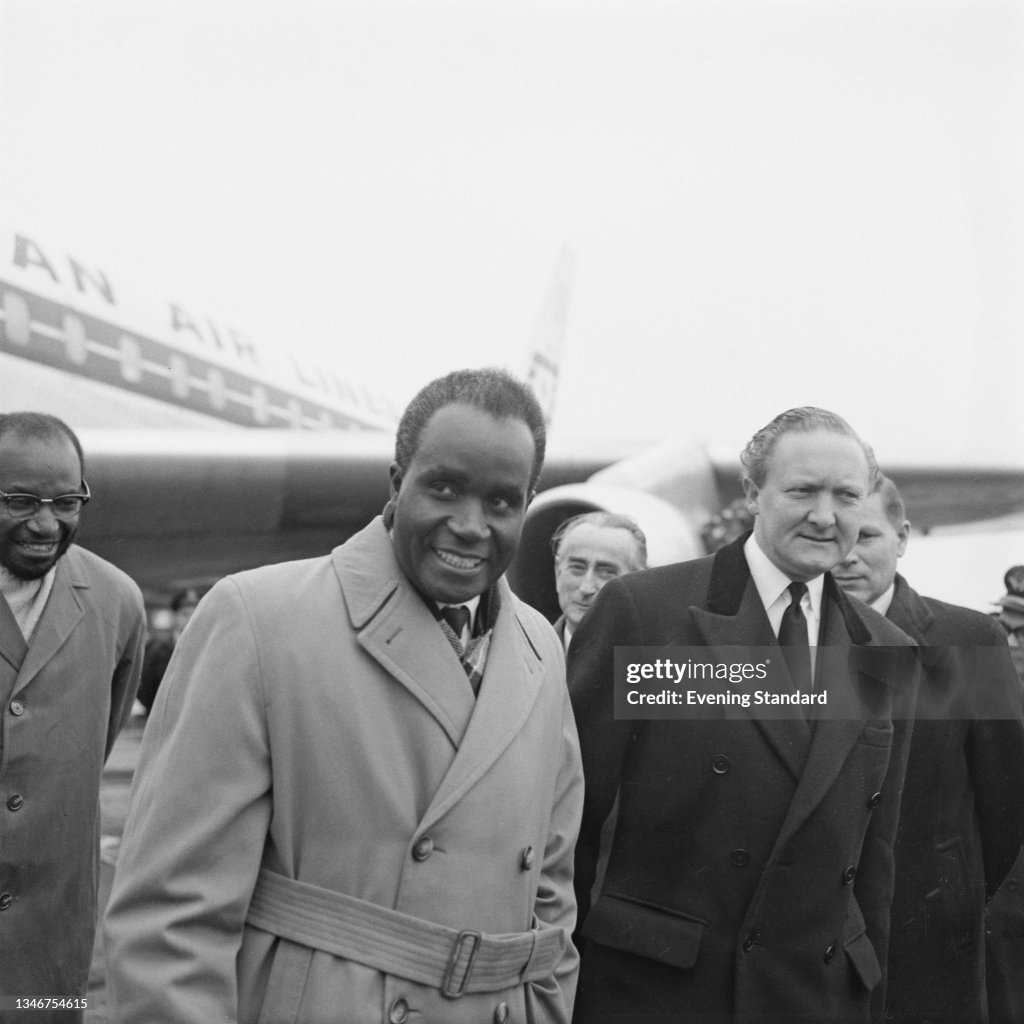
The Bonn Government is urgently seeking a way out of the diplomatic corner into which President Gamal Abdel Nasser of the United Arab Republic and Walter Ulbricht, East Germany’s Communist chief, have maneuvered West Germany.
The pinnacle of power on which stands Shah Mohammed Reza Pahlavi of Iran is lonelier today than ever before. By attempting far-reaching reforms, Shah Pahlavi has alienated the traditional supporters of the throne-the landlords. 2,000 families who for many generations dominated the economic life of the kingdom — without winning the support of those who might be expected to approve of his reforms. By cowing the leaders of the National Front with recurring arrests he has lost a chance for political cooperation with the middle class. Even the moderate wing of the front, with which the Shah has at times seemed willing to deal, has fallen silent. No voice remains to speak for the educated, liberally-inclined middle class, which is the fastest-growing element in the country. Stimulated by the economic development and commercial activity set off by oil revenues, this class could become the most significant political center in the country.
Prime Minister Harold Wilson had what he described as “a very friendly and useful discussion with President de Gaulle of France tonight. They talked about Mr. Wilson’s projected visit to Paris, and prospects for an early visit seemed to brighten. A French spokesman said afterward that the President had told Mr. Wilson he would be delighted to receive him. One qualified source said Mr. Wilson returned from the talk with General de Gaulle “rather encouraged.” That was said to be his reaction to the overall tone of the meeting rather than to any specific exchange.
U Thant, the U.N. Secretary General, sought the advice of members of the Security Council and leaders of the African-Asian and Latin-American groups today on how to draft a reply to Indonesia’s formal letter of resignation from the United Nations. The letter from Foreign Minister Subandrio, delivered January 21, gave as the reason for Indonesia’s withdrawal the seating of Malaysia as a nonpermanent member of the Security Council. Indonesia is waging economic and guerrilla war against Malaysia, which she regards as an attempt by the British to encircle Indonesia and retain influence in Southeast Asia.
Police in Kuala Lumpur arrested Burhanuddin al-Helmy, the leader of Malaysia’s Pan-Malaysian Islamic Party; Aziz Ishak, a former Agricultural Minister and founder of the National Convention Party; and Ishak Haji Muhammad, the Chairman of the Labour Party of Malaya and of the Malayan Peoples’ Socialist Front. All three were accused of attempting to establish a pro-Indonesian government-in-exile and planning to supersede the existing government.
An American Black leader proposed an “African” peace plan for the Congo here today. James Farmer, national director of the Congress of Racial Equality, called for a “disengagement” by the great powers from the Congo, a cease-fire, the removal of all white mercenaries from the country and a conference of rebel and Government leaders. Mr. Farmer, who is on a nine-nation tour of Africa, did not define precisely what he meant by a big-power “disengagement.” However, he said the United States and other Western powers should stop providing military aid for the Government of Premier Moise! Tshombe as soon as the Organization of African Unity called for a cease-fire. On the political front, 200 Congolese women demonstrated at the Belgian Embassy to back Premier Tshombe’s demands in his forthcoming talks in Brussels with Paul-Henri Spaak, Belgium’s Foreign Minister.
A journalist was killed and a prominent West Pakistani Opposition politician was critically wounded at Lahore last night by unidentified assailants who fired shotguns at them from ambush and then fled.
Ernest Che Guevara, Cuban Minister of Industry, left Algiers today for a second tour of sub-Sahara Africa.
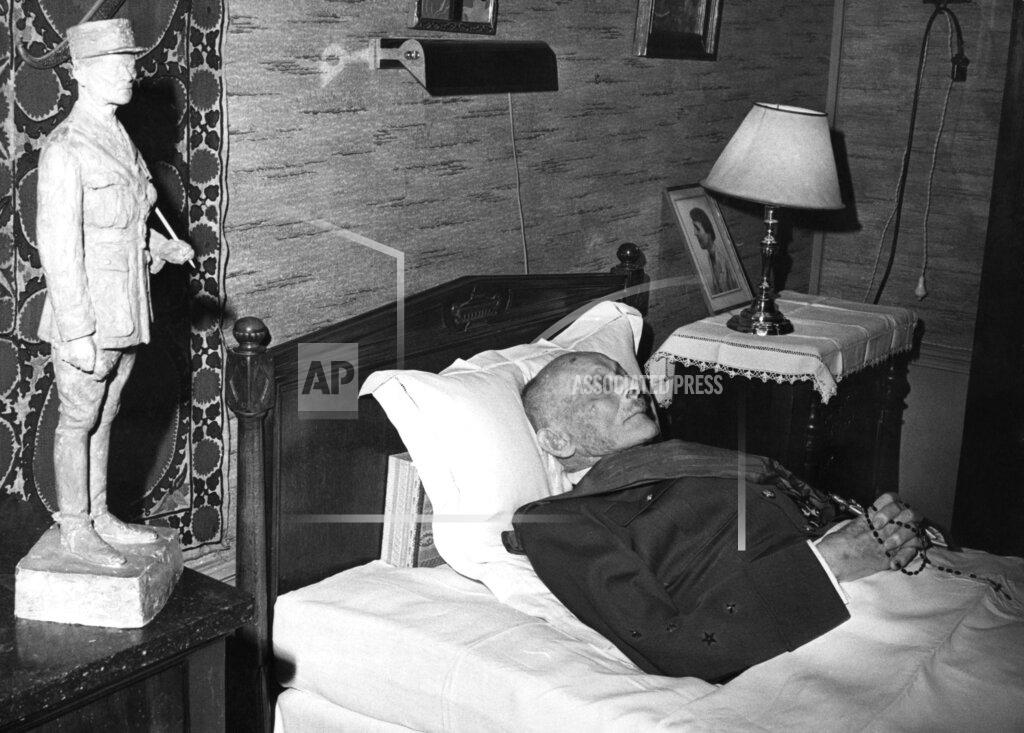
President de Gaulle’s Government today forbade the use of France’s greatest military shrine for General Maxime Weygand’s funeral.
The Italian Cabinet gave its initial approval today to a five-year economic plan aimed at creating a “modern, dynamic democratic state.”
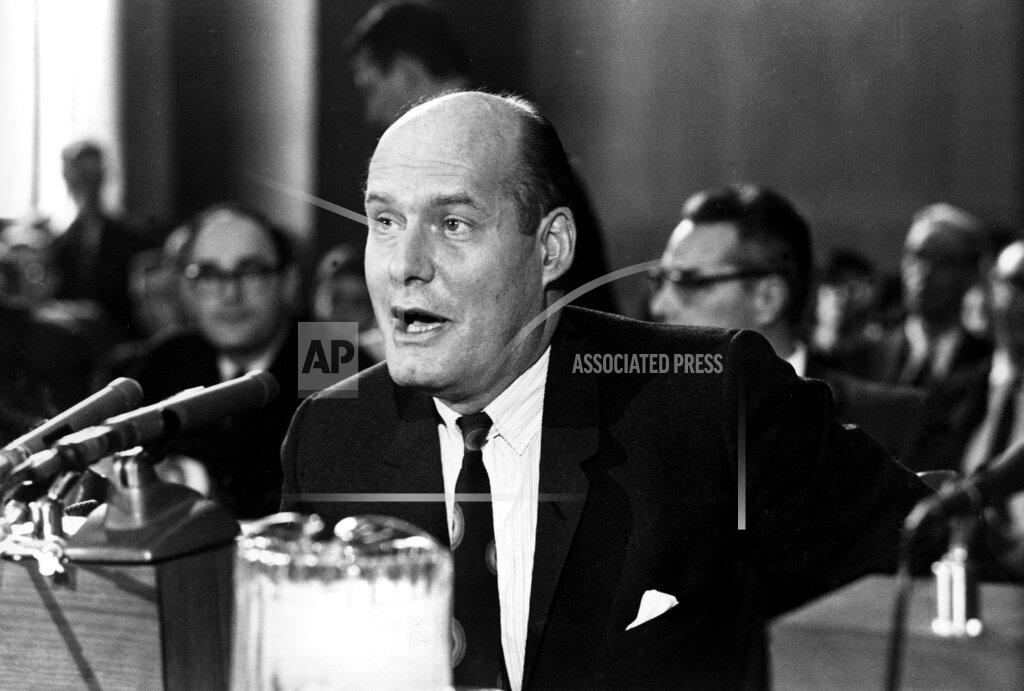
U.S. Attorney General-designate Nicholas deB. Katzenbach asked Congress today for speedy approval of a constitutional amendment covering Presidential disability and a vacancy in the Vice-Presidency. Quick action by Congress, Mr. Katzenbach said, would hasten the ratification process, since 47 State legislatures are in session this year. An amendment to the Constitution must be approved by two-thirds of both houses of Congress and three-fourths of the State Legislatures. Mr. Katzenbach, who has been Acting Attorney General since Robert F. Kennedy resigned last September to run for the Senate in New York, was named Attorney General by President Johnson yesterday. This morning he appeared before the Senate Judiciary Subcommittee on Constitutional Amendments in support of the Presidential-disability amendment sponsored by Senator Birch Bayh, Democrat of Indiana, the subcommittee chairman.
Lester Maddox, a cafeteria owner who faces a contempt hearing in Federal Court Monday in his continuing battle to maintain segregation, shoved four Blacks out of his establishment today. The Blacks, accompanied by two white companions, arrived at the Maddox cafeteria shortly after noon. The owner barred their way and told them to leave. When they refused, he shoved them out with short, open-palm jabs to the chest. Mr. Maddox said later that he had sprained his arm and hand in the brief scuffle. He said the four Blacks were the same ministerial students who visited his place several times before to test his defiance of the Civil Rights Act of 1964. The act prohibits racial discrimination in places of public accommodation, such as restaurants.
Mr. Maddox is to appear in Federal District Court in Atlanta on Monday to demonstrate why he should not be held in contempt of court for refusing to admit Blacks. He has been enjoined from thus discriminating at his restaurant, known as the Pickrick. Asserting that he would never integrate his business. Mr. Maddox closed the Pickrick and reopened at the same place with the same staff under the name Lester Maddox Cafeteria. He contends his cafeteria is a local business not involved in interstate commerce, and hence not subject to the Civil Rights Act.
Agents of the Federal Bureau of Investigation rounded up an “exalted cyclops” of the Ku Klux Klan and two other white men today and charged them with three bombings that occurred near a civil rights rally Sunday night in North Carolina. The Federal agents, called into the case by local authorities, acted before dawn. In addition to the suspects, they seized Klan robes, minutes of secret Klan meetings and Klan application forms. Those arrested at their homes in nearby Vanceboro were Raymond Duguid Mills, 35 years old, a salesman, who was identified “as the “exalted cyclops” of the New Bern Klan chapter; Edward Earl Fillingame, 23, a construction laborer, and his cousin, Laurie Latham Fillingame, 21, a carpenter and grocery store operator.
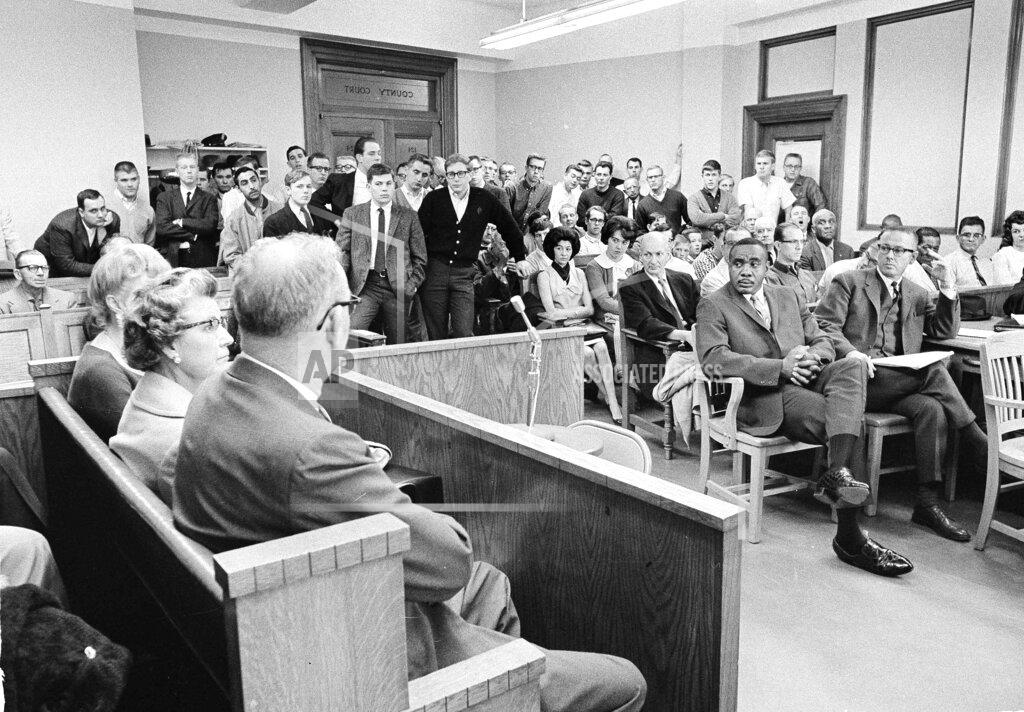
Black leaders in Jackson, Mississippi called off a mass demonstration today to protest the killing of a Black youth at the county jail, in response to state court orders.
More U.S. officials, including Defense Secretary Robert S. McNamara and Treasury Secretary Douglas Dillon, were stricken by colds. McNamara entered the Army’s Walter Reed hospital today.
The first strong opposition to the Administration’s $1.25 billion school-aid bill touched off a party dispute at a House hearing today. A Republican member of the Education subcommittee conducting the hearing accused the Democrats of attempting to muzzle the witness for his critical testimony about President Johnson’s aid package. The witness was Edgar Fuller, executive secretary of the Council of Chief State School Officers, which represents the school superintendents of all 50 states. Dr. Fuller’s right to speak for all of the superintendents was challenged by Representative John Brademas, Democrat of Indiana. Mr. Brademas said he was “profoundly suspicious of the integrity” of a poll that Dr. Fuller conducted to sound out the council members.
Critics attempted to shoot the Administration’s Appalachia bill full of holes today, but the nearly $1.1 billion measure is expected to win quick Senate approval on Monday.
The National Commission on Technology, Automation and Economic Progress, established by law last August, got off to a ceremonial start today with the assistance of Vice President Humphrey. The commission’s job is to find out what technological change is doing to the economic and social fabric of the country and how to obtain its maximum benefits with the least possible harm. The chairman is Dr. Howard R. Bowen, president of the University of Iowa.
More than 100 Air Force cadets who have been implicated in the investigation of cheating at the Air Force Academy actually cheated on tests, a source in Colorado Springs disclosed today.
President Johnson announced today he was promoting Dr. Andrew F. Brimmer from Deputy Assistant to Assistant Secretary of Commerce for Economic Affairs.
The Atomic Energy Commission reported “significant progress” in developing harder missile warheads to penetrate enemy defenses.
Floods unleashed by soaking rains and melting mountain snows left more than 1,000 homeless in the Pacific Northwest.
Qualification testing of the food, water, and waste management systems for the Gemini-Titan 3 mission was completed.
Hakametsä, the first ice hockey arena of Finland, is founded in Tampere.
The stock market closed out the week at record-high levels in the heaviest trading in 14 months.
Dow Jones Industrial Average: 902.86 (+1.91)
Born:
Dominik Hašek, Czech National Team and NHL goaltender (Hockey Hall of Fame, inducted 2014; Olympics, 1988, 2002; gold medal, 1998; bronze medal, 2006; NHL MVP, 1997, 1998; NHL All Star, 1996-1999, 2001, 2002; Chicago Blackhawks, Buffalo Sabres, Detroit Red Wings, Ottawa Senators); in Pardubice, Czechoslovakia.
Tim Johnson, NFL defensive tackle (Super Bowl 26-Redskins, 1991; Pittsburgh Steelers, Washington Redskins, Cincinnati Bengals) and American pastor (Orlando World Outreach Center), in Sarasota, Florida.
Peter Lundgren, Swedish tennis coach (Marat Safin, Marcelo Ríos, Grigor Dimitrov, Stanislas Wawrinka) and player (World #25 1987), in Kramfors, Sweden (d. 2024).
Died:
Jack Hylton, 72, English dance band leader.
John Larkin, 52, American actor (“Saints & Sinners”, “The Satan Bug”, “12 O’Clock High”), of a heart attack.
Michał Spisak, 50, Polish composer (Hymne Olympique).

 History Diaries