
A document that is reportedly guiding the Communists’ current military campaign envisions 1975 as a “turning point” but not the end of the struggle in South Vietnam. The document — Resolution 08 of the so‐called Central Office of South Vietnam — was drawn up late in 1974, according to the United States Embassy, which recently made it available to the press. There was no way of establishing from independent sources the authenticity of the document, but its language and argumentation are similar to those of earlier Communist directives. In the past, the American mission has regularly translated and distributed Communist directives, adding its own interpretive commentaries.
The resolution and a companion document from Bình Định Province clearly indicate that the Communists plan to step up military activities in 1975. At one point Resolution 08 states: “Our main forces must, on the one hand, engage in combat to wipe out the enemy, hold. expand and improve liberated areas and base areas, attract and hold the enemy, in support of the gaining of the population in the lowlands, and, on the other, build up, strengthen and improve themselves in every respect in order to get prepared for a large-scale offensive when the need arises.”
But the resolution, which speaks of tipping the military balance in the Communists’ favor “in the coming years,” indicates that the “large‐scale offensive” is not planned for this year. Instead, its anonymous authors foresee a possibility that the Government of President Nguyễn Văn Thiệu, weakened on the battlefield, will be “compelled to cling to” the Paris agreement and “implement small parts of it to impede our advancement, save [its] deteriorating situation and sabotage accord.” If this does not happen the resolution outlines a second possibility: “In case they do not want to carry out the accord, and the present war gradually widens into a large‐scale one, we again have to wage a decisive revolutionary war.”
In discussing favorable factors that, it argues, permit “the raising of previously set performance criteria intended for 1975 and some ensuing years,” the resolution says: “This will constitute a turning point of decisive character, as it will tip the balance of power to our advantage and create very basic conditions that will lead toward the achievement of total victory.” The Bình Định Province resolution was reportedly delivered to the Saigon authorities by high‐level Việt Cộng defector.
Port officials in Phnom Penh, Cambodia announced today that six vessels out of a convoy of 16 had arrived before dawn, completing a run through Mekong River gunfire. The vessels carried food, ammunition and fuel. Two of the six were rice barges, the port officials said, and this represented the first substantial rice supply to enter Phnom Penh harbor since a convoy made the run unopposed on Christmas Eve. Previous vessels that successfully ran the Mekong River fire of the Communist‐led insurgents have contained ammunition. There were differing reports about the fate of the 10 other boats in today’s convoy.
The port officials here said one fuel tanker had been sunk by rebel gunners, another tanker beached and a cargo ship with a broken steering rudder abandoned. Earlier reports said that two South Korean tankers had been sunk and that a Hong Kong-owned freighter was on fire. Locations of the remaining vessels were not given. Shipping sources reported that most of the crewmen from the sunk and abandoned craft had been rescued by Cambodian Navy boats escorting the convoy. Cambodian military officers say the Mekong, although narrow at a few points, is generally about half a mile wide and is difficult to cut totally. They said the rebels fire antitank rockets and 75‐mm, cannon but lack heavy artillery to use against the vessels.
President Ford has instructed American negotiators to work out a nuclear arms accord with the Soviet Union in accordance with the principles he agreed to last November with Leonid Brezhnev at Vladivostok. According to administration officials, the President has rejected demands by congressional critics that the projected ceilings on offensive nuclear arms be lowered even before they are written into a formal agreement in the next stage of the arms talks, resuming today.
U.S. Secretary of Defense James R. Schlesinger said today that “troubles may break out in number of areas” as a result of the decline of United States military power. Mr. Schlesinger did not identify the areas, but he expressed concern over the security of overseas supplies for the United States and its allies in the North Atlantic Treaty Organization. In a generally gloomy view of the power balance between the United States and the Soviet Union, the Defense Secretary emphasized that the world no longer regarded American military power as “awesome.” Mr. Schlesinger gave his views in addressing a conference at the Center for Strategic and International Studies and in answers to questions from a panel of military and political authorities. The center, a research branch of Georgetown University, sponsors reports on international diplomatic and military policy and holds conferences on defense and political issues.
U.S. Ambassador John A. Scali advised against U.S. withdrawal from the United Nations despite his repeated criticism of the last U.N. General Assembly. “Without the United States, the United Nations would persist,” the chief U.S. delegate to the world organization said in a speech in Boston. “Only it would be worse, not better.”
Soviet Communist Party chief Leonid I. Brezhnev has been seen several times over the past few days, apparently going to work in the Kremlin, Westerners said in Moscow. Reports had persisted that Brezhnev, 68, had been ill. East European I sources said they heard that Brezhnev resumed work this week and attended several meetings in the Kremlin. He was last seen in public December 24.
A half dozen Jewish activists today defended Senator Henry M. Jackson against recent charges that he had attached emigration conditions to the nowdefunct trade agreement to advance his own political ambitions.
Russian dissident writer Yuli M. Daniel defended artists and intellectuals who left the Soviet Union against charges that they were cowards. Daniel said that in the West the intellectuals “can work for the future and in the future their works will come back to the fatherland.” He was responding to charges from some liberal-minded Russians that those who left could not withstand the pressures.
British Prime Minister Harold Wilson arrived in Washington for two days of talks with President Ford on the Atlantic Alliance, East-West relations and economic problems. Wilson, Foreign Secretary James Callaghan and their party arrived on a flight from Ottawa, where they had conferred with Canadian Prime Minister Pierre Elliott Trudeau.
A strike by bus crews over a fatal assault on a black bus conductor left this city without buses today. Although it rained all day, Londoners coped well and there was little disruption.
Two Protestant gunmen surprised three repairmen at a lunch-hour chess game in Belfast and killed one of them, a Roman Catholic. Seventeen-year-old Robert McCullough, a Catholic, was killed by the UDA at his workplace in Belfast, Northern Ireland. Police said the killing was also in apparent retaliation for the death of a Protestant teenager Sunday in an IRA bomb blast outside Belfast. It was the first such retaliatory murder in Northern Ireland in six weeks.
Denmark’s Queen Margrete II asked Karl Skytte, the speaker of parliament, to try to break the nation’s political deadlock following the resignation of Prime Minister Poul Hartling’s minority Liberal government. The queen’s choice of the 67-year-old, widely respected Social-Liberal marked the first time that the speaker of the Folketing was entrusted with such a mission.
Aharon Yariv, Israel’s Information Minister, resigned today, saying that Premier Yitzhak Rabin was running the Government in a manner that he described as “inappropriate and inadequate to meet the needs of the current situation.
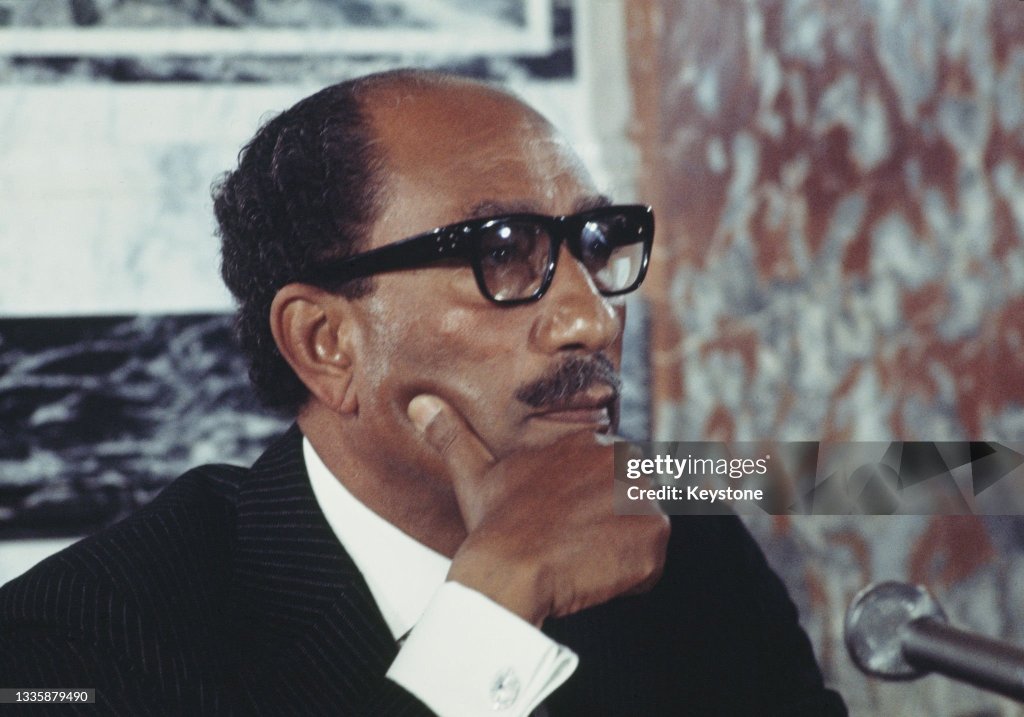
President Anwar el‐Sadat said today that France had agreed to sell supersonic Mirage fighter planes to Egypt. Speaking at a news conference at the end of a three‐day visit, he said the number was secret but that it would be “very much less” than the 120 planes that Egypt has reported having lost in the Middle East war of October, 1973. Authoritative French sources said privately, however, that there had been only an agreement in principle, that the number being considered was “some dozens” and that France did not want to upset the military balance in the Middle East. The informants said there would have to be negotiations on the number of planes, the models, prices, equipment, delivery dates and other matters. President Sadat said that financing of the purchase was no problem.
Relations between the two Middle Eastern oil superpowers, Iran and Saudi Arabia, have shown signs of improving in recent months, in the view of highly placed Iranians and diplomats in Tehran, and are likely to improve further as the Saudi armed forces grow stronger and more self-confident.
A toy and firecracker shop explosion in Taichung in central Taiwan killed 16 persons, injured 106, left 22 missing and did an estimated $2.5 million in damage. The blast demolished the four-story shop, flattened 15 neighboring buildings and damaged more than 45 downtown stores, police said. Reports said that the owner, who was detained by police, was operating an unlicensed firecracker factory.
Federal export curbs on wheat and soybeans, imposed last October to head off domestic shortages and soaring food prices, will be relaxed, returning the export trade “virtually to a free basis,” according to Earl Butz, the Secretary of Agriculture. The move followed Soviet cancellation of orders for 3.7 million bushels, with cancellation of orders for another 7.5 million said to be under negotiation. China canceled an order for about 22 million on Monday and other foreign cancellations are expected. Domestic prices have fallen sharply and a bumper crop is forecast.
China’s Foreign Ministry disclosed that Teng Hsiao-ping (Deng Xiaoping) has been named army chief of staff. In the past year the 71-year-old Communist party veteran and army political commissar has also become the principal deputy premier under Chou En-lai and one of five deputy party chairmen under Mao Tse-tung. Purged and vilified during the Cultural Revolution, he now holds a central position to oversee the succession to Chairman Mao, 81, and Mr. Chou, nearly 77. Purged and vilified in 1966 during the Cultural Revolution, Mr. Teng appears to be effectively in charge of the Government on a day‐to‐day basis as the principal Deputy Premier under Premier Chou En‐lai, who has supposedly been convalescing in a hospital since April. Earlier this month, Mr. Teng was also made one of the party’s five deputy chairmen under Chairman Mao Tse‐tung.
The army appointment asserts the authority of the party over the army to a degree that is unprecedented in the 25 years since the Communists assumed control in China.
Philippine President Ferdinand E. Marcos rejected a Moslem rebel plan to set up an independent state with its own army in the troubled southern Philippines. The proposal came after a top government official met with Filipino rebels in Saudi Arabia. Meanwhile, government forces pushed back rebels besieging the provincial capital of Cotabato, 500 miles south of Manila.
Canada agreed to sell South Korea a $300 million nuclear reactor provided that country signs an agreement against using it for weapons manufáçture, Ottawa officials said. Total project cost would be about $700 million, with the value of Canadian materials placed at $300 million. Formal ratification by both countries is expected within two or three months.
A prolonged drought in Somalia has resulted in 1,500 deaths from hunger and has crowded relief camps with 230.000 refugees, a government spokesman said today. The United Nations has appealed to its members for financial help, relief supplies and food for Somalia, but officials here warned that the situation was deteriorating rapidly and required much more outside aid than had been estimated. Ibrahim Megag Samater, economic adviser to President Mohamed Siad Barre of Somalia, said at a news conference that famine conditions were expected to reach peak levels in April or May and that 800,000 people —a quarter of the country’s population — might require relief. The United Nations Development Program has allocated $2million to help meet relief needs and governments and private relief agencies are supplying direct help.
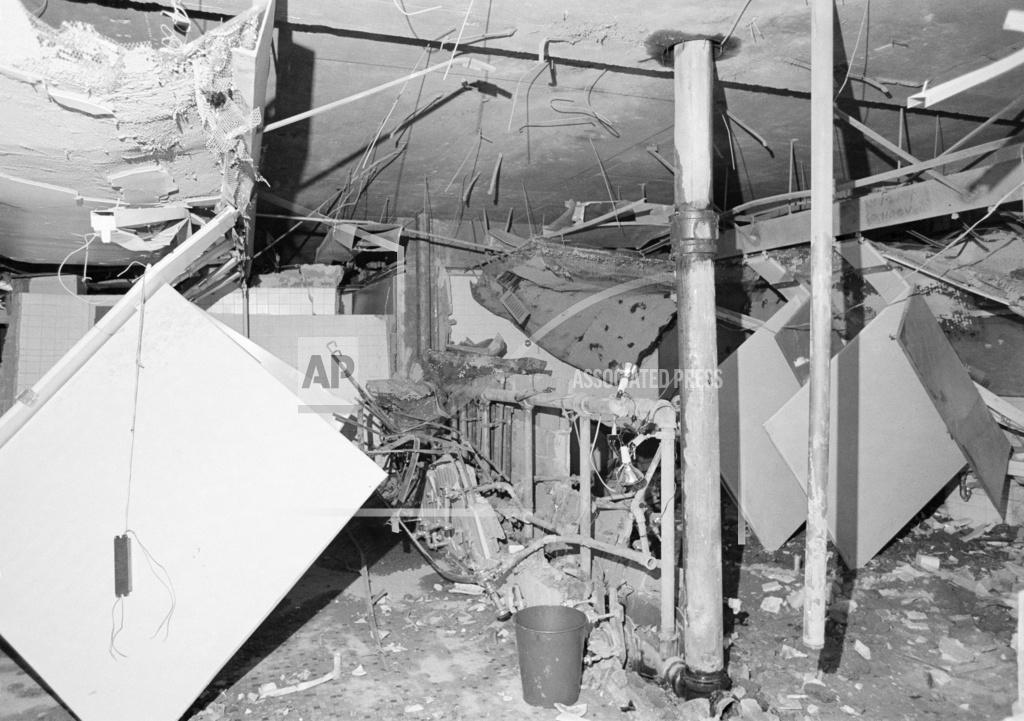
The Weather Underground bombed the U.S. State Department main office in Washington, D.C. An early-morning explosion at the State Department damaged 20 rooms on three floors. A group calling themselves the Weather Underground claimed responsibility. Anonymous threats against other federal buildings in Washington caused the evacuation of nearly 6,000 government employees. There was no specific political motive for the later threats, the Federal Bureau of Investigation said. The Weather Underground claimed responsibility for the blast, which damaged 20 rooms on three floors of the State Department at 1:17 AM. Another bomb was removed today from the Federal office building in Oakland, California, after a telephone caller had said it could be found behind a panel on the seventh floor. The bomb was detonated in the street by a bomb disposal squad. No damage was, caused.
The Weather Underground is a group of self‐styled revolutionaries that succeeded the socalled Weathermen, which was established in 1969 in Chicago. The Federal Bureau of Investigation is seeking about 29 reputed Weather Underground members. The bomb threats made anonymously here by telephone were apparently without specific political motives, according to the Federal Bureau of Investigation. Bomb threats against the Interior and Agriculture Departments and the Smithsonian Institution were conveyed about noon by a male who called The Associated Press Bureau. The Treasury Department received a threat from male caller at 3:23 P.M., according to the Secret Service.
President Ford indicated willingness to compromise with Congress on tax cut legislation at a meeting with a small group of reporters. But he appeared to rule out any concessions on his program to reduce oil imports. His answers on tax reduction suggested he was resigned to having Congress pass its own program and would not veto it. He remained adamant against changing any details of his energy conservation program and his plan for three $1-a-barrel fee increases on imported oil.
Senate confirmation hearings on the nomination of Edward H. Levi as attorney general wound up with the University of Chicago president under attack from a right-wing group, Liberty Lobby, and the left-wing U.S. Labor Party. Both organizations contended Levi was the personal choice of Vice President Rockefeller to protect his interests from Justice Department actions, which Mr. Rockefeller’s office denied. Approval by the Judiciary Committee appears certain this week or next, followed by swift Senate confirmation.
Cracks in the pipes of the emergency cooling system of the Dresden nuclear power plant near Morris, Illinois, have forced the government to order utilities operating 23 reactors to shut them down within 20 days to check for similar faults. A similar check for a different set of pipes in most of the same plants was ordered by the government four months ago.
A House Democratic study group unanimously adopted a motion of Lucien Nedzi, chairman of the Subcommittee on Intelligence, to recommend creation of a bipartisan select committee to investigate all government intelligence agencies.
A string of three oil barges collided with an empty grain ship in the Mississippi River just south of New Orleans in the dark, triggering a fiery explosion that showered burning oil and chemicals over a half-mile-wide area. The collision occurred in heavy fog as a tug boat was pulling the barges upriver. There were no reports of injuries. Two of the barges, carrying crude from offshore rigs in the Gulf of Mexico, caught fire and drifted downstream, threatening shipping and riverbank installations until they were secured about 15 miles from the collision site. Several hours later the Coast Guard announced that all crew members had been accounted for and no one was hurt.
Police in Anthony, New Mexico, used tear gas and mass arrest to quell a window-smashing disturbance at Anthony-Gadsden High School touched off by plainclothes narcotics agents investigating campus drug problems. Sixty students were arrested, authorities said. No one was injured. A police undercover officer said four plainclothes men went onto the campus and talked with a youth about the problem of marijuana peddling. The officer said the youth became resentful and abusive and was arrested. An estimated 200 to 300 students then converged on the scene and the situation degenerated into rock throwing that was put down by tear gas.
Former Georgia state Senator Leroy Johnson, the first black to win a Southern legislative seat since Reconstruction, was convicted in Atlanta of giving a false statement to the Internal Revenue Service. He was acquitted on two charges of income tax evasion. Johnson was charged with underreporting his income in 1969 and 1970 by $53,000. U.S. Attorney John Turner said Johnson could receive a maximum of five years and a $10,000 fine. Sentencing was postponed and Johnson announced he would appeal.
The prosecution rested today, using its final witness to emphasize the central theme of its case: that the fetus aborted by Dr. Kenneth C. Edelin could have lived if given the chance. Dr. Edelin, 36‐year‐old obstetrician at Boston City Hospital, is charged with manslaughter in the death of the fetus. The case has drawn national attention. Just two years after a United States Supreme Court decision overturning most state abortion regulations, the Edelin case enters delicate legal areas left open by that decision — when a human life begins and what responsibility a doctor has to an aborted fetus.
Eighty pedigreed poodles, some of them national award winners, were found covered with sores and locked in tiny cages at the Miami home of a murdered Coast Guard officer and his wife, police said. Police have refused to release information on Monday’s beating deaths of Lieutenant Commander Walter C. Parker, 39, and his wife, Marjorie, 35, except that they were found in their bed. The animals in Enchantress Kennels apparently had been mistreated for several weeks. The dogs were stored four and seven to a cage in an unventilated garage. They were covered with hard-caked excrement, sores and bugs, police said.
A federal grand jury in Brooklyn indicted 19 persons for conspiring to smuggle $200 million worth of heroin into the United States. The Drug Enforcement Administration said the conspiracy involved some of the world’s major narcotics traffickers. The heroin, estimated at 400 kilograms (about 880 pounds) was allegedly brought into the country between 1969 and 1972.
A federal appeals court has ruled against regulations that would have gradually eliminated lead from gasoline beginning this year. In a 200‐page opinion late yesterday the United States Federal appeals court here has Court of Appeals for the District of Columbia held that the Environmental Protection Agency regulations that would eliminate lead in gasoline were “arbitrary and capricious.” Acting on a lawsuit brought by the nation’s largest oil refiners, the appellate court said that, contrary to assertions by the envircnmental agency, there was no conclusive scientific proof that the lead emitted from gasoline was posing health hazards to “a substantial portion of the general population.”
A former New York City policeman, who won the departmental Medal of Honor and a dozen other citations for bravery before service wounds forced his retirement, has pleaded guilty in Miami, Florida to armed robbery, it was disclosed today. The retired policeman, former Detective Daniel P. McEnery who once owned a popular restaurant that bore his name in the Washington Heights section of Manhattan, told psychiatrists he had used a toy gun to rob liquor and drug stores.
The Food and Drug Administration is modifying some of its regulations in ways that the agency believes will help to supply the nation and ultimately the world with adequate quantities of nutritious food, a lawyer for the Federal agency reported.
A week-old oil slick off the coast of Santa Barbara that resulted from na- tural seepage was reported dissipating by wind and wave action, the Coast Guard said. Calm seas earlier had spread the oil into a thin sheet a mile wide and 10 to 12 miles long. The Coast Guard said the slick poses no threat to wildlife, beaches or the Channel Islands.
John Phillips’ musical “Man on the Moon”, produced by Andy Warhol, opens at the Little Theater, NYC; runs for 5 performances.
First American Annual Comedy Awards, hosted by Alan King.
Dow Jones Industrial Average: 705.96 (+11.19, +1.61%)
Born:
Sara Gilbert [as Sara Rebecca Abeles], American TV actress (“Roseanne”) and panelist (“The Talk”); in Santa Monica, California.
Kelly Packard, American actress (“California Dreams”), in Glendale, California.
Miguel Ojeda, Mexican MLB catcher (San Diego Padres, Seattle Mariners, Colorado Rockies, Texas Rangers), in Guaymas, Mexico.
Tony Blevins, NFL defensive back (San Francisco 49ers, Indianapolis Colts), in Rockford, Illinois.

 History Diaries