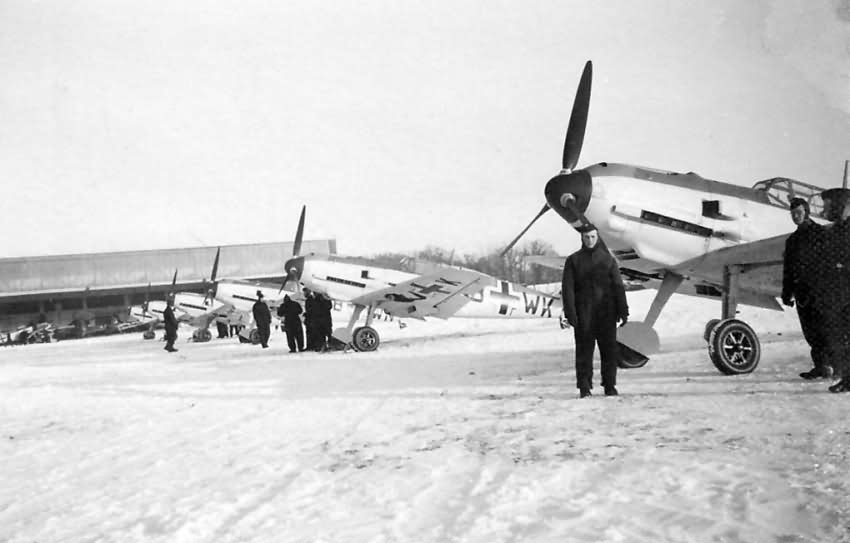
On the Karelian Isthmus, the Soviet artillery continues its increasingly fierce pounding of the main Finnish defensive position on the Isthmus. The 7,000-shell bombardment of Summa continues for another day. It has now been a continuous rain of artillery shells for two weeks. Soviets continue building up for the main Mannerheim Line offensive.
The final preparations are now being made for a massive Soviet offensive on the Karelian Isthmus. Comrade Stalin likes to begin his offensives on days that have some larger significance. The first of the month is the nearest one available.
Finnish Army Major-General Hägglund gives the command to take the ‘mottis’ at Kelivaara and West Lemetti. General Hägglund ordered the Finnish IV Corps to attack the Pieni-Kelivaara and Lemetti West encirclements to test various tactics.
IV Army Corps’ combat detachment and battalion commanders hold talks at the 13th Division’s command post.
General Siilasvuo’s 9th Division completes its deployment opposite the Soviet 54th Mountain Division. His plan is a copy of his plan to destroy the 44th Rifle Division on the Ratte road. First, his men will destroy the Soviet division’s lines of communication by using mobile ski groups. Then, his men will cut the column – stretched out on the road – into the “logs” that are easier to “burn.” This has become known as the “motti” strategy.
The ‘Million Fort’ in the Lähde sector to the east of Lake Summajärvi is badly damaged by the enemy’s heavy artillery.
In Ladoga Karelia, near Pitkäranta, Soviet troops take the offshore island of Putkisaari.
Count Eric von Rosen, the Swedish Finnophile who donated the first aircraft in the Finnish Air Force, believes Finland can withstand the Soviet pressure and does not believe the air raids will undermine Finnish resistance.
An editorial in the Red Army paper Krasnaya Zvezda claims the “Red Army is fulfilling an honorable international obligation in Finland.”
The American daily The Chicago News suggests the 1940 Nobel Peace Prize be awarded to Finland.
Sweden’s Foreign Minister warns the Soviet Ambassador in Stockholm, Madame Alexandra Kollontai, that continuation of the war against Finland could lead to the involvement of the Western powers.
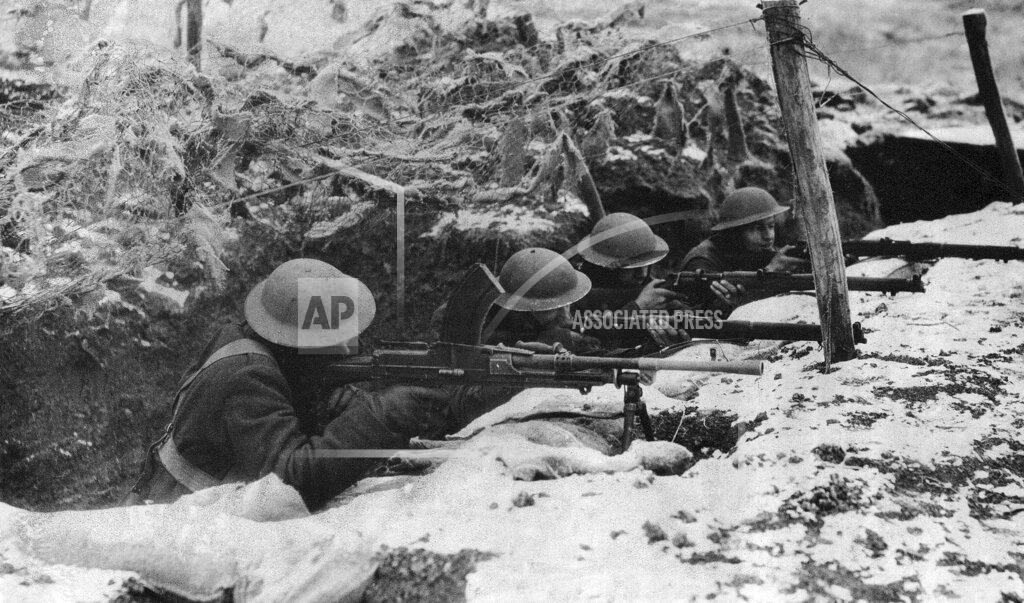
Along the whole front in France today’s big news has been that it has thawed. After more than a month of severe frost and snow, with only one brief interval, and after sixteen days of intense cold when the temperature fell as low as 20 below zero Fahrenheit, rain began to fall last evening and has continued throughout today with much higher temperature.
Adolf Hitler ordered Wilhelm Keitel to continue with the planning of an invasion of Norway. The Plan for the German invasion of Norway and Denmark is given a formal codename of “Weserubung”.
The German government demanded at least 1 million industrial and rural workers be provided from Nazi-occupied Poland to work assignments in the Reich.
The Nazis warned that listening to foreign radio was punishable by death. A warning that the German prohibition against listening in on foreign broadcasts would be enforced with the full force of the law was published in the official German law periodical Deutsche Justiz and issued in a broadcast over the German radio today.
The Vatican has been working intensively through its diplomatic representatives in the Balkans to urge Rumania to be conciliatory and to make the Balkan Entente meeting a success.
A decree formally restoring the vast property holdings in Spain of the Society of Jesus, which were confiscated by the republic in 1932, was published today. The Jesuits, who were expelled at the same time, have been permitted to carry on their work in Nationalist territory since the beginning of the civil war and they already have recovered much of their property.
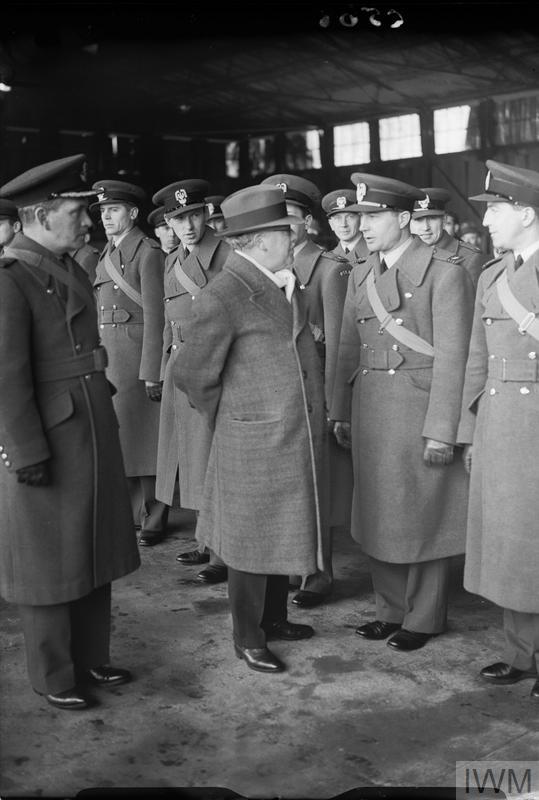
First Lord of the Admiralty Winston Churchill, undaunted by the very mixed reviews to his previous radio address, takes to the broadcast waves again. Churchill spoke at the Free Trade Hall in Manchester: “each to our station… there is not a week, nor a day, nor an hour to be lost!” He also says he is puzzled and worried about the “phony war” and wonders why Britain has not been bombed yet. The speech was broadcasted to the dominions and the United States.
The South African Parliament votes against a resolution to leave the war against Germany. Hertzog’s peace resolution was defeated, 81 to 59. In his speech to Parliament, Hertzog openly supported Hitler. The pro-British prime minister, General Jan Smuts, likens the speech, of his former Boer comrade-in-arms, to a chapter of Mein Kampf. He says, “Goebbels could not have done it better.”
The Royal Navy trawler HMT Riant foundered off Gigha, Argyllshire. All 14 crewmen were rescued.
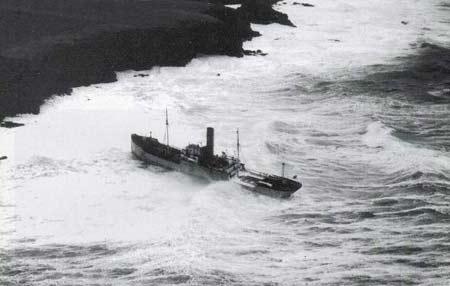
At 2003 hours, the Norwegian cargo ship Faro was torpedoed by U-20, commanded by Kapitänleutnant Harro von Klot-Heydenfeldt, about 15 miles SE of Copinsay, Orkneys (58° 55’N, 2° 46’W). The torpedo detonated about 20 metres from the ship and caused a leak. The crew abandoned ship in two lifeboats and one with eight men in it drifted away in the darkness. The master and six crew members in the other boat stayed close to the ship and reboarded her at dawn next day. They tried to save the Faro but her bow already settled so low that the propeller was out of the water. After the anchor chain broke she drifted ashore and was wrecked in the Taracliff Bay, Deerness. The survivors were taken off by breeches buoy. The missing lifeboat was washed ashore on Copinsay later that day, with only one man alive, and three bodies. The Faro was the first of four ships sunk by the U-20 that day. Of the ship’s complement, 8 died and 7 survived. The 844 ton Faro was carrying ballast and was bound for Methil, Scotland.
At 2052, the Danish cargo ship Fredensborg (Master J.V. Thorn) was hit amidships by one torpedo from U-20 and sank in 10 seconds about 15 miles southeast of Copinsay, Orkneys ( 58° 25’N, 1° 53’W). The ship was sailing together with the England and were both sunk by the same U-boat when they tried to assist the torpedoed Faro in heavy weather. The Fredensborg was one of four ships sunk by the U-20 that day. All of the ship’s complement of 20 died. The 2,094 ton Fredensborg was carrying ballast and was bound for Blyth, England.
At 2124 hours, the neutral Danish steam merchant England was torpedoed and sunk by the U-20, southeast of Copinsay at 58° 25’N, 1° 53’W. The England was hit underneath the bridge by a G7e torpedo from U-20, broke in two and sank within 2 minutes about 15 miles southeast of Copinsay, Orkneys. The ship was sailing together with the Fredensborg and were both sunk by the same U-boat when they tried to assist the torpedoed Faro in heavy weather. The England was one of four ships sunk by the U-20 that day. Of the ship’s complement, 20 died and 1 survived. The 2,319 ton England was carrying ballast and was bound for Blyth, England.
At 2313, the Norwegian cargo ship Hosanger was torpedoed & sunk by U-20, 15 miles SE of Copinsay Light (58° 25’N, 1° 53’W). The ship was hit by one G7a torpedo, lost the stern and sank within two minutes. The only survivor, Magnus Sandvik, managed to reach a raft with four others, but his shipmates froze to death while the armed boarding vessel HMS Northern Reward picked him up after about 15 hours. A line was thrown down on him, but he was not able to fasten it around himself, so a man from the Northern Reward jumped overboard to assist. He was then transferred to HMS Maori (F 24) and taken to a hospital in Kirkwall. Of the ship’s complement, 17 died. This was the last of the four ships sunk this day by U-20. The 1,591-ton Hosanger was carrying ballast and was bound for Leith, Scotland.
The British trawler Caerphilly Castle was bombed and sunk in the Atlantic Ocean west of Ireland by Luftwaffe aircraft.
The Greek cargo ship Adamantios J Pithis was wrecked on Cam Rocks, near St Ann’s Head, Pembrokeshire, United Kingdom. Her crew were rescued by a Royal Navy patrol vessel.
The British cargo ship Halton foundered off Lundy, England. The wreck was broken up at Briton Ferry, Wales, from September 1940.
U.S. freighter SS Cold Harbor, bound for Odessa, is detained at Gibraltar by British authorities.
Convoy OA.80G departs Southend.
Convoy OB.80 departs Liverpool.
The War in Sea, Saturday, 27 January 1940 (naval-history.net)
Battleship RODNEY, battlecruiser REPULSE, and the 8th Destroyer Flotilla less FORESTER under repair, departed the Clyde to exercise west of the Shetlands. They returned on the 31st.
Light cruiser MANCHESTER arrived at Scapa Flow to boiler clean.
Light cruiser DUNEDIN departed Scapa Flow and arrived at Portsmouth on the 29th.
Armed merchant cruiser SCOTSTOUN arrived in the Clyde.
Destroyer MAORI departed Rosyth escorting submarine TRITON to Scapa Flow. After delivering her on the 28th, MAORI proceeded to search for a boat from the Norwegian steamer HOSANGER before proceeding to the Clyde, where she arrived on the 29th.
Destroyers JAVELIN and JAGUAR departed Invergordon to rendezvous with tanker ATHELKNIGHT (8940grt) for Rosyth.
Convoy HM.9 A of 19 Norwegian, nine Swedish, four Finnish, four Estonian and one Latvian ship departed Bergen escorted by destroyers INGLEFIELD, ISIS, IMOGEN, and KASHMIR and submarine SEAL. Light cruisers GLASGOW and EDINBURGH departed Scapa Flow on the 26th to cover the convoy. Twelve ships in the convoy detached for ports on the west coast escorted by destroyers INGLEFIELD and MOHAWK before the remaining ships and escorts arrived at Methil on the 31st. ISIS then sailed for Falmouth for docking.
Sloop AUCKLAND departed Rosyth for a refit at Dundee.
Convoy FN.81 departed Southend, escorted by sloops FLEETWOOD and BITTERN. Sloop EGRET joined en route and anti-aircraft cruiser CALCUTTA, which had departed the Humber, was on passage near the convoy, which arrived in the Tyne on the 28th. Convoy FN.82 was cancelled.
Minesweeper SKIPJACK was in a collision with Finnish steamer KARIN THORDEN (1789grt) and sustained damage to her stern.
U-20 sank four steamers – Norwegian FARO (844grt) 15 miles SE of Copinsay, Orkneys, Danish FREDENSBURG (2094grt) in 58-10N, 1-40W, and Danish ENGLAND (2319grt) and Norwegian HOSANGER (1591grt) in 58 25N, 01 53W. FARO went ashore at Taracliffe Bay a total loss on the 28th, with seven crew lost and eight saved. FREDENSBURG lost her entire crew of 20 men. ENGLAND lost 20 men with one survivor and HOSAGNER lost 17, with her only survivor being rescued by armed boarding vessel NORTHERN REWARD and later transferred to destroyer MAORI.
Mine bumper ILSENSTEIN was to proceed to Troon to be converted into a blockship.
Finnish steamer CLIO (996grt) was seized in the Baltic by German warships, and taken to Pillau.
Destroyer HEREWARD was damaged by heavy weather, and repaired at Halifax until 28 February, when she left for England.
American light cruiser USS TRENTON (CL-11), at sea with American destroyers USS DICKERSON (DD-157) and USS HERBERT (DD-160) en route from Madeira to Lisbon, made plain language reports to French destroyer CHEVALIER PAUL, which was escorting merchant ships south towards North Africa, of apparent preparations for a breakout by German steamers ARUCAS (3369grt), LA PLATA (8056grt), WANGONI (7848grt) from Vigo.
French light cruiser JEANNE DE VIENNE departed Malta after a visit by French Admiral Sud.
President Roosevelt said today that the stiffening of our national defense does not mean that there is any increased likelihood of this country’s being involved in war, but that “on the contrary a position of readiness for defense lessens the danger of involvement.” He expressed this viewpoint in a letter endorsing Army Day, the annual celebration of which will take place on April 6. The letter was addressed to Charles A. Mills, commander-in-chief of the Military Order of the World War which started Army Day. The President’s letter, dated January 26 and made public by the veterans’ group, read as follows:
“Dear Commander Mills: With the armed forces of so many countries engaged in active hostilities, we are profoundly grateful as we prepare for this year’s observance of Army Day in America that our army is occupied with peace-time training. With much of the world at war, we have felt it necessary to strengthen our army in personnel, equipment and training. This stiffening of our national defense does not mean that there is any increased likelihood of our being involved in war. On the contrary, a position of readiness for defense actually lessens the danger of involvement. Army Day falls on the twenty-third anniversary of our entrance into the World War. Today, while so many millions of people suffer the stark realities of war, we have special reasons to be proud of the soldiers of all elements of our army — the Regular Army, the National Guard, and the Organized Reserves — who have volunteered in the defense of their country. The Military Order of the World War has rendered an outstanding public service in inaugurating and sponsoring the annual observance of Army Day. This observance tends to acquaint the American people with their army and gives them a better understanding of its composition, its duties and its needs.”
John L. Lewis today returned to his attack on the leadership of the Democratic party and declared that “If the Democratic party thinks it can return to power without the support of labor, that is the pure depth of stupidity and I cannot go along with them.” The burly, bushy-browed president of the United Mine Workers of America leaned back in a chair in a small sitting room of his hotel headquarters today and for the better part of an hour jabbed the Democratic party leadership, challenging it to answer his charge that, after seven years in power, it had failed to find a solution to the nation’s major problems. Mr. Lewis withheld answers to two questions, one designed to elicit what alternative he thought labor had to supporting the Democratic party, and the other dealing with his reaction to support of a third term for President Roosevelt by the Amalgamated Clothing Workers of America, a CIO affiliate. However, he made a partial answer on the question of CIO affiliates supporting the third term when, advised that the United Rubber Workers of America had adopted a third term resolution, he said: “It is a reasonable supposition that they will keep pace with their friends.”
He did not indicate whether this meant that the rubber workers might change their mind once the miners acted. Some forty-seven third term resolutions will be bundled up into a substitute proposal on Monday by the resolutions committee, which will probably follow Mr. Lewis’s suggestion to refer the question of political action to the international union’s executive board for later consideration. Much interest is being displayed here as to the possibility of a vigorous minority discussion by delegates, largely from West Virginia locals, who have been sent to support a third term for President Roosevelt. At the press conference today Mr. Lewis made only two references directly to President Roosevelt. Concluding his discussion of the need for leadership from the government in solving the nation’s economic ills, he remarked that “any American, reading the President’s message to Congress on the state of the Union, would not find a single answer to the questions that perplex him and his family.”
A split in the C.I.O. high command on the question of endorsing President Roosevelt for a third term was reflected yesterday in an assertion by Sidney Hillman, vice president of the C.I.O. and president of the Amalgamated Clothing Workers of America, that no man in public life was more deserving of labor’s confidence and support than Mr. Roosevelt.
SS City of Flint arrives back at her homeport of Baltimore following her adventures in the Baltic. Tall tales of the sea in a world at war ran the length of Baltimore’s icy waterfront today as the United States. freighter City of Flint warped into a pier at Canton Docks after a 116-day voyage of adventure. As related on his bridge by Captain Joseph A. Gainard and embellished tonight by freshly paid sailors in “Joe’s Place,” “Mae’s Tavern” and the “Jolly Spot,” they included stories of capture at sea by a German warship; of a perilous voyage in northern oceans infested with mines and icebergs; of a German prize crew who, for all their part in the war, were “damned good sailors”; of English refugees of the sea, gentlemen to the man; of German soldier-sailors who ate themselves almost to stupefaction on good American cooking, and of Russians who “looked like cows in a field” and acted the same way.
Labor is not likely to obtain additional Federal labor legislation this year and, indeed, will be “lucky” if it is “able to save the National Labor Relations Act,” Thurman W. Arnold, head of the anti-trust division of the United States Department of Justice, said.
A gain of 5 percent in income payments to individuals in 1939, compared with 1938, was reported in a survey made public today by the Department of Commerce.
The opinion of many voters in the United States is that lasting peace in the world can best be maintained through a strong international organization—or “United States of Europe”—and by the ending of dictatorships, according to a Gallup Poll by the American Institute of Public Opinion.
Secretary of the Navy Edison said today that he would probably “go to bat” with Congress in an effort to gain authority to order warships on the basis of negotiated contracts rather than by the old system of competitive bidding covering each individual item placed in the vessel.
Weak spots have been discovered in the island’s defense during the first Puerto Rico Departmental Army maneuvers designed to test the effectiveness of the new Caribbean outpost set up to guard the eastern approaches to the Atlantic coastline and the Panama Canal from possible enemy attack.
Penetration of Sulzberger Bay to its eastern shore by Rear Admiral Richard E. Byrd in the Bear, thereby setting a new mark in polar exploration in the Antarctic, was reported to the Navy Department today in a dispatch from the Bear.
-17°F (-27°C), CCC Camp F-16, Georgia (state record).
Slowly rising temperatures to break the wave of abnormal cold that has claimed 361 lives throughout the United States and caused damage mounting into the millions to Southern crops were predicted last night. A mass of warm air is moving down from the northwest and should restore normal conditions by the middle of next week, according to C.L. Mitchell, chief weather forecaster, in Washington.
The writ was issued for a new Canadian federal election to be held March 26. Canada’s general election will take place on March 26, the Tuesday after Easter. This announcement was made today by Prime Minister W.L. Mackenzie King at a press conference in his office in the Parliament Building. At the same time Mr. Mackenzie King outlined the elaborate procedure which has been devised for taking the soldier, sailor, and air force vote, both in Canada and overseas.
A Hindu-Muslim clash in Rangoon, Burma leaves one dead and 46 injured.
Chinese Winter Offensive: Under pressure from Chinese 3rd War Area, Japanese 22nd Infantry Division withdraws to Hsiaoshan.
Chinese and Japanese reported today a new outbreak of fighting south of the Chientang River In Chekiang, coastal province south of Shanghai. Chinese said a Japanese column had been repulsed in an attempt to drive toward Shaohing, east of Hangchow on a canal connecting with the provincial capital. They said a Japanese air raid on Chenghsien, near Shaohing, had caused twenty casualties and wrecked 170 buildings. A stalemate appeared to have developed, meanwhile, on the Kwangtung Province front, with the Chinese unable to smash entrenched Japanese positions stretching fan-like north of Canton. Chinese guerillas, disguised as a repair gang, were said however, to have caught a Japanese garrison by surprise in an attack seven miles north of Canton and inflicted heavy losses.
Domei, Japanese news agency, reported tonight that Japanese forces were advancing against 10,000 Chinese along the southern bank of the Yellow River, south of the western terminus of the Peiping-Suiyuan railway at Paotow. Japanese field dispatches said that Chinese guerrillas had been dealt a “severe blow,” according to Domei.
As predicted last week, a large share of administering the lower Yangtze River when it is opened to third powers will be entrusted to the projected Wang Ching-wei puppet government instead of being-directly administered by the Japanese.
The British reply to Japan’s protest against the removal of twenty-one Germans from the liner Asama Maru by a British warship last Sunday, delivered today, failed to satisfy Japan. In a two-hour discussion between Sir Robert Leslie Craigie, the British Ambassador, and Hachiro Arita, the Japanese Foreign Minister, the latter rejected the “legalistic” arguments, holding that the crux of the case was not its legal aspect but the slight to Japan’s dignity by a British warship “in Japan’s front garden.” It was agreed to continue the discussions next week. In the meantime, the text of the British note will not be published. During the interval the British Government will have an opportunity to reconsider, as Japan demands.
The Foreign Office communiqué and subsequent written comment by Yakichiro Suma, the spokesman, show that Japan will not be satisfied with a legal answer, but demands some form of emotional reparation for her injured dignity. Mr. Arita was not interested in the legal aspects of the removal of Germans from a Japanese liner as expounded by Viscount Halifax, the British Foreign Secretary, and clarified by the British Ambassador. In the words of Mr. Suma’s statement, he “strongly reminded Ambassador Craigie regarding Japan’s position and demanded reconsideration.” Mr. Suma admitted the British reply was courteous but complained that it was “nothing but a legalistic exposition of the British Government’s views.”
The Philippine ocean liner President Quezon struck a reef in the Pacific Ocean off Tanegashima, Ryukyu Islands, Japan (30°16′2″N 130°56′50″E) and sank with the loss of one life. Survivors were rescued by Ukishima Maru and two other Japanese ships.
A warning against subversive propaganda was issued today by Attorney General H.G.R. Mason, with the declaration that the New Zealand Government would not tolerate utterances designed to divide or disturb the people in the prosecution of the war.
Construction work at Palmyra Atoll began to improve its military facilities and create an airfield.
Dow Jones Industrial Average: 146.51 (-0.10)
Born:
Brian T. O’Leary, planetary scientist, author and astronaut (NASA Astronaut Group 6, 1967; abortive Apollo Applications Program, never flew), in Boston, Massachusetts (d. 2011).
James Cromwell, actor (“Babe”, “The Green Mile”), in Los Angeles, California.
Terry Harper, Canadian NHL defenseman (NHL Champions, Stanley Cup, 1965, 1966, 1968, 1969, 1971; NHL All-Star, 1965, 1967, 1973, 1975; Montreal Canadiens, Los Angeles Kings, Detroit Red Wings, St. Louis Blues, Colorado Rockies), in Regina, Saskatchewan, Canada.
Died:
Isaac Babel, 45, Ukrainian writer (executed).
Léon Frédéric, 83, Belgian Symbolist painter.
Naval Construction:
The Royal Navy Tree-class minesweeping trawler HMS Fir (T 129) is launched by A & J Inglis Ltd. (Glasgow, Scotland); completed by Aitchison Blair.
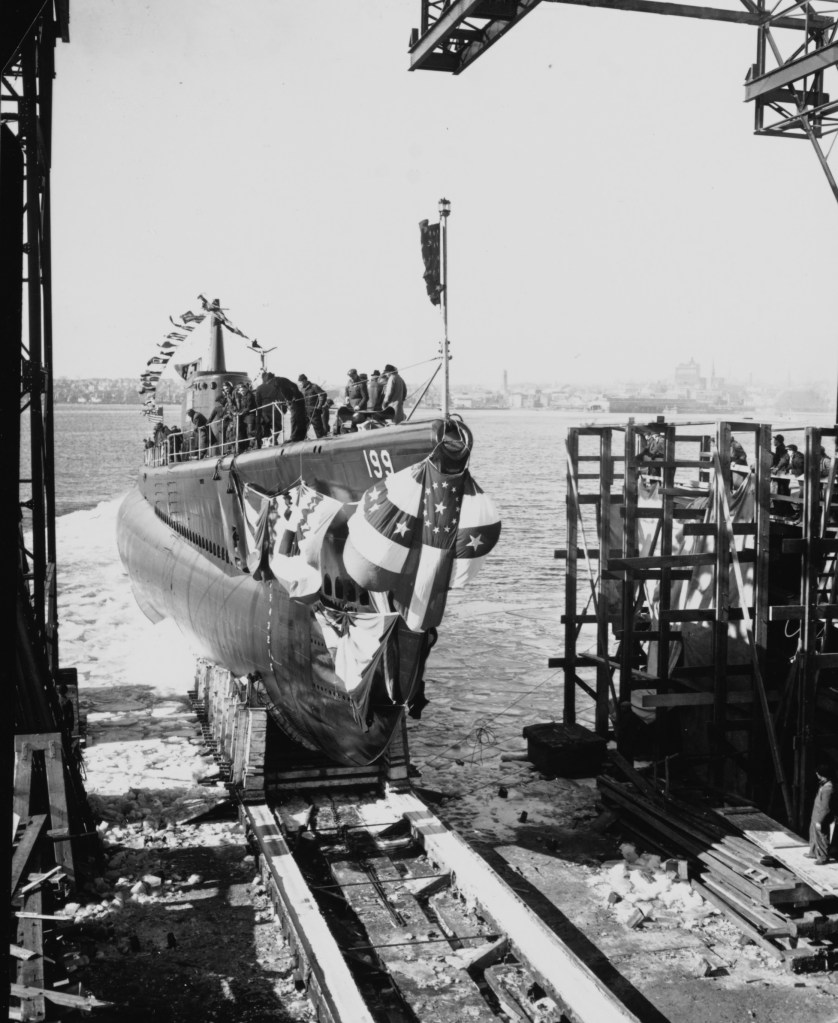
The U.S. Navy Tambor-class submarine USS Tautog (SS-199) is launched by the Electric Boat Co. (Groton, Connecticut, U.S.A.).
The Royal Navy sloop HMS Black Swan (L 57, later U 57), lead ship of her class of 8, is commissioned. Her first commanding officer is Captain Albert Lawrence Poland, DSC, RN.
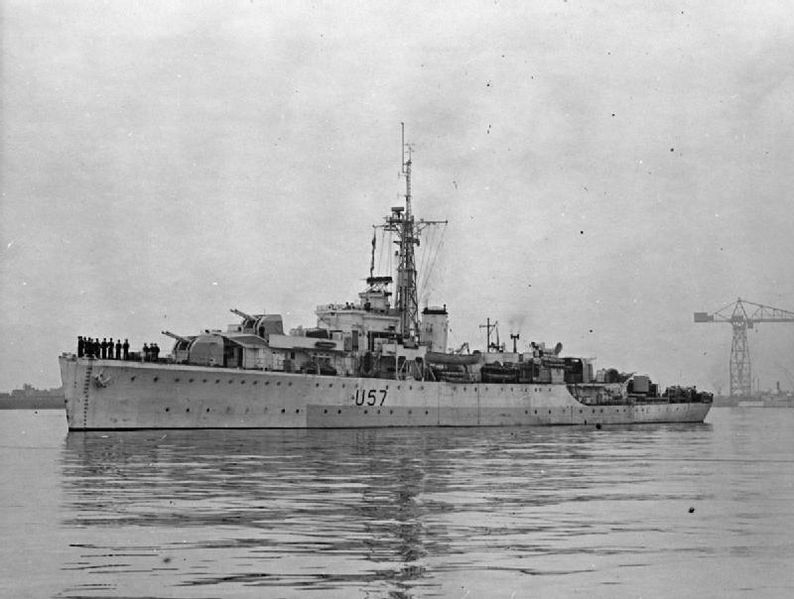
Black Swan was initially deployed on convoy escort missions along the British east coast, before the Norwegian Campaign caused Black Swan to be attached to the Home Fleet, where it was used to provide anti-aircraft cover to the Allied landings at Åndalsnes. Black Swan was heavily engaged by German bombers before being hit by a bomb which passed through the ship before exploding, on 27 April 1940.
After repair, in June Black Swan returned to escort duty in the North Sea, before being damaged by a mine on 1 November 1940. This time, the ship was under repair until May 1941, when it was transferred to Western Approaches Command, escorting convoys in the Irish Sea. Black Swan was again slightly damaged by bombing in August that year and was transferred to Londonderry as part of the 37th Escort Group, escorting convoys to and from Gibraltar.
On 25 October Black Swan rescued 34 survivors in a lifeboat from the cargo ship Empire Star, which had been sunk two days earlier. After a 120 nmi (140 mi; 220 km) search the sloop rescued another 27 survivors in a second lifeboat from the same ship. The next month Black Swan escorted convoys in support of Operation Torch.
On 2 April 1943, when escorting Convoy OS 45, from Liverpool to Freetown, Black Swan and the Flower-class corvette HMS Stonecrop sank the top-scoring U-boat U-124 with all hands off the coast of Portugal.
In 1943 Black Swan for a short time saw action near Iceland to provide escort against the U-boat threat, after which she served in the Mediterranean, on Malta and Adriatic convoy protection duties. From there, Black Swan passed through the Suez Canal en route to the Asia, Far East and Pacific theatres against the Japanese forces. The ship was on active duties as far as Australia and the Philippine Islands.
At the end of hostilities in 1945 Black Swan followed the cruiser HMS Belfast into Shanghai and were the first Royal Navy warships to liberate Japanese concentration camps containing British and Empire prisoners.
In 1949 she took part in the Yangtze Incident when she, with others, went to aid of HMS Amethyst. Black Swan suffered 12 men wounded and severe damage to her superstructure in a fierce engagement with Chinese batteries and fell back. The failed relief effort cost 46 killed and 64 injured. Black Swan also served in the Korean War and was involved in the Battle of Chumonchin Chan. Black Swan was scrapped in 1956 at Troon in Scotland. She was affiliated with TS Black Swan – a Sea Cadet Corps unit in Walton-on-Thames, Surrey.
 History Diaries