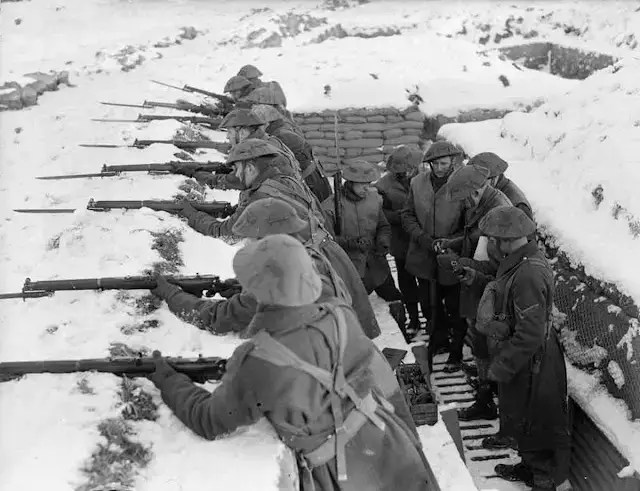
Marshal Voroshilov, who has been directing the war from the Kremlin, is on his way to the Finnish front on this day. It does not take a military genius for anyone in possession of this fact to figure out that something big is about to take place.
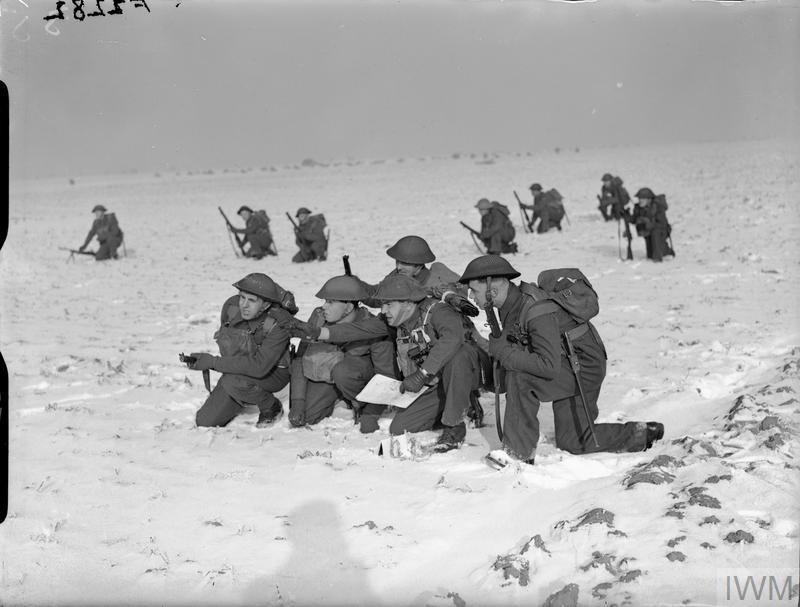
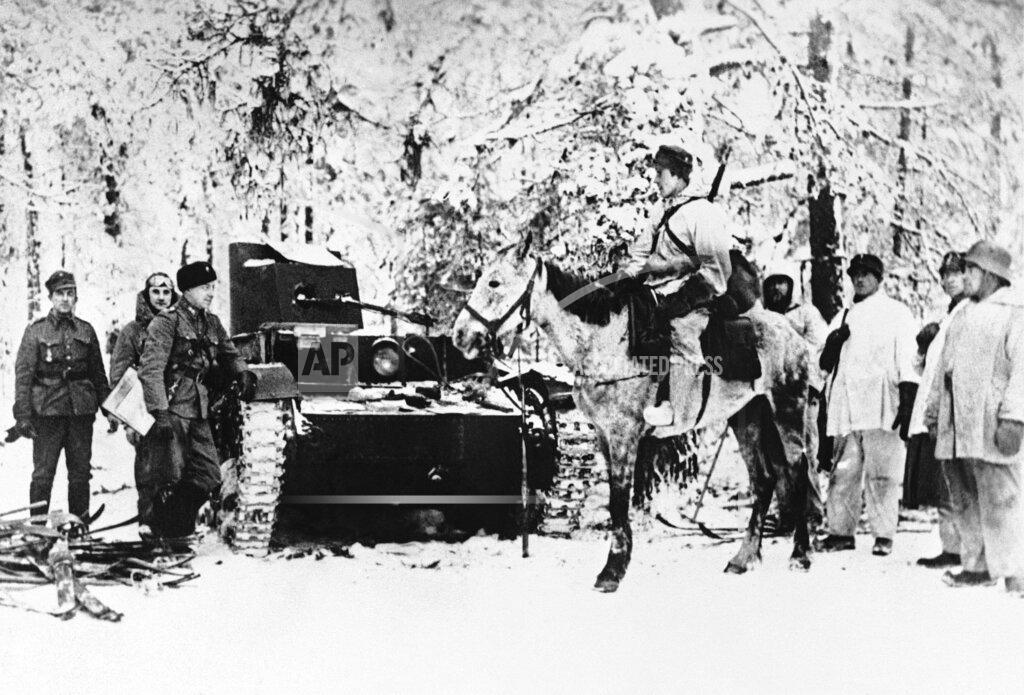
Fighting continues along the Taipale River at the eastern end of the Karelian Isthmus in Finland. The Finnish 7th Division defending Taipale announces overall losses of 816 men killed and 2020 wounded, since the start of the war. Soviet losses are unknown but probably 10 times this, given the WWI-like slaughter that has taken place.
On the Central Isthmus, in the Lähde road sector, the two 152-mm guns (Lieutenant Grachev) of the 4th Battery, 402nd Howitzer Artillery Regiment, 24th Corps. Artillery Regiment fire opposite the Millionaire bunker opens up at 12:00, along with other artillery. A Finnish observation tower on the bunker (one of three) is blown up almost at once, and the central section is hit seconds later. Several rounds penetrate the bunker and explode inside. The bunker is a total write-off within minutes. The Soviet artillerymen, possessing a deep understanding of the Soviet system, immediately ask their superiors to sign a document attesting to their part in the destruction of the bunker.
At Summa, the daily 7,000 round artillery bombardment continues.
In Ladoga Karelia, a Finnish Fokker reconnaissance plane disappears on a flight over the northeast shore of Lake Ladoga. The pilot, Toivo Heilä, and the navigator, Lieutenant Reino Vaittinen, are both killed.
On the east side of lake Nietjärvi, Soviet 5th and 6th separate ski battalions are beaten back. Large amount of automatic weapons are captured. Diary kept by a politruk is found on his body.
In Northern Finland, the last batch of 9th Division troops transferred from Suomussalmi arrive in Kuhmo for the assault on Soviet 54th division.
At Mikkeli, Prime Minister Risto Ryti visits General Headquarters to discuss the prospects for peace with Commander-in-Chief Mannerheim. Mannerheim urges the Prime Minister to make concessions to achieve a settlement.
Soviet aircraft bomb Ivalo, Kuusamo, Savukoski, and Sotkamo in the north.
At a press conference in Washington, U.S. President Franklin D. Roosevelt emphasizes that any American who enlists in and swears allegiance to the army of a foreign country at war will thereby lose his American citizenship. However, since there had been no official declaration of war, the United States did not consider Finland to be a country at war, and American volunteers in Finland would therefore retain their citizenship.
The British Labour Party and Cooperative Movement declare Britain will do all it can to help Finland.
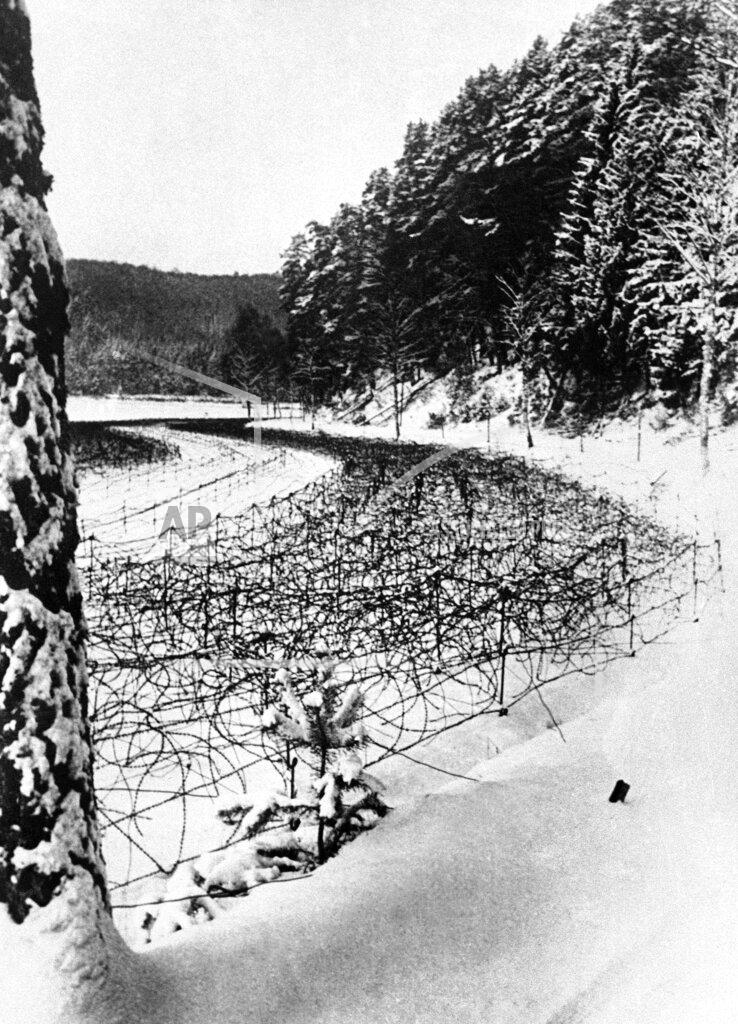
Heavy artillery on the Western Front suddenly burst into action today with a fierce duel in the Vosges Mountains. Military sources said French big guns opened the engagement after scouts had brought back reports of feverish German outpost activities, possibly indicating an impending offensive. Nazi artillery replied in kind and for hours both sides threw shell after shell at each other, while Allied and German planes took advantage of the first favorable weather in days to go aloft on reconnaissance flights. One French plane flew deep into Germany but encountered twelve enemy ships and scurried back to the safety of its own lines, the military sources reported. The French High Command made no mention of the artillery engagement reported by these sources, using exact words in both its morning and night communiqués: “Nothing to report.”
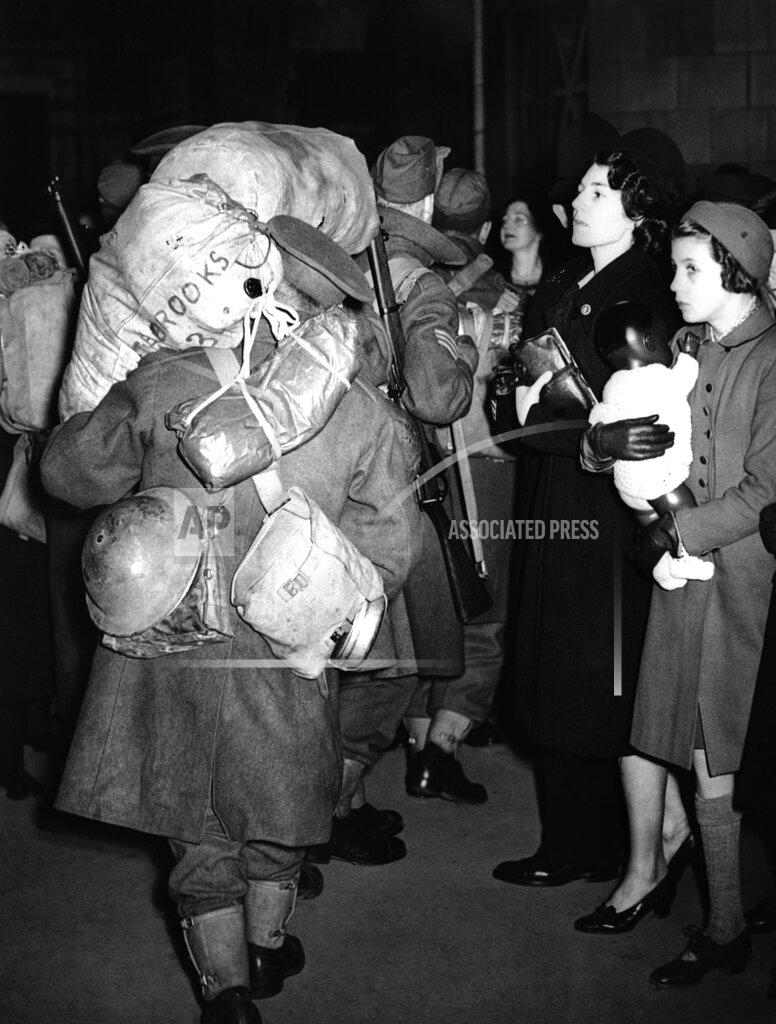
Believing that Germany would not be able to directly attack Britain, about half of the 750,000 children evacuated from London, England, United Kingdom since September 1939 had returned to their homes in the city. It is not just the absence of air raids that caused them to return, but a growing feeling that the entire war with Germany has been completely avoided.
The supplies of bacon from abroad have increased so much during the past few weeks in Britain that the government was able to announce today that the bacon ration will be doubled on Monday. This means that each person will be able to get eight ounces per week.
The Nazis forbid Polish Jews to travel on trains. Hans Frank decrees that Jews in occupied Poland are no longer allowed to travel on trains. Limitations also are placed on Jewish worship.
The German ambassador protests against the recent Vatican broadcasts about German atrocities in Poland.
An article by H. G. Wells, appearing currently in an American periodical, recommending the bombing of Berlin in order to “show Germany the seriousness of the situation,” and to give the German people a taste of what he alleges their government has brought down upon Europe, evoked indignant reaction in the German press yesterday.
Paul Ferdonnet — the “Radio Traitor” — a Nazi sympathizer broadcasting in French from Stuttgart (in Germany), is tried in absentia by a French military tribunal.
Charles de Gaulle issued a memo to his superiors stating, “We began the war with five million soldiers yet our aerial forces are only now being equipped and our armoured vehicles are too weak and too few in number.”
Two hundred and eighty thousand French women are now working in munitions factories, taking the place of men who have been mobilized, Raoul Dautry, Ministry of Armaments, said.
With the signing of a commercial treaty between France and Spain, it is expected that very soon the problem of Spanish political refugees in France will also be brought to a solution.
France, not directly involved, has kept out of the postal controversy with the United States, but it is hoped in official circles that it can be settled without creating bitterness.
American actor Norman Kerry joined the French Foreign Legion.
U-boat captains were permitted from now on to make submerged attacks without warning on certain merchant vessels (though not on Spanish, Russian, Japanese or American ships) east of Scotland, in the Bristol Channel and in the English Channel.
The 8,240-ton special service vessel HMS Durham Castle sank after she struck a mine laid by U-57 on 22 January 11 miles Northeast of Cromarty, Scotland (57° 41’N, 3° 54’W), during a gale and in severe icy conditions. The ship was in tow by the tug HMS Watermeyer for use as a store ship and floating barracks at Scapa Flow.
The British steam trawler Merisia, while on her way to the northern fishing grounds, ran aground in bad weather on the rocks in Bulgham Bay, north of Laxey, Isle of Man and was wrecked. All twelve crew drowned.
Convoy OG.16F forms at sea for Gibraltar.
The War in Sea, Friday, 26 January 1940 (naval-history.net)
Light cruiser DUNEDIN arrived at Scapa Flow after Northern Patrol.
Light cruiser CURACOA completed her conversion to anti-aircraft cruiser at Chatham, and departed Portland for working up on the 30th.
Light cruiser ARETHUSA departed Portsmouth for Scapa Flow, and arrived on the 29th for duty with 2nd Cruiser Squadron, Home Fleet.
Submarine TRUANT departed Rosyth on patrol.
Destroyers JACKAL, ECHO and ECLIPSE arrived at Rosyth.
Destroyer SIKH arrived at Scapa Flow and after refueling departed with destroyer TARTAR to relieve the escort of convoy HN.9.
Destroyers JERVIS, JUNO, JUPITER and IMPERIAL were on a sweep off the SW of Norway.
Destroyers JAVELIN and JAGUAR on a submarine hunt, were ordered into Invergordon for shelter from the gale.
Destroyer GREYHOUND and Polish destroyer BLYSKAWICA attacked a submarine contact off Great Yarmouth, 52-34N, 2-16E.
Destroyer WANDERER attacked a submarine contact off Chicken Rock, Isle of Man in 53-56N, 4-51W.
Steamer DURHAM CASTLE (8240grt), under tow by tug WATERMEYER en route to Scapa Flow from Rosyth on the 25th as a block ship, was sunk on a mine laid by U-57 off Cromarty on the 22nd.
Convoy OA.78GF, was escorted by destroyers BROKE from the 23rd to 24th and AMAZON from the 23rd to 25th. Meanwhile OB.78GF with 23 ships departed Liverpool on the 24th escorted by destroyers WHITEHALL and VANOC. The two merged as OG.16F on the 26th and on the same day WHITEHALL and VANOC detached to join HG.16F. Sloop SANDWICH joined the OG escort on the 26th and left on the 31st, while destroyers VELOX and WISHART joined on 1 February off Gibraltar, and arrived later that day.
Convoy BC.24 six steamers, including BARON GRAHAM and MARSLEW (Commodore) departed Bristol Channel escorted by destroyer MONTROSE, and arrived safely in the Loire.
Convoy AXS 10 of one steamer escorted by destroyer VETERAN arrived at Brest from Fowey on the 26th.
Convoy FN.80 departed Southend, escorted by destroyer WHITLEY and sloop LONDONDERRY, and arrived in the Tyne on the 27th.
Convoy FS.82 departed the Tyne, escorted destroyers WOOLSTON and VEGA and sloop GRIMSBY, and arrived at Southend on the 28th.
Estonian steamer KESSU (295grt) was seized in the Baltic by German naval forces and taken to Memel.
Heavy cruiser CORNWALL departed Capetown on escort duties and arrived back on the 30th.
New Zealand light cruiser HMNZS ACHILLES arrived at Montevideo.
President Roosevelt expressed the view today that Americans enlisting in the fighting forces of foreign governments would not lose their citizenship unless they took an oath of allegiance to the nation for which they proposed to fight. Scanning what he termed an informal opinion from Attorney General Jackson, dated September 5, 1939, when Mr. Jackson was acting attorney general, the President remarked that it was against the law to solicit enlistments in this country for a foreign army. The question came up during the President’s regular press conference when he was asked about reports of large numbers of Americans volunteering to fight for Finland against Soviet Russia. A reporter said that, while he was at the Finnish Legation recently, an aviator professing to be an American citizen was inquiring about enlistment in the Finnish service.
Mr. Roosevelt said he would have to have more facts at hand before he could determine whether such an incident constituted operation of an enlistment service. If the American were merely seeking information as to whether or how he might enlist, there was nothing wrong, said the President. If the legation were inviting or inducing the enlistment, it would be quite another matter. At the Finnish Legation later it was stated that many inquiries had been received from prospective volunteers, but that the legation had confined itself to pointing to the terms of American law forbidding solicitation of enlistments in foreign armies.
A military attaché at the legation said that foreign volunteers were not being required to take an oath of allegiance to Finland, but had to swear to obey the military authorities. To the opening question about the status of Americans enlisting in the armies of foreign countries, President Roosevelt said that, anticipating such an inquiry, he had asked Mr. Jackson last September for an informal opinion on the matter and had held the letter he received in reply in his desk. After reading from the document Mr. Roosevelt said in answer to a question that he had no objection to the letter being made public by the Attorney General, but that he would not give it out himself, since it was of such an informal nature. To another question that had been put to the president on several occasions previously, as to whether he regarded Finland as a belligerent nation, Mr. Roosevelt again replied in the negative. He added that he had not requested an opinion of the Attorney General on that subject.
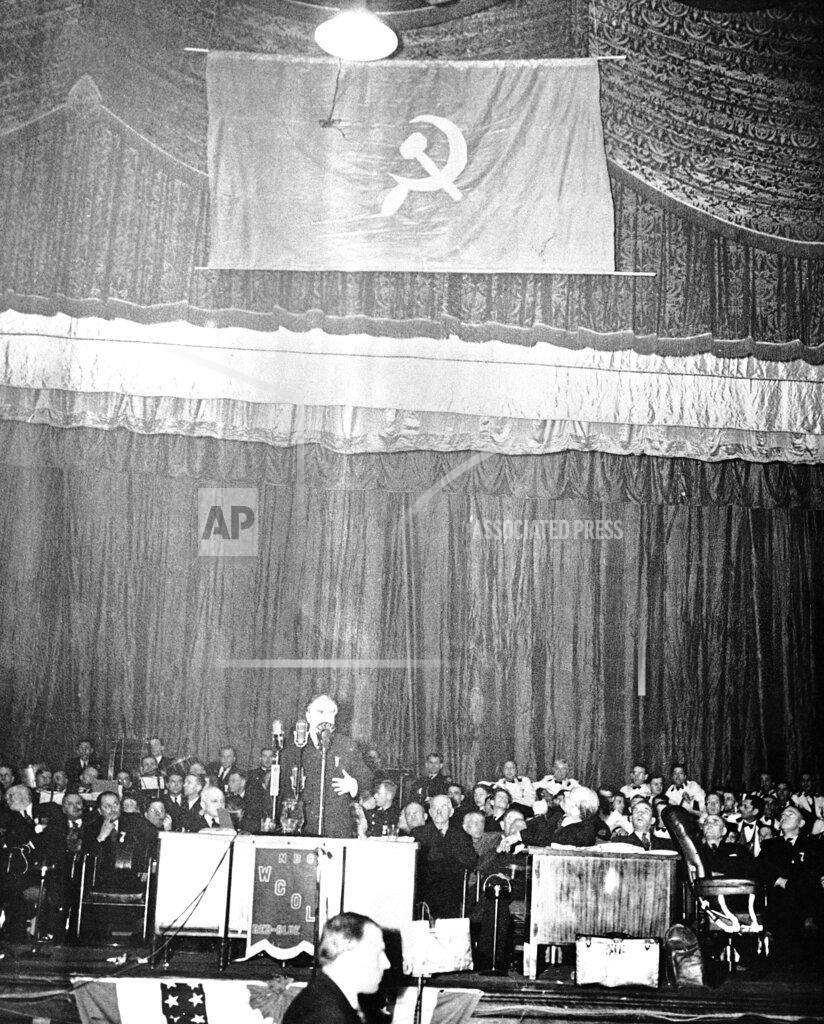
U.S. Senator Burton K. Wheeler (Democrat, Montana), demands that President Roosevelt state whether or not he intends to run for a third presidential term. Senator Wheeler, recipient of an ovation at the golden jubilee convention of the United Mine Workers of America, which all but endorsed him for the Presidency, today urged President Roosevelt to declare himself immediately on the third-term issue. The senator’s day in Columbus, Ohio was in the nature of a political gesture in his bid for the Presidency from the moment he stepped off the train in the morning, to be greeted by a miners’ band playing the national anthem, to the reception on the convention platform in the afternoon, when he shook the hands of delegates after his address.
John L. Lewis, president of the miners’ union and of the Congress of Industrial Organizations, wore a “cat-that-swallowed-the-canary” smile when he greeted Mr. Wheeler at the Deshler-Wallick Hotel. Later he heaped high praises on the Senator when he presented him to the 2,400 delegates, but carefully refrained from touching off the Wheeler boom by any specific reference to the future.Mr. Wheeler, on his part, paid tribute to the leaders of the miners in an all-embracing reference which spoke of them as men who had no peers in the American labor movement.
In his prepared address Senator Wheeler espoused an idea which has been pressed by the CIO and also in some American Federation of Labor quarters, namely, an attack on unemployment, “America’s No. 1 economic problem,” by a conference of leaders of industry, labor and agriculture, under government auspices. The delegates were tumultuous in their demonstration of approval when the Senator pledged himself “never to vote to send an American boy across the water to fight on foreign soil.”
“History tells us that foreign wars are an easy device to divert our attention from our own domestic problems. In such wars there will be a blackout of American institutions and possibly of democracy itself. I am convinced that the people of this nation are firm and united in their determination not to have any part of these foreign conflicts.”
The State Department revealed today that the European war sent the American arms export business to $204,555,780 in 1939, more than double the total for 1938. A report by the department’s arms license section said that the overwhelming proportion of arms exports was in aircraft, motors and airplane parts. The $204,555,780 figure represented the total licenses granted in 1939. Actual shipments abroad during the year were $102,298,298. The total of licenses granted in 1938 was $83,000,000. The banner arms month of 1939 was December, when new licenses totaling $35,262,313 were granted. Actual exports were $26,219,174. Frequently there is a lapse of several months between the time the license is issued and the actual shipment. Large-scale purchasers of American war materials were Great Britain, Canada and Australia; France, Sweden, Finland, Turkey, the Netherlands and the Netherlands Indies.
An assertion that many manufacturers would not testify against the reciprocal trade agreements program for fear of government “reprisals” furnished a stormy interlude today in a Congressional committee’s hearing on proposed extension of the program.
The State Department, an official of the British Embassy and executives of a large aircraft company today denied published reports that American-made bombers were being flown across United States territory to Newfoundland, in violation of the Neutrality Act.
The next phase of the activities of the Dies committee investigating un-American activities will be on the West Coast, especially in Hollywood, Representative J. Parnell Thomas of New Jersey, Republican, a member of the committee, declared last night in an address.
Governor C.A. Bottolfsen tonight appointed former United States Senator John W. Thomas, Republican, to the Senate seat left vacant by the death of Senator William E. Borah.
The anti-strike and labor espionage activities of the Industrial Association of San Francisco were examined today by the United States Senate Civil Liberties Committee, which is conducting hearings to obtain information for legislation designed to make civil liberties secure.
A fundraiser for victims of the German war against Poland and the Soviet war against Finland is held in the Rose Bowl Room of the Palace Hotel in San Francisco.
A unified drive by American Jews to bring immediate relief and rehabilitative aid to Jews of Poland and other centers of distress in Central and Eastern Europe, to support the immigration and settlement of refugees in Palestine and to further the adjustment of refugees was announced in New York.
The City of Flint, an unassuming little freighter catapulted by war into the center of an international drama, moved into the safety of United States waters tonight and toward a gala welcome befitting a hero coming home from the wars.
Actor Ronald Reagan (28) weds Academy Award-winning actress Jane Wyman (23) at the Wee Kirk o’ the Heather church in Glendale, California
The general election which must follow yesterday’s dissolution of the Canadian Parliament has been provisionally set for Tuesday, March 26. Confirmation waits upon a report from the chief electoral officer but under the present law the election cannot be held earlier.
Chinese Winter Offensive: Chinese 3rd War Area attacking Japanese 22nd Infantry Division west of Shaohsing.
United State-Japanese Trade Treaty of 1911 expires. The American-Japanese Treaty of Navigation and Commerce is allowed to lapse because the U.S. government refuses to negotiate in protest against Japanese aggression in China. Secretary of State Cordell Hull informed the Japanese government that trade would continue on a day-to-day basis.
With trade relations between the United States and Japan going on a day-to-day basis, the Japanese Government issued a statement today expressing hope that these relations would soon be restored to a normal treaty foundation. In the Japanese view the 1911 trade accord between the two countries became inoperative last midnight as a result of the six-month notice of abrogation given by the United States last July 26, despite Washington’s interpretation that the treaty will not lapse until midnight tonight.
Today’s Japanese statement viewed the United States abrogation action as a measure “intended to be of service in a solution of various questions arising in connection with the China affair.” It asserted that Japan’s policy in China “is not aimed at the elimination of the just and reasonable interests of third powers in China,” but left open “many fields for cooperation in creating a new East Asia.” To elucidate the Japanese position and readjust relations with the United States, the statement said, the Japanese Government continues to exert great efforts. Negotiations to obtain a new treaty or at least prevent a treaty-less situation have been in progress, but “unfortunately no agreement has been reached so far.”
The statement recapitulated United States measures allowing trade to continue, with Japan’s responsive steps to prevent any discrimination against United States ships or goods; the result is that “commercial relations between Japan and America will in practice. be subject to no change.” Japanese traders residing in the United States will be treated as temporary visitors, the statement pointed out, “but this is not considered likely to cause any special difficulties.”
In conclusion the statement said that though trade relations with the United States would on the whole. remain unaltered, a treaty-less situation that “makes general relations unstable” was “undesirable for both Japan and America,” and that “it is confidently hoped that through the negotiations that are being continued Japanese-American relations will be restored to a normal state with a treaty basis.”
A survey of Japanese opinion on the eve of the non-treaty period reveals as the most important feature a spirit of fatalistic acceptance. It is realized that trade with the United States will now be virtually on an hourly basis, which, in the newspaper Asahi’s words, suspends a Damocles sword over Japan. But as the situation arises from irreconcilable differences between United States policy and Japanese plans for China, nothing can be done about it.
An analysis of Japanese commercial opinion, made by Domei, Japanese news agency, shows Japanese business is inclined to belittle the effects of the abrogation today of the trade treaty with the United States.
All Japanese consular officials in North China have been summoned to meet in Peiping February 5 when Akiyoshi Tajiri, head of the Asiatic bureau of the Japanese Foreign Office, will explain Japan’s policy regarding Wang Ching-wei’s projected government and the consular execution of this policy.
Japanese Army officers in China say that the ending of the United States-Japanese commercial treaty today cannot alter their program for the establishment of a “new order” in this country. They assert that no matter what economic pressure the United States. may bring in the treatyless period, their program, which has meant harm to Americans and infringement of their treaty rights, must go on even if this means frontal conflict with the United States. Since 1931 the Japanese Army has dictated the empire’s policy respecting China. If its attitude is unchanged, experienced observers here. see little chance for a JapaneseAmerican agreement to replace the old treaty, since there would be no assurance that promises made by the Tokyo government to respect American interests would be carried out by the army in China.
Army officers freely discuss the possibility that gradual tightening of the economic screws on Japan by the United States might lead to war between the two countries. The more conservative Japanese Navy, which would have to do most of any fighting, dismissed the question of a Japanese-American war as extremely unlikely. “This is a war of life or death. for our nation,” one young army officer, typical of many, said. “If we are going to die, we will go down fighting against America or any other nation that tries to stop us.” The army’s attitude is shared to some extent by Japanese diplomats and civilians in China. They hope for the best but fear the “worst eventuality,” war with the United States.
The captain of the British coastal steamer Wing Sang reported today that a Japanese naval boarding party had searched and detained his ship for more than fifteen hours in apparent retaliation for the British seizura of twenty-one Germans from the Japanese liner Asama Maru.
The Norwegian cargo ship Fu Yuang sprang a leak and sank during a storm in the Pacific Ocean off Hachijō-jima, Japan (33°40′N 139°56′E). All 44 crewmen were rescued.
Brisbane, Australia is suffering from an intense heatwave, with temperatures extending above 110 degrees Fahrenheit in many places in the state.
U.S. Navy minesweeper USS Quail (AM-15) arrives at Palmyra Island with first construction party to begin building a naval air station there.
Dow Jones Industrial Average: 146.61 (+0.32)
Born:
Hubie White, NBA and ABA shooting guard (NBA: San Francisco Warriors, Philadelphia 76ers; ABA: Miami Floridians, Pittsburgh Condors), in Philadelphia, Pennsylvania.
Harold Lederman, American boxing judge, analyst (HBO), in New York, New York (d. 2019)
Naval Construction:
The Kriegsmarine (German Navy) Type VIIC U-boat U-331 is laid down by Nordseewerke, Emden (werk 203).
The Royal Navy Flower-class corvette HMS Marigold (K 87) is laid down by Hall, Russell & Co. Ltd. (Aberdeen, Scotland).
The U.S. Navy Cimarron-class oiler USS Guadalupe (AO-32) is launched by the Newport News Shipbuilding and Dry Dock Co. (Newport News, Virginia, U.S.A.).
The Nihon Kaigun (Imperial Japanese Navy) ammunition ship HIJMS Kashino (樫野), sole ship of her class, is launched by the Mitsubishi Heavy Industries Shipyard, Nagasaki, Japan.
The U.S. Navy fleet tug USS Navajo (AT-64), lead ship of her class of 28, is commissioned. Her first commanding officer is Lieutenant Commander Myron Edgar Thomas, USN.
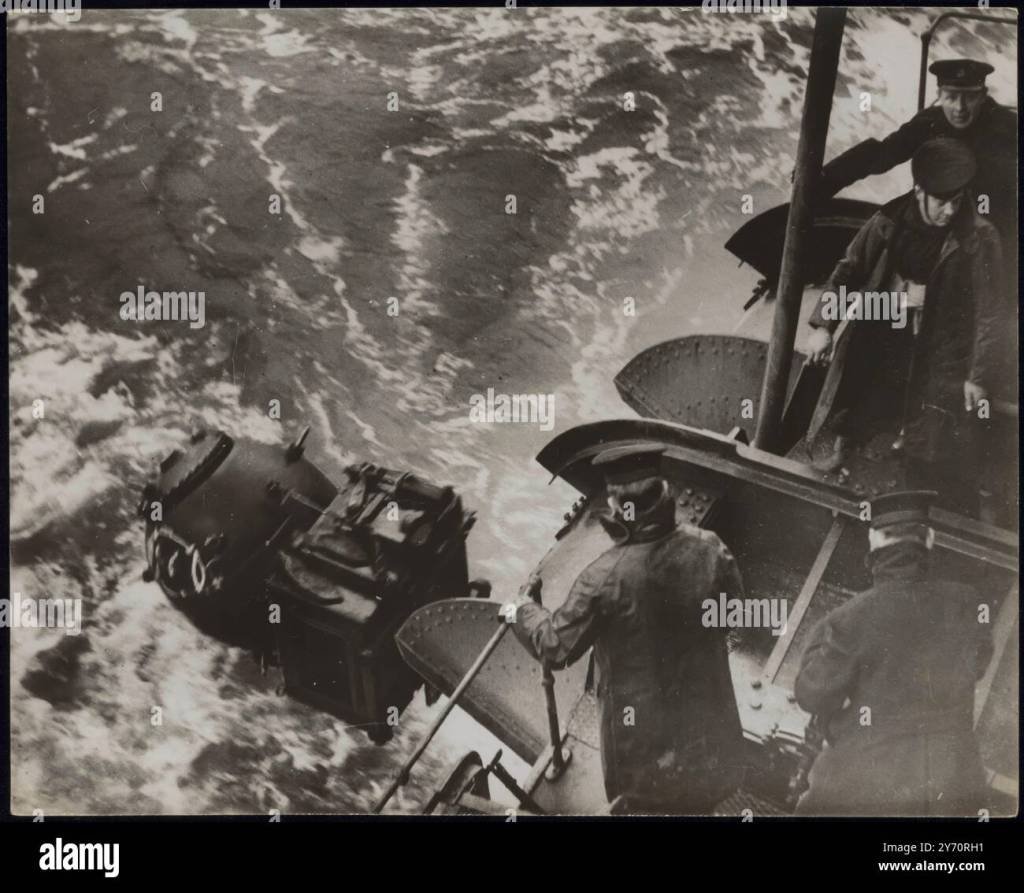
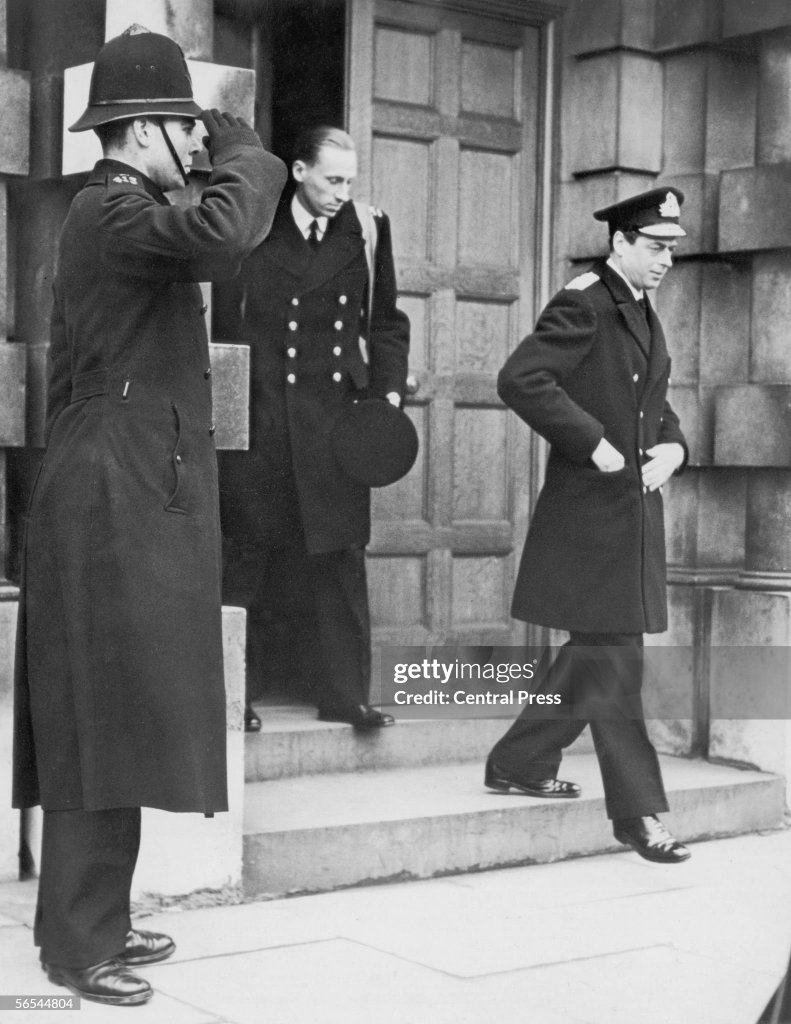
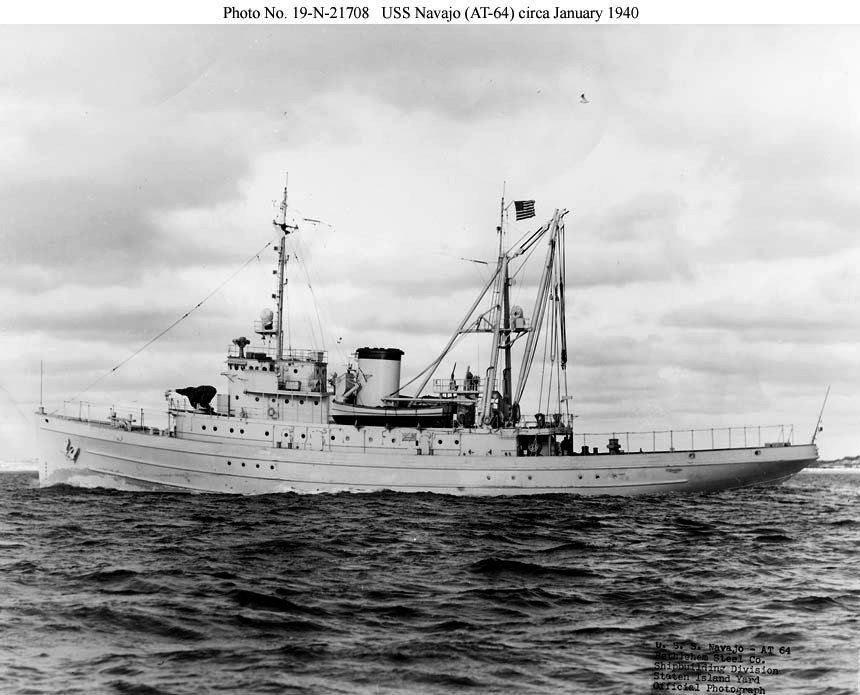
Ordered 15 August 1938, Laid down 12 December 1938, Launched 17 August 1939, Commissioned 26 January 1940.
Following shakedown and a brief tour on the east coast, Navajo, an oceangoing fleet tug, steamed to San Diego, where, in June 1940, she reported for duty in Base Force, later Service Force, Pacific Fleet. Until the Japanese attack on Pearl Harbor, the ship’s towing and salvage capabilities were utilized in the central and eastern Pacific, and then, after 7 December 1941, in the Pearl Harbor area. Interrupted only by a resupply and reinforcement run to Johnston Island at the end of December 1941, she remained in the waters off Oahu into the spring of 1942.
In late April 1942, Navajo sailed to Canton Island where she and other vessels attempted the unsuccessful salvage of the 502 ft. troop ship SS President Taylor, who had been grounded on a coral reef. Navajo then returned to Pearl Harbor, where she got underway for the war zone on 12 July 1942. Arriving in the New Hebrides just after the landings on Guadalcanal, she supported operations in the Solomons with repair and salvage work at Espiritu Santo, Nouméa, Tongatapu, and Suva, as well as under battle conditions at Tulagi, Guadalcanal, and Rennell. In October the tug assisted with rescue of survivors aboard the troop transport President Coolidge after she struck mines in the entrance to the harbor at Espíritu Santo. Navajo took off 440 survivors which were transferred to the cruiser USS Chester. Towing assignments during those operations took the vessel throughout the island groups of the South Pacific, and once in late November-early December, 1942 to Sydney, Australia.
On January 30, 1943, Navajo attempted to tow the badly damaged heavy cruiser USS Chicago away from the combat zone during the Battle of Rennell Island, but was unsuccessful as Chicago was finished off by a squadron of Japanese torpedo bombers. She then towed to safety the destroyer USS La Vallette, who had suffered a torpedo hit during the battle.
In the spring of 1943, Navajo returned to California, underwent overhaul, and in July 1943 got underway to return to the South Pacific. Steaming via Pago Pago, she arrived at Bora Bora on 21 August 1943 and commenced salvage and repair work on USS Pasig. At the end of the month, the ship sailed for Pago Pago, whence she got underway to tow gasoline barge YOG–42 to Espiritu Santo.
While en route to Espiritu Santo on 12 September 1943, the ship was torpedoed by Type B1 submarine I-39 and rocked by an explosion. Within seconds, a heavy starboard list resulted in a submerged starboard side. Navajo began going down rapidly by the bow and the order was given to abandon ship. As the ship settled, depth charges secured to port and starboard K-gun projectors exploded. An estimated two minutes had passed before the tug sank. 17 members of her crew died during the attack.
Navajo earned two battle stars during World War II.
 History Diaries