At Lahde, the Soviets have been scouting out Finnish positions. The Soviet 123rd Rifle Division (Colonel Alyabushev) has built dugouts with stoves and engaged in a training program in preparation for a new offensive. The three regiments of the division are kept well back from the front, approximately 2 km, with company-strength forces to keep an eye on the Finns.
Alyabushev is a taskmaster who gets his men ready. Morale is high. New guns are brought up and put into position, so many that it is difficult to locate them all to the best advantage. The scouts capture some Finnish prisoners and also locate the key defensive features. One is the large “Millionaire bunker” on Tongue Hill, another the “Poppius bunker” in the center of the line. This is one of the best-fortified sections of the entire Mannerheim Line.
Two 152 mm guns are sited for the express purpose of destroying the Millionaire bunker. The Soviet troops have enough time and manpower to construct elaborate wooden casements for the guns. They are in position and ready for action by today, but there is some thick fog which cancels the opening of the assault until the weather clears.
At Summa, the 7,000-shell daily bombardment continues.
On the Central Isthmus, a Soviet detachment of company strength attempts another attack on the island of Suursaari in Lake Muolaanjärvi.
On the Eastern Isthmus in the Taipale sector, Finnish troops repulse an attempted enemy assault in the early morning.
The Finnish 7th Division defending Taipale announces its overall losses since the beginning of the war: 37 officers and 779 men killed, and 40 officers and 1,980 men wounded.
In Ladoga Karelia, enemy pressure on the Finnish positions to the northeast of Lake Ladoga continues for the fifth day.
The difficult situation causes the Commander-in-Chief to change Group Talvela’s mission in the Tolvajärvi sector to allow it to adopt delaying tactics if necessary.
Enemy offensives on different fronts are successfully repulsed.
Elias Simojoki, a former Member of Parliament for the People’s Patriotic Movement, is killed by an enemy bullet on the ice of Lake Ladoga as he is destroying an injured horse.
The voluntary defence organization Maan Turva is collecting musical instruments, games and books to entertain the patients in the military hospitals.
A British delegation of the National Council of Labour headed by Sir Walter Citrine sets off for Finland. But the hour is growing late: Finland is running out of time and needs help now, not in a month or two.
The British aid fund for Finland has already collected over 100,000 pounds (about 25 million markkaa).
The Norwegian author Sigrid Undset is donating her 1928 Nobel Medal to Finland.
The French Academy expresses its warm sympathy for the Finnish people.
The cold at the Western Front is terrible. At the front it has been freezing for six weeks now. Yet the outposts must continue to be held. The task seems beyond human endurance — but it is done. Only on the spot can the conditions be realized. In its every aspect this war fails to conform with precedents, so there is no instance in military history of outposts being Winter quarters. Possibly there may never be another. In any case, it reveals war in one of its cruelest lights, for the fight against nature is as merciless as that against man. The Autumn of 1939 was one of the wettest known; the early Winter of 1940 is the coldest in several generations. Rain and mud have given place to snow and ice. Of the two, the cold is the worse because the circumstances are all against fighting it. At the outposts an enemy incursion remains an ever-present possibility, whatever may be the weather. One defense against cold is movement, yet the men are tied to their positions. Another is fire, yet they must show no smoke. By day you can stamp your feet and swing your arms; by night you must make no sound.
In a session of Parliament British Prime Minister Neville Chamberlain responded to a question concerning Belgium that Britain would “come to the immediate assistance of Belgium in the event of an unprovoked act of aggression by Germany.”
Calling on the country to grow as much of its food as possible by mobilizing “every single spadeful of available soil,” David Lloyd George, World War Prime Minister, said in the House of Commons tonight that this war was going to be a long struggle and that victory might depend on food supplies.
The “Göring-Frank Circular” is issued. It specifies that all material resources and manpower is to be ruthlessly exploited for the immediate benefit of the Reich. Copies of this top secret document are soon obtained by the Polish government-in-exile in France and widely publicized.
The Germans issued denials today of statements made by the Vatican and London radios relative to conditions within Poland, saying there were no atrocities..
The Polish town of Oswiecim (Auschwitz) was chosen as the site of a new Nazi concentration camp.
Nazi decrees establishment of Jewish ghetto in Lodz Poland.
Germany and the Allies appeared heading for a showdown today in their battle over Rumania’s vast petroleum resources, with Nazi envoys reported to have told the Rumanian Government that it must supply more oil to the Reich.
Dr. Karl Clodius, German trade expert, arrived in Rome from Bucharest this morning for important talks that may well change the basis of Italo-German commerce during these war times.
The Belgian Foreign Minister rejects Churchill’s appeal to join the Allies (issued in a speech on January 20th).
France announced a new decree providing sentences of up to two years in prison and fines up to 5,000 francs for “false assertions” presented as “personal opinions” that correspond to “enemy propaganda and which, expressed publicly, indicate the marked intention of their authors to injure national defense by attacking the morale of the army and population”.
A RAF reconnaissance flight fails to return from a mission over northwest Germany.
Patrol by Kriegsmarine destroyers turns back due to poor weather conditions.
The German cargo ship Orizaba was driven ashore at Skjervøya, Norway. She was a total loss.
There continues to be a rash of sinkings of neutral vessels, especially Norwegian ones. The British would dearly love for the Norwegians to join the fight, but they refuse to budge on their neutrality — though it is obvious they tilt toward the Allies.
German U-boat U-44, commanded by Kapitänleutnant Ludwig Mathes, torpedoed and sank the French cargo ship Tourny, which was a straggler from convoy 56.KS, 20 miles off of Porto, Portugal (41° 05’N, 9° 22’W) at 0411 hours. Since 00.55 hours, the U-boat was chasing another steamer which was missed with a torpedo at 01.11 hours. The Tourny was spotted at 03.40 hours and the U-boat continued to follow the first steamer after sinking her, but was forced to break off the chase after five more hours when a destroyer showed up and dropped six depth charges nearby. 8 men were killed and 9 were rescued by Spanish steamer Castillo Monforte. The 2,769-ton Tourny was carrying general cargo and was bound for Bordeaux, France.
The unescorted neutral Latvian steam merchant Everene was torpedoed and sunk by the U-19, commanded by Kapitänleutnant Joachim Schepke, five miles off Longstone Lighthouse, Farne Island off the southeast Scottish coast in the North Sea at 55° 42’N, 1° 30’W. At 21.12 hours the Everene was hit aft by one G7a torpedo from U-19 and sank slowly by the stern. Of the ship’s complement, 1 died and 30 survivors were picked up by the British fishing vessels Dole and Evesham. The 4,434-ton Everene was bound for Liepaja, Latvia.
Several hours later at 0930 hours, U-19 sank the Norwegian cargo ship Gudveig off Newcastle at 55° 42’N, 1° 30’W. At 21.30 hours the Gudveig was hit by one G7e torpedo from U-19 and sank immediately 4.5 miles east of Longstone Lightvessel, north of Newcastle. Ten crewmen were lost. Eight survivors were rescued and taken to Methil. Four of them probably by the Norwegian steam merchant Vim and the others by the British steam trawler Evesham and the Latvian steam merchant Dole. The 1,300-ton Gudveig was carrying coal and was bound for Bergen, Norway.
At 0230, the Norwegian cargo ship Biarritz was torpedoed by U-14 36 nautical miles NW of Ymuiden at 52° 39’N, 4° 15’E. She sank quickly and only one lifeboat with 19 people set off. 26 crewmen and 11 passengers (among them several women) died. 21 survivors and three bodies were picked up by the Norwegian SS Borgholm, which sailed nearby and were taken to Ymuiden. Several passengers were sailors who had paid off their ships and were on their way home. The 1,752-ton Biarritz was carrying general cargo and was bound for Oslo, Norway.
The British cargo ship Gleneden struck a rock off Bardsey Island, Caernarvonshire and was damaged. She was beached off Puffin Island, Anglesey and declared a constructive total loss. All 60 crew were rescued
Convoy OA.79 departs Southend.
Convoy OB.79 departs Liverpool.
The War at Sea, Thursday, 25 January 1940 (naval-history.net)
Heavy cruiser SUFFOLK and armed merchant cruisers SCOTSTOUN and FORFAR arrived in the Clyde after Northern Patrol.
Light cruiser DIOMEDE departed Scapa Flow for Plymouth where she arrived on the 30th, and later sailed to join the 8th Cruiser Squadron in the North America and West Indies Station.
Destroyer JAVELIN departed Rosyth to relieve destroyer JACKAL on anti-submarine duties.
Destroyers ESCAPADE and ENCOUNTER arrived at Rosyth from submarine hunting, and after refueling, left again on the 25th with cable ship ROYAL SCOT.
Destroyers ECHO and ECLIPSE departed Aberdeen escorting steamer RUTLAND (1437grt) to Scapa Flow.
T/Sub Lt G . Williamson RNVR, ferrying a Swordfish of 819 Squadron from Silloth to Ford, was killed when his aircraft crashed south of Huddersfield.
Destroyer ESCORT and sloop FLAMINGO departed the Tyne escorting convoy FS.81.
Convoy OA.79 departed Southend escorted by destroyers ANTELOPE from the 25th to 26th and VERITY from 26th to 28th, when the convoy was dispersed. Submarine H.33 was in the convoy on passage to Portsmouth.
Convoy OB.79 departed Liverpool escorted by destroyers WINCHELSEA and VOLUNTEER until the 28th, when they detached to convoy HXF.17.
Convoy SA.27 of two steamers departed Southampton, escorted by sloops FOXGLOVE and ROSEMARY, and arrived at Brest on the 27th, less steamer DIDO, which ran aground off Ouessant on the 27th. She was brought into Brest on the 30th.
Convoy FS.81 departed the Tyne, escorted by destroyer ESCORT and sloop FLAMINGO, and arrived at Southend on the 27th.
Drifter RIANT (95grt) was lost in heavy weather off Gighm on the south coast of Jura Sound.
German destroyers WILHELM HEIDKAMP, KARL GALSTER, ANTON SCHMITT, PAUL JACOBI, RICHARD BEITZEN and HERMANN SCHOEMANN conducted a shipping sweep in the Skagerrak during the night of 25/26 January. The raid was abandoned because of heavy weather.
U-14 sank Norwegian steamer BIARRITZ (1752grt) in 52 39N, 04 15E with the loss of 25 crew. The survivors were picked up by Norwegian steamer BORGHOLM (1561grt) 36 miles NW of Ijmuiden.
U-19 sank Latvian steamer EVERENE (4434grt) five miles off Longstone Light and Norwegian steamer GUDVIEG (1300grt) four and a half miles E by S of Longstone Light. Sloop PELICAN, escort ships VIVIEN, WOOLSTON, VEGA, and anti-submarine trawlers of the 19th A/S Group were ordered into the area to investigate. WOOLSTON and VEGA made unsuccessful attacks east of Farne Island at 0633/26th in 55-37N, 1-30W. One crewman was lost from EVERENE and ten from the GUDVIEG. EVERENE’s survivors and eight crew from GUDVEIG were rescued by fishing vessels DOLE and EVESHAM (239grt). (However, according to Uboat.net, four of GUDVEIG’s men were rescued by Norwegian steamer VIM.) PELICAN and VIVIEN proceeded to 20F buoy to turn back all northbound shipping from the Tyne. The search for the submarine continued until 2200/26th when WOOLSTON and sloop GRIMSBY set off for the Tyne to escort convoy FS.83. VEGA returned to Rosyth on the 26th to escort submarines WILK and H.34.
Destroyer VANQUISHER investigated a submarine contact SW of Nash Point in 51 18N, 03 39W, where she was joined by destroyer WAKEFUL at 0330/26th and later by destroyer KEITH. The destroyers swept westward and returned to the attack location at daylight. VANQUISHER then proceeded to Liverpool. At 1330/28th, WAKEFUL and KEITH, still on patrol, attacked a submarine contact in 51-21-30N, 3-40-50W. This was later determined to be the wreck of steamer STANHOLME (2473grt) sunk by a mine on 25 December. At 2215, the destroyers attacked a contact SW of Milford Haven in 51-32.5N, 5-24W, then at 0020/27th, proceeded on patrol.
French destroyer FOUGUEUX attacked a submarine contact 70 miles west of Oporto in 41-10N, 10-10W.
French destroyer BASQUE and sloop ANNAMITE made attacks on a submarine contact northwest of Ferrol in 44-10N, 9-10W.
U-44 sank French steamer TOURNY (2769grt), a straggler from convoy 56 KS, in 38 09N, 09 55W. Eight crew were lost, and survivors were picked up by Spanish steamer CASTILLO MONFORTE (1986grt).
Light cruiser NEPTUNE departed Freetown to join repair ship RESOURCE en route from Gibraltar. Both ships arrived at Freetown on the 29th.
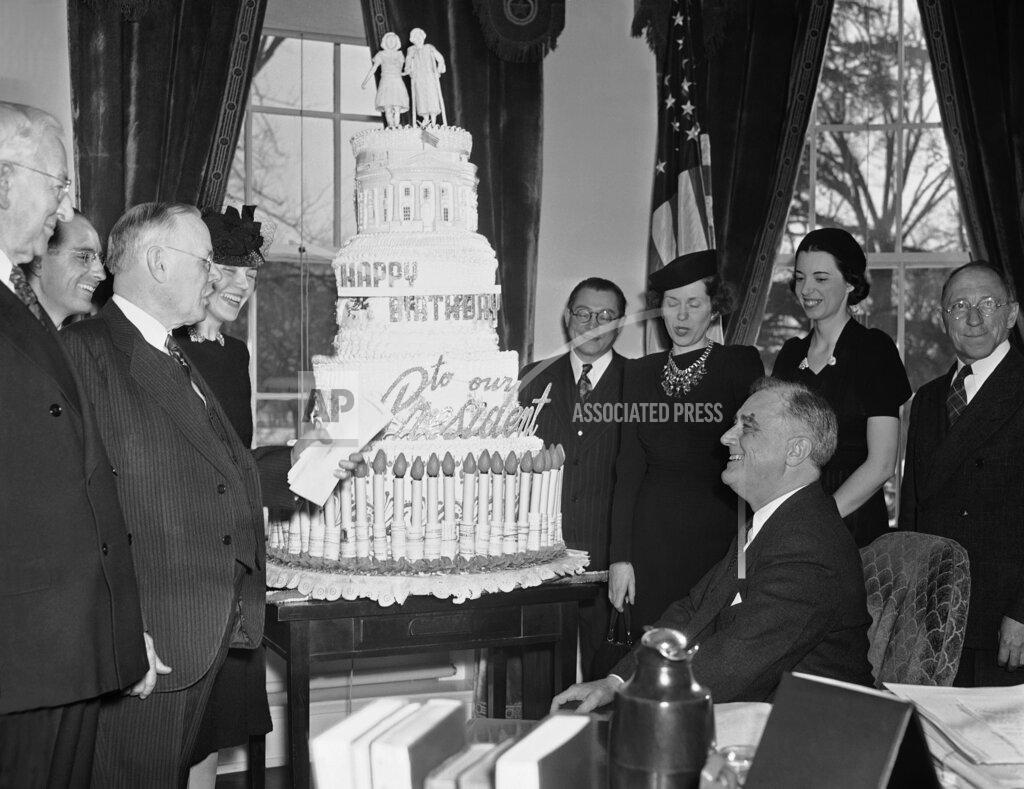
In Washington today, President Roosevelt discussed agricultural problems with Senator Wheeler, the pending stream-purification program with a delegation headed by Senator Barkley and the Temporary National Economic Committee’s life insurance investigation with Leon Henderson of the Securities and Exchange Commission. He sent to the Senate the nomination of Lewis Compton of New Jersey to be Assistant Secretary of the Navy.
The Senate approved and returned to the House the $251,822,585 Emergency Defense Deficiency Bill. It adjourned at 3:50 PM until noon on Monday.
The House passed the Treasury-Post Office Appropriation Bill and a deficiency appropriation measure carrying funds for the Treasury, Navy and the House; voted an appropriation of $75,000 for the Dies committee in 1940 and adjourned at 4:13 PM until noon on Monday.
The House of Representatives voted $75,000 to continue the Dies committee to investigate un-American activities during 1940. Secretary of the Interior Harold Ickes, meanwhile, let go another blast at its chairman and, in effect, demanded his removal. The House vote, which was final inasmuch as the committee is strictly a body of that branch of Congress, was by unanimous consent. The controversy over the inquiry was further heightened by a demand of Representative Frank E. Hook, Democrat, of Michigan, that Representative Martin Dies produce immediately evidence concerning an alleged bribe supposedly offered to “an unnamed individual or individuals” to swear that he, Mr. Dies, was sympathetic to the Christian Front. Secretary Ickes said that he thought the inquiry should be continued, but under another chairman.
“Undoubtedly there are activities in this country that we should know more about so that we can safeguard ourselves against them,” he said. “But — and I am talking now about Mr. Dies — for any one to employ the un-American methods he has employed to safeguard Americanism is to make a travesty of the whole thing. The investigation should go on, but in view of the widespread doubt as to his methods and interest he should step aside and let someone else carry on,” “In fairness to Congress, to the public, and to me, I demand that Congressman Dies produce immediately the evidence of this alleged bribe, so that no doubt can remain in the mind of any one who sees it, where it comes from and who is involved,” Mr. Hook said.
Representative Dies, whose resignation as chairman of the Committee on Un-American Activities was suggested in Washington by Secretary Ickes, commented tonight: “In my opinion and in the opinion of many people, Ickes couldn’t be elected dog catcher by a convention of disgruntled cats. The blast of Ickes today against me was a greater compliment than the overwhelming vote of the House, which last Tuesday voted, 345 to 21, to continue the committee for another year.”
The Congressional economy drive received new impetus today when the Senate and House overwhelmingly approved the action of their committees in slashing a total of $33,000,000 from three appropriation bills.
William Green, president of the American Federation of Labor, implicitly characterizing John L. Lewis, chief of the Congress of Industrial Organizations, as the singer of a “song of hate” and as an arch-ingrate, declared last night his organization’s support of the New Deal. The Roosevelt Administration, he said, has been a greater friend of labor than any previous administration in the country’s history. Mr. Green made his reply to the address in which Mr. Lewis, speaking before the convention of the United Mine Workers of America, signaled his break with the Roosevelt administration, which the CIO chieftain had helped to win re-election. He spoke before leaders of American Federation of Labor unions attending a dinner in honor of Thomas J. Lyons, newly elected president of the State Federation of Labor, at the Hotel Commodore.
Secretary Ickes, in reply to John L. Lewis, reiterated today his belief that President Roosevelt was the only Democrat who could be elected President this year.
President Roosevelt continues to hold popular support among voters polled by the American Institute of Public Opinion, of which Dr. George Gallup is director, it was announced yesterday. His approval rating is at 63.5%.
In Columbus, Ohio, a speech by John L. Lewis nearly turns into a riot when someone lowers a Soviet banner behind him on stage. After a moment of shock, ushers seize cameras from reporters and destroy their film. Lewis makes a pro-American statement to calm the crowd.
Members of two New York locals of the International Brotherhood of Electrical Workers, who say they speak in the name of 16,000 Consolidated Edison employees, voted yesterday to withdraw from the American Federation of Labor and set up an independent union unaffiliated with the A.F. of L. or the Congress of Industrial Organizations.
An appeal to the American Hierarchy of the Catholic Church to take cognizance of the association of the Rev. Charles E. Coughlin and the Christian Front and publicly rebuke and repudiate him, is made in an editorial statement in the current issue of Equality, a non-sectarian monthly magazine dedicated to combatting religious and racial intolerance.
Eleven of the largest organizations of women in this country went on record today through their representatives in the Conference on the Cause and Cure of War as appealing to this government to take steps toward a parley of non-belligerent nations and to help negotiate peace terms.
Auxiliary USS Bear (AG-29) (U.S. Antarctic Service) reaches 77°43’S, 143°52’W; it marks the deepest penetration by any ship into the Antarctic region.
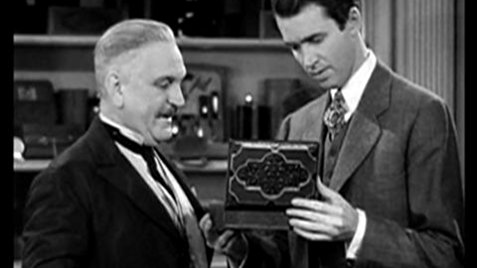
“The Shop Around the Corner” starring Jimmy Stewart and directed by Ernst Lubitsch opens at Radio City Music Hall in New York City.
The Canadian Parliament was dissolved because of a recent controversy over the alleged weakness of war preparations and elections were set for March 28, 1940. In a three-hour session today the eighteenth Canadian Parliament met, listened to the speech from the throne, began a bitter partisan debate that was never finished, and was dissolved.
The division of counsels existing for some months within the Mexican Communist party was brought into the open today when the executive committee of the party appointed a commission to investigate the activities of the dissident group accused of reactionary maneuvers and Trotskyist tendencies. The cynical actions of the Soviets in Poland and Finland have shaken and split the party’s rank and file.
Chinese Winter Offensive: Chinese 3rd War Area attacking Japanese 22nd Infantry Division west of Shaohsing.
Having halted at least temporarily their advance south of the Tsientang River, opposite Hangchow, the Japanese forces hoisted today over the captured city of Siaoshan a big balloon from which flutters a long streamer declaring in Chinese characters: “Those who resist will die; those who surrender will live.” Japanese Army headquarters here said two other important points had been captured and the advance then halted to see if guerrillas or other opposing forces would surrender.
The Japanese lost 4,000 men killed and 7,000 injured in the collapse of their offensive in North Hupeh early this week, according to the Chinese military spokesman. He said last night that 20,000 Japanese succeeded in taking Kaoping and Yingchiatien, but lost these points when the reinforced Chinese defenders counter-attacked. The fighting is said to have been the heaviest for several months in Hupeh. The invaders now are falling back on their base at Suihsien. They left behind six field guns, twenty mountain guns and many machine guns and rifles, it is said.
In the Nanning sector, the spokesman asserted, the Japanese last week brought in a new division, chiefly replacements for the badly battered Fifth Division, which held Nanning against heavy Chinese assaults late in December. North of Canton, the spokesman stated, the Chinese have pushed back the invaders to points on a semi-circle twenty or thirty miles. from the city, regaining Kuntien, Fayun, Tsunfa and three or four major outposts of Canton, which the Japanese had held before launching their unsuccessful offensive in North Kwangtung recently.
Battle of South Kwangsi: Reinforced Japanese forces from Nanning open new offensive, attacking toward Pinyang.
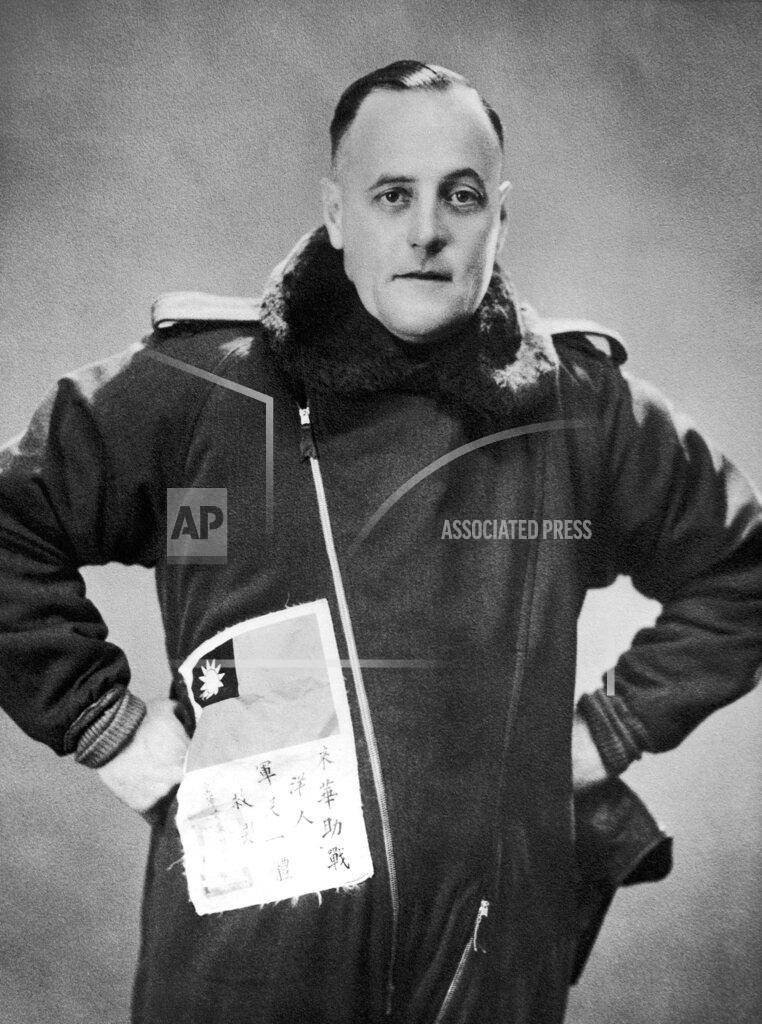
The grand blue cordon of the Order of the Jade, the highest decoration the Chinese Government may bestow on a foreigner, was presented to Colonel Theodore Roosevelt Jr. by Dr. Hu Shih, the Chinese Ambassador, at a luncheon held in the offices of the American Bureau for Medical Aid to China in New York.
General Masaharu Homma, commander of the Japanese garrison here, said today in an interview that Japanese military authorities might have to “reconsider appropriate steps” after the expiration of the Japanese-American trade treaty tomorrow. “My impression is that America is ready to take maliciously everything the Japanese military does in China and that Japan probably is purposely misunderstood,” he declared.
Japanese irritation over the British delay in answering the Japanese note in regard to the removal of twenty-one Germans from the steamship Asama Maru was shown tonight in unbridled press attacks on Sir Robert L. Craigie, British Ambassador to Tokyo.
Dow Jones Industrial Average: 146.29 (-0.71)
Born:
Ian Watkin, New Zealand actor (“Braindead”, “Sleeping Dogs”), in Greymouth, New Zealand.
Died:
John Calvin Stevens, 84, American architect.
Elias Simojoki, 40, Finnish clergyman and politician, in combat.
Naval Construction:
The Royal Navy tug HMS Impetus (W 60) is launched by Alexander Hall and Co. Ltd. (Aberdeen, Scotland).
The Royal Navy Hunt-class (Type I) escort destroyer HMS Exmoor (L 61) is launched by Vickers Armstrong (Newcastle-on-Tyne, U.K.); completed by Parsons.



 History Diaries