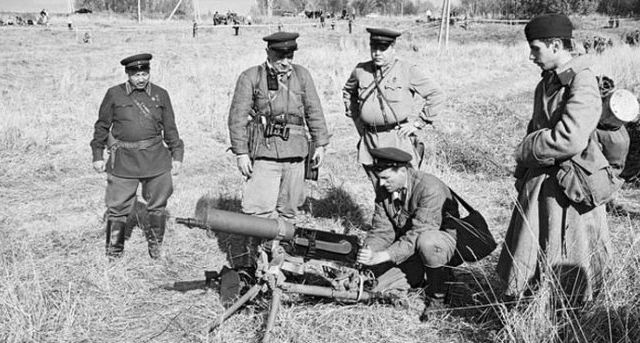
The Soviets resort to a typical tool to keep men at their guns. Stavka creates special NKVD “preventative detachments” or “blocking detachments” (zagraditelnyi otriad). These are set up in the rear of Soviet front-line units and are armed with machine guns just like regular army units. If troops retreat without orders, they are shot.
There is fierce fighting reported northeast of Lake Ladoga. Finnish forces defeat the attacking Soviet forces.
Force Talvela still holds the Soviet 8th Army at Kollaa, with attacks and counterattacks along Aittojoki (River Aitto; joki is river in Finnish). The main focus of the assault is coming to the west of Lake Vegarusjärvi. The defending Finns manage to hold their positions.
On the River Kollaanjoki, the enemy captures one of the bases of the 1st Battalion, 35th Infantry Regiment in the northern sector.
The Finnish cargo ship Notung was bombed and sunk in the Baltic Sea between Turku and the Åland Islands by Soviet Air Force aircraft.
Soviet aircraft bomb Finnish hospitals, 19 killed.
At Mikkeli, the General Headquarters orders the setting up of evacuation centres for the bodies of soldiers fallen in combat.
There has been a rise in the number of couples getting married. 75% of civil marriages are ‘war weddings’, which can be performed without the need for advance proclamation of the banns. Church war weddings require formal proclamation of the banns on the preceding Sunday.
Other nations continue contributing to the Finnish war effort. Two planes full of medical supplies depart from London for Helsinki. In addition, there are reports that 30 British aircraft have arrived in Finland to help with air defense.
At Turku, a four-strong delegation from the British Labour Party arrives in the city. In an interview, Sir Walter Citrine says 99.9% of people in Britain support Finland in her struggle.
Finnish convicts ask to be sent to the front. However, the authorities are less than enthusiastic in their response.
The leaders of the International Amateur Athletic Federation call on the world’s athletes to help Finland.
Sweden’s Red Star organization’s horse ambulance leaves Stockholm en route to Finland.
Finland’s Minister of Social Affairs K.-A. Fagerholm arrives in Stockholm to discuss details of the evacuation of Finnish children.
Although the idea is gaining ground that there is no immediate danger of Sweden being involved in war, the work on Stockholm’s air-raid shelters goes on day and night, “just in case.”
The subject of future Anglo-Russian relations was discussed in the British Parliament today in connection with questions raised by Sir Alfred Knox, Conservative, who obviously favored drastic action against the Soviet Government for its “unprovoked aggression on Finland.”
The German government ordered the registration of all Jewish-owned property in Poland.
German bombs dropped on land that were aimed at a cargo vessel in the Shetlands. An unknown number of enemy aircraft are involved that escape in low cloud.
British aviation experts claimed tonight to have learned one of Germany’s “most valuable air secrets” as a result of repeated raids on Scotland by the German Air Force. The secret, that of “puncture-proof” fuel tanks, was said to have leaked out when a Heinkel He 111 bomber was shot down by British fighting planes in the Lammermuir Hills of Scotland. The bomber was brought down in the first weeks of the war, but the discovery of its “puncture-proof” fuel tanks was not disclosed at that time. The tanks on the Heinkel, and presumably on the Nazi Dornier Do 17 flying boats frequently used by Nazi raiders, are ingenious developments that have no metal other than pipe connection and caps. The inside is something like a thin fiber suitcase, braced with fiber ribs. This is covered with a layer of buckskin to retain the gasoline supply if a bullet shatters the fiber. Next is a layer of natural raw rubber, one-eighth of an inch thick, covered by a very thin layer of vulcanized rubber. The gasoline container is placed inside the vulcanized rubber case, slung in the wings by straps. When a bullet passes through the container, the gasoline starts leaking, causing the raw rubber to swell until it seals the hole.
A Czechoslovakian branch of the French Army was established.
Turkey is resuming temporary trade relations with Germany after a lapse of nearly five months, Minister of Commerce Nazmi Topcoglu said in an interview published by the newspaper Cumhuriyet today.
The Spanish council of ministers passes a law banning Freemasonry throughout Spain.
King George reviews the Canadian 1st Division which is training at Aldershot.
The Luftwaffe drops four bombs on the Shetland Islands but they do no material damage.
The Yugoslavian naval destroyer Ljubljana was ran aground and sank off Šibenik, Yugoslavia. She was later raised, and captured by the Italians during their invasion of Yugoslavia in April 1941. The Italian navy finished the repairs in autumn 1942.
At 1140 hours, U-44 , commanded by Kapitänleutnant Ludwig Mathes, torpedoed and sank French cargo ship Alsacien from Convoy KS.56 four miles off of Lisbon, Portugal at 39.01N, 09.54W at 1140 hours, killing 4. The 3,819 ton Alsacien was carrying phosphate and was bound for Rouen, France.
The unescorted and neutral Norwegian steam merchant Varild was torpedoed and sunk by the U-23, commanded by Kapitänleutnant Otto Kretschmer, northeast of Scotland in the North Sea at 59° 27’N, 0° 24’W. At 1908 hours, U-23 fired a G7e torpedo at a small steamer and observed a hit amidships on the port side and the sinking of the vessel in 45 seconds about 40 miles east of Fair Isle. At 2020 hours the day before, the U-boat had spotted the ship, but then two attacks failed because first the torpedo was stuck in the tube and a G7e torpedo fired at 2213 hours became a circle runner. Its victim was very likely the unescorted and neutral Varild (Master David Humlebrekk) which was reported missing en route from Norway to the UK. All of the ship’s complement of 15 died. The 1,085 ton Varild was carrying ballast and was bound for Sunderland, England.
The British coaster Gleaner foundered in Liverpool Bay off Southport, Lancashire with the loss of one of her three-man crew.
Convoy OB.78 departs Liverpool.
Convoy HG.16 departs Gibraltar for Liverpool.
Convoy SL.18 departs Freetown for UK.
The War at Sea, Wednesday, 24 January 1940 (naval-history.net)
Battleship WARSPITE and battlecruiser HOOD with destroyers FURY, FAME, FORESIGHT, FOXHOUND, FEARLESS, FORESTER, FIREDRAKE, and FORTUNE arrived in the Clyde from patrol.
New submarine TETRARCH arrived in the Clyde for trials.
Submarine URSULA arrived at Rosyth after patrol.
Submarine H.34, Polish submarine ORP WILK and two destroyers exercised in the Firth of Forth.
Escort vessel/destroyer VEGA, her repairs completed, departed the Tay for Methil.
Destroyer JAVELIN arrived at Rosyth.
Destroyers ESCAPADE and ENCOUNTER departed the scene of their submarine search off Rattray Head at dusk for Rosyth.
Destroyers ICARUS and IMPULSIVE arrived at Portsmouth.
Minelayer PRINCESS VICTORIA, which left the Humber early on the 24th escorted by destroyers JERVIS and JUNO, laid 240 mines in a defensive minefield, designated LB, about 50 miles NE of Spurn Point.
Minesweeper SKIPJACK was in a collision with steamer RUTLAND (1437grt) and sustained minor damage.
Convoy ON.9 of three British, five Norwegian, one Swedish and four Finnish ships departed Methil escorted by destroyers INGLEFIELD, ISIS, KASHMIR, and TARTAR and submarine SEAL. TARTAR was relieved by destroyer KHARTOUM which was in turn relieved by destroyer IMOGEN. On the 25th, light cruisers EDINBURGH and GLASGOW departed Rosyth to join the convoy as near cover. ON.9 arrived safely on the 27th at Bergen.
Convoy FN.79 A departed Southend, escorted by destroyer VIVIEN and sloop PELICAN, and arrived in the Tyne on the 25th.
Convoy FS.79 departed the Tyne, escorted by destroyer WHITLEY and sloop LONDONDERRY, and arrived at Southend on the 25th.
Convoy FS.80 departed the Tyne, escorted by sloops FLEETWOOD and BITTERN, and arrived at Southend on the 26th.
Destroyers JACKAL, JAGUAR and ASHANTI sweeping off Tod Head in 56 47N, 02 10.8W attacked a submarine contact. Anti-submarine trawler FIFESHIRE (540grt) relieved them and they continued on patrol. ASHANTI then headed for Cowes for repair and refit, while JACKAL and JAGUAR returned to the location at 0300/25th, continuing their patrol at 1800.
French destroyer BOULONNAISE attacked a submarine contact east of Pointe de Barfleur in 49-45N, 00-38W, and was joined by anti-submarine trawlers LA NANTAISE and LA ORIENTAISE, both of which attacked contact in the vicinity in 49-51N, 00-28W.
U-23 sank Norwegian steamer BISP (1000grt) in the North Sea with all hands.
U-44 sank French steamer ALSACIEN (3819grt) from French convoy 56 KS in 39 01N, 09 54W with the loss of four crew.
Convoy HG.16 of 42 ships departed Gibraltar on the 24th, escorts:
24th — Anti-submarine trawler LEYLAND (452grt) joined as local escort, French large destroyers PANTHÈRE and TIGRE joined as ocean escort. LEYLAND detached.
31st — Destroyer WOLVERINE, and sister ship WALPOLE joined from OG.16. PANTHÈRE and TIGRE detached, and arrived at Brest on the 1st.
3rd — WOLVERINE and WALPOLE detached.
The convoy arrived on the 3rd February.
Finnish steamer AURA (4763grt) went ashore near Start Point on the 31st, but was refloated and taken to Plymouth that day.
Sloop FOLKESTONE departed Port Said for Malta, en route to England.
Aircraft carrier ARK ROYAL, battlecruiser RENOWN, and destroyers DAINTY and DIAMOND departed Freetown, and rendezvoused on the 29th with the EXETER force in 17 00S, 26 06W, where they relieved the heavy cruisers as escorts.
French battleship PROVENCE, heavy cruisers COLBERT, DUQUESNE, and destroyers VAUTOUR and ALBATROS departed Toulon and passed Oran on the 25th. The destroyer detached on the 27th, reached Casablanca on the 28th, left there on the 31st and arrived back at Oran on 1 February. The heavy ships arrived at Dakar on the 30th.
Convoy SL.18 departed Freetown escorted by armed merchant cruiser BULOLO from 24 January to 9 February, and a day earlier, on the 8th, merged with SLF.18. Destroyer WINDSOR relieved the armed merchant cruiser on the 9th February and took the convoy on to Liverpool, arriving on the 12th.
Yugoslav destroyer LJUBJANA, entering Sebenico in a gale, ran aground and was badly damaged. She was salved but was still under repair when Yugoslavia fell to the Germans in April 1941.
Finnish steamer NOTUNG (1133grt) was sunk by Soviet bombers between Abo and Aland Island.
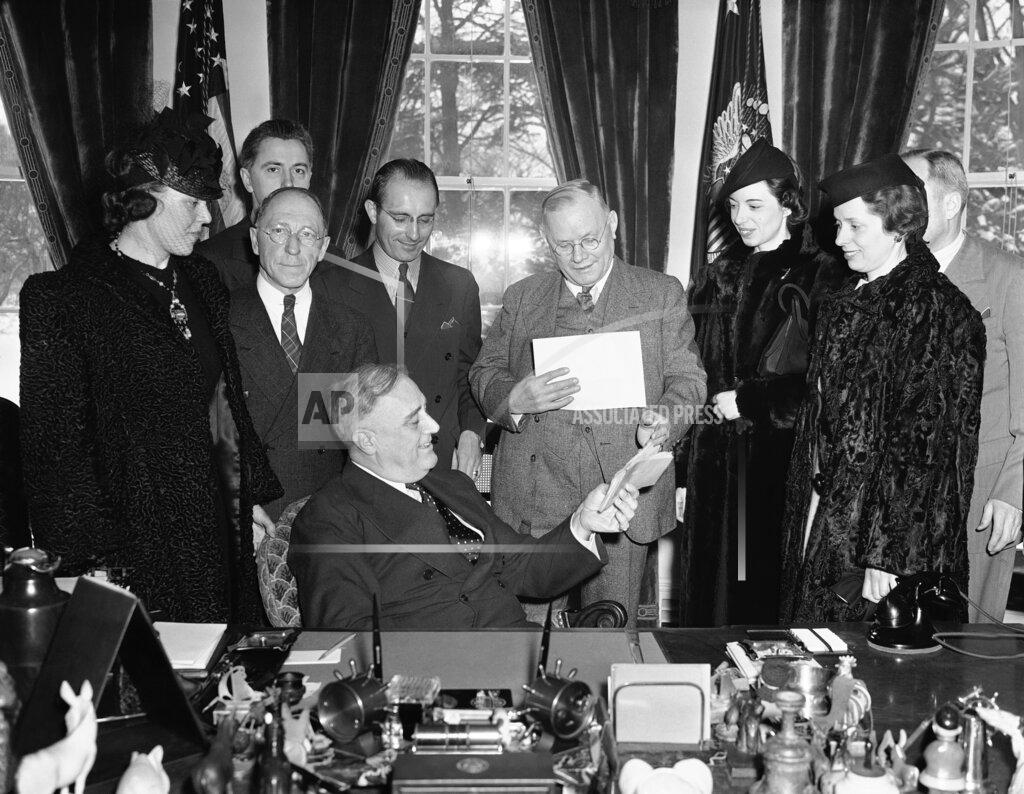
Today in Washington, President Roosevelt vetoed the bill to reimburse the State of Ohio for funds withheld by the Social Security Board because of Ohio’s failure to comply with the Social Security Act. He discussed the St. Lawrence Waterway negotiations with A. A. Berle, Assistant Secretary of State.
With the Senate in recess, its Banking and Currency Committee approved an increase of $100,000,000 in the Export-Import Bank revolving fund and the Monopoly Committee heard further testimony on practices in the steel industry.
The House voted to uphold the President’s veto of the bill to repay Social Security funds to Ohio, continued debate on the Treasury-postoffice supply bill and adjourned at 5:57 PM, until noon tomorrow. The Naval Affairs Committee heard Admiral John H. Towers on the Naval Expansion Bill, the Ways and Means Committee heard further opposition to renewal of the Trade Agreements Act and the Smith Committee continued its investigation into National Labor Relations Board procedure.
President Roosevelt today set a precedent, which Congress quickly upheld, by disapproving a bill reimbursing Ohio for Social Security payments for October, 1938, which were made by the State administration after the Federal Social Security Board had withheld funds on the ground that the State had failed to comply with the Social Security Act. His refusal to sign the measure was made known at the Capitol by an emphatic veto message, which, an hour after being read in the House, was sustained in that body by forty-five votes despite the plea of Ohio members to do “justice” to their State. The vote was 171 for overriding the veto to 153 for sustaining, 45 fewer than the required two-thirds. The President declared that under the Social Security Act the Federal Government had the right to withhold funds under the conditions. He recalled that in October, 1938, the Federal Social Security Board withheld “the payments. that would have otherwise been made to the State under the Old Age Assistance Plan in the State of Ohio.” He said that on September 6 the board had called a hearing on the alleged maladministration, which State authorities failed to attend.
Mr. Roosevelt thereupon made this assertion: “As a result of testimony introduced in that proceeding the Social Security Board made detailed findings showing that there had been in the operation of the Ohio State plan for old-age assistance a lack of efficiency of administration, wholesale violation of the State civil service laws and rules, delays in the handling of applications for assistance, blanket increases in some awards while at the same time aid was denied to other needy applicants, discrimination in the handling of complaints, a faulty accounting system and noncompliance with reporting provisions and with the requirement of fair hearings to aggrieved applicants.” Despite this, the President said, Ohio made the October payments out of its own treasury “to individual beneficiaries listed by the State authorities” and, under the bill he vetoed today, called upon the Federal Government to reimburse the State for these payments.
“The Social Security Act constitutes legislation of major importance,” Mr. Roosevelt declared. “It has far-reaching permanent consequences in the interest of the welfare of the aged and needy. Most of the phases of the Social Security Act involve cooperation between the Federal Government and the States. I am withholding my approval of the bill under consideration, because of my belief that an expeditious, effective and nonpolitical administration of the provisions of the Social Security Act is indispensable to the conduct of operations thereunder, and that approval of the measure would be inconsistent with this procedure and create a precedent that would seriously endanger the success of the entire Social Security program.”
United Mine Workers President John L. Lewis urges members not to support FDR in his bid for a third term. John L. Lewis today virtually recommended that the United Mine Workers of America, of which he is president, refrain from endorsing President Roosevelt for a third term, and predicted his “ignominious defeat” if the Democratic National Convention “could be coerced or dragooned into renominating him.” In a scathing indictment of President Roosevelt and the New Deal, the CIO chief climaxed his private criticisms of the Administration in the last two years by an open and public break. At the same time he left the way open for continuance of support of the Democratic party provided a voice were given labor in picking the Democrats’ 1940 standard-bearer and in framing the platform.
While some delegates to the miners’ convention, before which Mr. Lewis read his statement, felt that the pronouncement indicated an immediate break between the Congress of Industrial Organizations and the New Deal; several steps remain to be taken before this can be an accomplished fact. Assuming that the miners’ convention endorses the Lewis statement, it will have to go before the CIO’s executive board. There it will undoubtedly precipitate a debate, if not a clash between some members and Mr. Lewis. Sidney Hillman, president of the Amalgamated Clothing Workers of America, and Emil Rieve, president of the Textile Workers Union of America, are members of the CIO executive group and their unions have recently gone on record for a third term for the President.
Postmaster General James A. Farley tonight called for governmental fair play toward business and the banishing of uncertainty and fear from the national consciousness in an address which was looked upon in Winston-Salem, North Carolina as the opening bid of his Presidential candidacy.
Eighteen members of the Senate Banking and Currency Committee today approved proposed legislation which would make possible maximum loans to Finland by the Export-Import Bank of $30,000,000 for the purchase of non-military supplies.
A special committee of the American Civil Liberties Union, intent on making it clear that the organization does not sanction the denial of civil rights under the Communist regime in Russia, it was learned yesterday, has adopted a resolution to the effect that no one who believes in the American Bill of Rights can justify the position of the Nazi, Fascist, or Soviet governments toward civil liberties. The committee has sent letters. with copies of the resolution to directors and members of the union. in preparation for the annual election of officers, and directors on February 5. Precipitated by the Nazi-Soviet pact, this action is said to represent the crystallization of a long-standing movement inside the union against the re-election of Dr. Harry F. Ward as chairman of the union, especially since his testimony before the Dies committee. last October, and for other changes among the officers and directors. “I know there is no personal dictatorship in the Soviet Union,” Dr. Ward testified on that occasion. He also declined to bracket communism with nazism as an imperialistic movement. At the same time. he testified that the Communist party had given financial support to the American League for Peace and Democracy, of which he is president. Dr. Ward has been criticized as “a fellow-traveler” and the League for Peace and Democracy as a Communist “front” organization.
William (Wolfie) Goldis, co-defendant with New York mobster Louis (Lepke) Buchalter and three others on charges of extortion and attempted extortion in the bakery and flour-trucking racket, startled his former associates by entering a plea of guilty yesterday as the case went to trial before Judge John J. Freschi in General Sessions. Lepke, who was seated a short distance from Goldis when the latter changed his earlier plea of not guilty, turned toward his co-defendant and snarled, “You are a dirty rat.” The erstwhile racketeer chief, sensing that the change of plea meant new and potent support for the prosecution’s case, seemed. to swell with anger toward Goldis. After the plea had been heard and one talesman had been called to the jury box but not questioned, the trial was adjourned by agreement until tomorrow.
Interior Department motorship North Star (U.S. Antarctic Service) departs Bay of Whales, Antarctica for Valparaiso, Chile, for additional supplies and equipment to establish East Base. Construction of West Base commences immediately at the site chosen that lies at 78°29’06″S, 163°50’10″W, two miles from the edge of the ice barrier and five miles northeast of the site of Little America I and Little America II, the previous Byrd expedition bases. Until the main building is completed for habitation, the men live in regulation army tents (see 11 February).
The strength of the naval aviation forces will have increased to about 3,200 planes by the end of the fiscal year 1941, Rear Admiral John H. Towers, Chief of the Naval Bureau of Aeronautics, told the House Committee on Naval Affairs today.
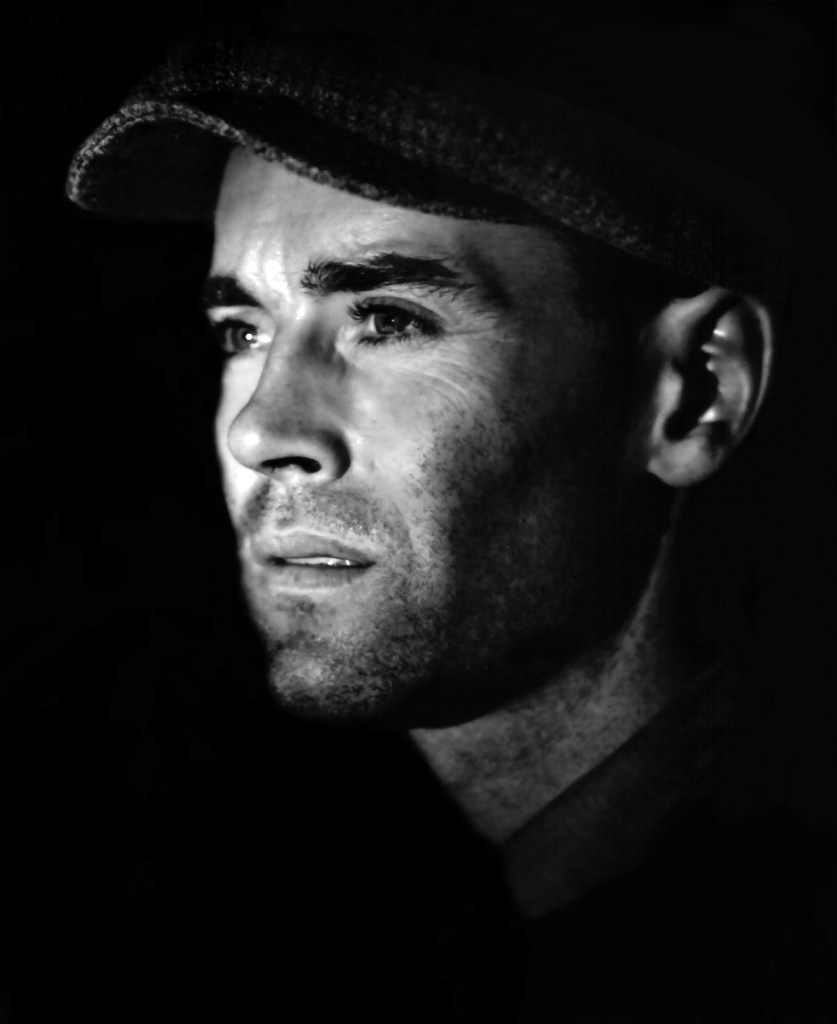
The drama film “The Grapes of Wrath,” directed by John Ford and based on John Steinbeck’s novel of the same name, starring Henry Fonda and Jane Darwell, premiered in New York City.
James H.R. Cromwell, the newly-appointed United States Minister to Canada, presented his credentials to the Governor General, Lord Tweedsmuir, today and mutual felicitations were exchanged over the happy relations that have so long existed between the two countries.
Gunboat USS Erie (PG-50) joins destroyer USS J. Fred Talbott (DD-247) at Wreck Bay, Galapagos Islands, to assist U.S. tuna boat City of San Diego. The gunboat takes on board the craft’s chief engineer (pneumonia) and sails the following day for Balboa, where the man will be transferred ashore for medical attention.
Chinese 2nd War Area troops capture Dongyangguan Pass in Shanxi Province, Licheng, and She Hsien.
The Central News Agency, a Chinese Government service, reported today that Kwangsi Province troops had overwhelmed a Japanese division, about 15,000 men, in Hupeh Province, killing 4,000 and wounding 7,000. The Japanese force was said to have tried to advance northwest of Suihsien, about 200 miles northwest of Hankow, when the Chinese. swarmed out of mountain foothills to attack. The agency said that survivors from scattered formations fell back toward Suihsien. Meanwhile, Japanese authorities announced termination of a punitive drive south of the Tsientang River in Chekiang province. “The object of inflicting a rigorous blow on the recalcitrants was attained,” a spokesman said, adding that Japanese forces would continue to hold posts south of the river and would not “hesitate to resume relentless operations, if the Chinese troops fail to awaken to the folly of fighting a friendly people.”
Newspapers in Tokyo today accused Washington of a concerted effort to wreck Japan’s program for creation of a “New Order in East Asia.” Among officials and business leaders alike, resentment against the United States, because of Washington’s refusal to accept Japan’s plea for a working agreement to replace the expiring Japanese-American treaty, was keen. Officials said bluntly, in private conversation, that President Roosevelt’s action in abrogating the commercial treaty, effective tomorrow, was a political move involving the most serious potential consequences and that the President was using the trade treaty as “a club to wreck the New Order in East Asia.” It was understood that a move for last-minute conversations here between Foreign Minister Hachiro Arita and United States Ambassador Joseph C. Grew, in a final effort to find some working agreement to replace the treaty, was abandoned after Ambassador Kensuke Horinouchi had been told by the State Department in Washington that no “stop-gap” arrangement was desired by the United States.
A Foreign Office spokesman said that Japan would consider the treaty ended at 12:01 AM, Tokyo time, Friday [10 AM Thursday, Eastern Standard Time]. In Washington the State Department said the treaty would expire at 12:01 A. M. Saturday. He said it was “not likely” that any new move would be made by Japan before the agreement ended. When the treaty terminates, Japanese-American relations will be on a day-to-day basis, which, businessmen said, would make it hazardous to enter the usual long-term commitments for purchases in the United States, since either side might enforce discriminatory measures at any moment. The Foreign Minister told members of the Lower House of Parliament who conferred with him yesterday, Domei, official news agency, said that no obstacles to normal Japanese-American trade were expected immediately after termination of the treaty. The government, however, is taking adequate measures to avoid possible inconvenience, he said. These measures, it was assumed, would take the form of quiet efforts to build up sources of supply for needed raw materials in markets other than the United States and to stimulate Japanese exports to non-United States markets. Associates of the Foreign Minister said he was annoyed at the “brusque” manner in which the State Department refused to consider Mr. Horinouchi’s effort to obtain a stop-gap agreement to replace the treaty.
The Japanese Government, it was said, “has not the slightest intention of abandoning its plan for a ‘New Order in East Asia’ but it continues to hope that, as that ‘New Order’ goes into effect, the government of the United States will come to realize that American rights in China are not to be abolished.” As the lapsing hour approached, a United Press dispatch from Shanghai quoted authoritative sources that the United States had rejected recent Japanese offers of indemnities for certain American properties damaged in China. The offer was made through the American Consulate General at Shanghai in an apparent effort to effect local settlement of such incidents. Shanghai said that in rejecting the offer the United States asked that the matter be transferred here for further negotiation-an implicit rejection, also, of the attempt at a local settlement. Japanese sources at Shanghai understood that Japan was preparing to make larger indemnity offers, probably through the American Embassy here. The rejection of the local settlement idea was regarded as meaning that the United States stood firm for a fundamental settlement of Chinese problems.
Several members of the U.S. Senate Foreign Relations Committee supported today the State Department’s announced intention to let future Japanese-American commercial relations depend upon developments in the Far East. Senator William H. King, Democrat, of Utah, outspoken critic of Japan’s invasion of China, said that he was opposed to any immediate move to negotiate a new treaty. “I have been very critical of Japan’s disregard for treaties,” he said, “and I would feel warranted now in severing all relations with Japan.” Both Senators Tom Connally, Democrat, of Texas, and George W. Norris, Independent, of Nebraska, said they saw no reason to hurry about a new treaty. Senator Connally said that “the world is not going to stop when the Japanese treaty expires.”
Cheered by crowds estimated at more than 500,000, the Victorian regiments of the Second Australian Imperial Force marched through the beflagged streets of Melbourne in farewell today. The troops will go to foreign war posts.
Dow Jones Industrial Average: 147.00 (+1.51)
Born:
Joachim Gauck, President of Germany (2012-2017), in Rostock, Germany.
Dave Getz, American drummer (Big Brother & The Holding Company), in Brooklyn, New York, New York.
Died:
John Doogan, 86, Irish recipient of the Victoria Cross.
Harry Piers, 69, Canadian historian.
Emile van Bosch, 52, Belgian revue, operetta and opera singer.
Naval Construction:
The Royal Canadian Navy Flower-class corvettes HMCS Moncton (K 139), HMCS Amherst (K 148), and HMCS Sackville (K 181) are ordered from Saint John Dry Dock and Shipbuilding Co. Ltd. (Saint John, New Brunswick, Canada).
The Royal Canadian Navy Flower-class corvettes HMCS Lévis (K 115), HMCS Shawinigan (K 136), and HMCS Lunenburg (K 151) are ordered from Davie Shipbuilding (Lauzon, Quebec, Canada).
The Royal Navy Hunt-class (Type II) escort destroyer HMS Ledbury (L 90) is laid down by Thornycroft (Southampton, U.K.).
The Royal Navy “M”-class destroyer (Flotilla leader) HMS Milne (G 14) is laid down by the Scotts Shipbuilding & Engineering Co. (Greenock, Scotland).
The Royal Navy Flower-class corvette HMS Gladiolus (K 34) is launched by the Smiths Dock Co., Ltd. (South Bank-on-Tees, U.K.).
The Вое́нно-морско́й флот СССР (ВМФ) (Soviet Navy) Project 7-class (Gnevny-class) destroyer Rezvy (Резвый, “Frisky”) is completed.
 History Diaries