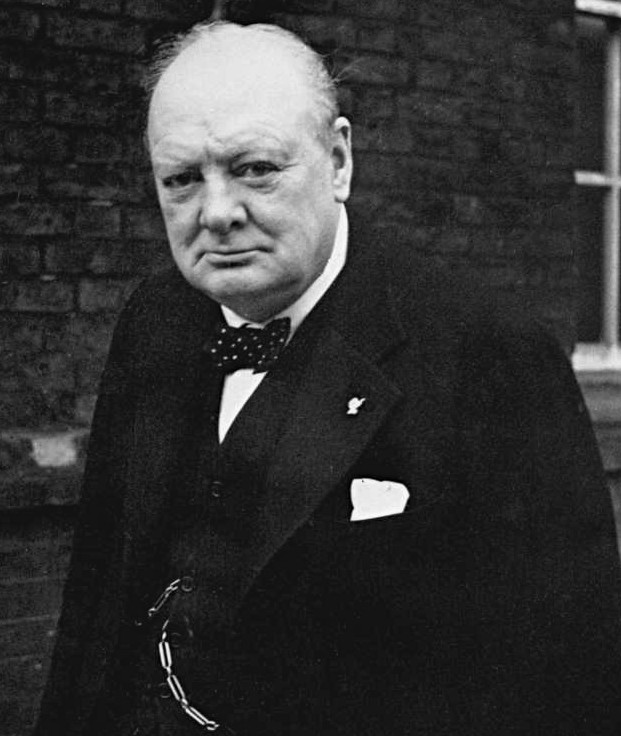
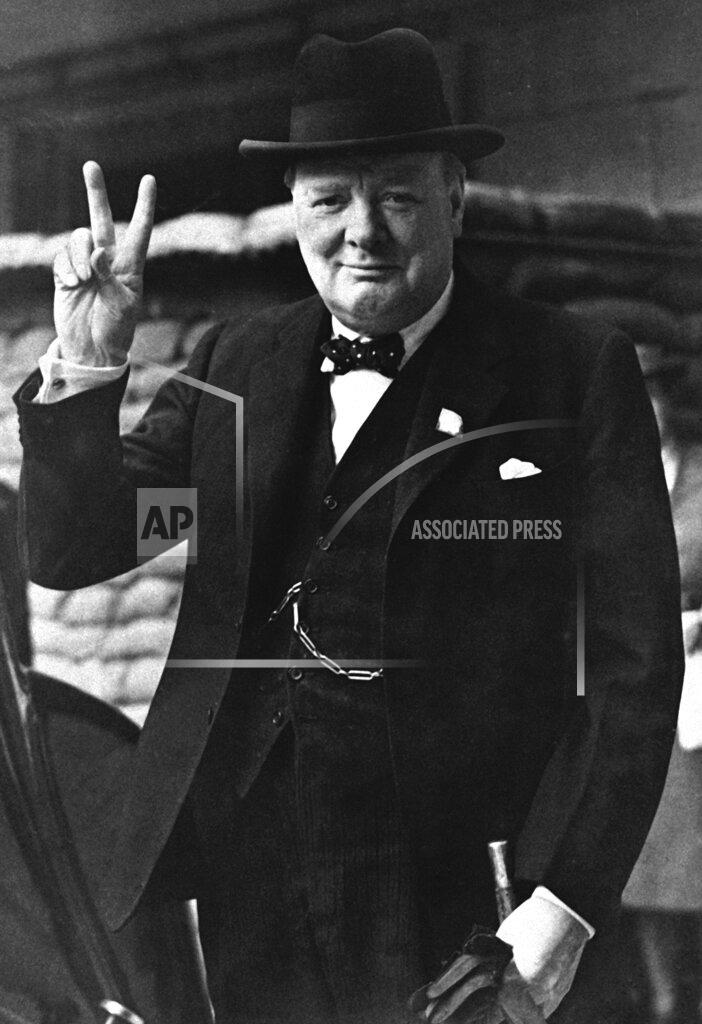
Sir Winston Churchill, the former Prime Minister of the United Kingdom who had guided Britain through World War II and later through the economic problems of the 1950s, died at the age of 90, two weeks after suffering a severe stroke. His final words, reportedly, were “I’m so bored with it all.” Sir John Colville, Churchill’s private secretary, would recall that 12 years earlier, in 1953, Churchill had said, “Today is the 24th of January. It’s the day my father died. It’s the day I shall die too.” Lord Randolph Churchill had died on January 24, 1895, exactly 70 years before his famous son.
Winston Churchill’s struggle for life ended this morning, and the people he had cherished and inspired and led through darkness mourned him as they have no other in this age. Sir Winston died just after 8 o’clock, in the 10th day of public anxiety over his condition after a stroke. He was in his 91st year. Britons small and great–village curate, Prime Minister and Queen paid him tribute through the day and this evening. Statesmen around the world joined in homage to the statesman they acknowledge as the greatest of the age. Londoners. during the last struggle, had come to accept Sir Winston’s death as inevitable. There was little of the shock and horror seen in the reaction to President Kennedy’s death.
Nevertheless, even those who consider themselves unsentimental found that they had difficult moments as they were reminded of the great Churchillian days. The radio followed the announcement of the death with Beethoven’s Symphony No. 5. The opening theme symbolizing the knock of victory — three short notes and a long note — evoked memories of Churchill’s wartime gesture, two fingers held aloft in a “V for Victory.” Parliament will meet tomorrow to authorize a state funeral. the first held for a commoner in this century. For the rest of the week public affairs will be slowed almost to a stop. The body will lie in state Wednesday, Thursday and Friday in Westminster Hall, the lofty medieval chamber adjoining Sir Winston’s real home, the House of Commons. On Saturday a state funeral service will be held at St. Paul’s Cathedral. Burial will be in the country churchyard at Bladon village, near Blenheim Palace, the ancestral castle where Sir Winston was born. Queen Elizabeth will attend the state funeral.
Queen Elizabeth said, “The whole world is the poorer by the loss of his many-sided genius while the survival of, this country and the sister nations of the Commonwealth. in the face of the greatest danger that has ever threatened them, will be a perpetual memorial to his leadership, his vision and his indomitable courage.”
President Johnson also paid tribute to Churchill. “When there was darkness in the world and hope was low in the hearts of men, a generous Providence gave us Winston Churchill. As long as men tell of that time of terrible danger and of the men who won the victory, the name of Churchill will live. Let us give thanks that we knew him. With our grief let there be gratitude for a life so fully lived, for service so splendid, and for the joy he gave by the joy he took in all he did. The people of the United States — his cousins and fellow citizens — will pray with his British countrymen for God’s eternal blessing on this man, and for comfort to his family. He is history’s child, and what he said and what he did will never die.”
France mourned Sir Winston Churchill tonight as though he had been one of her sons. To the French, he was the author of victory in World War II.
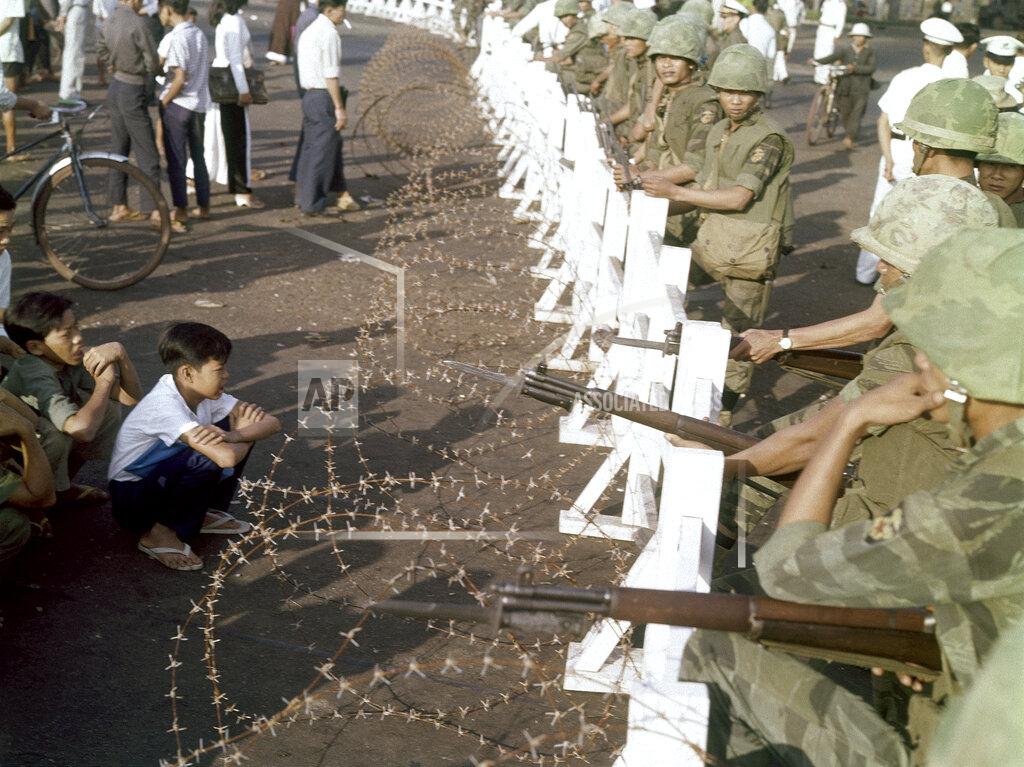
Military leaders of South Vietnam wavered today in their support of Premier Trần Văn Hương in the face of large-scale Buddhist agitation for his government’s resignation. After intensive discussions with civilian leaders of the government and United States Embassy officials, most of the top generals were understood to have indicated that they would continue to back the Premier. However, no firm Decision was taken on the future of the government or on measures to be adopted to counter the Buddhist demonstrations. in the main cities. These demonstrations are aimed at both the Premier and the United States, which is being denounced for supporting him.
Buddhist leaders called at midnight a 48-hour “noncooperation strike” in the central Vietnamese cities of Huế and Quảng Trị, during which Americans were not to be served by shops, restaurants or other commercial establishments. The United States Information Service library in Huế was sacked yesterday by members of a crowd, who had earlier paraded before the United States Consulate. Informed sources said that Lieutenant General Nguyễn Khánh, the commander in chief of the armed forces, expressed some reservations in today’s discussions as to whether the army would be able to cope with demonstrations that might be organized by the Buddhists. This was one of the arguments put forward by a number of generals who suggested that it might be wise for Premier Hương to mollify the Buddhists by some conciliatory move.
The survival of the government depends mainly on the continued support of the armed forces. Four military leaders were brought into the Hương Cabinet last Tuesday to strengthen it and to satisfy the generals’ desire for added political influence. This compromise was arrived at in consultation with United States officials. General Khánh, who was Premier and chief of state in the previous Government, has not been entirely pleased with the compromise. Well-informed sources said he seemed to be taking advantage of the Buddhist unrest to strengthen his own political position. Meanwhile, Buddhist leaders pressed forward with their militant campaign to oust the government.
In Nha Trang, a seaside resort about 220 miles northeast of Saigon, 500 persons, including about 80 monks, marched through the city in an anti-Government demonstration, Two hundred persons there reported to have begun the second day of a hunger strike. In Huế, speakers at a meeting of 700 students charged that “United States dollars have been used to buy off Hương’s opponents.” At the request of South Vietnamese authorities, the cities of Huế and Đà Nẵng, where a large air base is situated, have been put off limits to United States servicemen. In Saigon, riot policemen posted throughout the city forestalled any major disturbances. About 20 youths were arrested near the police-barricaded Buddhist headquarters, where five leading monks entered the fifth day of their “fast unto death” to force the resignation of Premier Hương.
A raid by 30 Montagnard soldiers and 12 United States helicopters destroyed a Việt Cộng camp today in the mountains of central Vietnam. The attack illustrated again the way in which the war against the Communist guerrillas was proceeding in the countryside despite political agitation in Saigon. Except for Americans and senior Vietnamese military officers who hear radio broadcasts from the capital, the rural and mountain population is uninformed of the crises in the cities or not interested in them. In today’s action one rifle, one hand grenade, two supply packs and bundles of propaganda leaflets were found at the guerrilla camp. According to American advisers, the base was large enough to hold 100 or more soldiers. Twenty-three empty thatched huts were burned.
The raid was staged by advisers from a United States Special Forces team at Pleiku, the military headquarters for the mountainous II Corps area. Hastily organized on the basis of fresh intelligence information, the raid was preceded by a 10 AM briefing alongside the helicopters in a grassy field. They had arrived an hour earlier from Pleiku, Major Peter Hall of Thomaston, Maine, who heads the corps’ helicopter force, and his officers told the crews that they were heading for a target west of the Krông Năng River and southeast of a Special Forces camp at Buôn Briêng. “Your airspeed to the landing zone will be 75 knots, your altitude 3,500 feet,” one briefing officer said.
The first four helicopters in the formation were armed with machine guns and rockets. The fifth was the command machine, and the 12th held the medical evacuation crew. In each of the others, the United States crewmen were crowded in with five Montagnard soldiers and one American adviser. Warrant Officer Fred Hawkins of Scotia, New York, and Lieutenant Thomas Castro of Fort Worth, Texas, flew one of the armed machines. Two young enlisted men, Pfc. Gary Foley of Miami and Specialist 4 Arthur Hennessy of West Falmouth, Massachusetts, manned the guns. After circling the site and drawing no fire, the four machines swooped low and strafed the landing zone with 3,200 rounds of ammunition. Rockets left a brilliant red trail as they streaked from carriers on each side of the helicopters. As the six troop carriers landed uneventfully, Lieutenant Castro’s helicopter flew back to refuel.
When the armed machines returned to the target, ground troops were moving briskly through the woods, burning every hut they passed. Reaching the Việt Cộng camp, all but hidden from the air by trees, the tribesmen searched the huts and burned them in minutes. Shortly after 1 P.M., the helicopters returned to take the men back to Ban Me Thuot, a 20-minute flight. On the ground, Captain Robert Lockridge of Charlestown, South Carolina, the ground forces’ senior adviser, lined up the Montagnards for a pep talk, with an interpreter relaying his words to the dark, intense men. “I think we did damned good.” he concluded. “We’ll go out again. Kay?” The 30 men grinned, their teeth gold or very white. “Okay!” they shouted.
The attack aircraft carrier USS Ranger (CVA-61), one of the United States Seventh Fleet’s most powerful, was revealed today to be engaged in “support operations” off the coast of Vietnam.
A series of explosions this morning demolished half the: fighter-bomber strength of the Laotian Air Force and completely destroyed Vientiane’s military airport. Probably nine fighter-bombers were destroyed, as well as a Cessna reconnaissance plane, and at least two transports were damaged. A maintenance hangar was wrecked and trailérs, equipment and ammunition lost. At 9:30 AM, a series of six loud explosions shook Vientiane, Smoke poured from the airport, 30 and .50 caliber machine-gun ammunition exploded, flames leaped from a hangar and soldiers rushed to get arms and ammunition to safety.
All that remained of the T-28 fighter-bombers were propellers and engine cowlings. Machine guns were strewn all around. Parts of the military parking area were torn up and 500-pound bombs lay around. The explosions were believed to have been accidental, but the possibility of sabotage was not ruled out. Airport sources said there was no attack on the airport. A widely accepted version was that the circuit in one of the machine guns on a T-28 shorted, firing a bullet that hit a fuel tank and detonated it. The explosion either detonated the bombs loaded in the racks of the fighters that were ready for a mission or the bombs fell out of the racks after the shock of the explosion and went off. United States Embassy sources and the hospitals said there were apparently no casualties.
Late this afternoon Laotian troops and American technicians were busy clearing the wreckage. The Royal Laotian Air Force had 28 fighter-bombers. Five have been lost through enemy action and three have crashed as a result of technical troubles. The T-28’s based at Vientiane are used, for strikes against enemy supplies moving down the Hồ Chí Minh Trail — the Communist supply line to South Vietnam — and to support Royal Laotian Army units when they are under pressure. Other T-28’s are based in Savannakhet, in southern Laos, and strike the southern portion of the Hồ Chí Minh Trail.
Last November 1, Communist guerrillas destroyed five B-57 jet bombers, damaged 15 others and killed four Americans and two Vietnamese in a mortar attack on the American Air Force installation at Biên Hòa, 12 miles north of Saigon, South Vietnam. Three Vietnamese A-1H Skyraider fighter-bombers and four United States helicopters also were damaged.
Cambodia protested today against two alleged new border violations by South Vietnam. A protest message published by the official Khmer Press Agency said a group of South Vietnamese soldiers had penetrated about a mile and a half inside Cambodian territory in Takeo Province on January 13. It said the soldiers opened fire on a Cambodian border patrol and withdrew after a brief engagement, leaving behind one dead Vietnamese soldier. The message also said that on January 16 South Vietnamese soldiers fired with automatic weapons at a farming community in the district of Kompong Trach Kampot, killing one Cambodian woman.
Premier Chou En-lai of Communist China called today for the creation of a new United Nations, free of “the manipulation of United States imperialism.” Mr. Chou said the United Nations had made “too many mistakes” and had “utterly disappointed” the new nations of Africa and Asia. His denunciation of the world body, which has repeatedly barred his country from membership, came during a speech in Peking in honor of the Indonesian Foreign Minister, Dr. Subandrio, and his delegation. The remarks were monitored in a broadcast from Peking by Hsinhua, the Chinese press agency.
Generalissimo Francisco Franco has received the heads of the Jewish communities in Madrid and Barcelona and has discussed with them the status of Jews in Spain. The Jews are asking Franco for legal recognition.
Lebanese Premier Hussein Oueini warned Israel last night that any interference with the diversion of the Jordan River tributaries in Lebanese territory would be treated as outright aggression.
Eli Cohen, an agent for Israel’s Mossad spy agency, was captured in Syria at his apartment in Damascus. He would be hanged after a conviction for espionage.
The Soviet Union’s Government and Communist party leaders returned to Moscow today from a week’s trip to Poland for the Warsaw Pact meeting.
Three Belgians were killed and two were wounded by the Congolese rebels who attacked the village of Nkolo yesterday. Survivors who arrived here today told of the early morning massacre at Nkolo, 200 miles north of Leopoldville. One survivor said the rebels. told them, “We are here to take revenge for Stanleyville” as they lined the Belgians against a wall to be shot. Belgian paratroopers killed hundreds of rebels when they dropped on Stanleyville November 24. Wil van der Struyk, a Dutchman who worked at the Sobopla plywood factory in Nkolo, said “the rebels were waiting for us when we came to work at 6 AM. They dragged us out and lined us up against a wall,” he added. “Two rebels armed with automatic weapons opened up without warning. It was all over in a few seconds.”
Argentina is expected to announce this week her desire to revitalize relations with the other Latin-American countries and to play a more dynamic role in Hemisphere decisions.
A general strike scheduled for tomorrow in Bogota, Colombia was called off after an agreement late last night between the government and the Union of Colombian Workers.
The Liberian cargo ship SS San Nicola sank in the Pacific 750 nautical miles (1,390 km) north west of Honolulu, Hawaii. All 30 crew were rescued by Maria and taken to Japan.
President Johnson’s new budget estimates, expected to be just shy of the magic $100 billion mark, will go to Congress tomorrow. Described as a “bare-bones” budget by sources close to the White House, it represents months of Presidential trimming of existing programs to finance new plans for the Great Society. “I don’t think the President will leave much fat for us to cut away.” said George H. Mahon, the Texas Democrat who heads the House Appropriations Committee. Less than two months ago. President Johnson said at a news conference at his LBJ Ranch that he “rather doubted” that he could hold the budget under $100 billion. The nation’s budget has never reached that figure.
However, by trimming here and there — including orders to close some naval yards, military bases, veterans hospitals and Veterans Administration regional offices — he is believed to have kept the budget just under $100 billion. The budget sent to Congress a year ago totaled $97.9 billion, but the President recently announced that actual expenditures for the fiscal year 1965, which ends next June 30, were now estimated at about $700 million less.
In drawing up his new budget, Mr. Johnson was beset by both the so-called big spenders and the advocates of a balanced budget. The Americans for Democratic Action had suggested that the President raise his sights by proposing a budget totaling $110 billion to $115 billion. Actual estimates from Government departments had totaled $108.5 billion. On the other hand, Senator Harry F. Byrd, Democrat of Virginia, who heads the Senate Finance Committee, continued to press for a balanced budget. He urged adoption of a bill that would require all spending authority to be placed in a single package.
Mr. Byrd pointed out that Congress had previously appropriated or authorized more than $100 billion still unspent. He noted that although Presidential estimates reached Congress in a single budget package, Congress divided them up into a number of bills, many of which permit spending over future years. His proposal would limit spending authority to the amount of estimated income for the period covered. By next July 1, Mr. Byrd said, the Government “will have” operated in the red for 30 of 36 years.” Thé national debt now totals $318 billion, he noted. The new budget is expected to top revenue estimates. Some experts expect tax revenues for the next fiscal year to be about $97 billion. The President’s Budget Message will be followed by his annual Economic Report, to be sent to Congress on Wednesday.
Meanwhile, after several weeks of attempting to get organized, Congress will settle down to business this week. A key Administration measure, the $1.077 billion Appalachia development bill, is likely to come up for Senate floor action late in the week. It is expected to be approved in committee on Wednesday. A bill authorizing an expanded program of water-pollution control is also likely to come up for Senate action this week.
President Johnson, still in a hospital bed with a bad cold, said today that he wanted to attend the funeral of Sir Winston Churchill and that he would do so if his health permitted. If he goes to London for Sir Winston’s funeral — and formed sources said he surely would — it will be the first trip abroad by Mr. Johnson since he became President on November 22, 1963. The President appeared to be recovering rapidly from the painful cough and sore throat for which he was admitted to the United States Naval Hospital at Bethesda, Maryland at 2:50 AM yesterday. “The improvement is considerable,” said the White House press secretary, George E. Reedy. “The harsh, wracking cough is gone. It is an extremely light cough.” Mrs. Johnson, who was admitted to the same hospital with a head cold yesterday afternoon. was also improved and “resting comfortably,” Mr. Reedy said.
Republican leaders in Arizona and elsewhere are almost certain that Barry Goldwater will run for Senator from Arizona again at the first opportunity.
Governor George Romney of Michigan said today that he thought the United States was headed for a social and economic crisis.
President Johnson will send to Congress this week a special message requesting the restoration of elected self-government to the capital of the United States.
The National Urban League is planning a series of “poverty workshops” in Southern cities to seek a fair share of federal antipoverty funds for Blacks.
A proposal for a sweeping reorganization of the Labor Department’s Manpower Administration has touched off a brisk bureaucratic battle within the department that may spread outside of it.
Four men broke into the fashionable Washington, D.C. home of Mrs. Gwen Cafritz, a prominent capital hostess, and robbed her at knifepoint of jewelry insured for $265,000.
The generation that struggled with its multiplication tables and logarithms may be in for some trouble helping its children with homework. For the new mathematics, which in many schools is already here, may soon be replaced with an even newer math.
Comedian Bill Dana is named the first official mascot of the Houston Astros by Judge Hofheinz. The comic, whose signature routine is portraying a dimwitted astronaut, José Jimenez, comments about the new ballpark “if they would build a cemetery, you’d never have to leave the place.”
Born:
Mike Awesome (ring name for Michael Lee Alfonso), American professional wrestler who also appeared in Japanese pro wrestling as “The Gladiator”; in Tampa (committed suicide, 2007).
Carlos Saldanha, Brazilian film director, in Rio de Janeiro, Brazil.
Died:
Sir Winston Churchill, 90, British Prime Minister (Conservative: 1940-45, 1951-55) during World War II, and writer (Nobel Prize in Literature, 1953), of a stroke.
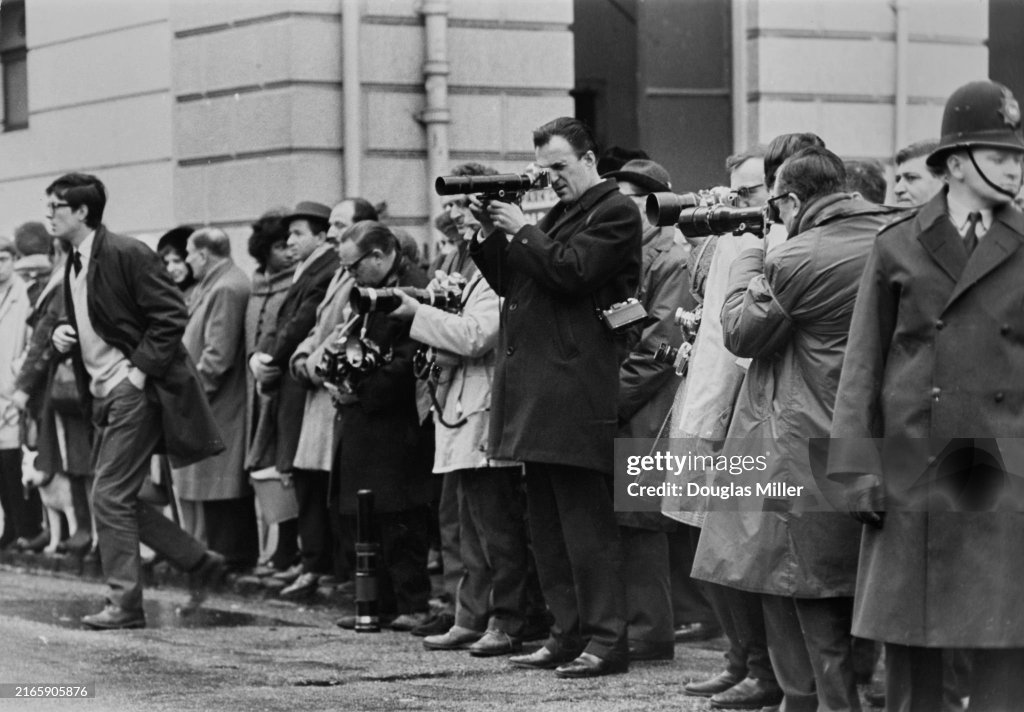

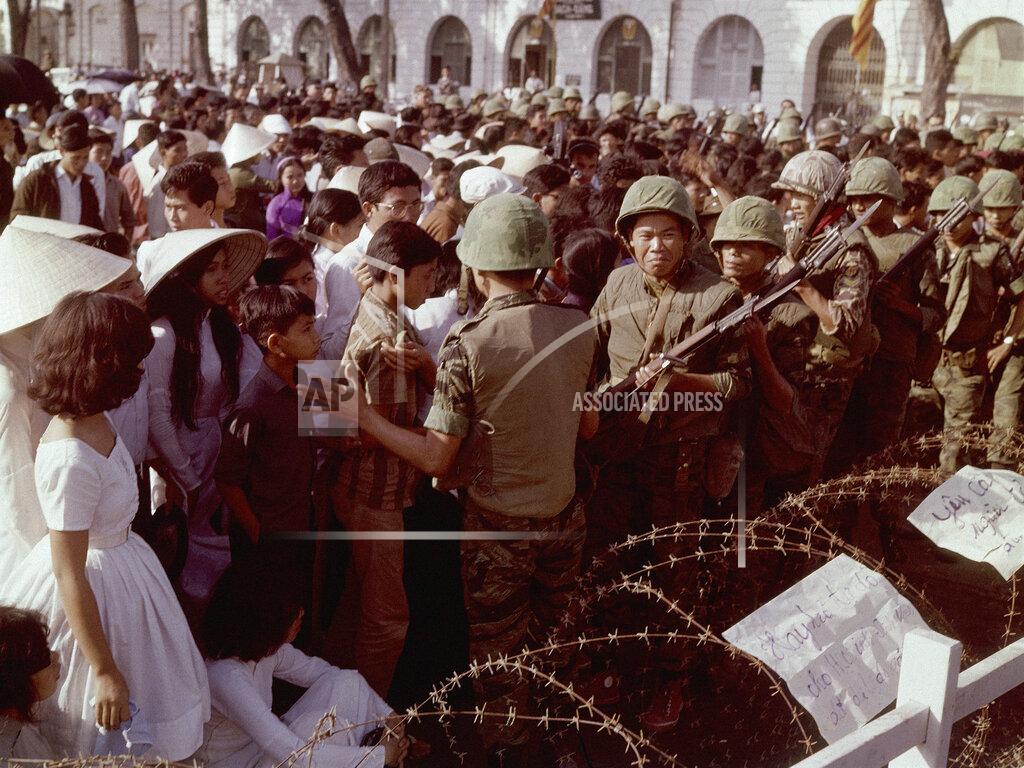
[Huỳnh Thanh Mỹ (March 29, 1938–October 10, 1965) was a Vietnamese photographer working for the Associated Press. While covering a fight between the Việt Cộng and ARVN Rangers in the Mekong Delta, Huỳnh Thanh Mỹ was wounded in the chest and arm. He was shot and killed while awaiting medical evacuation for his wounds when the Việt Cộng overran the makeshift aid station of a South Vietnamese army position. Huỳnh left behind his 19-year-old widow and seven-month-old daughter. Later his wife and the then-10-year-old daughter were evacuated to Los Angeles when the war ended.]



 History Diaries