
The Vietnamese Communists’ winter-spring campaign is beginning to take shape on the battlefields of South Vietnam’s military chess game in which they have so far firmly committed little more than pawns and perhaps a rook or two. In contrast to the 1968 and 1972 offensives, which were onslaughts of dramatic intensity, this campaign so far has been a series of thrusts — some probing, some determined, some overwhelming. For the most part, the North Vietnamese have not used their main-force units, relying instead on regional forces and others.
Some American and South Vietnamese analysts believe that the Communists, learning from the past, are prepared to be flexible in their tactics. “As long as we keep four ranger groups in Kon Tum, they won’t attack,” predicted one knowledgeable Vietnamese informant, citing this as an example of the Communists’ new flexibility. “But when some of those rangers are needed someplace else — like Bình Định — they’ll attack.”
As for military objectives, the pattern of attacks indicates fairly clearly that the North Vietnamese and the Việt Cộng hope to re-establish old infiltration corridors, particularly in the Mekong Delta, and widen others. An important swath of territory the Communists want to consolidate, in the opinion of many analysts, runs down South Vietnam’s western spine from the 17th parallel to Tây Ninh Province. This is the corridor from the well-known North Vietnamese Trường Sơn highway and pipeline, which resupplies troops in much of the South.
The capture of Phước Long Province earlier this month eliminated a series of Saigon-held “leopard spots” — notably the capital town of Phước Bình and the district capital of Đức Phong — from which movement on the western corridor could be harassed. Some American analysts believe the next logical target in this region is Quang Đức Province, which was the scene of heavy but inconclusive fighting 15 months ago. There, Saigon positions, particularly the base town of Đức Lập, oblige the Communists’ road system to make a detour into Cambodia. “I think they’re going to try to take the whole province,” said an analyst who has been following reported troops movements around Quang Đức, which is now said to be thinly defended.
Other Government outposts too near the road system — Ban Don in Đắk Lắk (Darlac) Province and Thanh An district town in Pleiku — may feel North Vietnamese pressure, analysts say, and Route 19 running from Quy Nhơn on the coast to Pleiku could be cut. One American analyst, noted that if the North Vietnamese could take Kon Tum, which is also considered a potential target, they might then drive right to the sea in southern Quảng Ngãi or northern Bình Định Provinces, where the Saigon side holds only a narrow band of territory. This would give them a swath of land cutting the country in half.
A Việt Cộng spokesman charged in Paris today that since the signing of the 1973 Paris peace agreements on Vietnam the United States had introduced 1.5 million tons of bombs into Saigon‐controlled territory. The spokesman said that at the height of the war, 800,000 tons of bombs were dropped yearly on South Vietnam under President Johnson and one million tons under President Nixon. The spokesman, Đinh Bá Thi, also charged that the Government of President Nguyễn Văn Thiệu was run from the American Embassy in Saigon. More specifically, he said, more than 100 American CIA agents were running a network of 14,000 South Vietnamese agents of the political police.
Mr Định is interim head of the Việt Cộng’s Provisional Revolutionary Government delegation here in the stalemated political talks with Saigon. He spoke at a press conference marking the second anniversary of the Paris agreements, which were initialed on January 23 and signed on January 27, 1973. Among other things, the agreements stipulated that once the treaty was in effect, arms could be introduced into South Vietnam only on a basis of one‐to one replacement of those already in the country. In anticipation of this stabilization, the United States delivered a vast supply of arms.
Nine American antiwar activists were deported from South Vietnam last night after they had staged a surprise demonstration in front of the United States Embassy. The demonstrators were detained last night at their hotel and put aboard an Air Vietnam flight to Bankok, Thailand, Government sources said. Earlier in the day they had slowed traffic near the embassy, passing out handbills. A heavy contingent of plainclothesmen and uniformed police did not prevent the Americans from holding the protest. But the police did eventually cordon off the area to halt the distribution of the leaflet which demanded an end to American involvement in South Vietnam and the carrying out of the Paris agreements. “As long as the United States come here and makes war, said Margie Kolchin, a 20‐year old student at Johns Hopkins University, “we feel we have the right to come here and ask for peace.”
The White House press secretary categorically denied that the United States was preparing three Army divisions for possible use in the Middle East. The strong denial was considered necessary because a question asked of Mr. Ford in a television interview Thursday night led to speculation whether the Pentagon in fact was preparing an expeditionary force for possible use in the Middle East. If the denial by the White House and the Pentagon is correct, the misunderstanding apparently resulted from a series of journalistic and official errors.
The commander of Turkish Army forces in Cyprus indicated in an interview today that there was little likelihood Turkey was prepared to make conciliatory moves before the February 5 deadline for a Congressional suspension of American military aid to Turkey. Lieutenant General Bedrettin Demirel, in a two‐hour conversation at his headquarters in what was once a resort hotel in this coastal town, said repeatedly that concessions to the Greek Cypriots who were defeated by his troops in the invasion last summer must come as part of a general political settlement, not on a piecemeal basis. General Demirel, in his first interview since the invasion, disclaimed competence to speak on political issues. But because he is generally considered the most powerful man in the Turkish‐occupied north of the island and is believed to reflect the thinking of the general staff, the views he expressed in carefully chosen words are significant.
Unless Turkey convinces the United States in concrete ways that she is prepared to make some concessions to the defeated Greeks and to ease the way for a political settlement, President Ford is under Congressional mandate to end military assistance to Ankara. General Demirel, a toughlooking soldier in a field‐gray uniform with scarlet flashes and gold stars on his shoulder boards, said that conciliatory moves the United States would consider as significant concessions would have to be part of a general political settlement. The United States, for example, hoped that an agreement to reopen the Nicosia international airport, in the United Nations‐controlled land between he warring sides, had been agreed upon between the leadlers of the two Cypriot communities, until it was rejected at Ankara’s demand by the chief of the Turkish Cypriots, Rauf Denktaş.
The Soviet Union reported that it had made economic progress in 1974, but official government figures disclosed that there were numerous failures to meet goals for increased production of consumer goods. An increase in consumer items had been one of the principal objectives of the 1971-75 five-year plan.
East Germany, like the rest of the Communist states of Eastern Europe, is expecting hard times ahead and its leaders appear to be preparing the people for dramatically higher prices for oil and other raw materials from the Soviet Union.
Dr. Donald Coggan was made the new Archbishop of Canterbury, the administrator of the Church of England. Dr. Coggan, a slim bespectacled man of 65, struck three times on the door of Canterbury Cathedral, and was admitted to be enthroned today as the 101st Archbishop of Canterbury.
Only seven months after its launch, the Salyut 3 space station was deorbited by the Soviet Union, a day after the secret test-firing of its defensive cannon. It was later determined that the firing of the shells had not played a role in taking the station out of orbit. Salyut 3 re-entered the atmosphere over the Pacific Ocean and burned up.
British soldier Thomas Lea died eight months after being injured in an IRA bomb attack in Belfast, Northern Ireland.
Jazz pianist Keith Jarrett played the solo improvisation ‘The Köln Concert’ at the Cologne Opera. The live performance became the best-selling piano recording in history.
President Anwar el‐Sadat of Egypt said in an interview published here today that he had “reason to believe” the United States would soon recognize the Palestine Liberaticn Organization. “The U.S. can play a big role, a very importapt role” in getting Israel to understand that “the P.L.O. is responsible for the Palestinians, their future, their land,” he said. Mr. Sadat’s interview was published in “Le Figaro. The President is coming to Paris next Monday for a three‐day official visit, the first by an Egyptian head of state to Western Europe since the 1952 military overthrow of King Farouk.
Appeals in the Arab world for additional aid to Egypt from the oil‐producing nations are being led by a prominent Socialist member of Lebanon’s Parliament. The Socialist, Kamal Jumblat, said at a news conference Tuesday that he was appalled by what he described as the deteriorating economic conditions of the Egyptian people. He said that while Egypt was leading the Arab struggle against Israel, the oil‐rich Arab countries were enjoying tremendous wealth and prosperity. According to the newspaper Al Liwa, Mr. Jumblat has warned in taiks with Lebanese Government officials that if the wealthy Arab countries do not give Egypt additional aid the Government of President Anwar el‐Sadat may not he able to pay its employes’ salaries at the end of this month.
Algeria’s Foreign Minister, Abdelaziz Bouteflika, opened a meeting of oil exporting countries today by saying they would cooperate to overcome world inflation and poverty if industrial nations gave up threats of military intervention and economic confrontation.
P. N. Haksar; deputy chairman of India’s Planning Commission, has described as “concoctions” the references to him made by Prime Minister Zulfikar Ali Bhutto of Pakistan. Mr. Bhutto, in an interview from Rawalpindi published Wednesday in The New York Times, said that Mr. Haksar, as a principal adviser to Prime Minister Indira Gandhi, had told an aide to one “friendly leader of a country” that if India attacked Pakistan it would be accepted as liberator and not as an army of occupation. Mr. Bhutto termed the comment “stupid” and cited it as proof that India was in an expansionist mood.
Philippine F-86 jets dropped napalm on suspected rebel supply depots on the island of Mindanao this week a field officer said today.
Canada’s Secretary of State for External Affairs, Allen MacEachen, said, in what his aides described as a major foreign policy statement, that Canada had reconsidered her relations with the United States and had decided to strengthen “the economy and other aspects of national life in order to secure our independence.”
An escaped convict sought for questioning in the Canadian nightclub massacre of 13 persons here this week was shot to death today in a raid on an expensive chalet in the Laurentian Mountains, according to the police.
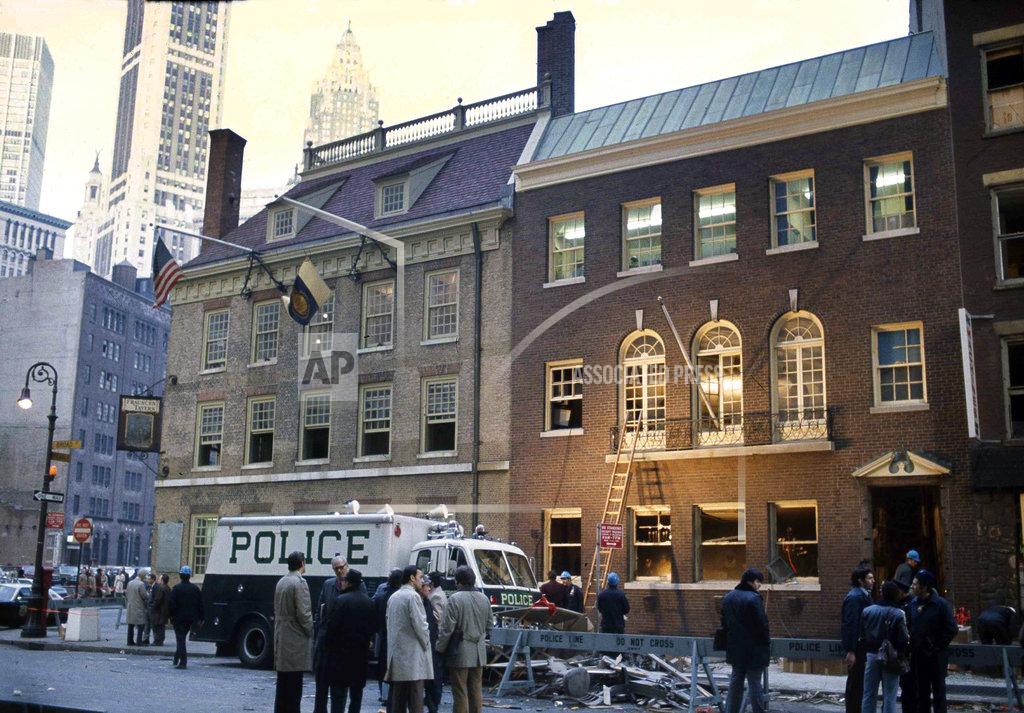
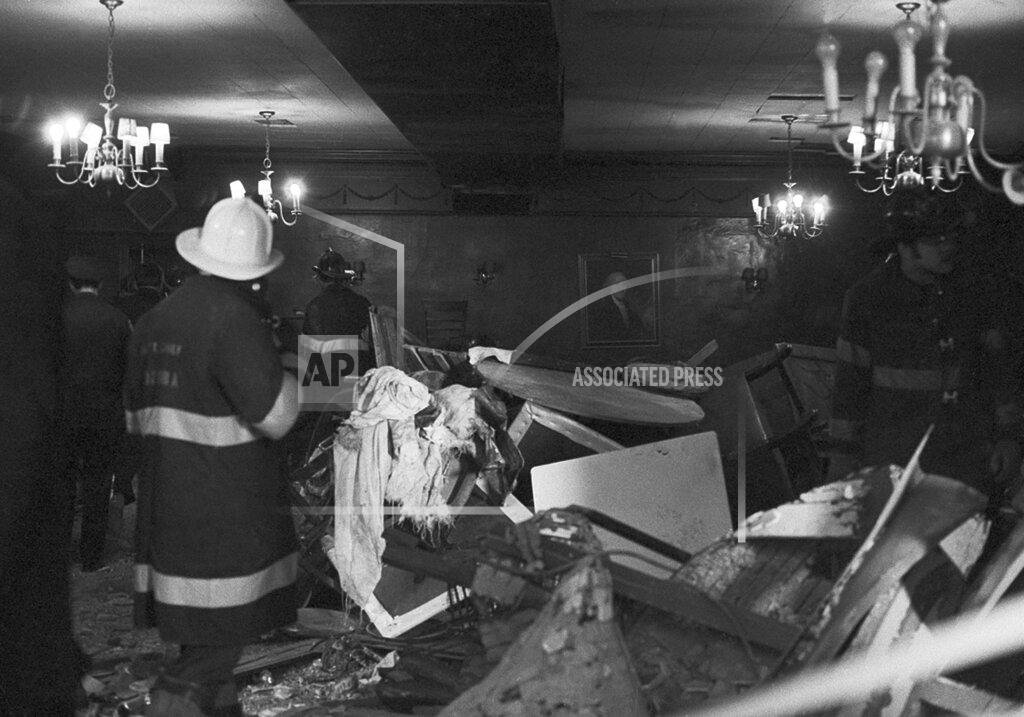
A bomb, planted by the Puerto Rican nationalist group FALN, killed 4 people and injured 58 at The Anglers’ Club of New York at 101 Broad Street in New York City. The club was located in the dining room of the Frances Tavern, where George Washington had given his Farewell Address in 1783. A note from the group said that the bombing was in retaliation for a blast on January 11 in Mayagüez, which the FALN said had been placed by the CIA, and had killed 2 people and injured 11.
Victims in the tavern restaurant and the second‐floor dining room of the adjacent Anglers Club were hurled from their tables in a confusion of screams and flying debris as the blast erupted just inside the front doorway of 101 Broad Street, a three‐story red‐brick Federal style building between Water and Pearl Streets. Roaring and reverberating in the narrow canyons of the city’s crowded financial district at 1:25 PM, the explosion shattered dozens of windows, ripped the front door to splinters, tore down an interior wall and blasted away a concrete and marble slab stairway. Four men, all believed to have been patrons of the tavern or the club, were fatally injured. Three were killed outright, one of them decapitated, and a fourth died later at Beekman‐Downtown Hospital. At least a dozen persons were admitted to Beekman and Bellevue Hospitals with fracured limbs and ribs, severe cuts and other injuries. Several victims were listed in critical condition.
Fuerzas Armadas de Liberacion Nacional, or F.A.L.N., the latest terrorist group arising from the Puerto Rican independence liberation movement, departs from the style of eariier Puerto Rican political organizations in a macabre way, according to the police. As one official said yesterday: “They seem to want to kill people.”
The House Ways and Means Committee approved legislation that would not only stop President Ford from imposing higher fees on imported petroleum, but also would prevent him from taking an alternative measure he has been considering, the establishment of restrictive quotas on imports. The committee’s bill would ban any presidential action affecting oil imports for 90 days. It was approved by a vote of 19 to 15, with four oil-state Democrats joining unanimous Republican opposition.
Secretary of State Kissinger, alarmed by the Administration’s deteriorating relations with Congress, called today for “a new national partnership” to avoid domestic confrontations over foreign policy and to achieve agreement on specific issues. In a speedh given in Los Angeles and made public here, Mr. Kissinger said “renewed nonpartisan cooperation” in foreign policy was “a national necessity” to prevent foreign nations from seeking to take advantage of apparent disunity in the country. “If our divisions lead to a failure of policy, it is the country which will suffer, not one group or one party or one Administration,” he said. “If our cooperation promotes, success, it is the nation which will benefit.” Mr. Kissinger sought to stress the Administration’s desire to improve relations with Congress; he said it wanted “to explore new approaches” and would seek the advice and consent of Congress “in the broadest sense.”
Underlying Mr. Kissinger’s appeal for “a new partnership” is the Administration’s annoyance with what it regards as a growing tendency of Congress to interfere in the day‐to‐day conduct of foreign affairs. Mr. Kissinger has told his aides that he wants “a massive effort” to persuade Congress to reduce its involvement in such tactics. The speech today was art of the campaign. “The growing tendency of the Congress to legislate in detail the day‐to‐day or week‐to‐week conduct of our foreign affairs raises grave issues,” he said. Often the President and Congress share the same goals, he said but added: “Too often, differences as to tactics have defeated the very purposes that both branches meant to serve, because the legislative sanctions were too public or too drastic or too undiscriminating.” Among the specific issues he cited were the conditions attached by Congress on trade with the Soviet Union, which led the Russians to renounce the 1972 trade agreement. He also criticized the effort to ban further aid to Turkey as harming not only the Cyprus peace negotiations and “our wider security interests in the eastern Mediterranean.”
An advisory council of prominent citizens reviewing the Social Security system finds that benefits will start exceeding tax receipts next year by several billion dollars, and will recommend a change in the system’s financing. The change tentatively decided upon would convert slightly more than half of the financing of Medicare for the aged to general Treasury revenues and out of the Social Security payroll tax. This would leave the Social Security tax unchanged from its present rate of 5.85 percent for both employee and employer, but would devote more of it to the basic Social Security retirement, survivors’ and disability benefits.
A Federal Court of Appeals in Denver overturned an antitrust conviction of the International Business Machines Corporation that had ordered the company to pay $259.5 million to the Telex Corporation, manufacturer of computer equipment. At the same time the court’s judgment against Telex in a countersuit was affirmed.
Dr. Jeffrey MacDonald was arrested at his home in Huntington Beach, California after being indicted by a federal grand jury in North Carolina, for the February 17, 1970 murders of his wife and two daughters while he had been in the U.S. Army. Murder charges had been brought against MacDonald but dropped that year for lack of evidence. MacDonald maintained that the killings had been done by four hippies who chanted “Acid is groovy, kill the pigs” before beating him unconscious, and that he had woken to find his family dead. MacDonald was freed on bail a week later. His case came to trial in 1979, and he was found guilty of murder and sentenced to life imprisonment. A federal court reversed the conviction in 1980 and MacDonald was freed on bail again, then re-arrested and imprisoned in 1982 after the verdict was upheld.
A Federal judge ruled today that the constitutional cloak that protects members of Congress On the floor of either house does not do so when they make speeches or television appearances outside the legislative chambers. United States District Judge A. Leon Higginbotham Jr. made the finding in rejecting a motion by a former United States Representative, Lawrence Williams, a Pennsylvania Republican, to quash a subpoena served on him for a deposition. The subpoena was served on behalf of Samuel R. Dickey, a Republican political figure in suburban Delaware County. It sought a deposition from Mr. Williams in connection with a $2‐million, libel suit Mr. Dickey filed against the Columbia Broadcasting System last July.
Interior Secretary Rogers C.B. Morton told Governors of Western states today that their states must supply much of the coal needed to make the nation self-sufficient in energy production.
Two years after the election victory that brought Arnold R. Miller and his rank-and-file reformers in the United Mine Workers, of America up from the pits into union headquarters here, controversy is rising in the coal fields over Mr. Miller’s leadership.
A Library of Congress analysis released today by two liberal Democratic Representatives held that President Ford’s energy plan, if enacted by Congress, would raise the Consumer Price Index by 3 percent, not the 2 percent postulated by the Administration.
John R. Stiles, a retired builder who has managed all of President Ford’s Congressional election campaigns, has been on the Federal payroll as a $125-a-day White House consultant, a Presidential spokesman has confirmed.
Wage settlements last year almost doubled those of 1973, but did not keep pace with inflation, the Labor Department reported today.
Fastest Earth-bound object, 7200 kph, in vacuum centrifuge, in England.
Blanton Collier has been called out of semi-retirement by Art Modell, the owner of the Cleveland Browns, to assist the new head coach, Forrest Gregg. Collier, a Kentuckian has served as a scout of the Southeastern Conferance for the Browns since his retirement as head coach of Cleveland in 1970. His teams compiled a won-lost-tied record of 76-34-2 from 1963 through 1970 in the National Football League. He’ll be in charge of quarterbacks.
Dow Jones Industrial Average: 666.61 (+9.85, +1.50%)
Born:
Patrick Côté, Canadian NHL left wing (Dallas Stars, Nashville Predators, Edmonton Oilers), in LaSalle, Quebec, Canada.
Died:
Larry Fine, 72, who had been one of The Three Stooges along with Moe Howard (who would die on May 4) and Curly Howard.
Erich Kempka, 64, German chauffeur to Adolf Hitler.


 History Diaries