
President Reagan said today that he viewed the United States arms-control negotiating commitments made with the Soviet Union in Geneva “with the utmost seriousness.” In a statement issued after his first meeting with his new arms-control negotiating team, Mr. Reagan said he had “no more important goal” in his second term than in reducing and ultimately eliminating nuclear weapons. “I also want to emphasize that we are determined to achieve a good agreement – an agreement which meets the interests of both countries, which increases the security of our allies and which enhances international stability,” Mr. Reagan said in the written statement. He pledged that once the three-part negotiations begin, “the United States will have concrete ideas to put on the negotiating table.” He added that “we hope the Soviet Union will follow a similar constructive approach.” The meeting was arranged, Larry Speakes, the White House spokesman said, to give the new negotiators “marching orders.” As the first substantive meeting of his second term, the White House sought to mark it as symbolizing the strong interest Mr. Reagan has in pursuing arms-control accords.
Administration officials said that the emphasis on living up to the commitment was to assure the Russians that the United States stood by the wording in its agreement in Geneva “to work out effective agreements aimed at preventing an arms race in space and terminating it on earth, at limiting and reducing nuclear arms and at strengthening strategic stability.” Because Mr. Reagan and his top aides have repeatedly said that the Administration’s long-term plans for research into defenses against incoming missiles would go ahead, the Soviet Union has expressed concern that Washington did not intend to live up to the commitments made in Geneva. Tass, the Soviet press agency, today criticized Mr. Reagan’s comments in his Inaugural Address on Monday. The address contained a statement saying that he wanted to achieve arms-control agreements while at the same time saying he intended to continue to seek a shield against missiles. The Russians have argued that such research into space weapons can only produce a new arms race and increase instability between the two nations.
A general in Poland’s security police testified in Torun today that although he directed a criminal investigation into the abduction and killing of a pro-Solidarity priest, he never suspected that a deputy who took part in the inquiry had any connection with the crime. Through much of his second day as a witness, General Zenon Platek tried to parry the often pointed questions of three lawyers representing the interests of the family of the slain priest, the Rev. Jerzy Popiełuszko. Specifically, the lawyers, who also have close ties to Poland’s Roman Catholic Church, tried to establish the reasons General Platek allowed his assistant, Colonel Adam Pietruszka, to play an active role in the investigation despite signs that appeared to implicate him in a cover-up.
Greece has withdrawn from the North Atlantic Treaty Organization’s defense college in a dispute that diplomats said highlights the Socialist government’s distrust of the alliance. The three Greek students and a lecturer at the Rome institute, which trains officers and civil servants in strategic studies, were instructed last week to leave within 24 hours. Informed sources said the walkout followed a dispute over a classroom exercise involving hypothetical political upheaval in Greece, a left-wing government and a military coup. Dimitrios Maroudas, a spokesman for the Socialist Government, said it warned that “any repetition of such incidents will have decisive repercussions on Greece’s relations with NATO.” The spokesman’s statement said an “unacceptable” classroom exercise had been drawn up for the students of the NATO military college in Rome. He said it envisaged, among other things, that the Greek armed forces, with the backing of “foreign agents,” had staged a right-wing coup after the left had come to power in elections. Mr. Maroudas said the protest underlined that “such notions undermine democratic institutions in Greece and constitute an insult to the armed forces.”
A two-day session of a Soviet-West German trade commission has raised hopes in the Government that Moscow may be easing its policy of trying to isolate Bonn. For some weeks, the Government of Chancellor Helmut Kohl had been made uneasy by what seems to be a Soviet policy of trying to exclude Bonn from revived East-West discussions. Some Government analysts said that they regarded this as a continuation of Moscow’s attempt to punish Chancellor Kohl for accepting the deployment of American medium-rage missiles in 1983 and to impose a form of quarantine on Bonn that would inhibit a rekindling of warm ties with East Germany.
Western members of UNESCO expressed concern today that Director General Amadou-Mahtar M’Bow may go to the World Court to settle a budget dispute with the United States. The Western members agreed at a meeting here that taking the dispute before the Court, known formally as the International Court of Justice, would be divisive and highly damaging to the organization. The meeting was attended by American observers. The Reagan Administration, citing dissatisfaction with UNESCO’s political positions and administrative procedures, withdrew from the United Nations Educational, Scientific and Cultural Organization at the end of 1984. But Mr. M’Bow has said that Washington might still be liable for its share of this year’s UNESCO budget and has warned that he might go to the World Court if it does not pay.
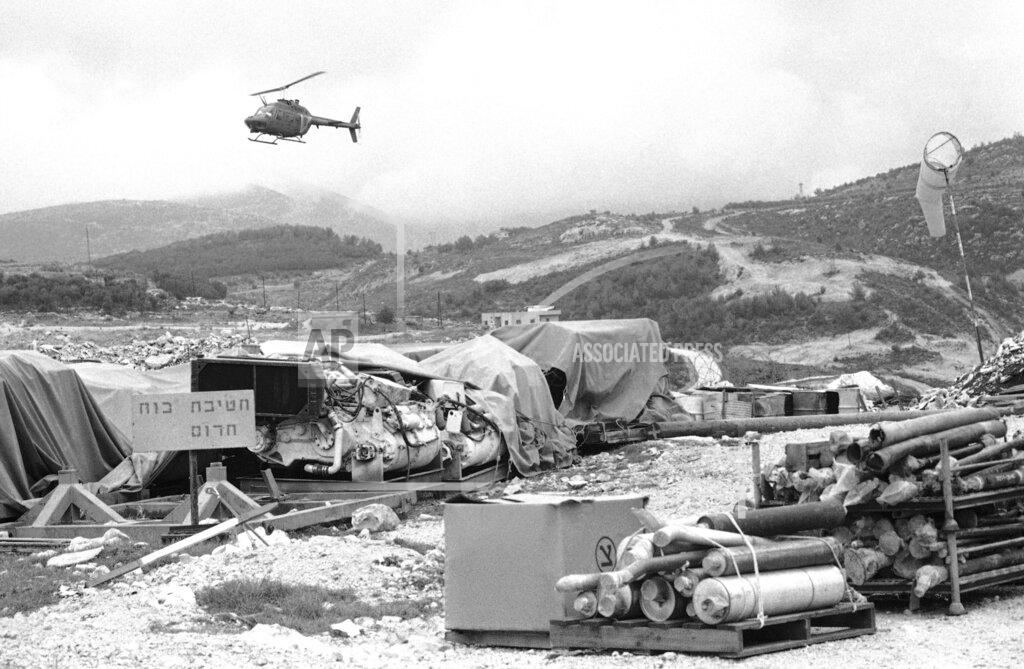
Lebanon refused today to back down on its demand for a detailed timetable for the Israeli troop withdrawal, but agreed to continue negotiations with Israel later in the week. The 13th session of the United Nations-sponsored talks, like similar meetings held since November 8 in the south Lebanon village of Naqura, centered on how to maintain peace in southern Lebanon after Israel withdraws its 20,000-strong occupation force. The talks today coincided with a general strike and demonstrations in Muslim areas of Lebanon to protest a car-bomb attack Monday night in Israeli- occupied Sidon that seriously wounded Mustafa Saad, a prominent Sunni Muslim leader and an opponent of Israel. The Naqura session was the first since the Israeli Cabinet announced a three-phase withdrawal plan last week.
Both Israel and the Palestine Liberation Organization are taking part in an international book fair now under way in Cairo. The foes’ displays are some distance from each other in the fair’s pavilion. Some delegations will not participate in the fair until Friday, the day after the Israeli stall is due to be closed down, officials said. Contrary to custom at the book fair, the Israeli flag was not raised. Barry Pintow, an Israeli export official, said: “We do not feel isolated. We are glad to be here.”
The French Government has informed India that it wll take “punitive action” against a recalled diplomat accused in news reports of spying for the United States Central Intelligence Agency, a newspaper reported today. Two other Frenchmen said to be involved in the espionage scandal fled the country before the diplomat, Lieutenant Colonel Alain Bolley, was recalled to Paris Sunday at the Indian Government’s request, the United News of India and The Hindustan Times reported. Another newspaper, The Statesman, said the French assurance of action against Colonel Bolley was conveyed on Tuesday to the Indian Government. “It is understood that Bolley may be charged with actions not authorized by his government,” the daily said.
Kim Dae Jung would be imprisoned if he returns to South Korea from the United States as planned in early February, according to a senior adviser to President Chun Doo Hwan. The adviser, Choi Chang Yoon, said the exiled opposition leader could not be treated “as a politician — he is a revolutionary.” Mr. Choi’s comments in an interview were the Government’s most direct statement that it would send Mr. Kim back to prison to serve the remaining 17 years on his 1980 conviction on sedition charges. In Boston, Mr. Kim said that despite the threat, “there is no change in my plan” to return to Seoul.
A Government prosecutor charged the armed forces chief, General Fabian C. Ver; two generals and 23 other men today in the killings of the opposition leader Benigno S. Aquino and the man the army had said was his assassin. Brigadier General Luther Custodio, chief of aviation security, and 16 other soldiers were charged with direct participation in a military conspiracy to kill Mr. Aquino as he stepped off a plane August 21, 1983, after three years of voluntary exile in the United States.
Saboteurs destroyed trucks and other equipment early today at the largest nickel mine in the French territory of New Caledonia in the South Pacific, which has been beset by unrest since November, a spokesman for the mining company said. The saboteurs, using iron bars, wrecked an estimated 90 percent of the mining equipment at Kouaoua, a town on the east coast of New Caledonia. The damage was great enough, the mining company spokesman said, to end operations at the mine for the foreseeable future. No group took responsibility for the destruction of equipment.
A small group of Soviet warships that arrived in Cuba late last month has been conducting exercises in the Gulf of Mexico and the Caribbean for the last five days under continuous U.S. surveillance, the Pentagon said. “The group is currently at sea north of Cuba,” spokesman Michael I. Burch said of the Soviet vessels-a guided-missile destroyer, two guided-missile frigates, an oiler and a diesel-powered submarine.
Nicaragua approved a general amnesty for right-wing insurgents that, for the first time, includes contra leaders. The amnesty law, to take effect after publication in the government gazette, calls for the U.S.-backed rebels to hand over their arms to Nicaraguan authorities and to officials designated by Costa Rica and Honduras. Nicaraguan consuls in those countries would guarantee the rebels’ safe return.
Leaders of El Salvador’s leftist opposition said here today that chances for future peace talks had been damaged by a “political crisis” in the Government of President Jose Napoleon Duarte. The rebel leaders, speaking at a briefing for reporters, said Mr. Duarte had been unable to stand up to growing opposition to new talks from the political right and certain sectors of the Salvadoran military. They said also that prospects for peace talks could worsen if the political right makes gains in municipal and legislative elections scheduled for March.
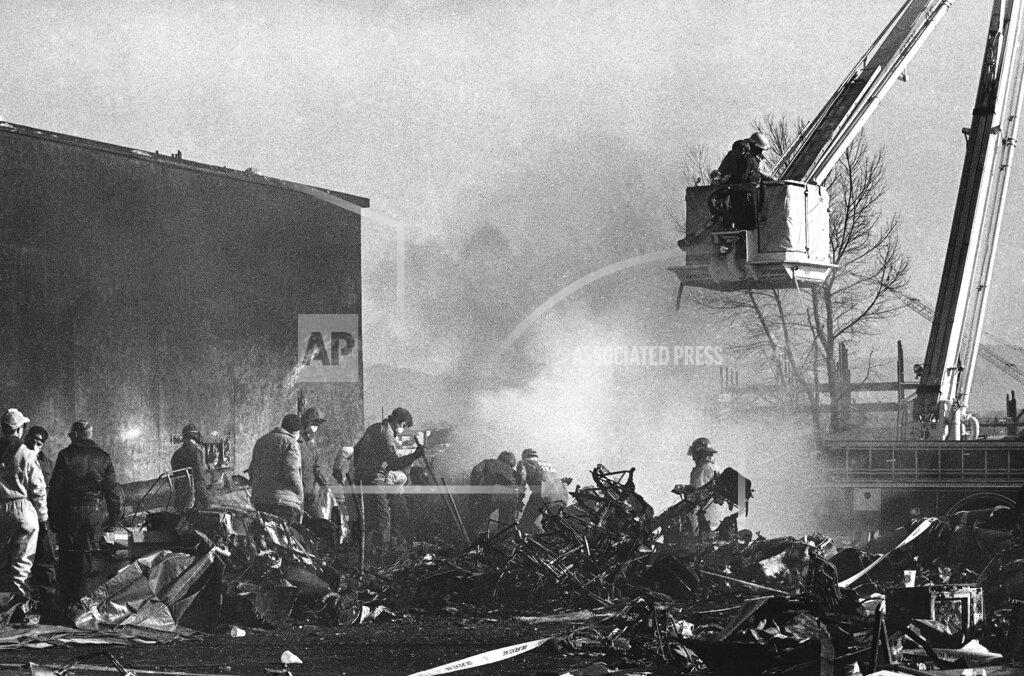
A U.S. Air Force C-130 transport plane with 21 people aboard went down in the Caribbean Sea off the coast of Honduras and rescue efforts were hampered by fog, the Defense Department said. “No hostile action was indicated,” Air Force Lieutenant Colonel Gene Sands said, adding that the cause of the crash was not immediately known. “We can’t even get in for sea rescue because of the weather,” Sands said. He said the plane was on a routine mission flying personnel to Honduras, where joint U.S.-Honduran exercises are being prepared. The plane was flying from Howard Air Force Base in Panama.
A special visit to Tegucigalpa last week by President Reagan’s national security adviser failed to satisfy Honduran demands for greater security guarantees and aid from the United States, according to Honduran and Western officials. Despite three high-level meetings in recent months, Honduras and the United States appear to be far apart in discussions of a Honduran request for a new security pact and of the future of about 12,000 Nicaraguan anti-Government rebels with bases in Honduras. Honduran and Western officials said that in a meeting last Friday with the highest-ranking members of the Honduran Government, the presidential adviser, Robert C. McFarlane, promised that the Reagan Administration would spare no effort in trying to persuade Congress to renew financial support of the Nicaraguan rebels but that a security pact between Honduras and the United States was not possible. Neither answer appears to have relieved Honduran anxieties, which have been spurred by the uncertain future of the covert war against Nicaragua and by the growing military strength of Nicaragua and El Salvador.
More than 1,000 people have disappeared in a remote region of Peru after being seized in a government crackdown on Maoist guerrillas, Amnesty International reported. The human rights group said many of the missing are feared dead. It accused security forces of mass killings since emergency military rule began two years ago near the Andean city of Ayacucho, in a campaign against rebels of Sendero Luminoso (Shining Path).
The President of Paraguay and other Paraguayan officials promised two visiting members of Congress last week that the Asuncion Government would destroy 49,000 gallons of chemicals believed to have been intended for the manufacture of cocaine, United States officials said today. Before the visit by the Congressmen, Paraguay’s President, General Alfredo Stroessner, had refused repeated requests from the American Ambassador for a meeting to discuss the chemicals, which were seized by Paraguayan customs officers in October. That refusal and an investigation by American officials had caused the State Department to say it believed senior Paraguayan military officers might be involved in drug trafficking.
Josef Mengele, widely considered the most notorious German war criminal still at large, may have been arrested and released in the American occupation zone of Vienna after World War II, according to newly declassified American intelligence documents. The documents also indicate that Canada informed American officials that Dr. Mengele, chief physician at the Auschwitz death camp, applied for a Canadian visa in Argentina in 1962.
Food supplies in eastern Sudan are running dangerously low for more than 160,000 Ethiopian refugees who fled from drought and famine in their country, and 80,000 more Ethiopians are believed to be on the way, Sudanese and foreign relief workers reported. “In the east, the situation is undoubtedly much worse than it was last month,” said Nicholas Morris, Khartoum representative for the Office of the U.N. High Commissioner for Refugees. “We are receiving 2,000 to 3,000 (refugees) a day, and we’re basically living from day to day.”
President Reagan meets with leaders of the “Right to Life” movement. The President, deploring abortion, lent his support to one of the largest anti-abortion marches in Washington’s history, telling tens of thousands of demonstrators that the tide of history was with them. Mr. Reagan is the first President to address the demonstrators in the 12-year-history of March for Life, which coincides with the anniversary of the 1973 Supreme Court decision that made abortion legal. The crowd, which the police estimated at 71,500 people, filled Pennsylvania Avenue for 15 blocks on a windy and bitterly cold day. “I feel a great sense of solidarity with all of you,” Mr. Reagan said. “The momentum is with us.”
The President and the First Lady host a reception for the Inaugural Committee staff.
The biggest annual growth in output of goods and services since 1951 occurred last year, the Commerce Department reported. While the American economy grew by 6.8 percent, the inflation rate surprisingly decreased to 3.7 percent, the lowest since 1967. A buoyant President Reagan promptly seized on today’s figures to assert that his economic policies had been entirely vindicated.
The Administration’s farm bill calls for “revolutionary” changes in national agriculture policy, according to Agriculture Secretary John R. Block. Almost everyone concerned agrees that the basic Federal farm law, the Food and Agriculture Act of 1981, which expires this year, is a costly anachronism that does not work and should be revised, but few people agree on what parts should be changed or on who should make sacrifices.
The Discovery’s liftoff on the first secret military mission by American astronauts was scheduled for tomorrow afternoon despite freezing temperatures and ice encrusting the launching tower.
The federal jury in Manhattan deliberating Ariel Sharon’s lawsuit against Time Inc. adjourned for the day without announcing a verdict in the $50-million libel case. The panel, which began deliberations on January 14, is trying to determine whether the TIME article was published with malice or reckless disregard for the truth. The article said that former Defense Minister Sharon had discussed revenge with Christian Falangists before they massacred hundreds of Palestinians.
A new study proposing to overhaul the Pentagon by reorganizing the military’s top chain of command drew criticism from the Defense Department. The report by the Georgetown Center for Strategic and International Studies, which will be formally released next month, proposes the reorganization as a way of trying to eliminate long-standing rivalries among the four services. Many of the proposals are similar to reforms advocated in earlier studies, most of which said interservice rivalries waste money and make for poor military advice to civilian leaders.
The Army, following the lead of the Navy and Air Force, announced that it has created a new post of full-time “competition advocate” to improve its weapons contracting process. Col. Charles R. Henry has been selected for promotion to brigadier general and will assume the new position in February, Army Secretary John O. Marsh Jr. said. He will be responsible for moving the Army toward a greater reliance on competitive bidding and on supervising “competition procurement training,” Marsh added.
Rep. Edward R. Roybal (D-California), chairman of the House Select Committee on Aging, introduced a resolution seeking to protect the elderly from increases in health care costs as a result of expected changes in Medicare and Medicaid programs. The resolution calls for a prohibition against any changes in current law that would increase out-of-pocket costs for the elderly or restrict eligibility.
Senator Alan Cranston (D-California), one of the Senate’s leading advocates of limiting nuclear weapons, said that he will not pursue nuclear freeze legislation until he sees whether the Reagan Administration succeeds in its efforts to reach an arms control accord with the Soviet Union. Cranston told reporters at a Washington breakfast that it is “better to let the Administration seek to do what it can without trying to second-guess them” and said he does not plan for now “to invest much of my time or capital” in a freeze effort.
The director of North Carolina’s Civil Liberties Union said in Raleigh that he bought 12 shares of CBS stock so Senator Jesse Helms (R-N.C.) “will never get his hands” on it. Helms has mailed letters to conservative supporters urging them to buy enough CBS stock to take over the network and end what he called “the liberal bias” in its news coverage. “I went out and bought 12 shares of stock yesterday, and I can’t afford it,” said George Gardner, executive director of North Carolina’s ACLU. “That’s 12 shares Jesse Helms will never get his hands on.”
Claus von Bülow’s second trial on charges of trying to murder his wife with insulin injections was moved to Providence, Rhode Island from Newport today over protests from the defendant’s lawyers. Presiding Justice Anthony A. Giannini of Providence Superior Court said he feared that the trial, which he said could last up to six weeks, would tie up the Newport court’s calendar. The second trial is scheduled to begin April 2. In the 1982 trial, a Newport County Superior Court jury convicted Mr. von Bülow, 58 years old, of twice trying to kill his wife, Martha (Sunny) von Bülow, at their Newport mansion in 1979 and 1980. Mr. von Bülow appealed, and the decision was overturned by the Rhode Island Supreme Court in 1984. Mrs. von Bülow remains in what doctors describe as an irreversible coma in a Manhattan hospital. Mr. von Bülow is free on bond.
A former rock singer arrived in Los Angeles today to face charges of murdering John Belushi, the comedian, with injections of cocaine and heroin. Cathy Evelyn Smith, 37 years old, of Toronto, gave up her challenge to extradition from Canada because, said her attorney, Brian Greenspan, negotiations with the Los Angeles County District Attorney’s office “provided an acceptable basis” for her voluntary return. Mr. Belushi, a star of “Saturday Night Live” on television, was found dead March 5, 1982, of “acute cocaine and heroin intoxication,” the police said. He was 33 years old. The police questioned Miss Smith in the case and released her. The case was reopened after The National Enquirer published an interview with Miss Smith quoting her as saying she injected Mr. Belushi with mixtures of heroin and cocaine. She was indicted in March 1983 on charges of murder and administering dangerous drugs. She has denied killing Mr. Belushi.
A Chicago teenager whose alleged accomplice in an armed robbery attempt was fatally shot by the 68-year-old victim was ordered held today in the Cook County Jail on $45,000 bond. The youth, K. C. Cathey, 18, was charged with attempted armed robbery and violation of probation. The police say the suspect and his companion, Detrick Wallace, demanded money from Harold Brown on Thursday and threatened to shoot him. Mr. Brown fatally wounded Mr. Wallace with a pistol.
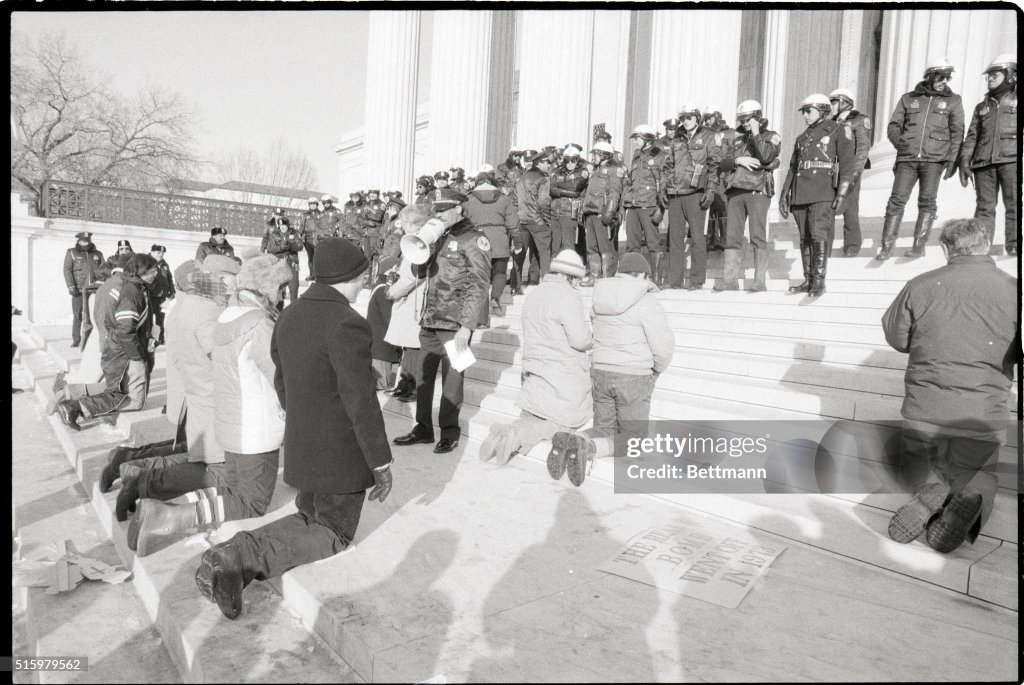
Farmers marched for the second day today to protest low grain prices, and 25 were arrested at the front door of the Chicago Mercantile Exchange. Almost 100 farmers and their families were continuing a protest they began Monday at the Chicago Board of Trade, where 12 were arrested. Those arrested were charged with disorderly conduct and criminal trespass after insisting that they be let inside the exchange. The farmers want to eliminate futures trading by speculators.
A 7-year-old boy testified that he had played “naked games” at a nursery school outside Los Angeles and that during at least one of the games, “Cowboys and Indians,” a teacher had touched his genital organs. Virginia McMartin, the 77-year-old founder of the nursery school, and six other teachers of the now-closed school are charged with 208 counts of molesting 41 pupils.
Nearly all of Florida’s citrus crop was damaged by two days of record-breaking cold, state officials reported. They said that nine-tenths of Florida’s orange and grapefruit crop was harmed in one of the biggest setbacks for the industry in history. Doyle Conner, the Florida Secretary of Agriculture, said that when the losses are totaled, this week’s freeze “may cause as much or more damage to Florida’s citrus and vegetable industries” as the billion-dollar freeze 13 months ago. The 1983 freeze, however, did not do much harm below the 11 counties at the northern border of the citrus belt. This week’s freeze numbed even the southern edge of the belt, on a line from Palm Beach to Naples.
-30°F (-34°C), Mountain Lake Bio Station, Virginia (state record).
Kelly Ann Hu of Hawaii was crowned Miss Teen USA 1985 and won $100,000 in prizes that go with the title. The dark-haired 16-year-old from Honolulu was chosen by a panel of 11 celebrity judges in the pageant in Miami. “I’m just so happy,” Hu said as the other 50 contestants, ranging in age from 15 to 18, hugged and kissed her. The first runner-up was 17-year-old Miss Wyoming, Emily Ernst of Gillette, and the second runner-up was Miss Washington State, Dru Homer, 18, of Selah.
Joe Namath, the former Jet quarterback whose spectacular passes and outsized personality helped to establish the old American Football League and paved the way for its merger with the National Football League, was elected to the Pro Football Hall of Fame yesterday. Also elected were Roger Staubach, O. J. Simpson, Frank Gatski and Pete Rozelle, the NFL commissioner. Staubach, the former Dallas quarterback who led the Cowboys to two Super Bowl victories, and Simpson, the former Buffalo Bills running back who in 1973 became the first in the NFL to gain 2,000 yards rushing in a season, were elected in their first year of eligibility, five years after retirement.
Dow Jones Industrial Average: 1259.50.
Born:
Nicklas Grossmann, Swedish NHL defenseman (Dallas Stars, Philadelphia Flyers, Arizona Coyotes, Calgary Flames), in Stockholm, Sweden.
John Mitchell, Canadian NHL centre (Toronto Maple Leafs, New York Rangers, Colorado Avalanche), in Oakville, Ontario, Canada.
Scott Cousins, MLB pinch hitter and outfielder (Florida-Miammi Marlins, Los Angeles Angels), in Reno, Nevada.
Justin Hurwitz, American Academy Award, BAFTA, and Golden Globe-winning film composer (“La La Land”; “Babylon”), in Los Angeles County, California.
Orianthi [Panagaris], Greek-Australian rock session and touring guitarist (Alice Cooper, Carrie Underwood, Dave Stewart), and singer-songwriter (Believe), in Adelaide, Australia.
Died:
Arthur Bryant, 85, English historian (biography of Samuel Pepys).



 History Diaries