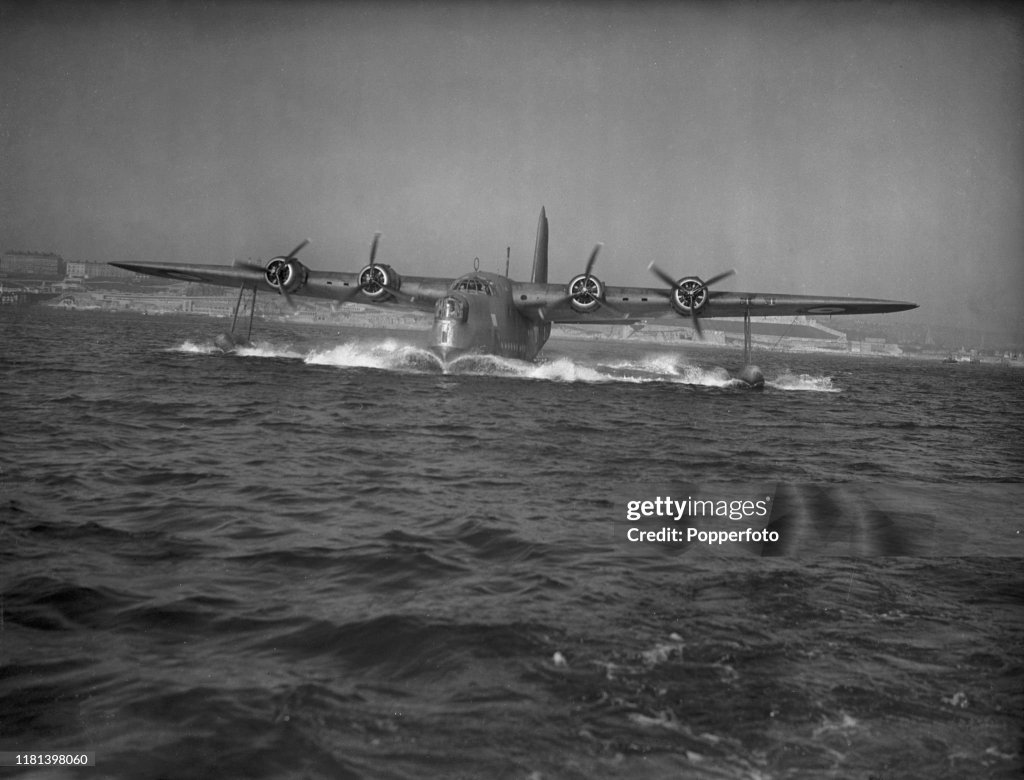
The Soviet units on the Karelian Isthmus are using the month for training and reconnaissance of Finnish defenses. Starting from 10 Soviet rifle divisions, the number is growing to 23 during the month. More heavy artillery is brought in as well. The divisions are distributed between the 7th Army and the 13th Army. Seventh Army has 14 divisions, 13th Army has 9. Seventh Army is headed toward Vyborg, the key point on the Mannerheim Line.
The Russian 8th Army launches a general offensive in Ladoga Karelia. Soviet 8th Army launched unsuccessful attack on Finnish Group Talvela at Kollaa and on the River Aittojoki. A similar attempt is made in Ilomantsi. Enemy artillery begins heavy shelling on the River Kollaanjoki at 8.50. The enemy attack is supported by approximately 20 tanks. The Finnish troops are outnumbered more than three to one. The enemy loses six tanks and 450 men.
In the morning the Russian 1st Army Corps launches a broad offensive on Group Talvela’s defensive positions on the River Aittojoki. The 155th Division launches a related assault at Kallioniemi and Oinaansalmi in Ilomantsi.
Siilasvuo’s 9th Division is redeployed from Suomussalmi to Kuhmo in Northern Finland.
On the Eastern Isthmus, Finnish troops on the River Taipaleenjoki shoot down a captive balloon being used to direct the Soviet artillery fire.
The Soviets continue their artillery bombardment of Summa. They are firing 7,000 shells every day to soften the Finnish line preparatory to a full-scale assault. Otherwise, the action is quiet as the weather is still frosty.
The Soviets bombed Oulu, and the Finns responded by bombing the Soviet naval base at Kronstadt. Finnish Blenheim bombers, piloted by foreign volunteers, raid the Soviet naval base at Kronstadt. There are similar raids on the Soviet air base south of Tallinn and other Soviet bases in Estonia.
In Ladoga Karelia, Finnish Blenheim bombers and dive-bombers cripple the air base built by the enemy at Karkunlampi in Salmi.
Hella Wuolijoki holds talks in the Swedish capital of Stockholm with Soviet emissaries Boris Yartsev and Grauer.
Finnish Foreign Minister Tanner prepares an unofficial memorandum for Wuolijoki with an eye to possible peace talks.
Participants at a major international skating event in Norway remember the Finnish world champion Birger Wasenius, who was killed at the front at the beginning of January.
Formation of a White Russian army to fight in Finland against the Soviet was urged yesterday by Boris Sergievsky, former Russian World War flier and for many years a leading test pilot in the United States.
A sharp warning to other nations against any intervention in the Soviet-Finnish conflict was sounded last night in the presence of Joseph Stalin and military leaders at a memorial mass meeting in the Bolshoi Opera House on the sixteenth anniversary of Lenin’s death.
Today both morning and afternoon military communiques from the Western Front have “nothing to report.” Part of the effect of the snowfall is likely to be a continued quiet period on the front.
The Foreign Office watched with considerable interest today the reaction in various capitals to Winston Churchill’s speech yesterday, which declared that there was no chance of a speedy solution of the neutrals’ troubles except through united action. Both Belgium and the Netherlands received the speech cooly.
The Duke of Windsor (who, as Edward VIII, abdicated in 1936) took leave after a five month tour of duty with the British Expeditionary Force in France.
The British Ministry of Information gives 8 French war correspondents a tour of the War Office, the Admiralty, the Air Ministry, and other key spots.
The Dutch Government announces that leave for the military will soon be restored.
Foreign correspondents in the Netherlands subjected to censorship.
Premier Benito Mussolini today urged Italian farmers to increase next year’s wheat production to the greatest possible degree in order to contribute to Italy’s military preparedness by making her self-sufficient in bread.
Rumania is seeking to turn the Balkan Entente into an outright military alliance that would protect her against attack by Russia or Hungary.
The Norwegian Government announces that 28 Norwegian-flagged ships have been lost.
At 0535 hours, the destroyer HMS Exmouth (H 02), commanded by Captain Richard Stoddart Benson, was escorting the British motor merchant Cyprian Prince when she was hit on the starboard side in the bow by a G7e torpedo from the U-22, commanded by Kapitänleutnant Karl-Heinrich Jenisch, and sank with all hands within three minutes off Tarbett Ness in the Moray Firth, east-southeast of Wick, Scotland in the North Sea (58° 18’N, 2° 25’W). All of the ship’s complement of 189 died. After sinking Exmouth, the submarine also fired on Cyprian Prince whose master deemed it too dangerous to pick up survivors. Eighteen bodies were later found washed ashore by a schoolboy playing truant near Wick. They were buried with full military honors in the cemetery at Wick.
German submarine U-22 attacked British merchant vessel Cyprian Prince in the Moray Firth in Scotland, United Kingdom at 0538 hours but failed to hit her.
At 0711 hours, the neutral Danish steam merchant Tekla was torpedoed and sunk by the U-22, commanded by Kapitänleutnant Karl-Heinrich Jenisch, approximately 40 miles north-northwest of Kinnaird Head off the east coast of Scotland (58° 18’N, 2° 25’W). The explosion killed four crew members, blew open both hatches and caused a heavy list to starboard that caused the ship to sink within three minutes. Ten survivors abandoned ship in the starboard lifeboat which was destroyed by the mast as the ship capsized when it sank. Five men drowned while the remaining men managed to rescue themselves onto a raft that had floated free. Four crew members abandoned ship on another raft and were picked up about two hours later by HMS Sikh (F 82) (Cdr J.A. Giffard, RN) and transferred to the Norwegian steam merchant Iris, which also picked up the other survivors and landed them all in Bergen. The body of one crew member was later washed ashore and he was buried in Wick cemetery. The 1,469 ton Tekla was carrying coal and coke and was bound for Aarhus, Denmark.
At 0936, SS Protesilaus struck a mine laid on 5 December 1939 by U-28 in the Bristol Channel southwest of Swansea (51° 31’N, 4° 04’W). The badly damaged vessel was beached in the Swansea Bay. The crew was rescued by the minesweeping trawler HMS Paramount & landed at Swansea. The Protesilaus was later refloated and towed to Greenock but declared a total loss. In September 1940, she was taken in tow by the British tug Empire Henchman and French tug Abeille 22 to Scapa Flow for use as a blockship, but on 13 September the ship sprung a leak and had to be sunk by gunfire about 5 miles northwest of the Skerryvore Lighthouse, Argyllshire.
At 2130, the unescorted British collier Ferryhill struck a mine laid on 20 December 1939 by U-22 and sank 1.5 miles north from St Mary’s Lighthouse near Blyth (55° 05’N, 1° 27’W). The master and eight crewmembers were lost. Two crewmembers were picked up by the minesweeping trawler HMS Young Jacob & landed at North Shields. The 1,086 ton Ferryhill was carrying coal and was bound for Aberdeen, Scotland.
On 16 January 1940, SS Andalusia departed from Bordeaux and sent out a last radio signal in the North Sea (58° 30’N, 8° 00’W) on 21 January early in the morning and went missing thereafter. It is believed that she was sunk by U-55, which did not return from her patrol. Wreckage and debris spotted in two different places northwest of the Hebrides on 27 and 28 January 1940 probably were from Andalusia and Segovia.
The Italian ocean liner Orazio caught on fire and sank off Toulon following an engine room explosion. 106 of the 633 aboard were killed. Survivors were rescued by Cellina, Colombo, Conte Biancamano (all Italian); Kersaint, Ville d’Ajaccio (both French Navy); Djebel Dira, Djebel Nador, Gouvernor General Cambon, Gouvernor General Grevy and Six Fours (all French). The ship sank the following day.
The Irish cargo ship Rynanna ran aground on the Goodwin Sands, Kent (51°16′25″ N 1°30′30″ E) and was wrecked. Her thirteen crew were rescued the next day by the Walmer lifeboat Charles Dibdin.
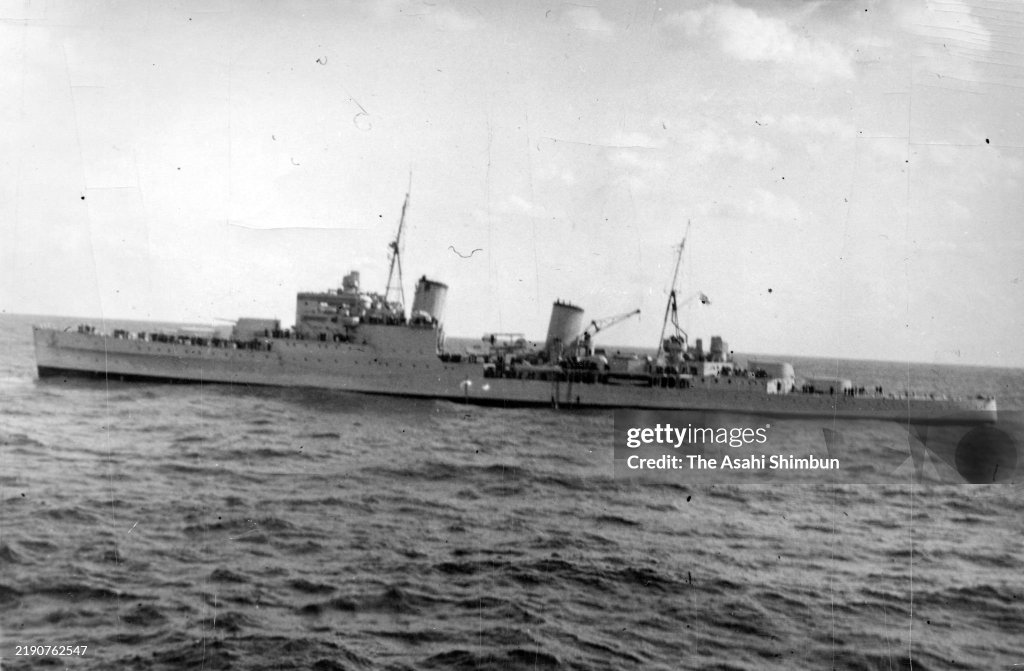
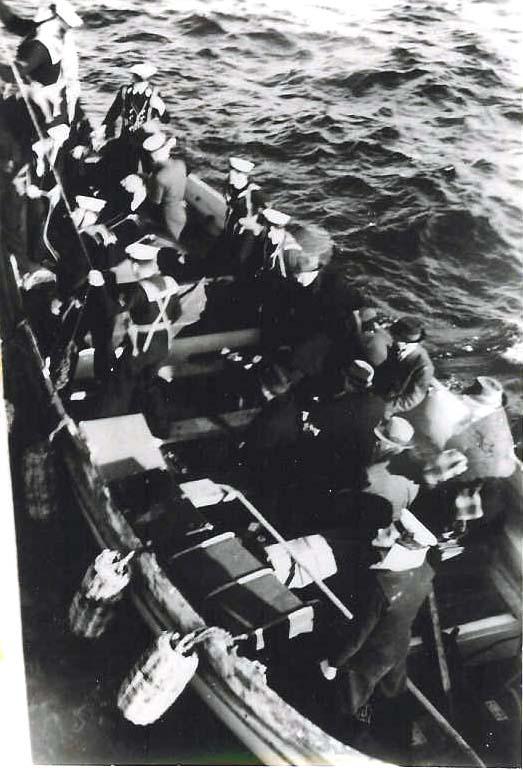
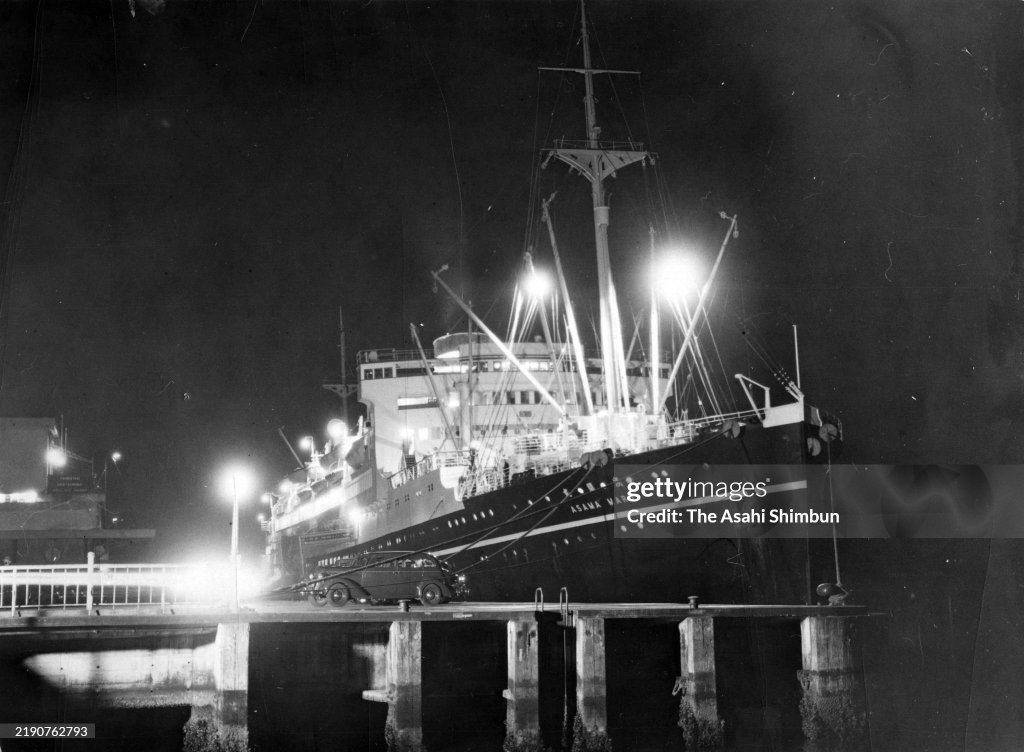
British light cruiser HMS Liverpool stops Japanese passenger liner Asama Maru 35 miles off Nozaki, Chiba Prefecture, Japan, and removes 21 Germans from the ship. All but nine are naval reservists, survivors of the scuttled passenger liner Columbus; the nine civilians are released. They were intending to return to Germany via Vladivostok. The incident further strains relations between Great Britain and Japan; the Japanese protested vociferously.
U.S. freighter Nishmaha is detained at Gibraltar by British authorities (see 22 January).
Britain rejects American protests concerning the examination of mail carried aboard U.S. merchant ships.
Convoy OA.77 departs Southend.
Convoy OB.77 departs Liverpool.
Convoy HG.16F departs Gibraltar for Liverpool.
Convoy OG.15 forms at sea for Gibraltar.
The War at Sea, Sunday, 21 January 1940 (naval-history.net)
Destroyer EXMOUTH (Captain Richard S Benson DSO, D.12) departed Aberdeen on the 20th leading steamer CYPRIAN PRINCE (1988grt). At 0441/21st, she was sunk by U-22 in Moray Firth off Tarbett Ness with all hands, Captain Benson, Lt J Lovejoy, Lt C C Hawkins DSC, Lt I W M Gill, Lt C H Crombie, Lt J R Olive, Lt J G F W Roberts, Surgeon Lt G A M Maxwell-Smith, Paymaster Lt L Sutherland, Gunner A H Budden, A/Gunner H.G Barter, Warrant Engineer C J Morton, P/Midshipman P L Watson RNR, P/T/Paymaster Sub Lt D D Bowen RNVR, Sub Lt B Gore-Booth (ret, emgy) and one hundred and seventy three ratings were lost. When CYPRIAN PRINCE arrived at Scapa Flow without her escort, destroyer SIKH and anti-submarine trawlers KING SOL (486grt), LOCH MONTEITH (531grt), ST ELSTAN (564grt) and ST CATHAN (565grt) of the 18th Anti-Submarine Group were sent to search for her survivors.
Heavy cruiser BERWICK and light cruisers SHEFFIELD and NEWCASTLE departed Scapa Flow on Northern Patrol duties. A British aircraft bombed a submarine contact north of Cape Wrath in 59-38N, 5-00W in the path of BERWICK, which relieved heavy cruiser SUFFOLK.
Light cruiser GLASGOW attacked a submarine contact east of Copinsay in 58-54.5N, 1-23W. Light cruiser EDINBURGH, in company with GLASGOW, attacked a contact three hours later east of Duncansby Head in 58-33N, 1-51W.
Armed merchant cruiser CARINTHIA departed the Clyde for Northern Patrol, while AMC FORFAR arrived back.
Destroyers KIMBERLEY arrived in the Clyde, as did destroyer DIANA from the south.
Destroyer VETERAN attacked a submarine contact off Portland Bill in 50-16N, 2-40W, and sister-ship VERITY a contact off Start Point in 50-01N, 3-30W.
Anti-submarine trawler LEICESTER CITY (422grt) attacked a submarine contact east of Douglas Head, Isle of Man, in 54-08N, 4-03W.
Convoy OA.77 departed Southend escorted by destroyers VANESSA and WREN from the 21st to 22nd, and destroyer ACASTA from the 21st to 24th, when the convoy dispersed.
Convoy OB.77 departed Liverpool escorted by destroyers VERSATILE and VANQUISHER until the 24th.
Convoys OA.75G, which departed Southend on the 19th, and OB.75G merged on the 21st to form OG.15 of 49 ships. Destroyers WHIRLWIND and WITHERINGTON of OB.75G and KEITH were with OG.15 from the 21st to 22nd, and French destroyer CHACAL and patrol vessel CAPITAINE ARMAND from the 22nd to 27th. Two Destroyers from Gibraltar escorted the convoy on the 27th, when it arrived at Gibraltar.
Convoy FN.77 departed Southend, escorted by sloops FLEETWOOD and BITTERN, but was forced to anchor shortly after departure due to fog, and arrived in the Tyne on the 23rd.
Convoy FS.78 departed the Tyne, escorted by sloops AUCKLAND and STORK, and it too was forced to anchor shortly after departure due to fog, arriving at Southend on the 22nd.
U-31 extended the minefield at Loch Ewe, but no shipping was sunk or damaged.
Steamer FERRYHILL (1086grt) was sunk on a mine one and a half miles north of St Marys Light off Blyth laid by U-61 (U-22 according to Seekrieg) on 2 December. Eleven crew were lost.
Steamer PROTESILAUS (9577grt) was badly damaged by a mine in 51 31N, 04 04W laid by U-28 on 13 November. The steamer was run aground off Mumbles Light House in Swansea Bay, a total loss, but later refloated and towed towards Scapa Flow by tugs EMPIRE HENCHMAN and ABEILLE 21. En route, she sprung a leak and was sunk by gunfire 4.9 miles 295° from Skerryvore on 13 September 1940.
U-57 sank Norwegian steamer MIRANDA (1328grt) in 58 14N, 02 05W. Fourteen crew were lost and three survivors picked up.
U-22 sank Danish steamer TEKLA (1469grt) at 0500 in 58 18N, 02 25W. Destroyer EXMOUTH’s fate was not then known and orders were dispatched for her to assist. Nine crew were lost on TEKLA and nine survivors rescued by Norwegian steamer IRIS (1177grt) and destroyer SIKH.
Swedish steamer ANDALUSIA (1357grt) departed Bordeaux on the 16th for Goteborg, and was lost with all hands on the 21st in the North Sea to unknown cause (torpedoed by U-55 according to Seekrieg and to Rohwer’s “Axis Submarine Successes”).
After the loss of steamers MIRANDA, TEKLA, and ANDALUSIA, destroyers ESCAPADE, ENCOUNTER, ECHO, ECLIPSE and IMPERIAL searched the area.
Destroyer VERITY attacked a submarine contact off Portland Bill.
Convoy BC.22 of steamers BARON BARNEGIE, BATNA, COXWOLD and DAVID LIVINGSTONE (Commodore) departed the Loire escorted by destroyer MONTROSE, and safely arrived off Barry on the 21st.
Convoy HG.16F departed Gibraltar with fifteen ships, escorted by destroyers ACTIVE and WHITEHALL. WHITEHALL was with the convoy from the 21st to 27th, ACTIVE from 21st to 28th, while sloop ABERDEEN joined from 22nd to 27th and destroyer VANOC from 27th to 28th, on which day it arrived.
Destroyer DOUGLAS was with convoy OG.15F off the west coast of Portugal when she sighted U-44 in the path of the convoy. She reported the submarine to convoy escort sloop ABERDEEN and advised she was attacking. U-44 was driven off with minor damage 150 miles west of Oporto in 41-09N, 11-55W, but was able to continue patrol.
Sloop BRIDGEWATER on passage from Lobito to Freetown attacked a submarine contact 170 miles south of Cape Palmas in 1-41N, 7-14W.
A Gladiator of 769 Squadron went into the sea from aircraft carrier ARGUS, but Lt G R Callingham was unhurt.
Italian liner ORAZIO (11,669grt) caught fire and sank 40 miles SW of Toulon, and her survivors were rescued by Italian liners COLOMBO (11,760grt), CELLINA (6086grt), CONTE BIANCAMANO (23,255grt), French destroyer KERSAINT, auxiliary patrol vessel VILLE D’AJACCIO (2444grt), tug SIX FOURS, refrigerator ship AUSTRAL, troop ships GOUVERNEUR GENERAL CAMBON (3509grt), GOUVERNEUR GENERAL GREVY (4565grt), and steamers DJEBEL DIRA (2835grt) and DJEBEL NADOR (3168grt).
Japanese liner ASAMA MARU (16,975grt) departed San Francisco on the 6th with 51 German seamen from the crew of German liner COLUMBUS. Light cruiser LIVERPOOL departed Hong Kong on the 16th to intercept the ship as it arrived off the Japanese coast. On the 21st, LIVERPOOL stopped her 35 miles off Nojima Zaki near Yokosuka and removed 21 German technicians. After strong protests from Japan and Germany, nine were finally released and arrived at Yokohama on 29 February on Australian armed merchant cruiser HMAS KANIMBLA. In some sources, the cruiser involved is incorrectly identified as GLOUCESTER which was refitting at Colombo.
Destroyer WOLSEY completed conversion to a fast escort vessel at Malta and was commissioned with the crew from repairing destroyer GARLAND. She departed Malta on the 21st, and Gibraltar on the 29th as an escort for convoy HG.17F, arriving at Dover on 5 February. WOLSEY carried on and arrived at Rosyth for duty with Convoy C.
Heavy cruiser EXETER, emergency repairs completed, departed Port Stanley escorted by heavy cruisers DORSETSHIRE and SHROPSHIRE. Aircraft carrier ARK ROYAL, battlecruiser RENOWN and destroyers DAINTY and DIAMOND departed Freetown on the 24th to rendezvous with her on the 29th in mid-South Atlantic some 200 miles east of Pernambuco in 17 00S, 25 06W and relieved the heavy cruisers. SHROPSHIRE then proceeded to Capetown for refitting, completed on 16 March. DAINTY and DIAMOND returned to Freetown on the 29th for refueling and left again that day to rejoin the carrier force at sea. On 3 February, ARK ROYAL, RENOWN, EXETER, DAINTY and DIAMOND entered Freetown for refueling, and departed on the 6th.
The Senate and House will lay aside their rivalry over economy and government spending tomorrow to pay tribute to Senator William E. Borah in a State funeral in the Senate chamber which President Roosevelt and other high officials of State will attend. The members of both houses will attend the funeral, to be held at 12:30 o’clock, and then the Senate and the House will adjourn for the day.
Starting Tuesday, however, both branches are expected to start consideration of appropriation bills which their appropriation committees have considerably reduced. The Senate will take up the Defense Deficiency Bill, which the House Appropriations Committee cut $7,000,000 from Bureau of the Budget estimates, to a figure of about $264,000,000. When it reached the Senate Appropriations Committee, the figure was reduced further by almost $13,000,000 to $251,882,588.
The Senate committee’s action served to emphasize the rivalry between the two appropriation committees over which should save the larger sum to prevent the imposition of new taxes, or increasing the national debt limit above $45,000,000,000. While there have been no public statements about the matter — the tradition of courtesy between the two branches precludes criticism of the other or its committees — private expressions by House Appropriation Committee members were to the effect that if the Senate Appropriation Committee members would get down to work as had the House Appropriation Committee members, then there would be no need of new taxes.
The Senate committee’s first answer was to cut the Defense Deficiency Bill almost twice as much as had the House group. The House Appropriations Committee was backed by the House last week in trimming the Independent Offices Bill $94,500,000. So as the first two supply bills of the session stand at the moment, they are $114,500,000 below budget estimates, a saving of almost one-fourth of the $460,000,000 in new taxes requested by President Roosevelt to prevent the 1941 deficit going beyond $1,716,000,000, and to prevent the raising of the debt limit.
The Senate will be put to the test to retain House savings in the Independent Offices Bill, since the bulk of the reductions was at the expense of the Maritime Commission, which lost $75,000,000 in funds for 1941, and $150,000,000 in contract authorizations. Predictions were made freely, however, that the Senate would adhere to the House cuts.
Death blocked plans of Senator William E. Borah to wage a new national campaign for a foreign policy which he thought safer than President Roosevelt’s. The Idahoan’s opposition to what he regarded as President Roosevelt’s policy of using the weight of American prestige against the totalitarian governments was well known and privately he expressed fear that it could lead only to war. “It may take another bath in blood to teach this country,” he said in a private conversation only a few days before the onset of the brain hemorrhage which caused his death Friday. In a series of conversations in his office, he outlined in rough form the campaign that he hoped to wage. At times he sat at his desk with sheafs of letters on either side of him while he argued for a course of independent American isolation which he felt was being abandoned.
A fight between Paul V. McNutt and Vice President John N. Garner for Ohio’s fifty-two delegates to the Democratic National Convention began taking shape tonight, although President Roosevelt has a tacit promise of the delegation’s support.
Britain is preparing to spend about $1,000,000,000 for the purchase of airplanes and other military supplies in the United States and is seeking to get dollar exchange to make this possible, it was learned tonight in official circles.
The people of Finland never will forget all the kindnesses shown them by Americans in recent weeks, Mrs. Kaarlo E. Kuusamo, wife of the Finnish Consul General in New York, declared.
Attorney General Robert H. Jackson has instructed O. John Rogge, Assistant Attorney General and chief of the Criminal Division of the Department of Justice, to take charge, in cooperation with Federal Attorney Harold Kennedy of Brooklyn, of the grand jury investigation of the charges of plotting the overthrow of the United States Government against seventeen Christian Front members apprehended by the Federal Bureau of Investigation last week.
The Rev. Charles E. Coughlin, in a Sunday sermon criticizing newspaper accounts of the recent arrest of seventeen men in New York on charges of plotting to overthrow the United States Government, took his stand today with the Christian Front. In a statement intended as an answer to persons who have accused him of inciting members of the Christian Front, Father Coughlin said: “While I do not belong to any unit of the Christian Front, nevertheless, I do not disassociate myself from that movement. I reaffirm every word which I have said in advocating its formation; I reencourage the Christians of America to carry on in this crisis for the preservation of Christianity and Americanism, more vigorously than ever despite this thinly veiled campaign launched by certain publicists and their controllers to vilify both the name and the principles of this pro-American, pro-Christian, anti-Communist and anti-Nazi group.”
The price of coal delivered to New York homes and small apartment houses will rise about 25 cents a ton, dealers predicted last night after employers and coal drivers had cleared the way for resumption of normal deliveries by ratifying Mayor La Guardia’s proposal for an increase of 75 cents a day in drivers’ wages.
Fifty-three inmates of the Ionia, Michigan reformatory were placed in segregated confinement today while Warden Warren J. Dodge sought to fix the blame for last night’s riot in which $10,000 damage was done to prison buildings and equipment.
Auxiliary USS Bear (AG-29) follows leads in the ice spotted on the 19th; the ship’s Barkley-Grow floatplane flies over the northern limits of the Edsel Ford Mountains.
While cold weather continued yesterday over a wide area extending south to the Gulf Coast and northern Florida, a snowstorm whipped by high winds swept western New York State, piling up enlarge drifts and cutting off virtually all highway traffic.
Two former associates of Wang Ching-wei, head of the Japanese sponsored Chinese government in Nanking, published the text of an agreement, signed by Wang, giving Japan total political and economic dominion in China. Wang would issue a strenuous denial. Two former followers of Wang Ching-wei, Japanese-approved head for a proposed new Chinese government, today announced a purported pact between Mr. Wang and Japan which they said “would virtually reduce China to the status of a dependency of Japan.” The alleged agreement was published by Ta Kung Pao, a Hong Kong newspaper, to which it had been sent by Kao Tsung-wu, former chief of the Asiatic Affairs Department of the Chinese Foreign Office, and Tao Hsi-sheng, Chinese writer. An official in Chungking said Generalissimo Chiang Kai-shek’s government had received copies of the alleged pact from the two men and regarded it as “absolutely authentic.”
The terms, embodying widespread concessions for Japan, included Chinese recognition of Manchukuo; general cooperation between Japan, China, and Manchukuo; establishment of a common front against communism; designation of North China and Mongolia as a special zone for defense and economic development for Japan; and recognition of Japan’s economic predominance in the lower Yangtze valley and her paramount position in certain islands off China, including Hainan and Amoy.
Tariffs and a customs system would be designed to promote commerce between China, Japan and Manchukuo. Other provisions given were for the stationing of Japanese troops in various areas, with Japan reserving the right to claim and supervise all communication facilities there; reduction of Chinese police and army forces to a minimum; and indemnification of Japanese for losses suffered since the beginning of the war as soon as a new central government is established.
This new central government eventually would absorb the Japanese-dominated government of Nanking, but in place of the existing provisional government at Peiping there would be established a political council of North China with broad autonomous powers. Broad autonomous powers for Mongolia also would be recognized. North China would consist of Hopeh, Shansi, and Shantung provinces and part of Honan. The pact allegedly was signed December 30 in Shanghai; the men who produced it said they did so because of its “exorbitant nature.” They said later they had participated in the negotiations “but consideration of the independence and freedom of 400,000,000 Chinese absolves us from our moral responsibility of keeping the proceedings secret.”
The Japanese liner Asamu Maru is stopped by the cruiser HMS Gloucester off of Honshu and 21 German technicians are removed. The Germans are sailor survivors of the German liner Columbus that was scuttled off the US east coast on 19 December 1939). They are returning to Germany by a circuitous route. The men are considered suitable for military service and are to be taken to Hong Kong to be interned. The Japanese government is irate and sends destroyers to intercept the HMS Liverpool, so it makes top speed to the British base.
U.S. Navy minesweeper USS Penguin (AM-33) transfers 24 survivors of Japanese fishing schooner No. 1 Seiho Maru, stranded off the southeast coast of Guam, Marianas Islands, on 15 January, to Japanese freighter Saipan Maru.
Born:
Jack Nicklaus, pro golfer (18 major titles, 73 PGA Tour titles), in Upper Arlington, Ohio.
Rich Beck, MLB pitcher (New York Yankees), in Pasco, Washington.
Robin Russell, 14th Duke of Bedford, English peer (Woburn Abbey, Country House TV series), at the Ritz, London, England, United Kingdom (d. 2003)
Jeremy Jacobs, businessman and owner of the Boston Bruins hockey team, in Buffalo, New York.
Died:
Prince Christopher of Greece and Denmark, 51.
 History Diaries