Despite Secretary of State Kissinger’s comment last week that President Ford had decided to increase American food aid abroad from about $1‐billion to about $1.5‐billion, a White House spokesman made clear today that a final decision had not yet been made. Ron Nessen, the press secretary, hinted that the decision would be along the lines discussed by Mr. Kissinger and said it would be announced soon, but added that “details” remained to be assessed and discussed with Congress. Other high Administration officials and a Senator said the details were complicated and related to aid to South Vietnam. Mr. Kissinger and Senator Hubert H. Humphrey, Democrat of Minnesota, who helped frame a new law that limits food aid given for purposes other than humanitarian, are negotiating on the Vietnam details.
Secretary Kissinger is said to be linking the maximum increase in food aid to Mr. Humphrey’s acceptance of a shift in the category of food aid for Saigon from “political” to “humanitarian.” The shift sought in Saigon’s status could allow Mr. Kissinger to provide more budget support for South Vietnam in the form of food aid, but the high officials insisted that the real intent is to meet promises by Mr. Kissinger of additional food aid for South Korea, Chile, Indonesia and Egypt. Under current law, a nation is considered to be a recipient of food aid for “political” purposes unless it is listed by the United Nations as among the neediest and hungriest nations. Administration officials and legislators believe Mr. Kissinger is maneuvering for more diplomatic flexibility on the food aid program as Congress continues to cut the more traditional military‐economic foreign aid bill.
Senator Humphrey said in an interview that his aim was to increase the food aid program to the hungriest areas, such as India, Bangladesh and North Africa, and that he was willing to bargain on the status of the Saigon Government to obtain this. “If the President gives us a more liberal over‐all program, he can have more liberal treatment on definitions,” Mr. Humphrey said. The latest contacts between Mr. Kissinger and Mr. Humphrey on food aid seem to many observers to be part of a larger emerging pattern of Administration consultation with Congress on foreign affairs as Congress continues to assert itself through legislation. In recent months, this has occurred on nuclear arms control, aid to Turkey and the foreign aid bill.
Three Arab terrorists who held 10 people hostage in a washroom at Orly airport in Paris for 17 hours since Sunday released them, flew off to the Middle East, where six nations reportedly refused them sanctuary, and finally surrendered to authorities in Baghdad, Iraq. A spokesman for Air France, whose plane the terrorists had taken on their flight, said the crew was safe.
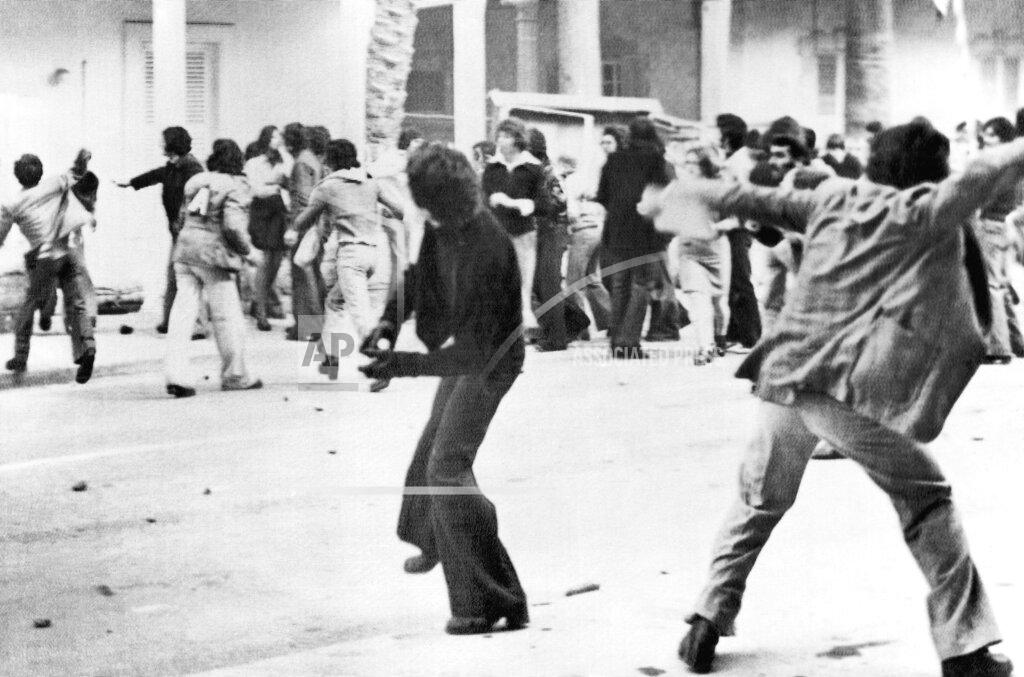
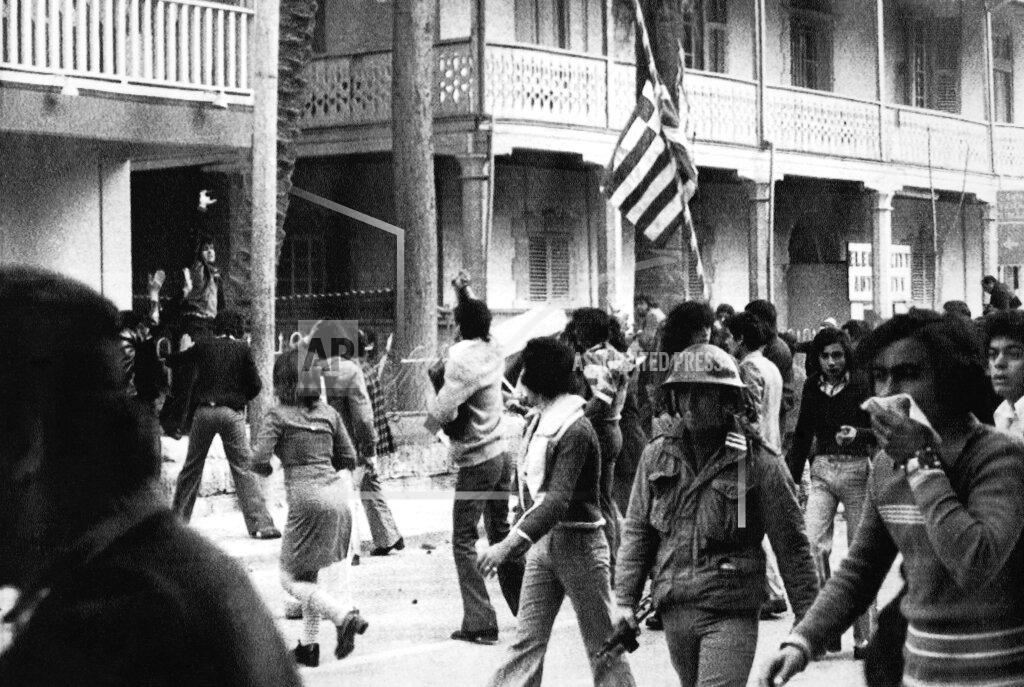
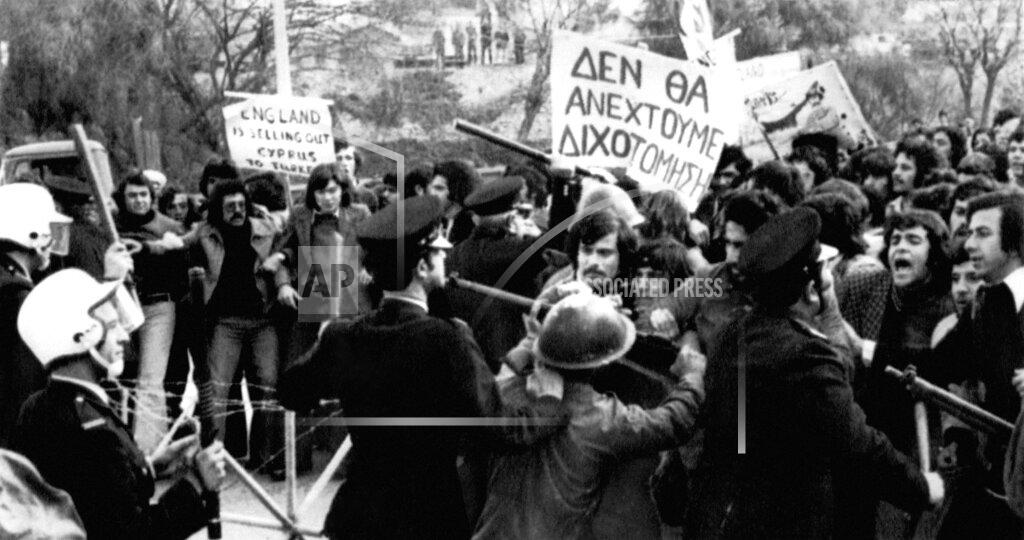
Thousands of youthful demonstrators attacked the American cultural center here today. Major damage was averted only when Archbishop Makarios calmed the crowd. The black‐robed President of Cyprus led the demonstrators away from the center and spoke to them from the steps of the Greek Embassy a few blocks away. When he asked them to disperse, most of them did, although a few were still lingering near the center this evening. After demonstrations here Saturday, which led to the sacking of a wing of the United States Embassy, Secretary of State Kissinger sent a strong protest to the Cypriot Government.
According to the Government here, Mr. Kissinger warned that if any American was injured, he would withdraw the embassy staff and end his own role in encouraging peace talks between Greek and Turkish Cypriots. Five months ago, the United States Ambassador, Rodger P. Davies, was killed by gunfire during a demonstration at the embassy. This weekend, the entire embassy staff and their dependents were placed in the Hilton Hotel here for their safety and alerted for the possibility of rapid evacuation. Publicly, the Cypriot Government replied that it was “doing all it could” to protect the embassy and its staff. Privately, officials were displeased with Secretary Kissinger’s note. “That’s not the proper way to threaten a small, injured country,” said one highly placed official. “Our efforts to control the extremists are genuine, but we can’t kill them in the streets.”
The most recent unrest in Cyprus started when Britain gave Turkey permission to move 10,000 Turkish Cypriot refugees from a British base to mainland Turkey. The Greeks charge that the move encourages the partition of Cyprus into two separate zones, but the protests also represent wider discontent. Policemen and military guards did little on Saturday to stop the attack on the American Embassy and two British offices. Today the troops were better armed and more determined.
The demonstration began in midmorning, shortly after the start of a one‐hour work stoppage in the downtown area to protest the British decision. Several thousand young people gathered outside the cultural center, which houses a library and other facilities of the United States Information Service. As the crowd pressed forward, the policemen and soldiers fired a water canon and tear‐gas shells. The youths kept advancing, and the guards retreated, firing into the air. After smashing some railings and outdoor display cases, the crowd tried to set fire to a small building in the rear, and for a while it appeared that the demonstrators would capture the main structure.
Then President Makarios arrived in a vehicle with sirens blaring. He tried to speak to the crowd, but when he could not get them quiet, he walked away. The demonstrators followed. At the Greek Embassy, he mounted the front steps and told the cheering protesters: “You have good reason to be angry. Your voice is the voice of a people that has been wronged. But I beg you not to commit any acts of violence. I do not want you to attack any foreign embassy.” Michael Dountas, the Greek Ambassador, then warned the crowd that “if there is a continuation of violent demonstrations, which are fully justified, there is a danger that people who don’t want the good of Cyprus will use them to harm you.”
Work was abandoned on the British end of the Channel Tunnel. The House of Commons approved cancellation of the project, 294–218, after Environment Secretary Anthony Crosland said that the nation could no longer afford the cost, which had increased to $4.6 billion. Crosland told the House of Commons that cancellation would cost the government about $46 million. But he said he thought a tunnel would be built sometime. Crosland, 56, said that he expected that the tunnel would be finished during his lifetime, but he died two years later. Work was restarted in 1986 as a private venture, and the tunnel was completed in 1994.
Britain’s decision to abandon a joint program with France to build a Channel tunnel provoked deep disappointment in Paris, but French officials said they hoped it would not damage other forms of cooperation between the two countries.
The British government announced it would spend $345 million during the next three months on persuading Britons to save energy. Home owners will be encouraged to turn off all unnecessary lights and draw curtains to keep in the heat, and industry will be helped by the government to cut down on the use of oil, coal, gas and electricity. The drive will be backed by extensive television advertising.
Former Greek dictator George Papadopoulos and four of his close associates were arrested and charged with high treason and insurrection in their 1967 military coup. His associates were two former deputy premiers, Stylianos Pattakos and Nicholas Makarezos; a former minister of public order, Ioannis Ladas, and a former chief of intelligence, Michael Roufogalis.
Lazlo Toth, Hungarian-born Australian who attacked Michelangelo’s Pieta statue in St. Peter’s in Rome, was released from an asylum for the criminally insane. Police sources said Toth, 35, who was sentenced to two years in January, 1973, after the May, 1972, attack, was to be deported to Australia as an undesirable alien.
Six days of labor strife in northern Spain claimed its first life when a man, 25, was shot and killed in a suburb of Bilbao in an exchange with police while distributing what was described as Communist propaganda leaflets, according to Spanish news reports. The leaflets urged support of strikes in Pamplona where street clashes last week between police and demonstrators left an unknown number of persons injured and more than 80 arrested.
Provisional IRA member Kevin Coen was killed by soldiers while attempting to hijack a bus in Kinawley, Northern Ireland.
The Portuguese coalition cabinet accepted the principle of creating a Communist-inspired trade union confederation, apparently ending a crisis that had threatened to topple the government. “It was agreed to adopt the principle of unity,” a government spokesman said. The cabinet will meet again today to discuss details of the proposal that would create a single confederation to control all of the. country’s labor unions, he said.
Administration officials said that enough progress had been made in the East-West conference on European security to allow the United States to begin planning for a final meeting next summer of heads of state and government of the 35 participating countries.
Israel has asked the United States for about $2.2 billion in military and economic aid, more than three times what it received in the current aid package, U.S. and Israeli sources announced. About $1.5 billion would be for military aid and the rest for economic assistance, the sources said. U.S. officials said that the request is now being considered by the State Department and Administration budget experts and that no decision has been made.
King Faisal of Saudi Arabia flew home today after a week-long tour of Syria, Jordan and Egypt, during which he gave large amounts of financial aid to all three countries as well as to the Palestinian movement. King Faisal also supported Egypt’s policy of accepting the American stepby-step approach to peace moves for a while longer.
Nicholas Ludington, an Associated Press correspondent, was freed from a central Damascus prison after three days of jail and interrogation. He was driven to the Lebanese border in a Ministry of Information limousine, and after a brief delay, released. Ludington, 40, who is based in Beirut, was picked up by military security agents Friday in connection with two stories he wrote during the visit to Syria by Saudi Arabia’s King Faisal.
India’s 200,000 dockworkers went back to work unloading a backlog of hundreds of ships after being on. strike since last Thursday. The agreement ending the strike was announced Sunday by the government. It gives the workers a raise of $7 a month retroactive to January 1. They had asked for $12.
Floodwaters are slowly subsiding in Southern Thailand as government officials try to provide relief for nearly a million refugees and prevent epidemics. The confirmed death toll in the six stricken provinces stands at 235, but officials have little hope for the 159 persons still listed as missing.
Premier Chou En-lai of China believes that a world war is inevitable between the two “superpowers” — the United States and the Soviet Union — because of their “fierce contention.” Nevertheless, he predicted that there would be “complete modernization” of a stable, orderly China by the end of the century. He made the statements in a speech to the National People’s Congress, China’s legislative body, at its meeting in Peking last week. The speech was made public yesterday. In general, the effect of the speech was a remarkable reassertion of the leadership of Premier Chou, who will be 77 years old this year.
Sixteen Latin-American countries today attacked the new United States trade act as “discriminatory” and “coercive.”
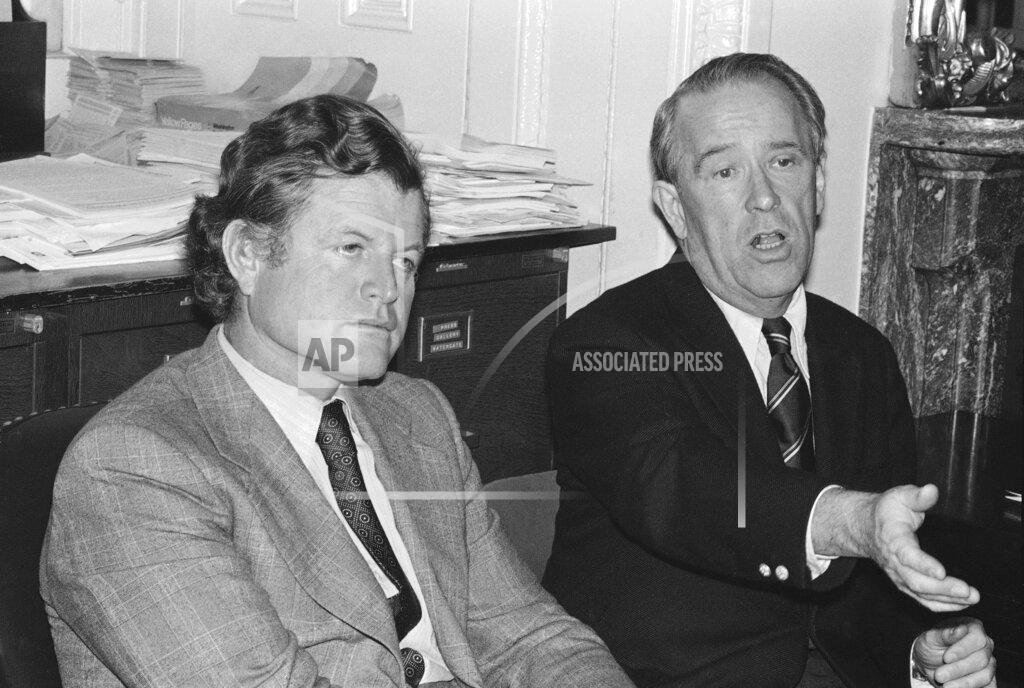
A key part of President Ford’s economic and energy proposals that would increase fuel prices through higher fees on imported crude oil brought the first specific challenge from Congress to his program. Senators Edward Kennedy and Henry Jackson said they would introduce a Senate resolution to delay the higher fees for 90 days. The delay, they said, would give Congress a chance “to develop fair and equitable alternatives” to the President’s plan, which, they said, would lead to “massive hikes in prices of gasoline, home heating oil and electricity.”
President Ford holds a slight edge over the two strongest Democratic contenders in the 1976 Presidential campaign, according to the results of a Harris Poll released yesterday. United Press International reports that the survey of 2,164 “likely voters” taken between January 2 and 8 showed that Mr. Ford’s lead over Senator Henry M. Jackson of Washington was 47 to 42 percent. His lead over Senator Edmund S. Muskie of Maine was closer, 46 to 45 percent. The Harris analysis said that although Mr. Ford’s margin had shrunk considerably since last November, it was not bad “compared to the fate of the Republican party in last fall’s elections.”
The Federal Reserve Board took its second major antirecession action in less than three weeks by making money for bank loans more easily available. The board’s action will release $1.1 billion in required bank reserves and several times that amount in terms of the volume of new loans that banks will be permitted to make.
The General Motors Corporation became the last of the Big Three auto makers to announce substantial rebates to car buyers in an attempt to stimulate sales and lift the industry out of one of the worst slumps since World War II. The company said that rebates ranging from $200 to $500 would be granted to buyers of compact and subcompact cars between January 13 and February 28.
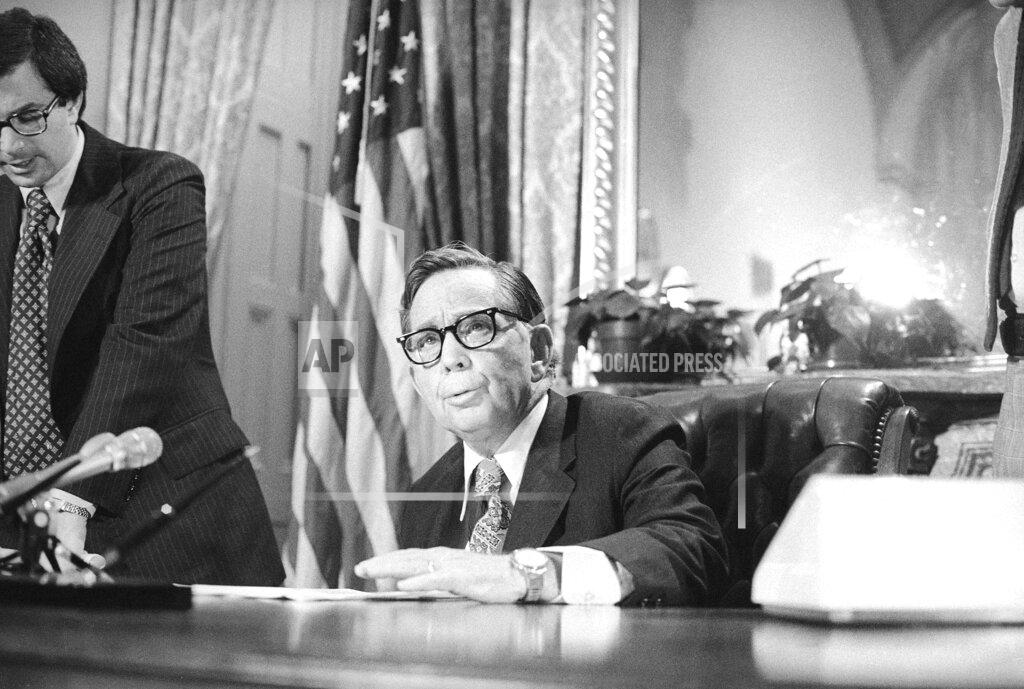
The Senate Democratic Caucus voted 45 to 7 to establish a bipartisan select committee — similar to the one that investigated the Watergate cover-up — to investigate all aspects of foreign and domestic operations of the Central Intelligence Agency and other government intelligence units. The overwhelming majority in favor of the new committee was viewed as a major setback for Senator John Stennis, chairman of the Senate Armed Service Committee, whose traditional dominance of military matters in the Senate had gone unchallenged until the caucus vote. “What happened today was a kind of revolution,” Senator Frank Church, Idaho Democrat, said.
Surrounded by symbols of political change and offering lessons in smooth race relations, George Corley Wallace was sworn in today for a third term as Governor of Alabama. “Admittedly, many things have changed,” he told an inaugural crowd of about 2,000 persons, several hundred of them black. Mr. Wallace, who will probably need black votes and a moderate image if he runs again for the Presidency, was referring to tumultuous developments since the morning 12 years ago when he took the oath of office for the first time on the white columned portico of the Alabama Capitol. On that cold, wintry day, he stood defiantly on the bronze star that marked the spot where Jefferson Davis was sworn in as president of the Confederacy, and Mr. Wallace cried out to a cheering, all‐white audience: “Segregation now, segregation tomorrow, segregation forever!” Today, with a black choir for a backdrop and several dozen newly elected and newly appointed black officials close by, Mr. Wallace took the oath more than 100 feet away from the Jefferson Davis Star, and then told the audience: “We find in our state today a determination on the part of all our people to work untiringly and in unison for the betterment of Alabama. This, to me, is one of the great advances of this period.”
The Justice Department charged that Mississippi had perpetuated a system of illegal racial segregation of the student bodies and faculties of the 25 state colleges and universities. The department asked a federal court to order state officials to develop and implement a plan to desegregate the system. The department’s action sought to broaden a 1970 suit seeking to desegregate Mississippi State University and Alcorn A&M College. It alleges that racial segregation persists in student admission policies, faculty hiring and assignment practices in the state’s higher education system.
The Passamaquoddy and the Penobscot Indian tribes received a major victory in their lawsuit against the U.S. Department of the Interior and their claims against the State of Maine, when U.S. District Judge Edward T. Gignoux ruled in Portland that the Interior Department had to intervene on their side in the case, based on the Nonintercourse Act of 1790. The two small tribes would go on to obtain an $81,500,000 settlement and build a huge gambling empire.
G. Gordon Liddy, who directed the Watergate burglary team, will resume his interrupted prison sentence Wednesday after three months of freedom. Sentenced to a term of 6 years and 8 months to 20 years after trial in 1973, he was freed last October 15 while a federal appeals court considered his case. The court turned him down and last week the Supreme Court refused to allow him to remain free while his appeal goes higher. Liddy was the only member of the seven Watergate defendants who refused to cooperate with investigators and received the stiffest sentence.
Charles W. Colson was disbarred in Virginia by the state’s Supreme Court for his role in the break-in of the office of Daniel Ellsberg’s psychiatrist. The former counsel to former President Richard M. Nixon currently is serving a one-to-three-year sentence at Ft. Holabird in Maryland.
Jeb Stuart Magruder said that beginning this spring he would lecture on college campuses about prison reform. After that, he said, he probably would return to a career in business. The former deputy director of the 1972 Nixon reelection campaign, who was released from prison January 8 by U.S. District Judge John J. Sirica after serving seven months of a 10-month-to-four-year jail term for his part in the Watergate coverup, said he had decided it would be “very difficult” for him ever to return to politics.
The oil workers union reached agreement with the Getty Oil Co. and Mobil Oil Co. The agreement with Mobil settles issues that have caused a strike at a Beaumont, Texas, facility. A union spokesman said agreement also was reached with Toscopetro, a Bakersfield facility that employs 150 workers. At the same time, A.F. Grospiron, president of the Oil, Chemical and Atomic Workers International Union, authorized a strike against Texaco’s Port Arthur and Port Neches, Texas, facilities. A national agreement has been reached with Texaco but the union now has given authorization for a strike by 4,200 workers that has been going on since January 8 over local issues.
The A.H. Robins Co. said it was withdrawing from the market all Dalkon Shield intrauterine contraceptive devices (IUDs) of the type involved in 14 deaths and at least 219 cases of infected abortions. The Richmond, Va., firm said its action was not a recall because it was undertaken voluntarily without Food and Drug Administration pressure. Last month the FDA lifted a six-month-old ban on Dalkon Shields but imposed new marketing restrictions, including a registry of new patients so that adverse reactions could be measured. The Dalkon Shield has been used by an estimated 2.2 million women in the United States and another 800,000 in other countries.
Senator William Proxmire (D-Wisconsin) criticized the military for spending $13.9 million a year to maintain 300 golf courses worldwide for officers and enlisted men. He called it “a waste of the taxpayers’ money in a time of inflation compounded by recession. Proxmire said the survey was made at his request by the General Accounting Office. It showed that in mid-1974 the military had golf courses in 19 foreign countries, as well as the United States, he said. The $13.9 million a year for maintenance “comes directly out of the defense budget, which the Pentagon claims is at a dangerously low level,” in addition to $20 million in nonappropriated funds.
Life University, founded by Sid E. Williams and located in Marietta, Georgia, held its first classes, as Life Chiropractic College, with 22 students enrolled. By 1995, it had more than 4,000 students.
Michael Ovitz, Michael Rosenfeld, Ron Meyer, Bill Haber, and Rowland Perkins founded the Creative Artists Agency after departing from the William Morris agency, and built CAA into one of the most powerful groups of sports agents and entertainment agents.
A memorial service will be held in Kansas City, Missouri, for Thomas Hart Benton, one of the leading American painters, who died there Sunday of heart disease. He was 85 years old.
Terrence McNally’s play “Ritz” premieres in NYC.
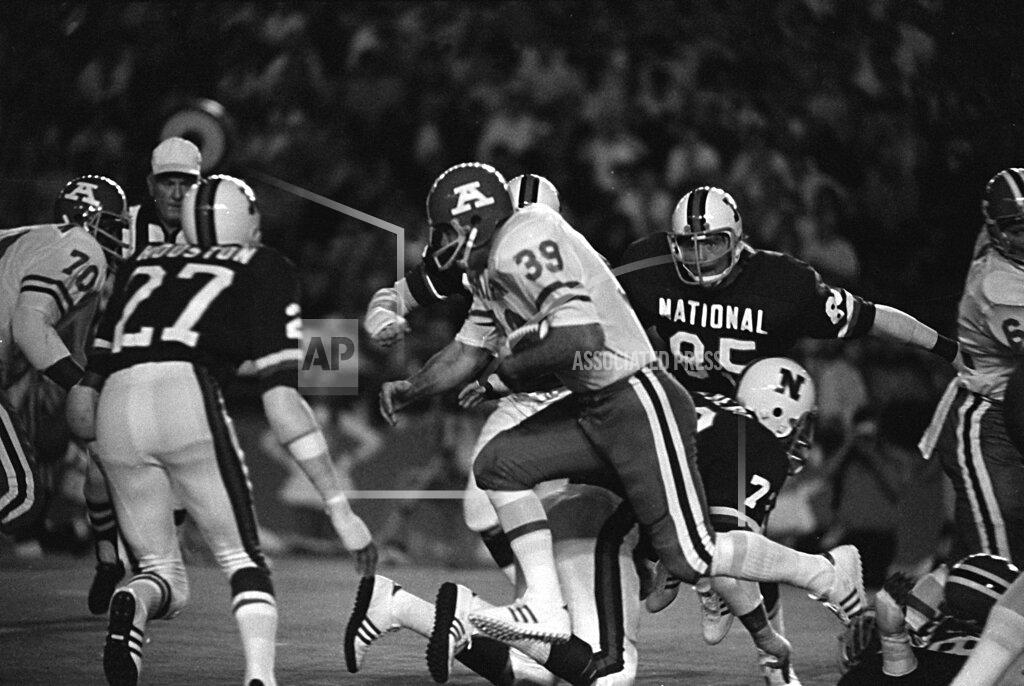
25th NFL Pro Bowl, Miami Orange Bowl: NFC beats AFC, 17-10; MVP: James Harris, LA Rams, Quarterback.
Dow Jones Industrial Average: 647.45 (+2.82, +0.44%)
Born:
David Eckstein, MLB shortstop and second baseman (World Series Champions, 2002-Angels, 2006-Cardinals [World Series MVP]; All-Star, 2005, 2006; Anaheim Angels, St. Louis Cardinals, Toronto Blue Jays, Arizona Diamondbacks, San Diego Padres), in Sanford, Florida.
Dick Tärnström, Swedish NHL defenseman (New York Islanders, Pittsburgh Penguins, Edmonton Oilers, Columbus Blue Jackets), in Sundbyberg, Sweden.
Éric Landry, Canadian NHL centre (Calgary Flames, Montreal Canadiens), in Gatineau, Quebec, Canada.
Christian Matte, Canadian NHL right wing (Colorado Avalanche, Minnesota Wild), in Hull, Quebec, Canada.
Ira Newble, NBA small forward and shooting guard (San Antonio Spurs, Atlanta Hawks, Cleveland Cavaliers, Seattle SuperSonics, Los Angeles Lakers), in Southfield, Michigan.
Pooh Bear [Clarence] Williams, NFL fullback (Buffalo Bills), in Crescent City, Florida (d. 2022, in a traffic collision).
Kati Agócs, American-Canadian composer (“The Debrecen Passion”), and educator (New England Conservatory), in Windsor, Ontario, Canada.
Norberto Fontana, Argentine racing driver, in Arrecifes, Argentina.
Died:
Kay Summersby, 66, wartime chauffeur for General Dwight Eisenhower who wrote about their extramarital relationship in her book, “Past Forgetting.”

 History Diaries