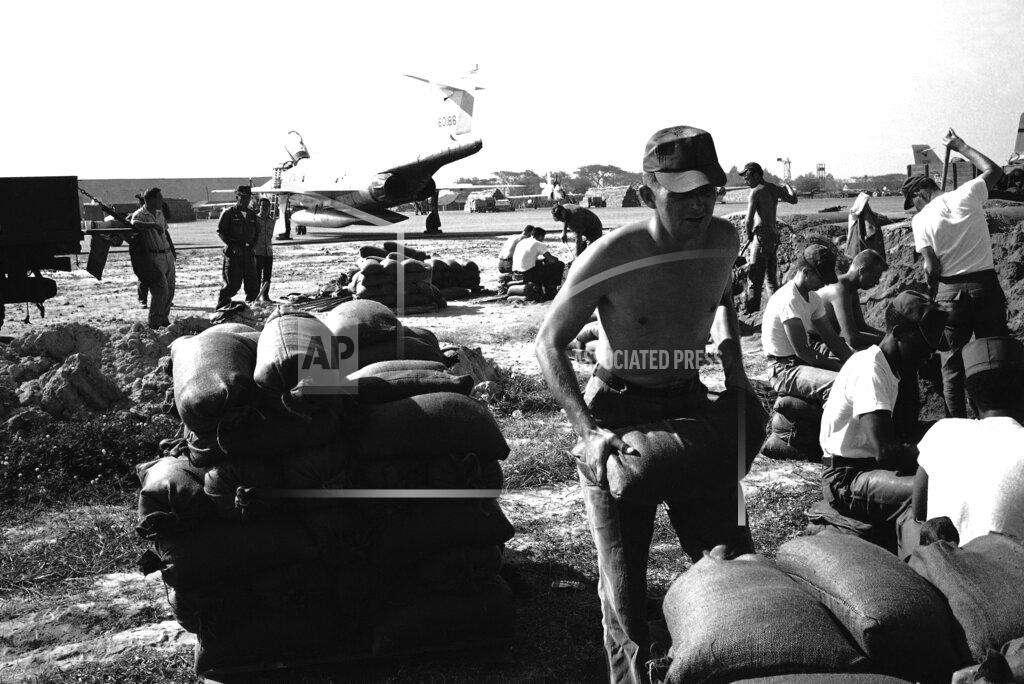
Premier Trần Văn Hương postponed today the inauguration of his government after Air Vice Marshal Nguyễn Cao Kỳ, one of a powerful group of defiant military leaders, unexpectedly balked at accepting the post of Minister of Youth in the Cabinet. A palace official said that General Kỳ, the 34-year-old air force commander, and three other generals appointed to the Cabinet were busy directing operations at the front against the Việt Cộng. Therefore, the official added, the presentation ceremony has been postponed indefinitely. General Kỳ and his fellow military leaders conferred late tonight in Saigon while the annoyed and baffled members of the government waited for them to allow the affairs of state to proceed. When the Cabinet, named yesterday, failed to show up at Gia Long Palace for the scheduled formal presentation to the chief of state, Phan Khắc Sửu, it became apparent that Saigon was again in a political crisis.
Privately, Premier Hương complained bitterly that he had been seriously embarrassed by what appeared to be an 11th-hour change of heart among the military leaders. General Kỳ and the other generals had evidently disagreed on how power within the government and the armed forces should be allotted. Before this setback, government sources said that the Armed Forces Council, a consultative body of senior generals, had approved the Cabinet list submitted to them by Premier Hương. It was made public yesterday. General Kỳ and the three other generals had been brought into the Cabinet in an effort to strengthen the government both internally and in the war against the Communists. The move also was part of a compromise under which the generals relinquished the control seized in their December 20 uprising.
The United States mission, which had been a party to the compromise, was surprised by today’s developments. In a statement yesterday it welcomed the inclusion of the military in the Cabinet as a “positive, helpful step toward a stable government.” This morning, General Kỳ called on the chief of state to inform him that he would not accept his assigned post in the Cabinet. He said later that he had advised the chief of state that he would not join the government unless the Hương Cabinet was made “more revolutionary.” General Kỳ insisted that the announcement of the Cabinet list had been premature and was made before Premier Hương informed him of what the government policy would be.
The general may have given a clue to the origins of the new crisis when he asserted that he would never give up his post as air force commander. It was understood that Premier Hương had expressed a preference that the military appointees devote themselves entirely to their government duties. In South Vietnam, ridden by coups d’état since the overthrow of the Ngô Đình Diệm Government in November, 1963, control over troops has been the key to power. It was believed that in the maneuvering going among the generals there was an unwillingness of some to allow appointees to Cabinet posts to wield power over troop commands. Of the other Cabinet appointees, the military leader who would be required to give up one of the most strategic commands was Major General Nguyễn Văn Thiệu, the commander of the country’s IV Corps area. This area embraces the Mekong River delta provinces and its garrison repeatedly has played a major part in Saigon coups.
General Thiệu has been given the post of Second Deputy Premier. It was considered likely that the two other generals would be less reluctant to yield their military commands. They are Major General Trần Văn Minh, the chief of staff, who has been appointed Minister of the Armed Forces, and Brigadier General Linh Quang Viên, director of military security, who was given the post of Minister of Psychological Warfare. Amid all the disarray at the top echelons of government, the administration of the country, by the regular civil servants, went on as usual.
The tactics of the students at Huế University have not changed appreciably since last August but the ranks of the demonstrators are thinning. Both Western and Vietnamese observers here believe that most of the students are opposed to the continuing political unrest in this city, 400 miles north of Saigon. Despite the smaller crowds, often only a few hundred now, the demonstrators succeed in closing the university and forcing shopkeepers to lock their doors as part of student-led protest strikes. “Those who want to get back to classes or to ignore the strikes do not have leaders to rally around,” one man well versed in Huế politics commented. “We’re finding out that you do not have to have large numbers to cause these disturbances,” he added.
Long before Brigadier General Nguyễn Chánh Thi warned against Việt Cộng influence at a news conference yesterday, the separation of actual students from demonstration leaders was becoming apparent. The Morin Building, one of the headquarters for the August demonstrations, was whitewashed last fall to eradicate the slogans assailing Lieutenant General Nguyễn Khánh who was then Premier. General Khánh, who was attempting to widen his power, was subsequently forced to step down. Now the building is freshly daubed with calls for the resignation of Premier Trần Văn Hương. But the new element is the appearance of many anti-American slogans on the city’s walls. “Vietnam is for the Vietnamese to solve,” is painted prominently on the Morin BuildIng. It is also a refrain in the Việt Cộng propaganda leaflets confiscated by American Special Forces teams in the hills north of Huế.
Thích Trí Quang and four other leading Buddhist monks vowed to fast until death unless the Government of Premier Trần Văn Hương was overthrown. Reuters reported.
Senator Wayne Morse said today that the Administration’s legal justification for conducting air strikes in Laos represented a “shocking” replacement of rule of law by “jungle law.” The Oregon Democrat, in a brief Senate speech, asserted that the Administration’s “unilateral interpretation” of the 1962 Geneva accords guaranteeing the neutrality and independence of Laos opened the door to “the outbreak of a massive war in Southeast Asia.” The Senator’s speech was a rebuttal to an argument presented yesterday by the Administration justifying United States reconnaissance and bombing missions in Laos, such as the air strike last Wednesday against a bridge on a Communist supply line leading from North Vietnam through central Laos.
Communist China today condemned the United States bombing missions in Laos. The United States “must immediately stop its military adventures in Laos and the whole of Indochina or it will be duly punished under the stern counterblows of the people of Laos and other Indochinese states,” a statement by the Foreign Ministry said.
The United States demanded an explanation from the Soviet Union of an underground nuclear blast that released radioactive debris into the atmosphere. The Soviet Union apparently violated the treaty curbing nuclear tests when a large underground explosion last week released radioactivity that was carried beyond the Soviet boundaries, the Atomic Energy Commission said today. The United States did not directly charge the Soviet Union with violating the 15-month-old treaty. Through diplomatic channels, however, the State Department asked the Soviet Government for information on the nuclear test. Secretary of State Dean Rusk called in Ambassador Anatoly F. Dobrynin to make the request.
The release of radioactive debris by the Soviet test represents the first apparent breach of the limited test-ban treaty, which went into effect in October, 1963. The treaty permits only underground tests that do not cause such debris to pass beyond the territorial boundaries of a nation. Officials here suggested the possibility that the radioactive debris was released accidentally because of faulty engineering in planning the underground explosion. According to this view, the explosion “vented,” or broke through ruptures in the earth, either because the test device was not buried deep enough or had a bigger yield than planned. If this proves to have been the case, officials said, it could be an important factor in a decision whether to accuse the Soviet Union of having violated the treaty.
Britain challenged the Soviet Union to make a contribution to the United Nations that would inspire a solution to the world body’s financial crisis. Britain appealed to the Soviet Union today to make a voluntary contribution and thus “give the lead” to extricate the United Nations from the crisis over unpaid assessments.
Three policy statements in the U.N. General Assembly today indicated a general fear of nuclear warfare that overshadows the world organization’s immediate financial and political crisis.
President Tito of Yugoslavia, President Gamal Abdel Nasser of the United Arab Republic and Prime Minister Sirimavo Bandaranaike of Ceylon publicly appealed today to President Sukarno of Indonesia “to reconsider your decision to withdraw from the United Nations.”
Sir Winston Churchill is holding his own in his struggle for life today. There was no appreciable change in his condition. Sir Winston Churchill has rallied from an early morning setback and continues to sleep through the fifth day of his critical illness.
President de Gaulle assured President Johnson by telegram today of French confidence in his leadership of the United States on the eve of his inauguration. “I am sure, Mr. President,” General de Gaulle said, “that I faithfully express the feelings of the French people in assuring you of the confidence with which they see you take into your hands the destiny of the great American nation, always its friend. I send you my very sincere wishes for the success of your task, and for the prosperity of the United States,” he said.
French President de Gaulle and West German Chancellor Ludwig Erhard began discussions today on the political future of West Germany and Europe. The two leaders, accompanied only by an interpreter, met at the general’s chateau at Rambouillet outside Paris for two. hours, then, after tea, conferred again until dinner. Meanwhile, the French and German Foreign Ministers, Maurice Couve de Murville and Dr. Gerhard Schröder, met in Paris. Official French sources said that the ministers’ conversation, which lasted for an hour and three-quarters, reflected a similarity of view on the questions they took up. These included relations with Eastern Europe, European political union, future problems of the Common Market and the reunification of Germany.
Revision of Japan’s postwar Constitution and a consolidation of conservative forces against the extreme leftist movement here were adopted as goals for this year by the annual convention of the ruling Liberal-Democratic party today.
The World Council of Churches authorized tonight a regular exchange of meetings with representatives of the Roman Catholic Church. A link between the World Council of Churches and the Roman Catholic Church will be realized with the formation of a working committee for formal consultations with the Vatican, World Council spokesmen announced.
An ex-CIA official said he believes defected Polish spy Michael Goleniewski can prove he is the son of Czar Nicholas II if he is permitted access to files of the Central Intelligence Agency in Washington.
Irish police fought a courtroom battle with 10 men accused of causing a disturbance when Princess Margaret visited Ireland. The police later struggled with sympathizers outside the courthouse. A riot again broke out in a country courthouse today when 10 young men were accused of having created trouble during the recent visit of Princess Margaret.
Rumors were heard in Moscow that the Kremlin has decided to curb its liberal policy on abortions in an effort to stem the decline in the Soviet birth rate.
The Cuban Government said today that a United States-made B-26 bomber that came from the north and “retired with a northern heading” staged a raid on sugar-producing Pinar del Rio Province Sunday.
An Israeli spokesman described today as “ridiculous” news reports from Lebanon that a secret Arab force had carried out a raid in Israel and killed 12 Israelis.
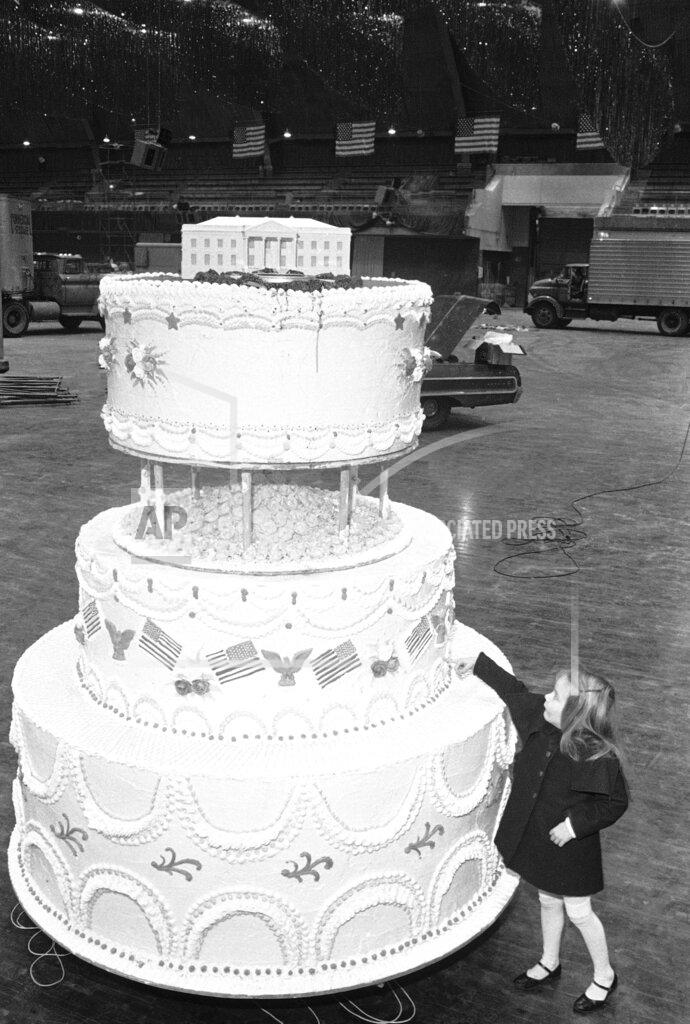
Lyndon B. Johnson, the 36th President of the United States, will begin his first elected term in the office when he is sworn in at noon tomorrow. The inaugural ceremony on the east plaza of the Capitol will be in strong contrast to the afternoon of November 22, 1963, when Mr. Johnson took the oath of office on the Presidential jet in Dallas. In the 14 months since the assassination of John F. Kennedy, the nation has not had a Vice President. That will be remedied when Hubert H. Humphrey of Minnesota takes the Vice-Presidential oath of office, administered by House Speaker John W. McCormack, a few minutes before Mr. Johnson is sworn in by Chief Justice Earl Warren. Until that moment Mr. McCormack will be, under the terms of the succession law, the first in line for the Presidency.
Mr. Johnson will lead the traditional parade down Pennsylvania Avenue to the White House, where he will alight from his car and enter a heated, carpeted box, enclosed by thick bulletproof glass, to watch the rest of the parade. A chest-high shield of bullet-resistant glass will also protect him earlier at the Capitol during the inauguration ceremony. The memory of Dallas is still strong. Especially stringent security measures will be in effect tomorrow, although the Secret Service will not divulge details of them. About 5,000 policemen, National Guard troops and other military personnel will help to provide security. Many of the troops participating will not carry weapons, and those that do will be carefully inspected to make sure they have no ammunition.
The President shook the hand of every governor, Democrat or Republican, who waited to greet him at the traditional pre-inaugural governors’ reception.
Hubert H. Humphrey, admittedly raring to get back on the payroll, bounced ebulliently about the nation’s capital on the eve of today’s inauguration that will bring him “a new job rating.
House Republican leader Gerald Ford of Michigan, who backed a moderate for a vacancy on the Ways and Means Committee, lost when a conservative was elected. Ford’s choice for party whip, a moderate, also lost.
The Democratic National Committee acted to head off a recurrence of the kind of civil rights fight that threatened to disrupt the party’s national convention in Atlantic City last August.
Senate Democratic leader Mike Mansfield won from key Senate committee chairmen a promise to speed action on the President’s program.
The American Federation of Labor and Congress of Industrial Organizations has scheduled a series of meetings to quicken the pace of its program to achieve voluntary compliance with the Civil Rights of 1964.
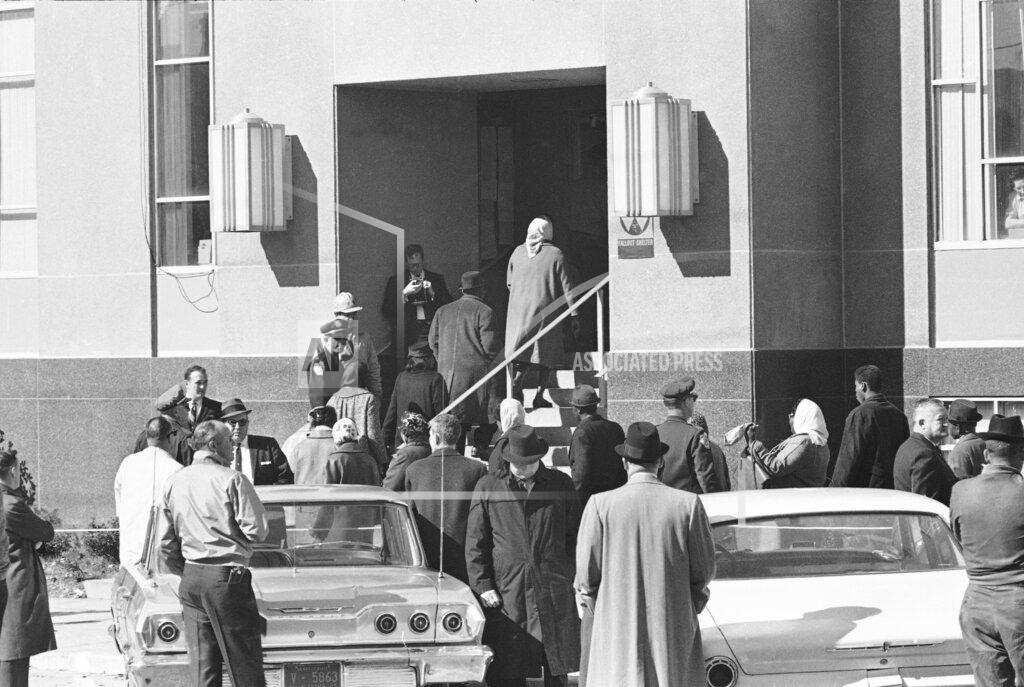
A group of Blacks who have been trying to register to vote in Selma, Alabama refused today to return to a courthouse alley assigned to them and wound up in jail. Sheriff James G. Clark arrested 62 on a charge of unlawful assembly and five others for “criminal provocation.” One of those arrested on the latter charge, a misdemeanor, was Mrs. Amelia Boynton, an insurance agent and local civil rights leader. When she refused to leave the sidewalk in front of the courthouse, Sheriff Clark grabbed her by the back of her collar and pushed her roughly and swiftly for half a block into a patrol car.
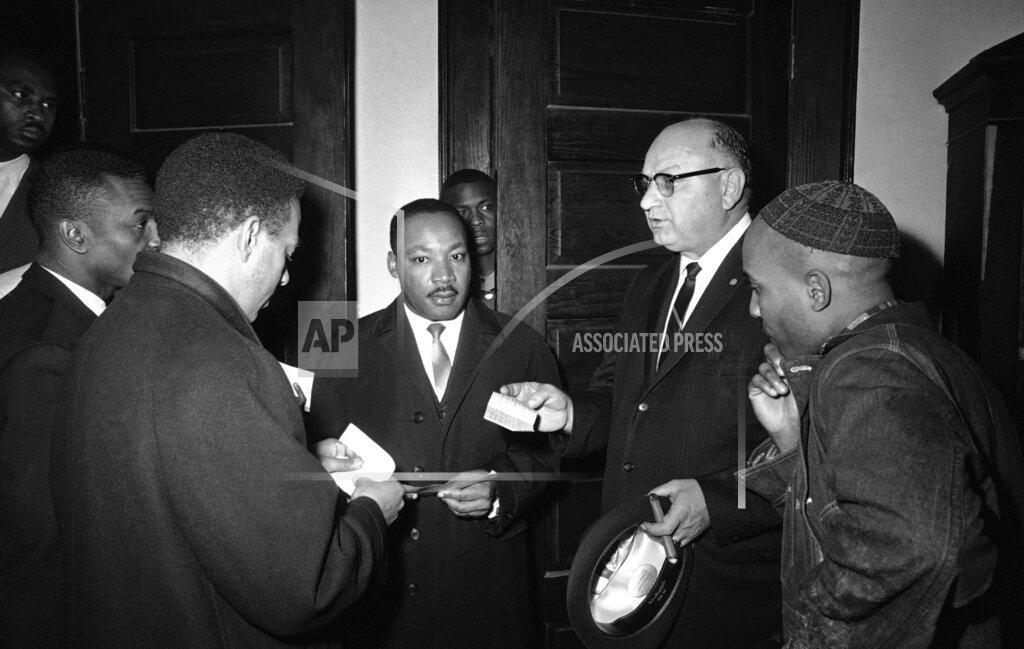
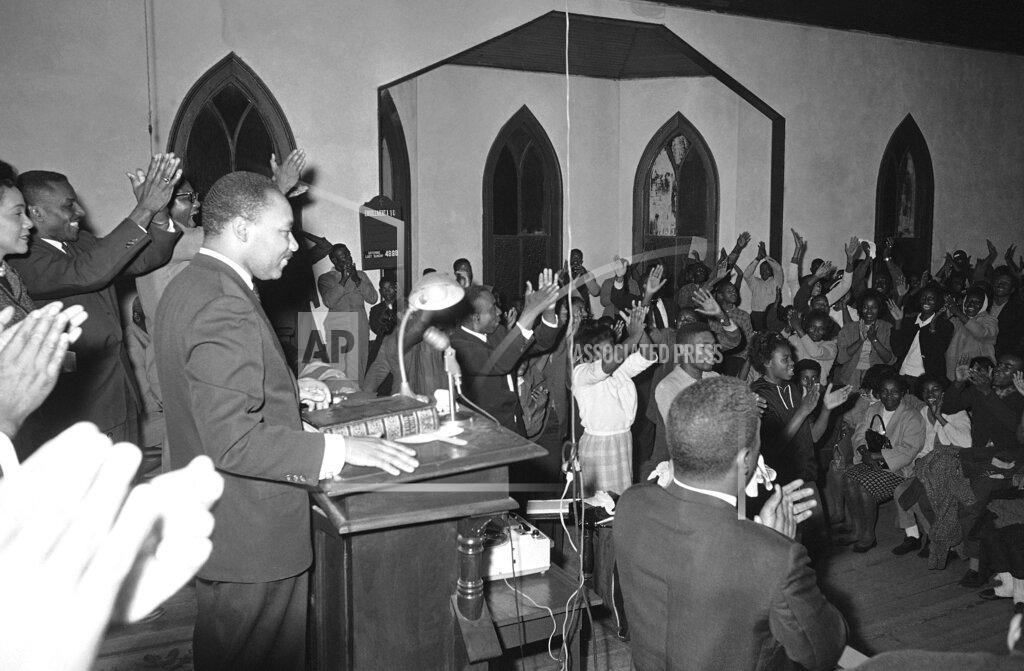
The Rev. Dr. Martin Luther King Jr. was watching from a car parked across the street. He stepped out of the car, walked into the Federal Building, which faces the courthouse, and asked the Justice Department to file for a court injunction against the sheriff. Dr. King, who is leading a voter registration drive throughout Alabama, charged that the arrests were unlawful and that the sheriff had been brutal. “I met with two officers of the Justice Department and filed a complaint that is to be immediately sent to Washington,” he told reporters later. “It was one of the most brutal and unlawful acts I have seen an officer commit.”
Dr. King left Selma tonight after telling a rally of 800 Blacks that he would return at the end of the week to continue “plaguing Dallas County — creatively and nonviolently.” He announced plans to set up a “freedom registration” project whereby a team of college professors would be brought in to draw up registration requirements they consider necessary to meet constitutional requirements, “Negroes will go in and sign up by the thousands,” he said, “and these will be presented to the federal courts to show that discrimination exists.”
Those arrested were released tonight pending arraignment without having to post bond, Sheriff Clark, who has become a symbol of aggression to Selma Blacks, has been named a defendant in previous Justice Department suits, now pending in the courts. One charges that he used his office to prevent compliance with the public accommodations section of the Civil Rights Act of 1964. Yesterday, about 400 Blacks marched to the courthouse to register. Sheriff Clark directed them through the building and into an alley that had been cordoned off with ropes. The applicants stood there all day. The courthouse was closed to reporters. But it was learned that none of the Blacks took the written test prescribed by state law for registration. The registration board apparently used the day to test applicants already there when the Blacks arrived. When the group returned today, Sheriff Clark again assigned them to the alley.
Normally, applicants wait in line in corridors and along the sidewalk. The lines form because only a few days in each month are set aside for registration. When the Blacks refused to go into the alley today, Sheriff Clark arrested them for unlawful assembly. Those charged with criminal provocation were not trying to register, but they were leading the group. In City Court, Jimmy George Robinson was fined $100 and sentenced to 60 days of hard labor for striking Dr. King in the lobby of the Hotel Albert yesterday. Robinson, 26 years old, of Birmingham, is a member of the National States Rights Party, a small segregationist organization. Judge Edgar P. Russell dismissed a charge of disorderly conduct against Robert Lloyd, 20, of Richmond, who was found in black face and costume in a restaurant about to be integrated. Lloyd, a member of the American Nazi party, said he had intended to mimic Blacks when they arrived to eat.
Six Tuscaloosa restaurants and lunch counters were quietly desegregated today by Negro civil rights workers led by Dick Gregory, the comedian. There were no incidents as organized groups of Blacks fanned out through this university city of about 65,000. However, at one place, Johnny’s Restaurant, the Black group found that air had been let out of a tire on their car. All of the places visited were among the 15 charged in a Justice Department suit last July with refusing to serve Blacks. One restaurant owner today said the businessmen had decided at an earlier meeting to desegregate their places. “It’s the only thing we can do,” he said.
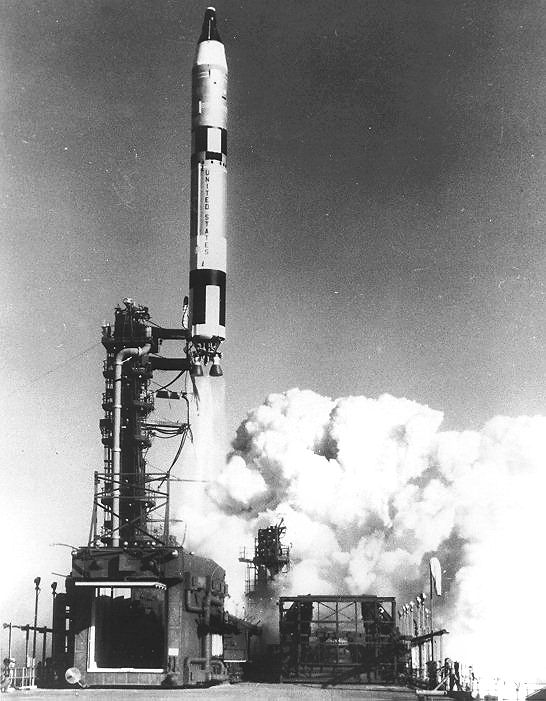
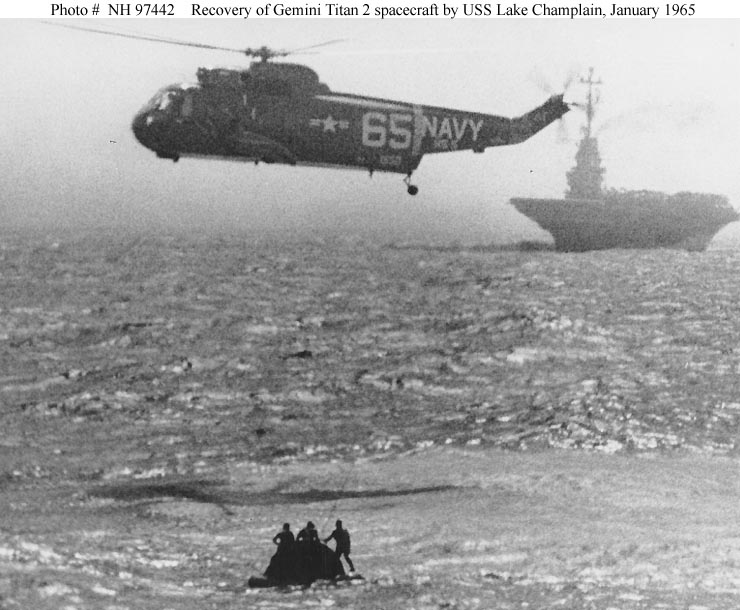
Gemini 2, an uncrewed suborbital flight, was successfully launched from complex 19 at Cape Kennedy at 9:04 a.m. EST. Major objectives of this mission were to demonstrate the adequacy of the spacecraft reentry module’s heat shields to protect the capsule’s occupants during a maximum-heating-rate reentry, the structural integrity of the spacecraft from liftoff through reentry, and the satisfactory performance of spacecraft systems, in preparation for the first American mission to send two astronauts into space. Gemini 2 was a suborbital ballistic flight which reached a maximum altitude of 92.4 nautical miles (171.1 km; 106.3 mi). Retrorockets fired 6 minutes 54 seconds after launch, and the spacecraft landed in the Atlantic Ocean 11 minutes 22 seconds later – 1,848 nautical miles (3,422 km; 2,127 mi) southeast of the launch site. Full duration of the mission was 18 minutes 16 seconds. The primary recovery ship, the aircraft carrier USS Lake Champlain, picked up the spacecraft at 10:52 a.m. EST.
The U.S. Air Force Academy announced that it was investigating whether some of its cadets had cheated on recent examinations, or failed to report (pursuant to the Academy’s Cadet Honor Code) their awareness that other cadets had cheated. Ultimately, 109 cadets would resign.
Danny O’Connell and Hobie Landrith surprise the Washington Senators’ front office when they both resign to pursue different business opportunities. The pair of coaches will be replaced by Rube Walker and Joe Pignatano, former major league catchers who played for the Dodgers with the team’s manager, Gil Hodges.
Bob Aspromonte is the first recipient of the Jim Umbricht Award, given to the Houston Astros’ most valuable player for the previous season. The honor was renamed after Umbricht’s death from cancer the previous April.
Dow Jones Industrial Average: 896.27 (+1.06)
Born:
J. B. Pritzker, American businessman (Pritzker Group), and politician (Governor of Illinois, Democrat, 2019–present), in Atherton, California.
Ricky Reynolds, NFL cornerback (Tampa Bay Buccaneers, New England Patriots), in Sacramento, California.
Kevin Coffman, MLB pitcher (Atlanta Braves, Chicago Cubs), in Austin, Texas.
Died:
Frank Reicher, 89, German-American actor (“King Kong”, “Son of Kong”).
 History Diaries