A huge boat convoy of badly needed supplies for isolated Phnom Penh was waiting today at the South Vietnamese border to cross into Cambodia and try to break through the insurgent blockade of the Mekong River. The commercial convoy of about 30 vessels, arranged by the United States Government and carrying American‐provided food, fuel and ammunition, is said to be waiting for Cambodian gunboats to escort it 71 miles up the Mekong from the border to Phnom Penh. Except for the last 15 miles to the capital, almost this entire stretch of the river, as well as Route 1, which parallels it, has fallen to the control of the Cambodian insurgents since they began their annual dryseason offensive nearly three weeks ago.
Authoritative diplomatic sources in Phnom Penh as well as a South Vietnamese military source in Saigon reported that departure of the convoy was imminent. But the timing of the departure will probably depend on an evaluation by Cambodian and American officials here of the risks involved in trying to run the gantlet of the insurgents, who are dug in with heavy weapons along both banks of the Mekong. The American Embassy in Phnom Penh said that it had no information about any convoy, but the other sources confirmed the convoy’s existence and location and provided details. The convoy will be the first attempted since the Communist‐led insurgents opened their offensive on several fronts on New Year’s Day. With 30 boats, it apparently will be the largest convoy in the nearly five years of the Cambodian war. In the past Mekong convoys have been at most only a dozen or so vessels.
The Phnom Penh and Saigon sources said that this convoy, which was put together as usual by civilian contractors of the American defense attaché’s office in Saigon, had formed and loaded at Vũng Tàu, a South Vietnamese resort and naval base on the South China Sea 40 miles southeast of Saigon. Two days ago, the sources said, these commercially hired boats — which are generally of Panamanian or Liberian registry and have Filipino, ethnic Chinese and Vietnamese crews — were escorted by the South Vietnamese Navy the short distance south into the mouth of the Mekong in Vietnam and then up to the staging point at Tan Chau, just short of the Cambodian border. It is here that they have awaited the signal to move into Cambodia. An unofficial report said that in addition to waiting for an escort of Cambodian gunboats, the convoy was also waiting for Cambodian troops to clear at least part of the route of enemy guns. It is not clear whether such an operation has begun.
Mekong river convoys are so conspicuous — especially one as large as this — that in the past the insurgents have always known about them well in advance and have waited with guns ready. That was the case last Thursday night, when a Cambodian military supply convoy tried to sail under cover of darkness from Phnom Penh to the isolated and besieged Mekong river town of Neak Luong, 38 miles downriver. The convoy was raked by intense fire from the moment it reached insurgent lines. Casualties were heavy, and at least two and possibly more boats were lost. The Mekong is the Cambodian Government’s last remaining surface supply route from the outside world. The Cambodian insurgents cut all other routes long ago.
Before this offensive Phnom Penh depended on the Mekong for 80 per cent or more of its essential supplies, virtually all of them provided by the Americans from points in Thailand and South Vietnam. Now, with the offensive 19 days old, this capital’s supplies are dwindling fast. Food is not yet scarce, but fuel is. Gasoline rationing for vehicles began last Monday, and in another fuel conservation step the Government two days ago began a “policy of austerity” by indefinitely cutting off power to virtually the entire city except for vital installations. This represents a cut of more than 80 per cent in the capital’s power supply. The civilian contractor in Thailand that has been handling American air supply to Cambodia since October — Bird Air — has increased its transports’ flights to Phnom Penh since the offensive began, but these only scratch the surface. The Americans have a contingency plan for an Air Force airlift from Thailand, but they say that would be only “a last resort.”
In the meantime, the plan is to try to get river convoys through the insurgents’ gantlet. The crews of the chartered freighters and barges get special risk pay; otherwise, no one would make the trip. One source close to the situation said of Phnom Penh’s disappearing rice and fuel stocks and the need to get a large supply convoy in here quickly that “it can’t go on like this — something will have to be done soon.”
Eight people were wounded at Orly airport in Paris when an attack by pro-Palestinian terrorists on an El Al airliner was foiled by the police. The plane took off safely for Tel Aviv. Three Arab gunmen went to the observation deck at Orly Airport in Paris and tried to shoot down at El Al 747 jumbo jet as it was taking off from Paris to Tel Aviv with 220 people on board. After police prevented them from succeeding, the gunmen fired machine guns into the crowd and threw grenades, wounding 78 people, then took ten hostages. After 17 hours, the men were allowed to depart on a flight to Iraq after freeing all of their hostages.
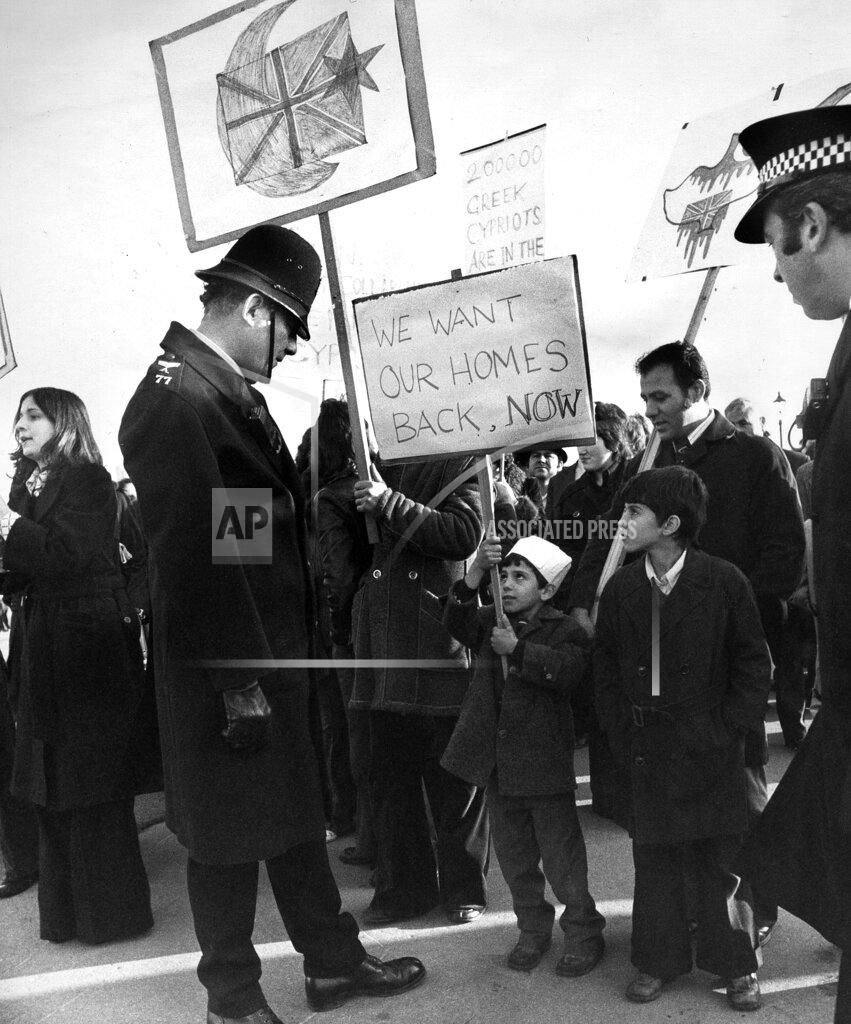
Two bombs went off at a British-owned store and saboteurs damaged a water pump outside Britain’s Akrotiri base in continuing protests by Greek Cypriots against the airlift of Turkish Cypriot refugees to the Turkish mainland. Demonstrators also gathered outside the Hilton Hotel in Nicosia waving the Cyprus flag and carrying bitterly anti-British placards.
Former chief of Greek intelligence Michael Roufogalis, the last of the five junta leaders accused of responsibility for the 1967 military takeover to appear before an investigating judge, denied charges of high treason and insurrection. Roufogalis refused to answer questions and handed a written memorandum to Judge George Voltis, who completed five days of hearings with the junta leaders. kept in exile on the Aegean island of Kea.
Seven-year-old Patrick Toner was killed by an IRA land mine near his home in Forkhill, Northern Ireland. The schoolboy was bringing home cows for milking. It was said at the inquest that a bomb in a car had been parked at the Forkhill RUC station. An army bomb disposal officer carried out a controlled explosion on the vehicle after it was towed about 250 yards away. He waited for the debris to settle before going to examine the remains. As he did so, there was a second explosion in which 7-year-old Patrick Toner was murdered along with a cow. Patrick and another boy were driving cattle to a field near the Fairview estate when the explosion occurred. The inquest was also told that an army corporal saw 2 boys driving cattle just before the second explosion. A command wire was discovered 500 yards away over the border.
Officials of the British Government and representatives of the I.R.A. Provisionals met secretly in Northern Ireland today in an effort to revive a cease-fire in this British province.
The controversy raging in Portugal over how labor unions should be legally organized has become a debate over the whole future of Portuguese democracy. The coalition that has tried to govern since the military coup last April may still hang together, but it has been so badly shaken and deeply split that it will be unable to survive for long, according to some of those who work within it. All the grievances, suspicions and antagonisms that have accumulated, but more or less been played down in the nine months since the coup, have come into the open as a result of the pending legislation for a new labor organization.
West Germany, Europe’s strongest economic power, has welcomed President Ford’s energy-conservation plans but believes they are essentially a step in the direction that Europe took by various means some time ago, according to a high-ranking official.
The Soviet Union’s winter grain crops are in mostly good condition, the U.S. Department of Agriculture said. A report from the department’s foreign agricultural service said the Russian winter so far has been “quite mild” and winter grains “in most areas appear to be in good condition.” The mild weather. however. has left the grain with only a light protective snow blanket. This leaves it vulnerable if extremely cold weather arrives later.
French Foreign Minister Jean Sauvagnargues said today that Secretary of State Kissinger suffered from an “aura of infallibility, of a magician,” built up with the help of the American press.
Israel announced today that she had invited Secretary of State Kissinger to Jerusalem, indicating that he might conduct a new round of shuttle diplomacy for peace in the Middle East. Premier Yitzhak Rabin said at a Cabinet meeting that the invitation to Mr. Kissinger was extended by Foreign Minister Yigal Allon during his visit to Washington last week. A report of Mr. Rabin’s statement that was issued to newsmen did not say whether Mr. Kissinger had accepted, but Israeli newspapers said that the Secretary of State was expected here next month.
King Faisal of Saudi Arabia and President Anwar el Sadat of Egypt met in the Nile River winter resort of Aswan today for talks that Arab diplomatic sources said would focus on the latest American peace moves for the Middle East — particularly on negotiations for a secondstage disengagement agreement in Sinai.
Associated Press correspondent Nicholas Ludington, 40, was being held by Syrian security agents in Damascus two days after his arrest in connection with stories he wrote during the state visit to Syria of King Faisal of Saudi Arabia. Unnamed authorities in Damascus said Ludington would soon be released and deported. One of Ludington’s articles was about a visit by Faisal to a Syrian air base. In another, he reported a bomb explosion near the Damascus hotel where the Saudi delegation stayed.
Iran and Iraq ended four days of talks here today without settling their disputes, raising the prospect of continued tension between them. The Foreign Ministers of the two Persian Gulf oil states failed to settle their differences over the Shatt al Arab waterway on their southern border and the Kurdish war in northern Iraq. “There have been no decisions,” the Iranian Foreign Minister, Abbas Khalatbari, said after 12 hours of intensive negotiations here with Foreign Minister Saadoun Hammadi of Iraq. A brief Iraqi statement said the talks — a continuation of an inconclusive meeting between the two men in New York last October — had produced no progress. Both sides said the ministers would continue their negotiations at a later date.
The Iraqi Government has announced the recent execution in Baghdad of a group of “pro‐Iranian spies,” the I.ebanese newspaper An Nahar reported today. The newspaper said the Iraqi Government claimed to have evidence that the supposed spy ring was supplying Iran with political and military information. It did not say how many persons were executed. The newspaper also reported that Iraq had signed her biggest arms deal ever with the Soviet Union. Quoting well‐informed diplomatic sources, An Nahar said Moscow had agreed to supply Iraq with advanced artillery of all calibers.
The Shah of Iran thinks it would be futile for Arab states to stop oil supplies to the West in the event of another Middle East war, according to an interview in the German news magazine Der Spiegel. When asked about reports that Arab states had decided to impose another oil embargo if war broke out again, the shah said he thought Arab countries would think very carefully before doing so.
Iran and Turkey, two countries that have been built up by the United States as bulwarks against Communism in the Middle East, are showing growing support for the Arabs in the conflict with Israel. Both countries had until recently held aloof from the Arab‐Israeli question, and both maintain political and economic ties with Israel. Iran has been an important supplier of oil to Israel under a not very secret arrangement whereby Iranian oil is shipped through is pipeline from the Gulf of Aqaba to the Mediterranean. But a perceptible shift has taken place in the last two weeks with a trip by Shah Mohammed Reza Pahlevi to Jordan and Egypt and a major economic agreement, with political overtones, negotiated between Turkey and Libya.
Indian Prime Minister Indira Gandhi’s government reached agreement with striking dockworkers who have crippled the nation’s ports for four days, delaying unloading of badly needed food and petroleum products. Union leaders said the 200,000 dockworkers would return to work at once. No details of the settlement were given.
A 6.8 magnitude earthquake struck in the state of Himachal Pradesh, India, at 1:30 pm local time, killing 47 people, mostly in the township of Kaurik. The strong earthquake shook northern India today, burying many people alive in areas bordering Tibet, it was reported tonight.
China published a new state Constitution that enshrines the basic precepts of Mao Tse-tung, chairman of the National Committee of China’s Communist party, who did not attend the meetings in Peking at which the Constitution was finally approved. As was expected, the Constitution abolishes the post of head of state, which has been vacant since it was formally stripped from the disgraced Liu Shao-chi more than six years ago during the Cultural Revolution. The functions of the head of state have been assigned to the National People’s Congress, the legislative body that adopted the Constitution on Friday at the conclusion of its first session in a decade. The document describes the Congress as “the highest organ of state power” but emphasizes that it is “under the leadership of the Communist party.”
Secretary of State Henry A. Kissinger may visit five South American nations next month on his first official trip into the area upset by U.S. trade policy, alleged Central Intelligence Agency meddling and a diplomatic snub from Kissinger himself. Latin American diplomats said they expect Kissinger to visit Venezuela, Brazil, Peru, Chile, and Argentina in middle to late February. Argentina and Chile have jumped the gun by announcing he will visit around February 18.
Twenty-three prisoners, all alleged left-wing guerrillas, have escaped from Caracas’ San Carlos Prison, the Venezuelan Defense Ministry said. Witnesses reported that guards opened fire when the prisoners climbed an outer wall Saturday night. Prison sources said a tunnel had been found.
The push for President Ford’s economic program intensified with three administration officials making appearances on television interview programs to urge prompt congressional approval. “I most certainly am,” Treasury Secretary William Simon replied when asked whether he was ready to fight for Mr. Ford’s proposals. The other officials interviewed were the Secretary of the Interior, Rogers C. B. Morton, and Frank Zarb, head of the Federal Energy Administration. The President’s major economic proposals include a onetime $12‐billion tax cut for individuals; a $4‐billion tax break for industry; a broad series of taxes and levies on oil and natural gas intended to raise prices and cut usage and a Federal budget deficit of $30‐billion this year and $45‐billion next year. Both Mr. Simon and Mr. Zarb, who appeared on CBS’s “Face the Nation,” stressed that the suggestions contained in the President’s State of the Union Message and his energy address were of a long-term nature.
A bitter battle over the Senate’s approach to its obligation to oversee foreign and domestic intelligence activities will reach a decisive point tomorrow in the Senate Democratic Caucus. Key Senators and aides acknowledged in telephone interviews today that the 60 members of the caucus will vote strongly in favor of establishing a nine‐member bipartisan select committee — similar to that set up after the Watergate break‐in — to undertake a two‐year study of the nation’s intelligence agencies. The key dispute will come not over the necessity for such a committee, the sources said, but over the question of who will serve on it.
For the last week Senator John C. Stennis, Democrat of Mississippi, who has long been the dominant figure in Senate inquiries into defense and national security issues, has been rallying support for his proposal, which is to be considered at the caucus. Mr. Stennis is urging that membership on the bipartisan committee be limited to those Senators now serving on the Senate Armed Services, Appropriations or Foreign Relations Committees. Those committees already have responsibility for dealing with national security issues. Senator Alan Cranston, Democrat of California, who was said by many sources to have played a key role in liberal Democrats’ lobbying for the bipartisan select committee, acknowledged in a telephone conversation that conservative Democrats, led by Mr. Stennis, “have given up” in their efforts to prevent the formation of the bipartisan group.
Representative Robert W. Kastenmeier, Democrat of Wisconsin who is chairman of a House Judiciary subcommittee, said today that he would call current and former officials of the Federal Bureau of Investigation to testify on charges that the agency kept personal files on members of Congress.
The United States Atomic Energy Commission was split up into the Nuclear Regulatory Commission (NRC) and the Energy Research and Development Administration (ERDA), under the terms of the Energy Reorganization Act of 1974. The NRC assumed the functions of regulating private nuclear power plants, while ERDA oversaw nuclear weapons.
Senator Henry M. Jackson plans an inquiry into the Drug Enforcement Administration to determine why it appears to be losing a struggle to stem the flow of heroin into the United States.
Two rifle shots pierced windows of the Soviet Union’s U.N. mission in New York City early in the morning. Later, scores of persons were arrested at a Jewish Defense League demonstration outside the building. Among them was league leader Rabbi Meir Kahane. No one was injured by the gunshots. Police found a .22 caliber rifle abandoned in a nearby construction site but it was not determined if it was the gun that had fired the bullets. The United Press International said an unidentified caller had attributed the shooting to Soviet repression of Jews and concluded with what is considered the Jewish league’s slogan, “Let my people go. Never again.”
A coalition of environmental groups called on Congress to abandon long-range efforts to control coal strip mining and to pass a bill that would phase out the practice altogether. The Coalition Against Strip Mining endorsed in principle a bill by Rep. Ken Hechler (D-West Virginia) aimed at prohibiting all surface mining of coal. The House rejected a phaseout proposal introduced by Hechler last summer. Instead, Congress approved a milder bill. President Ford vetoed it, contending it was vague, inflationary and so strict it would curtail production.
The Social Security Advisory Council reversed itself today and voted, 9 to 4, to recommend financing Medicare hospital benefits out of general revenues rather than increase payroll taxes for upper income Americans next year.
The market price of coal has declined by as much as $7 to $10 a ton since the United Mine Workers strike was settled last month and still is dropping, according to Stephen McCann, executive vice president of the Keystone Bituminous Coal Association. He said, however, the price trend probably would reverse when coal operators began passing on the increased costs of the new union contract. The licensing of 300 new coal operators in Pennsylvania alone in the last year added to the price decline, McCann said. The demand for coal should get back to normal about midsummer, he said.
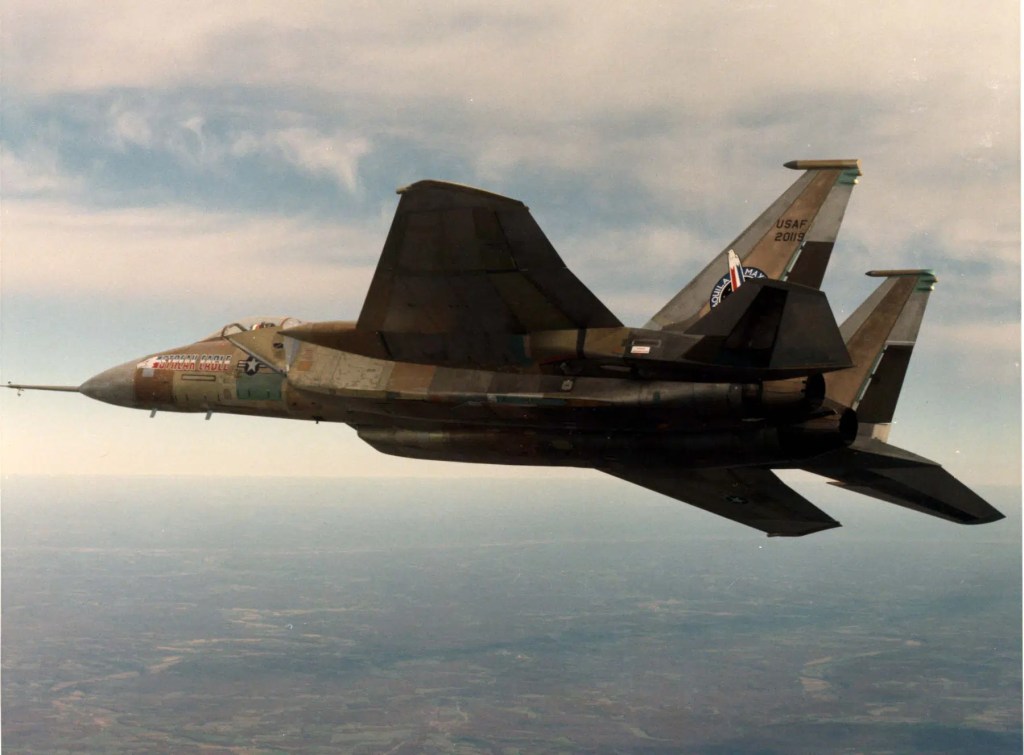
Major Roger J. Smith, United States Air Force, a test pilot assigned to the F-15 Joint Test Force at Edwards AFB, California, flew the McDonnell Douglas F-15A-6-MC 72-0119, Streak Eagle, to its sixth Fédération Aéronautique Internationale (FAI) and U.S. National Aeronautic Association time-to-altitude record. From brake release at Grand Forks Air Force Base, North Dakota, at 913 feet (278 meters) above Sea Level, the F-15 reached 20,000 meters (65,617 feet) in 122.94 seconds. This was the sixth time-to-altitude record set by Streak Eagle in just three days.
Two Soviet cruise ships canceled weekend stops in San Juan, Puerto Rico, after the State Department told them it could not guarantee their security in the harbor, the U.S. Coast Guard said. The liners Nikolai Anajev and Mikhail Lermontov had been scheduled to arrive simultaneously with a third Soviet cruise ship, the Maxim Gorky, which was a target of a terrorist attack three weeks ago. A hand grenade was rolled down the gangplank of the Gorky on December 28, injuring one crew member. The Coast Guard urged that no more than one Soviet vessel should be in the harbor at any one time. The Anajev and Lermontov continued their Caribbean cruise without the San Juan stop.
A dispute over oil contracts that has resulted in some fuel shortages for the military apparently has been settled. according to Defense Department officials. Spokesmen confirmed that some military activities had been interfered with by a fuel shortage resulting from the impasse between the Pentagon and the oil industry over disclosure of costs. But enough data now have come in from oil companies to let the Pentagon buy fuel to meet its petroleum requirements for the continental United States, officials said.
Fewer policemen are being bribed now by illegal bookmakers because impractical federal gambling laws are not being enforced, a study of the nation’s sports-betting industry indicates. In New York City, for example, where anti-gambling squads have been reduced by 50 percent in the last five years, the milder arrest tactics are melting much of the corruptive “ice” formerly paid to the local police. A number of things has brought about this apparent reduction of police corruption.
Energy costs rather than energy supplies are the number one problems of state energy officials, according to a nationwide survey released by Senator Edmund Muskie (D-Maine). And the survey showed that state agencies are critical of federal energy officials for failing to keep pace with energy problems at the state level. But responses indicated that federal action on state energy problems is improving.
A group of four surfers became the first to ride the 15-foot (4.6 m) breaker at Kaena Point in Hawaii, described in at least one source as “the final big-wave frontier.”
Born:
Fernando Seguignol, Panamanian MLB first baseman, pinch hitter, and outfielder (Montreal Expos, New York Yankees), in Bocas del Toro, Panama.
Brian Mallette, MLB pitcher (Milwaukee Brewers), in Dublin, Georgia.
Noah Georgeson, American musician and producer, in Nevada City, California.
Died:
Thomas Hart Benton, 85, known for his painting of murals across the United States, died the day after completing his final work, entitled The Sources of Country Music.




 History Diaries