A 2,000‐man South Vietnamese force spearheaded by more than 50 armored vehicles was reported to have launched a counteroffensive along the Cambodian border today. The operation is designed to block the North Vietnamese Fifth Division from thrusting across the western Mekong Delta and capturing Kiến Tường Province, the commanding general said. Reports from the field said the South Vietnamese force met stiff resistance as it sought to retake one of three outposts overrun by the North Vietnamese earlier this month. A South Vietnamese A‐37 bomber and a helicopter were shot down supporting the drive, 55 miles west of Saigon the reports said.
Phnom Penh today showed the effects of the two-and-a-half-week-old insurgent offensive as the Lon Nol Government instituted a “policy of austerity” to conserve Phnom Penh’s essential supplies. In a fuel‐saving step, the city power system’s production was cut drastically, and large segments of Phnom Penh — perhaps half of this city of over two million people — were without power today. Announcing the “massive cut‐off” of power the government appealed to its people for their “usual spirit of understanding and indulgence in these hard circumstances.” Gas rationing for vehicles began Monday but has been largely ineffective. The power cutback, however, was the largest in the history of this nearly five‐year‐old war.
During the 1973 insurgent offensive, power at times was cut off for periods of a few hours in successive sections of the city. But at that time although the Communist‐led insurgents put heavy pressure on the Mekong River, Phnom Penh’s main supply line, they did not completely block it and most supply convoys with American goods did get through from Thailand and South Vietnam. This time the insurgents seem to have blockaded the river and its parallel road Route 1, more effectively. Though convoys may eventually break through the rebels gauntlet, it will be a difficult and bloody time.
Last night, a convoy of more than 10 military boats left Phnom Penh in an attempt to get crucially needed arms and ammunition to the isolited and besieged town of Neak Luong 38 miles away. It ran into heavy fire from both banks almost all along the route, suffering heavy casualties and losing et least one big boat and reportedly some others too. How many vessels actually reached Neak Luong is not yet known.
Unlike in 1973, the Phnom Penh Government will not have the help of heavy bombing by American jets and giant B‐52 bombers, which was halted by Congress in August of that year. It will have to rely on its 50 or so single‐engine propellered T‐28 fighter‐bombers plus some helicopter gunships. Neither the military nor the supply situation can yet be called critical for the Government of Marshal Lon Nol. But if the Mekong remains cut much longer, conditions could deteriorate rapidly. The government normally depends on the Mekong for 80 percent or more of its supplies from the outside world — virtually all of them provided by the Americans. With nothing having come up the Mekong since the insurgent offensive began on New Year’s Day, Phnom Penh’s stocks are dwindling.
Fuel is low. Rice, the staple food, has not become scarce yet. Government sources say the Americans delivered a month’s supply before the offensive began. But if the present situation continues, the pressure could show in a week or so. Neither the Government nor the Americans are reporting on amounts of vital stocks remaining, apparently so as not to cause nervousness or panic among the people. Since the offensive began the Americans have increased supply flights from Thailand which are handled by a socalled civilian contractor using Air Force planes and “retired” United States Air Force pilots. But this limited air ferry is carrying mostly military goods and can only supply a fraction of Phnom Penh’s requirements.
As a result, the Americans have a contingency plan, which they say will be used only “as a last resort.” Under the plan United States Air Force planes in Thailand would be used in a vast supply airlift to keep the Phnom Penh Government from falling. Though the insurgents still pose no immediate physical threat to Phnom Penh from the insurgent forces, aside from the several rockets they fire into the city daily from positions not far away, there is a deteriorating situation in the area west and northwest of the city. The symbolically important collection of hills northeast of Phnom Penh at Phsar Oudong the royal Khmer capital in the 18th century, is under increasing pressure, and one unconfirmed report said it had fallen. And on the eastern bank of the Tonle Sap, within eight miles of Phnom Penh, a number of Government outposts have been overrun in the last few days.
As always, the government army is in a defensive posture reacting only after the insurgents have seized a position or swallowed up more territory. Thus the government is forced to continue its juggling act, hectically shifting its limited number of reserve troops from hotspot to hotspot by helicopter. Under these conditions, with pressure still on Phnom Penh from various nearby fronts the government has found it impossible to marshal enough troops to mount the push necessary to clear Route 1 and the Mekong.
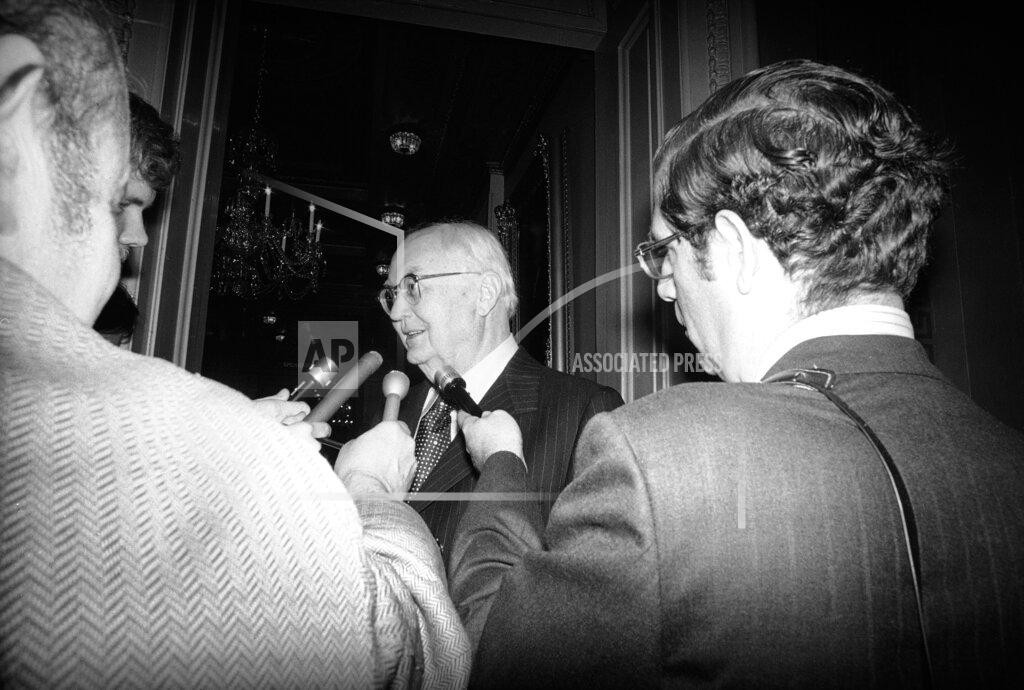
Three influential Senators asked for congressional support for the Vladivostok nuclear-arms accord with the Soviet Union and urged the administration to go further and negotiate a reduction in nuclear weapons. Secretary of State Kissinger “welcomed” the proposal by Senators Edward Kennedy, Charles Mathias and Walter Mondale. It was offered as the “advice” of the Senate. The principles agreed upon at Vladivostok last November limit the United States and the Soviet Union each to 2,400 long‐range bombers and missiles and to 1,320 missiles with multiple independently targetable re‐entry vehicles, known as MIRVs. United States and Soviet negotiators are to meet in Geneva to draft a formal agreement on the Vladivostok accord later this Month. The Vladivostok principles have been attacked by Senator Henry Jackson because they do not include reductions in existing nuclear arsenals. In the judgment of a number of legislators, the Vladivostok principles blunted the thrust of the Jackson criticism because they embodied numerical equality. This left Mr. Jackson, in their view, with no grounds for criticism other than the need for reductions. The call for reductions had, by this time, become identified with other liberal Democrats and Republicans.
The Irish Government announced today that it had arrested one of the top leaders of the I.R.A. Provisionals. The Government also issued a statement excoriating the Provisionals for their decision to end its 25‐day cease‐fire in Northern Ireland and England at midnight last night. J. B. O’Hagan, reputed to be quartermaster of the Provisional Irish Republican Army, was arrested yesterday within hours of attending the meeting of Provisional leaders that decided to resume the campaign of violence aimed at ending British rule in Northern Ireland and the ultimate unification of north and south. He is believed to have been one of the Provisionals’ leadership, although largely unknown to the public.
The Irish Government, which was not officially a party to the cease‐fire, broke its silence on the truce with a statement that did not mention the I.R.A. by name. The statement said: “Those who have taken it upon themselves to announce their intention to resume the taking of human life in Ireland and in Britain claim to be actling on behalf of the Irish people. In fact, their actions lare rejected and abhorred by the vast majority of the Irish people, north and south, CathoIlic and Protestant. This rejection will become particularly intense if the proposed resumption of violence occurs.”
In Northern Ireland there was a renewal of shooting incidents last night. Two men were caught with 50 pounds of explosives, a gun and ammunition in Belfast, and shots were fired in Londonderry, Portadown and Tandragee in County Armagh where a soldier was wounded in the foot. British soldiers were back on patrol in the streets of Belfast today on a war footing. There appeared to be little hope in Northern Ireland for fresh attempts to arrange talks between the British Government and representatives of the Provisionals. Four clergymen who helped to set up the truce after a secret rendezvous with the I.R.A. last month urged both sides to talk, if necessary with an acceptable third party to avoid misunderstandings. But unofficial reports indiated that the British Government does not favor any direct approach.
Press reports tonight said that the British Government had decided to abandon plans for a tunnel under the English Channel, a project shared with the French Government.
Political talks began today on the future of Cyprus, but a violent protest that resulted in the death of an 18‐year old Greek Cypriot showed that the issues dividing the communities of this island remained intricate and explosive. After months of uncertainty Greek Cypriots and Turkish Cypriots finally got down to specific issues in a morning meeting at the battle‐damaged Ledra Palace Hotel. They discussed the status of the international airport, a vital link in the country’s economy that has been closed since the Turkish Army’s invasion last July. Meanwhile, hundreds of Greek Cypriotes marched on the British base at Episkopi. They were protesting London’s decision to allow Turkey to move about 10,000 Turkish Cypriot refugees who fled to the base for safety during the war.
According to United Nations sources, the marchers attacked a small United Nations convoy that was approaching the base. broke the windows of the lead vehicle, and tried to set it afire. In the ensuing confusion, one of the other vehicles tried to come to the rescue of the first one and accidentally struck one of the marchers. The youth, Panikos Dimitriou died while being taken to the base hospital. A native of Agios Memnon, a village near Famagusta, he had been forced from his home during the fighting and was living as a refugee in Limassol.
After the French Chamber of Deputies voted 284–189 in favor of legalization of abortion, the law proposed by Simone Veil went into effect, allowing abortion on demand during the first ten weeks of pregnancy.
Israel’s Foreign Minister, Yigal Allan, said that after three days of talks with American leaders in Washington he had “a notion” that President Anwar Sadat of Egypt was now ready to negotiate a new Sinai withdrawal agreement with Israel. Mr. Allan also said at a news conference before his departure for home, that Secretary of State Kissinger had agreed “in principle” to go to Israel as soon as he could. The Foreign Minister’s statement suggested that another Kissinger attempt at “shuttle diplomacy” might be imminent. But high State Department officials stressed, that no firm travel plans had been set. Mr. Kissinger could go to the Middle East next month, one official said, but the Secretary wanted to be 99 percent sure that his trip would produce results. If Mr. Kissinger went to the area and failed to make progress, the official said, it might worsen the situation.
The rich oil-exporting countries are allotting part of their wealth among the less affluent countries of the third world through development loans, investments and humanitarian aid. Thus, they appear to be countering the charge that, by increasing oil prices sharply, they have ruined the development hopes of the poorer countries, which have been faced with staggering increases in fuel and fertilizer costs and diminishing aid from the West.
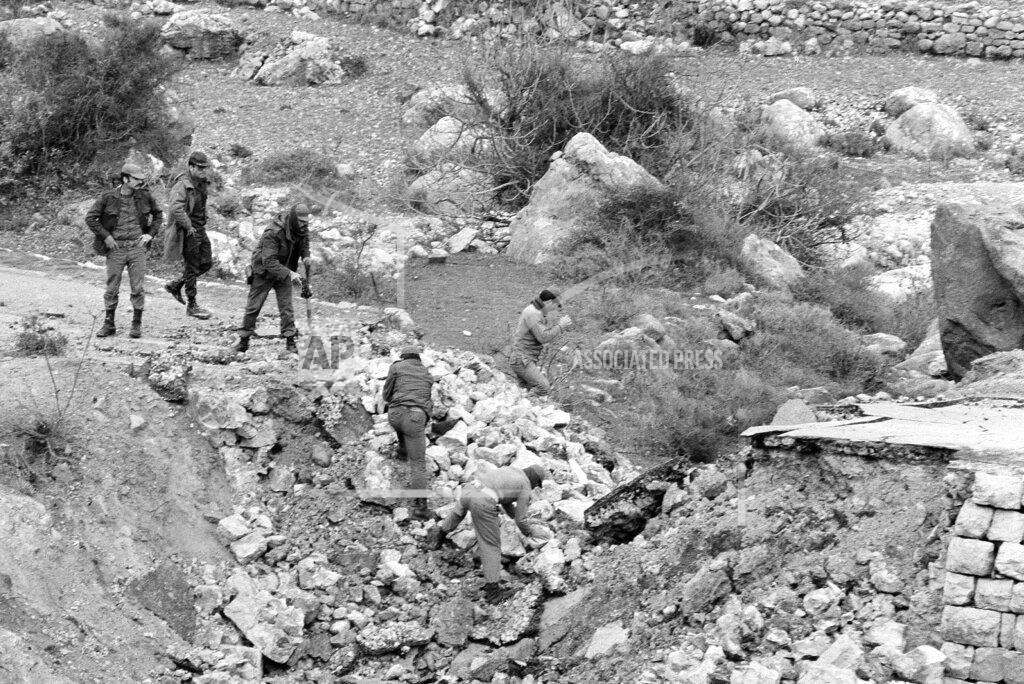
Artillery exchanges were reported along Lebanon’s southern border today from early morning to nightfall as Israeli guns shelled villages where guerrillas have been active. The Lebanese Defense Ministry said Israeli shelling of Shuba and other southern yillages had been answered by Lebanese artillery. The Palestinian press agency, WAFA said that guerrillas and Israeli troops had exchanged machinegun fire after, the big guns fell silent. There were no reports of casualties. This was the seventh day of hostilities in the so‐called Arkub, a region east of the Hasbani River, dominated by Israeli‐controlled slopes of Mount Hermon. The fighting in this area began after guerrillas attacked Israeli military patrols early this month, killing one sergeant and wounding four soldiers.
The United States is supplying Lebanon with a small number of new TOW antitank missiles under an agreement entered into last May, Defense Department officials said today.
King Faisal of Saudi Arabia ended a four-day visit here today with an announcement of an immediate grant of $150-million to Syria “to meet some pressing needs.”
Oil drillers in India have struck a third well in the offshore area known as the Bombay High, 115 miles northwest of Bombay. Exploration for oil has been under way for nearly two years in the area, which is reported to have a vast potential. The first oil strike was reported last March. According to Petroleum Ministry officials, the oil field has a reserve or one billion barrels, enough to yield 10 million tons a year for 15 to 20 years. This estimate, described as “very tentative,” was given this week by N. B. Prasad, chairman of the Government Oil and Natural Gas Commission.
Israel and South Africa have been barred from attending a major international table‐tennis tournament next month in Calcutta. The move, expecially against Israel, has been criticized in moderate segments of the Indian press. It accompanies India’s decision to allow the Palestine Liberation Organization to open an office in New Delhi.
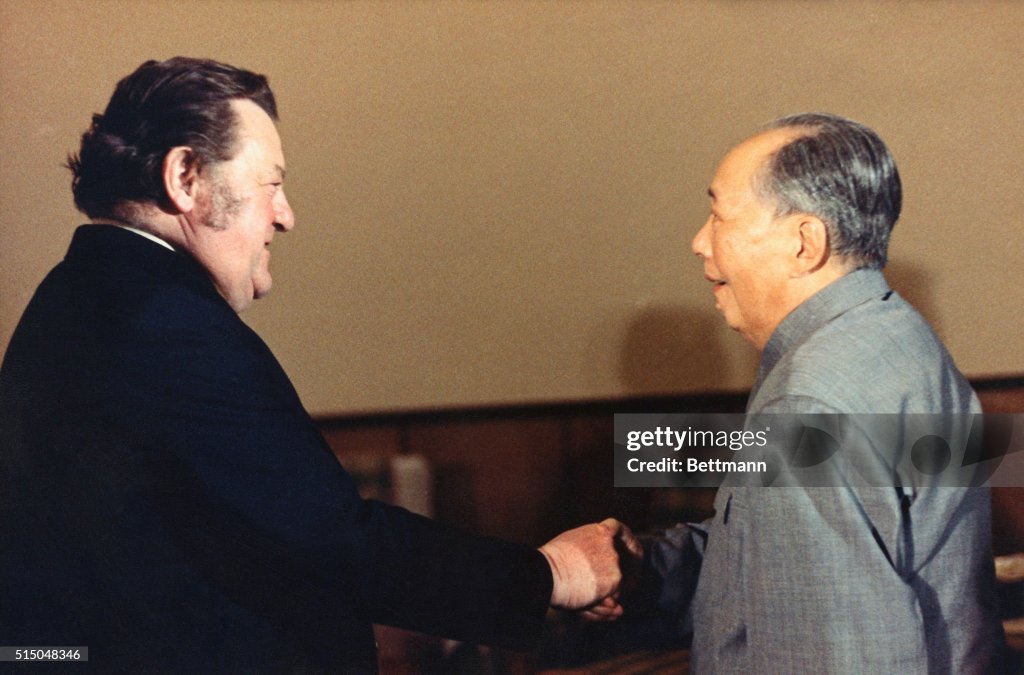
At the first meeting of China’s National People’s Congress in ten years, Zhou Enlai was re-elected as Prime Minister, and Deng Xiaoping, who had been in disgrace with the Communist Party for eight years, was elected as a Vice-Premier and Vice-Chairman of the party. Yeh Chin-ying was made Defense Minister, filling a spot left vacant by the death of the vilified Lin Biao. A new Constitution for the People’s Republic was promulgated on the same day. The Central Committee of the Chinese Communist party announced that it had approved a new slate of government ministers and a new state Constitution at a meeting last week. The announcement was preliminary to the first meeting in a decade of China’s top legislative body, the National People’s Congress. The announcement was also regarded as significant because it did not mention 81-year-old Mao Tse-tung, the Central Committee’s Chairman, who has not been reported in Peking since last May. It did mention, however, Deng Xiaoping, a 70-year-old party stalwart, who was restored to the Standing Committee of the Central Committee and named a Deputy Chairman of the party. He was purged at the start of the Cultural Revolution in 1966, but was taken back into the party in 1973, when he was named a Deputy Premier.
President Ferdinand E. Marcos today amended the issues to be raised in the referendum February 27 on his martial law Government, dropping the direct question of whether the people want an interim national assembly to convene at once.
More than 7,000 mine workers in Bolivia’s tin mining area today began an indefinite strike after a 96‐hour stoppage failed to force the government to reopen four radio stations.
Prime Minister Ian D. Smith said in a newspaper interview published here today that a proposed constitutional conference of blacks and whites would have to be held in Rhodesia and that it should take place as soon as possible.
The Democrats’ move to alter congressional rules and procedures shifted from the House, where there has been an upheaval, to the Senate, and Democrats there voted to select committee chairmen in the future by a secret ballot of the Democratic caucus. The Senate elected its committee chairmen for the new Congress strictly according to the seniority system, and there were no challenges. Nevertheless, from now on chairmen will be held accountable for the way they operate their committees and they will not be guaranteed their positions solely on the basis of seniority.
A government commission of judges, lawyers and Congressmen endorsed the establishment of a new national court of appeals to increase the capacity of the federal court system to resolve important disputes. The court reorganization proposal probably would not materially relieve the workload of the Supreme Court, but it would permit the court system to increase the number of nationally important rulings handed down each year and to respond more rapidly to more legal questions.
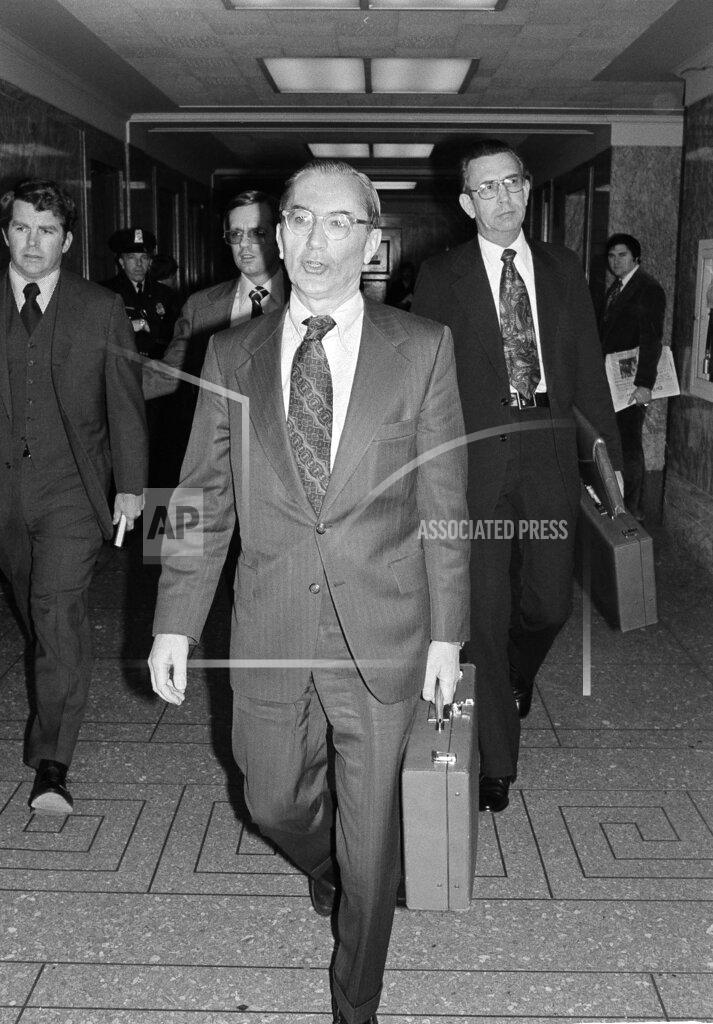
Four former high-ranking members of the Johnson Administration said today that they knew of no Presidential directive ordering the Central Intelligence Agency to set up a special office in 1967 to handle domestic intelligence about radical and antiwar groups. In testimony before a Senate subcommittee yesterday Richard Helms, former Director of Central Intelligence, said that the agency had set up a special office to monitor domestic antiwar activities “in response to the express concern of the President.” Mr. Helms, who is now the Ambassador to Iran, did not specify which President had expressed the concern or when the office was established. On Wednesday, however, William E. Colby, the present CIA director, told another Senate subcommittee that Mr. Helms had authorized the special office Aug. 15, 1967, at time when questions were raised as to whether foreign stimulation or support was being provided to this dissident activity.” Lyndon B. Johnson was President at that time.
The Seattle Post‐Intelligencer quoted an unnamed former Kennedy Administration official as saying that President Kennedy and his brother, then Attorney General Robert F. Kennedy, authorized the CIA to wiretap the phones of two unnamed newsmen in 1963. The newspaper quoted Kenneth O’Donnell, another former Kennedy aide, as denying the account. Mr. Colby disclosed the two wiretaps in his testimony Wednesday, and also noted then that they had been approved by the Attorney General. He did not say, however, that they were on newsmen.
Charles W. Colson’s attorney says the former White House aide does not know whether President Nixon spoke with Chief Justice Warren E. Burger about a suit to obtain his Watergate tapes. According to Ken Adams member of Mr. Colson’s former law firm, Mr. Colson said Mr Nixon had said only: “I think we’ll really win in the Supreme Court. Burger thinks this whole thing is a disgrace.” Mr. Adams said that Mr. Colson did not know whether Mr. Nixon had spoken directly with Chief Justice Burger, or whether the President had drawn a conclusion based on second‐hand information. In response to a request, Mr. Adams spoke by phone yesterday with Mr. Colson about allegations made by John W. Dean 3d, the former White House counsel, in a television interview Tuesday.
Vice President Rockefeller was congratulated today by the Senate Democratic leader, Mike Mansfield, for presiding over the Senate for four consecutive days. Although the Constitution says the Vice President is president of the Senate, most Vice Presidents are rarely present. Mr. Rockefeller’s string of presiding days is the highest for a Vice President in at least seven years, Senate officials said. Hubert H. Humphrey presided three times in a row in 1967.
Rejecting protests from antipoverty groups and many members of Congress, the Agriculture Department announced today its final approval of a plan to cut food stamp benefits for the needy by about $645-million a year. The action, to be effective March 1, was expected to touch off quick Congressional action to reverse it. Department officials said that the final stamp regulation included — with two minor exceptions — proposals that had been contained in a tentative announcement of the plan that was issued last November. They said that most of the 15.4 million needy who get food stamps would be required to pay 30 percent of their net income, instead of the current average of about 23 percent to purchase their monthly allotments.
Federal District Judge Warren K. Urbom ruled in a decision released in Lincoln, Nebraska today that, despite an “ugly history” that included “treaties pocked by duplicity” on the part of the government neither the Sioux nor any other American Indian tribe has sovereignty. Numerous Indians — including those who rebelled at Wounded Knee, South Dakota, in the spring of 1973 and those now holding land in New York State and former Roman Catholic novitiate in Wisconsin — have contended that the United States has no legal jurisdiction over them because the government has violated the treaties it signed with the Indians in the 19th century. But the judge said that treaties with Indians’ over the last century had in many instances been superseded by law. The conquest of Indian tribes by the Army. in the last century, he said, made the Indians subject to the legislative powers of the United States.
A leader of the Kanawha County textbook movement and five other persons were indicted today by a federal grand jury for allegedly conspiring to “damage and destroy” two county schools. The indictment charged that the conspiracy occurred from October 1 to November 15 last year during the height of the controversy over school textbooks that protesters asserted were irreligious and un‐American. Named in the six‐count indictment returned in Federal District Court were the Rev. Marvin Horan, Larry Elmer Stevens, Michael Wayne Blankenship, Jeannie Lynn Stevens Melvin B. Dickerson and Delbert Lee Rose. Mr. Horan, pastor of the Fundamentalist Leewood FreeWill Baptist Church, is a leader of an antitextbook group, called Concerned Citizens.
A two‐year minority recruitment program has added 19 black agents to the Federa1 Bureau of Investigation, but blacks still account for little more than 1 percent of the total force of 8,500 agents. By comparison, blacks and other racial minorities account for 20 percent of the total federal government work force and 13 percent of all professional and technical jobs in the Justice Department, according to Government statistics. Wayne Davis, a black agent who heads the FBI Office of Equal Employment Opportunity Affairs, said in an interview that the bureau’s problem in attracting minor applicants for positions as agents might rest partly in its traditional white image.
The Civil Aeronautics Board has approved a new excursion plan that would reduce ticket prices on many domestic air routes by 20 to 25 percent. This was the first substantial reduction in domestic air fares in more than two years. The agency said it appeared that selective fare cuts were now necessary to stimulate air travel.
Jack A. Gleason, a former White House aide, was placed on unsupervised probation for one month today for his part in a $2.8-million fund-raising campaign by associates of Richard M. Nixon in 1970.
Senator Abraham A. Ribicoff, Democrat of Connecticut, proposed again today legislation to give consumers a strong voice before courts and government agencies.
The Atomic Energy Commission has revised the timing of commercial introduction of breeder reactors, moving it from the late nineteen‐eighties to the early nineteen‐nineties. The reason for the delay the commission said today, is the general cutback in construction plans for both nuclear and nonnuclear electric generating plants. The commission is due to go out of existence on Sunday. Its functions are to be taken over by the new Energy Research and Development Administration and the new Nuclear Regulatory Commission.
Dow Jones Industrial Average: 644.63 (-11.11, -1.69%)
Born:
Freddy Rodriguez, Puerto Rican-American actor (“Six Feet Under”), in Chicago, Illinois.
Brad Fullmer, MLB designated hitter and first baseman (World Series Champions-Angels, 2002; Montreal Expos, Toronto Blue Jays, Anaheim Angels, Texas Rangers), in Chatsworth, California.
Scott Mullen, MLB pitcher (Kansas City Royals, Los Angeles Dodgers), in San Benito, Texas.
Kevin Swayne, NFL wide receiver (New York Jets), in Riverside, California.
Coco Lee, Chinese-American pop singer (“A Love Before Time”; “Tragic”), in British Hong Kong (d. 2023).
Rami Yacoub, Swedish songwriter and producer, in Stockholm, Sweden.
Tom Jenkinson, English bassist, composer, and electronic music producer (Squarepusher), in Chelmsford, England, United Kingdom.
Tony Brown, New Zealand rugby union football player; in Balclutha, New Zealand.
Died:
General Gustavo Rojas Pinilla, 74, President of Colombia from 1953 to 1957.




[Ed: Wepner becomes more or less the real life inspiration for the movie, “Rocky.”]
 History Diaries