At 7 p.m. German Chancellor Adolf Hitler, in response to the Mechelen Incident, concurred with the advice from the previous day of General Alfred Jodl, the Wehrmacht’s Chief of Operations, to call off the invasion of the Low Countries indefinitely. Hitler decides to cancel the German attack in the west until the spring. The possible compromising of the plan for the attack at Mechelen on January 10th and the continuing bad weather are the principal reasons.
Heavy Soviet artillery fire continues against the Mannerheim Line. On the Central Isthmus, heavy enemy shelling pounds the defences on the Mannerheim Line in Summa. Stalin considers artillery to be the “Queen of Battle.”
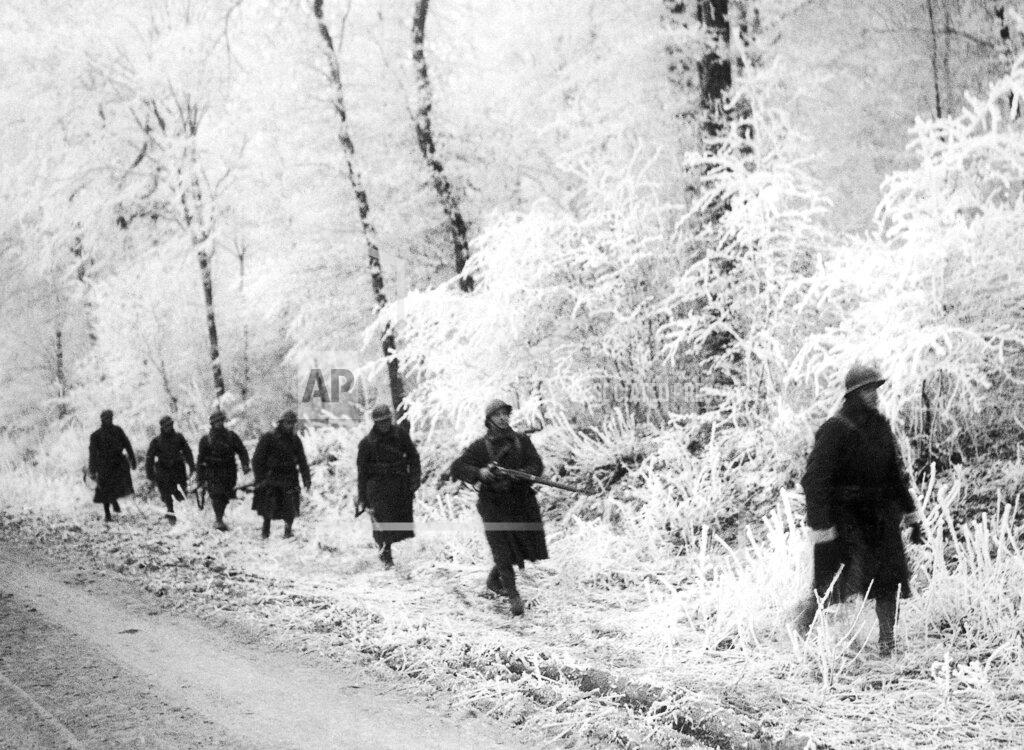
In Ladoga Karelia, in temperatures of -41° Celsius, a small Finnish detachment attacks and halts the enemy advance at the edge of Mursula village in Kitilä.
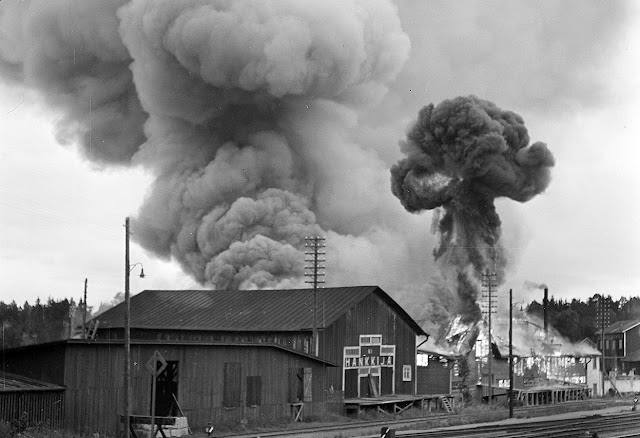
In extremely frosty weather, the Soviets launch more raids on southern Finland. Since 12 January, the Soviets have dropped almost 3,000 bombs on 50 cities. That is tiny by later standards, but Finland is a small country.
The Finnish aid agency Suomen Huolto grants 800,000 marks in aid to victims of the bombing in the towns of western Finland.
A special Finnish day is to be held at the Holmenkollen skiing games in Oslo to raise money for Finland.
A Danish association of factory-owners is sending a railway wagonload of food aid to Finland.
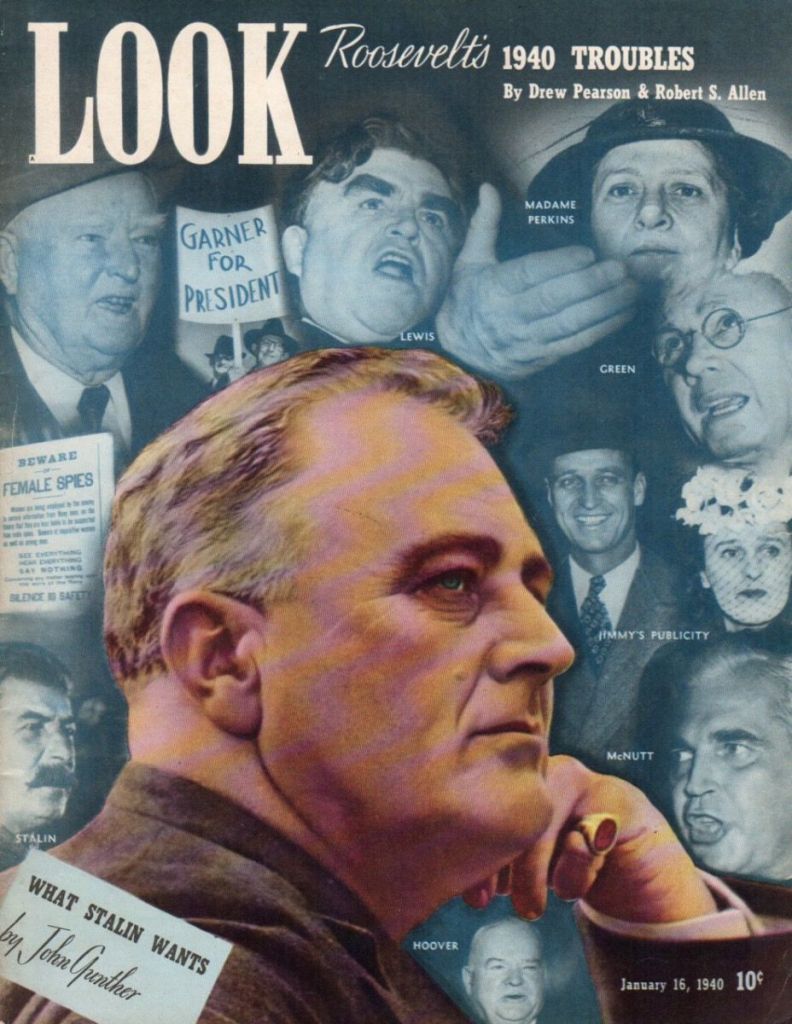
United States President Franklin D. Roosevelt says the USA can extend a non-military loan to Finland as this would in his opinion not compromise U.S. neutrality.
The Swiss Medical Association announces it is to send a group of volunteers to Finland.
A report which vividly describes Nazi atrocities in Poland is presented to the Polish government-in-exile in France. It contains graphic accounts of public executions, forced labor, looting and hostage-taking on a vast scale. In Poznan, for example, the German occupation forces are said to have shot 5000 Poles. Thousands more are being held in makeshift concentration camps. Mass arrests of prominent Poles are commonplace and Germans are said to take precedence over Poles for food, clothes and housing. The Jews and Gypsies in Nazi-occupied Poland are said to suffer brutal persecution and indignities.
Germany and Hungary tonight agreed upon a new trade schedule calling for increased exports of foodstuffs to Germany and amounting to a German “fait accompli” in the face of French-Hungarian trade talks scheduled to begin in Paris within two weeks.
British Parliament met for the first time in the New Year. Prime Minister Neville Chamberlain made a speech on the general war situation which concluded, “At the moment there is a lull in the operations of war, but at any time that lull may be sharply broken, and events may occur within a few weeks or even a few hours which will reshape the history of the world. We, in this country, hope, as do the peoples of every nation, that the just and lasting peace which we are seeking will not be long delayed. On the other hand, it may well be that the war is about to enter upon a more acute phase. If that should prove to be the case, we are ready for it, and in common with our Allies we will spare no effort and no sacrifice that may be necessary to secure the victory on which we are determined.”
The political ghost of Leslie Hore-Belisha, former War Minister, appears to have been exorcised with impressive parliamentary rites this afternoon. The former Minister, who was eased out of the Cabinet by Prime. Minister Neville Chamberlain, made a rather cryptic but properly diplomatic valedictory as a Liberal member of the Conservative Government. The Prime Minister then dwelt at length on the theme that he had done what he thought best, that nobody had guessed correctly the reasons for his act, and that he was not going to tell the inside story now. The discussion left the members of Parliament confused but mostly convinced that, while it was all very puzzling, it was probably all for the best. The remarks of Clement Attlee and Sir Archibald Sinclair, leaders of the Labor and Liberal oppositions, respectively, following Mr. Chamberlain’s speech indicated that there would be no further clamor from them about the fall of Mr. Hore-Belisha provided they were satisfied that the reforms he helped to initiate in the army would be spared.
Early this month, Prime Minister Chamberlain dismissed Hore-Belisha from the War Office. He had been in an increasingly untenable position due to his disputes with the Army high command and the King and hostility from sympathisers within the public of the British Union of Fascists after Oswald Mosley claimed him to be a “Jewish warmonger”. By 1940, his relations with Lord Gort, commander of the British Expeditionary Force (BEF) in France, had deteriorated such that neither man had confidence in the other. Gort and other generals disliked Hore-Belisha’s showmanship, but their main disagreements had stemmed from the Pillbox affair, concerning the defence of France along the border with Belgium. Hore-Belisha was unpopular amongst his fellow ministers, with meetings of the War Cabinet said to be regularly tense and loud. As a result, Chamberlain agreed to replace him as Secretary of State for War. Military antisemitism contributed to tensions between Hore-Belisha and Gort, with Henry Pownall, the chief of staff to the BEF in France and Belgium until the fall of France in May 1940, claiming in his diary that “the ultimate fact is that they could never get on – you couldn’t expect two such utterly different people to do so – a great gentleman and an obscure, shallow-brained, charlatan, political Jewboy”.
King George and Queen Elizabeth, accompanied by Princess Elizabeth and Princess Margaret Rose, returned to Buckingham Palace today from Sandringham, where they had spent the Christmas vacation. The King later held a Privy Council in the palace when Oliver Stanley received his seal of office as War Secretary and Sir John Reith, the new Information Minister, was sworn in as a Privy Councillor. The Prime Minister was received by the King tonight.
The Admiralty finally announces the loss of the HMS Seahorse, HMS Undine and HMS Starfish on 7-9 January. The Germans then chime in that they have rescued parts of the crew from two of the British boats.
Sixty-six Communist members are ejected from the French Chamber of Deputies. By a vote of 521 to 2, after a discussion that at times was passionate and throughout was marked by the desire on the part of all to have done with both Fascist and Communist doctrines, the Chamber of Deputies this evening passed a bill that, if ratified by the Senate, will exclude from Parliament and municipal government in France all Communist Deputies. It will also exclude those who did not by October 26 categorically repudiate all adhesion to the international Communist party and all participation in its activities.
Pope Pius XII has told Britain, in answer to a question whether his recent statements implied any criticism of the Allies’ war aims, that the Vatican expresses neither approval nor censure of any country’s political policy except Russia’s, reliable sources said today.
The first Spitfire PR Mk.IB is delivered. This photo reconnaissance version has an additional 29 gallon fuel tank installed in the aft fuselage, instead of the ballast carried by earlier types.
General Wavell embarks on an inspection tour of Palestine and Iraq.
At 1619, the British motor tanker Inverdargle in Convoy HXF 15 struck a mine laid on 9 November 1939 by U-33, broke in two and sank in the Bristol Channel SW of Nash Point. The master and all 48 crew members perish in the frigid winter weather some 30 miles from their destination. The stern section lies at 51°16´31 N 03°47´15 W and the bow lies 1300 meters Northeast. The 9,456 ton Inverdargle was carrying aviation fuel and was bound for Avonmouth, England.
At 0611, the unescorted Greek cargo ship Panachrandos was hit by one torpedo from U-44, commanded by Kapitänleutnant Ludwig Mathes, west of Brest, broke in two & sank within three minutes at 48°30′N 9°10′W. All of the ship’s complement of 31 died. The 4,661 ton Panachrandros was headed for Key West, Florida.
The British passenger ship Gracia in Convoy OB.72 was damaged by a mine laid on 6 January by U-30 about 5 miles WSW of the Bar Lightvessel, Liverpool and was beached. She was later refloated, repaired and returned to service. The 5,642 ton Gracia was carrying general cargo and was bound for St. Johns, U.S. Virgin Islands.
The Belgian steamer Joséphine Charlotte (3422grt) is sunk in the minefield laid by German destroyers on 6 January 1940, at 51 32N, 01 33E; four crew were lost and the survivors rescued by steamer Mickleton (777grt). The wreck was dispersed by explosives.
The Greek cargo ship Pelinaion ran aground off St. David’s Head, Bermuda and broke in two.
The Italian cargo ship Premuda collided with a lightship and was beached on the Goodwin Sands, Kent. There were no casualties. She was later raised and repaired.
The Danish cargo ship Chile ran aground in the Kattegat. There were no casualties.
Convoy OA.73GF departs Southend.
Convoy OB.72 departs Liverpool.
Convoy OB.73 departs Liverpool.
Convoy HG.15 departs Gibraltar for Liverpool.
Convoy SL.17 departs Freetown for Liverpool.
The War at Sea, Tuesday, 16 January 1940 (naval-history.net)
Heavy cruiser NORFOLK departed Rosyth on patrol duties, and arrived in the Clyde on the 23rd.
Light cruiser NEWCASTLE departed Scapa Flow on patrol and arrived back on the 18th.
Light cruiser DIOMEDE departed Scapa Flow on patrol.
Armed merchant cruiser DERBYSHIRE arrived at the Clyde from Northern Patrol.
Armed merchant cruiser CALIFORNIA departed the Clyde on Northern Patrol.
Anti-aircraft cruiser CURLEW departed Scapa Flow for the Humber, and on passage arrived at Rosyth on the 16th.
Destroyers IVANHOE and INTREPID were to conduct minelaying operation IE-3 in the North Sea, but it was cancelled due to bad weather.
Destroyers KIMBERLEY and KELVIN collided at sea SE of Barra in 56-45N, 7-15W between the Clyde and Scapa Flow. KIMBERLEY was not damaged, but KELVIN was taken to the Clyde for repairs, escorted by destroyer BEDOUIN. Repairs to KELVIN were completed on 2 February. KIMBERLEY arrived at Scapa Flow on the 16th.
Destroyer EXMOUTH and cable ship ROYAL SCOT arrived at Rosyth after an unsuccessful attempt in bad weather to repair the Danish cable.
Destroyers SIKH and MOHAWK departed the Clyde escorting base ship MASHOBRA to Scapa Flow. They arrived at Scapa Flow on the 18th, and the destroyers went on to Rosyth arriving later that day.
Submarine SUNFISH departed Harwich on patrol.
Submarine H.34 departed Rosyth to exercise in the Firth of Forth, and off Inchkeith, rendezvoused with sloop FLAMINGO.
Salvage ship TEDWORTH, escorted by escort vessel/minesweeper JASON departed the Clyde for Liverpool.
Tanker INVERDARGLE (9456grt) was sunk on a mine laid by U.33 in 51‑61N, 03‑43W on 5 November, with the loss of all 44 crew.
Italian steamer PREMUDA (4427grt) collided with a Lightship and was run aground on Goodwin Sands to prevent her sinking.
Convoy HG.15 departed Gibraltar with 37 ships on the 16th, escorts:
16th — Destroyer WITHERINGTON, French TARTU and VAUQUELIN, and sloop WELLINGTON joined.
19th — WITHERINGTON detached to convoy OG.15.
23rd — Convoy split, WELLINGTON escorted HG.15B.
25th — TARTU and VAUQUELIN detached.
The convoy arrived on the 25th
French light cruiser DUGUAY TROUIN and destroyer RAILLEUSE departed Casablanca with French steamer DE LA SALLE for Lorient, and French steamer BRAZZA departed Casablanca at the same time, escorted by destroyer BASQUE for Bordeaux. The destroyers were relieved on the 17th by large destroyer JAGUAR, which had departed Brest on the 15th, and destroyer BOUCLIER from Lorient.
Convoy SL.17 departed Freetown escorted by armed merchant cruiser CARNARVON CASTLE and destroyer DAINTY. The armed merchant cruiser was with the convoy until the 31st, but the destroyer was detached in the local approaches. On 2 February, sloop ROCHESTER and destroyers VISCOUNT and WALKER joined the convoy and escorted it until its UK arrival on 4 February.
At 0700, steamer HIGHLAND PRINCESS (14,133grt) coming out of La Cruz, Canary Islands, was attacked by French submarine PASCAL which mistook her for a German blockade runner. No damage was done.
New Zealand light cruiser HMNZS ACHILLES departed the Falkland Islands for patrol in the Rio de Janiero area.
Today in Washington, President Roosevelt sent to Congress a letter suggesting financial aid to Finland. He conferred with William Green, president of the American Federation of Labor, and with Josephine Boche and members of the Interdepartmental Committee on Health and Welfare.
The Senate debated the proposal to extend financial aid to Finland, confirmed the nominations of Frank Murphy to be associate justice of the Supreme Court, Robert Jackson to be Attorney General and Francis BidIdle to be Solicitor General and adjourned at 2:48 PM until noon on Thursday. The Monopoly Committee heard testimony in regard to the copper industry.
The House debated Finnish aid proposals, began consideration of the $1,100,212,307 Independent Offices Appropriation Bill and recessed at 4:19 PM until noon tomorrow. The Ways and Means Committee heard A. Manuel Fox of the Tariff Commission on the trade. treaty extension proposal, the Smith committee continued its examination of National Labor Relations Board trial examiners; the Naval Affairs Committee concluded questioning of Admiral Stark on the Naval Expansion Bill and the Military Affairs Committee heard Secretary Woodring and General Marshall on the army’s defense aims.
Transmission to the Congress by President Roosevelt of a formal proposal that methods of aiding Finland in her struggle against Russia be studied set off a sharp debate in the Senate today. Influential members questioned both the proposed action and a suggestion that it be done through the Export-Import Bank, a corporation within the Federal Loan Agency. The President suggested no formal procedure and named no sum of money, although it was reported in well-informed circles that perhaps $25,000,000 would be earmarked for Finland. This would be in addition to a credit of $10,000,000 already granted that country for the purchase of American agricultural products and “other civilian supplies.”
Representative Sam Rayburn, the majority leader of the House, rose on the floor to state that the proposed loan plan would, he believed, “in no wise involve us in war,” and to suggest that perhaps Finland could use agricultural products purchased under loans from the United States to barter ‘other products.’ “If Finland does not need agricultural products,” he said, “she can trade them for other products.”
His remark was obviously a reference to a plan reported to have been discussed here to the effect that Finland might buy with the $10,000,000 credit already granted cotton that she does not need but that could be exchanged in France. for an equivalent value in munitions. The Senate debate revolved more directly around the question of reviving the foreign loans to belligerents. Senators Tom Connally and Walter F. George won an agreement in that chamber under which the Banking and Currency Committee will consider the financial program but the Foreign Relations Committee will pass on the foreign policy issue.
This compromise, in which the Texas and Georgia Senators prevailed over Senator Alben W. Barkley, the majority leader, and Senator. Robert F. Wagner, chairman of the Committee on Banking and Currency, was proposed by Senator Charles L. McNary, the minority leader. In the meantime two other Senators, John A. Danaher, a Republican, and Guy M. Gillette, a Democrat, attempted to invoke procedure established in the new Neutrality Act under which the Congress itself may stop credit extension to belligerents by agreeing in concurrent resolution that “states of war” exist even where war has not been formally declared.
Mr. Danaher offered a resolution to that effect naming Russia and Finland. Mr. Gillette attempted the same procedure with regard to Japan and China. Both resolutions were offered before receipt of the President’s proposal, written in the form of letters addressed to Vice President John N. Garner as president of the Senate and to Speaker William B. Bankhead of the House. When reporters attempted to obtain comment on the letter and the reception it had in Congressional circles at a White House press conference this afternoon, Mr. Roosevelt advised reporters to read the letter again.
The president indicated that he had no intention of declaring a state of war to exist between Russia and Finland, short of a declaration by one of those countries. In his letter to the Vice President and the Speaker, he said it went without saying that there existed a great deal of sentiment throughout the country for helping Finland finance purchases of agricultural surpluses and manufactured products in the United States, “not including implements of war.”
The House Appropriations Committee today sent to the floor the Independent Offices Supply Bill, after it had slashed it to $94,492,166 below budget recommendations. For the first time this session, leaders saw the possibility of trimming estimates by enough to obviate the need of new taxes or of an increase in the national debt limit this year. The committee’s reduction of the estimates from $1,194,704,473 to $1,100,212,307 took the House by surprise. Representative Woodrum of Virginia, leader of the economy forces, pressed his advantage by a speech in the House which served notice that the full committee would oppose any upward changes in the bill.
During the next five years the U.S. Navy probably will need more than $2,000,000,000 for new construction and replacements, Admiral Stark, Chief of Naval Operations, disclosed today in his testimony before the House Naval Affairs Committee in support of the $1,300,000,000 naval expansion bill. He promised a complete and accurate breakdown of the probable cost of the construction tomorrow or as soon as the Navy Department can complete such a breakdown. Representative Bates of Massachusetts estimated the money outlay, based on the construction authorized in the $1,000,000,000 expansion bill of 1938, unexpended deficiency appropriations and the pending $1,300,000,000 expansion bill, at $2,716,000,000. Admiral Stark was not ready to challenge the accuracy of these estimates, stating that he did not have the figures before him. An accurate estimate, he promised, would be supplied to the committee just as soon as the estimates could be checked for accuracy. The new construction involved in the navy’s program totals 145 ships, of which seventy-seven are provided for in the bill now before the committee.
Army Secretary Woodring told the House Military Committee today that deficiencies of “critical ordnance and engineer items” to supply the so-called protective mobilization force of 750,000 men would cost at least $300,000,000, none of which, he added, was to be included in the Army’s regular appropriation bill soon to be submitted to Congress. Preliminary to a closed session to discuss the army’s needs and the progress of its current mechanization program. Mr. Woodring told the committee the forthcoming appropriation bill would enable the army virtually to complete modern equipment for 227,000 men of the Regular Army and 235,000 in the National Guard. He termed the President’s request for $1,007,000,000 “a wise step” toward fulfillment of army objectives. “It is my hope that we will emerge from the present period of military reconstruction with an ‘army in being,’ a bulwark for peace,” Secretary Woodring said. “I contend that the maintenance of that military establishment is justified by the fact that through its existence in these tragic days, we can speak for peace, can speak with authority for peace.”
Incomplete returns from yesterday’s Democratic primary indicated early today that the Louisiana political machine set up by Huey P. Long in 1928 was in the most serious test in its history. Governor Earl K. Long, brother of Huey, was building up a commanding lead in New Orleans in the Governorship contest, but Sam H. Jones, Lake Charles attorney, topping the four “reform” candidates, was ahead in slow returns. from the country parishes. It appeared probable that a second primary would be necessary on February 20. The Long dynasty never before found it necessary to go into a run-off, either during Huey’s lifetime or after he was shot and killed in September, 1935.
Frank E. Gannett, publisher and a leader in the successful fights against President Roosevelt’s campaigns for expansion of the Supreme Court and reorganization of the Federal Government, announced today his Candidacy for the Republican Presidential nomination.
Official quarters revealed today that the State Department was looking askance at approval by the Maritime Commission of the proposed transfer of eight United States Lines ships to Norwegian registry.
Premier Mitchell Hepburn of Ontario today accused the Canadian Government of inefficiency in prosecuting the war. In an attack delivered in the Provincial Legislature, he asserted that an officer of the Royal Canadian Engineers had been able to obtain an overcoat only after he had become ill and had recovered in a hospital. The officer, Mr. Hepburn said, was Lieutenant Colin Campbell, former Minister of Public Works. “Yet Prime Minister King says Canada has been anticipating war for two years,” said Mr. Hepburn. “If Lieutenant Campbell had died, he would have died as the result of neglect by the Dominion Government.” Mr. Hepburn said he had been told by military officers that some recruits in the Canadian force had developed tuberculosis as a result of being improperly clad. They received underwear “not fit to be put on a human being and footwear that wouldn’t last two weeks,” he charged.
Permission has been granted to the United States Navy to patrol Costa Rican territorial waters in connection with enforcement of the Pan-American security zone, it was announced today.
The Inter-American Permanent Neutrality Committee held a short meeting this afternoon at which discussion centered on Uruguay’s note on the cases of the German pocket battleship Admiral Graf Spee and freighter Tacoma. No action was taken. At its next meeting tomorrow the committee is expected to continue its discussion. The committee also studied the British rejection of the American security belt proposal. All committee sessions are to be secret. No program will be drawn up. After each session, a time will be set for the next meeting.
Former Premier Wang Ching-wei, who is slated to head the new Japanese-sponsored Central China government to be proclaimed soon in Nanking, telegraphed nationalist Generalissimo Chiang Kai-shek yesterday, urging him to join Mr. Wang in making peace with Japan. No answer has been received from the generalissimo, and Mr. Wang’s adherents admitted it was possible the peace plea would be ignored. Mr. Wang told General Chiang that China should make peace with Japan on the basis of the declaration of no annexations and no indemnities made by Prince Fumimaro Konoye, former Japanese Premier, on Dec. 22, 1938, and added that if the general accepted the proposal Mr. Wang and his associates, who deserted the Chungking regime about the time the Konoye declaration was made, would go to the nationalist capital to discuss details.
Should General Chiang continue his “unreasonable” opposition to a peace that is wanted by all the Chinese people, Mr. Wang said, the Wang group will go ahead with their plan to negotiate a Japanese-Chinese peace agreement for East China and permit the Japanese to continue their warfare against General Chiang. The world situation and the present position of the Chungking government are such that General Chiang can have no hope for victory, and therefore peace should be made. at the earliest possible moment, Mr. Wang said.
The former Premier recalled that a withdrawal of Japanese troops from China was desired by all Chinese and intimated that this could be brought about if General Chiang would enter the Wang peace movement. If the generalissimo persists in his refusal to make peace, Mr. Wang said, the responsibility for a continuation of Japanese garrisons in China will rest solely with the Chungking government. Japan is ready to discuss the evacuation of her armed forces the moment peace is made, Mr. Wang asserted.
Reports of Wang Ching-wei’s message to Generalissimo Chiang Kai-shek created a sensation in informed quarters. Government circles, however, declared it had no information regarding the message and had no comment. There is much speculation as to Mr. Wang’s motive in sending proposals to Chungking. The first reaction of unofficial Chinese and foreigners was that the telegram, if prompted by the Japanese, was a confession of defeat and a plea for peace.
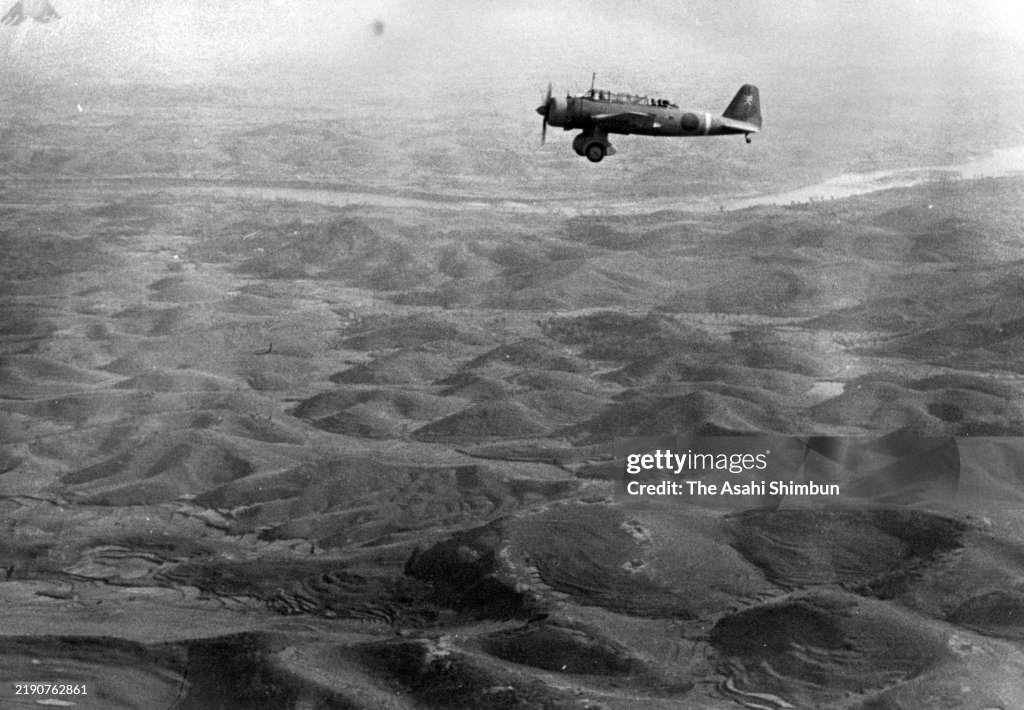
Chinese Winter Offensive: Chinese 4th War Area captures Yinchanao north of Canton.
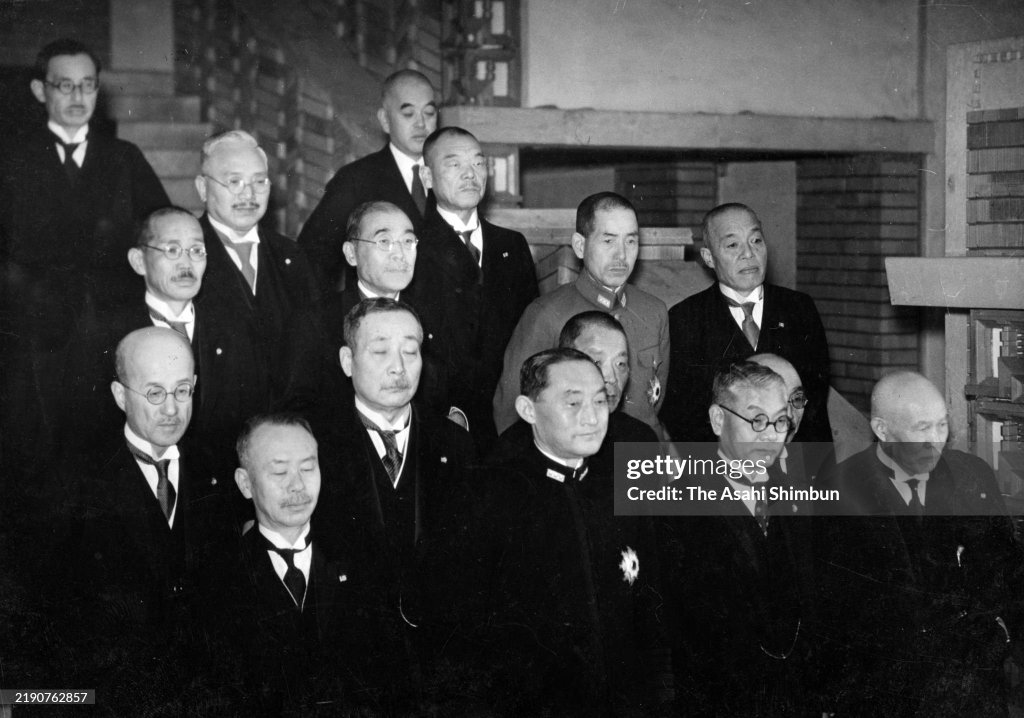
Mitsumasa Yonai replaced Nobuyuki Abe as Prime Minister of Japan. The emperor of Japan today appointed Admiral Mitsumasa Yonai, aged 60, to form a new cabinet after General Abe & his ministers resigned after an urgent session early on 14 January.
The new Japanese Cabinet headed by Premier Admiral Mitsumasa Yonai will strive for an early settlement of all differences with the United States and Russia and will carry out the pledge of the preceding Cabinet for reopening the Yangtze River valley in China to general international trade, Foreign Minister Hachiro Arita said in his first statement to the press last night. The newspaper Asahi stated, however, that American-Japanese talks were not in a position to be resumed, because the opening of the Yangtze River to foreign shipping “cannot be realized because of local conditions.”
Dow Jones Industrial Average: 145.67 (+1.02)
Born:
Franz Müntefering, German politician (Vice-Chancellor of Germany, 2005–2007), in Neheim, Germany.
John Meyers, NFL defensive tackle (Dallas Cowboys, Philadelphia Eagles), in Forest City, Iowa (d. 1998, while waiting for a heart transplant).
Bob Baird, MLB pitcher (Washington Senators), in Knoxville, Tennessee (d. 1974, shot during a domestic dispute).
Rod Miller, MLB pinch hitter (Brooklyn Dodgers), in Portland, Oregon (d. 2013).
Naval Construction:
The Kriegsmarine (German Navy) Type VIIC U-boats U-455, U-456, U-457, and U-458 are ordered from Deutsche Werke AG, Kiel (werk 286-289).
The Kriegsmarine (German Navy) Type VIIC U-boats U-587, U-588, U-589, U-590, U-591, U-592, U-593, U-594, U-595, U-596, U-597, and U-598 are ordered from Blohm & Voss, Hamburg (werk 563-574).
The Kriegsmarine (German Navy) Type VIIC U-boat U-651 is laid down by Howaldtswerke Hamburg AG, Hamburg (werk 800).
 History Diaries