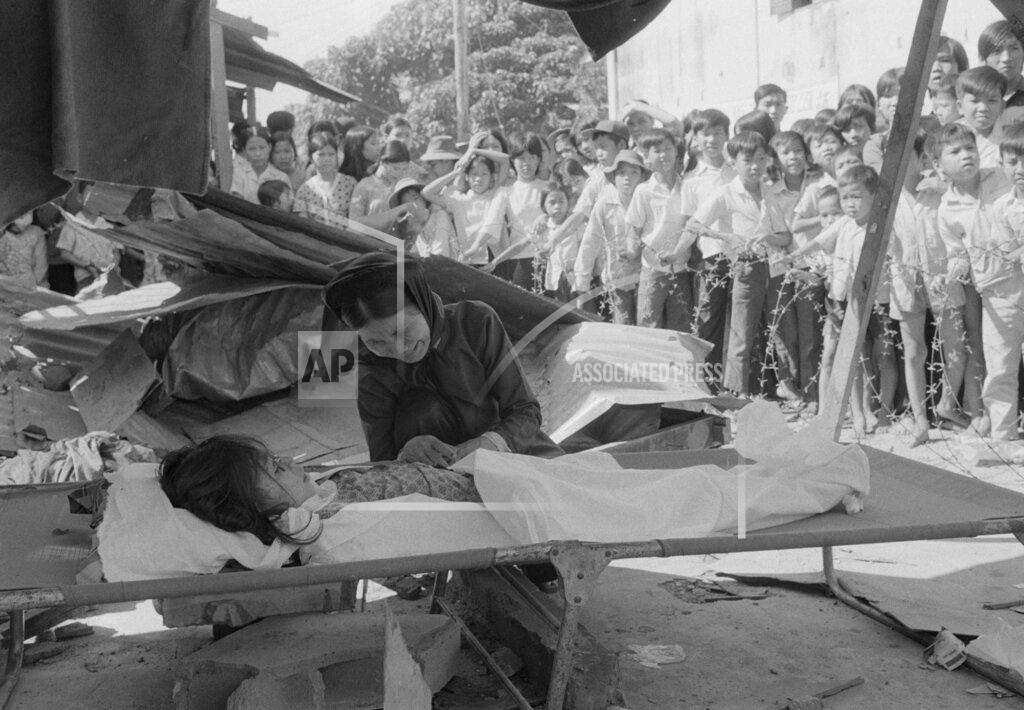
The nocturnal rocketing of Biên Hòa, which lies 15 miles northeast of Saigon, is one element of a suddenly stepped‐up campaign of sabotage, terrorism, and assassination by Việt Cộng guerrillas on four sides of the capital. Scattered guerrilla exploits, some of them on the very outskirts of Saigon, have stirred tension and anxiety, but not panic, in hamlets and villages of Giã Định and Biên Hòa Provinces. A policeman in Thành Lộc village, five miles north of Saigon, pointed at a thick clump of bushes and observed. “They may be in there watching us and you never know until they open fire. Then you know, but it is too late.” “They are like crickets,” the policeman added. “They disappear when you approach, but you know very well they are near you.
The guerrilla campaign around Saigon apparently has several objectives. It makes Saigon edgy, gives the impression that the government is not in control, ties down troops that are needed to check larger military thrusts elsewhere, and on occasion, claims an important military or economic target. A week ago, a Communist sabotage team broke into the Thủ Đức power station, five miles northeast of Saigon and blew up a transformer. Saigon was blacked out from 4 to 5 in the morning. Had the sabotage team been more expert, a French engineer observed, it would have placed the explosive charge on a generator a few yards from the transformer. “That would have taken at least 48 hours to repair,” he said, with a jolly laugh.
Early on the morning of January 6, Việt Cộng gunners fired dozen rockets at the huge Phú Lâm communications center on the western fringe of Saigon. The six rockets that fell on‐the grounds of the center did no damage; six others fell into an adjacent slum area, killing four people and wounding 13. Another evident target is the sprawling Nhà Bè petroleum depot, seven miles southeast of Saigon, which was blown up a year ago, sending up almost half the country’s civilian gasoline stocks in an, enormous cloud of gray‐black smoke that hung over the city for two days. The Saigon military command on occasion laconically recounts aborted attempts on Nhà Bè in its daily communiqués, as on January 4: “In Giã Định Province, at 2045 last night, Government militiamen detected two Communist frogmen in the docking area of Esso fuel depot northeast of Nhà Bè district town. The militiamen killed both the frogmen and captured one mine.” To some foreigners and even some Vietnamese, it comes as a revelation that guerrillas can operate with impunity in the orchards, forests, and rice fields on the edges of a city of three million people.
But the guerrillas have always been there. A hoary song for example, celebrates the victories of the people of An Phú Đông over the French. In 1975, An Phú Đông, which nestles in a bend of the Saigon River four and a half miles north of the capital, is still “insecure.” In fact, a principal road running from the town of Lái Thiêu to the Saigon suburb of Gò Vấp past An Phú Đông, is now “dangerous,” according to local people. Intimately informed on the area, the guerrillas can operate with a certain precision. On the evening of January 9, they reportedly entered Dân Trí hamlet near An Phú Đông, and knocked on the doors of off-duty militiamen, demanding their weapons. Nineteen weapons were said to have been collected that night.
It is uncertain how the guerrilla campaign will unfold in the Saigon area. Much may depend on the success, or failure, of Communist main force units in their current dry season campaign. In Saigon there are predictions of terror or rocket attacks in the city. But some military analysts dismiss such notions judging that the Communists want to avoid headline-grabbing undertakings in favor of actions that gradually and dramatically undermine the government’s hold. “I think they would be pretty stupid to rocket Saigon,” said one Western military analyst who believes the Communists want to avoid giving the world the impression that they have scrapped the Paris peace agreements. Virtually all military units in the Capital Military District have been on full alert for three months. Militia and ranger teams are sweeping the farmlands north of Gò Vấp and around Nhơn Trạch, 11 miles southeast of the capital.
The Paris agreements appear to be exerting less influence on events in Vietnam than at any time since they were signed two years ago. Although they led to the release of American prisoners and the withdrawal of American troops, the war they sought to end is being fought at a tempo comparable to that of the early years of American involvement. More South Vietnamese soldiers died in 1974 than in 1965, 1966, or 1967.
The American Embassy in Phnom Penh said today that there was an emergency contingency plan to use the United States Air Force to run a large supply airlift into Cambodia to keep the Phnom Penn Government from falling to the insurgents. However, the embassy, responding to questions, said this would be done only “as a last resort” and that it was “not even being considered at this point” — because the military situation did not yet warrant it. With the insurgent offensive now two weeks old, the government’s supply situation is not getting any better. For the Communist‐led rebels have effectively cut the Mekong River on which Phnom Penh normally depends for 80 percent of its supplies.
Not a single river convoy — bringing American-provided food, gasoline, ammunition and other essentials from Thailand and South Vietnam — has been attempted since the insurgents opened their annual dry‐season offensive on New Year’s Day. Phnom Penh is beginning to run short of basics. Gasoline rationing, for example, began on Monday. Ammunition alone is being expended at a rate of 600 tons a day. Then, too, 600 tons of rice a day are needed for Phnom Penh and its environs not to mention fuel, medicines spare parts and other supplies.
For the fiscal year that will end June 30, Congress has imposed a ceiling of $452‐million on military and economic aid to Cambodia — which is about $200 million less than last year. When President Ford signed the foreign aid bill, he called the Cambodia part “clearly inadequate” and made it clear that he would ask for more later. Reports from Washington now indicate that he may ask for $150‐million to $200‐million in additional aid for Phnom Penh. However, Congress seems to be in a resistant mood. An increasing number of Congressmen have come to feel that aid to Cambodia is not bringing the situation closer to peace talks but is prolonging the war. This clashes directly with the views of Secretary of State Kissinger, who said he believes that the limits on aid encourage insurgent attacks and reduce the likelihood of negotiations.
Finance ministers representing both rich and poor countries announced in Washington a series of agreements aimed at helping the international economy cope with the vast flow of funds to oil-producing countries and at dealing with several other monetary problems. John Turner, Canada’s Finance Minister, said of the agreements, “I think it can be said we have made significant progress in assuring world economic stability.”
The Soviet Union asserted that it was not to blame for the collapse of the 1972 trade agreement, and still sought trade with the United States, but only on a “mutually beneficial” basis. The statement was made through the official press agency, Tass, to rebut speculation in the Western press that Moscow’s unwillingness to carry out the agreement meant a departure from its policy of accommodation with Washington. “No changes have or could have taken place in the Soviet policy of détente,” Tass said noting that the policy had been sanctioned by the 24th Communist Party Congress in 1971. “As for trade, it is not a unilateral process.” Tass continued. “We want and are prepared to trade with the West but, needless to repeat, only on the basis of full equality and mutual benefits.”
Anatoly F. Dobrynin, the Soviet Ambassador to the United States, has been summoned back to Moscow for a major review of foreign policy questions, including Soviet-American relations, American officials said today. The Soviet Embassy confirmed that Mr. Dobrynin planned the trip next week for talks with leading Soviet officials; but declined to go into details.
Czechoslovakia said today that she would not sign a previously initialed property settlement with the United States because of political conditions” in the “Czechoslovak supplement” of the American trade reform act. Early this week the Soviet Union renounced the 1972 trade agreement with the United States and nullified understandings on emigration as interference in Soviet domestic affairs. The Czechoslovak agreement had provided for settlement of long‐standing financial claims. These were the return to Czechoslovakia of some 18 tons of gold taken west by the Nazis and recovered by United States forces. The Czechs had agreed to pay $20.5‐million about 40 percent of claims by some 2,500 Americans who lost their property in Czechoslovakia, mainly through nationalization. The United States had agreed to grant favored trading treatment for Czechoslovak goods.
Britain announced today that she would release a number of political prisoners in Northern Ireland. An official response from the Provision Irish Republican Army leadership in Dublin was expected shortly. Both I.R.A. sources and others close to the negotiations that have been going on over recent weeks predicted that the I.R.A. would order an extension for at least a month of the holiday ceasefire it called nine days ago. Today’s British announcement was a new phase in what appeared to be the most hopeful developments in the province since a low point was reached with the downfall of the moderate Protestant‐Roman Catholic coalition government last spring.
The Provisional IRA announced in Dublin that it would not extend its 25-day cease-fire in Northern Ireland when it expired at midnight, “owing to a total lack of response to our peace proposals by the British government.” The decision was unexpected and it angered or disappointed both Protestants and Roman Catholics. Several shooting incidents were reported in Northern Ireland early Friday, only minutes after the end of the I.R.A. cease‐fire, Reuters reported. The British Secretary for Northern Ireland, Merlyn Rees issued a statement that said: “I will not be influenced by any views which are backed with threats of the bomb and the bullet. I share the feeling of outrage and disappointment of the people of Northern Ireland that the Provisional I.R.A, have today shown a total lack of concern for the people’s clear call for an end to violence.”
The kidnappers of 17-year-old heiress Lesley Whittle called her family in Highley, England, and issued new instructions for the delivery of $117,500 ransom. Police had earlier expressed fears for her life after a local newspaper published the location of a telephone booth where a member of the Whittle family was to contact the kidnappers. The family are the wealthy owners of a bus company.
The division of Cyprus into two districts came a bit closer today as about 10,000 Turkish Cypriot refugees prepared to leave the southern part of the island for Turkey and probably eventual resettlement in areas in northern Cyprus now controlled by Turkish troops.
The Italian Communist Party was accused of trying to infiltrate the Roman Catholic Church to achieve power. In an article apparently directed at left-wing Italian Catholics, the Jesuit magazine Civilia Catholica warned that the party was counting on them “to destroy the Catholic world. The article was seen as an attack on the concept of an alliance between the Catholic Christian Democrat Party and the Communists.
Twenty West European Communist parties issued a joint declaration today calling on Europeans to “block the military adventure planned by the United States in the Middle East.” Charging that the United States was using the oil crisis to extend its economic and financial influence in Western Europe, they also urged Europeans to prevent the continent from becoming “a region of the American empire.” Each of the parties issued the statement at its headquarters. The announcement by the French Communists said that they had reached such a good stage of coordination that it was not necessary to hold special conference to agree on the announcement.
President Ford stressed to Foreign Minister Yigal Allon of Israel today “the seriousness” of the situation in the Middle East the White House announced. Following an hour and 40 minutes of talks by Mr. Ford and Mr. Allon in Washington, the White House said that the President had also “repeated his commitment” to assisting Israel and the Arab countries to move toward a negotiated settlement. Mr. Ford has been telling visitors lately of his deep concern that failure to move ahead in the Israeli‐Egyptian talks now being discussed could heighten tensions and provoke a new round of fighting. Mr. Allon, according to the White House statement, “assured the President that the Israeli Government shared his desire for a negotiated settlement.”
The Middle East has entered a crucial period of a few months during which there will be either. new and much more devastating war or a breakthrough in the form a major Israeli withdrawal in the Sinai Peninsula and Israeli commitments to make withdrawals in the Golan Heights and the West Bank of the Jordan River. This is the judgment of virtually all foreign diplomats in Cairo, from Eastern Europe as well as from the West. Arab officials from countries with varying political systems concur. Although tension is mounting daily, many diplomats are beginning to believe that a new Israeli withdrawal is more likely than war.
Lebanon complained to the Security Council today, accusing Israel of having carried out “repeated and condemnable acts of aggression.” A Lebanese letter to the Council charged Israel with “long campaign of terror” against the population of southern Lebanon. Israel has charged repeatedly that guerrillas operating from southern Lebanon have been carrying out raids against her territory. The complaint from Lebanon did not ask for a Council meeting, but said that the United Nations had a responsibility to deter Israel from endangering peace and security.
Israeli artillery and tanks shelled southern Lebanon intermittently throughout yesterday according to a midnight broadcast by the Israel defense forces radio. A newsman in the area said that clouds of smoke and dust covered the mountain slope near the village of Shuba which the Israelis have attacked nightly for several days. Israel says that the village is a base for Arab guerrillas. Military headquarters said today that several shells fixed from Lebanon exploded in the Metulla area last night. The Israeis returned the fire, it said.
The foreign ministers of Iran and Iraq are planning to meet in Istanbul in the next few days for secret talks believed to center on their countries’ dispute over the Shatt-al-Arab Waterway, informed sources said. The waterway dispute has provoked several border skirmishes between the two gulf neighbors.
Chairman Mao Tse-tung has received visiting German opposition leader Franz-Josef Strauss in what Peking observers regard as a deliberate snub by the Chinese to Moscow, which has been strongly critical of Strauss’ current visit. West German diplomats said Strauss had promised not to reveal any details about the meeting until it had been officially announced by Peking.
Soviet Foreign Minister Andrei A. Gromyko, at a Kremlin dinner for Japanese Foreign Minister Kiichi, Mayazawa, said favorable conditions exist for improving Soviet-Japanese relations, Tass reported. “Of course,” Gromyko said, “there may be issues.. on which our stands do not coincide.” One of those issues — a bilateral peace treaty formally ending World War II hostilities — reportedly was under discussion by the two foreign ministers.
A 25-year-old American woman arrested two months ago in Argentina has been charged under an anti-subversion law and her case is before the courts, U.S. consular officials said in Buenos Aires. The defendant is Olga Talamante of Gilroy, California. She protested earlier that she was beaten and subjected to electric torture after her arrest but a consular official said she told him this week that she is in excellent condition and is being well fed.
Rhodesia’s African nationalist leaders attacked Prime Minister Ian Smith for saying his white minority government would never agree to black majority rule. Dr. Edson Sithole, publicity secretary of the African National Council, Rhodesia’s African nationalist organization, said: “To those who say they will not hand over to Africans, we advise them to say nothing of that sort as they might find it embarrassing to explain to themselves in a few months.”
Rep. Charles C. Diggs Jr. (D-Michigan) said in Washington he had been refused a visa for travel to South Africa and declared persona non grata by the South African government. Diggs is chairman of the House foreign affairs subcommittee on Africa. He described Pretoria’s action as unreasonable and discriminatory.
The Commerce Department reported that the nation’s total output in the last three months of 1974 declined at the fastest rate for any three-month period in 16 years, giving evidence that the country was in its most precipitous recession since World War II. For 1974 as a whole, the drop in the national output was the largest for any year since 1946 when the vast productive machinery that supported World War II was halted for conversion to peacetime use.
President Ford, insisting that immediate action to implement his economic and energy proposals was urgent, began a concerted effort to sell his new policies to the country. He held separate meetings, the first of a series, with congressional leaders, his sub-cabinet officials, other second-level administration officials, and with governors, mayors and other local leaders. There were growing indications, however, that many of the President’s proposals would be resisted.
The automobile industry’s stone wall against price cuts appeared to be crumbling with the announcement by the Ford Motor Company that it was following the lead of the Chrysler Corporation in offering large rebates in an attempt to improve declining sales. Ford’s decision is expected to put further pressure on the General Motors Corporation to make a similar offer.
Democratic representatives voted to unseat the long-term chairmen of the House Armed Services and Agriculture Committees and threw congressional tradition into turmoil for the second day. After voting narrowly to depose the Armed Services’ chairman, Edward Hebert, and W. R. Poage, the chairman of Agriculture, the 291-member Democratic majority in the House rejected recommendations of its leaders to dismiss two other veteran chairmen, Wright Patman of the Banking and Currency Committee, and Wayne Hays of the House Administration Committee.
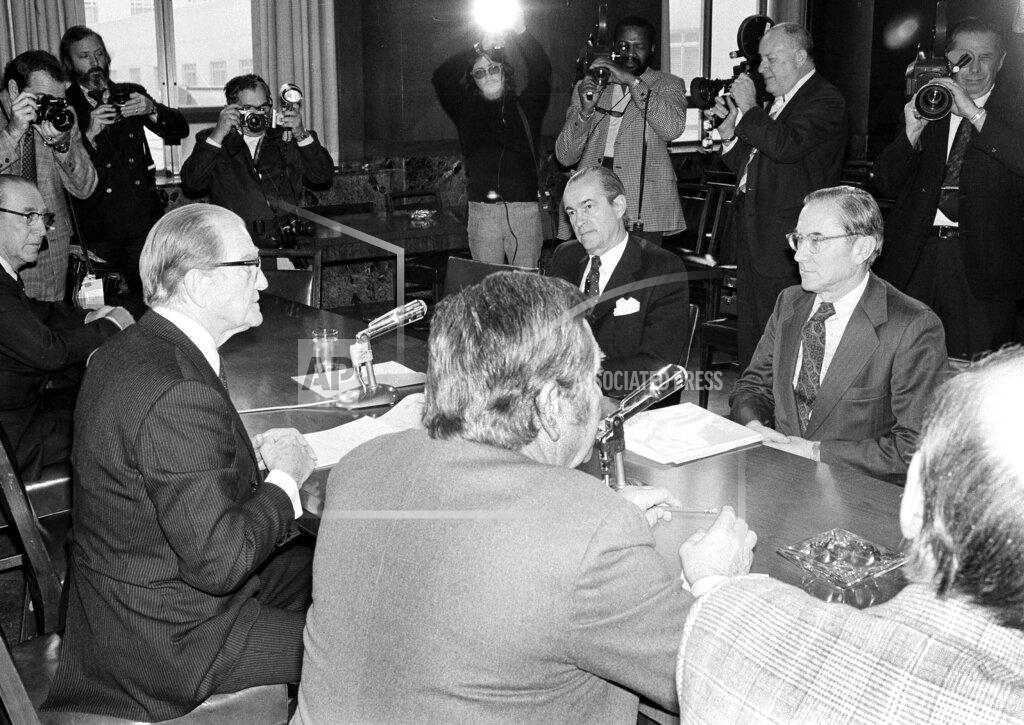
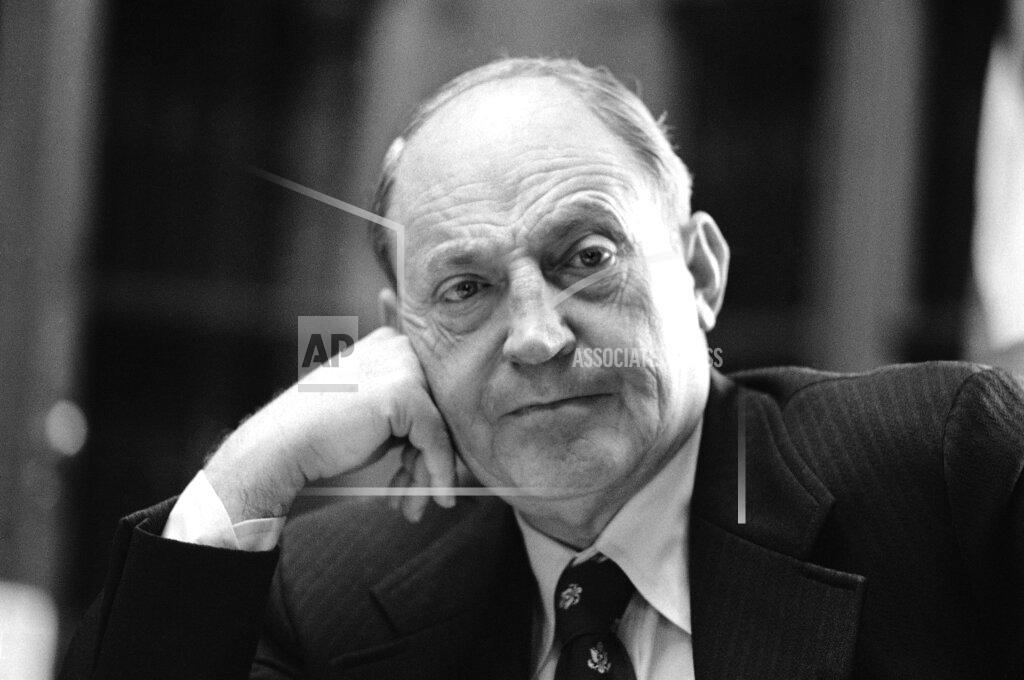
Richard Helms, former Director of Central Intelligence, told Congress today that the CIA had become involved in domestic intelligence gathering on Presidential authority because of “the sudden and quite dramatic upsurge of extreme radicalism in this country and abroad” beginning in the late nineteen-fifties.
The American Civil Liberties Union won a $12 million damage suit against the District of Columbia for the false arrest and infringement of the rights of 1,200 anti-Vietnam war demonstrators on the steps of the Capitol in 1971. A U.S. District Court jury awarded $12,000,000 to 1,200 anti-war demonstrators who had been illegally arrested on May 5, 1971, while they listened to a speech by Congressman Ronald Dellums of California at the U.S. Capitol. The amount was ordered payable by the District of Columbia government, following the suit by the ACLU. Many of the group had been detained at makeshift compounds, including the RFK Stadium. The ACLU had located 900 of the named plaintiffs.
A Senate subcommittee said it had found a pattern of prescription drug misuse in many of the nation’s nursing homes, including kickbacks from pharmacists to the nursing home operators. A survey conducted in California by the long-term care subcommittee of the Senate Special Committee on Aging indicated that over 60% of 4,400 pharmacists checked reported that they had been approached for a kickback or believed such kickbacks were widespread.
Twenty-five black servicemen and two black servicewomen protesting alleged racial discrimination barricaded themselves in a mess hall at the Air Force base in Minot, North Dakota, early in the morning but ended the takeover at noon. Air Force officials said a delegation of the protesters met with a base official and the situation was under control. Colonel Robert Spencer, base commander, said he understood the servicemen were concerned about being accepted in the community. There are about 2,500 blacks on the base, including family members, out of a total of 6,500. The last census showed North Dakota had only 2,494 blacks among its 617,761 residents.
The oil workers union reached a nationwide settlement with Amoco and Texaco but threatened strikes against four other major refiners if agreement was not reached on a new contract by noon today. The settlement, announced by the Oil, Chemical and Atomic Workers International Union, would give workers a wage increase of about 26% over a two-year contract. They now average $5.95 an hour. Union President A. F. Grospiron threatened strike action against Mobil, Union, Ashland and Standard of Ohio. Meanwhile, in New Orleans, Shell Oil Co. announced it had made a contract offer, similar to those accepted by other companies, at its Norco, Louisiana, refinery, and said the union was studying the proposal.
An independent panel set up by the Federal Aviation Administration to make recommendations to improve air safety has resigned after its authority was cut back by the Transportation Department, the FAA confirmed. FAA chief Alexander P. Butterfield formed the panel after a House subcommittee accused the FAA of failing to exercise leadership in air safety. The panel resigned last week after Transportation Secretary Claude S. Brinegar said it could not make any recommendations on policy, procedure or organization of the FAA. Brinegar and Butterfield reportedly have been at odds for some time. Meanwhile, the National Transportation Safety Board reported that 467 persons were killed in airline accidents last year — the highest total since 1960.
Ralph Nader’s Health Research Group said two widely prescribed antibiotics have been responsible for more than 15 deaths and hundreds of thousands of cases of colitis. The drugs were identified as clindamycin and lincomycin, marketed as Cleocin and Lincocin by the Upjohn Co. of Kalamazoo, Michigan. Director Sidney M. Wolfe of the Health Research Group urged the Food and Drug Administration in a letter to immediately warn all doctors and patients not to use the drugs for upper respiratory infections such as colds and sore throats and to limit other usage.
The Food and Drug Administration announced the recall of 1 million bottles of two liquid antibiotics frequently given to children. It said the manufacturer, E. R. Squibb & Sons, Inc., of Princeton, NJ., discovered that some lots of Veetids and Pentids made after March 22, 1974, were understrength. Consumers were advised to contact their physician or pharmacist.
Nuclear energy offers the only reasonable hope for a solution to the nation’s power needs for at least the next two decades, a group of 34 leading scientists said at a news conference in Washington. The group, which includes 11 Nobel Prize winners, issued a statement saying critics of nuclear power “lack perspective as to the feasibility of nonnuclear power sources and the gravity of the fuel crisis.” Meanwhile, consumer watchdog Ralph Nader and eight scientists issued a letter criticizing President Ford’s proposal to build 200 nuclear power plants. They warned of possible catastrophic accidents and the long-term danger of radiation from radioactive waste.
Three United States Air Force pilots, Majors Roger J. Smith, Willard R. MacFarlane and David W. Petersen, test pilots assigned to the F-15 Joint Test Force at Edwards Air Force Base, California, set five Fédération Aéronautique Internationale (FAI) time-to-altitude records in one day, flying this unpainted McDonnell Douglas F-15A-6-MC Streak Eagle, serial number 72-0119, from Grand Forks Air Force Base, North Dakota. The airfield’s elevation is 913 feet (278 meters) above Sea Level.
Smith took the first record: from brake release to 3,000 meters (9,843 feet) in 27.571 seconds.
The next three belonged to MacFarlane: 6,000 meters (19,685 feet), 39.335 seconds; 9,000 meters (29,528 feet), 48.863 seconds; and 12,000 meters (39,370 feet), 59.383 seconds.
The last record for the day went to Peterson, who reached 15,000 meters (49,213 feet) in 1 minute, 17.042 seconds.
The NBC television show “Ironside,” starring Raymond Burr as wheelchair-bound police detective Robert Ironside, aired its 199th and final episode after a run of eight seasons.
The Minnesota Twins release future hall of famer, 38-year-old slugger Harmon Killebrew. He was promptly signed by the Royals. He hit his 573rd and final major league home run at Met Stadium off Eddie Bane on September 18, 1975.
Dow Jones Industrial Average: 655.74 (+2.35, +0.36%)
Born:
Julie Ann Emery, American actress (“Better Call Saul”, “Preacher”), in Crossville, Tennessee.
Gillian Iliana Waters, American actress (“Take Back”), in Los Angeles, California.
Marc Jackson, NBA center and power forward (Golden State Warriors, Minnesota Timberwolves, Philadelphia 76ers, New Jersey Nets, New Orleans-Okalhoma City Hornets), in Philadelphia, Pennsylvania.
Lee Gardner, MLB pitcher (Tampa Bay Devil Rays, Florida Marlins), in Hartland, Michigan.
Zola Davis, NFL wide receiver (Cleveland Browns), in Charleston, South Carolina.
Greg Strause, American visual effects creator, in Waukegan, Illinois.
Died:
Paul Beaver, 49, American experimental musician, electronic, and psychedelic rock Moog synthesizer player (Beaver & Krause), of a cerebral aneurysm.
Thor Johnson, 61, American conductor (Cincinnati Symphony, 1947-58; Nashville Symphony, 1967-75).



 History Diaries