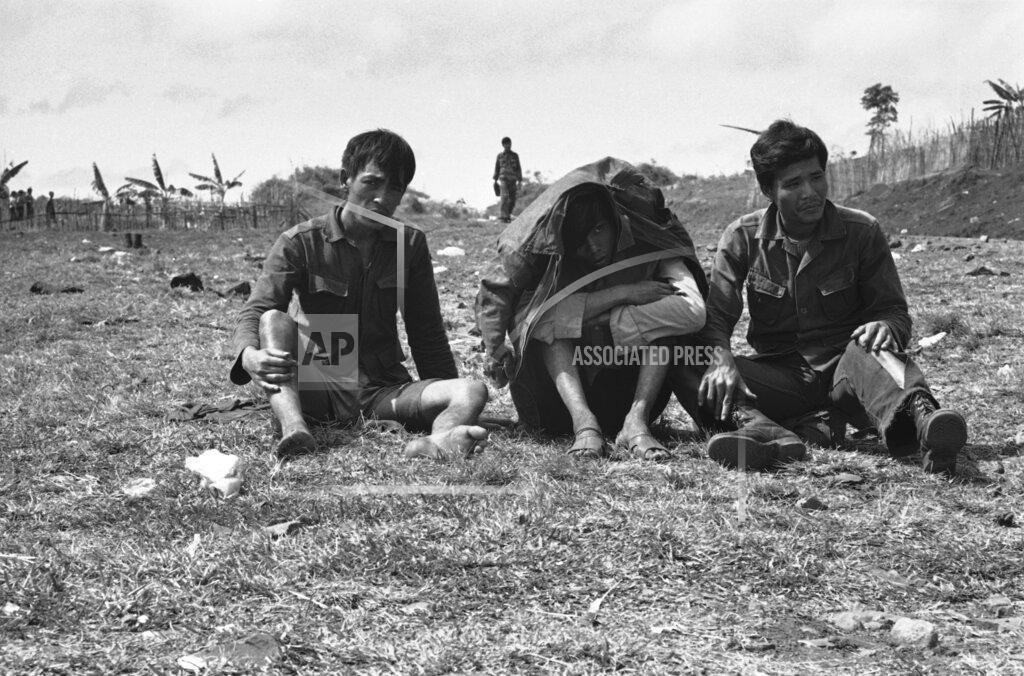
Cambodian insurgents tightened their blockade of Neak Luong today, heavily shelling the Mekong River town, sinking a barge carrying ammunition and forcing a seven‐ship convoy to return to South. Vietnam, military sources reported. Casualties were net immediately known. Rebel antiaircraft fire also hit a civilian airliner carrying Government reinforcements wounding one of the, two United States crewmen and 13 Cambodian soldiers and civilians, airline sources said. But they said the plane landed safely in Phnom Penh. Military sources said the plane was carrying 82 passengers and was requisitioned by the Government to ferry reinforcements to Phnom Penh from Battambang Province, 190 miles northwest of the capital. American supply planes from Thailand have doubled arms runs to Phnom Penh from five to 10 a day in the last week because of the insurgents’ blockade of the Mekong shipping channel, Cambodian Army sources reported.
Every 15 minutes or so a shell screams down and explodes in the besieged town of Neak Luong and another half‐dozen people are killed or wounded. It goes on day and night. The tile floors of the military infirmary and civilian hospital are slippery with blood. They have long since run out of pain‐killing drugs. Bodies are everywhere — some people half conscious crying out in pain, some with gaping wounds who will not live. Some are already dead and, in the chaos, just lie there with no one to cover them or take them. Fifty yards away, behind a wall, another shell bursts. Those who are conscious jump involuntarily. The seriously wounded are too weak to react. Inside the infirmary a 7-year-old girl, a filthy bandage over the wound in her stomach, lies on a wooden table. The only doctor in the town feels her pulse. It is failing.
Suddenly her father appears, a soldier. He has come from the spot where another of his children, a 5‐year‐old girl, has just been killed by a mortar shell. His wife was killed three years ago by shelling in another town. He picks up his daughter in his shaking arms; his face bathed in a cold sweat, contorts as he tries to hold back the tears that come anyway. “I love all my children,” is all he says as he walks away with the dying child — heading for the helicopters that are too few to carry all the wounded to Phnom Penh.
There is deep hunger in Neak Luong, too. The soldiers here are getting by, for American and Cambodian transport planes are dropping some food by parachute for them. But there is none for the civilians. By today, the 30,000 or more refugees who have fled to Neak Luong from outlying areas as the Communist‐led insurgents have advanced toward the town have been reduced to subsistence on the thinnest of rice gruel. Every day it becomes thinner. Many are living in the open and it rains almost every night. Yesterday the Catholic Relief Services, whose dogged Cambodian staff has stayed in Neak Luong to run gruel kitchens, tried to send a barge with 25 tons of rice down the Mekong River the 38 miles from Phnom Penh to the isolated town. But at the last minute, the barge was ordered to stay in Phnom. Penh. The Cambodian military said the situation was too dangerous and the barge would probably be sunk if it tried to run the insurgents’ gauntlet. “They’re going to have to airdrop more food,” said one disheartened relief worker. “That’s all there is to it. Otherwise people will starve.” Already, as one walks around the shell‐marked town one hears everywhere the sound of children whimpering.
[Ed: If Hell was a place on Earth, Neak Luong in January of 1975 would come pretty close.]
Secretary General Waldheim has agreed to let the Việt Cộng’s Provisional Revolutionaiy Government of South Vietnam open an office at the United Nations4 Geneva headquarters to deal with humanitarian matters. The United States has reportedly protested the move to both the Secretary General’s office and‐to the Swiss Government. The United States does not recognize the Việt Cộng as representing a government. When the 1973 Vietnam peace accords were signed in Paris, Mr. Waldheim discussed the possibility of a Việt Cộng liaison office at the United Nations in New York with Mrs. Nguyễn Thị Bình, the foreign minister of the Provisional Revolutionary Government. The United States protested against the idea then and indicated that it would probably not give a visa to Việt Cộng representatives. Mr. Waldheim later sought to emphasize that he had made no commitment to Mrs. Bình, and the matter was quietly shelved sometime later.
Regarding the Việt Cộng office in Geneva, a spokesman for Mr. Waldheim emphasized that it would not be a diplomatic mission but rather an office devoted to facilitating cooperation with United Nations aid agencies. The United Nations Children’s Fund and the office of the High Commissioner for Refugees provide assistance to areas controlled by the Communists in South Vietnam. The spokesman said that the Việt Cộng had asked last October for an office in Geneva. The arrangements were not disclosed, however, until the Swiss Government announced that it was providing such facilities at United Nations request.
Former Greek President George Papadopoulos appeared before an investigating judge to answer charges of treason and insurrection. The 55-year-old former artillery colonel who headed the junta that overthrew Greek democracy seven years ago, met with Court of Appeals Judge George Voltis in a small hotel on the Aegean island of Kea, to which Papadopoulos and four other members of the junta have been banished.
Police and strikers clashed in Pamplona after 20,000 workers in that northern Spanish town heeded a call for a 24-hour general strike in support of locked-out miners. At least four workers were injured when police fired rubber bullets to disperse the crowd, according to worker sources.
Britain’s runaway member of Parliament, John Stonehouse, is not resigning his seat, according to a communication received in London, a government spokesman said. It was reported earlier that Stonehouse had indicated he would resign. He is still in Australia seeking permission to remain there. In Melbourne, Stonehouse’s lawyer said he is reconsidering his position about resigning.
[Ed: Stonehouse is actually guilty of espionage and treason — but the Wilson government is more worried about its razor-thin hold on the House of Commons, and is covering that up.]
Irish Finance Minister Richie Ryan announced heavy taxation increases in a budget statement that also granted across-the-board improvements in social assistance benefits and a modest reduction in income tax. The price of a glass of liquor goes up by 11 cents and an extra 7 cents has been imposed on a pint of beer. A pack of cigarettes costs 14 cents more, a bottle of wine an added 23 cents.
The French Communist leader, Georges Marchais, who has been leading his party’s increasing denunciation of its Socialist allies in recent months, entered a hospital last night after suffering a heart attack.
West Germany has broken a Communist-directed espionage ring aimed against the International Business Machines Corporation, the Federal Public Prosecutor said today.
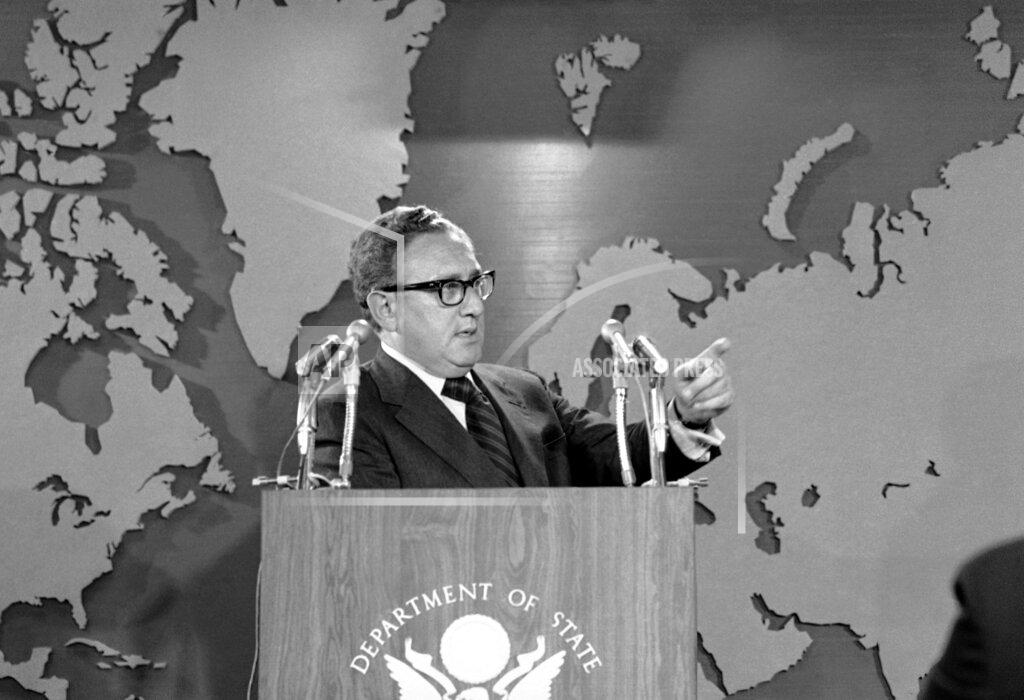
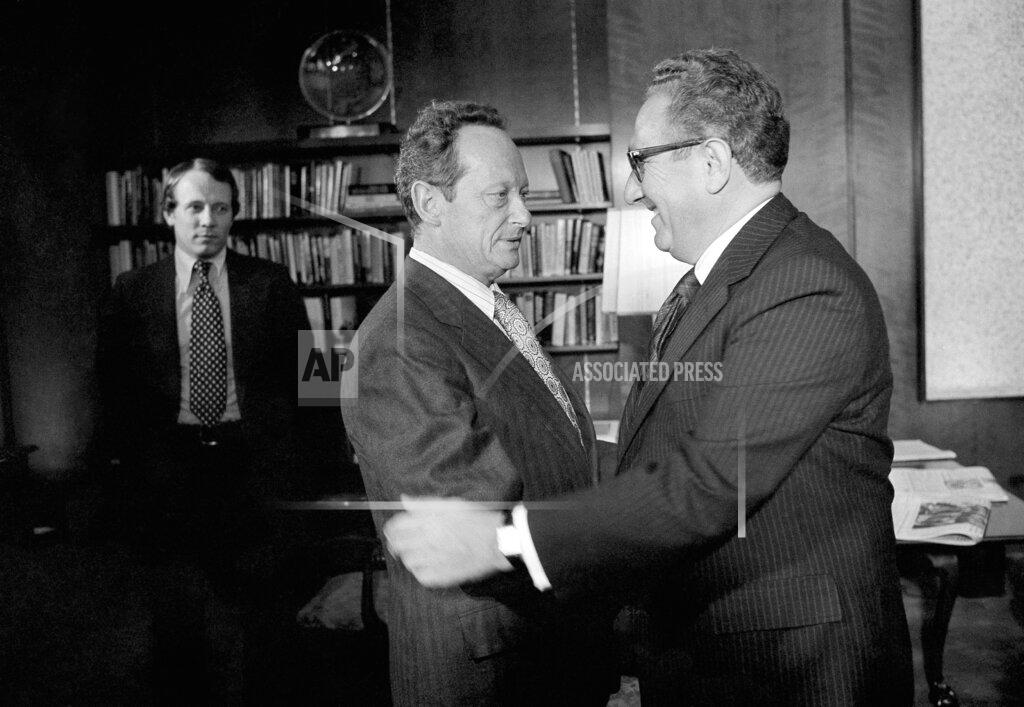
U.S. Secretary of State Henry Kissinger and Foreign Minister Yigal Allon of Israel opened a crucial series of discussions today on bow to make progress in the next round of Israeli‐Egyptian negotiations. Following their initial session at the State Department which lasted an hour and a half, Mr. Kissinger told newsmen that they had conducted a “very detailed and full review” of the Middle East situation but did not “attempt to reach any conclusions.” Mr. Kissinger disclosed that Mr. Allon, who will meet with President Ford late tomorrow had agreed to remain in Washington another day to hold additional talks with him and Vice President Rockefeller.
Four Arabs described as terrorists were killed and two Israeli soldiers wounded in a clash in southern Lebanon last night, the military headquarters announced today. Witnesses to the battle were quoted by the Reuters news agency, as saying. it was large-scale and mechanized, including tanks and armored cars. This description was forcefully denied in Jerusalem, where Israeli officials, emphasized that it was smaller than an attack in the same area yesterday. The Palestinian press agency Wafa, said Israeli artillery and tanks were shelling the village of Shuba and that an armored Israeli column was moving toward the village. There was no official Lebanese statement. The Israeli headquarters announcement said its Crops were searching the area for Palestinian guerrillas who were said to have established bases there for attacks.upon Israel.’’ The Israelis have raided nightly for the last four days blowing up buildings and roofs. The Israelis also blew up bridge on the road to El Dada to disrupt terrorist movements and returned with a prisoner detained at Khaman, the command said.
The Palestinian guerrilla command said Israeli naval vessels shelled a refugee camp and other targets in southern Lebanon today hours after an Israeli troop attack on a Southern Lebanese village. No casualties in the naval attack were immediately reported. Eight Israelis were wounded in the ground attack on the village, the Israeli command said.
A farreaching public debate is under way in Jerusalem among Cabinet ministers, leading intellectuals and commentators over the best way for Israel to proceed with negotiations, with her Arab neighbors. The debate, which intensified with the approach of the meeting in Washington today between Foreign Minister Yigal Allon and Secretary of State Kissinger, is over the relative merits of the following courses of action.
- The step‐by‐step approach initiated by Mr. Kissinger through which Israel hopes to negotiate a series of separate agreements with her neighbors, principally Egypt and Syria.
- A more ambitious attempt to reach an all‐encompassing agreement — even a peace treaty if possible — at the Middle last peace conference in Geneva.
Several months ago Mr. Peres favored the step‐by‐step approach. But he now feels there is little likelihood that President Anwar el Sadat of Egypt will agree to any concessions that could possibly justify an Israeli withdrawal from either the Sinai mountain passes or the oilfields at Abu Rudeis. Since he thinks a mutually acceptable agreement is out of the question, he has been arguing recently that Israel should abandon this approach and aim for a more comprehensive settlement at Geneva. Mr. Eban, by contrast, feels that Israel is committed to the Kissinger approach and should not now interrupt it. But he too, is pessimistic about the outcome. “It may or may not produce second‐stage agreement with the Egyptians,” he said in a telephone interview today. “But either way we will not be able to put off the basic, over‐all issues indefinitely. Sooner or later we will have to go to Geneva.”
The police chief of Ethiopia’s troubled Eritrea province is believed to have joined the secessionist Eritrean Liberation Front. The police chief, Brigadier General Goitom Gebre-Ezghi, who is missing from his post, joined the guerrilla movement after at least one meeting with ELF leaders, reliable sources said.
Fire broke out in the flood-battered southern Thailand city of Trang, destroying or damaging a reported 70 buildings. Government sources said the provincial capital lacked sufficient fire-fighting equipment. Reinforcements called from nearby provinces were hampered by flood-severed roads and washed-out bridges.
The leader of South Korea’s main opposition party demanded that President Park Chung Hee reintroduce a democratic constitution and then resign. The head of the New Democratic Party, Kim Young Sam, called a news conference after Park told newsmen the constitution should not be revised until threats posed by North Korea ceased to exist.
Muslim rebels armed with mortars and grenade launchers killed all the members of a 41-man Philippine Army patrol and attacked Government installations in renewed fighting on Jolo Island in the southern Philippines, military sources reported today.
The Alvor Agreement was signed at the Penina Golfe Hotel in Alvor, Portugal, by the chiefs of the three groups fighting for the independence of Angola (Savimbi, Neto and Roberto) and President Costa Gomes of Portugal, after which the Portuguese government announced a date of November 11, 1975, for the independence of the colony of Portuguese West Africa as Angola. The accord virtually liquidating the last colonial empire was designed to maintain peace in the rich African territory during the 10-month transition. The agreement provides a power-sharing mechanism for the three rival liberation movements in the West African territory. Angola is Portugal’s largest and richest territory in Africa.
[Ed: And as soon as independence comes, the three sides will fall upon each other in civil war.]
The Anglo-American Corp. in South Africa fired 2,400 striking black miners for attempting to encourage other workers to join a walkout at the company goldfields, a spokesman said. The strike was the latest in a series of walkouts at South African goldfields. Eight men have been killed and 33 have been injured in disturbances.
Two Soviet astronauts aboard the orbiting Salyut 4 space station carried out complex navigational experiments and set up a teletype link to earth today.
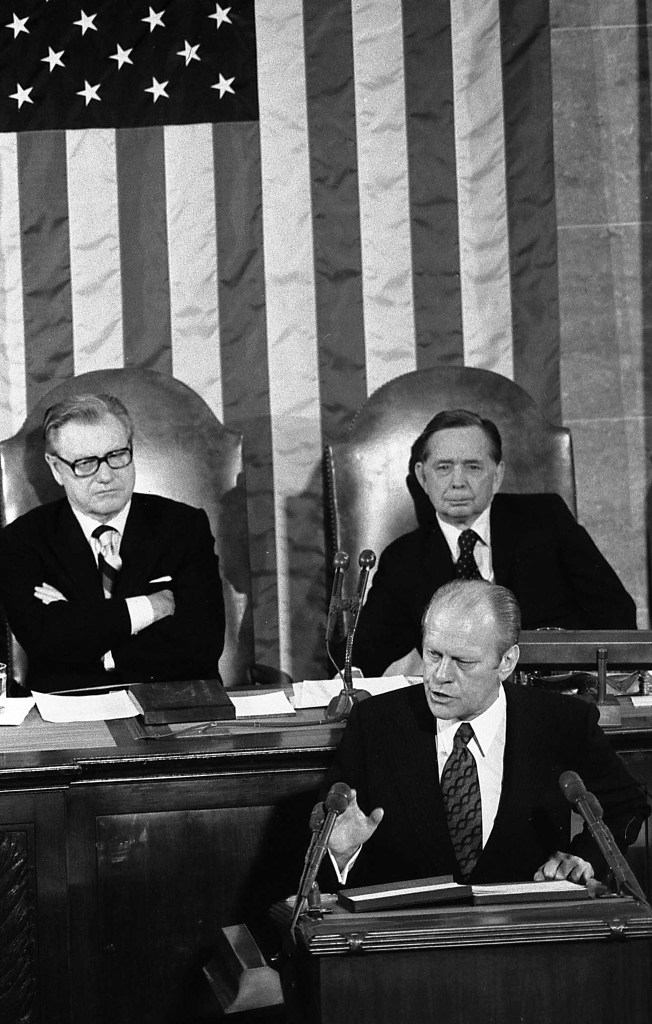
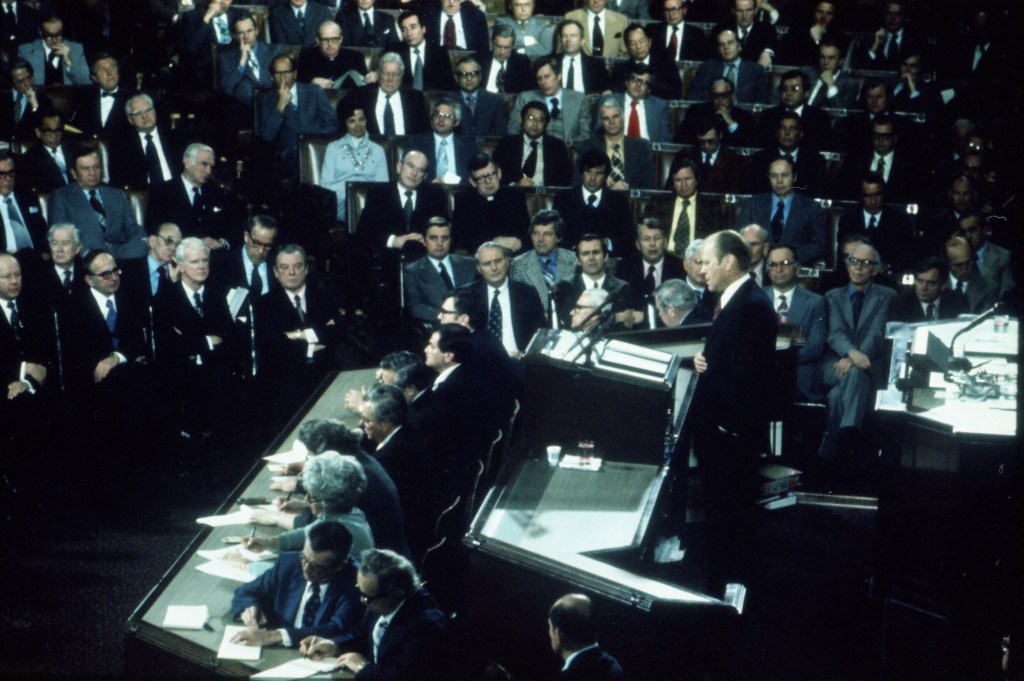
President Ford, declaring that “the state of the union is not good,” urged the Democratic Congress to enact speedily his new plan for stimulating the economy and to approve a sweeping program aimed at achieving energy independence. He also asked Congress to refrain from tying his hands in the conduct of foreign policy. It was the gloomiest State of the Union Message delivered by a President since the Great Depression of the 1930s in terms of his description of the domestic scene. “Millions of Americans are out of work,” Mr. Ford told a somber joint session in a 40-minute, nationally televised address. “Recession and inflation are eroding the money of millions more. Prices are too high and sales are too slow. “This year’s Federal deficit will be about $30‐billion; next year’s probably $45‐billion. The national debt will rise to over $500‐billion. Our plant capacity and productivity are not increasing fast enough. We depend on others for essential energy.” Much of the address was a repetition of the economic plan that Mr. Ford presented to the American people two nights ago on television. He urged a tax cut to stimulate the sagging economy and a move to end United States dependence on foreign energy sources.
While applauding the broad goals of President Ford’s State of the Union Message, many executives and economists expressed dissatisfaction yesterday with the specifics of his program, particularly with regard to energy matters. The decision to put a tariff on foreign oil and an excise tax on domestic oil was seen by some experts as United States approval of high oil prices for the world for the forseeable future. One bank economist in a reference to the high‐price policies of the Organization of Petroleum Exporting Countries commented “the United States has joined OPEC.” Another point made by several experts was that there was considerable doubt that President Ford could get much of his program through Congress in view of a strong Democratic majority.
The administration said it expected the budget deficit to go as high as $34 billion this fiscal year and $47 billion in fiscal year 1976, assuming that Congress enacted the entire Ford economic program. It appeared almost certain the deficits would go considerably higher, however, because the program included some proposed restraints on spending that Congress seemed determined to set aside.
The President proposed a many-sided plan to achieve national independence in energy, with higher energy prices for all consumers as its central feature. He held out the prospect that the plan would move the country toward becoming an important exporter of energy and energy technology by the end of the century.
Influential Senators and House members were sharply critical of many of the President’s proposals to conserve energy and invigorate the economy, and there appeared to be little chance that the proposals would be approved intact. Among those objecting were members of Congress from the oil-producing and oil-consuming states, as well as liberals who would limit tax rebates to persons with low incomes and conservatives who objected to budget deficits.
The nation got encouraging news on the inflation front when the wholesale price index for December after seasonal adjustment declined by half of 1 percent — the first drop since October, 1973. But deepening recession was strongly confirmed when the Federal Reserve Board showed a huge 2.8 percent drop that month in industrial production, the largest since August, 1959.
President Ford blamed Congress for the breakdown in efforts to exchange American trade benefits for liberalized Soviet emigration practices. He said it showed that well-intended legislative restrictions could have the opposite results. Henry Jackson, the Washington Democrat, and other key Senators joined Jewish organizations in putting prime responsibility for the collapse of the trade agreement on the Soviet Union.
The Senate Democratic caucus voted unanimously to reverse two centuries of tradition and require all Senate committee meetings to automatically be held in open session, except where members specifically vote to close them for national security reasons. By a much closer margin, 22 to 17, the caucus recommended that all House-Senate conferences on legislation also automatically be held in open session unless members vote to close them. The two proposals, which must be cleared by the Rules Committee and then adopted by the full Senate, were pushed through the caucus by Senator Lawton Chiles (D-Florida), an advocate of “government in the sunshine.”
Several thousand demonstrators, protesting President Ford’s economic policies and chanting “we want jobs,” attempted to march around the White House seven times but stopped at midpoint. The marchers, following civil rights leader the Rev. Jesse Jackson, Rep. Bella S. Abzug (D-New York) and Walter E. Fauntroy, the Democratic House delegate from the District of Columbia, had intended to symbolically recreate Joshua’s march around the walls of Jericho. The demonstrators said police stopped them halfway but police denied it. No arrests were made.
CIA Director William Colby confirmed the reports from New York Times reporter Seymour Hersh and revealed to a U.S. Senate subcommittee that the agency had violated its charter by spying on American citizens for activities within the United States.William Colby, director of the Central Intelligence Agency, publicly acknowledged that it had infiltrated agents into antiwar and dissident political groups within the United States as part of a counterintelligence program started in 1967. He said it had led to the accumulation of files on 10,000 American citizens. But in his statement, released after he appeared before a Senate subcommittee on intelligence, he denied an allegation in The New York Times that the agency engaged in a “massive, illegal, domestic intelligence operation.”
The 24-member Democratic Steering and Policy Committee in the House voted to unseat Representative Wright Patman of Texas as chairman of the Banking and Currency Committee and Representative Wayne Hays of Ohio as chairman of the Administration Committee in a stunning victory for reformers over the House seniority system. The decision must be ratified by the full Democratic caucus today.
The Department of Justice gave its support today to the contention that involuntary patients in mental hospitals had a constitutional right to treatment. In a letter submitted to the Supreme Court and produced at a hearing, Solicitor General Robert H. Bork said that the Government supported the legal position that such a patient enjoyed “a constitutional right to receive such individual treatment as will give him a reasonable opportunity to be cured or to improve his mental condition.” Although the Justice Department is not a party to the rightto‐treatment case argued before the high court today, the letter in effect, asked the Justices to affirm a decision last year in support of patient rights by the United States Court of Appeals for the Fifth Circuit.
A vice president of the First National City Bank of New York and his wife were axed to death by their 15-year-old son, an honor student who committed suicide by leaping from a water tower, authorities said. The bodies of Thomas Sanders Jr., 48, and his wife, Janice, 44, were discovered in their home in Mountainside, New Jersey, after their son, Gregg, was found dead at the base of the 150-foot tower a quarter of a mile from the house. Police said the youth left a half-page handwritten note addressed “to whom it may concern” claiming responsibility for the double-murder suicide and expressing “sorrow.”
A former general manager of Southern Bell’s North Carolina system says he administered a political fund for the telephone company and made secret cash payments to candidates of both parties, the Charlotte Observer reported. The newspaper quoted John J. Ryan as saying top executives contributed to the fund. Ryan, 55, was vice president and general manager from December, 1964, until September, 1973. Bell claimed he retired after turning down a transfer to Atlanta. Ryan claims he was fired after an “un-American” investigation of him. Bell officials denied the change.
Clifford J. Kroger was found guilty of kidnapping Allison Mechem, 4, from her home in a Cincinnati suburb last September. The child, daughter of Charles S. Mechem Jr., board chairman of the Taft Broadcasting Co., was found unharmed one day later in a nearby motel. Kroger, 38, father of six, was found guilty of second-degree kidnapping because the child was released in a safe place.
The Supreme Court ruled today that Illinois could not send 59 insurgent Democrats to jail because they participated in the party’s national convention of 1972 in place of delegates loyal to Mayor Richard J. Daley of Chicago.
The college freshman of 1974-1975 is more politically conservative and less inclined than any of his immediate predecessors to favor legalization of marijuana or job equality for women, the American Council on Education said in a recent report.
Parts of the Midwest and the Northeast, trying to recover from heavy snows earlier in the week, were hit again with moderate snow falls that closed schools and threatened more death and damage. Snow fell from the Great Lakes to the Appalachians and winds of up to 40 mph reduced visibility. The death toll from the huge storm continued to rise, reaching 64 when the bodies of an elderly couple were found in their home in Rembrandt, Iowa.
Space Mountain, an enclosed roller coaster, operated in near darkness, opened at Walt Disney World in Florida, and would later be duplicated at the other Disney parks.
Pioneering American female comedian Phyllis Diller gets a star on the Hollywood Walk of Fame.
Dow Jones Industrial Average: 653.39 (+4.69, +0.72%)
Born:
Mary Pierce, Canadian-born French professional tennis player; winner of Australian Open, 1995, and French Open, 2000; in Montreal, Quebec, Canada.
Martin Štrbák, Slovakian National Team and NHL defenseman (Olympics, 2006, 2010; Los Angeles Kings, Pittsburgh Penguins), in Prešov, Slovakia, Czechoslovakia.
Steve Brûlé, Canadian NHL centre (NHL Champions, Stanley Cup-Devils, 2000; New Jersey Devils, Colorado Avalanche), in Montreal, Quebec, Canada.
Edwin Díaz, Puerto Rican MLB second baseman, pinch hitter, and shortstop (Arizona Diamondbacks), in Bayamon, Puerto Ric.
Shahab Tolouie, Iranian Persian-Flamenco fusion guitarist, composer, and singer, in Shahsavar, Mazandaran Province, Iran.
Edith Bowman, Scottish television and radio presenter, in Anstruther, Scotland, United Kingdom.
Died:
Ernest Koliqi, 78, Albanian poet.



 History Diaries