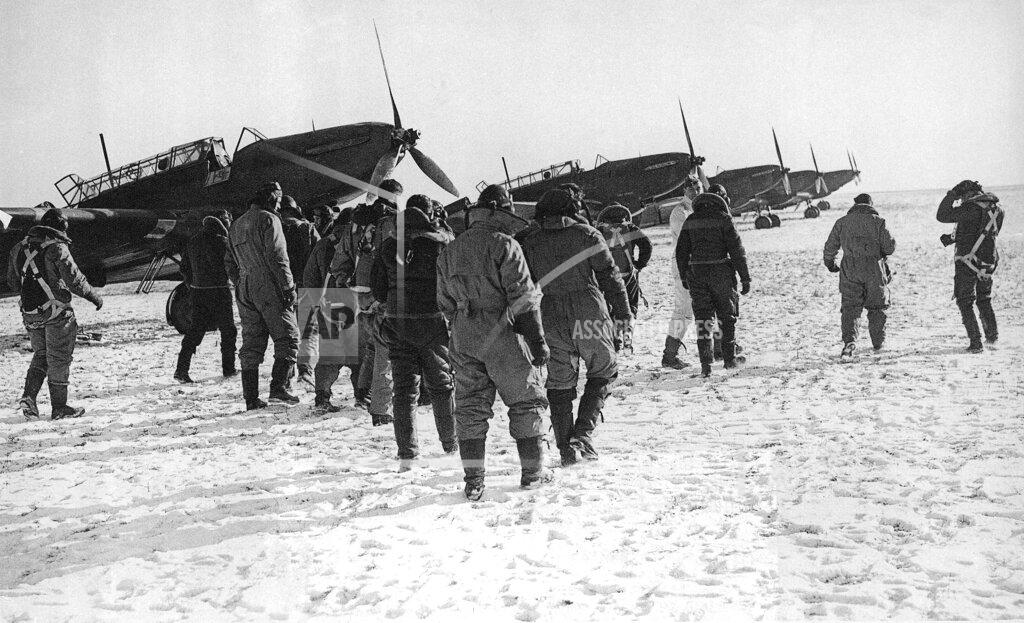
Belgium and the Netherlands ordered partial mobilization in response to the Mechelen Incident. A “state of readiness” is ordered in both countries in anticipation of an invasion from Germany. All army leave is cancelled.
Vicco von Bülow-Schwante, Germany’s ambassador in Belgium, telegraphed to his superiors concerning the Mechelen Incident: “Major Reinberger has confirmed that he burnt the documents except for some pieces which are the size of the palm of his hand. Reinberger confirms that most of the documents which could not be destroyed appear to be unimportant.” This appears to have convinced General Jodl. His diary for January 13, 1940 included the entry: “Report on conversation of Luftwaffe Attaché with the two airmen who made forced landing. Result: dispatch case burnt for certain.”
The Belgians receive a message from Colonel Georges Goethals, Belgium’s Military Attaché in Berlin, regarding the Mechelen Incident that included: “Were there tactical orders or parts of them on the Malines plane? A sincere informer, whose credibility may be contested, claims that this plane was carrying plans from Berlin to Cologne in relation to the attack on the West. Because these plans have fallen into Belgian hands, the attack will happen tomorrow to preempt countermeasures. I make explicit reservations about this message, that I do not consider reliable, but which it is my duty to report.” The “sincere informer” was the Dutch Military Attaché in Berlin Gijsbertus Sas who spoke with Goethals around 5 p.m. Sas’ information had to be carefully considered because he was in contact with a German intelligence officer who was an opponent of the Nazi regime, Colonel Hans Oster.
Informed of Goethals’ message regarding the Mechelen Incident, General Van Overstraeten was astonished that the informant appeared to know about the capture of the plans. Van Overstraeten altered the warning that the Belgian Chief of the General Staff Lieutenant-General Edouard van den Bergen had drafted which was about to be sent to all Belgian Army commanders that an attack on the next morning “quasi-certain.”
Van den Bergen, who had secretly promised French supreme commander Maurice Gamelin to bring Belgium to the allied side decided to broadcast on the popular current affairs radio program that night an immediately recall to their units of all 80,000 Belgian soldiers on leave to ensure that these would be at full strength at the moment of the German attack. Van den Bergen also ordered the barriers to be moved aside on the southern border with France so the French and British troops could march in swiftly when they were called in, in response to the German attack. Both actions were made without the knowledge of the King or Van Overstraeten. If the Germans had indeed attacked on the January 14th, Van den Bergen would probably have been congratulated for his decisions. However, Van den Bergen fell in disgrace for acting in this way without the King’s permission, as King Leopold was the Supreme Commander of all the Belgian armed forces. Van den Bergen was rebuked so harshly by Von Overstraeten that the Belgian Chief of Staff’s reputation never recovered, and at the end of January he resigned.
In response to the German perception of the Mechelen Incident, believing that the plans have not been compromised, General Alfred Jodl, the Wehrmacht’s Chief of Operations, called off plans to execute the attack on the Low Countries three days early on January 14 and postponed them to January 15 or 16, to be decided as the circumstances demanded. That evening he received news that the Belgian and Dutch troops had been put on alert. This was attributed to the Mechelen Incident and the obvious approach of the Sixth Army.
Forecasts of poor weather force Hitler to postpone the western offensive to January 20th. Before talking to Hitler, General Jodl postpones the date tentatively to the 15th or 16th, depending on further news. When everybody sits down to hash it out, Hitler ultimately intervenes and definitively postpones the attack until 20 January, supposedly due to the weather.
There is artillery fire west of the Vosges Forest and east of the Moselle.
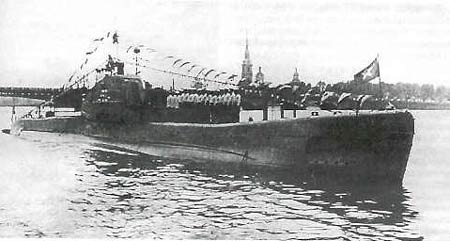
In the Åland Sea, the Soviet submarine ShCh-324 attacks Finnish convoys in the Märket narrows. The Merivoimat (Finnish Navy) escort Aura II was sunk by its own depth charge trying to attack a Soviet submarine in the Sea of Åland (60°23′N 19°10′E). Soviet submarine ShCh-324 attacked an Axis convoy in the Sea of Åland, but the single torpedo missed. Finnish Navy converted yacht Aura II retaliated with depth charges, but the wooden yacht was destroyed when one of the depth charges exploded in the thrower. 26 of her crew were killed and 15 survived the sinking. Finnish escort vessel Tursas picks up 15 survivors. ShCh-324 escapes back to home port.
In the Central Isthmus, enemy attempts at mini-offensives at Lähde and Summa are successfully repulsed.
At Sallaa, the Soviet 9th Army orders the 122nd Division to retreat to the Märkäjärvi village. This helps the two prongs of the Soviet effort, on the north and south forks of the road, to form a tighter overall perimeter.
In Ladoga Karelia, Finnish troops establish the great Kitelä ‘motti’.
Soviet bombers carry out air-raids on a number of localities.
The air-raid on Hämeenlinna kills 12 people and injures 21 more.
In Helsinki, the air-raid kills 6 and injures another 21; it also sets the Hietalahti shipyard on fire.
In Lahti, the radio transmitter is damaged in the bombing.
The Finnish Broadcasting Company warns its listeners to be on their guard against enemy radio propaganda and indicates that due to enemy interference it will use only well-known announcers in its own broadcasts.
A long and sharply worded communiqué was issued tonight by the headquarters of the Leningrad Military Area, denying categorically most of the claims of Finnish successes and Soviet losses made by the press outside of Russia.
Heimo Haitto, the 14-year-old violin prodigy, is the main attraction at a gala concert in Stockholm organized by the Fund for Finnish Relief.
At a fight held in Pittsburgh, Pennsylvania, the Finnish heavyweight boxer Gunnar Bärlund scores a points victory over his American opponent, Jim Thompson. Some of the proceeds from the fight go to help Finland.
Coffee growers in Rio de Janeiro donate 60,000 sacks of coffee to Finland.
The German Navy Operations Division reported that while Norway presented strategic importance, Germany should not invade the neutral country if there was little risk of a British violation of Norwegian neutrality.
Increasing defense expenditures produce the largest government budget in Norwegian history.
A fall in the size of the German male workforce is causing the regime to reconsider the Nazi doctrine, fostered since 1933, that a woman’s place is firmly at home. The idea of employing more women is opposed by senior Nazi Party leaders.
Hans Frank issues new labor laws for Jews in occupied Poland.
General Albert Kesselring takes command of Luftflotte 2.
A French-Spanish Trade Agreement is signed. Spain is to receive French wheat, fertilizers and manufactured goods in exchange for iron ore and other minerals.
Wavell’s Middle Eastern theater takes command of East Africa.
The RAF conducts extensive surveillance over the Reich. It also drops propaganda leaflets over Vienna and Prague.
The RAF shoots down a Heinkel He 111 over the Firth of Forth.
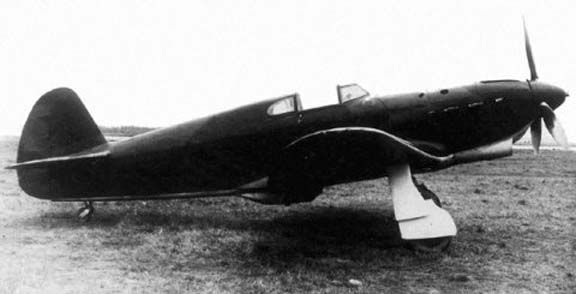
The first flight is made of the I-26, prototype of the Yakovlev Yak-1 fighter. It suffers from oil overheating issues. The Yak-series of small fighters will become one of the most important of WWII.
The first use of the cannon-armed Spitfire Mk.I in combat is made. Both guns jammed.
The unescorted and neutral Swedish steam merchant Sylvia was torpedoed and sunk by the U-20, commanded by Oberleutnant zur See Karl-Heinz Moehle, northeast of Aberdeen, Scotland in the North Sea (58° 45’N, 1° 12’W). At 04.30 hours the Sylvia was hit amidships by a G7a torpedo from U-20 and sank within one minute with all hands northeast of Aberdeen. The ship was reported missing after leaving Aberdeen, only the body of a crewman was later recovered from a raft The 1,524-ton Sylvia was carrying general cargo and coal and was bound for Gothenburg, Sweden.
The British ocean liner Duchess of York ran aground off the west coast of Scotland and was severely damaged. She was refloated on 17 January, repaired and returned to service.
The British coaster Fire King collided with Duke of Lancaster (also British) off the Isle of Man and sank with the loss of one crew member.
The Kriegsmarine (German Navy) naval trawler Schiff 7 Wega ran aground on the Langhoft Tonne, in the Baltic Sea. She was later refloated.
The Freighter SS Tripp, detained at Gibraltar by the British since 11 January, is released, but not before some items of her cargo are seized as contraband.
U.S. freighter Narbo, bound for Italy, Yugoslavia, and Greece, is detained at Gibraltar by British authorities (see 14 January).
Convoy OA.72 departs Southend.
Convoy OB.72M departs Liverpool.
Convoy HG.15F departs Gibraltar for Liverpool
The War at Sea, Saturday, 13 January 1940 (naval-history.net)
Late on the 13th, minelaying destroyers IVANHOE and INTREPID of the 20th Destroyer Flotilla laid minefield IE‑2 in the German channels of the West Wall minefield in the Heligoland Bight in 54‑06N, 05‑29E. They reached the Humber on the 14th after this operation. Operation IE 3 for the 17th was cancelled and the destroyers proceeded to Rosyth.
Light cruiser DIOMEDE departed Plymouth for Rosyth.
Destroyers FAME, FORESIGHT, FURY, and FORESTER arrived in the Clyde.
Minesweeper NIGER attacked a submarine contact in Knock Deep in 51-39N, 1-33E.
Sloop GRIMSBY escorting a convoy attacked a submarine contact off Scarborough in 54-18N, 00-12W.
Submarine TRIBUNE at 1900 was missed by two torpedoes in 57-58N, 10-15E. There is no German record of this attack and submarine SHARK was exercising at this time in the area, but did not report an attack on a submarine.
Destroyer COSSACK departed Leith on the 10th to prepare for high-speed trials. Lying in the stream, she was involved in a collision with cable ship ROYAL SCOT, escorted by destroyer EXMOUTH, in the Firth of Forth on the 13th. COSSACK returned to Leith for repairs and was able to carry out her gun trials on the 15th.
Convoy FN.70 departed Southend, escorted by destroyer VIVIEN and sloop STORK, and arrived in the Tyne on the 14th. There was no convoy FN.71.
Convoy FS.72 departed the Tyne, escorted by sloops AUCKLAND and STORK, and arrived at Southend on the 15th.
Sloop BITTERN found a German mine which she towed towards Sheerness. It was secured to the Nord Buoy and beached from there by harbour defence patrol yacht GLALA (51grt).
Russian submarine ShCh-324 unsuccessfully attacked a Finnish convoy consisting of ANNEBORG and BORE I, escorted by patrol yacht AURA II (563grt) and patrol boat TURSAS, in 60-23N, 19-10E. AURA II dropped depth charges, which damaged her and she later sank.
U-20 sank Swedish steamer SYLVIA (1524grt) NE of Aberdeen.
Convoy of HG.15F of thirteen ships departed Gibraltar 13 January, escorts:
13th — Destroyers BROKE, KEPPEL, WALPOLE, and WALKER joined from Gibraltar. Also sloop ENCHANTRESS from convoy OG.14F.
15th — BROKE detached.
17th — Destroyer AMAZON joined. KEPPEL detached when she was damaged in collision with French destroyer JAGUAR.
19th — WALPOLE and WALKER detached.
20th — ENCHANTRESS detached.
The convoy arrived on the 22nd still escorted by AMAZON.
Completing her time in the East Indies, aircraft carrier GLORIOUS departed Trincomalee on 29 December and arrived at Aden on 7 January, Suez on the 9th and Alexandria on the 13th. She proceeded to Malta on the 15th escorted by destroyers VENDETTA and BULLDOG, and arrived on the 17th for refitting, completed on 25 March. BULLDOG also refitted at Malta, until the 24 February. On 26 March, GLORIOUS, escorted by destroyer WESTCOTT and Australian destroyer HMAS STUART was departed Malta for flying-off exercises.
Convoy SLF.16 departed Freetown escorted by armed merchant cruiser CHESHIRE, destroyers HARDY, HOSTILE and submarine SEVERN. The destroyers and submarine were returning for duty in Home Waters. HARDY and HOSTILE left the convoy on the 20th and called at Gibraltar. Sloop ROCHESTER and destroyer VISCOUNT joined on the 24th relieving the armed merchant cruiser and submarine. SEVERN reached Portsmouth on the 24th, while the convoy arrived in port on the 27th.
Declaring that “less than one dozen men on both sides are responsible for the division of 8,000,000 workers,” Daniel J. Tobin, president of the International Brotherhood of Teamsters, the largest international union in the American Federation of Labor, today called for a rank-and-file revolt of members of the federation and of the Congress of Industrial Organizations to compel peace in the more than four years of inter-union warfare.
Mr. Tobin, writing in his union’s monthly publication, asserted that “95 per cent” of complaints by organized labor against the Wagner act arose from the labor conflict and the act, which he considered the “greatest piece of progressive, liberal legislation ever enacted in behalf of labor,” was threatened. He warned that, although the political exigencies of an election year may preserve the act through the present session of Congress, “in the Spring of 1941 you can look for a destruction or a tearing to pieces of the Wagner act” and other labor legislation.
“Reaction has set in,” he declared. “The only hope for labor is in unity. You ask me what’s the answer and I say the answer is that the rank and file everywhere should rise up and demand by public expressions, mass meetings and by resolutions and declarations that the committee representing both sides get together and settle this trouble one way or another. Neither side has to sacrifice very much in order to bring about a settlement. “Less than one dozen men on both sides are responsible for the division of 8,000,000 organized workers. Let the workers ask themselves why 8,000,000 organized workers should allow a few men to keep them separated in two or three rival labor organizations.
“Isn’t it pitiful to see men of labor down there in Washington before committees disputing with each other, arguing with one another, hating each other over the provisions of the Wagner act? Now look at what we have. Labor leaders (not labor itself) failing to remain in one body, united, and because of the weaknesses and the jealousies of a few men there is a possibility that the law will perhaps be amended to such an extent that it will be partially destroyed. At any rate, you can rest assured that it will not be strengthened in favor of labor. No Senator or Congressman in Washington today needs to pay much attention to requests from labor because one side is arrayed against the other and a Senator or Congressman is up in the air, not knowing which way to turn.”
The House committee investigating the National Labor Board decided today to turn over the inquiry to Charles Fahy, board general counsel, on January 29. Chairman Smith said that the committee would let Mr. Fahy call any witnesses he chose and present “the Labor Board’s side of the case” for perhaps a week. Mr. Fahy has complained that the board has had no opportunity to reply to testimony and evidence thus far presented at the public hearings. Presumably, Mr. Fahy first will call J. Warren Madden, chairman of the board, and Edwin S. Smith, another board member.
Neither the Democrats nor the Republicans have enough “regular” party members at this time to capture the Presidency, the balance of power resting with a large bloc of political “independents” to whom the actual candidates and the platforms are likely to mean more than party labels, a survey conducted by the American Institute of Public Opinion reveals. Dr. George Gallup, the institute’s director, writes: The size and political temper of this independent bloc is something which may give the political leaders of both major parties plenty of concern between now and election. day. In his Jackson Day speech President Roosevelt himself declared that the problem of the Democratic Party would be to hold its supporters “among those independent voters, and don’t let us forget it.”
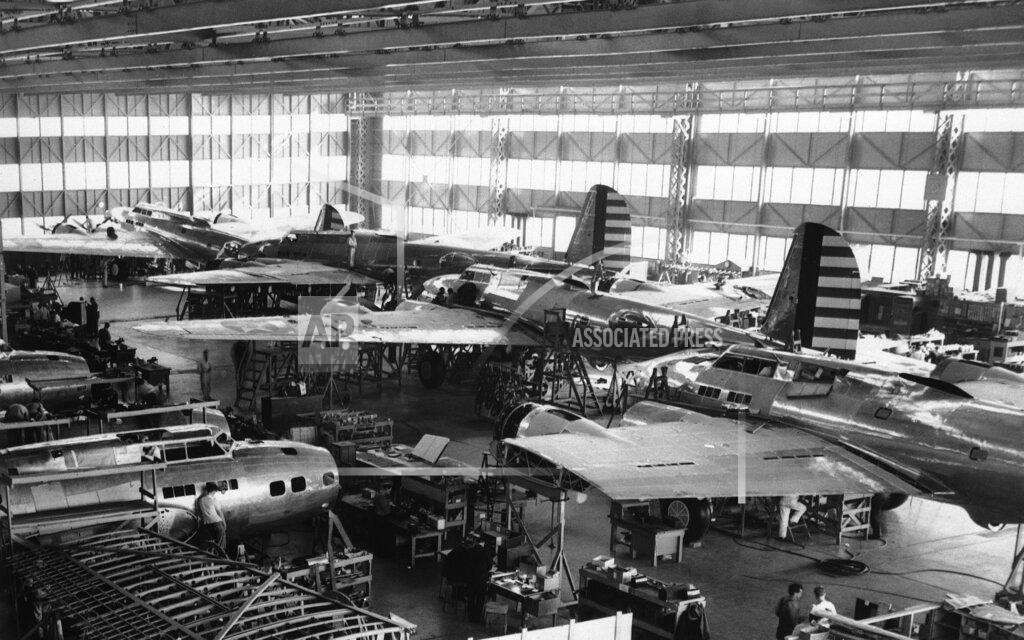
A new twenty-two-ton, B-17B army bomber is leaving the assembly lines of the Boeing Aircraft Company’s plants every fourth working day. The four-engined craft are of the same type that recently flew nonstop from Los Angeles to New York in nine and a half hours, a record for large planes. The company is completing the delivery of thirty-nine bombers of this class to the army. The number of new bombers being built was not made public. The planes have a wingspan of 105 feet, a length of seventy feet and carry a normal crew of seven or eight men. The defensive armament includes five machine guns, extending from sides, bottom and top. The bombers can operate from sea level to 35,000 feet and have exhaust-driven superchargers on their 1,000-horsepower engines. The Boeing assembly line is similar to an automobile production line, with parts built at two plants and assembled at a third. Work is going on day and night and the payroll lists about 6,000.
House members close to the War and Navy Departments predicted today that a new and larger defense program would be sent to Congress in the Spring if the full fury of war was unleashed in Europe then. Informed legislators said that they did not expect any new army proposals to be advanced until after the War Department’s regular appropriation bill was out of the way. As to the navy, Representative Vinson, chairman of the Naval Affairs Committee, said that if Congress authorized the proposed $1,300,000,000 expansion of the fleet in time, funds would be sought at this session to start work on as many of the seventy-seven warships involved as the country’s building facilities would permit.
President Roosevelt proposed in his budget message a $460,000,000 increase in defense spending and additional taxes to raise this amount. It is known, however, that both the army and navy asked the Budget Bureau for far larger sums than Mr. Roosevelt recommended. Legislators said the opinion in some Administration military circles appeared to be that the amount asked by Mr. Roosevelt was an irreducible minimum and that prudence would require much larger appropriations if Europe became engaged in “complete war.”
The resignation of John A. Hoffman, Detroit’s chief of detectives, and the removal of Inspector Raymond W. Boettcher from precinct command, following the disappearance Thursday of two detectives who were to testify in a robbery case, caused further turmoil in Detroit’s Police Department today and high ranking officials predicted that other heads would fall soon. Their predictions soon came true, for tonight Police Commissioner Frank D. Eaman suspended Superintendent Fred W. Frahm because of “flagrant disregard of duty” and because in his handling of the robbery case he accepted “fishy alibis.” Mr. Frahm at once resigned. Deputy Superintendent Louis L. Berg was made superintendent.
The missing detectives, Byron E. Farrish and Wilfred Brquillet, are being sought on orders for their apprehension broadcast over the nation. Wanted for appearance in the trial of four men for alleged robbery in the office of Dr. Martin B. Robinson, one-time minor Republican politician and real estate dealer, in July, they disappeared after conferring with Hoffman and after Farrish had telephoned to his superior that he “knew he was in the grease.”
Denunciation of the Finnish and other war loans, gibes at President Roosevelt and attacks upon the “reactionaries” who are insisting upon national economy at “the expense of the unemployed” marked the second annual convention of the Workers Alliance of the State of New York, in session here yesterday.
Admission of 82,998 immigrants to the United States in the fiscal year 1939, the largest numberr since 1931, was reported today by Immigration Commissioner James L. Houghteling.
Paul V. McNutt, Federal Security Administrator and candidate for the Democratic nomination for the Presidency, urged tonight that the Administration’s reciprocal trade agreements program be continued as “a rational tool for the performance of a scientific job.”
Mathematical confirmation for the first time that the forces holding the nucleus of the atom together are transmitted by the recently found meson, the elementary particle, was presented today at Cornell University by Professor Hans Bethe.
The Chinese Government will go into the business of supplying everyday necessities on a vast scale as the result of a program for combating the scarcity and high prices of consumer goods in unoccupied China, it is announced by Y.S. Chang, Director of the Department of Commerce in the Ministry of Economic Affairs.
Informed Chinese circles in Chungking assert that the political importance of Wang Ching-wei has been radically reduced by the defection of prominent former Chinese Government officials who had followed him in his efforts to form a new regime in cooperation with the Japanese. Chen Kung-po, onetime Nanking Minister of Industry, is said to have severed connections with Mr. Wang and to have left Shanghai for Hong Kong. Kao Tsung-wu, onetime Nanking Department Chief of the Foreign Ministry, is said, also, to have been won over from the camp of Mr. Wang. This camp is said to be a Shanghai group of senior Japanese military men and representatives of big business who are in favor of conducting peace negotiations between Japan and Chungking. Tao Hsi-hun, another prominent colleague of Mr. Wang, is said to have severed his relations with the would-be Japanese puppet.
Dow Jones Industrial Average: 145.19 (-0.77)
Born:
Ron Brand, MLB catcher, shortstop, and third baseman (Pittsburgh Pirates, Houston Astros, Montreal Expos), in Los Angeles, California.
Naval Construction:
The Kriegsmarine (German Navy) Type VIIB U-boat U-101 is launched by F. Krupp Germaniawerft AG, Kiel (werk 595).

 History Diaries