The U.S. press reports that the two U.S. Air Force jet fighters have just been shot down in Laos while escorting U.S. Air Force bombers in attacks on the Communist supply trails passing from North Vietnam through Laos into South Vietnam. These planes are part of the secret air war in northern Laos, an extension of the Yankee Team that had begun in May 1964 with reconnaissance flights and then become Operation BARREL ROLL — bombing raids that began in December 1964.
In announcing that the supersonic fighter planes had been downed by ground fire, the Defense Department said that one pilot had been rescued. The Defense Department said early Thursday that it had received word that the second pilot also had been rescued “and is all right.” The Associated Press reported. The loss of the two planes brought to six the total of American reconnaissance or fighter planes shot down over Laos since June. In contrast with the earlier losses, however, the two planes were not on reconnaissance or escort missions, according to Pentagon sources.
The Defense and State Departments declined to describe the mission the planes had been on. But from the Pentagon sources, it was established that the fighters had been on a strafing and bombing mission, against the supply lines through Laos used by the Communists to support their forces in Laos and South Vietnam. The incident provided the first public indication that the United States had extended its military operations in Southeast Asia to attacks upon Communist supply lines outside South Vietnam. For several months, the Administration has been considering the possibility of attacks on Communist supply lines outside South Vietnam. With the political chaos in Saigon, however, the Administration has taken the position that there is no sense in extending the war until a stable government is established.
The United States has nonetheless been exploring the possibility with the Laotian Government. Nearly a month ago it was reported from Vientiane, the capital of Laos, that the Laotian Government had agreed privately to increase bombing strikes, including raids by United States planes, against the Hồ Chí Minh Trail, the Communist supply lines through Laos into South Vietnam. The Administration has maintained a noncommittal attitude toward the reports of an agreement with the Laotian Government. Secrecy, however, was reported to have been part of the agreement for United States involvement in attacks on the supply lines.
South Vietnamese Government troops have killed 32 Việt Cộng guerrillas and captured four just south of the frontier with North Vietnam, the Defense Ministry announced today.
Premier Trần Văn Hương disclosed today that he intended to bring military leaders into the Saigon Government and to convene a national congress in March to cope with the political crisis confronting the country. The Premier outlined his program after a meeting with military commanders summoned to Saigon from the four corps areas. The war against the Việt Cộng guerrillas was treated as secondary to the political controversy in Saigon. Mr. Hương, a gentle-looking 61-year-old politician, showed no intention of bowing to militant Buddhist agitation for his resignation or for a wholesale reshuffle of his Cabinet. He said that, with goodwill, differences with the Buddhists could be settled, but he indicated that two days of private contacts with them had been inconclusive and that there was no intention of bringing them into the government. Buddhist demonstrations in Huế and other cities of central Vietnam slackened today after a two-day general strike. Results of the talks in Saigon were being awaited.
Premier Hương made his remarks at a tea party that was described by officials as a “kiss-and-make-up affair” for Maxwell D. Taylor, the United States Ambassador, and the generals who staged the virtual seizure of power from the Hương Government December 20. The party was given by Phan Khắc Sửu, the Chief of State. in the great, chandeliered reception room of Gia Long Palace, where President Ngô Đình Diệm entertained before his slaying in a coup d’état on November 1, 1963. The elderly, benign Chief of State ushered before assembled photographers the powerful generals and the Government ministers and the leading officials of the United States mission. The 45-minute gathering was accepted by the Vietnamese as a ritual party to celebrate the break in the political impasse. Over Coca-Cola, tea, and petits fours, Mr. Taylor met with Lieutenant General Nguyễn Khánh, the army commander in chief and the younger generals for the first time since he bitterly complained to them about the December 20 upheaval. Informed sources said that military appointments might satisfy those generals who had pressed for a military “control organ” in the government. Mr. Hương, who holds the defense portfolio, was understood to be considering the appointment of a military leader as Deputy Defense Minister.
Government officials met with Brigadier General Nguyễn Chánh Thi, 40 year-old commander of I Corps area in central Vietnam. General Thi has been sympathetic toward some of the Buddhist demands for changes in the Hương Government and has restrained his troops from halting demonstrations. Observers said that General Thi had what amounted to a political lever in dealing with Saigon since he could curb the Buddhists in their principal strongholds in central Vietnam or allow them to agitate against the Hương Cabinet. The envisioned changes in the Hương Government may satisfy General Thi. He indicated in conversation that he would soon bring the demonstrations in central Vietnam to a halt. Government officials said that the talks with the military commanders would try to define those areas in which elections could be held for the national congress, which would act as a constituent assembly to draft a permanent constitution and would serve as an interim legislature.
The Soviet Union has taken new steps toward reasserting its influence in Vietnam. Both the North Vietnamese Communists and the South Vietnamese National Liberation Front, political arm of the Việt Cộng, have been responsive to Soviet overtures despite the ideological predominance of Communist China in the region. Nguyễn Văn Thiện, a prominent official of the Liberation Front, has visited Moscow to make arrangements for the opening of a permanent office there. An agreement to establish the mission was evidently made when a Soviet delegation visited Hanoi last month) to participate in a conference expressing solidarity with the Vietnamese Communist struggle against the United States. Previously, Eastern European countries had been reached through the Liberation Front’s office in Prague.
A Liberation Front office was opened in Peking last September. Moscow has also signed a new agreement with the North Vietnamese providing for a “marked increase” in the volume of trade during 1965. The agreement, similar to that negotiated last year, is significant in that trade is being broadened at a time when Communist China has cut back its dealings with the Soviet bloc by more than 25 percent. While Peking has declined aid from Moscow since 1961, Soviet aid projects are going forward in North Vietnam. Eastern European technicians are active in the country. Analysts have found evidence of a continuing struggle within the ranks of the North Vietnamese Communists as to the stand that should be taken in the ideological contest between Moscow and Peking. The militant doctrine of Peking appeals to the North Vietnamese, it is said, but there are some who feel that Soviet assistance is needed and some who retain traditional distrust of the Chinese.
The North Vietnamese Communist party did swing over decisively to Peking in the summer of 1963 on the issue of the nuclear test ban treaty, which Communist China boycotted. However, the North Vietnamese, in their criticism of “modern revisionism” — the Chinese description of Soviet policy — have balked at following Peking in its more violent denunciations of the Moscow leaders. The Soviet leadership that has replaced Nikita S. Khrushchev has recently cultivated the Vietnamese Communists by warning the United States against expanding the war in South Vietnam. The most important of these declarations was contained in a letter sent by Foreign Minister Andrei A. Gromyko on December 30 to Xuân Thủy, Foreign Minister of North Vietnam. It said Soviet aid would be forthcoming if the United States extended the war to North Vietnam.
More than half of all United States Army helicopters destroyed by Việt Cộng gunfire since American military aid in South Vietnam began in 1962 were downed during the last year.
President Sukarno declared today that Indonesia would never start a war. Asked if there was a possibility that his country might attack Malaysia, the President replied, “No, no, no and again no!” Since August, 1963, Indonesian guerrillas have continually attacked the Malaysian states of Sarawak and Sabah across the border from Indonesian Borneo, and Indonesian guerrillas have made landings on the Malayan mainland. Last year President Sukarno vowed to “crush Malaysia before the cock crows on New Year’s Day.” In a television interview for the Columbia Broadcasting System network, President Sukarno said today, “If Indonesia is attacked, the Indonesian people will fight back, but Indonesia will never begin the fighting.” A transcript of the interview was later published by the official Indonesian press agency Antara. Asked if he believed that Indonesia might be attacked from Malaysia, Mr. Sukarno replied, “No comment.”
Malaysia, embracing Malaya and the former British territories of Singapore, Sarawak and Sabah (North Borneo), is regarded by President Sukarno as a device to preserve British colonial control in Asia. Yesterday the Foreign Office issued a statement accusing Britain of planning to attack Indonesia, using the Malaysia dispute as a pretext, as the British attacked Egypt in 1956 over the Suez Canal seizure. In another part of the interview, President Sukarno said he was in good health and had no thought of resigning. Mr. Sukarno also indicated that he had no immediate plans to try to bring African and Asian countries into a new organization to rival the United Nations. “Indonesia withdrew from the United Nations, and that’s a fact,” he said, “but there will be no follow-up.”
President Sukarno has said that guerrilla action against Malaysia will be intensified, but in the interview he asserted that there would be no problem if Malaysia adhered to agreements reached in Manila just before the federation was created. At that time, Indonesia and the Philippines agreed to accept Malaysia if a United Nations survey proved that the people of Sarawak and Sabah wanted to join. A United Nations team made the survey, but Mr. Sukarno has refused to accept the affirmative findings.
The United Nations reported today that Indonesia had indicated a further delay in acting on her withdrawal from the organization.
The Malaysian Cabinet decided today, at its weekly meeting, to ask Britain, Australia, New Zealand and other friendly countries for arms to equip local defense corps on the coast and in remote areas.
Almost 20 years after World War II, the Communist nations of Eastern Europe are still searching for a path to prosperity and stability. They are losing faith in the leadership long provided or imposed by the Soviet Union and are now striking out in many political directions. From the Baltic to the Balkans, from the Berlin wall to the Ukrainian plain, economic slump, stagnation or backwardness have shattered Communist theories and assumptions of two decades. They have also exposed the underlying political strains. In one way or another, nearly all the Communist governments of Eastern Europe are seeking ways to appease their populations and to rouse them to more productive labor.
U Thant, the Secretary General, took the initiative anew today in efforts to break the deadlock over payments to the United Nations. The impasse has blocked voting in the General Assembly. Mr. Thant summoned Adlai E. Stevenson of the United States and Nikolai T. Fedorenko of the Soviet Union to separate meetings with him late in the afternoon. Several other heads of United Nations missions met with him during the day, including Paul Tremblay of Canada. The dispute has arisen over the United States’ declaration that it would invoke Article 19 of the Charter against the Soviet Union for nonpayment of assessments. This article deprives any country that is two years in arrears on its assessments of its vote in the Assembly.
The Russians have refused to pay $52.6 million for United Nations peace-keeping operations in the Congo and the Middle East, contending that they are illegal. The Assembly has carried on following an agreement to avoid a vote on any issue, rather than. bring about a confrontation of the two chief disputants. This situation, it is generally agreed, cannot go on. The budget must be approved and appointments must be made. Mr. Stevenson spent about an hour with the Secretary General and was noncommittal when he came out. Informed sources said that the present discussion to ease the payments crisis involved a plan presented by an African-Asian committee of December 31 and since revised by Abdul Rahman Pazhwak, chief representative of Afghanistan
West German Chancellor Ludwig Erhard will seek a clarification from President de Gaulle on France’s alternative to the mixed-manned nuclear fleet, it was reported after the West Germán Cabinet met in West Berlin today. General de Gaulle envisions the construction of a European nuclear force around the French nuclear force. Karl-Günther von Hase, the West German Government spokesman, said mutual defense problems were among the points Dr. Erhard planned to discuss with General de Gaulle when they meet near Paris next week. The news came amid growing indications that West German leaders have little interest in British proposals for a modified Atlantic nuclear force and are prepared to shelve indefinitely plans to participate in a mixed-manned nuclear effort.
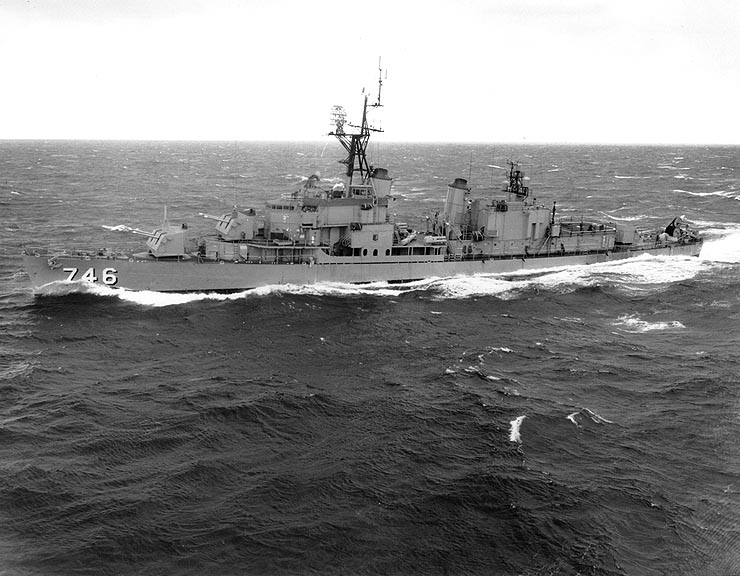
Turkey has notified the United States that she is no longer interested in participating in the mixed-manned nuclear fleet. Officials said the information had been received through diplomatic channels. They conceded that Turkey’s withdrawal was a “psychological loss” and indicated that they expected Turkey to pull back her 11-man contingent from the crew of the USS Ricketts, the American destroyer now operating experimentally with a seven-nation crew aboard. The State Department had been aware of Turkey’s waning enthusiasm since November.
Protests mushroomed today against reported British Government plans to cancel production of the TSR-2, Britain’s newest military plane.
The Warsaw Government has asked the United States to recall its air attaché, Colonel George F. Carey Jr., on the ground that he photographed a Polish jet fighter base.
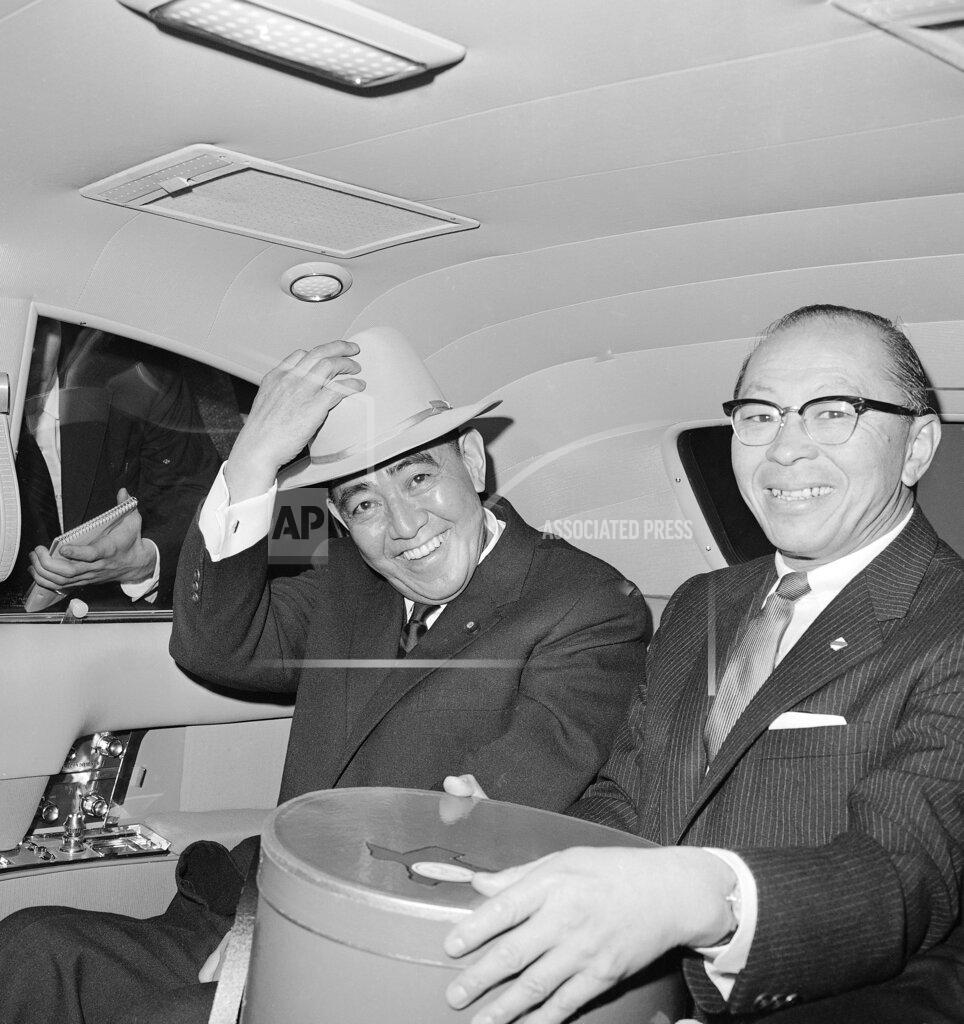
Japan’s Prime Minister Eisaku Satō met with U.S. Secretary of Defense Robert S. McNamara in Washington to discuss the ramifications of China’s first successful test of an atomic bomb. Almost forty-four years later, in 2008, the Japanese Foreign Ministry would declassify its documents from the talk, and reveal that Sato said that Japan had no plans to develop its own nuclear weapons, but that it would “of course be a different matter in the event of a war” with China. In the event of a Chinese attack, Sato said, he expected the United States “to retaliate immediately using nuclear weapons” and that Japan would allow the U.S. to place submarines near Japan in order for missiles to be launched.
President Amin el-Hafez of Syria denounced the heads of 13 other Arab states today for talking but not acting against Israel.
Congo’s Premier Moïse Tshombe canceled his trip to Brussels today as Belgian-Congolese relations deteriorated rapidly. Mr. Tshombe, who had been scheduled to leave tonight, announced the cancellation after a special Cabinet session. He said, however, that a small delegation of specialists would go to Brussels to discuss specific financial questions. The Premier said at a news conference that his decision to cancel his trip had been prompted by the arrival in Brussels yesterday of Cyrille Adoula, the former Congolese Premier, who had called for Mr. Tshombe’s removal and the formation of a new Government in Leopoldville. Mr. Tshombe described Mr. Adoula’s trip to Brussels as part of “a plot designed to sabotage the negotiations we were to have” there. He said this plot had been organized by “certain reactionary Belgians with the aim of sowing confusion and equivocal elements in the public opinion of our two countries.”
In its report on a recent survey of the economy of Zambia, a United Nations mission has recommended that the government negotiate a cooperative agreement with the owners of copper mines there, to expand production for the mutual profit of the mines and the country.
President Johnson announced plans for a reform on U.S. immigration law, denouncing the quotas for different nationalities as “incompatible with our basic American tradition” and proposed what would become the Immigration and Nationality Act of 1965. “We have no right to disparage the ancestors of millions of our fellow Americans this way”, Johnson told Congress. The legislation would pass 326–69 in the House and 76–18 in the Senate, and would be signed into law on October 3, 1965, in a ceremony staged at the Statue of Liberty. Johnson submitted a program containing the following provisions:
- Quotas would be eliminated by 20 percent a year over a period of five years. The amounts then would go into a general pool.
- Visas would be allotted from this pool on a preferential basis, with four ranks of preference, the first going to skilled and gifted persons.
- The President would have power to restore a portion of the cuts suffered by nations. now favored by the quota system, such as Germany and Britain.
- Safeguards would be continued against undesirables and security risks including “requirements designed to exclude persons likely to become public charges.”
Government sources said the new law would probably eliminate heartbreakingly long waiting lists within five years in all countries discriminated against by the quota system except Italy. It would accommodate all qualified Italians on that nation’s waiting list, now totaling 250,000, shortly thereafter. The bill would greatly increase immigration from such nations as Poland, Greece, Italy and Portugal. It would end invidious immigration discrimination against Asians. For example, Japan has been averaging 460 immigrants each year and has a waiting list of 4,932. The new law would allow 1,069 immigrants a year, it was estimated by Administration experts.
The quota system, adopted 40 years ago, was designed to preserve the national and ethnic balance in the United States as it existed in 1920. It gave Britain a quota of 83,000 and Greece a quota of only 308, for example. Government sources said it was so obviously unworkable and inequitable that Congress had been forced to pass special legislation from time to time to assign unused quotas to nationals of such nations as Greece but that such unfavored nations had continued to suffer under the system.
The 41,000-mile Interstate Highway System will cost $5.8 billion more than the 1961 estimate of $41 billion, according to a report the Commerce Department sent to Congress yesterday. The revised cost of $46.8 billion was announced by the United States Bureau of Public Roads after the report was sent to Congress. The report also showed that 19,000 miles of the 41,000-mile network were open to traffic. The project, designed to connect virtually all of the country’s urban population centers, is scheduled for completion by 1972.
Congress authorized the interstate system in 1956, with a proposed cost of $27 billion — nearly $20 billion less than the current estimate. The legislation that provided for the system also required the Bureau of Public Roads to submit a revised cost estimate to Congress every four years — such as yesterday’s report of a cost increase of 14 percent since 1961. The bureau said $3.6 billion of the higher cost resulted from improvements in the system — such as wider bridges, more traffic lanes and longer life for the roads. Under the law, projects must be planned to accommodate the traffic expected 20 years beyond the design period. The increased cost of land, construction and engineering services accounted for $2 billion more, while $200 million went for administration and research, the bureau said.
A Mississippi county was frustrated yesterday in an effort to gain custody of a key witness in the government’s case against the alleged slayers of three civil rights workers. A Hinds County deputy sheriff tried to serve a summons on James Edward Jordan, a 38-year-old construction worker, who is said to have confessed participating in the killing of three young men near Philadelphia, Mississippi, last June. The deputy was acting for authorities of Lauderdale County who reportedly wanted Jordan in Meridian in connection with an automobile accident case. Several of the suspects named by the Federal Bureau of Investigation in the slayings live in Meridian. Jordan was shielded by Federal Marshal Jack Stuart and FBI agents, who refused to let the Mississippi deputy approach him.
Jordan had testified before the Federal grand jury that yesterday completed its investigation of the slayings amid strong speculation that indictments would be returned by the end of the week. Late yesterday Jordan, under close Federal security, was taken from Jackson to Georgia, where he is now living. His reported statement was the second alleged confession obtained by the FBI from among the 21 men arrested last month. The other, according to the bureau, was obtained from Horace Doyle Barnette, 25, who now lives in Cullen, Louisiana. The Justice Department disclosed the purported Barnette confession during a preliminary hearing last month before United States Commissioner Esther Carter in Meridian,
When the Government refused to produce copies of the alleged statement, Miss Carter, a Mississippian, dismissed as hearsay the testimony of an FBI agent regarding the confession and freed the 21 suspects. Although Barnette later was reported to have become uncooperative with Federal agents, the Government seemed confident when Federal Judge William Harold Cox reconvened the 23-man grand jury Monday. Both Barnette and Jordan testified. At 4 PM yesterday, after hearing several other witnesses, the jury completed its inquiry into the slaying last June 21 of Michael H. Schwerner, 24, a former New York City settlement worker, and Andrew Goodman, a 20-year-old Queens College student, both of New York, and James E. Chaney, a 21-year-old Meridian Black man.
Charges of anti-Black and anti-Semitic racism were leveled yesterday against striking New York City Welfare Department employees by the National Association for the Advancement of Colored People. In strongly worded telegrams to the heads of the two striking unions, Roy Wilkins, executive director of the association, called upon them to “curb at once the hateful excesses of some of the pickets.”
In another development, Mayor Wagner again called upon the strikers last night to return to work, as he had done twice earlier this week. “You are on a collision course and you cannot win with it,” he said in a statement at City Hall issued after conferring with advisers. The Mayor repeated that he would not confer with the strikers unless they first ended their 10-day-old strike and returned to their jobs.
The salary increases that President Johnson gave his principal assistants in November, some details of which the White House has refused to divulge, were made retroactive to August 15, informed sources said today.
Farm forces have begun a major mobilization of their strength in and out of Congress to combat the Administration’s planned cut of $170 million in soil-conservation funds.
Space agency engineers said today that for the first time there was hope of a significant reduction in the sonic booms expected from proposed supersonic airliners.
“The Outlaws Is Coming!,” the last motion picture made by the comedy trio The Three Stooges, premiered at the Texas Theater in San Antonio, Texas, a day before being released nationwide. By then, Moe Howard and Larry Fine were over 60 years old, and “Curly Joe” DeRita (who had become the third stooge after the death of Curly Howard) was in his late 50s. The film was moderately successful.
15th NBA All-Star Game, St. Louis Arena, St. Louis, Mo: East beats West, 124-123; MVP: Jerry Lucas, Cincinnati Royals, Forward.
Wilt Chamberlain, the highest-paid player in the National Basketball Association, was traded from the San Francisco Warriors to the Philadelphia 76ers shortly after he had scored 20 points for the West in the 1965 NBA All-Star Game in St Louis, a 124–123 loss to the Eastern Conference stars. Reluctantly, Chamberlain returned to Philadelphia (where he had starred for the Philadelphia Warriors before their move) and on January 21, played his first game for the 76ers, and led them to a 111–102 win over his former teammates. With Chamberlain, the 76ers, who would finish 40–40 in 1965, were 55–25 in 1966 and would win the NBA championship in 1967.
Dow Jones Industrial Average: 886.85 (+0.96)
Born:
Allen Pedersen, Canadian NHL defenseman (Boston Bruins, Minnesota North Stars, Hartford Whalers), in Fort Saskatchewan, Alberta, Canada.
Chuck Compton, NFL defensive back (Green Bay Packers), in Atwater, California.
Bill Bailey, British comedian (Black Books, QI), in Bath, England, United Kingdom.




 History Diaries