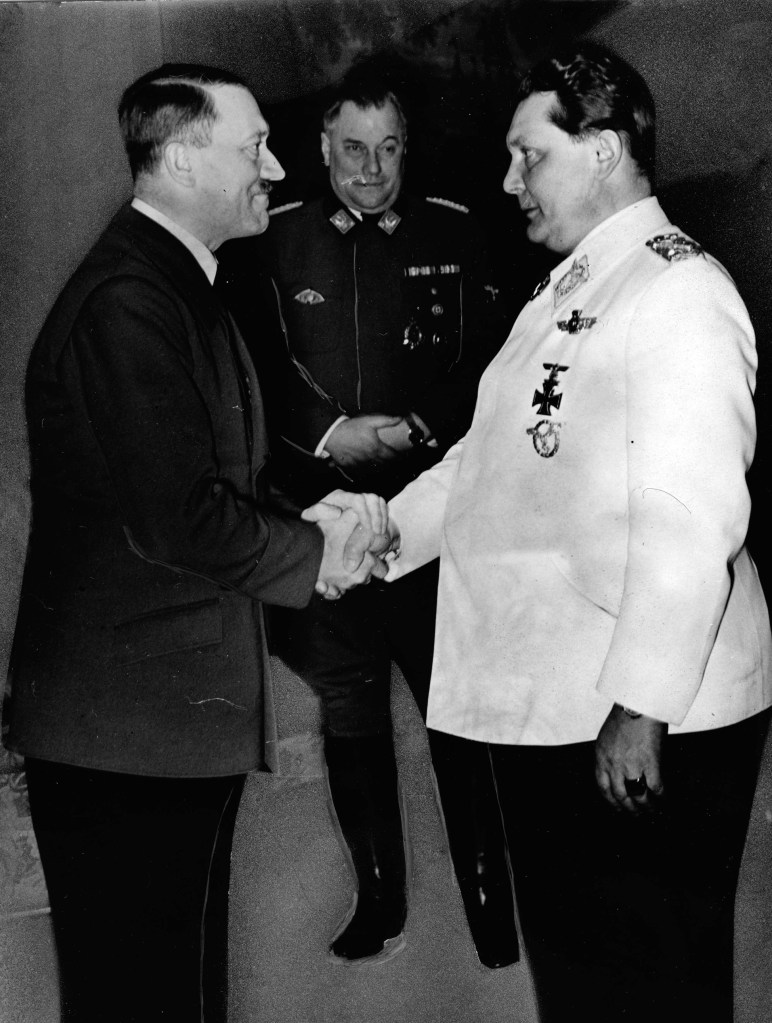
General Alfred Jodl, the Wehrmacht’s Chief of Operations, gave Hitler an assessment of what the Belgians might have learned from documents recovered in the Mechelen Incident. A note in Jodl’s diary summed up what he had said to Hitler: “If the enemy is in possession of all the files, situation catastrophic.” The Germans would at first be falsely reassured by Belgian deception measures.
The two men in the Mechelen Incident plane, Majors Reinberger and Hoenmanns, are sentenced to death in absentia – which is the lawful punishment for what they did. Hoenmann is beyond the Gestapo’s reach, but not his wife, who soon dies under interrogation.
In the Mechelen Incident Major Helmuth Reinberger and Major Eric Hönmanns meet the German Air and Army Attachés to Belgium, Lieutenant-General Ralph Wenninger and Colonel Friedrich Carl Rabe von Pappenheim, while their conversations were secretly recorded. During this meeting Reinberger informed Wenninger that he had managed to burn the papers enough to make them unreadable.
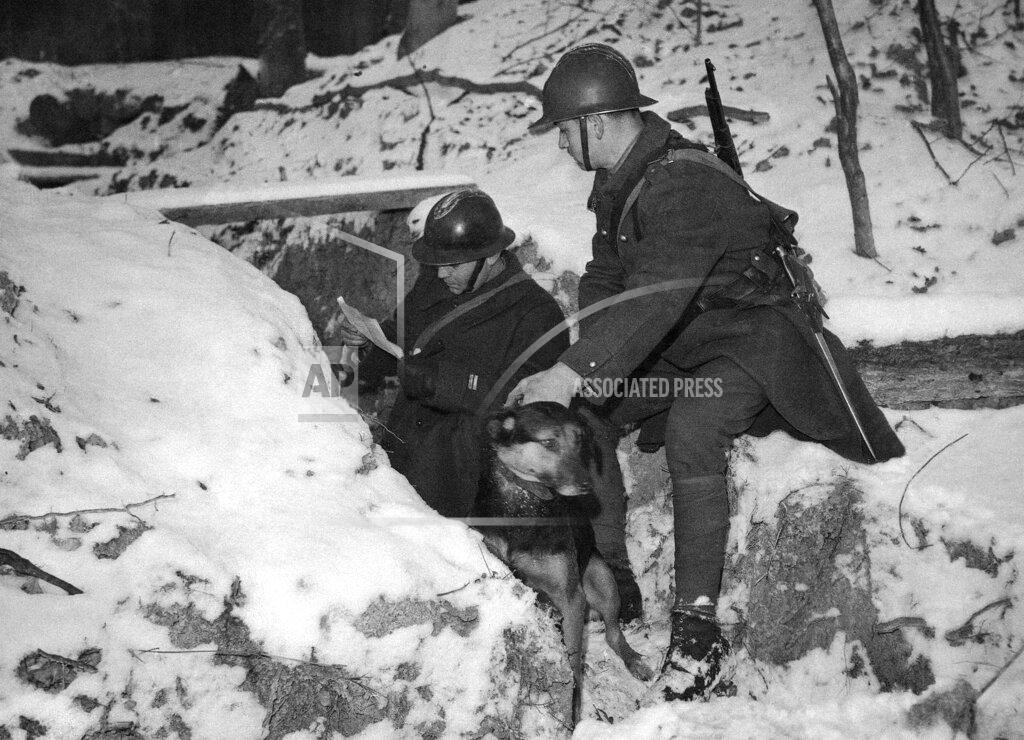
French supreme commander Maurice Gamelin held a meeting with the highest French operational army commanders and the Chief of Military Intelligence Colonel Louis Rivet. Rivet was skeptical of the warning from the Belgians but Gamelin considered that, even if it all were a false alarm, this would be an excellent opportunity to pressure the Belgians into allowing a French advance into their country. Both to intensify the crisis and to be ready for any occasion that presented itself, Gamelin ordered 1st Army Group and the adjoining Third Army to march toward the Belgian frontier.
Dutch Queen Wilhelmina and her government are alarmed when notified by the Belgians of the contents recovered in the Mechelen Incident. Dutch supreme commander Izaak H. Reijnders was skeptical of the information. When the Belgian military attaché in The Hague, Lieutenant-Colonel Pierre Diepenrijckx, handed him a personal memorandum from Van Overstraeten, he reacted: “Do you believe in these messages yourself? I don’t believe in them at all.” The Dutch were not informed of the precise source and the Belgians hid the fact that the Germans only intended a partial occupation of The Netherlands, without the Dutch National Redoubt, the Vesting Holland.
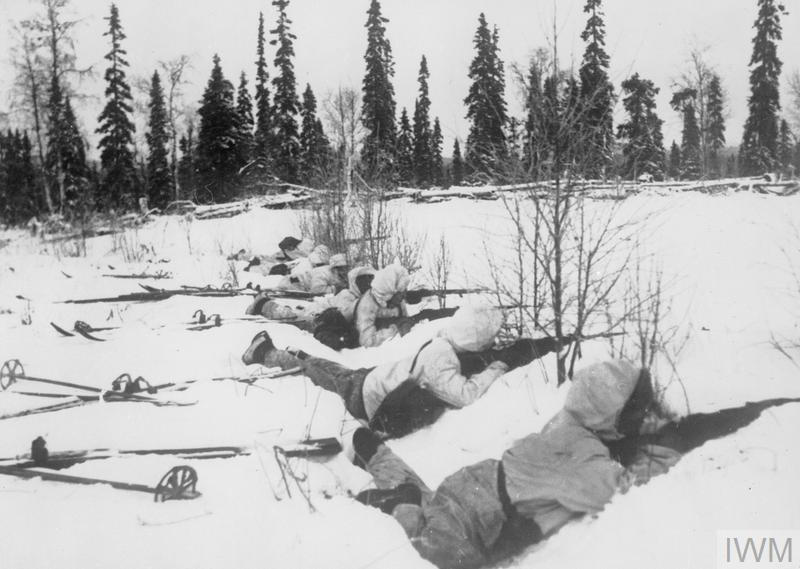
The battle of Taipale begins in Finland. Red Army forces launch a major offensive to break through the left flank of the Mannerheim Line. The Soviet effort is aimed at achieving a crossing over the frozen Taipale River. The Soviets of 7th Army, now under Kirill Meretskov, attempt to cross the River Taipale, which is ice-bound. They choose a 16 km area between Taipale and the Munasuo swamp. They use an armored wedge to force a breakthrough, followed by infantry and other forces. They have built up their tank force and drastically increased manpower. The ultimate aim is Viipuri.
In Ladoga Karelia, the commander of the Soviet 56th Army requests an aircraft to lift him out of the Kitelä-Syskyjärvi-Koirinoja triangle. Finnish troops manage to damage the aircraft, which has to make an emergency landing on the frozen Lake Ladoga.
In Northern Finland, after intense combat with a force of Soviet troops who had made a surprise advance in the Juntusranta sector, Group Susi takes up defensive positions on the Tormua parallel.
The F19 airforce regiment of Swedish volunteers goes into combat for the first time at Märkäjärvi.
After an 18-day respite, Soviet planes resume bombing of Helsinki, Turku, and Lahti in Finland. Over 400 Soviet aircraft bomb several localities across Finland; the main focus of the bombing is in the southwest.
The Ministry of Supply urges evacuees to adapt to their new circumstances and attempt to support themselves, if possible, and to work for their hosts who are providing them with shelter.
In London, the Daily Express reports a Dutch source as saying that Hitler is keen to act as broker in the conflict between Finland and the Soviet Union.
King Haakon, opening the Storting [Parliament] today, pledged every effort to maintain Norway’s neutrality, but added that the country’s armed forces would be increased as a precaution.
In Sweden, an art shop is opened to raise funds for Finland.
The International Federation of Trade Unions issues a resolution calling on governments around the world to fulfil their obligation of solidarity with Finland.
There is a secret meeting between Finnish representatives and Madame Kollontai, the Soviet ambassador to Sweden, in Stockholm.
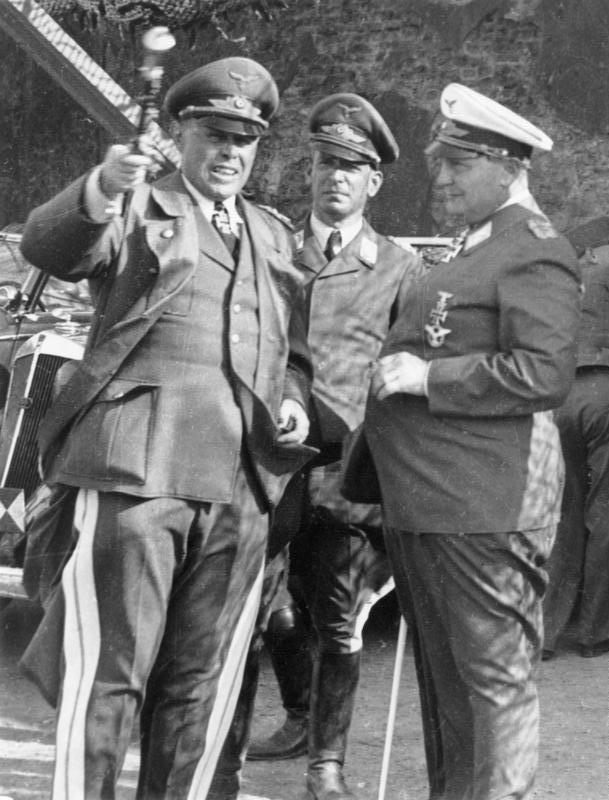
General Albert Kesselring is given command of the Luftwaffe’s 2nd Air Fleet. To replace the fired Felmy, Hitler and Goering appoint General Albert Kesselring to command the 2nd Air Fleet. Kesselring had done good work in support of army operations during the Battle of Poland but does not have a lot of knowledge about strategic air campaigns.
Sixty German pursuit planes have been delivered in Rumania in a barter deal for Rumanian raw materials in which Nazi munitions for the Balkan country also are involved, according to information received here today and credited in responsible quarters.
The French Government bans the sale of meat (except pork, goat and horseflesh) on Mondays and Tuesdays.
The RAF conducts night reconnaissance over Western Germany and flies missions over German seaplane bases on the Heligoland Bight. There also is a targeted raid on minelaying infrastructure at Rantum Bay.
Armstrong Whitworth Whitleys of No.77 Squadron, RAF Bomber Command, operating from Villeneuve in France, dropped leaflets over Prague and Vienna for the first time.
The Royal Navy trawler HMT Valdora was bombed and sunk in the North Sea off Cromer, Norfolk by aircraft of X Fliegerkorps, Luftwaffe with the loss of all ten crew.
At 0650, the Danish cargo ship Danmark was hit by one G7e torpedo from U-23 when she was anchored in Inganess Bay, Kirkwall in the Shetlands (58°59′N 2°52′W). She exploded, broke in two and drifted ashore. On 21 January, the afterpart sank and the forepart was refloated, taken to Inverkeithing and used as storage hulk. Of the ship’s complement, all 40 survived. The 10,517 ton Danmark was carrying petrol and kerosene and was bound for Nyborg, Denmark.
British steamer Granta (2719grt) sinks in the German destroyer minefield off Cromer, in 53 13N, 01 21E, eleven miles 123° from Cromer Knoll Light Vessel. Twelve of her crew were lost, and sloop Stork and fishing vessels Fulham IV and Robur VIII rescued the survivors.
The British fishing vessel William Ivey was bombed and sunk in the North Sea off St Abbs Head, Northumberland. Her crew were rescued by another trawler.
The Estonian cargo ship Kastor ran aground off Lysekil, Sweden.
Convoy OA.71 departs Southend.
Convoy OB.71 departs Liverpool.
Convoy OB.71M departs Liverpool.
Convoy HXF.16 departs Halifax for Dover.
The War at Sea, Friday, 12 January 1940 (naval-history.net)
Anti-aircraft cruiser CARLISLE completed her conversion to an anti-aircraft cruiser at Devonport and later headed for the Mediterranean. Following working up at Malta from 10 February to 26 March, she arrived at Gibraltar on 29 March to return to England, where she was assigned to the 20th Cruiser Squadron working with the Humber Force.
Light cruisers DUNEDIN and DELHI departed Scapa Flow on Northern Patrol duties, with both arrived back on the 17th.
Armed merchant cruiser CALIFORNIA arrived in the Clyde after standing by armed merchant cruiser CANTON.
Light cruiser EMERALD departed Portsmouth for Halifax where she arrived on the 18th.
Minelayer PRINCESS VICTORIA, escorted by destroyers ESCAPADE and ECLIPSE, conducted operation PA 1. Minesweepers HARRIER and SKIPJACK accompanied this force, which arrived back at Rosyth on the 13th.
Destroyer EXMOUTH relieved destroyer ECHO on escort duty with cable ship ROYAL SCOT.
Submarine TRIDENT arrived at Rosyth after patrol.
Submarine L.23 departed Blyth on patrol.
Convoy OA.71 departed Southend escorted by destroyers ACASTA and WINDSOR from the 12th to 14th. Destroyers VETERAN and VERITY escorted the convoy from 14th to 16th, when it dispersed to join convoy SL.15. Meanwhile convoy OB.71 departed Liverpool, escorted by destroyers VANOC and WINCHELSEA to the 16th when it too joined SL.15.
Convoy FN.69 departed Southend, escorted by destroyer WOOLSTON and sloop GRIMSBY, and arrived in the Tyne on the 13th.
Convoy FS.70 departed the Tyne, escorted by sloops FLEETWOOD and BITTERN, and arrived at Southend on the 13th. Convoy FS.71 was cancelled.
Destroyer ASHANTI made two attacks on a submarine contact NNW of Great Orme’s Head, in 53-33N, 4-01W. Anti-submarine yacht CUTTY SARK was also in the area.
Anti-submarine yacht ANNA MARIE (344grt) sighted what was taken to be a periscope feather off Bull Point, in 51-15N, 04-17W, and dropped depth charges on a presumed submarine contact. Portuguese steamer MELLO (4020grt) also sighted a submerged object near this location about the same time. It was later determined that the contact was the wreck of steamer LEONARD PEARCE sunk in a collision on the 11th.
Patrol yacht SHEMARA (834grt) and anti-submarine yacht VALENA (882grt) were exercising with submarine H.50 off Portland Bill in 50-25-50N, 2-47-40W, and made attacks on a submarine contact. Motor anti-submarine boats 3 and 6 were also searching in the area. SHEMARA escorted H.50 back to harbour.
U-23 torpedoed Danish tanker DANMARK (10,517grt) east of South Ronaldsay in 58 59N, 02 53W. The after part sank on the 21st, while the fore part was refloated and taken to Inverkeithing for use as a storage hulk.
Armed patrol trawler VALDORA (251grt, T/Skipper A. Potterton RNR) was sunk by aircraft of German X Air Corps off Cromer with the loss of her entire crew of one officer and nine ratings.
Three more British vessels were also attacked and bombed by aircraft of the German X Air Corps – trawler WILLIAM IVEY (202grt) was sunk 15 to 16 miles north, one half mile east, of Longstone Light House, steamer BLYTHMOOR (6582grt) damaged in 54 16N, 00 10W, and trawler PERSIAN EMPIRE (195grt) damaged seven miles east by north of Filey.
Light cruiser CAPETOWN was refitting at Malta beginning on this date and completing on the 30th.
Light cruiser DURBAN departed Singapore on escort duty, and arrived back on the 20th.
Convoy HXF.16 departed Halifax at 1000 escorted by Canadian destroyers HMCS OTTAWA and HMCS SAGUENAY, which detached on the 13th. The ocean escort was armed merchant cruiser AUSONIA, which detached on the 21st. The convoy was escorted in Home Waters by destroyers MACKAY and WANDERER from convoy OB.74 and destroyers ANTELOPE and VESPER, and arrived at Dover on the 21st.
In Washington, President Roosevelt conferred with Secretary Hull, Under-Secretary Sumner Welles and Myron C. Taylor, his recently appointed representative to the Vatican; Chairman Norton of the House Labor Committee; Jesse H. Jones, Federal Loan Administrator: John Carmody, Federal Works Administrator; James A. Moffatt, the Rev. Maurice S. Sheehy and the Most Rev. James H. Ryan, Bishop of Omaha; members of the National Conference of Business Paper Editors and the capital press corps. He met the Cabinet at 2 PM.
The Senate was in recess, but its Temporary National Economic Committee continued hearings on investment banking practices.
The House completed action on a bill providing for payment to Ohio of social security funds previously withheld; passed a $264,611,252 national defense appropriation bill; received the annual report of the Maritime Commission, and adjourned at 3:11 PM. The Ways and Means Committee heard Secretaries Hull and Wallace urge extension of the Reciprocal Trade Treaty program; the special committee investigating the National Labor Relations Board continued its hearings, and the Naval Affairs Committee continued questioning of Admiral Stark on the Naval Appropriations Bill.
President Roosevelt expressed the opinion today that leaders of the Democratic and Republican parties in Congress should get together and agree in nonpartisan fashion on a program for further United States aid to Finland. The President stressed the belief in his press conference that the attack on Finland, the Baltic nation’s needs in connection with the struggle to maintain independence, as well as the problems created by the destitution of a large number of Finns, should not be made a party matter in this country. Mr. Roosevelt refused to discuss the various propositions for aid to Finland advanced in Congress, and indicated that he thought it up to Congress to decide what it wanted to do in the matter. This brought from Senator Charles L. McNary, the minority leader, a declaration that, while he agreed Congress should deal with the problem in a nonpartisan way, the President should assume “responsibility” for legislation.
President Roosevelt said that he had not heard a word about the proposal to sell Finland a supply of the army’s new Garand semi-automatic rifles at $1 each, and that he did not have the resolution by Senator Prentiss M. Brown, Democrat, of Michigan, to lend Finland $60,000,000, in mind when he suggested that Congressional leaders get together on the matter. He did say that the disposition of the latest $234,000 Finnish debt payment, which he ordered suspended in a special Treasury account, figured in the whole question of what should be done to aid Finland.
Opposition to reapportionment, of the House of Representatives, following the 1940 census, has grown so strong that President Roosevelt, to counter it, has written to Representative Matthew Dunn of Pennsylvania, chairman of the Census Committee, urging him to put through legislation. A desire to stave off reapportionment has manifested itself among Census Committee members from both parties. The point at issue is the Vandenberg resolution, bringing up to date the Reapportionment Act of 1929 to make it apply to the new census. The resolution was adopted by the Senate at the last session and is in the hands of the House committee. President Roosevelt asked in his letter that a resolution similar to the Vandenberg resolution be passed at this session. The Constitution, he pointed out, was mandatory in requiring a reapportionment every decade. Despite this, the opposition of members from some States, both North and South, is very strong. A few leaders feel that the opposition may be strong enough to prevent a reapportionment in 1941.
An emergency defense bill carrying more than $264,000,000 for additional expenditures for the armed forces of the United States was passed by the House today after cursory debate.
92 men are declared dead in a coal mine disaster in Bartley, West Virginia. The men had been trapped two miles below ground by a gas explosion two days before. Hope was abandoned tonight for the entombed men in the blast-swept Bartley No. 1 mine and company officials put the death toll at ninety-two, the worst mine disaster in the country since 1928. Raymond E. Salvati, vice president of the Pond Creek Pocahontas Coal Corporation, who had led rescue crews day and night in their efforts to reach the trapped men, issued this statement: “We have penetrated far enough to justify our thoughts that there was no possibility that the men barricaded themselves (against explosion gases). They are all dead. They would be dead even if they had barricaded themselves. There is insufficient air.” The rescue squads found thirty bodies in the wrecked corridors 600 feet underground, leaving sixty-two still missing. Only three bodies had been identified as relatives began preparations for funerals.
The company at first had put the total of trapped men at ninety-one, but a recount of work records showed that ninety-two were caught when the blast ripped through the mine on Wednesday. Forty-seven others escaped unharmed. Until 4 o’clock this morning the company had held hopes of finding fifty or sixty of the miners alive, but the crews broke through then to the center of the blast area and found five bodies. That meant, crew leaders said, that all in the area probably had been killed instantly. Mr. Salvati said that forty-one of the men apparently had been trapped far back in the “Main 6” heading, a tunnel leading horizontally from the perpendicular shaft; forty-nine in two entryways branching from the heading, and two close to the shaft. The cause of the explosion has not been determined.
Both the central agencies of organized workers, the American Federation of Labor and the Congress of Industrial Organizations, stood committed today to a program of pressing for some revision of the National Labor Relations Act. The A.F.L. decided today to press for immediate adoption of a plan to abolish the present NLRB and substitute a body of five members as a means toward “a complete house cleaning of the biased board and its biased personnel.” The C.I.O. has asked for revision of the Wagner Labor Act but it would be satisfied, as was stated in December, with changes which would prevent attempts to appease “reactionary interests,” including A.F.L. leaders, by carving out craft unions in plants which the C.I.O. has organized. The A.F.L. decision was made by more than forty members of the federation’s legislative conference who met here to outline the legislative program.
Renewed speculation about possible Democratic Presidential candidates started here today with the disclosure that John L. Lewis had invited Senator Wheeler of Montana to address the fiftieth anniversary convention of the United Mine Workers in Columbus, Ohio, on January 23.
Arguing that domestic markets are insufficient to absorb the entire American farm output, agriculture secretary Wallace told the House of Representatives Ways and Means Committee today that foreign sales were necessary and urged the administration’s trade agreements program as an effective method for obtaining them.
Congress was urged today by Major Evans Carlson, a former Marine Corps officer, to confer upon President Roosevelt the power to declare an optional embargo against Japan.
U.S. Interior Department motorship North Star (U.S. Antarctic Service) reaches Bay of Whales, Antarctica, and immediately begins discharging cargo to establish West Base. Ice conditions prohibit unloading at the original chosen site, King Edward VII Land.
Two great ocean liners different from any ever before designed or built, which, in the event of war, could be rapidly converted into naval aircraft carriers, are on the program of the Maritime Commission for construction in the near future, it was learned today.
NBC initiated its first network television programming. A play called “Meet the Wife” was broadcast to a station in Schenectady, New York.
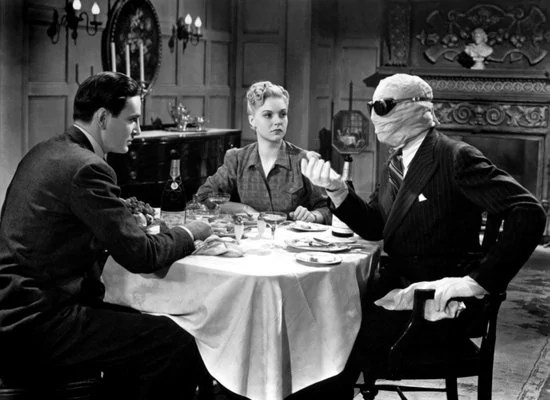
The horror science fiction film “The Invisible Man Returns” was released.
Mexican President Lazaro Cardenas this afternoon in speaking to local newspaper men stressed his point that the Monroe Doctrine as such has not existed since all nations of America had agreed to the “principle of American solidarity” at the InterAmerican Conference held at Buenos Aires in 1936.
China is seeking additional United States credits to supplement $25,000,000 worth already extended by the Export-Import Bank, James A. Moffett, vice president of the California-Texas Oil Company, said today after a conference with President Roosevelt.
The Japanese today claimed a major aerial victory in fighting over Kweilin, capital of Kwangsi Province, and confirmed report that they had advised France to stop all munitions shipments from French Indo-China to Generalissimo Chiang Kai-shek’s southwest defense area.
Chinese Winter Offensive: Chinese 4th War Area captures Pachiangkou and Yuantan.
Commenting today on the possibility of a widespread anti-American movement throughout North China after January 26, when the Japanese-United States trade treaty will end, the Japanese military spokesman here officially declared: “The Japanese Army in North China has no intention whatever of engaging in any activity related to any sort of anti-American movement in any aspect.” The spokesman said the North China army had no knowledge that any anti-American movement was being planned or carried on anywhere within the army’s jurisdiction. He added that he regarded it as an “impossibility” that any anti-American movement should arise.
Questioned concerning the North China army’s probable attitude toward any “spontaneous” anti-American movement, the spokesman declined to reply, declaring that the foregoing statement represented the army’s official views. Americans here recall official Japanese military denials of any connection with the so-called spontaneous Chinese anti-British movements, but it is well known that those movements were officially Japanese sponsored, organized, and financed. Reports regarding purported plans for an anti-American movement after the treaty lapses even declare that anti-American posters are being printed in Peiping, but nothing definite is known in either foreign or Japanese circles about such posters and it is impossible to find credible witnesses who have seen them.
Premier General Nobuyuki Abe was reported today by Domei, Japanese news agency, to have announced his decision to resign at a special Cabinet meeting Sunday morning.
Senior statesmen, whose duty it is to select the next Premier, are busily engaged but with little success so far. Prince Fumimaro Konoye is being pressed from all sides to resume the Premiership, but does not conceal his unwillingness, and unless some very special influence is brought to bear it is improbable that he will accept.
Dow Jones Industrial Average: 145.96 (-2.27)
Born:
Ronald Shannon Jackson, American avant-garde jazz and funk drummer, and composer (Cecil Taylor; Last Exit; Decoding Society), in Fort Worth, Texas (d. 2013).
George Kernek, MLB first baseman (St. Louis Cardinals), in Holdenville, Oklahoma (d. 2022).
Died:
Erich R. Jaensch, 56, German psychologist (eidetiek).
Nikolay Strunnikov, 53, Russian speed skater and cyclist.
Naval Construction:
The Royal Navy Dance-class ASW trawler HMS Saltarelo (T 128) is laid down by Henry Robb Ltd. (Leith, U.K.); completed by Whites M.E.
 History Diaries